

Astronomik S-II MaxFR 6nm Imaging Filter - Canon EOS XL Clip Filter
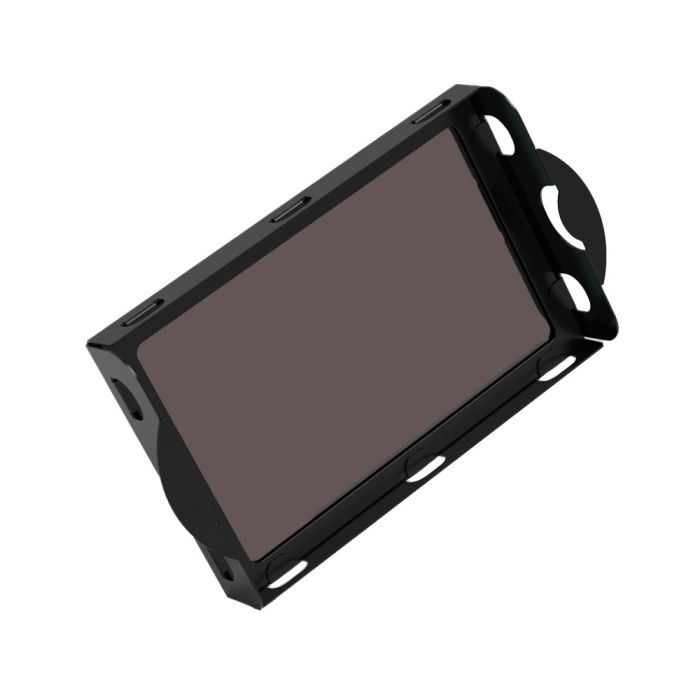
- This is a special order item.
- We will order it directly from the manufacturer and ship it to you as soon as it arrives at our warehouse.
- Transit time varies by location.
Stock count is accurate & shown in real time.
- This item is out of stock.
- Sign up for back-in-stock alerts to be notified when this item becomes available (account login required).
- This item is out of stock.
- Sign up for back-in-stock alerts to be notified when this item becomes available (account login required).
Contiguous US / Lower 48:
Free shipping applies to orders over $50 using our chosen carrier/method. Faster paid options are available at checkout.
Alaska, Hawaii & US Territories:
Free shipping applies to many—but not all—products. Enter your ZIP code in cart or upon checkout to confirm options and costs.
International:
International orders do not qualify for free shipping. Shipping, duties, brokerage, tariffs, and taxes are the customer’s responsibility. Some items may be restricted due to export, size, or manufacturer limitations.
The Astronomik ProPlanet 642 BP filter is the latest addition to the Astronomik ProPlanet infrared (IR)-pass filter series. This filter stands out for its versatility in daylight IR-photography, high-resolution lunar and planetary imaging, and deep-sky astrophotography of H-alpha nebulae.
"BP" stands for "Bandpass", indicating that the filter operates within a 200nm spectral window from 642nm to 842nm. In contrast to the other two Astronomik ProPlanet filters, it blocks the longer IR wavelengths. Together with the Astronomik ProPlanet 742 and ProPlanet 807 filters, you now have three choices to suit your IR imaging needs.
Highlight of the Astronomik ProPlanet 642 BP filter: Three filter in one!
The highlight of the Astronomik ProPlanet 642 BP filter is its three-in-one functionality. Depending on the camera used, it serves as an excellent tool for daylight IR-photography, reducing seeing effects and enhancing contrast for lunar and planetary imaging. Additionally, it is an affordable H-alpha filter for those beginning deep-sky astrophotography of H-alpha regions. Extensive testing and development have ensured that this filter performs these tasks optimally, delivering stunning images.
1) Daylight IR-photography
- Contrast-rich images with great color rendition
- Clear "Wood-Effect" images
- No hot spots from longer IR
- Short exposure times, similar to normal VIS-imaging
- Perfect choice for IR-videos
2) High-resolution lunar and planetary imaging
- Short exposure times
- Effective reduction of seeing (air turbulence)
- Enhanced contrast in the red area
- No ghost images and best sharpness due to blocking longer IR
3) Deep-sky astrophotography of H-alpha nebulae
- Maximal transmission of the H-alpha line at 656nm
- About 40nm Full-Width-Half Maximum (FWHM) with astro-modified DSLRs
- Amazing contrast under light-polluted skies or moonlight
- Low-priced filter for getting started in H-alpha imaging
- Easy focusing using the camera display plus LiveView
Guiding for Astrophotography
Installing the Astronomik ProPlanet 642 BP filter in front of your autoguider camera dramatically improves guiding quality by minimizing image motion from one frame to the next.
The features of the Astronomik ProPlanet 642 BP filter in detail
1) Daylight IR-photography
The development of the Astronomik ProPlanet 642 BP filter started with a focus on daylight IR-imaging using modified DSLR cameras. Normally, unmodified DSLRs have a built-in IR-blocking filter because their sensors are sensitive up to 1100nm. By removing this internal blocking filter through modifications like MC or Full Spectrum, the camera can be used for the fascinating field of IR- photography.
The Astronomik ProPlanet 642 BP filter opens in the very deep red spectrum and allows light to pass through up to 842nm. This results in images that are perfect for channel swapping and offer excellent color differentiation in post-processing. The starting wavelength of 642nm combined with blocking longer IR provides particularly contrast-rich images.
2) High-resolution lunar and planetary imaging
High-resolution imaging of the moon and planets is an area of astrophotography that has seen remarkable advancements over the past 20 years. Today, amateurs around the world can capture images that were unimaginable for even the best-equipped professional observatories two decades ago. To engage in this field of astrophotography, you need a low-noise video camera, specialized image-processing software like AstroStakkert, Registax, or AviStack, and an IR-pass filter.
Why infrared? Observers are familiar with the flickering of stars and planetary disks when viewed through an eyepiece or on a monitor. This flickering, caused by variations in air temperature and pressure, leads to a phenomenon known as "Seeing." The change in the refractive index of air bubbles, which causes the image to shift, is less pronounced in the IR spectrum than in the visual range, resulting in steadier and clearer images.
While human eyes are not sensitive to IR light, CCD and CMOS sensors in modern cameras are. An IR-pass filter, such as the Astronomik ProPlanet 642 BP filter, blocks unwanted visible, short-wave light, allowing only the long-wave, calm IR light to reach the sensor. This greatly improves image sharpness and contrast.
The amount of seeing changes very quickly, so there is no universal filter that will work every time. The Astronomik ProPlanet 642 BP filter is the latest addition to a line of products that includes the Astronomik ProPlanet 742 and ProPlanet 807 filters. This filter opens at 642nm and blocks longer IR, making it ideal for nights with relatively good seeing conditions. During its development, testers reported that the Astronomik ProPlanet 642 BP filter produced the best images, outperforming filters from other manufacturers in terms of sharpness and contrast.
Thus, the Astronomik ProPlanet 642 BP filter is an essential tool for achieving high-quality, high-resolution lunar and planetary images, providing amateurs with the capability to capture professional-grade astrophotographs.
3) Deep-sky astrophotography of H-alpha nebulae
The Astronomik ProPlanet 642 BP filter achieves nearly 100% transmission at the famous H-alpha line at 656nm. This means that all light from beautiful red H-alpha regions reaches your camera sensor while shorter wavelengths and most artificial light pollution are effectively filtered out. When used with a typical astro-modified DSLR, the filter provides a spectral window of about 40nm, resulting in a very dark background and high contrast. This makes it possible to capture stunning images of H-alpha regions even when the moon is up, as lunar stray light is also filtered out effectively.
A common question from customers is, "How much longer do I need to expose with this filter?“. The answer is simple: you don't have to expose longer, but you can if you want to.
Due to the high transmission rate of nearly 100%, the same amount of photons with a wavelength of 656nm will reach your sensor regardless of whether the filter is installed. However, with the Astronomik ProPlanet 642 BP filter installed, the sky background will remain very dark, allowing you to expose longer to collect more photons from your target without the background becoming overly bright.
While narrowband-emissionline filters like the Astronomik H-alpha filters with 12nm or 6nm bandwidth perform this job even better by blocking more unwanted light, the Astronomik ProPlanet 642 BP filter is a very attractive option for beginners in this field of astrophotography due to its lower price. Additionally, real emission-line filters can be difficult for beginners to use because focusing is challenging with them. With the Astronomik ProPlanet 642 BP filter, there is usually enough light to use the LiveView monitor on your camera, making focusing much easier.
Overall, the Astronomik ProPlanet 642 BP filter is the ideal filter for getting started in deep-sky astrophotography of H-alpha nebulae with a modified DSLR, providing excellent transmission, contrast, and ease of use for capturing beautiful deep-sky astrophotographs.
Clip-Filters for mirrorless Canon EOS R cameras
Since 2007 we offer our extremely popular Astronomik Clip-Filters. The complete range of Astronomik filters is available as Clip-Filters for the mirrorless Canon EOS R camera series.
The Astronomik Clip-Filters offer a number of practical advantages that make them an ideal choice for astrophotographers:
- Installing and removing the Astronomik Clip-Filter is very quick and easy and requires no extra tools or modifications to the camera body. They can be changed at any time, even at night.
- All lens functions, such as focus, aperture, and image stabilization remain fully functional.
- The Astronomik Clip-Filters are held securely in place without stressing the high-quality glass.
- The Astronomik Clip-Filters are designed and optimized for use with both standard camera lenses and telescopes.
Through the Astronomik Clip-Filters, we were able to solve several common issues faced by astrophotographers:
- Large filters for large camera lenses are very expensive.
- Using a filter holder between the camera body and the lens prevents focusing to infinity.
- For very fast telescopes (low f-number) like the Vixen R200SS or the Takahashi "Epsilon" astrograph, a filter drawer or filter wheel cannot be used because the distance to the corrector lenses would be changed.
- Long exposure times lead to dust settling on the camera's sensor chip.
Additionally, all Astronomik EOS R XL Clip-Filters serve as an excellent dust shield, protecting the sensor during long exposures. If you only need a dust shield without filtering effects, the Astronomik MC-Clear EOS R XL Clip-Filter is the right choice.
Use Astronomik filters for your Canon EOS R camera and enjoy marvelous images with an ultra-light equipment!
Compatible Canon EOS full-frame cameras
| Model | Compatibility |
|---|---|
| Canon EOS R | Yes |
| Canon EOS Ra | Yes* |
| Canon EOS RP | Yes |
| Canon EOS R3 | Yes |
| Canon EOS R5 | Yes |
| Canon EOS R5 Mark II | Yes |
| Canon EOS R6 | Yes |
| Canon EOS R6 Mark II | Yes |
| Canon EOS R8 | Yes |
* Please note: Canon's astro-version "Ra" of the R-series shows strong halos around brighter stars, even without any filter. We highly recommend NOT purchasing the Canon EOS Ra.
Compatible Canon EOS APS-C cameras
| Model | Compatibility |
|---|---|
| Canon EOS R7 | Yes |
| Canon EOS R10 | Yes |
| Canon EOS R50 | Yes |
| Canon EOS R100 | Yes |
Non-compatible Canon lenses
| Model | Compatibility |
|---|---|
| Canon RF 35mm F1.8 IS Macro STM | No |
| Canon RF 85mm F1.2L USM | No |
| Canon Extender RF 2x | No |
| Canon Extender RF 1.4x | No |
Astronomik XT-Filters
The new Astronomik XT-Filters are specifically designed for astrophotography with wide-angle lenses, delivering sharp and crisp star images all the way to the edges of the image. Since many years, Astronomik Clip-Filters are a popular and well known tool among astrophotographers worldwide. However, when using very short focal length lenses to take widefield images, standard Clip-Filters could introduce aberrations, stretching stars in the outermost corners of the image. To solve this issue, the new Astronomik XT-Filters are coated on an extremely thin substrate of only 0.3mm or 0,5mm thickness, significantly reducing these aberrations.
Despite the reduced thickness, the Astronomik XT-Filters maintain the highest optical quality: they are finely polished, free of any striae, residual stresses, and bubbles, and are suitable for the most advanced imaging applications. The Astronomik XT-Filters are manufactured using the same durable coating technology as all Astronomik filters. They are extremely scratch-resistant, unaffected by high humidity, and do not degrade over time. This ensures they retain their performance for years. As with all our filters, we underline this promise with a 10-year warranty.
Please note that not all Astronomik filters are available as XT-versions due to the complexity of manufacturing these ultra-thin filters. Currently, filters are produced that are predestined for photography with wide-angle lenses.
Technical Data
- More than 95% transmission for wavelengths between 642nm and 840nm
- Blocking of wavelengths between 350nm and 630nm
- Glass thickness: 1mm (except Astronomik OWB Type 3 and XT filters)
- Finely polished optical glass, free of any striae, residual stresses, and bubbles
- Extremely scratch-resistant and durable coating
- Completely resistant against high humidity and aging effects
- Parfocal with other Astronomik filters
- Diffraction-limited
- Optimized spectral windows
- Delivered in a high-quality, long-lasting filter box
Due to the high-precision machining of the carrier substrate, all Astronomik filters are parfocal with wedge errors far below all common tolerances. Astronomik filters are diffraction-limited, ensuring that the optical performance (resolution and contrast) of your telescope is not compromised. Issues concerning focal distances and the exact alignment of images from each color channel are therefore effectively eliminated.
All Astronomik filters are ideal for modern cameras, including both CMOS- and CCD-based models, ensuring you capture the best possible images with your equipment. Sharpness, contrast, and the absence of any reflections and halos are guaranteed. Even with bright stars in the field of view, nebulae and galaxies will be captured with the finest structures. The Astronomik MFR coating is designed for optimal performance across a wide range of focal ratios of the optics used.
Every Astronomik filter undergoes a rigorous quality control process before delivery.