

Antlia Filters at Agena Astro!
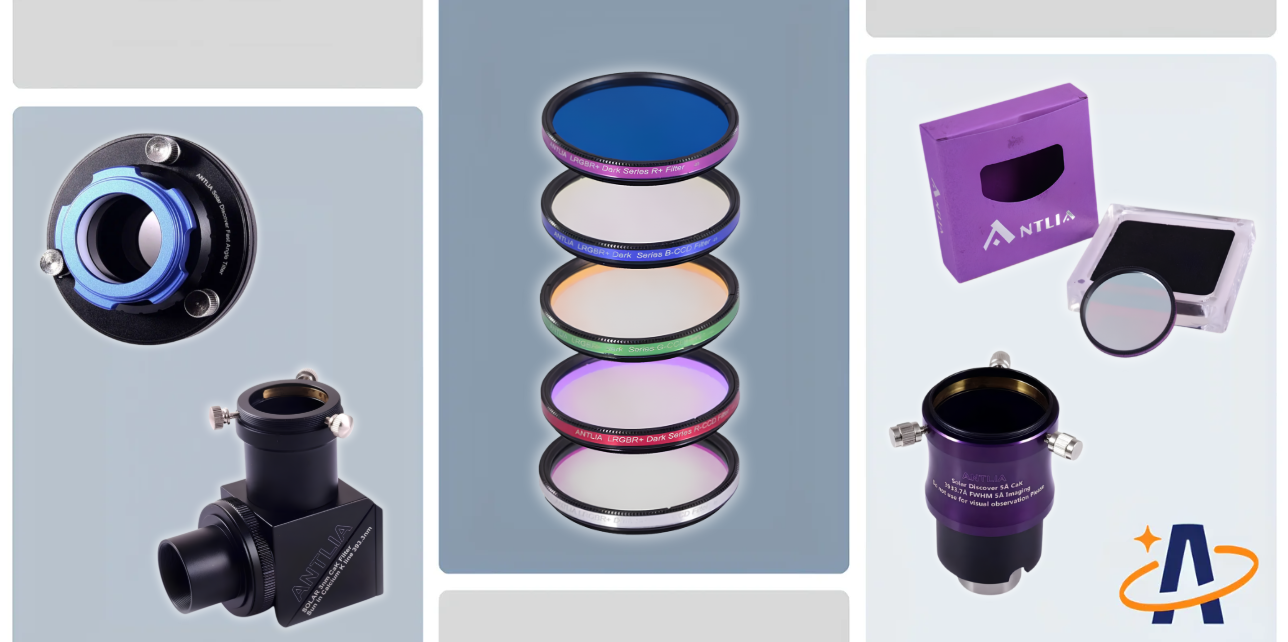
Antlia is an astronomy filter manufacturer based in Hangzhou, China, with a catalog centered on filter production. They make filters for all types of astronomy, including deep-sky imaging, planetary work, visual observing, photometry, and solar imaging. Rather than branching into cameras, mounts, and telescopes, Antlia concentrates on this high-precision niche within the world of optics. That focus has led to a wide range of bandwidths, filter sizes, prices, and designs for different optical systems.
Agena Astro carries Antlia filters for both monochrome and color cameras, along with options for planetary, visual, photometric, and solar use. Mounted and unmounted formats cover a range of cameras and filter wheels, while different coatings and bandwidths address everything from broadband color imaging to very narrow emission-line work.
Narrowband Imaging Filters
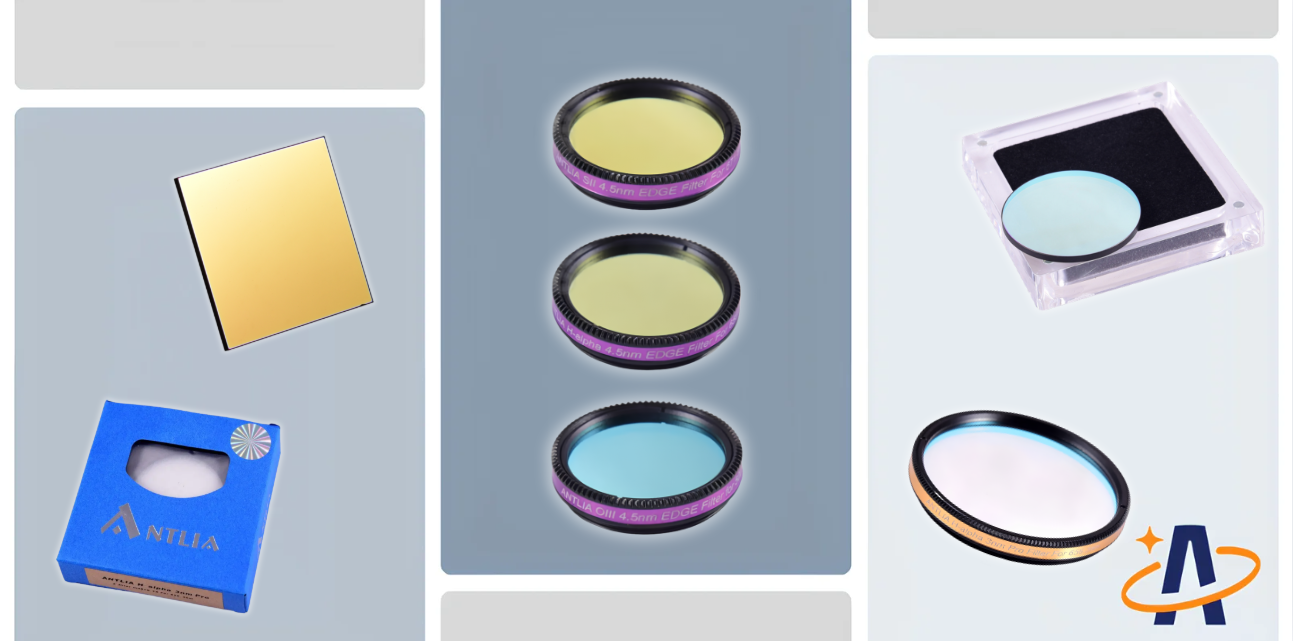
Antlia’s narrowband filters isolate the wavelengths produced by glowing gas in emission nebulae. Hydrogen alpha, oxygen III, and sulfur II are the most common, with each recording different structures within the target. Blocking most of the surrounding spectrum improves contrast against light pollution, moonlight, and natural sky glow.
Antlia offers most of the popular imaging bandwidths, with bandpasses ranging from 2.5nm to 7nm, along with filters for a few less common emission lines. Narrower filters block more background light, but they also become more sensitive to telescope speed because fast optics can shift the effective bandpass. Antlia compensates for this in some filters with pre-shifted designs made specifically for faster optical systems.
Multiband and Light Pollution Filters
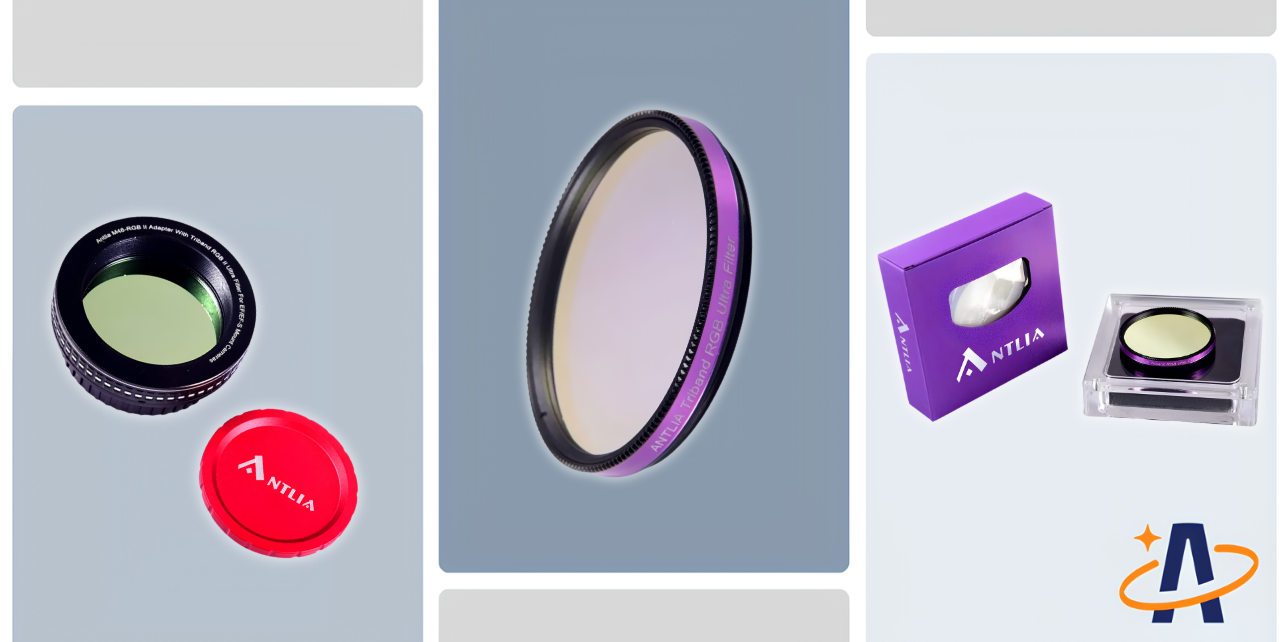
Antlia’s multiband filters are aimed mainly at color astronomy cameras rather than monochrome cameras. Instead of isolating one emission line at a time, they pass two or more selected wavelength regions during the same exposure. This lets a color sensor record several useful nebular emissions while blocking much of the unwanted background. While not a true replacement for a monochrome camera with dedicated filters, these multiband options can make one-shot color cameras much more effective on emission nebulae.
Multiband filters are best suited to emission-line targets because much of the continuum light from galaxies and other broadband objects is blocked. For broader target options, Antlia also makes light-pollution filters that leave more of the visible spectrum intact. Rather than passing only narrow regions of light, they suppress selected parts of the spectrum associated with sky glow and traditional industrial or municipal lighting. They preserve more continuum light from stars, galaxies, and reflection nebulae, but they also allow more unwanted background light through than a narrowband filter.
Planetary and Visual Filters
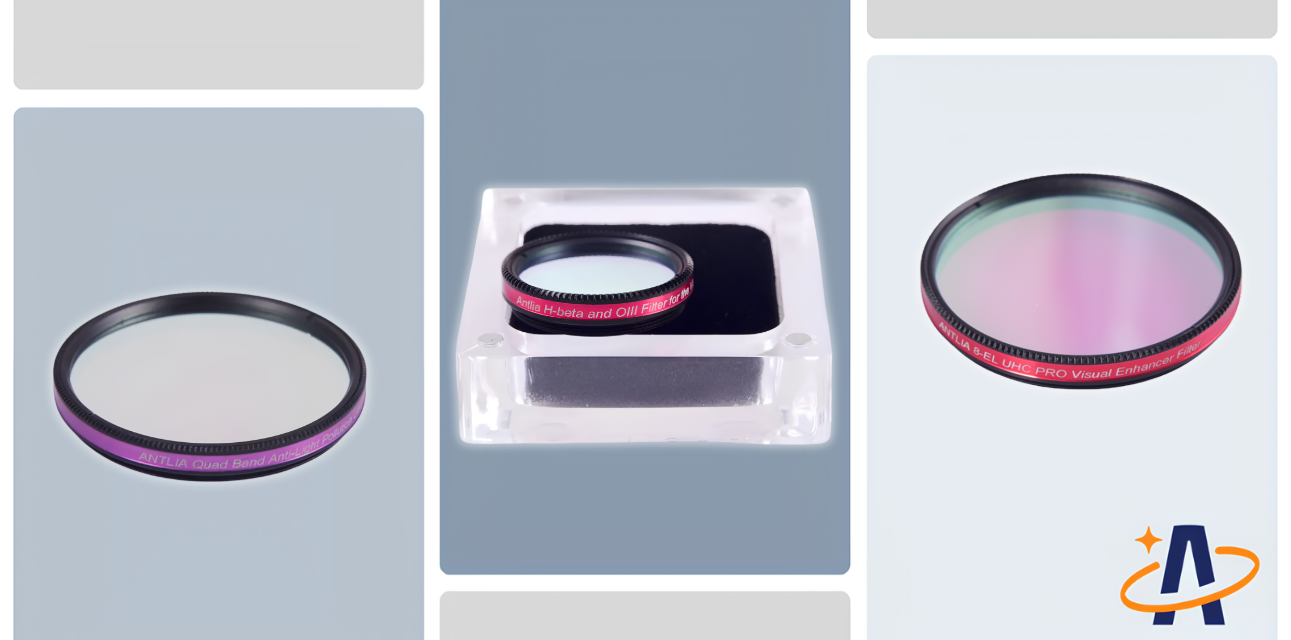
Antlia makes planetary filters for wavelengths that can reveal details outside ordinary color imaging. Infrared can reduce the effects of atmospheric turbulence, while other spectral regions can bring out features such as methane absorption in the outer planets or ultraviolet contrast on Venus. The useful wavelength depends on the planet, the camera, and the observing conditions.
Antlia also makes filters specifically for visual observing. These stay within useful visual wavelengths and are designed around the sensitivity of the human eye rather than a camera sensor. Nebula filters suppress parts of the spectrum while transmitting wavelengths where many emission and planetary nebulae are brightest. One of the most common is an OIII filter, which can significantly improve contrast at the eyepiece.
Because imaging and visual filters are designed for different purposes, they are not always interchangeable even when they cover similar parts of the spectrum.
Solar Filters and Accessories
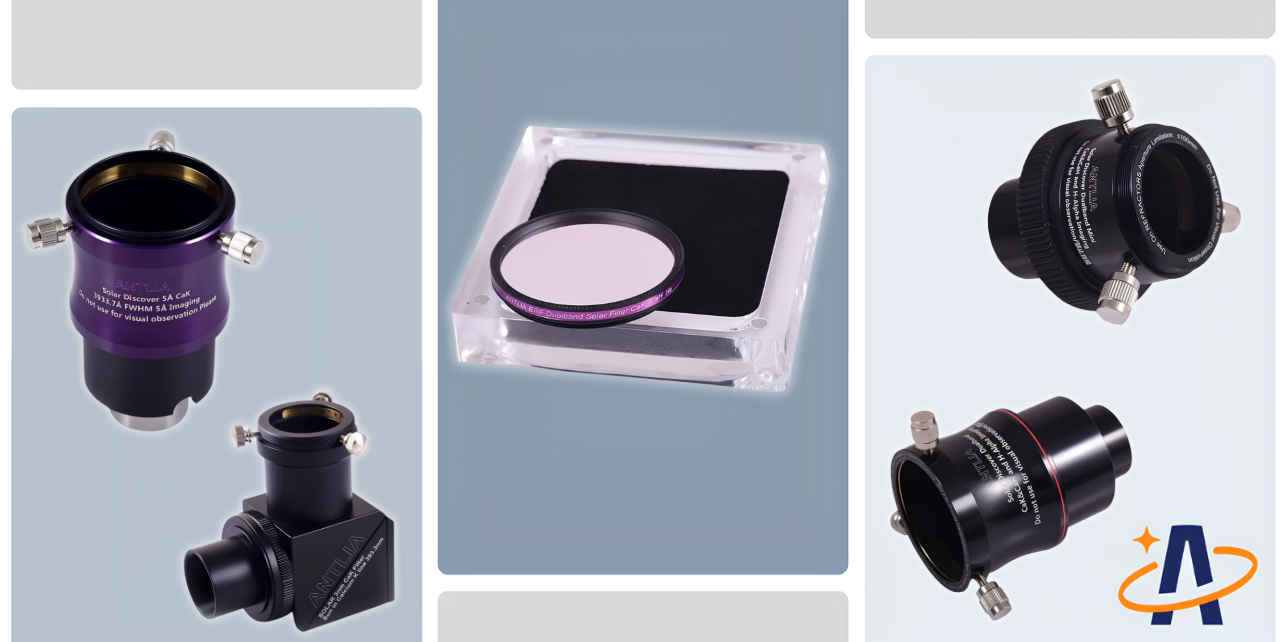
Antlia’s solar range covers wavelength-selective imaging along with the hardware needed to manage the Sun’s much greater light and heat. Antlia has put particular emphasis on the calcium K region near 393.3nm. This part of the spectrum is better suited to cameras than visual observing because it lies near the ultraviolet edge of human vision. With a monochrome sensor, Ca K imaging records light from singly ionized calcium in the Sun’s atmosphere, revealing plages, network structure, and other features associated with magnetic activity. This produces a very different view from the more familiar H-alpha wavelength, which shows features in the chromosphere such as prominences and filaments.
The broader Antlia solar offerings include energy rejection filters, solar wedges, magnification optics, and other supporting hardware for different telescope apertures. These components are designed to work as parts of a complete optical system, not as interchangeable standalone filters. A solar telescope project needs to be planned carefully because some components are intended only for imaging, and proper safety precautions depend on the complete optical setup.
Frequently Asked Questions
What does the bandwidth number on an Antlia narrowband filter mean?
Bandwidth describes how wide a section of the spectrum the filter transmits, usually in nanometers. Narrower filters block more surrounding light and can improve contrast on emission nebulae, but they are more sensitive to wavelength shift in fast optical systems.
Which narrowband filters are used most often for deep-sky imaging?
Hydrogen alpha, oxygen III, and sulfur II form the standard three-filter set. Each records a different emission line, allowing separate structures within a nebula to be captured and combined into a finished image.
Should I use LRGB or narrowband filters with a monochrome camera?
LRGB is better suited to galaxies, reflection nebulae, star clusters, and other broadband targets. Narrowband filters are intended mainly for emission nebulae with strong light at specific wavelengths. Many imaging setups keep both types available.
What type of Antlia filter works well with a color astronomy camera?
Multiband filters are commonly used for emission nebulae because they let several useful wavelength regions reach the sensor during the same exposure. Broader light-pollution filters preserve more continuum light and may suit galaxies, clusters, and mixed target lists.
Why does focal ratio matter with narrowband filters?
Fast telescopes send light through the filter at steeper angles, which can shift the effective passband toward shorter wavelengths. The effect becomes more important as the filter gets narrower, which is why Antlia offers options intended for different telescope speeds.
What filter sizes does Antlia offer?
Antlia filters are available in several mounted and unmounted formats for different cameras and filter wheels. Larger sensors and wider light paths generally need larger filters to avoid vignetting, while smaller formats work well with compact imaging systems.
Can Antlia solar filters be used for visual observing?
Only Antlia equipment specifically intended and configured for visual solar use should be used at an eyepiece. Some solar filters and energy rejection components are parts of imaging systems and are not safe to use by themselves.