

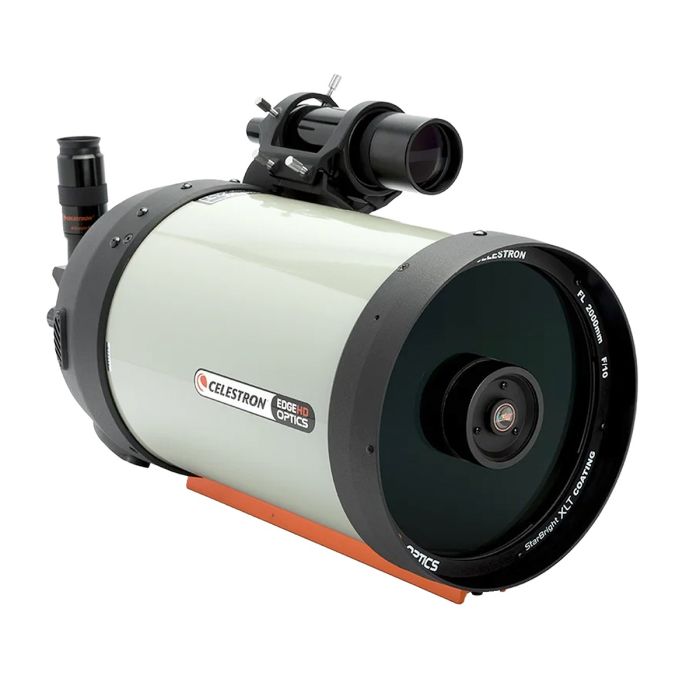
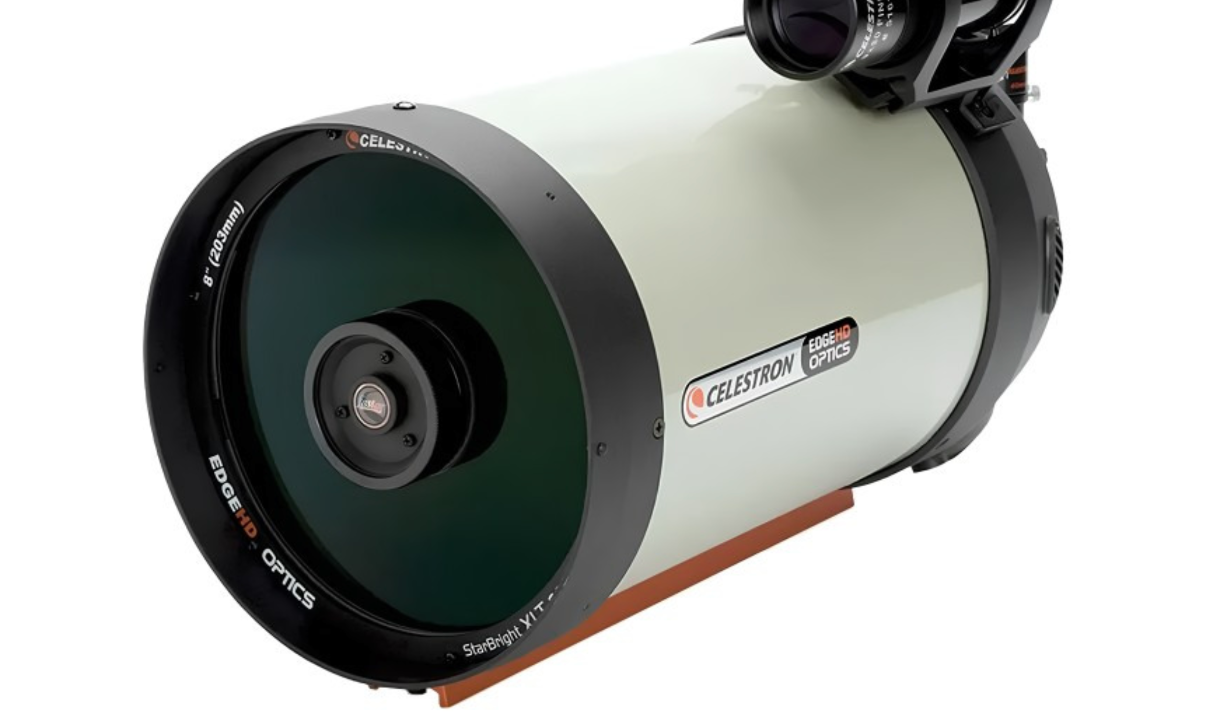
Celestron 8" EdgeHD 800 Schmidt-Cassegrain Telescope OTA
Stock count is accurate & shown in real time.
- This item is out of stock.
- Sign up for back-in-stock alerts to be notified when this item becomes available (account login required).
- This item is out of stock.
- Sign up for back-in-stock alerts to be notified when this item becomes available (account login required).
Contiguous US / Lower 48:
Free shipping applies to orders over $50 using our chosen carrier/method. Faster paid options are available at checkout.
Alaska, Hawaii & US Territories:
Free shipping applies to many—but not all—products. Enter your ZIP code in cart or upon checkout to confirm options and costs.
International:
International orders do not qualify for free shipping. Shipping, duties, brokerage, tariffs, and taxes are the customer’s responsibility. Some items may be restricted due to export, size, or manufacturer limitations.
- 8" EdgeHD Schmidt-Cassegrain Telescope (SCT)
- Native f/10 focal ratio with 2032mm focal length
- Flat, coma-free imaging
- Built-in Fastar system = HyperStar-compatible
- StarBright XLT optical coating
- Includes mirror locks and cooling vents
- Compact, 14 lb OTA with CGE/Losmandy dovetail
- Includes 9×50 finder, 40 mm eyepiece, and 1.25" diagonal
See the Universe in EdgeHD!
EdgeHD is an aplanatic, flat field Schmidt-Cassegrain telescope that produces aberration-free images across a wide visual and photographic field of view. The optical system was designed to reduce more than just off-axis star coma; it also provides an astrograph-quality flat focal plane all the way to the edge of the field of view.
Many optical designs that advertise themselves as "astrographs" actually only produce pinpoint stars across a curved focal plane. While this may be acceptable for some visual observing, stars will appear out of focus at the edge when used with the flat chip sensor of a digital camera. EdgeHD optics produce a focal plane more than three-times flatter than a standard Schmidt-Cassegrain telescope and dramatically flatter than competing coma-free designs. This guarantees you visibly sharp stars across some of the largest CCD chips available today.
Celestron Explores What Sets the EdgeHD Optics Above the Rest!
EdgeHD Imaging Advantages
8" EdgeHD Optics
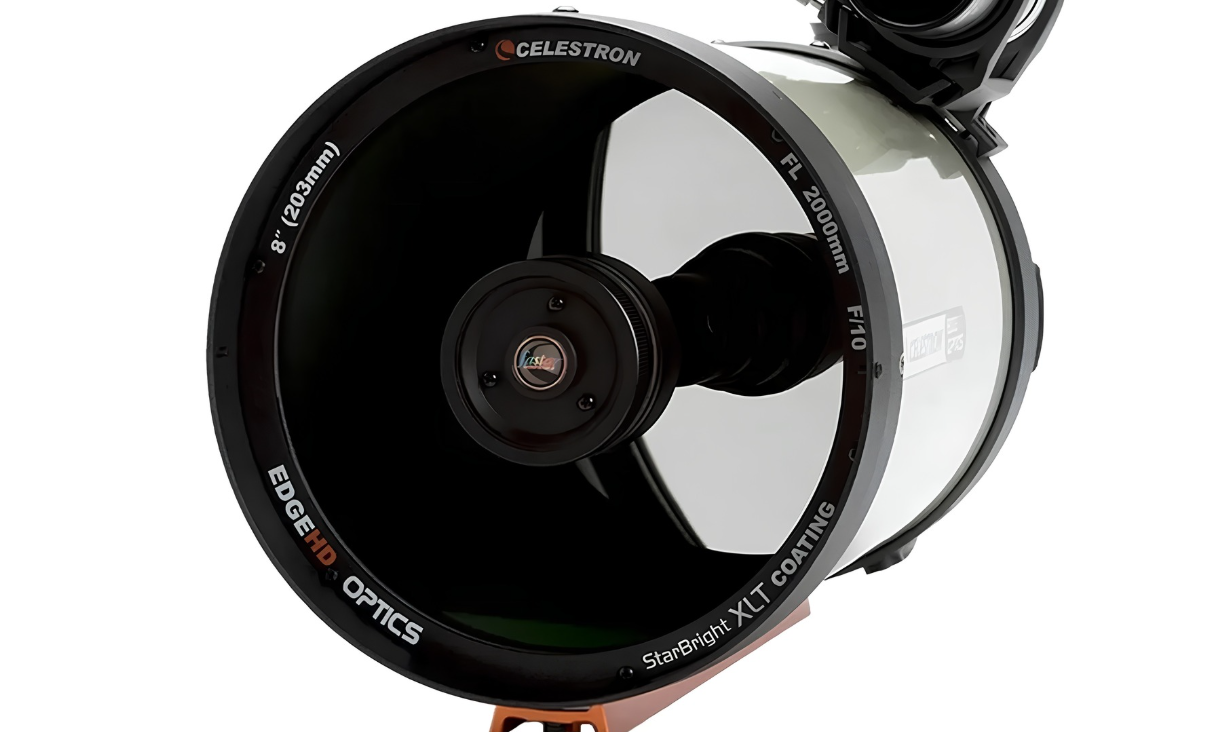
The large 8" aperture gathers plenty of light for detailed planetary, lunar, and deep-sky observing. EdgeHD optics also maintain a flatter field with sharper stars toward the edges for imaging.
Flexible Imaging Speeds
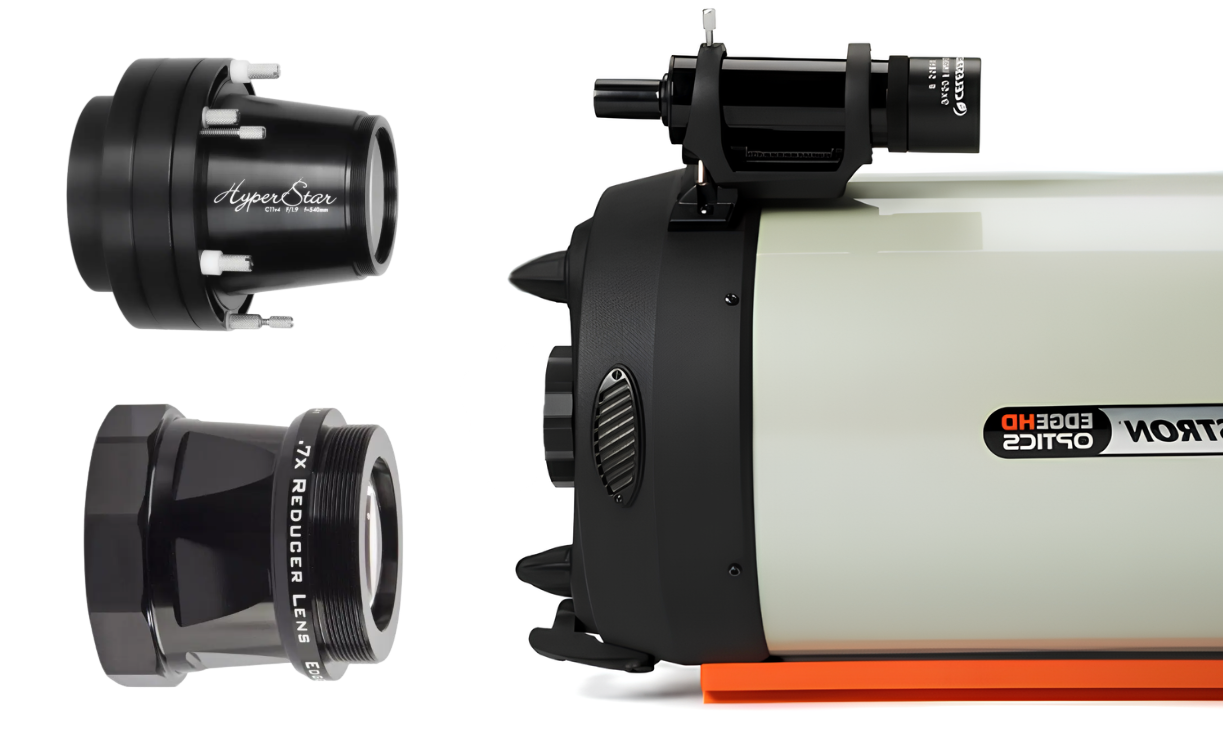
Use the telescope at its native f/10, pair it with an optional reducer for f/7, or add a compatible HyperStar system for ultra-fast f/2 imaging. This gives you more flexibility for different targets and imaging styles.
Imaging-Focused Design
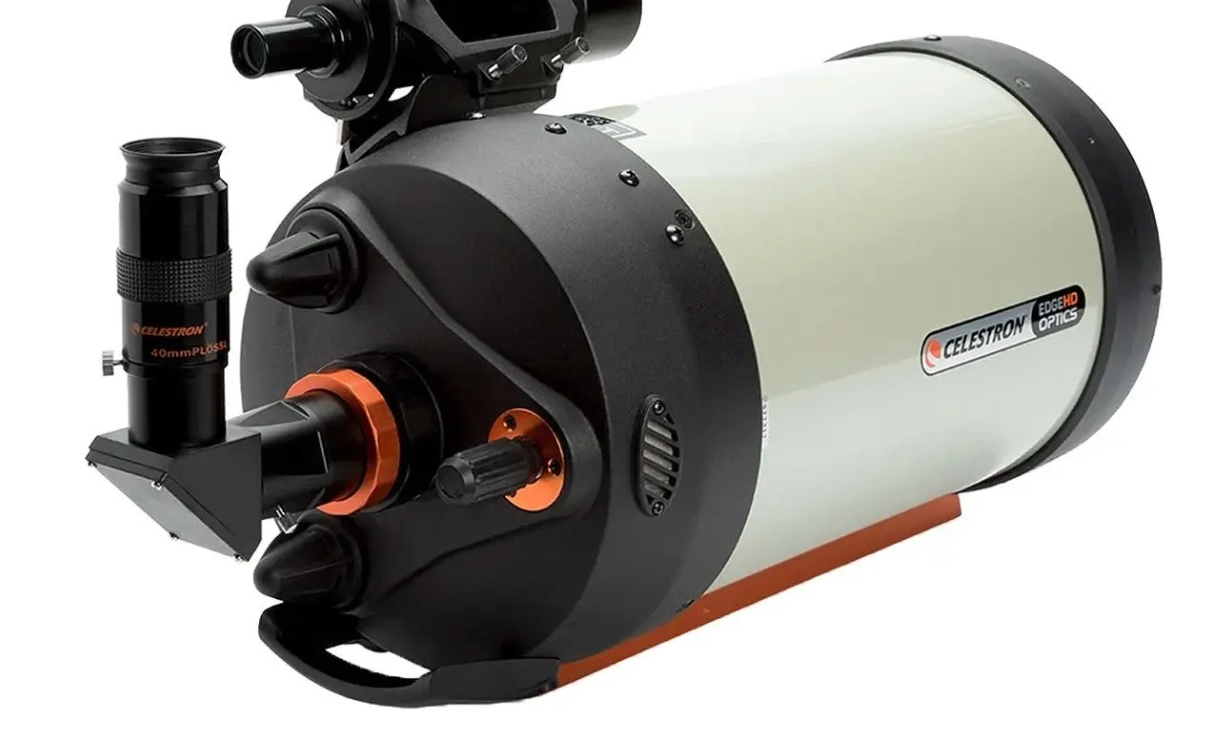
Mirror support locks help reduce movement during long exposures, while 50-micron micromesh filter cooling vents help the optical tube reach ambient temperature faster for more stable imaging sessions.
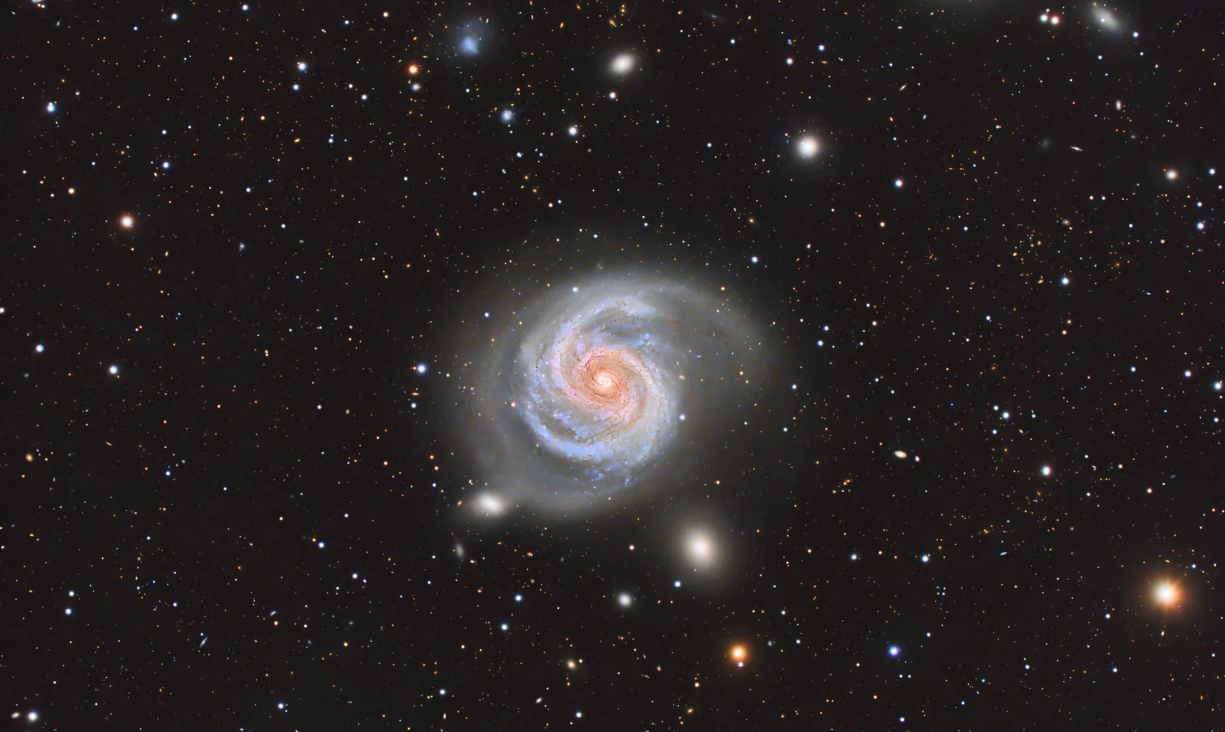
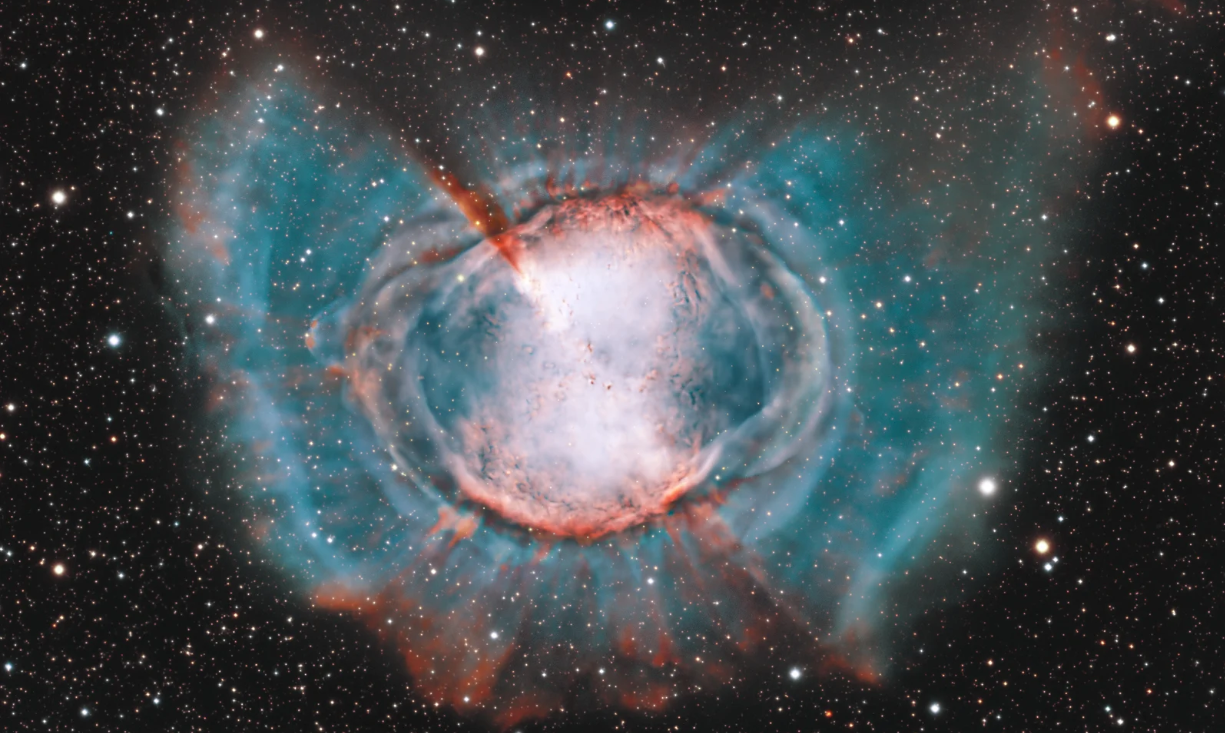
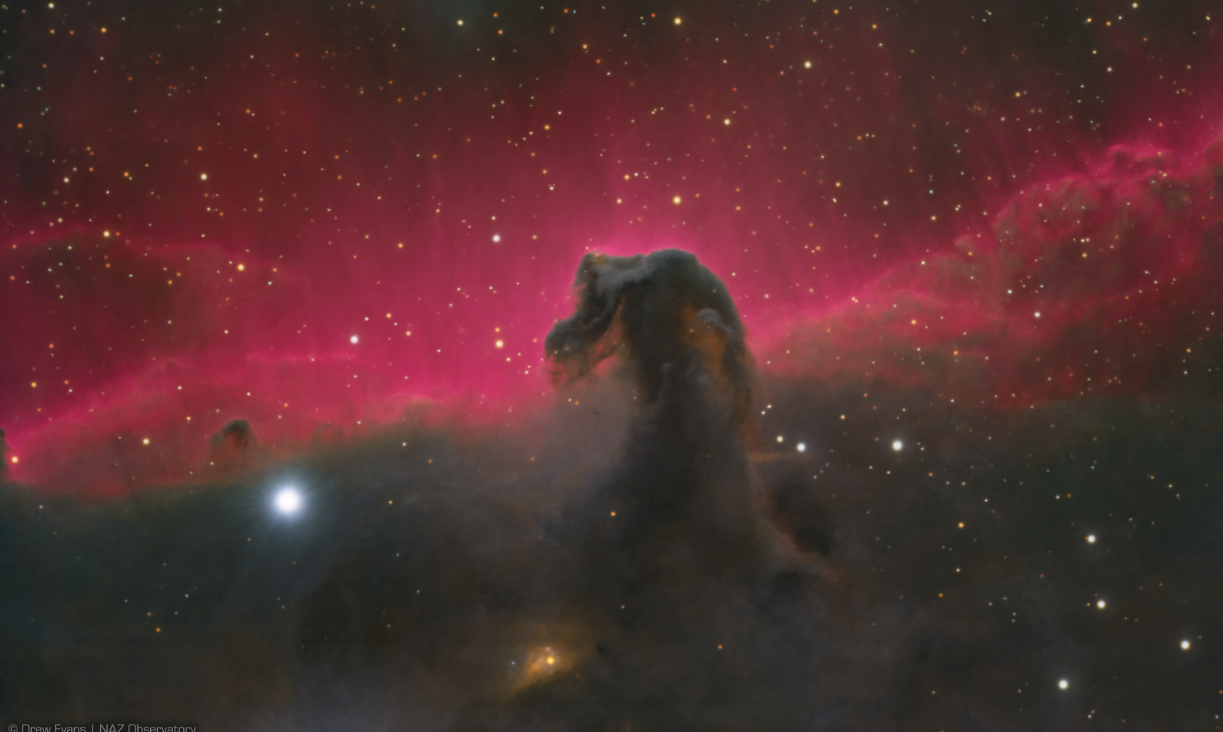
Images Captured with the 11" EdgeHD
M100 (NGC 4321)
The Dumbbell Nebula (M27)
Horsehead Nebula (IC 434)
EdgeHD Aplanatic, Flat-Field Optics
Unlike a traditional Schmidt-Cassegrain, the EdgeHD optical system incorporates corrective optics that reduce field curvature and off-axis coma. This produces tighter, more consistent stars across large imaging sensors and wide-field eyepieces, while Celestron’s StarBright XLT coatings improve overall light transmission.
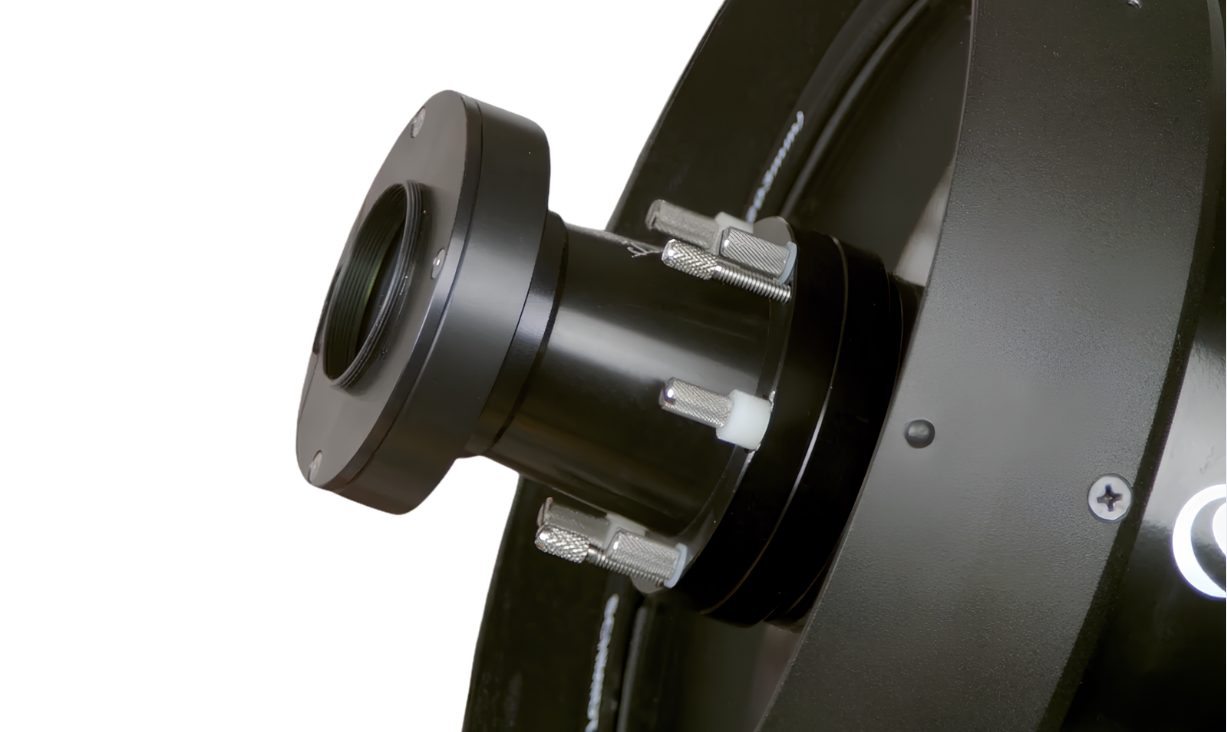
Fastar-Compatible for Ultra-Fast f/2 Imaging
The removable secondary mirror allows it to accept a compatible third-party Fastar/HyperStar lens system for imaging at approximately f/2. This dramatically shortens exposure times and provides a much wider field of view for large nebulae and other extended deep-sky targets. The telescope can also operate at its native f/10 or at f/7 with Celestron’s optional EdgeHD reducer.
Reducers not included and sold separately*
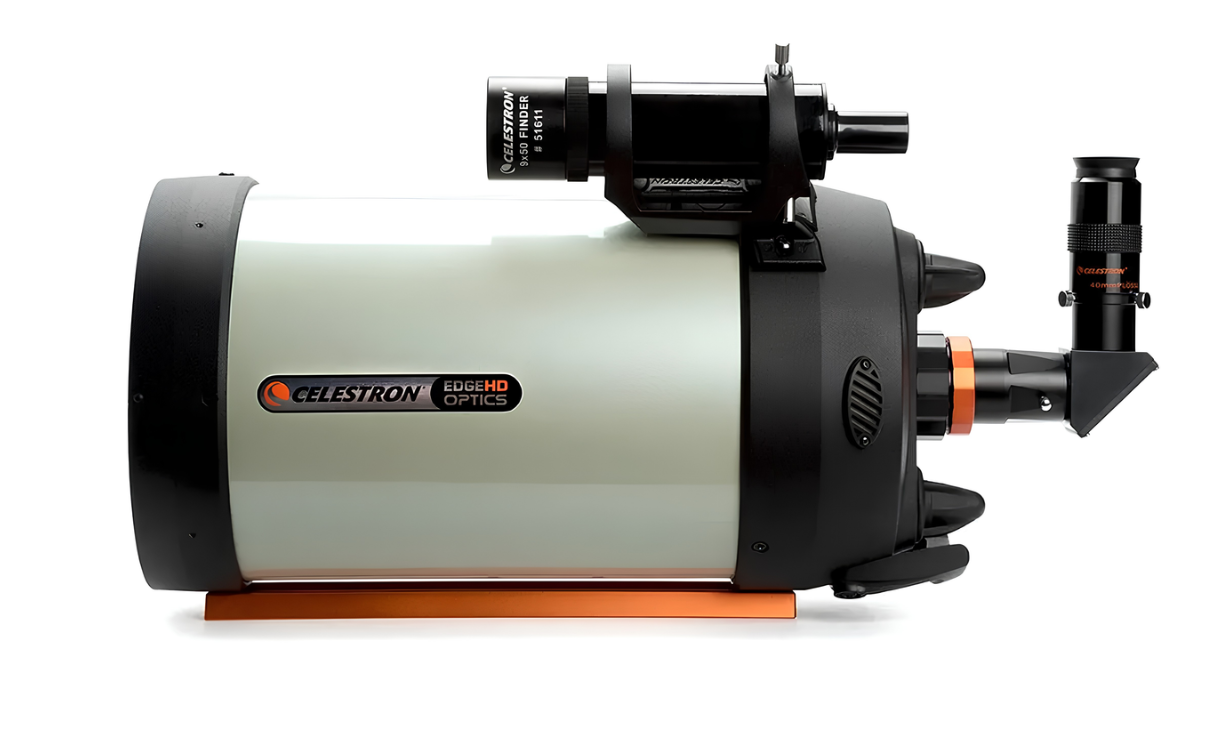
Ready for Visual Observing
The EdgeHD 8" OTA includes a 40mm Plössl 1.25" eyepiece, 1.25" mirror diagonal, and 9x50 finderscope, giving you a capable visual setup right out of the box. The wide-angle Luminos eyepiece pairs especially well with the telescope’s 2032mm native focal length, while the finder makes locating and centering targets easier before moving to higher magnification.
Specifications
- Optical Design: EdgeHD (Flat-Field Schmidt-Cassegrain)
- Aperture: 203.2 mm (8")
- Focal Length: 2032 mm
- Focal Ratio: f/10
- Included Eyepiece: 40 mm (1.57")
- Eyepiece Magnification: 51x
- Finderscope: 9x50
- Star Diagonal: 1.25"
- Optical Tube Material: Aluminum
- Highest Useful Magnification: 480x
- Lowest Useful Magnification: 29x
- Limiting Stellar Magnitude: 14
- Rayleigh Resolution: 0.69 arcsec
- Dawes Resolution: 0.57 arcsec
- Light-Gathering Power: 843x (compared to human eye)
- Image Circle: 42 mm
- Secondary Mirror Obstruction: 64 mm (2.5")
- Secondary Obstruction by Diameter: 31%
- Secondary Obstruction by Area: 9.77%
- Optical Coatings: StarBright XLT
- Optical Tube Length: 432 mm (17")
- Optical Tube Diameter: 238 mm (9.37")
- Optical Tube Weight: 14 lb (6.35 kg)
- Dovetail: CGE Dovetail Bar
Solar Warning:
- Never look directly at the Sun with the naked eye or with an optic (unless you have the proper solar filter). Permanent and irreversible eye damage may result.
- Never use your optic to project an image of the Sun onto any surface. Internal heat build-up can damage the optic and any accessories attached to it.
- Never leave your optic unsupervised. Make sure an adult who is familiar with the correct operating procedures is with your optic at all times, especially when children are present.
Individually Tested:
Every EdgeHD that ships has been tested not only for the surface quality of each optical component, but also with a camera and artificial star to ensure the imaging system meets our rigid quality assurance. This “final acceptance test” confirms the EdgeHD will perform in the field and deliver high-quality astroimages.
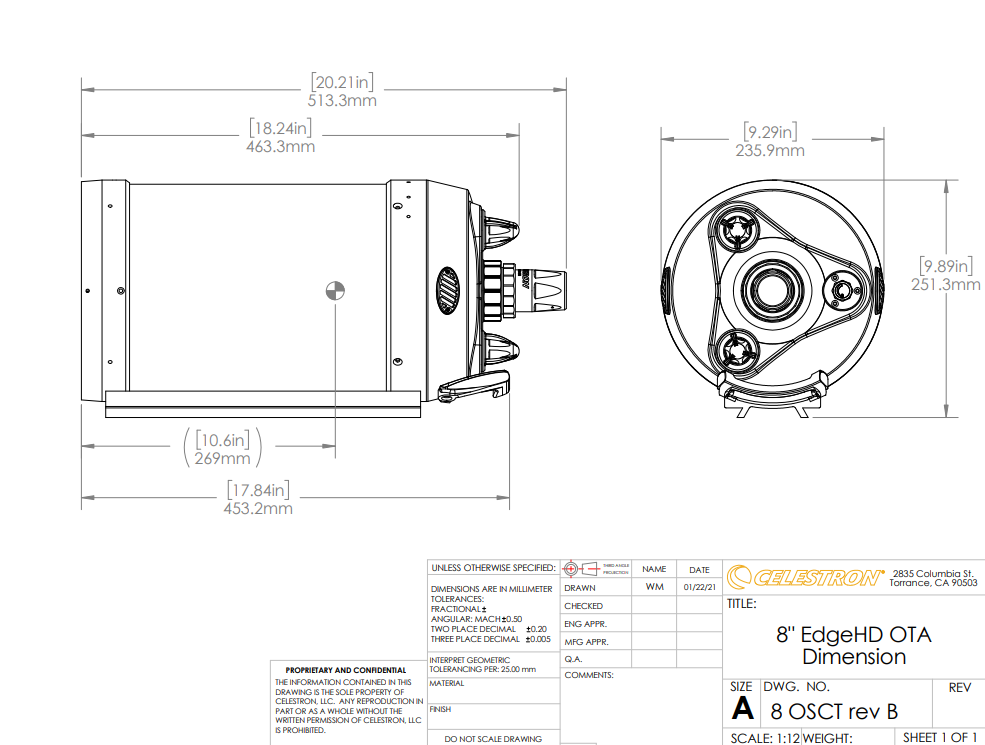
EdgeHD 8" Dimensional Drawing
Frequently Asked Questions
What can I see with the EdgeHD 8"?
With the EdgeHD 8, you can enjoy detailed views of the Moon’s craters and maria, observe planets like Jupiter and Saturn, and explore star clusters, galaxies, and nebulae. Pair it with a dedicated astrophotography camera to capture high-resolution deep-sky images.
Is the EdgeHD 8 beginner-friendly?
Yes. The EdgeHD 8 is a good choice for beginners who want a telescope that can grow with their experience. It is approachable for visual observing while offering the optical performance and versatility needed for more advanced astrophotography.
Do I need a separate mount?
Yes. The EdgeHD 8 is an optical tube assembly (OTA) only, so you’ll need a compatible mount. Equatorial mounts provide precise tracking for astrophotography, while alt-azimuth mounts are well suited for visual observing.
What is Fastar?
Fastar compatibility allows the secondary mirror to be removed and replaced with a compatible HyperStar lens. This converts the telescope to an ultra-fast f/2 imaging system, significantly reducing exposure times and providing a wider field of view for deep-sky astrophotography.
Can I use a DSLR or a dedicated camera?
Yes. The EdgeHD 8 can be paired with DSLR, mirrorless, and dedicated astronomy cameras. Its 42 mm optimized image circle makes it well suited for a variety of imaging sensors and astrophotography configurations.
Does the EdgeHD 8 come with a focal reducer?
No. A focal reducer is not included, but Celestron offers a dedicated 0.7x focal reducer for the EdgeHD 8. It reduces the telescope’s focal length and focal ratio, providing a wider field of view and shorter exposure times for deep-sky imaging.
Is collimation hard?
Collimation is generally straightforward and should only require occasional adjustment. Proper collimation keeps the telescope’s optics aligned for sharp, detailed views and images.
What makes EdgeHD different from a standard SCT?
EdgeHD uses additional corrective optics to provide a flatter, coma-free field compared with a traditional Schmidt-Cassegrain telescope. This helps keep stars sharp and round across a larger portion of the field, making the design especially useful for astrophotography.
How does it stay in focus during long exposures?
The EdgeHD 8 features mirror support knobs that help hold the primary mirror in position during imaging. This reduces mirror movement and image shift during long-exposure astrophotography sessions.
Is the EdgeHD 8 a good long-term telescope?
Yes. Its high-quality optics and compatibility with a wide range of accessories allow the EdgeHD 8 to support visual astronomy, planetary imaging, and deep-sky astrophotography as your setup and experience grow.
What mount is best for the EdgeHD 8?
For astrophotography, a stable equatorial mount with sufficient payload capacity is recommended. Mounts such as the Celestron CGX or Losmandy G11 can support the 14 lb (6.35 kg) OTA along with additional imaging equipment. For visual observing, a compatible alt-azimuth mount can also be used.
Can the EdgeHD 8 be used for planetary imaging?
Yes. Its 2032 mm focal length, 8-inch aperture, and sharp optics make the EdgeHD 8 particularly well suited for high-resolution imaging of Jupiter, Saturn, Mars, the Moon, and other Solar System targets.
How heavy is the EdgeHD 8?
The EdgeHD 8 optical tube assembly weighs approximately 14 lb (6.35 kg), making it relatively portable while still providing the light-gathering capability of an 8-inch aperture.
Does the EdgeHD 8 come with software?
The OTA itself does not include control or imaging software. Software requirements will depend on the mount, camera, guiding system, and other equipment used with the telescope.
Can I use the EdgeHD 8 for visual observing only?
Absolutely. The EdgeHD 8 provides bright, sharp views of the Moon, planets, star clusters, galaxies, nebulae, and other celestial objects. The included eyepiece, diagonal, and finderscope provide the basic accessories needed for visual observing when paired with a compatible mount.
What accessories are recommended for the EdgeHD 8?
Popular accessories include the dedicated 0.7x focal reducer, HyperStar lens, additional eyepieces, filters, off-axis guiders, filter wheels, dedicated astronomy cameras, and a sturdy compatible mount. The best accessories will depend on whether the telescope is primarily used for visual observing or imaging.
How do I maintain the EdgeHD 8?
Store the OTA in a dry, dust-free environment and use protective caps or a case during storage and transport. Check collimation periodically and only clean optical surfaces when necessary using appropriate telescope-optics cleaning methods.
Can I use the EdgeHD 8 for astrophotography with a smartphone?
Yes. A smartphone adapter can be used for basic lunar and planetary imaging through an eyepiece. For deep-sky imaging and higher-resolution astrophotography, a dedicated astronomy camera, DSLR, or mirrorless camera will generally provide better results.
Other Information
- Country of Manufacture: China
- Celestron Warranty: Two-year factory limited warranty (within US/Canada only).
See the Universe in EdgeHD!
EdgeHD is an aplanatic, flat field Schmidt-Cassegrain telescope that produces aberration-free images across a wide visual and photographic field of view. The optical system was designed to reduce more than just off-axis star coma; it also provides an astrograph-quality flat focal plane all the way to the edge of the field of view.
Many optical designs that advertise themselves as "astrographs" actually only produce pinpoint stars across a curved focal plane. While this may be acceptable for some visual observing, stars will appear out of focus at the edge when used with the flat chip sensor of a digital camera. EdgeHD optics produce a focal plane more than three-times flatter than a standard Schmidt-Cassegrain telescope and dramatically flatter than competing coma-free designs. This guarantees you visibly sharp stars across some of the largest CCD chips available today.
Celestron Explores What Sets the EdgeHD Optics Above the Rest!
EdgeHD Imaging Advantages
8" EdgeHD Optics
The large 8" aperture gathers plenty of light for detailed planetary, lunar, and deep-sky observing. EdgeHD optics also maintain a flatter field with sharper stars toward the edges for imaging.
Flexible Imaging Speeds
Use the telescope at its native f/10, pair it with an optional reducer for f/7, or add a compatible HyperStar system for ultra-fast f/2 imaging. This gives you more flexibility for different targets and imaging styles.
Imaging-Focused Design
Mirror support locks help reduce movement during long exposures, while 50-micron micromesh filter cooling vents help the optical tube reach ambient temperature faster for more stable imaging sessions.
Images Captured with the 11" EdgeHD
M100 (NGC 4321)
The Dumbbell Nebula (M27)
Horsehead Nebula (IC 434)
EdgeHD Aplanatic, Flat-Field Optics
Unlike a traditional Schmidt-Cassegrain, the EdgeHD optical system incorporates corrective optics that reduce field curvature and off-axis coma. This produces tighter, more consistent stars across large imaging sensors and wide-field eyepieces, while Celestron’s StarBright XLT coatings improve overall light transmission.
Fastar-Compatible for Ultra-Fast f/2 Imaging
The removable secondary mirror allows it to accept a compatible third-party Fastar/HyperStar lens system for imaging at approximately f/2. This dramatically shortens exposure times and provides a much wider field of view for large nebulae and other extended deep-sky targets. The telescope can also operate at its native f/10 or at f/7 with Celestron’s optional EdgeHD reducer.
Reducers not included and sold separately*
Ready for Visual Observing
The EdgeHD 8" OTA includes a 40mm Plössl 1.25" eyepiece, 1.25" mirror diagonal, and 9x50 finderscope, giving you a capable visual setup right out of the box. The wide-angle Luminos eyepiece pairs especially well with the telescope’s 2032mm native focal length, while the finder makes locating and centering targets easier before moving to higher magnification.
Specifications
- Optical Design: EdgeHD (Flat-Field Schmidt-Cassegrain)
- Aperture: 203.2 mm (8")
- Focal Length: 2032 mm
- Focal Ratio: f/10
- Included Eyepiece: 40 mm (1.57")
- Eyepiece Magnification: 51x
- Finderscope: 9x50
- Star Diagonal: 1.25"
- Optical Tube Material: Aluminum
- Highest Useful Magnification: 480x
- Lowest Useful Magnification: 29x
- Limiting Stellar Magnitude: 14
- Rayleigh Resolution: 0.69 arcsec
- Dawes Resolution: 0.57 arcsec
- Light-Gathering Power: 843x (compared to human eye)
- Image Circle: 42 mm
- Secondary Mirror Obstruction: 64 mm (2.5")
- Secondary Obstruction by Diameter: 31%
- Secondary Obstruction by Area: 9.77%
- Optical Coatings: StarBright XLT
- Optical Tube Length: 432 mm (17")
- Optical Tube Diameter: 238 mm (9.37")
- Optical Tube Weight: 14 lb (6.35 kg)
- Dovetail: CGE Dovetail Bar
Solar Warning:
- Never look directly at the Sun with the naked eye or with an optic (unless you have the proper solar filter). Permanent and irreversible eye damage may result.
- Never use your optic to project an image of the Sun onto any surface. Internal heat build-up can damage the optic and any accessories attached to it.
- Never leave your optic unsupervised. Make sure an adult who is familiar with the correct operating procedures is with your optic at all times, especially when children are present.
Individually Tested:
Every EdgeHD that ships has been tested not only for the surface quality of each optical component, but also with a camera and artificial star to ensure the imaging system meets our rigid quality assurance. This “final acceptance test” confirms the EdgeHD will perform in the field and deliver high-quality astroimages.
EdgeHD 8" Dimensional Drawing
Frequently Asked Questions
What can I see with the EdgeHD 8"?
With the EdgeHD 8, you can enjoy detailed views of the Moon’s craters and maria, observe planets like Jupiter and Saturn, and explore star clusters, galaxies, and nebulae. Pair it with a dedicated astrophotography camera to capture high-resolution deep-sky images.
Is the EdgeHD 8 beginner-friendly?
Yes. The EdgeHD 8 is a good choice for beginners who want a telescope that can grow with their experience. It is approachable for visual observing while offering the optical performance and versatility needed for more advanced astrophotography.
Do I need a separate mount?
Yes. The EdgeHD 8 is an optical tube assembly (OTA) only, so you’ll need a compatible mount. Equatorial mounts provide precise tracking for astrophotography, while alt-azimuth mounts are well suited for visual observing.
What is Fastar?
Fastar compatibility allows the secondary mirror to be removed and replaced with a compatible HyperStar lens. This converts the telescope to an ultra-fast f/2 imaging system, significantly reducing exposure times and providing a wider field of view for deep-sky astrophotography.
Can I use a DSLR or a dedicated camera?
Yes. The EdgeHD 8 can be paired with DSLR, mirrorless, and dedicated astronomy cameras. Its 42 mm optimized image circle makes it well suited for a variety of imaging sensors and astrophotography configurations.
Does the EdgeHD 8 come with a focal reducer?
No. A focal reducer is not included, but Celestron offers a dedicated 0.7x focal reducer for the EdgeHD 8. It reduces the telescope’s focal length and focal ratio, providing a wider field of view and shorter exposure times for deep-sky imaging.
Is collimation hard?
Collimation is generally straightforward and should only require occasional adjustment. Proper collimation keeps the telescope’s optics aligned for sharp, detailed views and images.
What makes EdgeHD different from a standard SCT?
EdgeHD uses additional corrective optics to provide a flatter, coma-free field compared with a traditional Schmidt-Cassegrain telescope. This helps keep stars sharp and round across a larger portion of the field, making the design especially useful for astrophotography.
How does it stay in focus during long exposures?
The EdgeHD 8 features mirror support knobs that help hold the primary mirror in position during imaging. This reduces mirror movement and image shift during long-exposure astrophotography sessions.
Is the EdgeHD 8 a good long-term telescope?
Yes. Its high-quality optics and compatibility with a wide range of accessories allow the EdgeHD 8 to support visual astronomy, planetary imaging, and deep-sky astrophotography as your setup and experience grow.
What mount is best for the EdgeHD 8?
For astrophotography, a stable equatorial mount with sufficient payload capacity is recommended. Mounts such as the Celestron CGX or Losmandy G11 can support the 14 lb (6.35 kg) OTA along with additional imaging equipment. For visual observing, a compatible alt-azimuth mount can also be used.
Can the EdgeHD 8 be used for planetary imaging?
Yes. Its 2032 mm focal length, 8-inch aperture, and sharp optics make the EdgeHD 8 particularly well suited for high-resolution imaging of Jupiter, Saturn, Mars, the Moon, and other Solar System targets.
How heavy is the EdgeHD 8?
The EdgeHD 8 optical tube assembly weighs approximately 14 lb (6.35 kg), making it relatively portable while still providing the light-gathering capability of an 8-inch aperture.
Does the EdgeHD 8 come with software?
The OTA itself does not include control or imaging software. Software requirements will depend on the mount, camera, guiding system, and other equipment used with the telescope.
Can I use the EdgeHD 8 for visual observing only?
Absolutely. The EdgeHD 8 provides bright, sharp views of the Moon, planets, star clusters, galaxies, nebulae, and other celestial objects. The included eyepiece, diagonal, and finderscope provide the basic accessories needed for visual observing when paired with a compatible mount.
What accessories are recommended for the EdgeHD 8?
Popular accessories include the dedicated 0.7x focal reducer, HyperStar lens, additional eyepieces, filters, off-axis guiders, filter wheels, dedicated astronomy cameras, and a sturdy compatible mount. The best accessories will depend on whether the telescope is primarily used for visual observing or imaging.
How do I maintain the EdgeHD 8?
Store the OTA in a dry, dust-free environment and use protective caps or a case during storage and transport. Check collimation periodically and only clean optical surfaces when necessary using appropriate telescope-optics cleaning methods.
Can I use the EdgeHD 8 for astrophotography with a smartphone?
Yes. A smartphone adapter can be used for basic lunar and planetary imaging through an eyepiece. For deep-sky imaging and higher-resolution astrophotography, a dedicated astronomy camera, DSLR, or mirrorless camera will generally provide better results.
-
1x Celestron EdgeHD 8" Optical Tube Assembly (OTA)
-
1x CGE (Losmandy-style) Dovetail Bar
-
1x 9x50 Finderscope
-
1x 1.25" Star Diagonal
-
1x 40 mm Plössl Eyepiece (1.25")
-
1x Dust Covers
-
1x Quick Start Guide

- 8" EdgeHD Schmidt-Cassegrain Telescope (SCT)
- Native f/10 focal ratio with 2032mm focal length
- Flat, coma-free imaging
- Built-in Fastar system = HyperStar-compatible
- StarBright XLT optical coating
- Includes mirror locks and cooling vents
- Compact, 14 lb OTA with CGE/Losmandy dovetail
- Includes 9×50 finder, 40 mm eyepiece, and 1.25" diagonal
See the Universe in EdgeHD!
EdgeHD is an aplanatic, flat field Schmidt-Cassegrain telescope that produces aberration-free images across a wide visual and photographic field of view. The optical system was designed to reduce more than just off-axis star coma; it also provides an astrograph-quality flat focal plane all the way to the edge of the field of view.
Many optical designs that advertise themselves as "astrographs" actually only produce pinpoint stars across a curved focal plane. While this may be acceptable for some visual observing, stars will appear out of focus at the edge when used with the flat chip sensor of a digital camera. EdgeHD optics produce a focal plane more than three-times flatter than a standard Schmidt-Cassegrain telescope and dramatically flatter than competing coma-free designs. This guarantees you visibly sharp stars across some of the largest CCD chips available today.
Celestron Explores What Sets the EdgeHD Optics Above the Rest!
EdgeHD Imaging Advantages
8" EdgeHD Optics
The large 8" aperture gathers plenty of light for detailed planetary, lunar, and deep-sky observing. EdgeHD optics also maintain a flatter field with sharper stars toward the edges for imaging.
Flexible Imaging Speeds
Use the telescope at its native f/10, pair it with an optional reducer for f/7, or add a compatible HyperStar system for ultra-fast f/2 imaging. This gives you more flexibility for different targets and imaging styles.
Imaging-Focused Design
Mirror support locks help reduce movement during long exposures, while 50-micron micromesh filter cooling vents help the optical tube reach ambient temperature faster for more stable imaging sessions.
Images Captured with the 11" EdgeHD
M100 (NGC 4321)
The Dumbbell Nebula (M27)
Horsehead Nebula (IC 434)
EdgeHD Aplanatic, Flat-Field Optics
Unlike a traditional Schmidt-Cassegrain, the EdgeHD optical system incorporates corrective optics that reduce field curvature and off-axis coma. This produces tighter, more consistent stars across large imaging sensors and wide-field eyepieces, while Celestron’s StarBright XLT coatings improve overall light transmission.
Fastar-Compatible for Ultra-Fast f/2 Imaging
The removable secondary mirror allows it to accept a compatible third-party Fastar/HyperStar lens system for imaging at approximately f/2. This dramatically shortens exposure times and provides a much wider field of view for large nebulae and other extended deep-sky targets. The telescope can also operate at its native f/10 or at f/7 with Celestron’s optional EdgeHD reducer.
Reducers not included and sold separately*
Ready for Visual Observing
The EdgeHD 8" OTA includes a 40mm Plössl 1.25" eyepiece, 1.25" mirror diagonal, and 9x50 finderscope, giving you a capable visual setup right out of the box. The wide-angle Luminos eyepiece pairs especially well with the telescope’s 2032mm native focal length, while the finder makes locating and centering targets easier before moving to higher magnification.
Specifications
- Optical Design: EdgeHD (Flat-Field Schmidt-Cassegrain)
- Aperture: 203.2 mm (8")
- Focal Length: 2032 mm
- Focal Ratio: f/10
- Included Eyepiece: 40 mm (1.57")
- Eyepiece Magnification: 51x
- Finderscope: 9x50
- Star Diagonal: 1.25"
- Optical Tube Material: Aluminum
- Highest Useful Magnification: 480x
- Lowest Useful Magnification: 29x
- Limiting Stellar Magnitude: 14
- Rayleigh Resolution: 0.69 arcsec
- Dawes Resolution: 0.57 arcsec
- Light-Gathering Power: 843x (compared to human eye)
- Image Circle: 42 mm
- Secondary Mirror Obstruction: 64 mm (2.5")
- Secondary Obstruction by Diameter: 31%
- Secondary Obstruction by Area: 9.77%
- Optical Coatings: StarBright XLT
- Optical Tube Length: 432 mm (17")
- Optical Tube Diameter: 238 mm (9.37")
- Optical Tube Weight: 14 lb (6.35 kg)
- Dovetail: CGE Dovetail Bar
Solar Warning:
- Never look directly at the Sun with the naked eye or with an optic (unless you have the proper solar filter). Permanent and irreversible eye damage may result.
- Never use your optic to project an image of the Sun onto any surface. Internal heat build-up can damage the optic and any accessories attached to it.
- Never leave your optic unsupervised. Make sure an adult who is familiar with the correct operating procedures is with your optic at all times, especially when children are present.
Individually Tested:
Every EdgeHD that ships has been tested not only for the surface quality of each optical component, but also with a camera and artificial star to ensure the imaging system meets our rigid quality assurance. This “final acceptance test” confirms the EdgeHD will perform in the field and deliver high-quality astroimages.
EdgeHD 8" Dimensional Drawing
Frequently Asked Questions
What can I see with the EdgeHD 8"?
With the EdgeHD 8, you can enjoy detailed views of the Moon’s craters and maria, observe planets like Jupiter and Saturn, and explore star clusters, galaxies, and nebulae. Pair it with a dedicated astrophotography camera to capture high-resolution deep-sky images.
Is the EdgeHD 8 beginner-friendly?
Yes. The EdgeHD 8 is a good choice for beginners who want a telescope that can grow with their experience. It is approachable for visual observing while offering the optical performance and versatility needed for more advanced astrophotography.
Do I need a separate mount?
Yes. The EdgeHD 8 is an optical tube assembly (OTA) only, so you’ll need a compatible mount. Equatorial mounts provide precise tracking for astrophotography, while alt-azimuth mounts are well suited for visual observing.
What is Fastar?
Fastar compatibility allows the secondary mirror to be removed and replaced with a compatible HyperStar lens. This converts the telescope to an ultra-fast f/2 imaging system, significantly reducing exposure times and providing a wider field of view for deep-sky astrophotography.
Can I use a DSLR or a dedicated camera?
Yes. The EdgeHD 8 can be paired with DSLR, mirrorless, and dedicated astronomy cameras. Its 42 mm optimized image circle makes it well suited for a variety of imaging sensors and astrophotography configurations.
Does the EdgeHD 8 come with a focal reducer?
No. A focal reducer is not included, but Celestron offers a dedicated 0.7x focal reducer for the EdgeHD 8. It reduces the telescope’s focal length and focal ratio, providing a wider field of view and shorter exposure times for deep-sky imaging.
Is collimation hard?
Collimation is generally straightforward and should only require occasional adjustment. Proper collimation keeps the telescope’s optics aligned for sharp, detailed views and images.
What makes EdgeHD different from a standard SCT?
EdgeHD uses additional corrective optics to provide a flatter, coma-free field compared with a traditional Schmidt-Cassegrain telescope. This helps keep stars sharp and round across a larger portion of the field, making the design especially useful for astrophotography.
How does it stay in focus during long exposures?
The EdgeHD 8 features mirror support knobs that help hold the primary mirror in position during imaging. This reduces mirror movement and image shift during long-exposure astrophotography sessions.
Is the EdgeHD 8 a good long-term telescope?
Yes. Its high-quality optics and compatibility with a wide range of accessories allow the EdgeHD 8 to support visual astronomy, planetary imaging, and deep-sky astrophotography as your setup and experience grow.
What mount is best for the EdgeHD 8?
For astrophotography, a stable equatorial mount with sufficient payload capacity is recommended. Mounts such as the Celestron CGX or Losmandy G11 can support the 14 lb (6.35 kg) OTA along with additional imaging equipment. For visual observing, a compatible alt-azimuth mount can also be used.
Can the EdgeHD 8 be used for planetary imaging?
Yes. Its 2032 mm focal length, 8-inch aperture, and sharp optics make the EdgeHD 8 particularly well suited for high-resolution imaging of Jupiter, Saturn, Mars, the Moon, and other Solar System targets.
How heavy is the EdgeHD 8?
The EdgeHD 8 optical tube assembly weighs approximately 14 lb (6.35 kg), making it relatively portable while still providing the light-gathering capability of an 8-inch aperture.
Does the EdgeHD 8 come with software?
The OTA itself does not include control or imaging software. Software requirements will depend on the mount, camera, guiding system, and other equipment used with the telescope.
Can I use the EdgeHD 8 for visual observing only?
Absolutely. The EdgeHD 8 provides bright, sharp views of the Moon, planets, star clusters, galaxies, nebulae, and other celestial objects. The included eyepiece, diagonal, and finderscope provide the basic accessories needed for visual observing when paired with a compatible mount.
What accessories are recommended for the EdgeHD 8?
Popular accessories include the dedicated 0.7x focal reducer, HyperStar lens, additional eyepieces, filters, off-axis guiders, filter wheels, dedicated astronomy cameras, and a sturdy compatible mount. The best accessories will depend on whether the telescope is primarily used for visual observing or imaging.
How do I maintain the EdgeHD 8?
Store the OTA in a dry, dust-free environment and use protective caps or a case during storage and transport. Check collimation periodically and only clean optical surfaces when necessary using appropriate telescope-optics cleaning methods.
Can I use the EdgeHD 8 for astrophotography with a smartphone?
Yes. A smartphone adapter can be used for basic lunar and planetary imaging through an eyepiece. For deep-sky imaging and higher-resolution astrophotography, a dedicated astronomy camera, DSLR, or mirrorless camera will generally provide better results.
Other Information
- Country of Manufacture: China
- Celestron Warranty: Two-year factory limited warranty (within US/Canada only).
| Telescope Focal Length | 2001 - 2500mm |
|---|
-
1x Celestron EdgeHD 8" Optical Tube Assembly (OTA)
-
1x CGE (Losmandy-style) Dovetail Bar
-
1x 9x50 Finderscope
-
1x 1.25" Star Diagonal
-
1x 40 mm Plössl Eyepiece (1.25")
-
1x Dust Covers
-
1x Quick Start Guide

Celestron 8" EdgeHD 800 Schmidt-Cassegrain Telescope OTA