

Exploring the Night Sky with Binoculars (by David Chandler)
Stock count is accurate & shown in real time.
- This item is out of stock.
- Sign up for back-in-stock alerts to be notified when this item becomes available (account login required).
- This item is out of stock.
- Sign up for back-in-stock alerts to be notified when this item becomes available (account login required).
Contiguous US / Lower 48:
Free shipping applies to orders over $50 using our chosen carrier/method. Faster paid options are available at checkout.
Alaska, Hawaii & US Territories:
Free shipping applies to many—but not all—products. Enter your ZIP code in cart or upon checkout to confirm options and costs.
International:
International orders do not qualify for free shipping. Shipping, duties, brokerage, tariffs, and taxes are the customer’s responsibility. Some items may be restricted due to export, size, or manufacturer limitations.
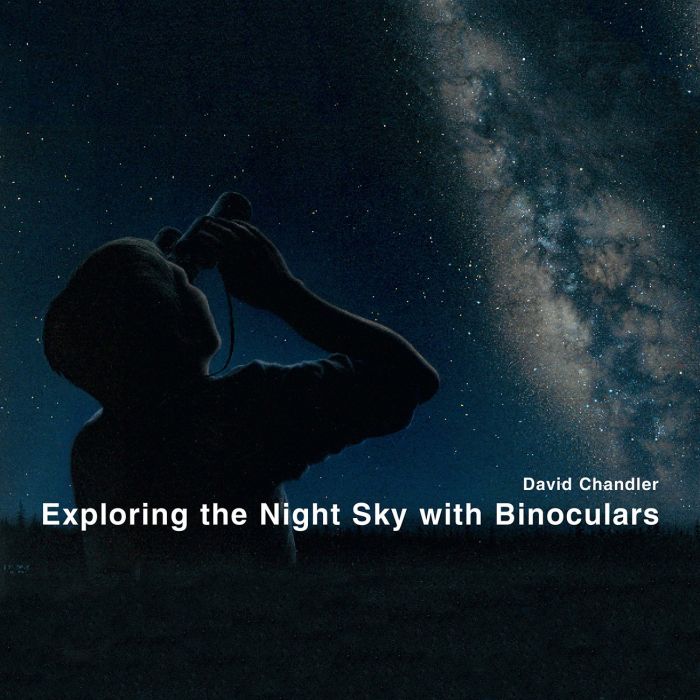
Exploring the Night Sky with Binoculars was written to be a companion handbook for The Night Sky Planisphere, serving as a general introduction to observational astronomy. It covers both what can be seen in the sky and the significance of what is seen. Although it was not written explicitly for children, it received honorable mention in the New York Academy of Sciences Children's Science Book Awards (older children's division). It is beautifully illustrated with specially commissioned artwork by Don Davis, one of the leading space artists today. Besides being a starter book for beginners, it is used in a number of colleges as a textbook supplement for the first-week's reading assignment!
From the creator of what I consider to be the best planisphere available (The Night Sky), comes Exploring the Night Sky with Binoculars, a companion to that star dial. Taken together, the two items - plus a pair of binoculars - constitute the best introduction to observational astronomy you could ask for." - Astronomy Magazine
The Illustrations Are as Important as the Text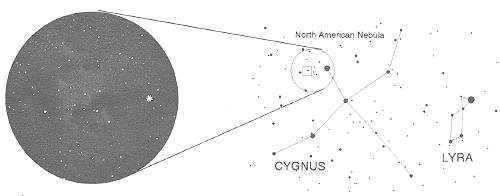
The artwork of Don Davis, commissioned especially for this book, is not just an attempt to "approximate" photography. it represents what is seen to the eye better than any photograph. Shown here is the subtle glow of the "North American Nebula" approximating very well what is actually seen in binoculars. This is one of the most challenging objects presented in the book, but a very satisfying object to see with ones own eyes. Photographs show this to be a spectacular nebula, but they can mislead a visual observer, especially a beginner. What can be perceived visually are subtle "variations in the blackness."
Other Information
- Country of Manufacture: China
Exploring the Night Sky with Binoculars was written to be a companion handbook for The Night Sky Planisphere, serving as a general introduction to observational astronomy. It covers both what can be seen in the sky and the significance of what is seen. Although it was not written explicitly for children, it received honorable mention in the New York Academy of Sciences Children's Science Book Awards (older children's division). It is beautifully illustrated with specially commissioned artwork by Don Davis, one of the leading space artists today. Besides being a starter book for beginners, it is used in a number of colleges as a textbook supplement for the first-week's reading assignment!
From the creator of what I consider to be the best planisphere available (The Night Sky), comes Exploring the Night Sky with Binoculars, a companion to that star dial. Taken together, the two items - plus a pair of binoculars - constitute the best introduction to observational astronomy you could ask for." - Astronomy Magazine
The Illustrations Are as Important as the Text
The artwork of Don Davis, commissioned especially for this book, is not just an attempt to "approximate" photography. it represents what is seen to the eye better than any photograph. Shown here is the subtle glow of the "North American Nebula" approximating very well what is actually seen in binoculars. This is one of the most challenging objects presented in the book, but a very satisfying object to see with ones own eyes. Photographs show this to be a spectacular nebula, but they can mislead a visual observer, especially a beginner. What can be perceived visually are subtle "variations in the blackness."
Exploring the Night Sky with Binoculars was written to be a companion handbook for The Night Sky Planisphere, serving as a general introduction to observational astronomy. It covers both what can be seen in the sky and the significance of what is seen. Although it was not written explicitly for children, it received honorable mention in the New York Academy of Sciences Children's Science Book Awards (older children's division). It is beautifully illustrated with specially commissioned artwork by Don Davis, one of the leading space artists today. Besides being a starter book for beginners, it is used in a number of colleges as a textbook supplement for the first-week's reading assignment!
From the creator of what I consider to be the best planisphere available (The Night Sky), comes Exploring the Night Sky with Binoculars, a companion to that star dial. Taken together, the two items - plus a pair of binoculars - constitute the best introduction to observational astronomy you could ask for." - Astronomy Magazine
The Illustrations Are as Important as the Text
The artwork of Don Davis, commissioned especially for this book, is not just an attempt to "approximate" photography. it represents what is seen to the eye better than any photograph. Shown here is the subtle glow of the "North American Nebula" approximating very well what is actually seen in binoculars. This is one of the most challenging objects presented in the book, but a very satisfying object to see with ones own eyes. Photographs show this to be a spectacular nebula, but they can mislead a visual observer, especially a beginner. What can be perceived visually are subtle "variations in the blackness."
Other Information
- Country of Manufacture: China

Exploring the Night Sky with Binoculars (by David Chandler)