

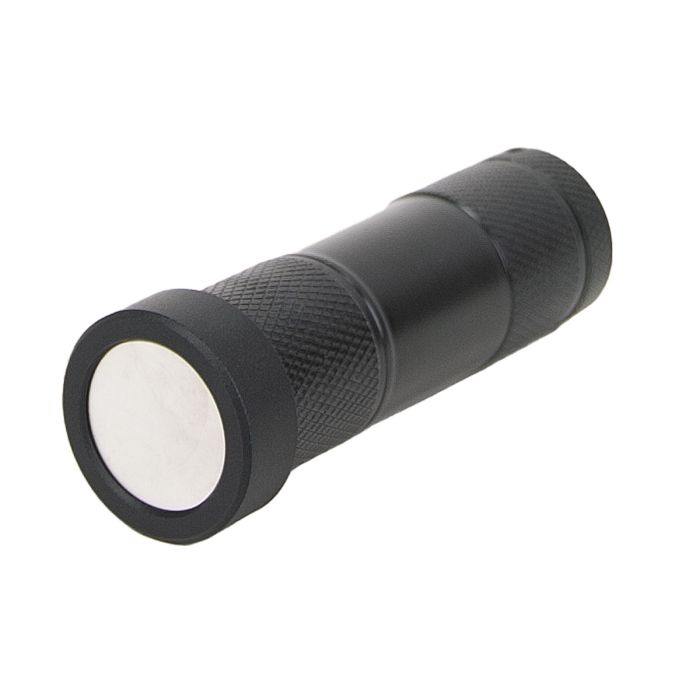
Hubble Optics 5-Star Artificial Star for Testing and Collimating Telescopes
Stock count is accurate & shown in real time.
- This item is out of stock.
- Sign up for back-in-stock alerts to be notified when this item becomes available (account login required).
- This item is out of stock.
- Sign up for back-in-stock alerts to be notified when this item becomes available (account login required).
Contiguous US / Lower 48:
Free shipping applies to orders over $50 using our chosen carrier/method. Faster paid options are available at checkout.
Alaska, Hawaii & US Territories:
Free shipping applies to many—but not all—products. Enter your ZIP code in cart or upon checkout to confirm options and costs.
International:
International orders do not qualify for free shipping. Shipping, duties, brokerage, tariffs, and taxes are the customer’s responsibility. Some items may be restricted due to export, size, or manufacturer limitations.
The star test is the ultimate method to test and collimate your telescopes. The most and very much the only difficult part of doing the star test is that you need a star. Sadly, a real star is not always available, and you really may not want to spend your precious observation time doing a star test even when it is available. Of course, you will also need a good tracking system for doing a star test with the moving star. After all the trouble, due to turbulence, the real star may not even reveal the true quality of your telescopes or give you perfect collimation.
An artificial star will provide you with an excellent alternative means to do the star test anytime and anywhere you want, without all the drawbacks of real stars. However, the problem with artificial star testing is that you really need different sizes of artificial stars for different telescopes of different apertures with different F/#, and even for the same telescopes but at different distances, and under different lighting conditions.
The innovative Hubble 5-star Artificial Star is a perfect solution to this problem. It has 6 bright white LEDs with 5 precision pinholes (50/100/150/200/250 microns). It will enable you to test practically all telescopes of different apertures with different F/#s, from any reasonable distances needed, and under different lighting conditions.
- You can instantly find out which star is best for your particular telescope at that particular distance under that particular lighting environment by simply choosing the smallest possible star, but which still gives you a clear defocused image
- You can mask out any 4 of the 5 stars with a provided magnetic mask.
With the Hubble Optics 5-star Artificial Star, telescopes are truly easy to test and collimate!
- Please expose the mask only while star testing. Keep it clean to prevent the blockage of pinholes.
- The unit should be kept in a clean Ziploc bag when not in use, separated from the magnetic mask.
- 3 AAA batteries are required and are not included.
Is this just a flashlight with holes poked in it?
Over the years, a number of customers have commented that this is simply a cheap flashlight with holes poked in it, implying that this would be something easy to replicate at a much lower cost. While this is indeed a very cheap flashlight and the magnetic mask might barely hold, the value of this item is not in the flashlight or the mask but entirely in the metal (steel) mask in which the precision pinholes are 0.05 to 0.25mm in diameter. You cannot simply take a pin and poke holes in a paper or plastic substrate to get anything remotely this small and accurate. We once had a US supplier provide us with a quote for the pinhole mask provided in this artificial star. The price they quoted was $80 for each single mask!
If you want something more robust, there are a couple of other offerings on the market costing over $100 each and having a single pinhole size.
Please note: It is common for the pinhole mask to have one or more scuff marks on its surface, as shown in the 3rd product photo above. This is purely cosmetic.
Useful Resources
- Please note that no instruction manual is included with this item. A number of very useful resources are listed below (especially the FAQ in the next bullet). You can find additional resources online that explain star testing. Another excellent reference is Harold Suiter's book Star Testing Astronomical Telescopes.
- FAQ: Artificial Star FAQ (PDF format, 469KB)
- Product Review: Astronomy Technology Today Review (PDF format, 1.3MB)
- Guide: Telescope Collimation via Star Test by Thierry Legault
- Resource: Aberrator, an useful star test simulator by Cor Berrevoets
- Article: SCT Collimation Under Adverse Circumstances by Greg Nowell
- Product Review: By Bill Faatz
- Product Review: By Steve Bennetsen
- Product Review: Japanese User Dyna_Crew Part 1 / Part 2
- Guide: The Easy Way to Align Your Telescope's Optics by Derek Wallenstein
Other Information
- Country of Manufacture: China
The star test is the ultimate method to test and collimate your telescopes. The most and very much the only difficult part of doing the star test is that you need a star. Sadly, a real star is not always available, and you really may not want to spend your precious observation time doing a star test even when it is available. Of course, you will also need a good tracking system for doing a star test with the moving star. After all the trouble, due to turbulence, the real star may not even reveal the true quality of your telescopes or give you perfect collimation.
An artificial star will provide you with an excellent alternative means to do the star test anytime and anywhere you want, without all the drawbacks of real stars. However, the problem with artificial star testing is that you really need different sizes of artificial stars for different telescopes of different apertures with different F/#, and even for the same telescopes but at different distances, and under different lighting conditions.
The innovative Hubble 5-star Artificial Star is a perfect solution to this problem. It has 6 bright white LEDs with 5 precision pinholes (50/100/150/200/250 microns). It will enable you to test practically all telescopes of different apertures with different F/#s, from any reasonable distances needed, and under different lighting conditions.
- You can instantly find out which star is best for your particular telescope at that particular distance under that particular lighting environment by simply choosing the smallest possible star, but which still gives you a clear defocused image
- You can mask out any 4 of the 5 stars with a provided magnetic mask.
With the Hubble Optics 5-star Artificial Star, telescopes are truly easy to test and collimate!
- Please expose the mask only while star testing. Keep it clean to prevent the blockage of pinholes.
- The unit should be kept in a clean Ziploc bag when not in use, separated from the magnetic mask.
- 3 AAA batteries are required and are not included.
Is this just a flashlight with holes poked in it?
Over the years, a number of customers have commented that this is simply a cheap flashlight with holes poked in it, implying that this would be something easy to replicate at a much lower cost. While this is indeed a very cheap flashlight and the magnetic mask might barely hold, the value of this item is not in the flashlight or the mask but entirely in the metal (steel) mask in which the precision pinholes are 0.05 to 0.25mm in diameter. You cannot simply take a pin and poke holes in a paper or plastic substrate to get anything remotely this small and accurate. We once had a US supplier provide us with a quote for the pinhole mask provided in this artificial star. The price they quoted was $80 for each single mask!
If you want something more robust, there are a couple of other offerings on the market costing over $100 each and having a single pinhole size.
Please note: It is common for the pinhole mask to have one or more scuff marks on its surface, as shown in the 3rd product photo above. This is purely cosmetic.
The star test is the ultimate method to test and collimate your telescopes. The most and very much the only difficult part of doing the star test is that you need a star. Sadly, a real star is not always available, and you really may not want to spend your precious observation time doing a star test even when it is available. Of course, you will also need a good tracking system for doing a star test with the moving star. After all the trouble, due to turbulence, the real star may not even reveal the true quality of your telescopes or give you perfect collimation.
An artificial star will provide you with an excellent alternative means to do the star test anytime and anywhere you want, without all the drawbacks of real stars. However, the problem with artificial star testing is that you really need different sizes of artificial stars for different telescopes of different apertures with different F/#, and even for the same telescopes but at different distances, and under different lighting conditions.
The innovative Hubble 5-star Artificial Star is a perfect solution to this problem. It has 6 bright white LEDs with 5 precision pinholes (50/100/150/200/250 microns). It will enable you to test practically all telescopes of different apertures with different F/#s, from any reasonable distances needed, and under different lighting conditions.
- You can instantly find out which star is best for your particular telescope at that particular distance under that particular lighting environment by simply choosing the smallest possible star, but which still gives you a clear defocused image
- You can mask out any 4 of the 5 stars with a provided magnetic mask.
With the Hubble Optics 5-star Artificial Star, telescopes are truly easy to test and collimate!
- Please expose the mask only while star testing. Keep it clean to prevent the blockage of pinholes.
- The unit should be kept in a clean Ziploc bag when not in use, separated from the magnetic mask.
- 3 AAA batteries are required and are not included.
Is this just a flashlight with holes poked in it?
Over the years, a number of customers have commented that this is simply a cheap flashlight with holes poked in it, implying that this would be something easy to replicate at a much lower cost. While this is indeed a very cheap flashlight and the magnetic mask might barely hold, the value of this item is not in the flashlight or the mask but entirely in the metal (steel) mask in which the precision pinholes are 0.05 to 0.25mm in diameter. You cannot simply take a pin and poke holes in a paper or plastic substrate to get anything remotely this small and accurate. We once had a US supplier provide us with a quote for the pinhole mask provided in this artificial star. The price they quoted was $80 for each single mask!
If you want something more robust, there are a couple of other offerings on the market costing over $100 each and having a single pinhole size.
Please note: It is common for the pinhole mask to have one or more scuff marks on its surface, as shown in the 3rd product photo above. This is purely cosmetic.
Useful Resources
- Please note that no instruction manual is included with this item. A number of very useful resources are listed below (especially the FAQ in the next bullet). You can find additional resources online that explain star testing. Another excellent reference is Harold Suiter's book Star Testing Astronomical Telescopes.
- FAQ: Artificial Star FAQ (PDF format, 469KB)
- Product Review: Astronomy Technology Today Review (PDF format, 1.3MB)
- Guide: Telescope Collimation via Star Test by Thierry Legault
- Resource: Aberrator, an useful star test simulator by Cor Berrevoets
- Article: SCT Collimation Under Adverse Circumstances by Greg Nowell
- Product Review: By Bill Faatz
- Product Review: By Steve Bennetsen
- Product Review: Japanese User Dyna_Crew Part 1 / Part 2
- Guide: The Easy Way to Align Your Telescope's Optics by Derek Wallenstein
Other Information
- Country of Manufacture: China

Hubble Optics 5-Star Artificial Star for Testing and Collimating Telescopes