

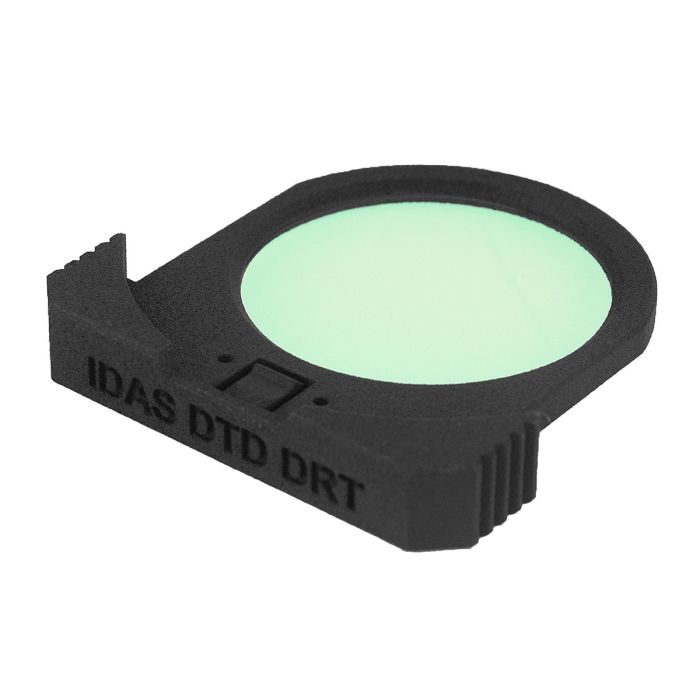
IDAS DTD Dusk to Dawn H-a, OIII & NIR Filter - For Select Drop-In Mount Adapters
Stock count is accurate & shown in real time.
- This item is out of stock.
- Sign up for back-in-stock alerts to be notified when this item becomes available (account login required).
- This item is out of stock.
- Sign up for back-in-stock alerts to be notified when this item becomes available (account login required).
Contiguous US / Lower 48:
Free shipping applies to orders over $50 using our chosen carrier/method. Faster paid options are available at checkout.
Alaska, Hawaii & US Territories:
Free shipping applies to many—but not all—products. Enter your ZIP code in cart or upon checkout to confirm options and costs.
International:
International orders do not qualify for free shipping. Shipping, duties, brokerage, tariffs, and taxes are the customer’s responsibility. Some items may be restricted due to export, size, or manufacturer limitations.
- One Filter, Countless Targets: Designed for comets, galaxies, the Milky Way, emission nebulae, reflection nebulae, and star clusters.
- Dual-Band + NIR Performance: Combines Hα and OIII transmission with near-infrared passbands for enhanced contrast on a wide variety of deep-sky objects.
- Richer, More Natural Colors: Preserves blue-channel data better than many traditional dual-band filters for more vibrant color reproduction.
- Optimized for Light-Polluted Skies: Suppresses common light pollution sources while maintaining strong transmission of valuable astronomical signals.
- Filter Holder Sold Separately: DRT filter version require a compatible filter drawer or holder, which is not included.
The IDAS DRT framed filters are mounted in a 3d printed holder and designed to be inserted directly into the following ZWO filter drawers:
- Canon EF-EOSR drop-in mount adapter
- Meike MK-EFTR-C (EF-R)
- MK-EFTE-C (EF-E) drop-in mount adapters
- Kolari EF-EOS R Drop-In Filter Mount Adapter For Canon
- RED RF cameras
- More details at: IDAS DRT framed Filter
IDAS Dust-to-Dawn Filter: Precision, Compatibility, and Power in Every Focus!
A new generation filter covering multiple objects including comets, galaxies, the Milky Way, and emission and reflection nebulae, by making use of the extra transmission in the NIR region. The IDAS DTD filter not only passes through the Ha and OIII regions in the same manner as of the IDAS NBZ, but also provides a pass band for comet ion tails in the visible spectrum range (400nm to 700nm, susceptible to light pollution). This filter furthermore enhances the contrast of the continuous spectrum lights from comet dust tails, galaxies and the Milky Way by making use of the NIR region that is hardly interference by light pollution. The DTD filter makes it possible to shoot more objects in the visible to NIR spectrum range at higher contrasts. Please note: The drop-in mounted filter holder is not included in the DRT filter purchase.
n.b. on halos
Optical filters like this IDAS DTD that utilize infrared tend to cause haloing in the NUV and NIR regions. This is because the anti-reflection properties of off-the-shelf cameras' optical systems (optical window and sensor cover glass) are optimized for the visible spectrum only, not for the NIR region. Thus, hailing at the camera end in the unoptimized region becomes more apparent, coupled with haloing from the filter itself.
Here is a rough estimation of the magnitude of haloing where the haloing magnitude of NBZ (NBZex) is counted as 1:
-
DTD + IMX294 sensor results in 7.9 times
-
DTD + IMX585 sensor results in 23.7 times
IDAS DTD - Dusk to Dawn - Astrophotography Filter Review
Landscape Astrophotography
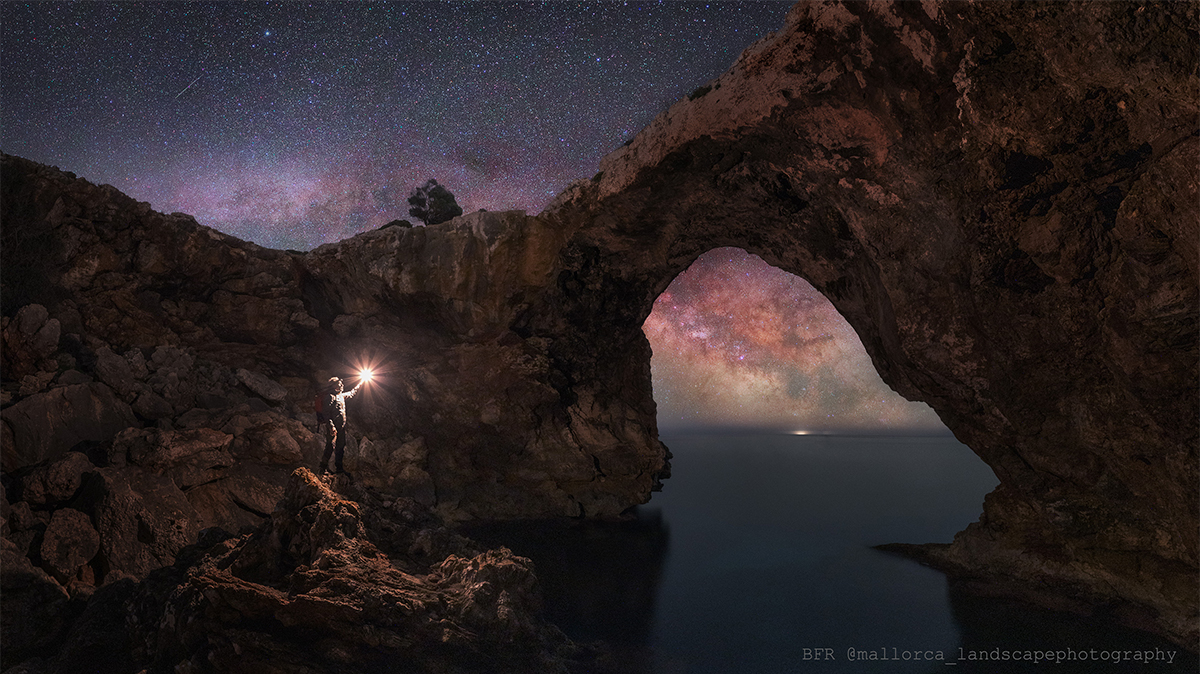
These days more and more people make use of IDAS DRE/DRT filters for landscape astrophotography!
Light Pollution Cut Functions
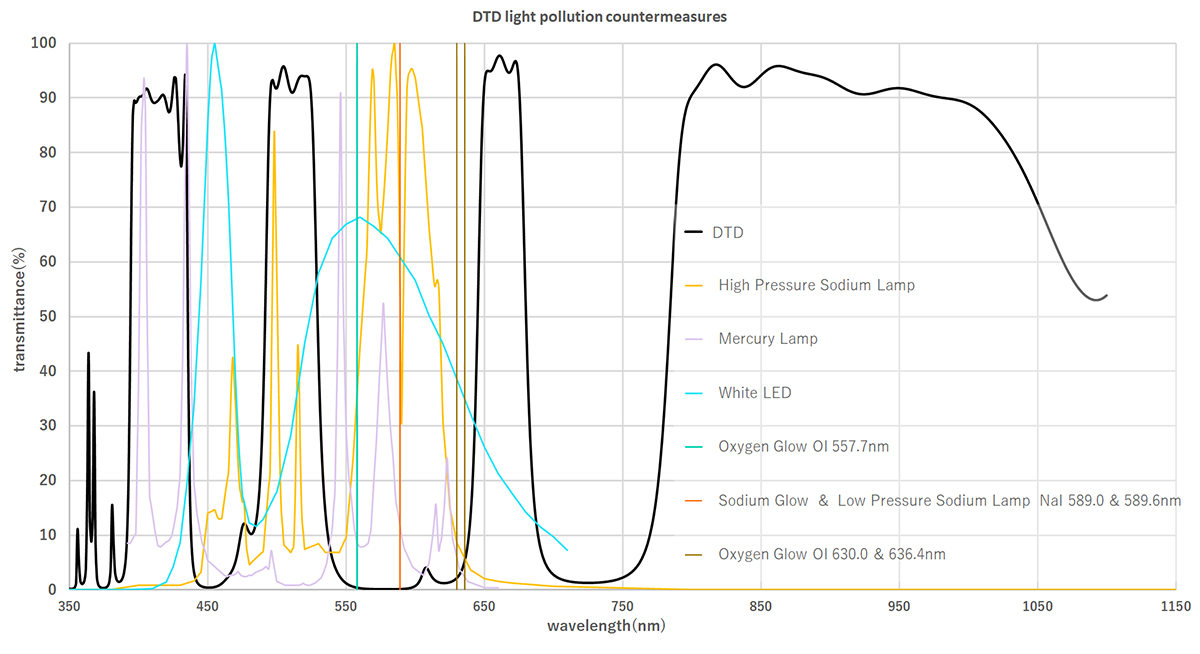
The most of the light pollution sources are conspicuous below 600nm, i.e. in the visible wave rage. There are almost no light pollution sources available in the NIR range of 630nm and 700nm or above.
Suitability for Capturing Comets
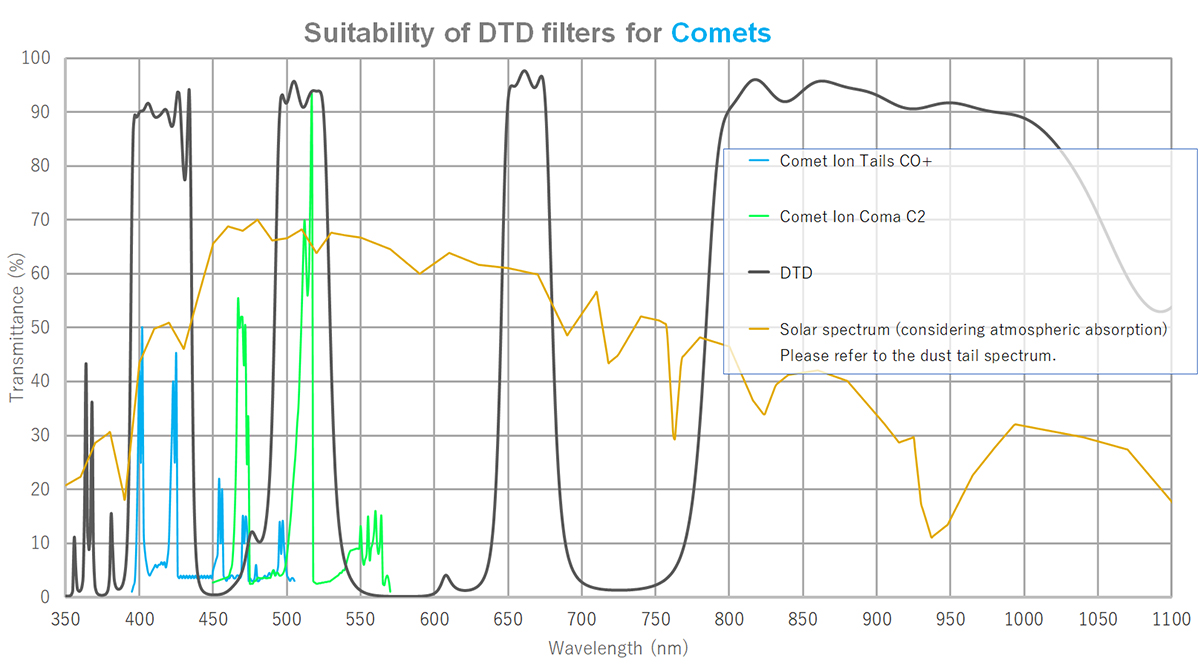
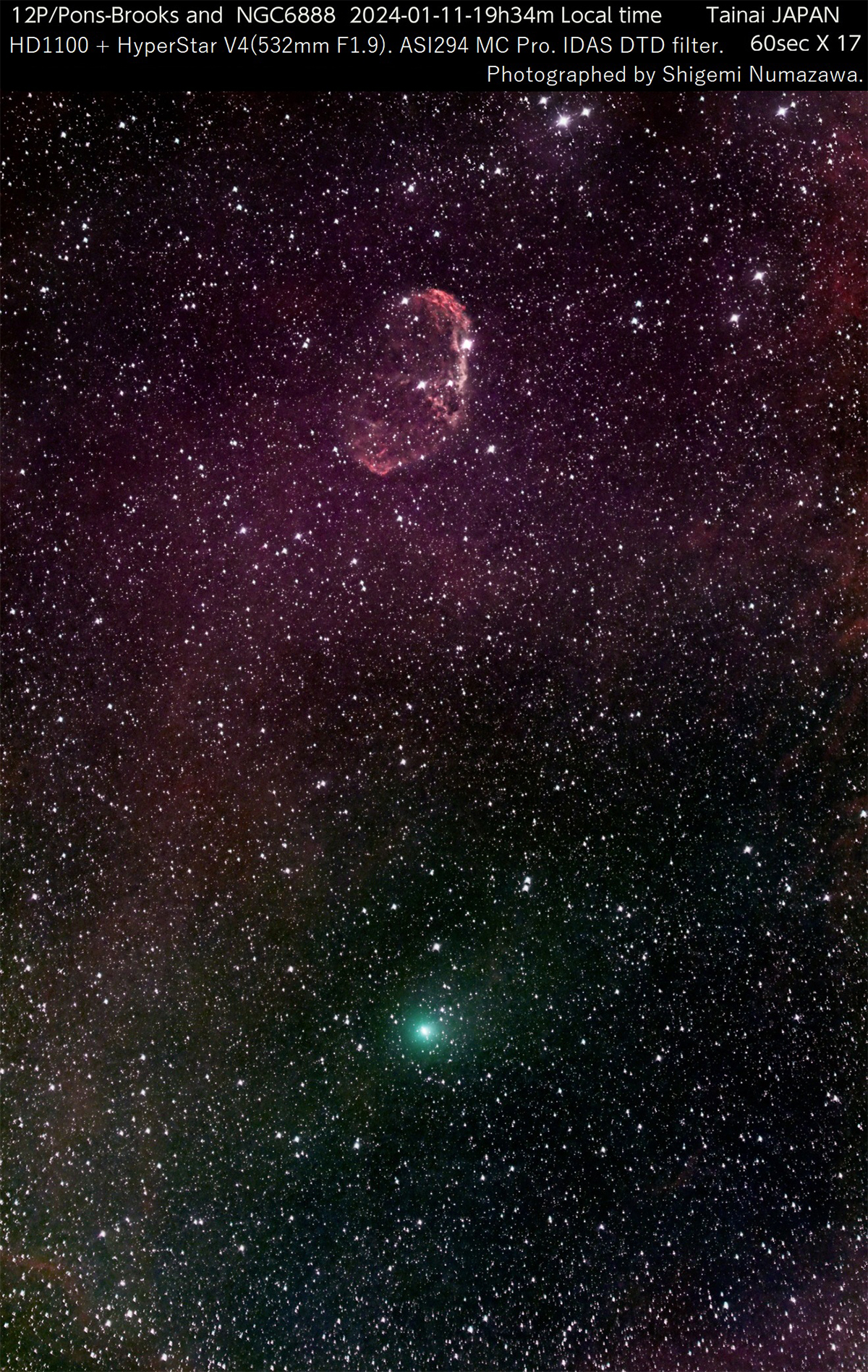
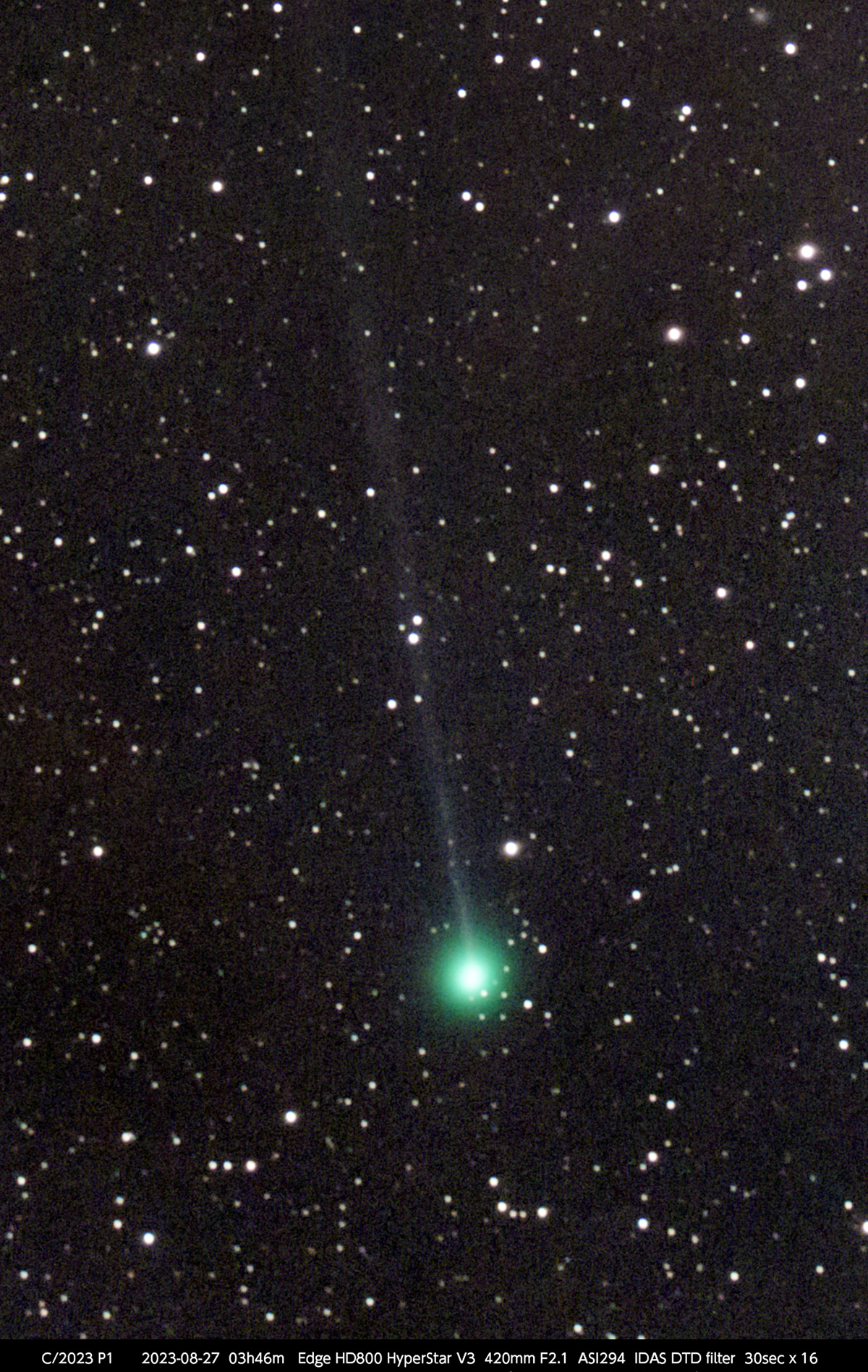
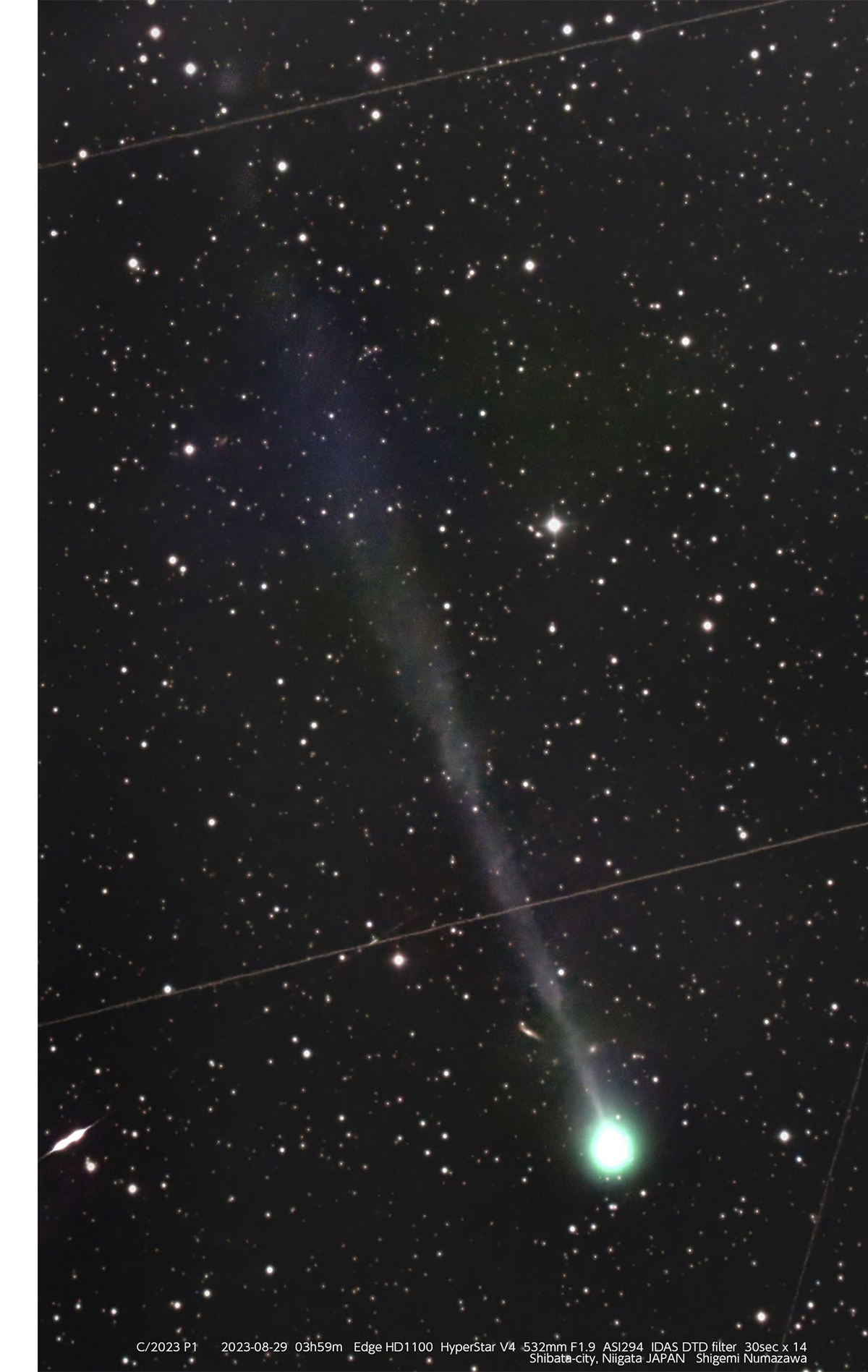
The DTD's transmission bands allow you to captures the blue-green coma (C2 ions) at the head of the comet, the blue CO+ plasma at the tail, and the overall reflected light. In addition, in low-altitude and hazy conditions such as mist, the transmission of the near-infrared range is utilized to increase contrast.
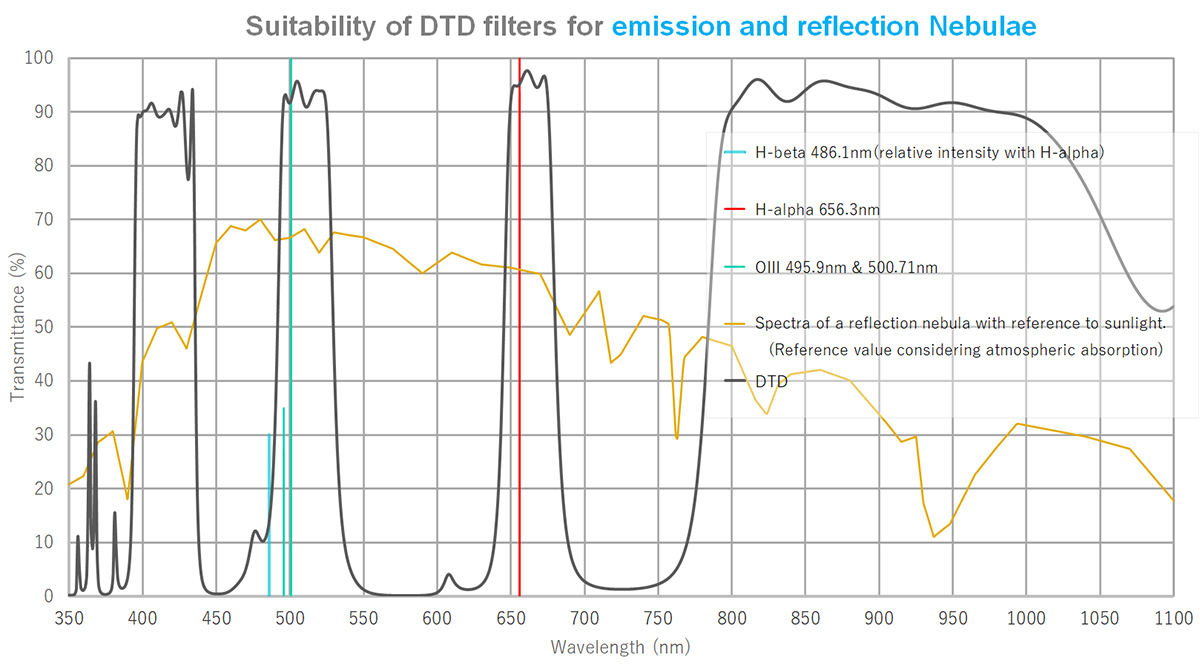
Suitability for Imaging Nebulae (including molecular clouds), the Milky Way, Galaxies, and Star Clusters
For nebulae with Hα and OIII emission lines, the DTD will increase contrast by using a quasi-narrowband transmission band in the visible range, while keeping the light loss of continuous spectrum objects minimum by using the entire transmission band in the visible and infrared ranges.
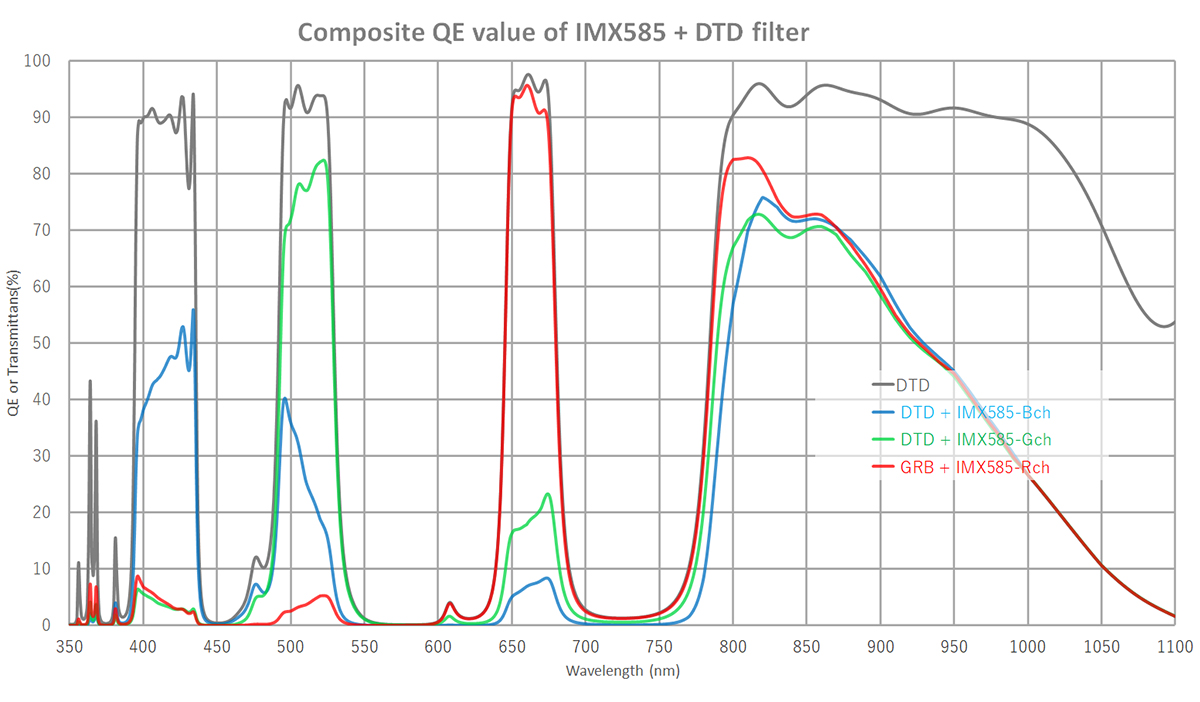
QE Data of IMX585 Sensor + DTD Filter
The visible range characteristics of the DTD allow for effective use of the RGB range of the image sensor.
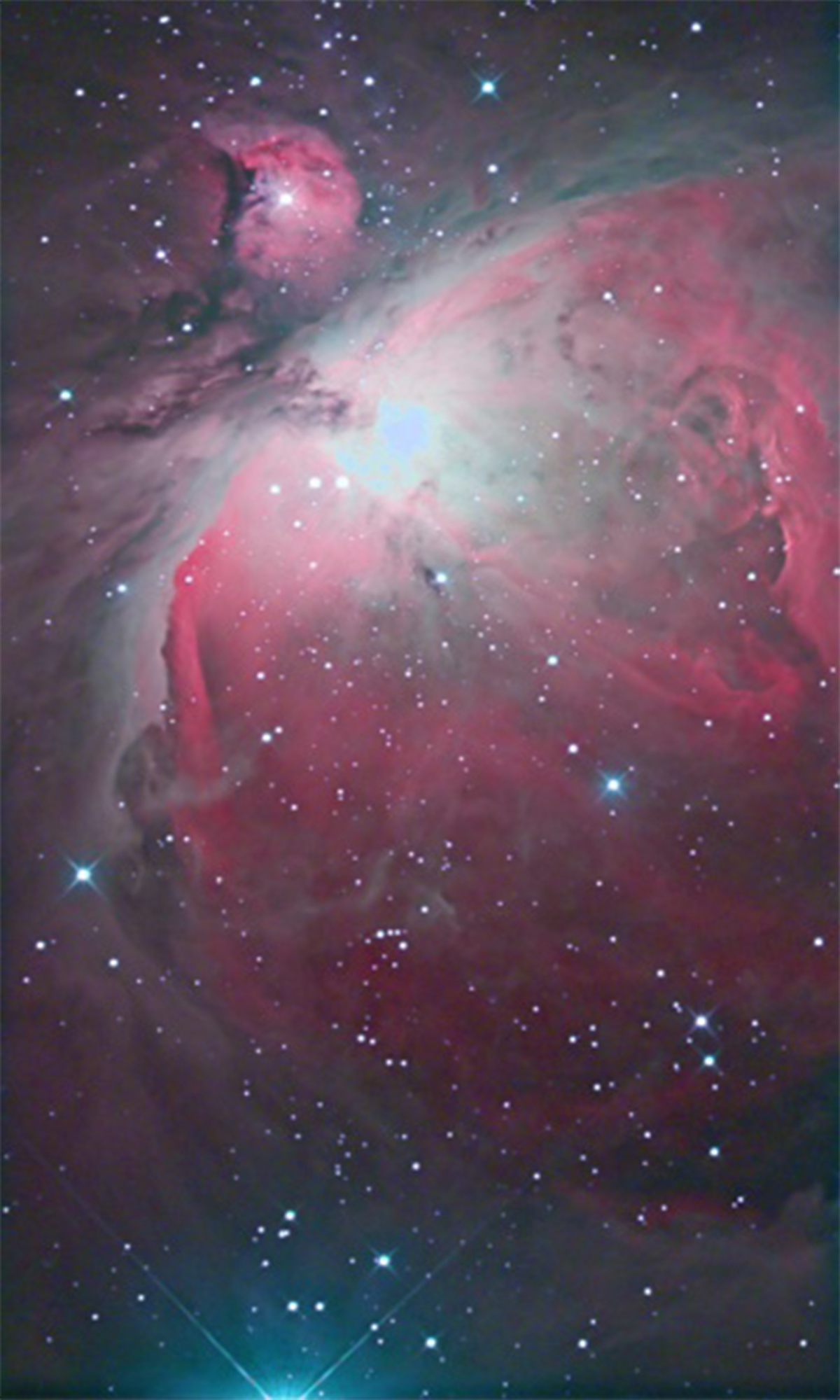
Our Nebula Booster series (NBZ-II and GNB) and other companies' dual band NB filters produce images with poor color reproduction in the B-ch. In contrast, the DTD provides sufficient light for the B-ch, resulting in richer color reproduction.
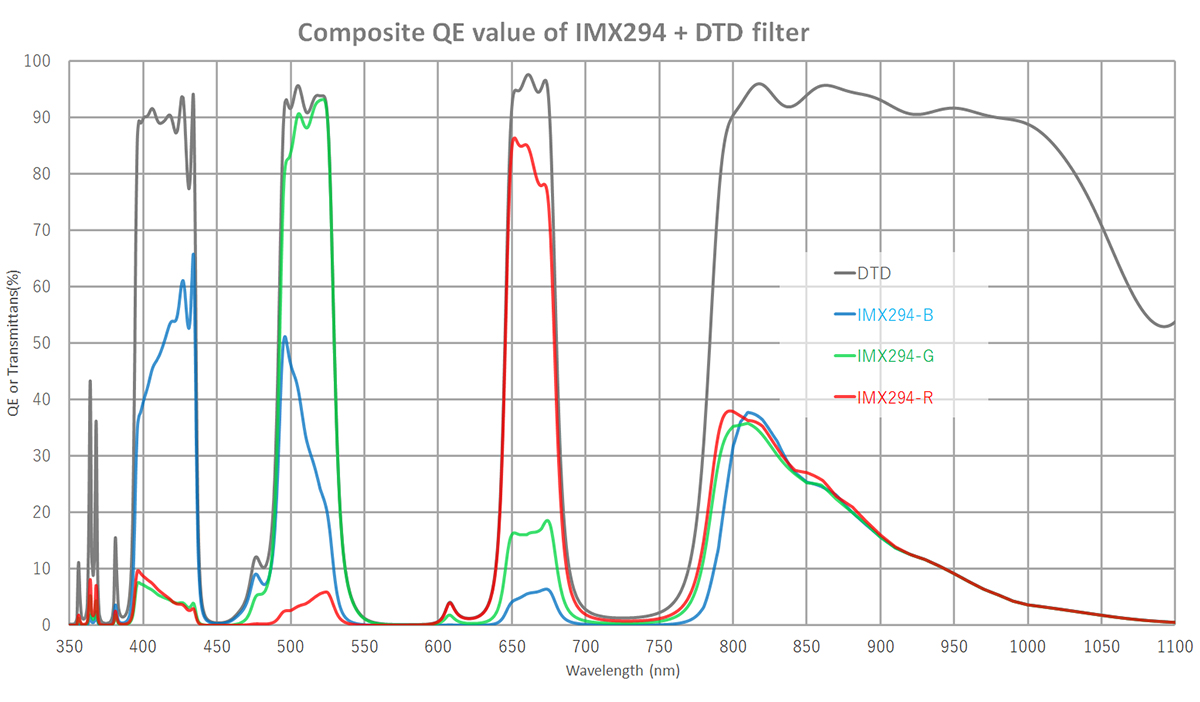
QE Data of IMX294 Sensor + DTD Filter
The visible range characteristics of the DTD allow for effective use of the RGB range of the image sensor.
Our Nebula Booster series (NBZ-II and GNB) and other companies' dual band NB filters produce images with poor color reproduction in the B-ch. In contrast, the DTD provides sufficient light for the B-ch, resulting in richer color reproduction.
Specifications
- Dimensions: 41 x 52 x 70.3mm
- Weight: 7.5oz (215g)
- Payload: 11lb (5kg)
- Motor: Stepper motor, step angle 7.5°, reduction ratio 1:128
- Communication: USB Type-C
- Power Supply: USB Type-C (5V 500mA)
- Software: ZWO ASIAIR APP, ZWO ASIStudio; (ASCOM platform and various ASCOM-compatible third-party software)
DTD Filter Capturing Comets in Action!
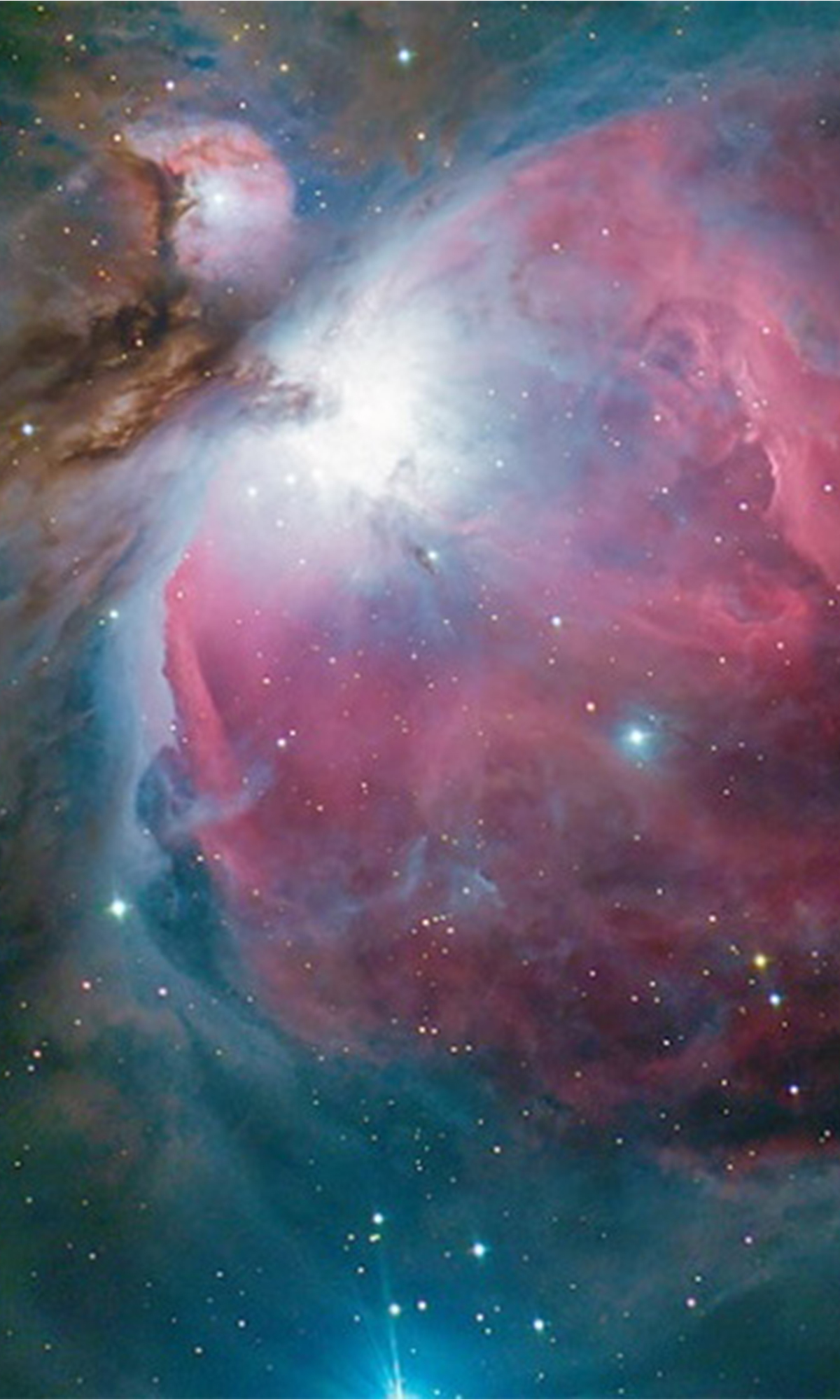
Visual Comparison of these Popular IDAS Astro Filters
Shot taken with DTD (Dusk to Dawn)
Shot taken with GNB (Galaxy and Nebula Booster)
Other Information
- Country of Manufacture: Japan
The IDAS DRT framed filters are mounted in a 3d printed holder and designed to be inserted directly into the following ZWO filter drawers:
- Canon EF-EOSR drop-in mount adapter
- Meike MK-EFTR-C (EF-R)
- MK-EFTE-C (EF-E) drop-in mount adapters
- Kolari EF-EOS R Drop-In Filter Mount Adapter For Canon
- RED RF cameras
- More details at: IDAS DRT framed Filter
IDAS Dust-to-Dawn Filter: Precision, Compatibility, and Power in Every Focus!
A new generation filter covering multiple objects including comets, galaxies, the Milky Way, and emission and reflection nebulae, by making use of the extra transmission in the NIR region. The IDAS DTD filter not only passes through the Ha and OIII regions in the same manner as of the IDAS NBZ, but also provides a pass band for comet ion tails in the visible spectrum range (400nm to 700nm, susceptible to light pollution). This filter furthermore enhances the contrast of the continuous spectrum lights from comet dust tails, galaxies and the Milky Way by making use of the NIR region that is hardly interference by light pollution. The DTD filter makes it possible to shoot more objects in the visible to NIR spectrum range at higher contrasts. Please note: The drop-in mounted filter holder is not included in the DRT filter purchase.
n.b. on halos
Optical filters like this IDAS DTD that utilize infrared tend to cause haloing in the NUV and NIR regions. This is because the anti-reflection properties of off-the-shelf cameras' optical systems (optical window and sensor cover glass) are optimized for the visible spectrum only, not for the NIR region. Thus, hailing at the camera end in the unoptimized region becomes more apparent, coupled with haloing from the filter itself.
Here is a rough estimation of the magnitude of haloing where the haloing magnitude of NBZ (NBZex) is counted as 1:
-
DTD + IMX294 sensor results in 7.9 times
-
DTD + IMX585 sensor results in 23.7 times
IDAS DTD - Dusk to Dawn - Astrophotography Filter Review
Landscape Astrophotography
These days more and more people make use of IDAS DRE/DRT filters for landscape astrophotography!
Light Pollution Cut Functions
The most of the light pollution sources are conspicuous below 600nm, i.e. in the visible wave rage. There are almost no light pollution sources available in the NIR range of 630nm and 700nm or above.
Suitability for Capturing Comets
The DTD's transmission bands allow you to captures the blue-green coma (C2 ions) at the head of the comet, the blue CO+ plasma at the tail, and the overall reflected light. In addition, in low-altitude and hazy conditions such as mist, the transmission of the near-infrared range is utilized to increase contrast.
Suitability for Imaging Nebulae (including molecular clouds), the Milky Way, Galaxies, and Star Clusters
For nebulae with Hα and OIII emission lines, the DTD will increase contrast by using a quasi-narrowband transmission band in the visible range, while keeping the light loss of continuous spectrum objects minimum by using the entire transmission band in the visible and infrared ranges.
QE Data of IMX585 Sensor + DTD Filter
The visible range characteristics of the DTD allow for effective use of the RGB range of the image sensor.
Our Nebula Booster series (NBZ-II and GNB) and other companies' dual band NB filters produce images with poor color reproduction in the B-ch. In contrast, the DTD provides sufficient light for the B-ch, resulting in richer color reproduction.
QE Data of IMX294 Sensor + DTD Filter
The visible range characteristics of the DTD allow for effective use of the RGB range of the image sensor.
Our Nebula Booster series (NBZ-II and GNB) and other companies' dual band NB filters produce images with poor color reproduction in the B-ch. In contrast, the DTD provides sufficient light for the B-ch, resulting in richer color reproduction.
Specifications
- Dimensions: 41 x 52 x 70.3mm
- Weight: 7.5oz (215g)
- Payload: 11lb (5kg)
- Motor: Stepper motor, step angle 7.5°, reduction ratio 1:128
- Communication: USB Type-C
- Power Supply: USB Type-C (5V 500mA)
- Software: ZWO ASIAIR APP, ZWO ASIStudio; (ASCOM platform and various ASCOM-compatible third-party software)
DTD Filter Capturing Comets in Action!
Visual Comparison of these Popular IDAS Astro Filters
Shot taken with DTD (Dusk to Dawn)
Shot taken with GNB (Galaxy and Nebula Booster)
- 1x DTD DRT framed filter

- One Filter, Countless Targets: Designed for comets, galaxies, the Milky Way, emission nebulae, reflection nebulae, and star clusters.
- Dual-Band + NIR Performance: Combines Hα and OIII transmission with near-infrared passbands for enhanced contrast on a wide variety of deep-sky objects.
- Richer, More Natural Colors: Preserves blue-channel data better than many traditional dual-band filters for more vibrant color reproduction.
- Optimized for Light-Polluted Skies: Suppresses common light pollution sources while maintaining strong transmission of valuable astronomical signals.
- Filter Holder Sold Separately: DRT filter version require a compatible filter drawer or holder, which is not included.
The IDAS DRT framed filters are mounted in a 3d printed holder and designed to be inserted directly into the following ZWO filter drawers:
- Canon EF-EOSR drop-in mount adapter
- Meike MK-EFTR-C (EF-R)
- MK-EFTE-C (EF-E) drop-in mount adapters
- Kolari EF-EOS R Drop-In Filter Mount Adapter For Canon
- RED RF cameras
- More details at: IDAS DRT framed Filter
IDAS Dust-to-Dawn Filter: Precision, Compatibility, and Power in Every Focus!
A new generation filter covering multiple objects including comets, galaxies, the Milky Way, and emission and reflection nebulae, by making use of the extra transmission in the NIR region. The IDAS DTD filter not only passes through the Ha and OIII regions in the same manner as of the IDAS NBZ, but also provides a pass band for comet ion tails in the visible spectrum range (400nm to 700nm, susceptible to light pollution). This filter furthermore enhances the contrast of the continuous spectrum lights from comet dust tails, galaxies and the Milky Way by making use of the NIR region that is hardly interference by light pollution. The DTD filter makes it possible to shoot more objects in the visible to NIR spectrum range at higher contrasts. Please note: The drop-in mounted filter holder is not included in the DRT filter purchase.
n.b. on halos
Optical filters like this IDAS DTD that utilize infrared tend to cause haloing in the NUV and NIR regions. This is because the anti-reflection properties of off-the-shelf cameras' optical systems (optical window and sensor cover glass) are optimized for the visible spectrum only, not for the NIR region. Thus, hailing at the camera end in the unoptimized region becomes more apparent, coupled with haloing from the filter itself.
Here is a rough estimation of the magnitude of haloing where the haloing magnitude of NBZ (NBZex) is counted as 1:
-
DTD + IMX294 sensor results in 7.9 times
-
DTD + IMX585 sensor results in 23.7 times
IDAS DTD - Dusk to Dawn - Astrophotography Filter Review
Landscape Astrophotography
These days more and more people make use of IDAS DRE/DRT filters for landscape astrophotography!
Light Pollution Cut Functions
The most of the light pollution sources are conspicuous below 600nm, i.e. in the visible wave rage. There are almost no light pollution sources available in the NIR range of 630nm and 700nm or above.
Suitability for Capturing Comets
The DTD's transmission bands allow you to captures the blue-green coma (C2 ions) at the head of the comet, the blue CO+ plasma at the tail, and the overall reflected light. In addition, in low-altitude and hazy conditions such as mist, the transmission of the near-infrared range is utilized to increase contrast.
Suitability for Imaging Nebulae (including molecular clouds), the Milky Way, Galaxies, and Star Clusters
For nebulae with Hα and OIII emission lines, the DTD will increase contrast by using a quasi-narrowband transmission band in the visible range, while keeping the light loss of continuous spectrum objects minimum by using the entire transmission band in the visible and infrared ranges.
QE Data of IMX585 Sensor + DTD Filter
The visible range characteristics of the DTD allow for effective use of the RGB range of the image sensor.
Our Nebula Booster series (NBZ-II and GNB) and other companies' dual band NB filters produce images with poor color reproduction in the B-ch. In contrast, the DTD provides sufficient light for the B-ch, resulting in richer color reproduction.
QE Data of IMX294 Sensor + DTD Filter
The visible range characteristics of the DTD allow for effective use of the RGB range of the image sensor.
Our Nebula Booster series (NBZ-II and GNB) and other companies' dual band NB filters produce images with poor color reproduction in the B-ch. In contrast, the DTD provides sufficient light for the B-ch, resulting in richer color reproduction.
Specifications
- Dimensions: 41 x 52 x 70.3mm
- Weight: 7.5oz (215g)
- Payload: 11lb (5kg)
- Motor: Stepper motor, step angle 7.5°, reduction ratio 1:128
- Communication: USB Type-C
- Power Supply: USB Type-C (5V 500mA)
- Software: ZWO ASIAIR APP, ZWO ASIStudio; (ASCOM platform and various ASCOM-compatible third-party software)
DTD Filter Capturing Comets in Action!
Visual Comparison of these Popular IDAS Astro Filters
Shot taken with DTD (Dusk to Dawn)
Shot taken with GNB (Galaxy and Nebula Booster)
Other Information
- Country of Manufacture: Japan
- 1x DTD DRT framed filter

IDAS DTD Dusk to Dawn H-a, OIII & NIR Filter - For Select Drop-In Mount Adapters