

Optolong L-Quad Broadband Light Pollution Filter - 2" Mounted
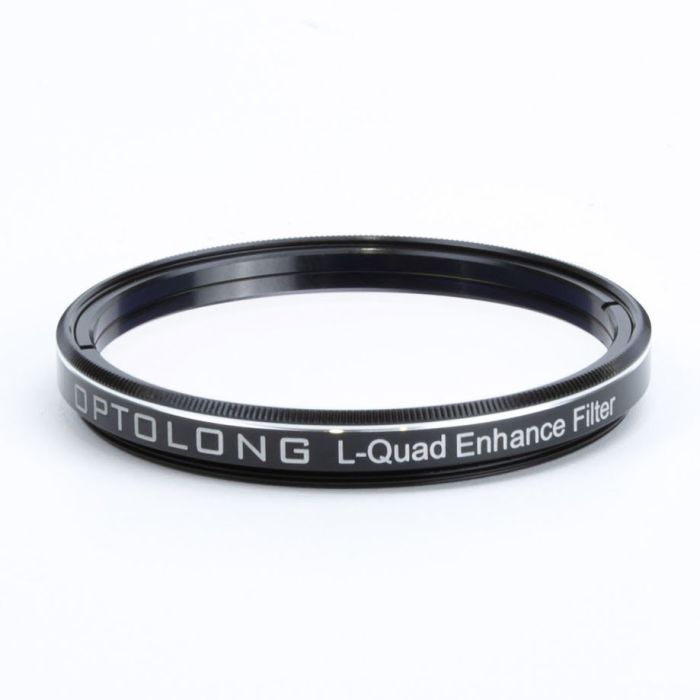
Stock count is accurate & shown in real time.
- This item is out of stock.
- Sign up for back-in-stock alerts to be notified when this item becomes available (account login required).
- This item is out of stock.
- Sign up for back-in-stock alerts to be notified when this item becomes available (account login required).
Contiguous US / Lower 48:
Free shipping applies to orders over $50 using our chosen carrier/method. Faster paid options are available at checkout.
Alaska, Hawaii & US Territories:
Free shipping applies to many—but not all—products. Enter your ZIP code in cart or upon checkout to confirm options and costs.
International:
International orders do not qualify for free shipping. Shipping, duties, brokerage, tariffs, and taxes are the customer’s responsibility. Some items may be restricted due to export, size, or manufacturer limitations.
- Passes five emission lines at over 92% peak transmission each. These include H-alpha, NII, SII, OIII, and H-beta.
- OD4 blocking from 300 to 1050nm suppresses artificial light pollution
- Rated for optical systems as fast as f/2
- Compatible with both OSC and monochrome cameras
- Suitable for >90% of deep-sky objects such as galaxies, star clusters, and most nebulae
- Balanced RGB design with updated coating minimizes color cast and reduces star halos
- Can replace the luminance (L) filter in mono LRGB imaging workflows
Optolong L-Quad Enhance (L-QEF) Light Pollution Filter 2" Mounted
The Optolong L-Quad Enhance Filter (L-QEF) is a quad bandpass light pollution filter made for one-shot color (OSC) astrophotography. It helps reduce skyglow so your target stands out more clearly. This means darker backgrounds, stronger contrast, and cleaner color in many imaging setups. It is also a solid pick when you want better results from suburban skies without moving to a very narrowband-only workflow. This 2 inch mounted M48 version threads into many common 2 inch filter-ready accessories. It is designed for deep-sky imaging, including nebulae, galaxies, and star clusters.
Take a Closer Look at the Optolong L-Quad Enhance Filter in Our Video Below!
Highlights of the Optolong L-Quad Enhance
Emission Nebulae
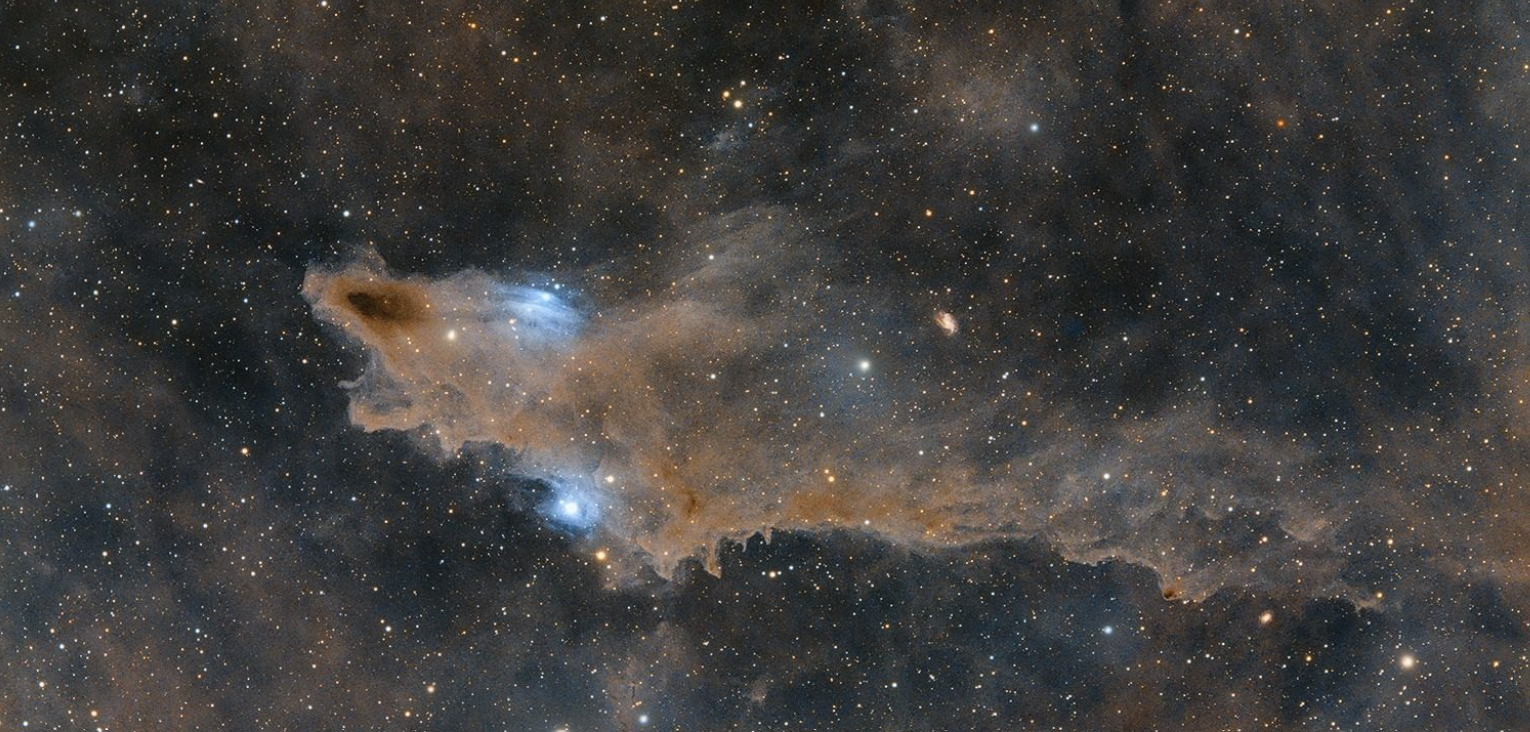
The L-QEF shines where strong signals can be captured at H-alpha, OIII, SII, and H-beta wavelengths of light. This filter can boost contrast and signal by removing the other unwanted wavelengths of light, such as common light pollution and moonlight.
Wide-Field Milky Way
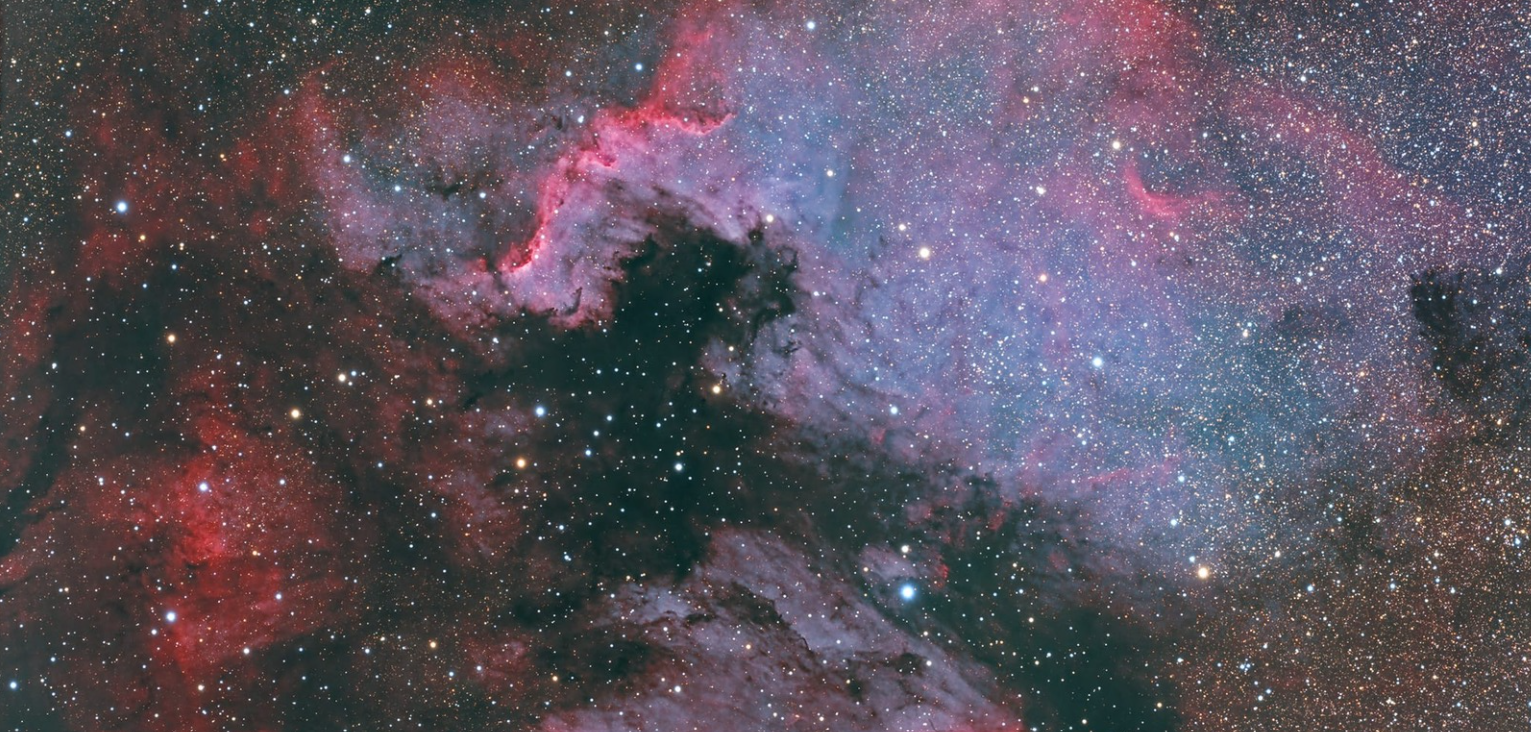
Thanks to its wide bandpass filtration and precise light pollution cuts, Optolong has stated that the L-QEF can be used for wide-field Milky Way astrophotography.
Galaxies & Star Clusters
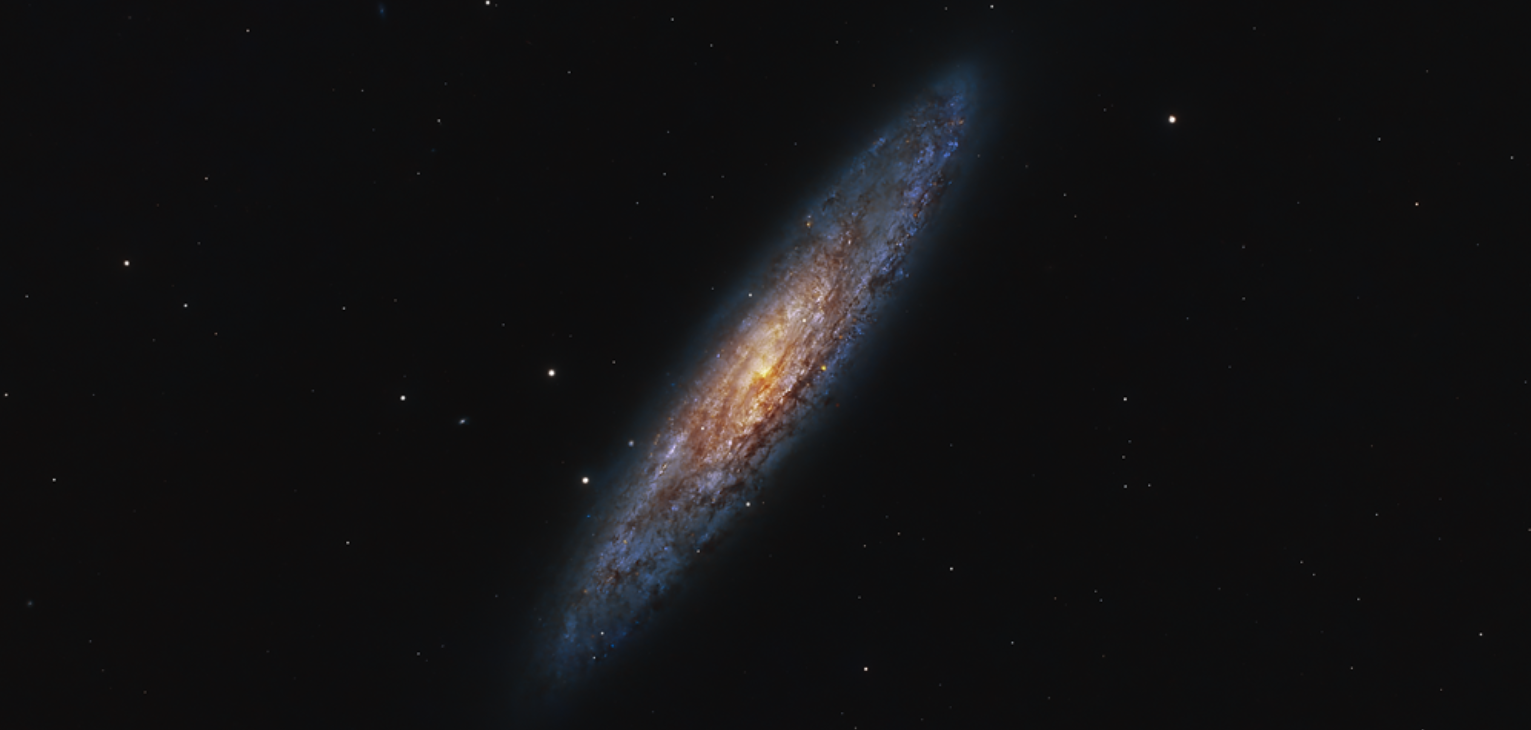
The L-QEF is a versatile filter you can use for many targets. It can even help make narrowband signals stand out in targets normally considered broadband! But it works well any time you want cleaner backgrounds and stronger overall contrast while fighting light pollution.
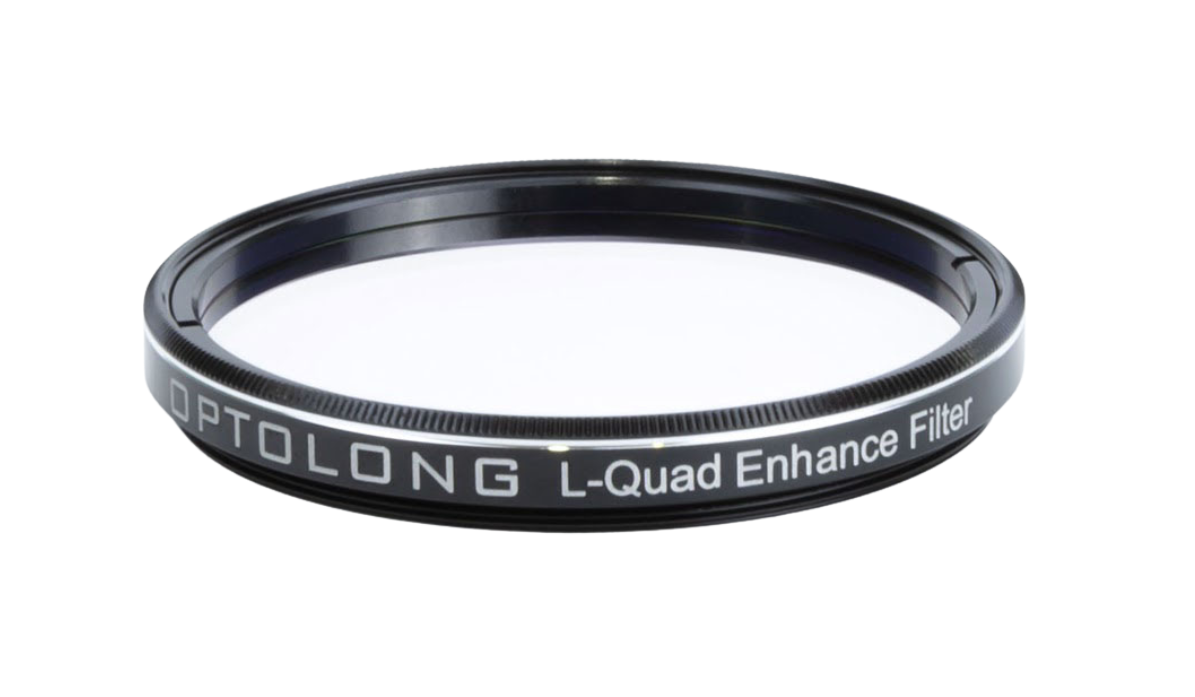
Cleaner Data From Light-Polluted Skies
Light pollution adds brightness to the background of your images. That background brightness can hide faint detail and reduce contrast. The L-QEF is designed to lower that background so your target separates more clearly from the sky.
Optolong describes this filter as helping improve contrast, color saturation, and signal-to-noise ratio (SNR) by suppressing light pollution. They specifically mention suppression from artificial lighting sources such as mercury and sodium lamps.
This filter is recommended for Bortle 1 to Bortle 7 skies. Optolong does not recommend it for Bortle 8 to Bortle 9 skies, where a different narrow-band option may be a better match.
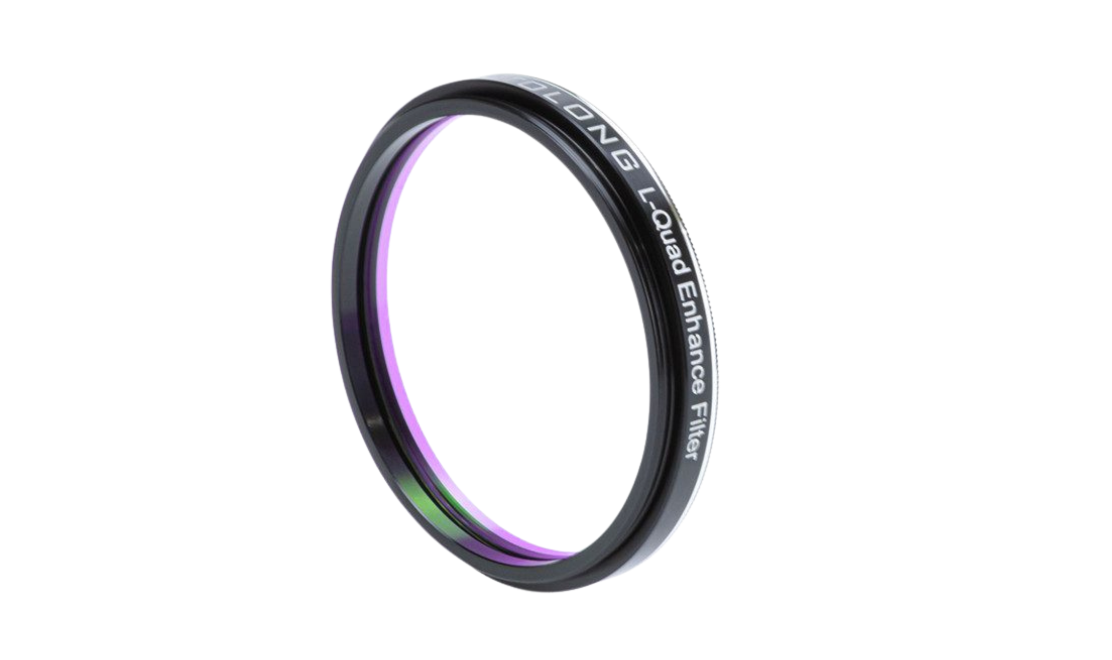
How the L-Quad Works (What It Passes vs. What It Blocks)
The L-QEF uses a quad bandpass design. In simple terms, it is made to pass more of the light you want from many deep-sky targets, while blocking more of the light you do not want from the sky background.
Optolong lists a blocking range of 300 to 1000 nm and a blocking depth of OD2 to OD4. This is intended to reduce unwanted wavelengths and help keep the background under control during capture.
Optolong also states the filter has a near-IR cut-off to 1000 nm. This can help limit infrared-related issues that can add extra noise or soften stars in some setups.
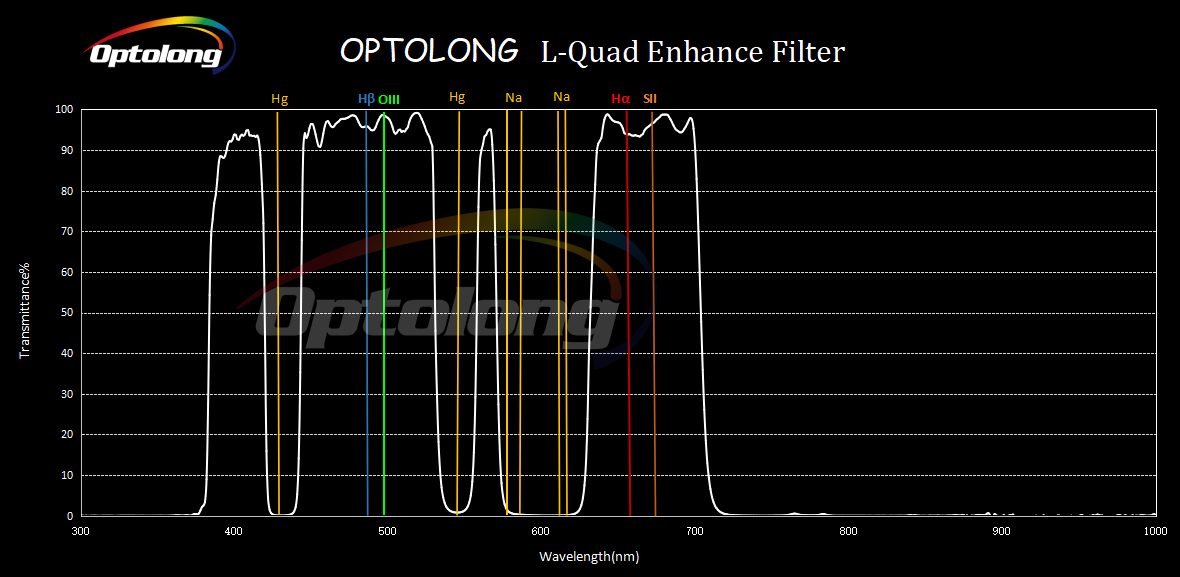
Deep-Sky Targets and Color Camera Performance
Optolong specifies over 90% transmission at major emission lines: H-beta, OIII, H-alpha, and SII, and meant to support nebula imaging while also being usable for galaxies and star clusters. That high transmission is a key reason this filter can improve nebula contrast while still keeping a broader, color-friendly result. Designed for color cameras, it aims for better overall balance than very aggressive filters. It is a good fit when you want improved contrast and cleaner backgrounds without fully switching to a narrow-band-only workflow.
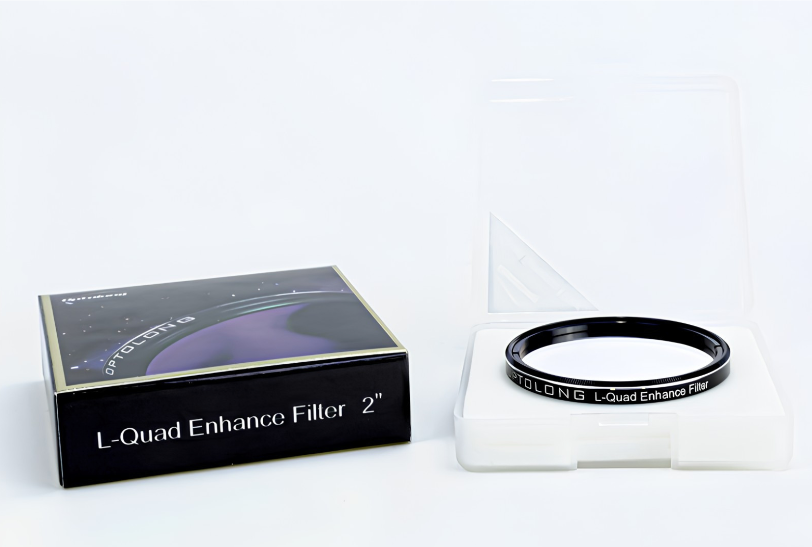
Optical Build and Coating Details
Anti-reflection coatings on the L-QEF help reduce internal reflections and improve contrast. Optolong also uses a non-cemented design, applying coatings directly to the completed filter without an adhesive layer. Optolong specifies a 60/40 surface quality, λ/4 transmitted wavefront RMS, and 30-arcsecond parallelism. In simple terms, these specifications indicate precise, optically flat glass that helps maintain sharp stars while reducing optical errors and tilt-like effects.
Specifications
- Filter type: Quad bandpass light pollution suppression filter
- Intended use: Color camera astrophotography
- Substrate: Optical glass
- Glass thickness (listed): 1.85 mm
- Blocking range: 300 to 1000 nm
- Blocking depth: OD2 to OD4
- Transmission: Over 90% at H-beta, OIII, H-alpha, SII
- Filter size: 2 inch mounted
- Thread: M48 x 0.75
- Surface quality: 60/40
- Transmitted wavefront RMS: λ/4
- Parallelism: 30 arcseconds
Frequently Asked Questions
Can I use the L-QEF with a monochrome camera?
The L-QEF is designed for color cameras and is not the right tool for monochrome sensors. Monochrome camera users typically pair their sensor with individual narrowband filters, such as separate H-alpha, OIII, and SII filters, and capture each channel independently. Using a broadband filter like the L-QEF with a monochrome camera would not give you the channel separation that makes monochrome imaging powerful. If you use a monochrome camera, a set of dedicated narrowband filters is the better approach.
Has this filter been tested under a full Moon?
Yes. Real-world tests by astrophotographers have shown the filter can produce usable results under a full Moon. One documented test on the Double Cluster was conducted under a full Moon with average transparency, and the filter performed well on star colors and shapes. That said, a bright Moon adds significant skyglow, and results will vary by target and local conditions. Emission-rich nebulae hold up better under the Moon than faint galaxies or reflection nebulae.
How does the L-QEF compare to the Optolong L-Pro filter?
The L-Pro is Optolong's broadest-spectrum light pollution filter. It passes the widest range of light and produces the most natural-looking color output with the least processing correction required. The L-QEF uses a quad bandpass design that is more specifically shaped around the key nebula emission wavelengths. This gives the L-QEF better light pollution rejection than the L-Pro while still supporting a wide range of targets. If you shoot from a dark sky and want the most natural color, the L-Pro may be the better fit. If you deal with moderate light pollution and want more contrast, the L-QEF is the stronger choice.
Can I use the L-QEF for wide-field Milky Way photography?
Yes. Optolong identifies the L-QEF as compatible with wide-field astrophotography, including summer and winter Milky Way shots. The quad bandpass design passes signal across both blue and red portions of the spectrum, which supports the natural color range of the Milky Way. The benefit will be most noticeable from a moderately light-polluted site. From a truly dark sky, a light pollution filter has less to do and its effect will be less pronounced.
Can I stack the L-QEF with another filter?
No. The female end of this filter is not threaded, so you cannot attach a second filter directly to it. If you need to use a light pollution filter in combination with another filter, you will need a filter drawer that allows side-by-side stacking. This is worth confirming with your specific setup before purchase.
How should I care for and store this filter?
Store the filter in the included protective case when not in use. Avoid touching the glass surface with your fingers, as skin oils can contaminate the coating. If the surface needs cleaning, start with a clean, soft lens brush to remove any loose dust. If a smear remains, use a clean optical lens tissue or microfiber cloth with a small amount of optical cleaning solution. Never wipe a dry glass surface directly, as any grit present can scratch the coating. The ion-assisted deposition coating is more durable than standard coatings, but the glass surface is still vulnerable to improper handling.
Useful Resources
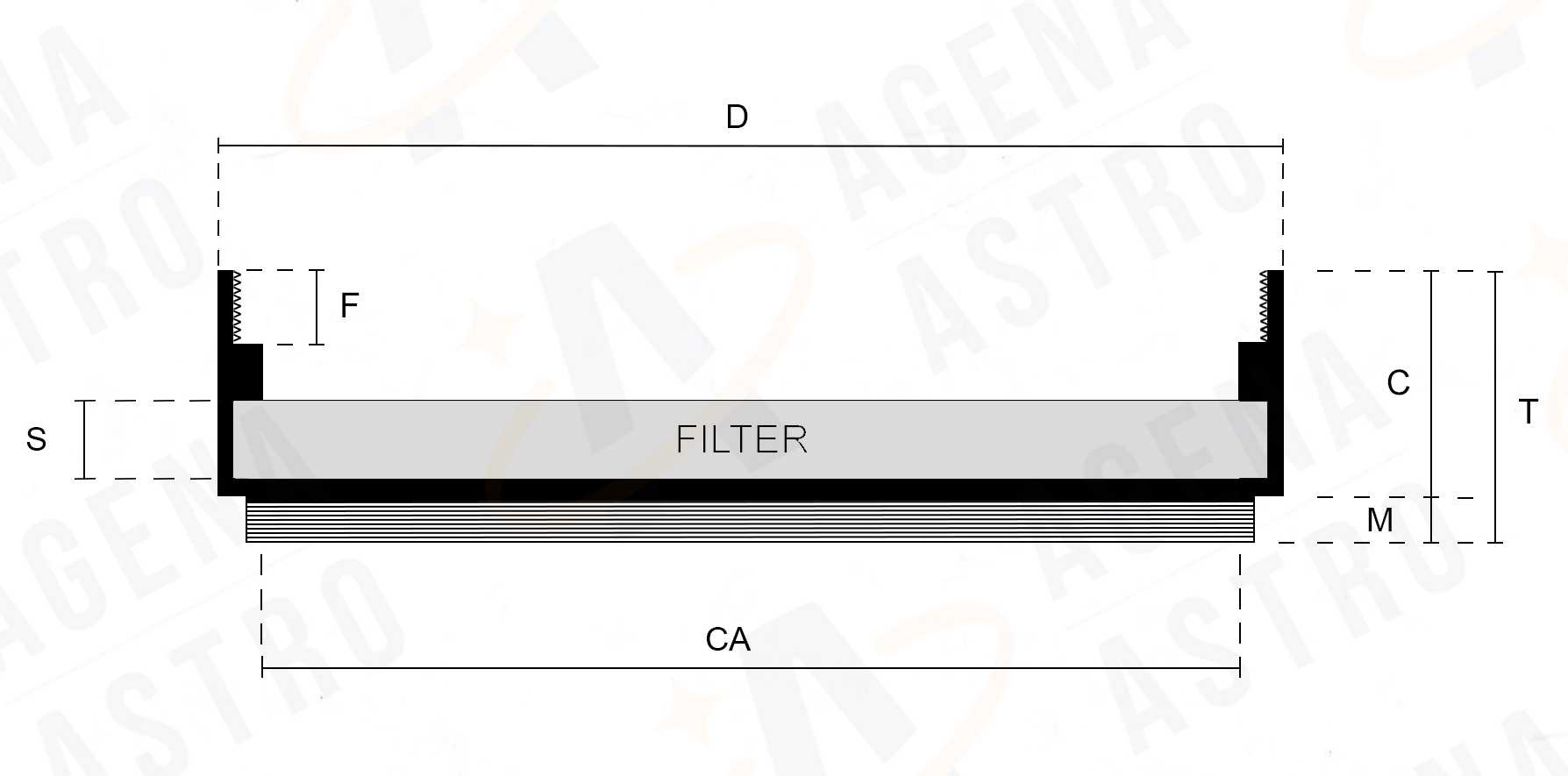
Filter Cell Specifications
D = Filter Cell Diameter = 50.3 mm / 2.0 in
T = Total Filter Height = 6.8 mm / 0.26 in
C = Filter Cell Height (Excluding Male Thread) = 4.8 mm / 0.18 in
M = Male Thread Length = 2.0 mm / 0.07 in
F = USABLE Female Filter Thread Length = Not threaded, so you cannot stack additional filters
S = Glass Substrate Thickness = 2 mm / 0.07 in
CA = Clear Aperture = 44 mm / 1.73 in
Other Information
- Country of Manufacture: China
Optolong L-Quad Enhance (L-QEF) Light Pollution Filter 2" Mounted
The Optolong L-Quad Enhance Filter (L-QEF) is a quad bandpass light pollution filter made for one-shot color (OSC) astrophotography. It helps reduce skyglow so your target stands out more clearly. This means darker backgrounds, stronger contrast, and cleaner color in many imaging setups. It is also a solid pick when you want better results from suburban skies without moving to a very narrowband-only workflow. This 2 inch mounted M48 version threads into many common 2 inch filter-ready accessories. It is designed for deep-sky imaging, including nebulae, galaxies, and star clusters.
Take a Closer Look at the Optolong L-Quad Enhance Filter in Our Video Below!
Highlights of the Optolong L-Quad Enhance
Emission Nebulae
The L-QEF shines where strong signals can be captured at H-alpha, OIII, SII, and H-beta wavelengths of light. This filter can boost contrast and signal by removing the other unwanted wavelengths of light, such as common light pollution and moonlight.
Wide-Field Milky Way
Thanks to its wide bandpass filtration and precise light pollution cuts, Optolong has stated that the L-QEF can be used for wide-field Milky Way astrophotography.
Galaxies & Star Clusters
The L-QEF is a versatile filter you can use for many targets. It can even help make narrowband signals stand out in targets normally considered broadband! But it works well any time you want cleaner backgrounds and stronger overall contrast while fighting light pollution.
Cleaner Data From Light-Polluted Skies
Light pollution adds brightness to the background of your images. That background brightness can hide faint detail and reduce contrast. The L-QEF is designed to lower that background so your target separates more clearly from the sky.
Optolong describes this filter as helping improve contrast, color saturation, and signal-to-noise ratio (SNR) by suppressing light pollution. They specifically mention suppression from artificial lighting sources such as mercury and sodium lamps.
This filter is recommended for Bortle 1 to Bortle 7 skies. Optolong does not recommend it for Bortle 8 to Bortle 9 skies, where a different narrow-band option may be a better match.
How the L-Quad Works (What It Passes vs. What It Blocks)
The L-QEF uses a quad bandpass design. In simple terms, it is made to pass more of the light you want from many deep-sky targets, while blocking more of the light you do not want from the sky background.
Optolong lists a blocking range of 300 to 1000 nm and a blocking depth of OD2 to OD4. This is intended to reduce unwanted wavelengths and help keep the background under control during capture.
Optolong also states the filter has a near-IR cut-off to 1000 nm. This can help limit infrared-related issues that can add extra noise or soften stars in some setups.
Deep-Sky Targets and Color Camera Performance
Optolong specifies over 90% transmission at major emission lines: H-beta, OIII, H-alpha, and SII, and meant to support nebula imaging while also being usable for galaxies and star clusters. That high transmission is a key reason this filter can improve nebula contrast while still keeping a broader, color-friendly result. Designed for color cameras, it aims for better overall balance than very aggressive filters. It is a good fit when you want improved contrast and cleaner backgrounds without fully switching to a narrow-band-only workflow.
Optical Build and Coating Details
Anti-reflection coatings on the L-QEF help reduce internal reflections and improve contrast. Optolong also uses a non-cemented design, applying coatings directly to the completed filter without an adhesive layer. Optolong specifies a 60/40 surface quality, λ/4 transmitted wavefront RMS, and 30-arcsecond parallelism. In simple terms, these specifications indicate precise, optically flat glass that helps maintain sharp stars while reducing optical errors and tilt-like effects.
Specifications
- Filter type: Quad bandpass light pollution suppression filter
- Intended use: Color camera astrophotography
- Substrate: Optical glass
- Glass thickness (listed): 1.85 mm
- Blocking range: 300 to 1000 nm
- Blocking depth: OD2 to OD4
- Transmission: Over 90% at H-beta, OIII, H-alpha, SII
- Filter size: 2 inch mounted
- Thread: M48 x 0.75
- Surface quality: 60/40
- Transmitted wavefront RMS: λ/4
- Parallelism: 30 arcseconds
Frequently Asked Questions
Can I use the L-QEF with a monochrome camera?
The L-QEF is designed for color cameras and is not the right tool for monochrome sensors. Monochrome camera users typically pair their sensor with individual narrowband filters, such as separate H-alpha, OIII, and SII filters, and capture each channel independently. Using a broadband filter like the L-QEF with a monochrome camera would not give you the channel separation that makes monochrome imaging powerful. If you use a monochrome camera, a set of dedicated narrowband filters is the better approach.
Has this filter been tested under a full Moon?
Yes. Real-world tests by astrophotographers have shown the filter can produce usable results under a full Moon. One documented test on the Double Cluster was conducted under a full Moon with average transparency, and the filter performed well on star colors and shapes. That said, a bright Moon adds significant skyglow, and results will vary by target and local conditions. Emission-rich nebulae hold up better under the Moon than faint galaxies or reflection nebulae.
How does the L-QEF compare to the Optolong L-Pro filter?
The L-Pro is Optolong's broadest-spectrum light pollution filter. It passes the widest range of light and produces the most natural-looking color output with the least processing correction required. The L-QEF uses a quad bandpass design that is more specifically shaped around the key nebula emission wavelengths. This gives the L-QEF better light pollution rejection than the L-Pro while still supporting a wide range of targets. If you shoot from a dark sky and want the most natural color, the L-Pro may be the better fit. If you deal with moderate light pollution and want more contrast, the L-QEF is the stronger choice.
Can I use the L-QEF for wide-field Milky Way photography?
Yes. Optolong identifies the L-QEF as compatible with wide-field astrophotography, including summer and winter Milky Way shots. The quad bandpass design passes signal across both blue and red portions of the spectrum, which supports the natural color range of the Milky Way. The benefit will be most noticeable from a moderately light-polluted site. From a truly dark sky, a light pollution filter has less to do and its effect will be less pronounced.
Can I stack the L-QEF with another filter?
No. The female end of this filter is not threaded, so you cannot attach a second filter directly to it. If you need to use a light pollution filter in combination with another filter, you will need a filter drawer that allows side-by-side stacking. This is worth confirming with your specific setup before purchase.
How should I care for and store this filter?
Store the filter in the included protective case when not in use. Avoid touching the glass surface with your fingers, as skin oils can contaminate the coating. If the surface needs cleaning, start with a clean, soft lens brush to remove any loose dust. If a smear remains, use a clean optical lens tissue or microfiber cloth with a small amount of optical cleaning solution. Never wipe a dry glass surface directly, as any grit present can scratch the coating. The ion-assisted deposition coating is more durable than standard coatings, but the glass surface is still vulnerable to improper handling.
- 1x Optolong L-Quad Broadband Filter, 2" Mounted (M48 x 0.75mm)
- 1x Silver outer box
- 1x Plastic protective case with EVA foam lining
- Passes five emission lines at over 92% peak transmission each. These include H-alpha, NII, SII, OIII, and H-beta.
- OD4 blocking from 300 to 1050nm suppresses artificial light pollution
- Rated for optical systems as fast as f/2
- Compatible with both OSC and monochrome cameras
- Suitable for >90% of deep-sky objects such as galaxies, star clusters, and most nebulae
- Balanced RGB design with updated coating minimizes color cast and reduces star halos
- Can replace the luminance (L) filter in mono LRGB imaging workflows
Optolong L-Quad Enhance (L-QEF) Light Pollution Filter 2" Mounted
The Optolong L-Quad Enhance Filter (L-QEF) is a quad bandpass light pollution filter made for one-shot color (OSC) astrophotography. It helps reduce skyglow so your target stands out more clearly. This means darker backgrounds, stronger contrast, and cleaner color in many imaging setups. It is also a solid pick when you want better results from suburban skies without moving to a very narrowband-only workflow. This 2 inch mounted M48 version threads into many common 2 inch filter-ready accessories. It is designed for deep-sky imaging, including nebulae, galaxies, and star clusters.
Take a Closer Look at the Optolong L-Quad Enhance Filter in Our Video Below!
Highlights of the Optolong L-Quad Enhance
Emission Nebulae
The L-QEF shines where strong signals can be captured at H-alpha, OIII, SII, and H-beta wavelengths of light. This filter can boost contrast and signal by removing the other unwanted wavelengths of light, such as common light pollution and moonlight.
Wide-Field Milky Way
Thanks to its wide bandpass filtration and precise light pollution cuts, Optolong has stated that the L-QEF can be used for wide-field Milky Way astrophotography.
Galaxies & Star Clusters
The L-QEF is a versatile filter you can use for many targets. It can even help make narrowband signals stand out in targets normally considered broadband! But it works well any time you want cleaner backgrounds and stronger overall contrast while fighting light pollution.
Cleaner Data From Light-Polluted Skies
Light pollution adds brightness to the background of your images. That background brightness can hide faint detail and reduce contrast. The L-QEF is designed to lower that background so your target separates more clearly from the sky.
Optolong describes this filter as helping improve contrast, color saturation, and signal-to-noise ratio (SNR) by suppressing light pollution. They specifically mention suppression from artificial lighting sources such as mercury and sodium lamps.
This filter is recommended for Bortle 1 to Bortle 7 skies. Optolong does not recommend it for Bortle 8 to Bortle 9 skies, where a different narrow-band option may be a better match.
How the L-Quad Works (What It Passes vs. What It Blocks)
The L-QEF uses a quad bandpass design. In simple terms, it is made to pass more of the light you want from many deep-sky targets, while blocking more of the light you do not want from the sky background.
Optolong lists a blocking range of 300 to 1000 nm and a blocking depth of OD2 to OD4. This is intended to reduce unwanted wavelengths and help keep the background under control during capture.
Optolong also states the filter has a near-IR cut-off to 1000 nm. This can help limit infrared-related issues that can add extra noise or soften stars in some setups.
Deep-Sky Targets and Color Camera Performance
Optolong specifies over 90% transmission at major emission lines: H-beta, OIII, H-alpha, and SII, and meant to support nebula imaging while also being usable for galaxies and star clusters. That high transmission is a key reason this filter can improve nebula contrast while still keeping a broader, color-friendly result. Designed for color cameras, it aims for better overall balance than very aggressive filters. It is a good fit when you want improved contrast and cleaner backgrounds without fully switching to a narrow-band-only workflow.
Optical Build and Coating Details
Anti-reflection coatings on the L-QEF help reduce internal reflections and improve contrast. Optolong also uses a non-cemented design, applying coatings directly to the completed filter without an adhesive layer. Optolong specifies a 60/40 surface quality, λ/4 transmitted wavefront RMS, and 30-arcsecond parallelism. In simple terms, these specifications indicate precise, optically flat glass that helps maintain sharp stars while reducing optical errors and tilt-like effects.
Specifications
- Filter type: Quad bandpass light pollution suppression filter
- Intended use: Color camera astrophotography
- Substrate: Optical glass
- Glass thickness (listed): 1.85 mm
- Blocking range: 300 to 1000 nm
- Blocking depth: OD2 to OD4
- Transmission: Over 90% at H-beta, OIII, H-alpha, SII
- Filter size: 2 inch mounted
- Thread: M48 x 0.75
- Surface quality: 60/40
- Transmitted wavefront RMS: λ/4
- Parallelism: 30 arcseconds
Frequently Asked Questions
Can I use the L-QEF with a monochrome camera?
The L-QEF is designed for color cameras and is not the right tool for monochrome sensors. Monochrome camera users typically pair their sensor with individual narrowband filters, such as separate H-alpha, OIII, and SII filters, and capture each channel independently. Using a broadband filter like the L-QEF with a monochrome camera would not give you the channel separation that makes monochrome imaging powerful. If you use a monochrome camera, a set of dedicated narrowband filters is the better approach.
Has this filter been tested under a full Moon?
Yes. Real-world tests by astrophotographers have shown the filter can produce usable results under a full Moon. One documented test on the Double Cluster was conducted under a full Moon with average transparency, and the filter performed well on star colors and shapes. That said, a bright Moon adds significant skyglow, and results will vary by target and local conditions. Emission-rich nebulae hold up better under the Moon than faint galaxies or reflection nebulae.
How does the L-QEF compare to the Optolong L-Pro filter?
The L-Pro is Optolong's broadest-spectrum light pollution filter. It passes the widest range of light and produces the most natural-looking color output with the least processing correction required. The L-QEF uses a quad bandpass design that is more specifically shaped around the key nebula emission wavelengths. This gives the L-QEF better light pollution rejection than the L-Pro while still supporting a wide range of targets. If you shoot from a dark sky and want the most natural color, the L-Pro may be the better fit. If you deal with moderate light pollution and want more contrast, the L-QEF is the stronger choice.
Can I use the L-QEF for wide-field Milky Way photography?
Yes. Optolong identifies the L-QEF as compatible with wide-field astrophotography, including summer and winter Milky Way shots. The quad bandpass design passes signal across both blue and red portions of the spectrum, which supports the natural color range of the Milky Way. The benefit will be most noticeable from a moderately light-polluted site. From a truly dark sky, a light pollution filter has less to do and its effect will be less pronounced.
Can I stack the L-QEF with another filter?
No. The female end of this filter is not threaded, so you cannot attach a second filter directly to it. If you need to use a light pollution filter in combination with another filter, you will need a filter drawer that allows side-by-side stacking. This is worth confirming with your specific setup before purchase.
How should I care for and store this filter?
Store the filter in the included protective case when not in use. Avoid touching the glass surface with your fingers, as skin oils can contaminate the coating. If the surface needs cleaning, start with a clean, soft lens brush to remove any loose dust. If a smear remains, use a clean optical lens tissue or microfiber cloth with a small amount of optical cleaning solution. Never wipe a dry glass surface directly, as any grit present can scratch the coating. The ion-assisted deposition coating is more durable than standard coatings, but the glass surface is still vulnerable to improper handling.
Useful Resources
Filter Cell Specifications
D = Filter Cell Diameter = 50.3 mm / 2.0 in
T = Total Filter Height = 6.8 mm / 0.26 in
C = Filter Cell Height (Excluding Male Thread) = 4.8 mm / 0.18 in
M = Male Thread Length = 2.0 mm / 0.07 in
F = USABLE Female Filter Thread Length = Not threaded, so you cannot stack additional filters
S = Glass Substrate Thickness = 2 mm / 0.07 in
CA = Clear Aperture = 44 mm / 1.73 in
Other Information
- Country of Manufacture: China
- 1x Optolong L-Quad Broadband Filter, 2" Mounted (M48 x 0.75mm)
- 1x Silver outer box
- 1x Plastic protective case with EVA foam lining

Optolong L-Quad Broadband Light Pollution Filter - 2" Mounted