

Thousand Oaks Optical Broadband Light Pollution Reduction Filter - 1.25"
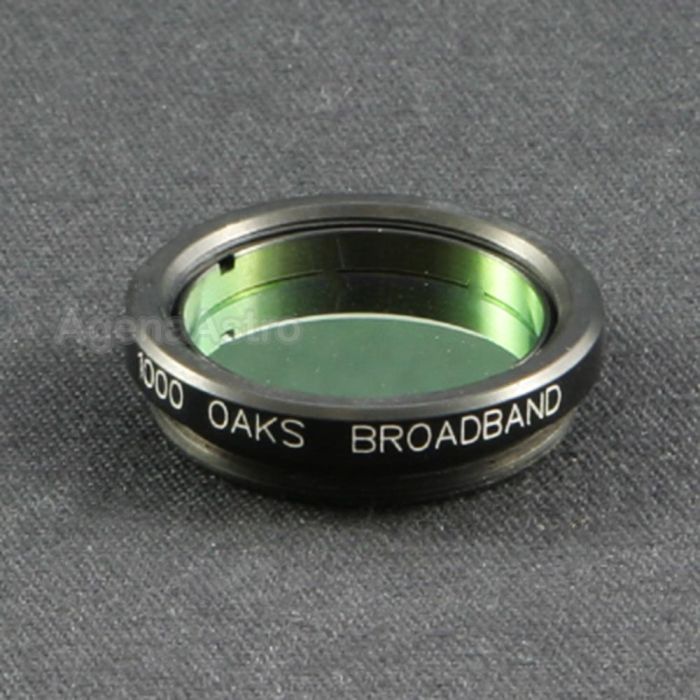
- This item is out of stock.
- Sign up for back-in-stock alerts to be notified when this item becomes available (account login required).
Stock count is accurate & shown in real time.
- This item is out of stock.
- Sign up for back-in-stock alerts to be notified when this item becomes available (account login required).
- This item is out of stock.
- Sign up for back-in-stock alerts to be notified when this item becomes available (account login required).
Contiguous US / Lower 48:
Free shipping applies to orders over $50 using our chosen carrier/method. Faster paid options are available at checkout.
Alaska, Hawaii & US Territories:
Free shipping applies to many—but not all—products. Enter your ZIP code in cart or upon checkout to confirm options and costs.
International:
International orders do not qualify for free shipping. Shipping, duties, brokerage, tariffs, and taxes are the customer’s responsibility. Some items may be restricted due to export, size, or manufacturer limitations.
- Blocks most man-made light pollution (sky glow) from common sources such as mercury vapor and sodium vapor lighting
- Improves the visibility and contrast of emission nebulae and other similar deep sky objects
- Can improve visibility and contrast of some reflection nebulae and larger, diffuse galaxies
Broadband "Light-pollution Reduction" (LPR) filters are designed to improve the visibility of deep sky objects by blocking out the mercury vapor, sodium vapor, and other such emission lines from man-made or natural sources which contribute to light pollution. In turn, these filters allow a broad range of more useful wavelengths to pass to the eye or imaging sensor. By selectively screening out of some of the background sky glow, the contrast is increased and allows deep sky objects to stand out against the background.
Broad-band filters don’t eliminate the effects of light pollution or make the objects brighter, but they can improve the visibility of many deep-sky objects. Emission nebulae are the most improved, but these filters can also give a slight contrast boost to reflection nebulae and a few of the larger and more diffuse galaxies. Large versions of these broadband filters that can fit over DSLR lenses can improve imaging of wide fields when sky glow is present.
Broadband filters can offer a noticeable boost in contrast and visibility of the fainter outer detail for objects like the Orion nebula (M42), the Lagoon nebula (M8), the Trifid nebula (M20), and others. The improvement isn’t as noticeable on star clusters or small galaxies.
Since some light is blocked by the filters, objects may look fainter from a dark sky site when using a broad-band filter than without one. Severe levels of light pollution can be too much for the broad-band filters to handle effectively, so observing from a dark site is preferred in these cases.
Other Information
- Country of Manufacture: United States
Broadband "Light-pollution Reduction" (LPR) filters are designed to improve the visibility of deep sky objects by blocking out the mercury vapor, sodium vapor, and other such emission lines from man-made or natural sources which contribute to light pollution. In turn, these filters allow a broad range of more useful wavelengths to pass to the eye or imaging sensor. By selectively screening out of some of the background sky glow, the contrast is increased and allows deep sky objects to stand out against the background.
Broad-band filters don’t eliminate the effects of light pollution or make the objects brighter, but they can improve the visibility of many deep-sky objects. Emission nebulae are the most improved, but these filters can also give a slight contrast boost to reflection nebulae and a few of the larger and more diffuse galaxies. Large versions of these broadband filters that can fit over DSLR lenses can improve imaging of wide fields when sky glow is present.
Broadband filters can offer a noticeable boost in contrast and visibility of the fainter outer detail for objects like the Orion nebula (M42), the Lagoon nebula (M8), the Trifid nebula (M20), and others. The improvement isn’t as noticeable on star clusters or small galaxies.
Since some light is blocked by the filters, objects may look fainter from a dark sky site when using a broad-band filter than without one. Severe levels of light pollution can be too much for the broad-band filters to handle effectively, so observing from a dark site is preferred in these cases.
- Blocks most man-made light pollution (sky glow) from common sources such as mercury vapor and sodium vapor lighting
- Improves the visibility and contrast of emission nebulae and other similar deep sky objects
- Can improve visibility and contrast of some reflection nebulae and larger, diffuse galaxies
Broadband "Light-pollution Reduction" (LPR) filters are designed to improve the visibility of deep sky objects by blocking out the mercury vapor, sodium vapor, and other such emission lines from man-made or natural sources which contribute to light pollution. In turn, these filters allow a broad range of more useful wavelengths to pass to the eye or imaging sensor. By selectively screening out of some of the background sky glow, the contrast is increased and allows deep sky objects to stand out against the background.
Broad-band filters don’t eliminate the effects of light pollution or make the objects brighter, but they can improve the visibility of many deep-sky objects. Emission nebulae are the most improved, but these filters can also give a slight contrast boost to reflection nebulae and a few of the larger and more diffuse galaxies. Large versions of these broadband filters that can fit over DSLR lenses can improve imaging of wide fields when sky glow is present.
Broadband filters can offer a noticeable boost in contrast and visibility of the fainter outer detail for objects like the Orion nebula (M42), the Lagoon nebula (M8), the Trifid nebula (M20), and others. The improvement isn’t as noticeable on star clusters or small galaxies.
Since some light is blocked by the filters, objects may look fainter from a dark sky site when using a broad-band filter than without one. Severe levels of light pollution can be too much for the broad-band filters to handle effectively, so observing from a dark site is preferred in these cases.
Other Information
- Country of Manufacture: United States