

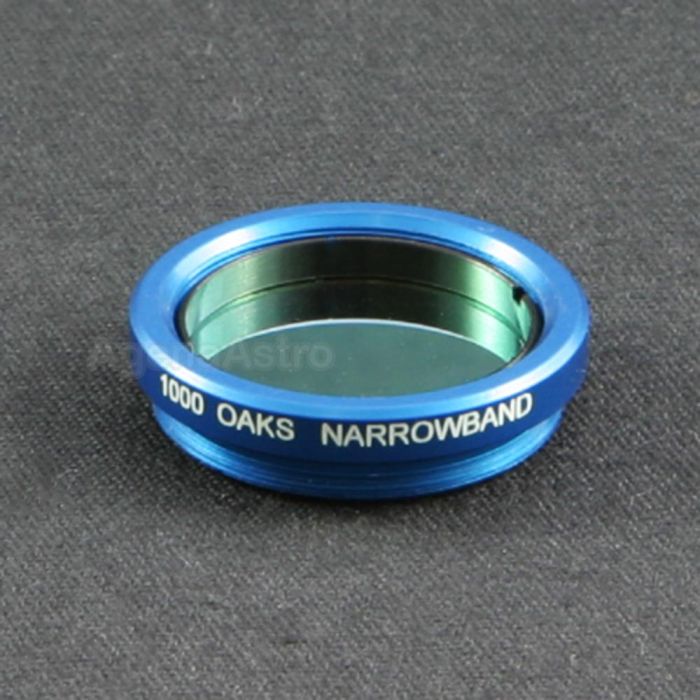
Thousand Oaks Optical Narrowband Light Pollution Reduction Filter - 1.25"
- This item is out of stock.
- Sign up for back-in-stock alerts to be notified when this item becomes available (account login required).
Stock count is accurate & shown in real time.
- This item is out of stock.
- Sign up for back-in-stock alerts to be notified when this item becomes available (account login required).
- This item is out of stock.
- Sign up for back-in-stock alerts to be notified when this item becomes available (account login required).
Contiguous US / Lower 48:
Free shipping applies to orders over $50 using our chosen carrier/method. Faster paid options are available at checkout.
Alaska, Hawaii & US Territories:
Free shipping applies to many—but not all—products. Enter your ZIP code in cart or upon checkout to confirm options and costs.
International:
International orders do not qualify for free shipping. Shipping, duties, brokerage, tariffs, and taxes are the customer’s responsibility. Some items may be restricted due to export, size, or manufacturer limitations.
Please note: Thousand Oaks' filters often have tiny dots, sleeks, and/or light scratches on the glass surface. These flaws will have no impact on optical performance and the spectral characteristics of the filter are not compromised. These are all brand new as received from the manufacturer and this is just how they come.
- Best for viewing emission nebulae from low to moderately light polluted sites
- Passes only the OIII and H-Beta emission lines and the wavelengths between
- Faint nebular objects become easier to see
- Darkens the background sky glow substantially without degrading nebulae
- Nebulae visible without filters can gain significant detail and contrast when viewed through the narrowband filter
- Photographic use of narrowband filters not recommended
The Thousand Oaks Optical Narrowband Light Pollution Reduction Filter is mainly designed for viewing emission nebulae from low to moderate light polluted areas. Often, its use in severely light polluted areas may be your only hope of observing nebular objects at all. The filter allows only the spectral emission lines of Oxygen III (OIII) and Hydrogen Beta (H-Beta) to pass through, as well as the wavelengths between the H-Beta and OIII lines. Such filters are often marketed as "nebula" filters.
The effect of narrowband filters on emission nebulae can be breathtaking with faint nebular objects becoming easier to see. The filter darkens the background sky glow substantially without degrading the nebulae. Prominent nebulae visible without filters can gain significant detail and contrast with a narrowband filter. Under true dark sky conditions the contrast and detail improvements are impressive.
Narrowband filters reduce the brightness of most star clusters, reflection nebulae, and galaxies. Photographic use of these narrowband filters is not recommended.
Other Information
- Country of Manufacture: United States
The Thousand Oaks Optical Narrowband Light Pollution Reduction Filter is mainly designed for viewing emission nebulae from low to moderate light polluted areas. Often, its use in severely light polluted areas may be your only hope of observing nebular objects at all. The filter allows only the spectral emission lines of Oxygen III (OIII) and Hydrogen Beta (H-Beta) to pass through, as well as the wavelengths between the H-Beta and OIII lines. Such filters are often marketed as "nebula" filters.
The effect of narrowband filters on emission nebulae can be breathtaking with faint nebular objects becoming easier to see. The filter darkens the background sky glow substantially without degrading the nebulae. Prominent nebulae visible without filters can gain significant detail and contrast with a narrowband filter. Under true dark sky conditions the contrast and detail improvements are impressive.
Narrowband filters reduce the brightness of most star clusters, reflection nebulae, and galaxies. Photographic use of these narrowband filters is not recommended.
Please note: Thousand Oaks' filters often have tiny dots, sleeks, and/or light scratches on the glass surface. These flaws will have no impact on optical performance and the spectral characteristics of the filter are not compromised. These are all brand new as received from the manufacturer and this is just how they come.
- Best for viewing emission nebulae from low to moderately light polluted sites
- Passes only the OIII and H-Beta emission lines and the wavelengths between
- Faint nebular objects become easier to see
- Darkens the background sky glow substantially without degrading nebulae
- Nebulae visible without filters can gain significant detail and contrast when viewed through the narrowband filter
- Photographic use of narrowband filters not recommended
The Thousand Oaks Optical Narrowband Light Pollution Reduction Filter is mainly designed for viewing emission nebulae from low to moderate light polluted areas. Often, its use in severely light polluted areas may be your only hope of observing nebular objects at all. The filter allows only the spectral emission lines of Oxygen III (OIII) and Hydrogen Beta (H-Beta) to pass through, as well as the wavelengths between the H-Beta and OIII lines. Such filters are often marketed as "nebula" filters.
The effect of narrowband filters on emission nebulae can be breathtaking with faint nebular objects becoming easier to see. The filter darkens the background sky glow substantially without degrading the nebulae. Prominent nebulae visible without filters can gain significant detail and contrast with a narrowband filter. Under true dark sky conditions the contrast and detail improvements are impressive.
Narrowband filters reduce the brightness of most star clusters, reflection nebulae, and galaxies. Photographic use of these narrowband filters is not recommended.
Other Information
- Country of Manufacture: United States