

Vaonis Atlas Modular Smart Telescope - Twin 80mm f/4.5 Imaging Modules
- This item is available for pre-order.
- Pre-orders are fulfilled in batches after the product launches, in the order orders are received.
- Exact shipping timing depends on initial availability.
Stock count is accurate & shown in real time.
- This item is out of stock.
- Sign up for back-in-stock alerts to be notified when this item becomes available (account login required).
- This item is out of stock.
- Sign up for back-in-stock alerts to be notified when this item becomes available (account login required).
Contiguous US / Lower 48:
Free shipping applies to orders over $50 using our chosen carrier/method. Faster paid options are available at checkout.
Alaska, Hawaii & US Territories:
Free shipping applies to many—but not all—products. Enter your ZIP code in cart or upon checkout to confirm options and costs.
International:
International orders do not qualify for free shipping. Shipping, duties, brokerage, tariffs, and taxes are the customer’s responsibility. Some items may be restricted due to export, size, or manufacturer limitations.
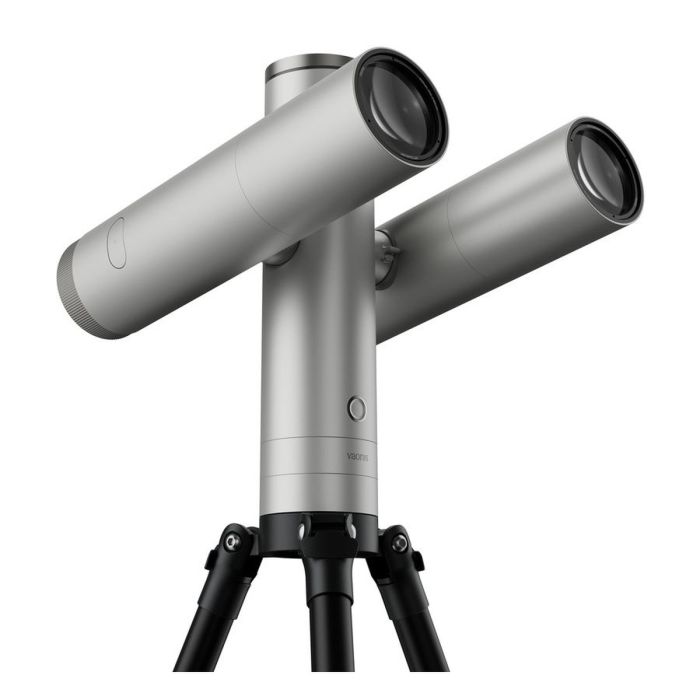
- Two imaging modules capture the same target automatically stacking to reveal more detail in half the time
- Beginner friendly, app-guided control from powering on to capturing your first astro image in minutes
- Both lenses are 80 mm APO Petzval with f/4.5, 80mm aperture, and 360mm focal length
- Featuring a back-illuminated Sony IMX585 sensor built for night imaging: 8.3MP and 24MP w/ mosaics
- See horizon to horizon on your screen with the Sky Guard 185° fisheye camera
- Sky Dock unlocks effortless setup enhancement, easily swap imaging modules in seconds
- 6 hours of battery life and up to 10 phones connected at once
- Expandable microSD storage (16 GB included), Wi-Fi 6, 60 W USB-C, IP64, and replaceable battery
- Compatible with standard 1.25” filters and Vaonis filters
Vaonis Atlas Modular Smart Telescope - Sky Twin Edition
Built with imaging evolution in mind, the new Vaonis Atlas Modular Smart Telescope is designed to grow as your passion expands. At the heart of Atlas lies Sky Dock, an interface that allows seamless clip-on imaging module attachments in seconds. The alt-az mount itself features Sky Guard, an integrated 185° fisheye camera that provides horizon-to-horizon coverage for a real-time sky map! Featuring two 80mm imaging modules, each modeled after the historic Petzval astrograph, while the incorporated back-illuminated Sony IMX585 sensors are matched to the optics for refined image correction.
The Atlas mounts, precision mechanics, and onboard intelligence are built to stay with you for years, even while the optics and sensor technology continue to evolve rapidly. Atlas was born from that idea: a mount built to last, with imaging modules that can be swapped in seconds. You change the module, never the instrument.
Discover What Sets the Atlas Apart!
Optics without Compromise
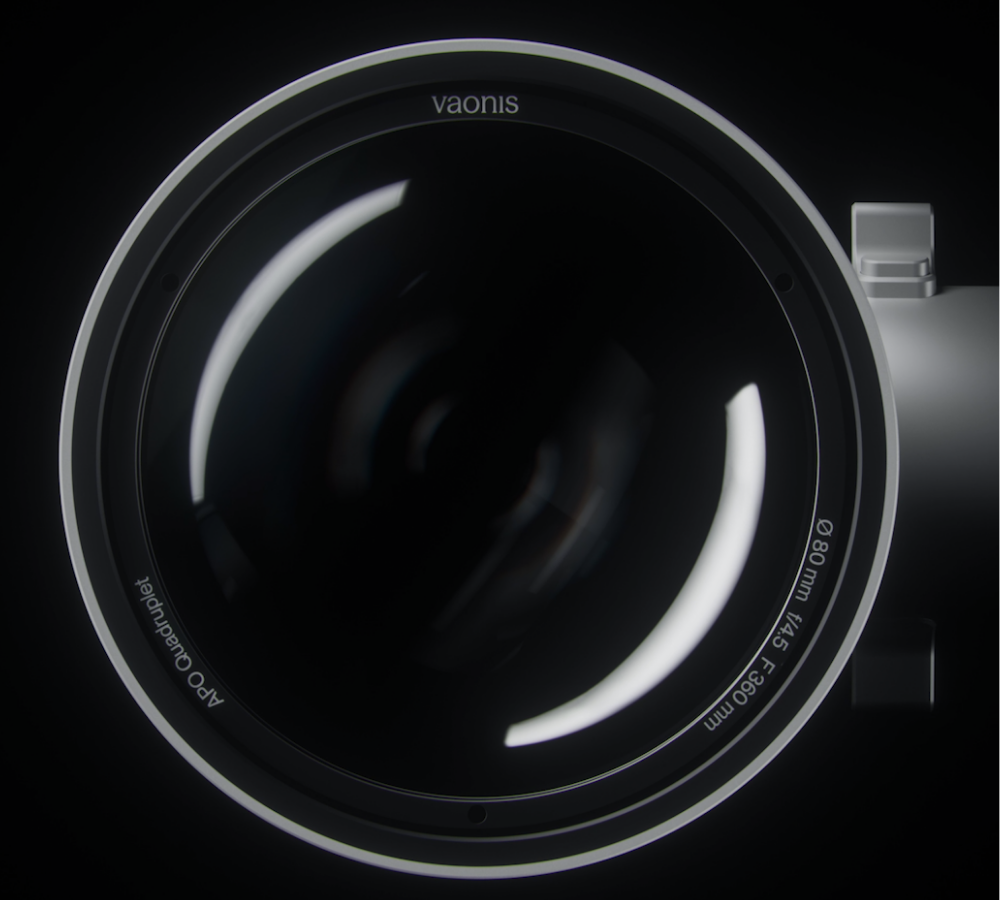
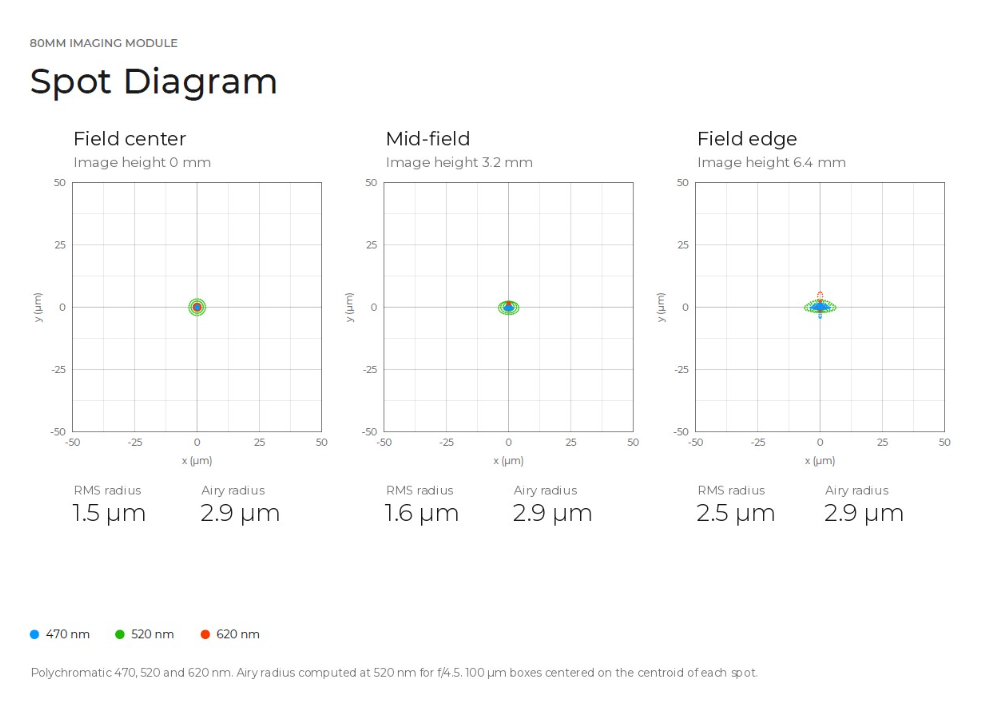
Featuring two fast f/4.5 with 80mm aperture and 360mm focal length, this APO quadruplet is perfectly paired with a built-in Sony IMX585 sensor. Unlocking perfectly matched optics for diffraction-limited across the entire view.
Your Sky in Real Time
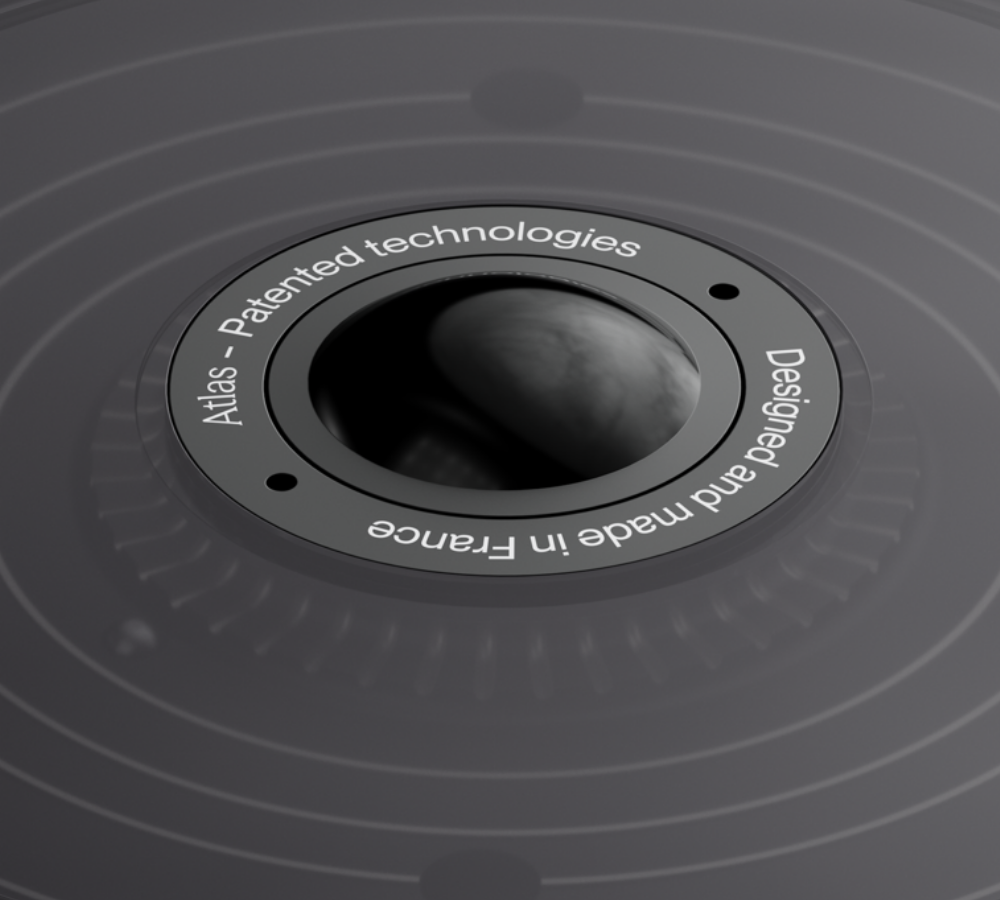
Sky Guard utilizes an onboard 185° fisheye camera, even revealing stars down to magnitude 6, just as the naked eye can! The Gaia app shows you real-time sky views while overlaying constellation lines, and object markers.
Built for Adventure
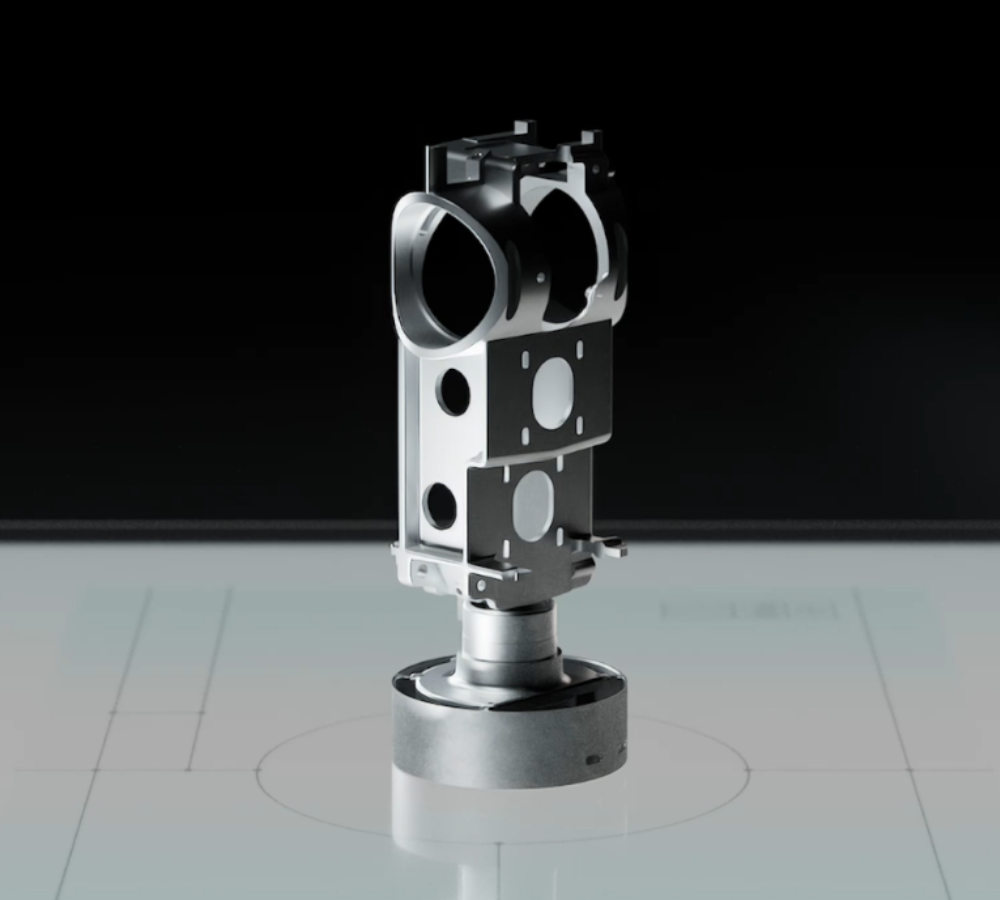
The dual aluminum structure takes the knocks of traveling and nights outdoors, instead of the internal precision components. Operating from −4°F to +104°F (−20°C to +40°C), the Atlas is ready whatever the weather.
The Universe Through the Vaonis Atlas
Iris Nebula
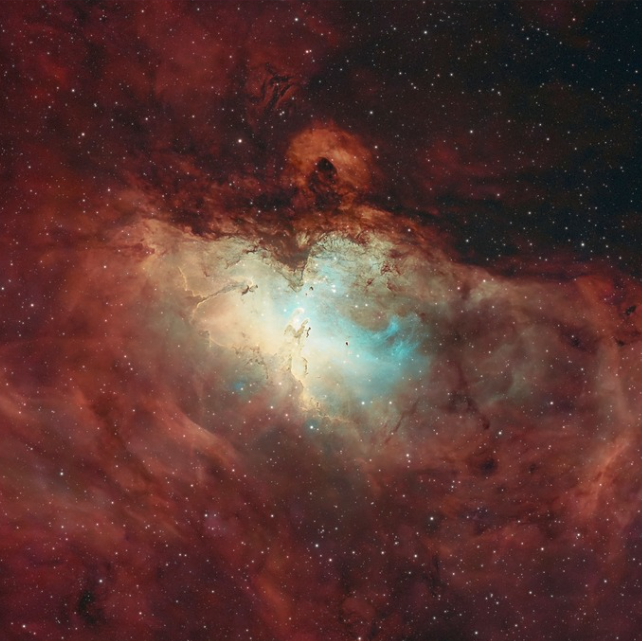
Captured with Vaonis Atlas Single 80mm imaging module, 68-mins of integration time, 30-sec exposures, and Vaonis Dual Band filter (sold separately). Under bortle 4 skies.
Triangulum Galaxy
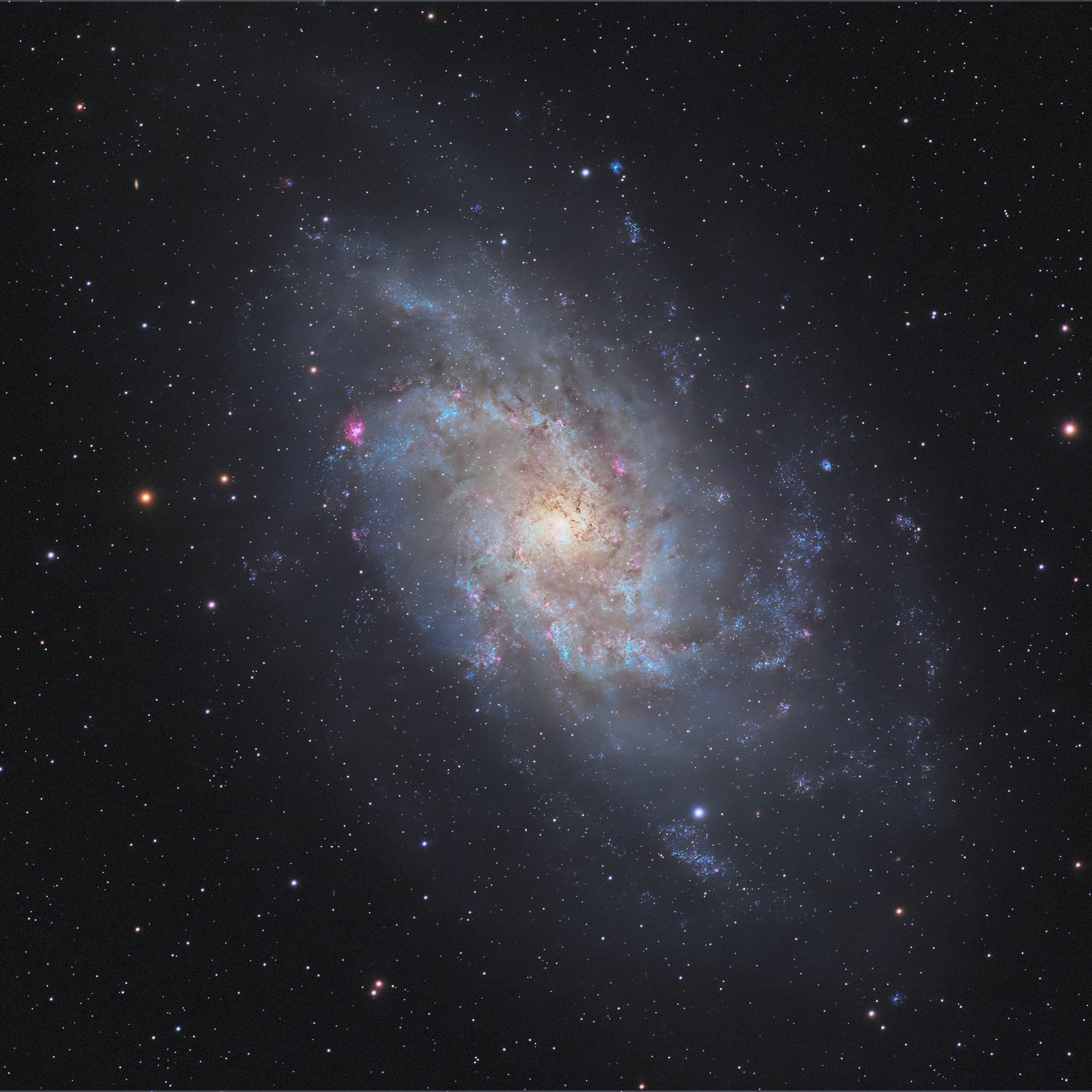
Twin Atlas 2x 80mm imaging modules, 15-mins of total integration time, 30-sec exposures, and no filter. Under bortle 5 skies.
Heart Nebula
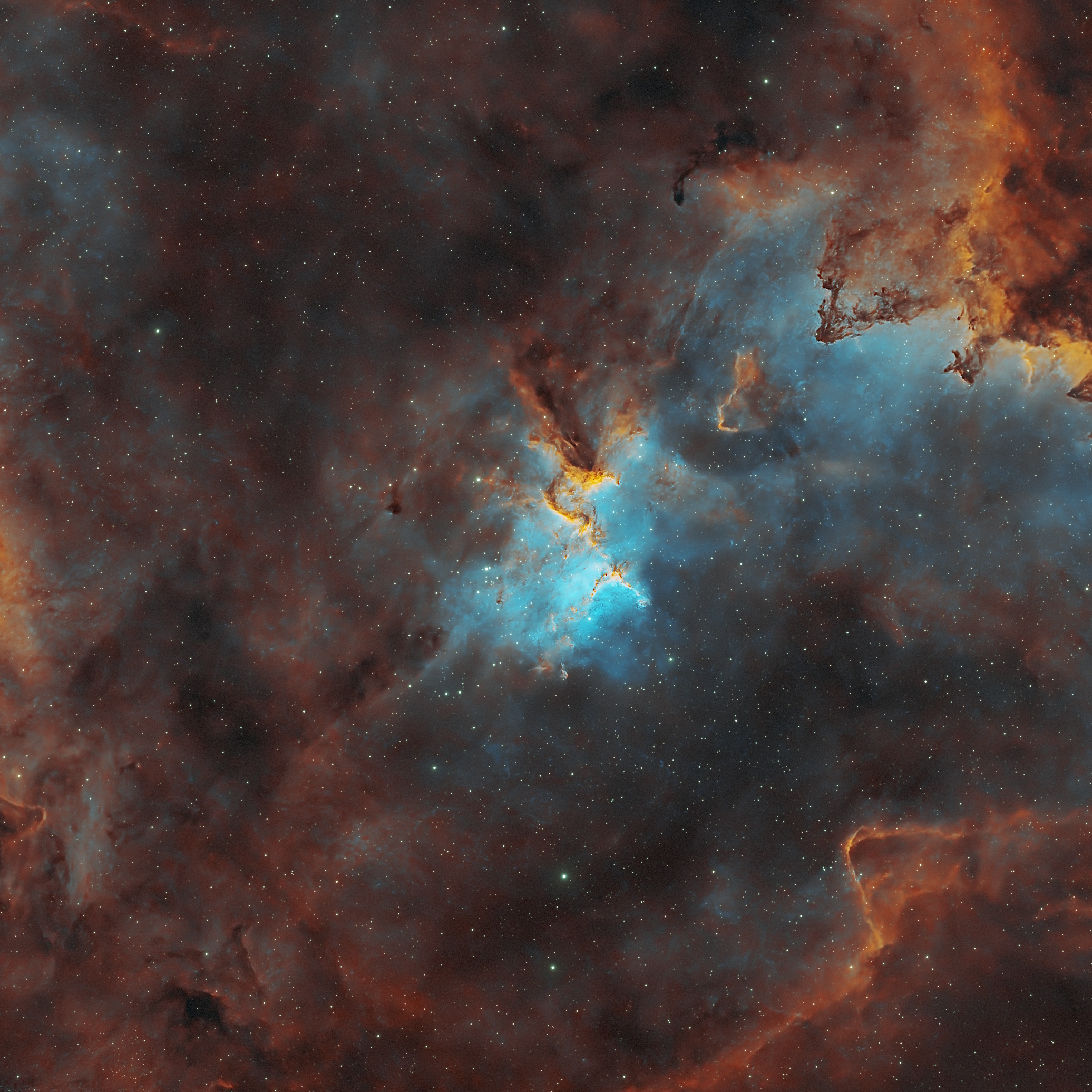
Twin Atlas 2x 80mm imaging modules. 1-hr of total integration time, 10-sec exposures at 200 gain and Vaonis Dual Band filter (sold separately). Under bortle 4 skies.
Vaonis Smart Telescope Comparison
| Specifications | Atlas Single | Atlas Twin | Vespera Pro II |
|---|---|---|---|
| Aperture | 80 mm | 2 × 80 mm | 50 mm |
| Focal Length | 360 mm | 360 mm | 250 mm |
| Focal Ratio | f/4.5 | f/4.5 (2 modules, Sky Twin) | f/5 |
| Optical Design | Petzval APO quadruplet | 2 × Petzval APO quadruplet | APO quadruplet |
| Sensor | Sony IMX585, 8.3 MP | 2 × Sony IMX585, 8.3 MP each | Sony IMX676, 12.5 MP |
| Max. Mosaic Resolution | 24 MP | 24 MP | 50 MP |
| Max. Mosaic Field | 3.5° × 2° | 3.5° × 2° | 4.18° × 2.45° |
| Image Scale | 1.66"/pixel | 1.66"/pixel | 1.65"/pixel |
| Sky Guard Camera | Yes, 185° | Yes, 185° | No |
| Modularity | Sky Dock modules | Sky Dock modules | Integrated instrument |
| Storage | 16 GB microSD, expandable | 16 GB microSD, expandable | 225 GB |
| Battery Life | 6 hours | 6 hours (1 module)* | 11 hours |
*The 6-hour Atlas battery specification applies to single-module operation. Battery life with both Twin modules operating has not been specified.
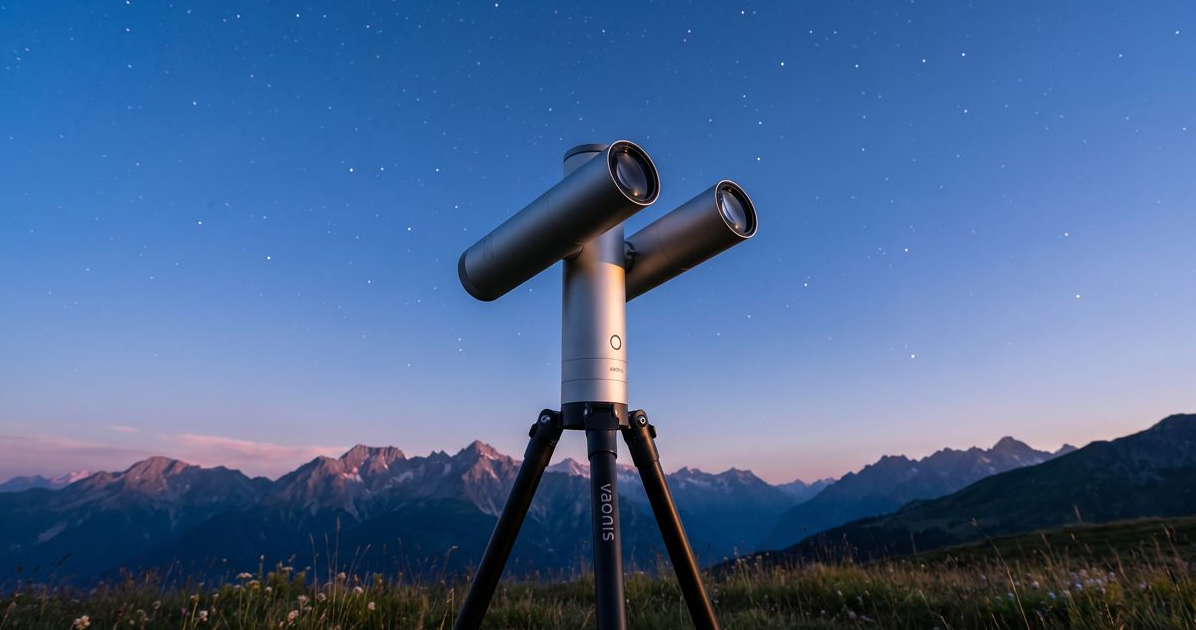
Dual Imaging Modules
The Vaonis Atlas Sky Twin features two 80mm f/4.5 Petzval-inspired APO imaging modules, each equipped with premium fluorophosphate and lanthanum glass and a back-illuminated 8.3 MP Sony IMX585 sensor for exceptional sharpness and color correction. Working together, both modules capture twice as much light from the same target, while Sky Twin automatically stacks images in real time to reveal more detail in half the time! Enjoy a 1.78° x 1.00° field of view, up to 24 MP CovalENS mosaics, and 16-bit FITS export for advanced processing. The alt-azimuth mount supports exposures up to 30 seconds, with equatorial mode planned for early 2027 to enable longer exposures without field rotation.
Sky Guard: Your Night Sky, Live
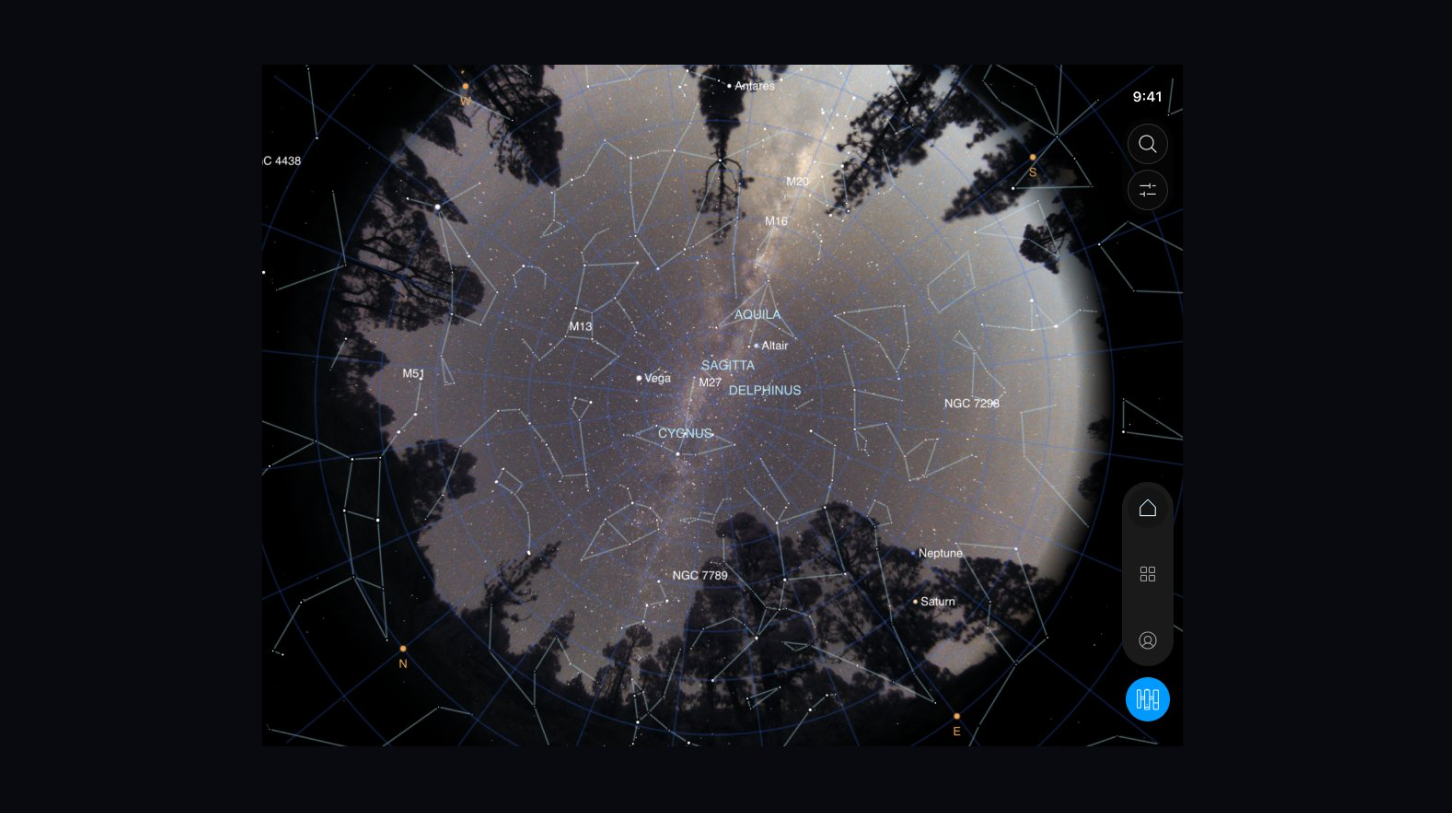
Featuring a 185° fisheye camera with a 12 MP Sony IMX676 sensor, Sky Guard delivers a live, horizon-to-horizon view of the night sky, revealing stars down to magnitude 6. Through the Gaia app, explore an interactive sky map with constellations, object names, and target locations. Simply select an object, and Atlas automatically aligns and begins capturing! Seamlessly switch between the live sky map and detailed imaging view while Sky Guard records an automatic timelapse of your observing session to save and share.
Sky Dock: The Evolving Interface
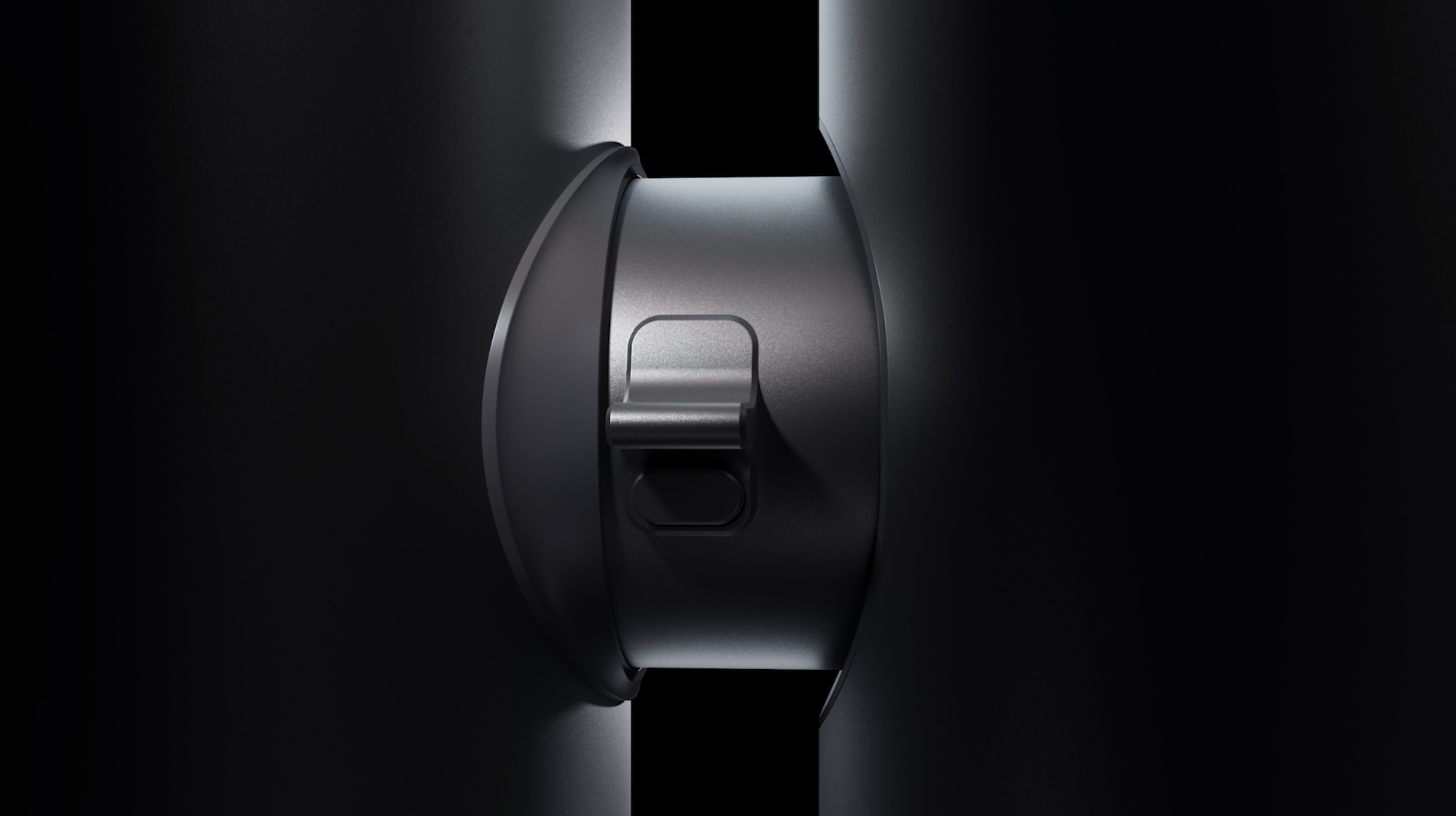
The Sky Dock lets you swap imaging modules in seconds with a secure, tool-free connection that ensures precise alignment and data transfer speeds up to 3 Gbit/s per module. Designed to evolve with your imaging needs, Atlas supports current and future modules, including upcoming planetary and monochrome imaging options, all using the same mount and mobile app. Plus, Atlas can be transported and stored fully assembled, making setup quick and effortless!
Built for All Terrain
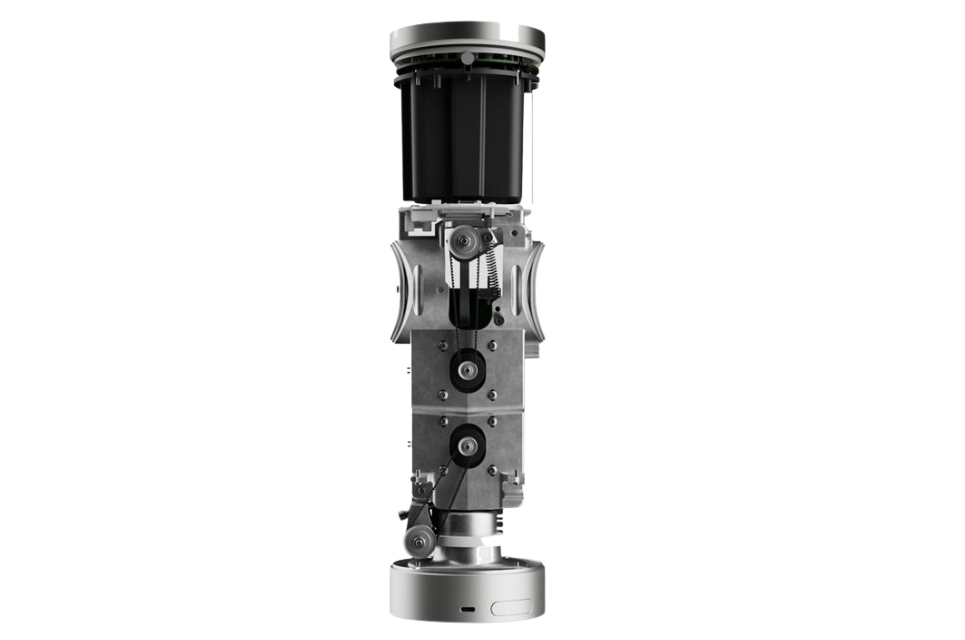
Atlas features a rugged dual-aluminum construction, combining a rigid die-cast chassis for precise tracking with a protective machined aluminum shell. With IP64 dust and splash resistance and an operating range of -20°C to +40°C (-4°F to +104°F), Atlas is built for demanding outdoor conditions. Additional features include automatic dew heating, 60W USB-C fast charging, a replaceable battery, and expandable microSD storage (16 GB included). Designed and manufactured in France, the mount is backed by a 10-year warranty through Vaonis, with 5 years of coverage on imaging modules.
Versatile Filter Compatibility
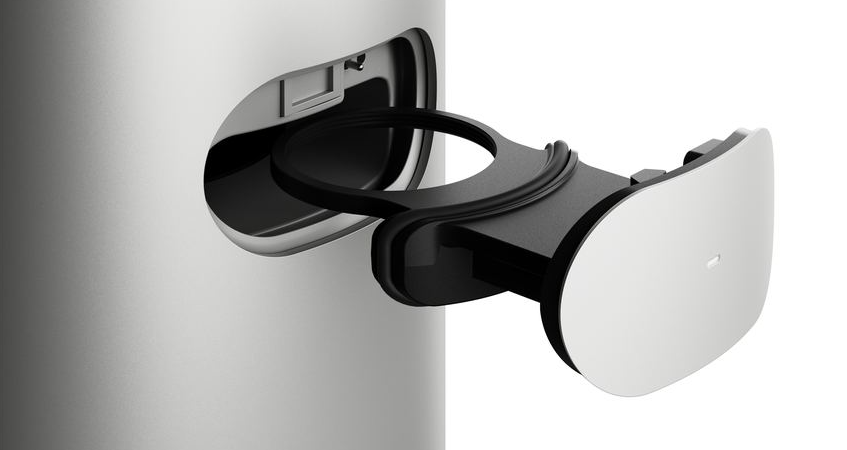
Atlas features a built-in filter drawer compatible with standard 1.25" (31.75 mm) filters, allowing you to customize your imaging experience. Compatible Vaonis CLS, Dual-Band, and Dark filters are automatically detected for seamless integration, while an optional full-aperture solar filter expands your observing possibilities to the Sun! (Filters sold separately)
Four Steps to your First Image
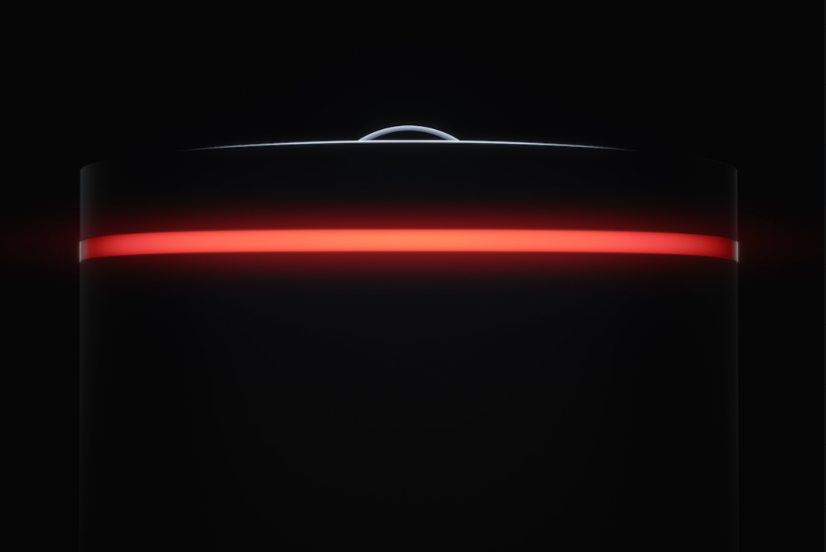
- Set Atlas down and level it: the accelerometer and the LED ring guide you.
- Connect over NFC or the built-in Wi-Fi, in a few seconds.
- Launch the Gaia app: Atlas aligns itself and Sky Guard shows your whole sky, from horizon to horizon.
- Select your target in the Sky Guard view: Atlas orients itself, tracks, focuses and stacks exposures; the image reveals itself live, for you and up to ten other connected screens.
Is Atlas Right for Me?
I'm a beginner. Is Atlas easy to use?
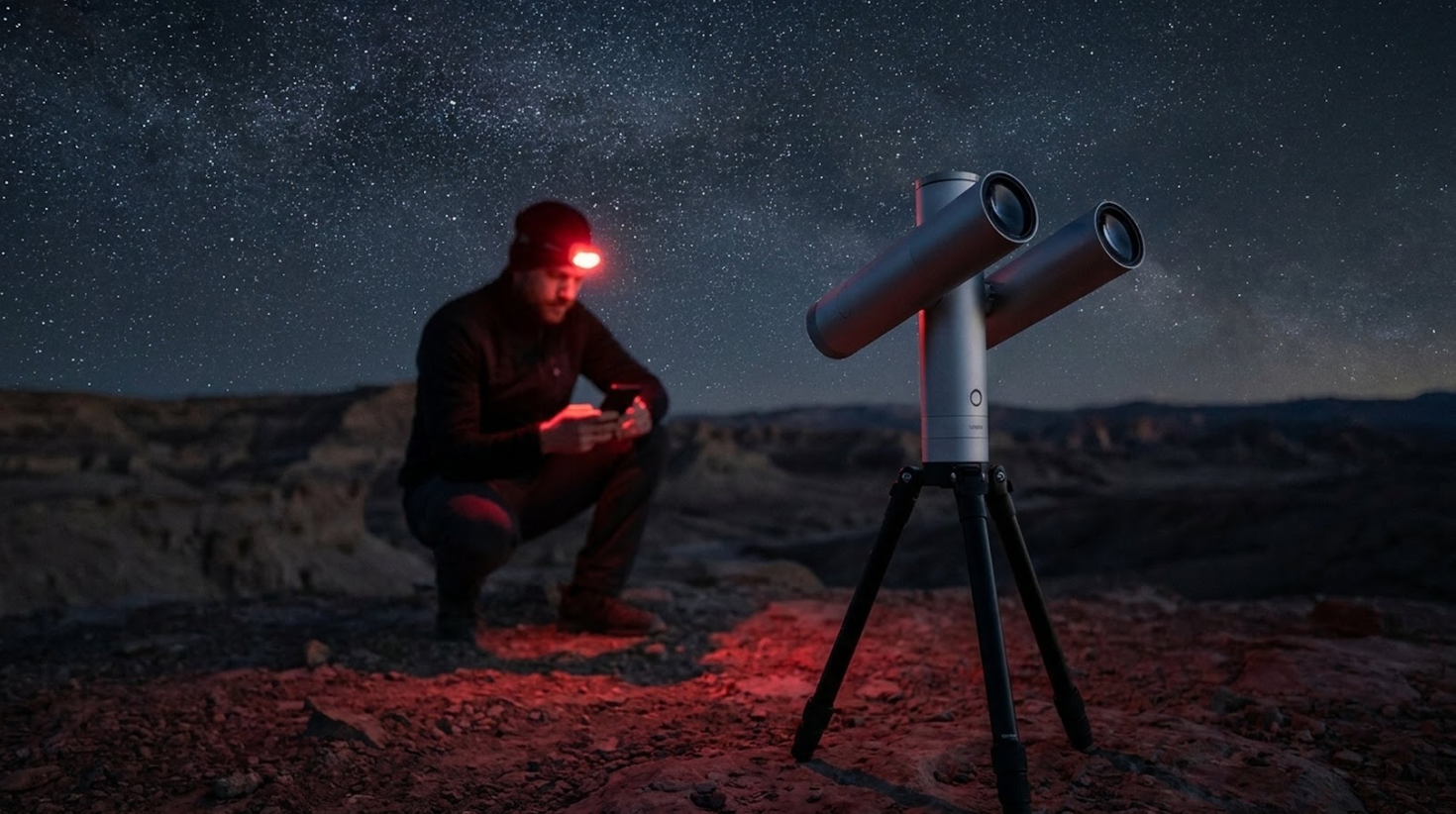
Yes! The Gaia app guides setup and automatically handles alignment, focusing, pointing, and tracking. Simply select a target and watch your image develop!
I'm an experienced astrophotographer. Is Atlas right for me?
Absolutely! Enjoy 16-bit FITS exports, multi-night imaging, 24 MP CovalENS mosaics, 1.25" filter compatibility, and faster imaging with Sky Twin.
I live in the city. Can I still use Atlas?
Yes! Real-time stacking and processing reveal deep-sky objects even under light-polluted skies, with optional filters for improved contrast.
Specifications
Optics
-
Aperture: 2x 80 mm (3.15")
-
Focal Length: 360 mm
-
Focal Ratio: f/4.5
-
Optical Design: Corrected Petzval apochromatic quadruplet (4 lenses in 3 groups)
-
Glass Elements: 2 fluorophosphate, 1 lanthanum
-
Optical Quality: Diffraction-limited across the full field and visible spectrum
-
Focusing: Automatic motorized stepper
-
Dew Shield: Built-in, retractable
Sensor
-
Sensor: Sony IMX585 STARVIS 2, back-illuminated color CMOS
-
Resolution: 3840 x 2160 (8.3 MP)
-
Sensor Format: 1/1.2"
-
Sensor Dimensions: 11.2 x 6.3 mm (0.44" x 0.25")
-
Pixel Size: 2.9 µm
-
Live Video: Lunar and solar observing (solar filter required)
-
Sensor Temperature Probe: Built-in
Imaging
-
Native Resolution: 8.3 MP
-
Maximum Mosaic Resolution: 24 MP (CovalENS)
-
Field of View: 1.78° x 1.00° native; up to 3.5° x 2° mosaic
-
Image Scale: 1.66 arcsec/pixel
-
Observation Modes: Deep sky, Moon, planets, Sun (with solar filter), daytime, multi-night, mosaic, night timelapse
-
Multi-Night Imaging: Automatically resumes and stacks exposures across sessions
-
Export Formats: JPEG 8-bit, FITS 16-bit, TIFF 16-bit
Mount & Tracking
-
Mount Type: Motorized alt-azimuth
-
Equatorial Mode: Planned with equatorial table accessory (second half of 2027)
-
Imaging Modules: 1 x 80 mm (supports optional second module)
-
Sky Dock: 2 tool-free connectors, 3 Gbit/s per module
-
Module Connection: Under 5 seconds, precision alignment
-
Drive System: Stepper motors, 1/256 microstepping, belt and worm gear
-
Maximum Slewing Speed: 6°/second
-
Sky Guard Camera: Sony IMX676 STARVIS 2, 12 MP, 185° fisheye
-
Sky Guard Frame Rate: 10 FPS
-
Sky Guard Sensitivity: Stars down to magnitude 6
-
Leveling: Accelerometer, adaptive LED ring, app guidance
-
Dew Control: Automatic heating with temperature and humidity sensors
-
Construction: Die-cast aluminum chassis with machined aluminum shell
Storage & Connectivity
-
Included Storage: 16 GB microSD card
-
System Memory: 32 GB
-
Expandable Storage: microSD
-
Wireless: Wi-Fi 6 (2 x 2 MIMO), NFC, Bluetooth 5.2
-
Simultaneous Users: More than 10
-
USB Port: Sealed USB-C 3.1 (IP68)
-
Charging: 60 W USB Power Delivery
-
Additional Connectivity: Ethernet and USB accessories via adapter
-
Mobile App: Gaia (iOS and Android)
-
App Features: Sky map, guest mode, NFC pairing, JPEG cloud backup
Power & Durability
-
Battery: Replaceable 9,000 mAh lithium-ion
-
Battery Life: Up to 6 hours (single module)
-
Ingress Protection: IP64
-
Operating Temperature: -20°C to +40°C (-4°F to +104°F)
Filters
-
Filter Drawer: Automatic Vaonis filter detection
-
Filter Compatibility: Standard 1.25" (31.75 mm)
-
Vaonis Filters: CLS, Dual-band, Dark
-
Solar Filter: Full-aperture solar filter
Dimensions & Weight
-
Twin Dimensions: 41 x 10 x 20.5 cm (16.14" x 3.94" x 8.07")
-
Mount Weight: 3.5 kg (7.72 lb)
-
80 mm Module Weight: 3 kg (6.61 lb)
-
Total Weight: 6.5 kg (14.33 lb)
Spot Diagram
Frequently Asked Questions
Do you look through an eyepiece or at a screen?
Atlas has no eyepiece. You observe live on your screen through the Gaia app. The instrument gathers light over time, revealing colors and details the human eye cannot perceive, even through a large telescope.
What is an imaging module?
An imaging module combines the telescope optics and camera sensor into one interchangeable unit that attaches to the Atlas mount through the Sky Dock interface. The 80 mm module pairs an apochromatic optical system with a back-illuminated Sony IMX585 sensor, essentially combining an optical tube and camera into one compact module.
Why an imaging module rather than an optical tube?
Each imaging module contains its own sensor, precisely matched to its optics. When you upgrade or change modules, the optics and sensor are replaced together, while the mount, Sky Guard camera, and Gaia app remain the same.
Single or Twin, which one should I choose?
Atlas Single includes one 80 mm imaging module and provides a complete observing experience. Atlas Twin adds a second module to capture twice as much light from the same target, with automatic Sky Twin stacking for more detail in half the time. Twin is ideal for faint deep-sky objects and shorter observing sessions. You can also start with Single and add a second C80 module later.
Does each module in Twin have its own sensor?
Yes. Each 80 mm imaging module has its own Sony IMX585 sensor. Both modules capture the same target simultaneously, and Sky Twin automatically combines their images in real time without additional adjustments.
Will other imaging modules be available?
Yes. Atlas is designed around a modular platform, allowing future imaging modules to connect through the same Sky Dock interface. Modules optimized for planetary observation and monochrome imaging are already in development, offering greater flexibility for different imaging applications.
Are Vespera accessories compatible with Atlas?
No. Atlas uses a new modular platform, so Vespera accessories are not compatible with the Atlas mount or its 80 mm imaging module.
Is Atlas suitable for beginners and experienced astronomers?
Yes. The Gaia app guides leveling and automates alignment, pointing, and tracking, making Atlas accessible to beginners. Experienced astrophotographers can take advantage of 16-bit FITS exports, multi-night acquisition, CovalENS mosaics, and the optional Twin configuration for faint deep-sky targets.
Can Atlas be used under light-polluted skies?
Yes. Atlas uses real-time image stacking and processing to reveal deep-sky objects even in light-polluted environments. Compatible light-pollution filters can also be installed in the filter drawer to improve contrast when imaging suitable targets.
How long does Atlas run on a charge, and how do I recharge it?
Atlas provides up to 6 hours of operation with one imaging module. It supports 60 W USB-C fast charging and can remain connected to a compatible external power bank during observation. The built-in battery is also replaceable. Battery life with two modules operating has not been specified.
Does Atlas support long exposures and equatorial mode?
Atlas ships with a motorized alt-azimuth mount supporting individual exposures up to 30 seconds, automatically stacked in real time. Equatorial mode is planned for the first half of 2027 to eliminate field rotation and enable longer exposures. An optional equatorial table is expected in the second half of 2027.
Other Information
- Country of Manufacture: France
Vaonis Atlas Modular Smart Telescope - Sky Twin Edition
Built with imaging evolution in mind, the new Vaonis Atlas Modular Smart Telescope is designed to grow as your passion expands. At the heart of Atlas lies Sky Dock, an interface that allows seamless clip-on imaging module attachments in seconds. The alt-az mount itself features Sky Guard, an integrated 185° fisheye camera that provides horizon-to-horizon coverage for a real-time sky map! Featuring two 80mm imaging modules, each modeled after the historic Petzval astrograph, while the incorporated back-illuminated Sony IMX585 sensors are matched to the optics for refined image correction.
The Atlas mounts, precision mechanics, and onboard intelligence are built to stay with you for years, even while the optics and sensor technology continue to evolve rapidly. Atlas was born from that idea: a mount built to last, with imaging modules that can be swapped in seconds. You change the module, never the instrument.
Discover What Sets the Atlas Apart!
Optics without Compromise
Featuring two fast f/4.5 with 80mm aperture and 360mm focal length, this APO quadruplet is perfectly paired with a built-in Sony IMX585 sensor. Unlocking perfectly matched optics for diffraction-limited across the entire view.
Your Sky in Real Time
Sky Guard utilizes an onboard 185° fisheye camera, even revealing stars down to magnitude 6, just as the naked eye can! The Gaia app shows you real-time sky views while overlaying constellation lines, and object markers.
Built for Adventure
The dual aluminum structure takes the knocks of traveling and nights outdoors, instead of the internal precision components. Operating from −4°F to +104°F (−20°C to +40°C), the Atlas is ready whatever the weather.
The Universe Through the Vaonis Atlas
Iris Nebula
Captured with Vaonis Atlas Single 80mm imaging module, 68-mins of integration time, 30-sec exposures, and Vaonis Dual Band filter (sold separately). Under bortle 4 skies.
Triangulum Galaxy
Twin Atlas 2x 80mm imaging modules, 15-mins of total integration time, 30-sec exposures, and no filter. Under bortle 5 skies.
Heart Nebula
Twin Atlas 2x 80mm imaging modules. 1-hr of total integration time, 10-sec exposures at 200 gain and Vaonis Dual Band filter (sold separately). Under bortle 4 skies.
Vaonis Smart Telescope Comparison
| Specifications | Atlas Single | Atlas Twin | Vespera Pro II |
|---|---|---|---|
| Aperture | 80 mm | 2 × 80 mm | 50 mm |
| Focal Length | 360 mm | 360 mm | 250 mm |
| Focal Ratio | f/4.5 | f/4.5 (2 modules, Sky Twin) | f/5 |
| Optical Design | Petzval APO quadruplet | 2 × Petzval APO quadruplet | APO quadruplet |
| Sensor | Sony IMX585, 8.3 MP | 2 × Sony IMX585, 8.3 MP each | Sony IMX676, 12.5 MP |
| Max. Mosaic Resolution | 24 MP | 24 MP | 50 MP |
| Max. Mosaic Field | 3.5° × 2° | 3.5° × 2° | 4.18° × 2.45° |
| Image Scale | 1.66"/pixel | 1.66"/pixel | 1.65"/pixel |
| Sky Guard Camera | Yes, 185° | Yes, 185° | No |
| Modularity | Sky Dock modules | Sky Dock modules | Integrated instrument |
| Storage | 16 GB microSD, expandable | 16 GB microSD, expandable | 225 GB |
| Battery Life | 6 hours | 6 hours (1 module)* | 11 hours |
*The 6-hour Atlas battery specification applies to single-module operation. Battery life with both Twin modules operating has not been specified.
Dual Imaging Modules
The Vaonis Atlas Sky Twin features two 80mm f/4.5 Petzval-inspired APO imaging modules, each equipped with premium fluorophosphate and lanthanum glass and a back-illuminated 8.3 MP Sony IMX585 sensor for exceptional sharpness and color correction. Working together, both modules capture twice as much light from the same target, while Sky Twin automatically stacks images in real time to reveal more detail in half the time! Enjoy a 1.78° x 1.00° field of view, up to 24 MP CovalENS mosaics, and 16-bit FITS export for advanced processing. The alt-azimuth mount supports exposures up to 30 seconds, with equatorial mode planned for early 2027 to enable longer exposures without field rotation.
Sky Guard: Your Night Sky, Live
Featuring a 185° fisheye camera with a 12 MP Sony IMX676 sensor, Sky Guard delivers a live, horizon-to-horizon view of the night sky, revealing stars down to magnitude 6. Through the Gaia app, explore an interactive sky map with constellations, object names, and target locations. Simply select an object, and Atlas automatically aligns and begins capturing! Seamlessly switch between the live sky map and detailed imaging view while Sky Guard records an automatic timelapse of your observing session to save and share.
Sky Dock: The Evolving Interface
The Sky Dock lets you swap imaging modules in seconds with a secure, tool-free connection that ensures precise alignment and data transfer speeds up to 3 Gbit/s per module. Designed to evolve with your imaging needs, Atlas supports current and future modules, including upcoming planetary and monochrome imaging options, all using the same mount and mobile app. Plus, Atlas can be transported and stored fully assembled, making setup quick and effortless!
Built for All Terrain
Atlas features a rugged dual-aluminum construction, combining a rigid die-cast chassis for precise tracking with a protective machined aluminum shell. With IP64 dust and splash resistance and an operating range of -20°C to +40°C (-4°F to +104°F), Atlas is built for demanding outdoor conditions. Additional features include automatic dew heating, 60W USB-C fast charging, a replaceable battery, and expandable microSD storage (16 GB included). Designed and manufactured in France, the mount is backed by a 10-year warranty through Vaonis, with 5 years of coverage on imaging modules.
Versatile Filter Compatibility
Atlas features a built-in filter drawer compatible with standard 1.25" (31.75 mm) filters, allowing you to customize your imaging experience. Compatible Vaonis CLS, Dual-Band, and Dark filters are automatically detected for seamless integration, while an optional full-aperture solar filter expands your observing possibilities to the Sun! (Filters sold separately)
Four Steps to your First Image
- Set Atlas down and level it: the accelerometer and the LED ring guide you.
- Connect over NFC or the built-in Wi-Fi, in a few seconds.
- Launch the Gaia app: Atlas aligns itself and Sky Guard shows your whole sky, from horizon to horizon.
- Select your target in the Sky Guard view: Atlas orients itself, tracks, focuses and stacks exposures; the image reveals itself live, for you and up to ten other connected screens.
Is Atlas Right for Me?
I'm a beginner. Is Atlas easy to use?
Yes! The Gaia app guides setup and automatically handles alignment, focusing, pointing, and tracking. Simply select a target and watch your image develop!
I'm an experienced astrophotographer. Is Atlas right for me?
Absolutely! Enjoy 16-bit FITS exports, multi-night imaging, 24 MP CovalENS mosaics, 1.25" filter compatibility, and faster imaging with Sky Twin.
I live in the city. Can I still use Atlas?
Yes! Real-time stacking and processing reveal deep-sky objects even under light-polluted skies, with optional filters for improved contrast.
Specifications
Optics
-
Aperture: 2x 80 mm (3.15")
-
Focal Length: 360 mm
-
Focal Ratio: f/4.5
-
Optical Design: Corrected Petzval apochromatic quadruplet (4 lenses in 3 groups)
-
Glass Elements: 2 fluorophosphate, 1 lanthanum
-
Optical Quality: Diffraction-limited across the full field and visible spectrum
-
Focusing: Automatic motorized stepper
-
Dew Shield: Built-in, retractable
Sensor
-
Sensor: Sony IMX585 STARVIS 2, back-illuminated color CMOS
-
Resolution: 3840 x 2160 (8.3 MP)
-
Sensor Format: 1/1.2"
-
Sensor Dimensions: 11.2 x 6.3 mm (0.44" x 0.25")
-
Pixel Size: 2.9 µm
-
Live Video: Lunar and solar observing (solar filter required)
-
Sensor Temperature Probe: Built-in
Imaging
-
Native Resolution: 8.3 MP
-
Maximum Mosaic Resolution: 24 MP (CovalENS)
-
Field of View: 1.78° x 1.00° native; up to 3.5° x 2° mosaic
-
Image Scale: 1.66 arcsec/pixel
-
Observation Modes: Deep sky, Moon, planets, Sun (with solar filter), daytime, multi-night, mosaic, night timelapse
-
Multi-Night Imaging: Automatically resumes and stacks exposures across sessions
-
Export Formats: JPEG 8-bit, FITS 16-bit, TIFF 16-bit
Mount & Tracking
-
Mount Type: Motorized alt-azimuth
-
Equatorial Mode: Planned with equatorial table accessory (second half of 2027)
-
Imaging Modules: 1 x 80 mm (supports optional second module)
-
Sky Dock: 2 tool-free connectors, 3 Gbit/s per module
-
Module Connection: Under 5 seconds, precision alignment
-
Drive System: Stepper motors, 1/256 microstepping, belt and worm gear
-
Maximum Slewing Speed: 6°/second
-
Sky Guard Camera: Sony IMX676 STARVIS 2, 12 MP, 185° fisheye
-
Sky Guard Frame Rate: 10 FPS
-
Sky Guard Sensitivity: Stars down to magnitude 6
-
Leveling: Accelerometer, adaptive LED ring, app guidance
-
Dew Control: Automatic heating with temperature and humidity sensors
-
Construction: Die-cast aluminum chassis with machined aluminum shell
Storage & Connectivity
-
Included Storage: 16 GB microSD card
-
System Memory: 32 GB
-
Expandable Storage: microSD
-
Wireless: Wi-Fi 6 (2 x 2 MIMO), NFC, Bluetooth 5.2
-
Simultaneous Users: More than 10
-
USB Port: Sealed USB-C 3.1 (IP68)
-
Charging: 60 W USB Power Delivery
-
Additional Connectivity: Ethernet and USB accessories via adapter
-
Mobile App: Gaia (iOS and Android)
-
App Features: Sky map, guest mode, NFC pairing, JPEG cloud backup
Power & Durability
-
Battery: Replaceable 9,000 mAh lithium-ion
-
Battery Life: Up to 6 hours (single module)
-
Ingress Protection: IP64
-
Operating Temperature: -20°C to +40°C (-4°F to +104°F)
Filters
-
Filter Drawer: Automatic Vaonis filter detection
-
Filter Compatibility: Standard 1.25" (31.75 mm)
-
Vaonis Filters: CLS, Dual-band, Dark
-
Solar Filter: Full-aperture solar filter
Dimensions & Weight
-
Twin Dimensions: 41 x 10 x 20.5 cm (16.14" x 3.94" x 8.07")
-
Mount Weight: 3.5 kg (7.72 lb)
-
80 mm Module Weight: 3 kg (6.61 lb)
-
Total Weight: 6.5 kg (14.33 lb)
Spot Diagram
Frequently Asked Questions
Do you look through an eyepiece or at a screen?
Atlas has no eyepiece. You observe live on your screen through the Gaia app. The instrument gathers light over time, revealing colors and details the human eye cannot perceive, even through a large telescope.
What is an imaging module?
An imaging module combines the telescope optics and camera sensor into one interchangeable unit that attaches to the Atlas mount through the Sky Dock interface. The 80 mm module pairs an apochromatic optical system with a back-illuminated Sony IMX585 sensor, essentially combining an optical tube and camera into one compact module.
Why an imaging module rather than an optical tube?
Each imaging module contains its own sensor, precisely matched to its optics. When you upgrade or change modules, the optics and sensor are replaced together, while the mount, Sky Guard camera, and Gaia app remain the same.
Single or Twin, which one should I choose?
Atlas Single includes one 80 mm imaging module and provides a complete observing experience. Atlas Twin adds a second module to capture twice as much light from the same target, with automatic Sky Twin stacking for more detail in half the time. Twin is ideal for faint deep-sky objects and shorter observing sessions. You can also start with Single and add a second C80 module later.
Does each module in Twin have its own sensor?
Yes. Each 80 mm imaging module has its own Sony IMX585 sensor. Both modules capture the same target simultaneously, and Sky Twin automatically combines their images in real time without additional adjustments.
Will other imaging modules be available?
Yes. Atlas is designed around a modular platform, allowing future imaging modules to connect through the same Sky Dock interface. Modules optimized for planetary observation and monochrome imaging are already in development, offering greater flexibility for different imaging applications.
Are Vespera accessories compatible with Atlas?
No. Atlas uses a new modular platform, so Vespera accessories are not compatible with the Atlas mount or its 80 mm imaging module.
Is Atlas suitable for beginners and experienced astronomers?
Yes. The Gaia app guides leveling and automates alignment, pointing, and tracking, making Atlas accessible to beginners. Experienced astrophotographers can take advantage of 16-bit FITS exports, multi-night acquisition, CovalENS mosaics, and the optional Twin configuration for faint deep-sky targets.
Can Atlas be used under light-polluted skies?
Yes. Atlas uses real-time image stacking and processing to reveal deep-sky objects even in light-polluted environments. Compatible light-pollution filters can also be installed in the filter drawer to improve contrast when imaging suitable targets.
How long does Atlas run on a charge, and how do I recharge it?
Atlas provides up to 6 hours of operation with one imaging module. It supports 60 W USB-C fast charging and can remain connected to a compatible external power bank during observation. The built-in battery is also replaceable. Battery life with two modules operating has not been specified.
Does Atlas support long exposures and equatorial mode?
Atlas ships with a motorized alt-azimuth mount supporting individual exposures up to 30 seconds, automatically stacked in real time. Equatorial mode is planned for the first half of 2027 to eliminate field rotation and enable longer exposures. An optional equatorial table is expected in the second half of 2027.
| Manufacturer | Vaonis |
|---|---|
| Telescope Focal Length | 301 - 400mm |
- x1 Atlas Mount
- x2 Atlas 80 mm Imaging Module with Lens Cap
- x1 Aluminum Tripod
- x1 Protective Cover
- x1 Sky Guard Caps
- x2 Sky Dock Cap
- x2 Standard Filter Drawer
- x2 Atlas Mount Extension
- x1 16 GB MicroSD Card
- x1 Quick Start Guides
- Two imaging modules capture the same target automatically stacking to reveal more detail in half the time
- Beginner friendly, app-guided control from powering on to capturing your first astro image in minutes
- Both lenses are 80 mm APO Petzval with f/4.5, 80mm aperture, and 360mm focal length
- Featuring a back-illuminated Sony IMX585 sensor built for night imaging: 8.3MP and 24MP w/ mosaics
- See horizon to horizon on your screen with the Sky Guard 185° fisheye camera
- Sky Dock unlocks effortless setup enhancement, easily swap imaging modules in seconds
- 6 hours of battery life and up to 10 phones connected at once
- Expandable microSD storage (16 GB included), Wi-Fi 6, 60 W USB-C, IP64, and replaceable battery
- Compatible with standard 1.25” filters and Vaonis filters
Vaonis Atlas Modular Smart Telescope - Sky Twin Edition
Built with imaging evolution in mind, the new Vaonis Atlas Modular Smart Telescope is designed to grow as your passion expands. At the heart of Atlas lies Sky Dock, an interface that allows seamless clip-on imaging module attachments in seconds. The alt-az mount itself features Sky Guard, an integrated 185° fisheye camera that provides horizon-to-horizon coverage for a real-time sky map! Featuring two 80mm imaging modules, each modeled after the historic Petzval astrograph, while the incorporated back-illuminated Sony IMX585 sensors are matched to the optics for refined image correction.
The Atlas mounts, precision mechanics, and onboard intelligence are built to stay with you for years, even while the optics and sensor technology continue to evolve rapidly. Atlas was born from that idea: a mount built to last, with imaging modules that can be swapped in seconds. You change the module, never the instrument.
Discover What Sets the Atlas Apart!
Optics without Compromise
Featuring two fast f/4.5 with 80mm aperture and 360mm focal length, this APO quadruplet is perfectly paired with a built-in Sony IMX585 sensor. Unlocking perfectly matched optics for diffraction-limited across the entire view.
Your Sky in Real Time
Sky Guard utilizes an onboard 185° fisheye camera, even revealing stars down to magnitude 6, just as the naked eye can! The Gaia app shows you real-time sky views while overlaying constellation lines, and object markers.
Built for Adventure
The dual aluminum structure takes the knocks of traveling and nights outdoors, instead of the internal precision components. Operating from −4°F to +104°F (−20°C to +40°C), the Atlas is ready whatever the weather.
The Universe Through the Vaonis Atlas
Iris Nebula
Captured with Vaonis Atlas Single 80mm imaging module, 68-mins of integration time, 30-sec exposures, and Vaonis Dual Band filter (sold separately). Under bortle 4 skies.
Triangulum Galaxy
Twin Atlas 2x 80mm imaging modules, 15-mins of total integration time, 30-sec exposures, and no filter. Under bortle 5 skies.
Heart Nebula
Twin Atlas 2x 80mm imaging modules. 1-hr of total integration time, 10-sec exposures at 200 gain and Vaonis Dual Band filter (sold separately). Under bortle 4 skies.
Vaonis Smart Telescope Comparison
| Specifications | Atlas Single | Atlas Twin | Vespera Pro II |
|---|---|---|---|
| Aperture | 80 mm | 2 × 80 mm | 50 mm |
| Focal Length | 360 mm | 360 mm | 250 mm |
| Focal Ratio | f/4.5 | f/4.5 (2 modules, Sky Twin) | f/5 |
| Optical Design | Petzval APO quadruplet | 2 × Petzval APO quadruplet | APO quadruplet |
| Sensor | Sony IMX585, 8.3 MP | 2 × Sony IMX585, 8.3 MP each | Sony IMX676, 12.5 MP |
| Max. Mosaic Resolution | 24 MP | 24 MP | 50 MP |
| Max. Mosaic Field | 3.5° × 2° | 3.5° × 2° | 4.18° × 2.45° |
| Image Scale | 1.66"/pixel | 1.66"/pixel | 1.65"/pixel |
| Sky Guard Camera | Yes, 185° | Yes, 185° | No |
| Modularity | Sky Dock modules | Sky Dock modules | Integrated instrument |
| Storage | 16 GB microSD, expandable | 16 GB microSD, expandable | 225 GB |
| Battery Life | 6 hours | 6 hours (1 module)* | 11 hours |
*The 6-hour Atlas battery specification applies to single-module operation. Battery life with both Twin modules operating has not been specified.
Dual Imaging Modules
The Vaonis Atlas Sky Twin features two 80mm f/4.5 Petzval-inspired APO imaging modules, each equipped with premium fluorophosphate and lanthanum glass and a back-illuminated 8.3 MP Sony IMX585 sensor for exceptional sharpness and color correction. Working together, both modules capture twice as much light from the same target, while Sky Twin automatically stacks images in real time to reveal more detail in half the time! Enjoy a 1.78° x 1.00° field of view, up to 24 MP CovalENS mosaics, and 16-bit FITS export for advanced processing. The alt-azimuth mount supports exposures up to 30 seconds, with equatorial mode planned for early 2027 to enable longer exposures without field rotation.
Sky Guard: Your Night Sky, Live
Featuring a 185° fisheye camera with a 12 MP Sony IMX676 sensor, Sky Guard delivers a live, horizon-to-horizon view of the night sky, revealing stars down to magnitude 6. Through the Gaia app, explore an interactive sky map with constellations, object names, and target locations. Simply select an object, and Atlas automatically aligns and begins capturing! Seamlessly switch between the live sky map and detailed imaging view while Sky Guard records an automatic timelapse of your observing session to save and share.
Sky Dock: The Evolving Interface
The Sky Dock lets you swap imaging modules in seconds with a secure, tool-free connection that ensures precise alignment and data transfer speeds up to 3 Gbit/s per module. Designed to evolve with your imaging needs, Atlas supports current and future modules, including upcoming planetary and monochrome imaging options, all using the same mount and mobile app. Plus, Atlas can be transported and stored fully assembled, making setup quick and effortless!
Built for All Terrain
Atlas features a rugged dual-aluminum construction, combining a rigid die-cast chassis for precise tracking with a protective machined aluminum shell. With IP64 dust and splash resistance and an operating range of -20°C to +40°C (-4°F to +104°F), Atlas is built for demanding outdoor conditions. Additional features include automatic dew heating, 60W USB-C fast charging, a replaceable battery, and expandable microSD storage (16 GB included). Designed and manufactured in France, the mount is backed by a 10-year warranty through Vaonis, with 5 years of coverage on imaging modules.
Versatile Filter Compatibility
Atlas features a built-in filter drawer compatible with standard 1.25" (31.75 mm) filters, allowing you to customize your imaging experience. Compatible Vaonis CLS, Dual-Band, and Dark filters are automatically detected for seamless integration, while an optional full-aperture solar filter expands your observing possibilities to the Sun! (Filters sold separately)
Four Steps to your First Image
- Set Atlas down and level it: the accelerometer and the LED ring guide you.
- Connect over NFC or the built-in Wi-Fi, in a few seconds.
- Launch the Gaia app: Atlas aligns itself and Sky Guard shows your whole sky, from horizon to horizon.
- Select your target in the Sky Guard view: Atlas orients itself, tracks, focuses and stacks exposures; the image reveals itself live, for you and up to ten other connected screens.
Is Atlas Right for Me?
I'm a beginner. Is Atlas easy to use?
Yes! The Gaia app guides setup and automatically handles alignment, focusing, pointing, and tracking. Simply select a target and watch your image develop!
I'm an experienced astrophotographer. Is Atlas right for me?
Absolutely! Enjoy 16-bit FITS exports, multi-night imaging, 24 MP CovalENS mosaics, 1.25" filter compatibility, and faster imaging with Sky Twin.
I live in the city. Can I still use Atlas?
Yes! Real-time stacking and processing reveal deep-sky objects even under light-polluted skies, with optional filters for improved contrast.
Specifications
Optics
-
Aperture: 2x 80 mm (3.15")
-
Focal Length: 360 mm
-
Focal Ratio: f/4.5
-
Optical Design: Corrected Petzval apochromatic quadruplet (4 lenses in 3 groups)
-
Glass Elements: 2 fluorophosphate, 1 lanthanum
-
Optical Quality: Diffraction-limited across the full field and visible spectrum
-
Focusing: Automatic motorized stepper
-
Dew Shield: Built-in, retractable
Sensor
-
Sensor: Sony IMX585 STARVIS 2, back-illuminated color CMOS
-
Resolution: 3840 x 2160 (8.3 MP)
-
Sensor Format: 1/1.2"
-
Sensor Dimensions: 11.2 x 6.3 mm (0.44" x 0.25")
-
Pixel Size: 2.9 µm
-
Live Video: Lunar and solar observing (solar filter required)
-
Sensor Temperature Probe: Built-in
Imaging
-
Native Resolution: 8.3 MP
-
Maximum Mosaic Resolution: 24 MP (CovalENS)
-
Field of View: 1.78° x 1.00° native; up to 3.5° x 2° mosaic
-
Image Scale: 1.66 arcsec/pixel
-
Observation Modes: Deep sky, Moon, planets, Sun (with solar filter), daytime, multi-night, mosaic, night timelapse
-
Multi-Night Imaging: Automatically resumes and stacks exposures across sessions
-
Export Formats: JPEG 8-bit, FITS 16-bit, TIFF 16-bit
Mount & Tracking
-
Mount Type: Motorized alt-azimuth
-
Equatorial Mode: Planned with equatorial table accessory (second half of 2027)
-
Imaging Modules: 1 x 80 mm (supports optional second module)
-
Sky Dock: 2 tool-free connectors, 3 Gbit/s per module
-
Module Connection: Under 5 seconds, precision alignment
-
Drive System: Stepper motors, 1/256 microstepping, belt and worm gear
-
Maximum Slewing Speed: 6°/second
-
Sky Guard Camera: Sony IMX676 STARVIS 2, 12 MP, 185° fisheye
-
Sky Guard Frame Rate: 10 FPS
-
Sky Guard Sensitivity: Stars down to magnitude 6
-
Leveling: Accelerometer, adaptive LED ring, app guidance
-
Dew Control: Automatic heating with temperature and humidity sensors
-
Construction: Die-cast aluminum chassis with machined aluminum shell
Storage & Connectivity
-
Included Storage: 16 GB microSD card
-
System Memory: 32 GB
-
Expandable Storage: microSD
-
Wireless: Wi-Fi 6 (2 x 2 MIMO), NFC, Bluetooth 5.2
-
Simultaneous Users: More than 10
-
USB Port: Sealed USB-C 3.1 (IP68)
-
Charging: 60 W USB Power Delivery
-
Additional Connectivity: Ethernet and USB accessories via adapter
-
Mobile App: Gaia (iOS and Android)
-
App Features: Sky map, guest mode, NFC pairing, JPEG cloud backup
Power & Durability
-
Battery: Replaceable 9,000 mAh lithium-ion
-
Battery Life: Up to 6 hours (single module)
-
Ingress Protection: IP64
-
Operating Temperature: -20°C to +40°C (-4°F to +104°F)
Filters
-
Filter Drawer: Automatic Vaonis filter detection
-
Filter Compatibility: Standard 1.25" (31.75 mm)
-
Vaonis Filters: CLS, Dual-band, Dark
-
Solar Filter: Full-aperture solar filter
Dimensions & Weight
-
Twin Dimensions: 41 x 10 x 20.5 cm (16.14" x 3.94" x 8.07")
-
Mount Weight: 3.5 kg (7.72 lb)
-
80 mm Module Weight: 3 kg (6.61 lb)
-
Total Weight: 6.5 kg (14.33 lb)
Spot Diagram
Frequently Asked Questions
Do you look through an eyepiece or at a screen?
Atlas has no eyepiece. You observe live on your screen through the Gaia app. The instrument gathers light over time, revealing colors and details the human eye cannot perceive, even through a large telescope.
What is an imaging module?
An imaging module combines the telescope optics and camera sensor into one interchangeable unit that attaches to the Atlas mount through the Sky Dock interface. The 80 mm module pairs an apochromatic optical system with a back-illuminated Sony IMX585 sensor, essentially combining an optical tube and camera into one compact module.
Why an imaging module rather than an optical tube?
Each imaging module contains its own sensor, precisely matched to its optics. When you upgrade or change modules, the optics and sensor are replaced together, while the mount, Sky Guard camera, and Gaia app remain the same.
Single or Twin, which one should I choose?
Atlas Single includes one 80 mm imaging module and provides a complete observing experience. Atlas Twin adds a second module to capture twice as much light from the same target, with automatic Sky Twin stacking for more detail in half the time. Twin is ideal for faint deep-sky objects and shorter observing sessions. You can also start with Single and add a second C80 module later.
Does each module in Twin have its own sensor?
Yes. Each 80 mm imaging module has its own Sony IMX585 sensor. Both modules capture the same target simultaneously, and Sky Twin automatically combines their images in real time without additional adjustments.
Will other imaging modules be available?
Yes. Atlas is designed around a modular platform, allowing future imaging modules to connect through the same Sky Dock interface. Modules optimized for planetary observation and monochrome imaging are already in development, offering greater flexibility for different imaging applications.
Are Vespera accessories compatible with Atlas?
No. Atlas uses a new modular platform, so Vespera accessories are not compatible with the Atlas mount or its 80 mm imaging module.
Is Atlas suitable for beginners and experienced astronomers?
Yes. The Gaia app guides leveling and automates alignment, pointing, and tracking, making Atlas accessible to beginners. Experienced astrophotographers can take advantage of 16-bit FITS exports, multi-night acquisition, CovalENS mosaics, and the optional Twin configuration for faint deep-sky targets.
Can Atlas be used under light-polluted skies?
Yes. Atlas uses real-time image stacking and processing to reveal deep-sky objects even in light-polluted environments. Compatible light-pollution filters can also be installed in the filter drawer to improve contrast when imaging suitable targets.
How long does Atlas run on a charge, and how do I recharge it?
Atlas provides up to 6 hours of operation with one imaging module. It supports 60 W USB-C fast charging and can remain connected to a compatible external power bank during observation. The built-in battery is also replaceable. Battery life with two modules operating has not been specified.
Does Atlas support long exposures and equatorial mode?
Atlas ships with a motorized alt-azimuth mount supporting individual exposures up to 30 seconds, automatically stacked in real time. Equatorial mode is planned for the first half of 2027 to eliminate field rotation and enable longer exposures. An optional equatorial table is expected in the second half of 2027.
Other Information
- Country of Manufacture: France
| Manufacturer | Vaonis |
|---|---|
| Telescope Focal Length | 301 - 400mm |
- x1 Atlas Mount
- x2 Atlas 80 mm Imaging Module with Lens Cap
- x1 Aluminum Tripod
- x1 Protective Cover
- x1 Sky Guard Caps
- x2 Sky Dock Cap
- x2 Standard Filter Drawer
- x2 Atlas Mount Extension
- x1 16 GB MicroSD Card
- x1 Quick Start Guides

Vaonis Atlas Modular Smart Telescope - Twin 80mm f/4.5 Imaging Modules