

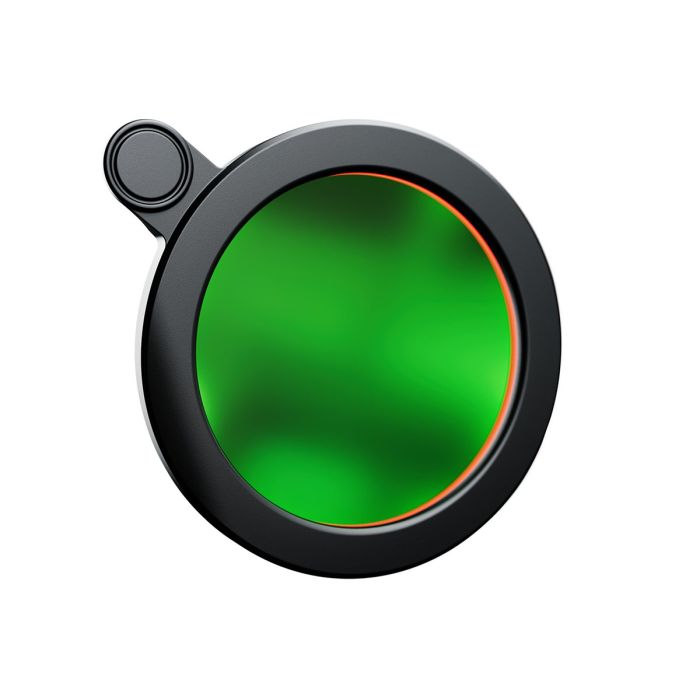
Vaonis City Light Supression / Light Pollution Reduction CLS Filter for Vespera
Stock count is accurate & shown in real time.
- This item is out of stock.
- Sign up for back-in-stock alerts to be notified when this item becomes available (account login required).
- This item is out of stock.
- Sign up for back-in-stock alerts to be notified when this item becomes available (account login required).
Contiguous US / Lower 48:
Free shipping applies to orders over $50 using our chosen carrier/method. Faster paid options are available at checkout.
Alaska, Hawaii & US Territories:
Free shipping applies to many—but not all—products. Enter your ZIP code in cart or upon checkout to confirm options and costs.
International:
International orders do not qualify for free shipping. Shipping, duties, brokerage, tariffs, and taxes are the customer’s responsibility. Some items may be restricted due to export, size, or manufacturer limitations.
The Vespera light pollution filter or CLS (City Light Suppression) filter allows you to improve the quality of your photos when observing in the city or suburbs. It attenuates the effects of light pollution and thus increases the contrast between the celestial object being photographed and the background sky.
The broadband filter blocks wavelengths mainly emitted by urban night lighting or undesirable natural light, while allowing the main wavelengths from celestial objects.
- Essential for observing from an environment where light pollution is very present (urban and peri-urban environment, residential lighting, etc.)
- Improves the quality of nebula photography
The anti-light pollution filter is particularly useful for improving the brightness of deep sky objects: nebulae, star clusters, galaxies, etc. It is especially effective on emission nebulae because of the filtered wavelengths.
Examples of emission nebulae: Bubble (NGC 7635), Crescent (NGC 6888), Eagle (M16), Elephant’s Trunk (IC 1396), Flame (NGC 2024), Lagoon (M8), North America (NGC 7000), Omega (M17), Orion (M42), Pacman (NGC 281), Rosette (NGC 2237), Tarantula (NGC 2070), Thor’s Helmet (NGC 2359), Trifid (M20), Tulip (Sh2-101).
Designed specifically for the Vespera lens, it fits easily and discreetly into the optical arm. The lens ring that holds the CLS filter is equipped with an electronic card that allows Vespera to detect it.
The filter is delivered in a transparent storage box.
Instructions for use
Remove the standard Vespera lens ring and insert the light pollution filter until you hear a click. To verify that the light pollution filter is properly positioned, connect Vespera to your mobile device and launch the Singularity app. In the Space Center and then the Instrument screen, the word “CLS” is shown.
- The filter is of limited use when observing the Moon, stars and planets, which are very bright objects.
- It is designed for use in urban or suburban areas or in the presence of ambient light. It does not have to be used in an environment with ideal viewing conditions.
- Because the filter allows less light to pass through the sensor, the stacking speed may be affected slightly.
- The light pollution filter is ineffective against LED lighting.
Directions for use:
- Do not expose the filter to direct sunlight.
- Store the filter in its box after each use to avoid dust build-up.
- If you notice any streaks or dust, gently clean the filter with an optical wipe, microfiber cloth, feather duster or air blower.
- Do not attempt to open the lens ring that contains the filter.
Specifications:
- Weight: 0.1 kg
- Colors: Black (exterior)
- Net weight: 15 g (0.53 oz)
- Net Dimensions: Thickness: 0.6 cm (0.24 in), Width: 7.80 cm (3.07 in)
- Materials: Glass, Plastic
- Package Weight: 60 g (2.12 oz)
The Vespera light pollution filter or CLS (City Light Suppression) filter allows you to improve the quality of your photos when observing in the city or suburbs. It attenuates the effects of light pollution and thus increases the contrast between the celestial object being photographed and the background sky.
The broadband filter blocks wavelengths mainly emitted by urban night lighting or undesirable natural light, while allowing the main wavelengths from celestial objects.
- Essential for observing from an environment where light pollution is very present (urban and peri-urban environment, residential lighting, etc.)
- Improves the quality of nebula photography
The anti-light pollution filter is particularly useful for improving the brightness of deep sky objects: nebulae, star clusters, galaxies, etc. It is especially effective on emission nebulae because of the filtered wavelengths.
Examples of emission nebulae: Bubble (NGC 7635), Crescent (NGC 6888), Eagle (M16), Elephant’s Trunk (IC 1396), Flame (NGC 2024), Lagoon (M8), North America (NGC 7000), Omega (M17), Orion (M42), Pacman (NGC 281), Rosette (NGC 2237), Tarantula (NGC 2070), Thor’s Helmet (NGC 2359), Trifid (M20), Tulip (Sh2-101).
Designed specifically for the Vespera lens, it fits easily and discreetly into the optical arm. The lens ring that holds the CLS filter is equipped with an electronic card that allows Vespera to detect it.
The filter is delivered in a transparent storage box.
Instructions for use
Remove the standard Vespera lens ring and insert the light pollution filter until you hear a click. To verify that the light pollution filter is properly positioned, connect Vespera to your mobile device and launch the Singularity app. In the Space Center and then the Instrument screen, the word “CLS” is shown.
- The filter is of limited use when observing the Moon, stars and planets, which are very bright objects.
- It is designed for use in urban or suburban areas or in the presence of ambient light. It does not have to be used in an environment with ideal viewing conditions.
- Because the filter allows less light to pass through the sensor, the stacking speed may be affected slightly.
- The light pollution filter is ineffective against LED lighting.
Directions for use:
- Do not expose the filter to direct sunlight.
- Store the filter in its box after each use to avoid dust build-up.
- If you notice any streaks or dust, gently clean the filter with an optical wipe, microfiber cloth, feather duster or air blower.
- Do not attempt to open the lens ring that contains the filter.
Specifications:
- Weight: 0.1 kg
- Colors: Black (exterior)
- Net weight: 15 g (0.53 oz)
- Net Dimensions: Thickness: 0.6 cm (0.24 in), Width: 7.80 cm (3.07 in)
- Materials: Glass, Plastic
- Package Weight: 60 g (2.12 oz)
The Vespera light pollution filter or CLS (City Light Suppression) filter allows you to improve the quality of your photos when observing in the city or suburbs. It attenuates the effects of light pollution and thus increases the contrast between the celestial object being photographed and the background sky.
The broadband filter blocks wavelengths mainly emitted by urban night lighting or undesirable natural light, while allowing the main wavelengths from celestial objects.
- Essential for observing from an environment where light pollution is very present (urban and peri-urban environment, residential lighting, etc.)
- Improves the quality of nebula photography
The anti-light pollution filter is particularly useful for improving the brightness of deep sky objects: nebulae, star clusters, galaxies, etc. It is especially effective on emission nebulae because of the filtered wavelengths.
Examples of emission nebulae: Bubble (NGC 7635), Crescent (NGC 6888), Eagle (M16), Elephant’s Trunk (IC 1396), Flame (NGC 2024), Lagoon (M8), North America (NGC 7000), Omega (M17), Orion (M42), Pacman (NGC 281), Rosette (NGC 2237), Tarantula (NGC 2070), Thor’s Helmet (NGC 2359), Trifid (M20), Tulip (Sh2-101).
Designed specifically for the Vespera lens, it fits easily and discreetly into the optical arm. The lens ring that holds the CLS filter is equipped with an electronic card that allows Vespera to detect it.
The filter is delivered in a transparent storage box.
Instructions for use
Remove the standard Vespera lens ring and insert the light pollution filter until you hear a click. To verify that the light pollution filter is properly positioned, connect Vespera to your mobile device and launch the Singularity app. In the Space Center and then the Instrument screen, the word “CLS” is shown.
- The filter is of limited use when observing the Moon, stars and planets, which are very bright objects.
- It is designed for use in urban or suburban areas or in the presence of ambient light. It does not have to be used in an environment with ideal viewing conditions.
- Because the filter allows less light to pass through the sensor, the stacking speed may be affected slightly.
- The light pollution filter is ineffective against LED lighting.
Directions for use:
- Do not expose the filter to direct sunlight.
- Store the filter in its box after each use to avoid dust build-up.
- If you notice any streaks or dust, gently clean the filter with an optical wipe, microfiber cloth, feather duster or air blower.
- Do not attempt to open the lens ring that contains the filter.
Specifications:
- Weight: 0.1 kg
- Colors: Black (exterior)
- Net weight: 15 g (0.53 oz)
- Net Dimensions: Thickness: 0.6 cm (0.24 in), Width: 7.80 cm (3.07 in)
- Materials: Glass, Plastic
- Package Weight: 60 g (2.12 oz)

Vaonis City Light Supression / Light Pollution Reduction CLS Filter for Vespera