

William Optics Star71-II 71mm f/4.9 Apo Imaging Refractor / Astrograph: Gold
This item is discontinued by the manufacturer and is no longer available.
Stock count is accurate & shown in real time.
- This item is out of stock.
- Sign up for back-in-stock alerts to be notified when this item becomes available (account login required).
- This item is out of stock.
- Sign up for back-in-stock alerts to be notified when this item becomes available (account login required).
- Premium 71mm f/4.9 apochromatic 4-element astrograph for astronomical imaging
- Patented field-flattened design for razor sharp images
- Large image circle for imaging with APS-C and full-frame sensors
- Compact form factor and light weight ideal for transport and travel
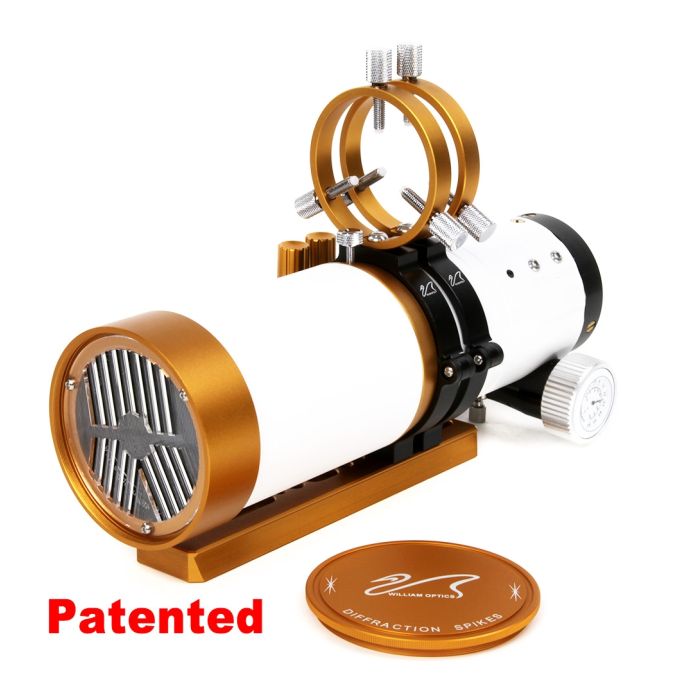
- Includes patented clear Bahtinov mask cover, dual-speed 2.5” focuser, mounting rings, guidescope rings, dovetail plate, all color matched for an attractive appearance
NEW: Latest version with patented Bahtinov Mask Cover, Guidescope Rings, and Free Carrying Case
William Optics Star 71-II Four-Element Apochromatic Astrograph
The William Optics Star 71-II is a premium compact astrograph, an ideal instrument for wide-field deep-sky imaging with DSLRs or dedicated astronomy cameras. With a patented 4-element Petzval design including two FPL-53 elements, the Star 71-II delivers a large, flat field of view across an image circle 45mm wide, enough to fill the field of APS-C and full-frame sensors without the need for an additional flattener.
The Star 71-II has a focal length of 350mm and a fast focal ratio of f/4.9, ideal for delivering stunning color-corrected wide-field images of the deep sky. The scope is also amazingly compact, with a retracted length of 320mm and a weight of just 2.4kg (5.3lbs) with rings and dovetail.
The William Optics Star 71-II also features a patented objective lens cover that doubles as clear Bahtinov focusing mask. This makes it a snap to achieve sharp focus when setting up for astrophotography.
How does this astrograph differ from the 1st generation Star-71?
Mechanically, the two scopes are virtually identical. Optically, their performance is identical also. However, the first generation Star-71 had a five-element design out of which only one element used FPL-53 ED glass. This second generation has a new four-element Petzval design using two FPL-53 ED lens elements. The new design retains the excellent performance of the previous generation, but it’s much easier to collimate during assembly.
Also with this 2nd generation scope, the tube features a Vixen-style dovetail base for attaching finder/guider brackets. It also includes a soft padded carry case as a standard accessory, while with the 1st generation scope it was sold separately.
Focuser and Accessories
The Star 71-II features a precision 2.5” dual-speed focuser with a drawtube travel of 1.38” (35mm). The focuser drawtube terminates in a male M48x0.75 thread. The coarse-focus knob includes a thermometer to help you track temperature changes during your observation sessions so you know when you may need to adjust focus. The scope comes with a wide M48 female threaded Canon EOS adapter ring. Similar rings are available from other suppliers for other brands of cameras. The scope has a back focus of approximately 67mm from the 48mm Canon thread.
Note that this a not a conventional 2" focuser tube with locking thumbscrews. An optional 1.25" 90-deg dielectric mirror diagonal is available separately for those wishing to use this as a visual scope. This diagonal comes with a custom adapter that connects directly to the M63 female thread on the telescope's focuser tube. You cannot attach standard 1.25" diagonals and the telescope cannot reach focus with larger 2" diagonals.
The scope also includes dual rings for the OTA with an additional pair of rings for a guide scope (sold separately) and a Vixen rail for mounting the scope for astronomical or terrestrial observation.
All Star 71-II telescopes come with a 2-year no-fuss warranty from William Optics.
Specifications for William Optics ED Lenses
All William Optics refractor objectives are double tested and inspected by WO at their factory. These telescopes are free of coma and astigmatism. Since all individual lens surfaces are machine coated, sometimes you may notice minor visual imperfections which will not compromise the optical performance of the telescope. The dimensions of scratches and points shall not exceed the following values:
- Scratches - Maximum Width: 0.025 mm
- Scratches - Maximum Length: 1/4 of total lens diameter
- Scratches - Maximum Quantity: Three
- Dots or Spot Points - Maximum Diameter: 0.4 mm
- Dots or Spot Points - Maximum Quantity: Three
- Accumulation of Defects - Limited Area: 0.8mm^2
- Accumulation of Defects - Total Area: 5.8mm^2
Useful Resources
- Charles Bracken's Review of the Star 71 (This is a review of the discontinued first generation of this telescope)
- Astronomy Technology Today Article - The William Optics Star71 Refractor by James R. Dire, Ph.D. (This is a review of the discontinued first generation of this telescope)
Other Information
- Country of Manufacture: Taiwan
NEW: Latest version with patented Bahtinov Mask Cover, Guidescope Rings, and Free Carrying Case
William Optics Star 71-II Four-Element Apochromatic Astrograph
The William Optics Star 71-II is a premium compact astrograph, an ideal instrument for wide-field deep-sky imaging with DSLRs or dedicated astronomy cameras. With a patented 4-element Petzval design including two FPL-53 elements, the Star 71-II delivers a large, flat field of view across an image circle 45mm wide, enough to fill the field of APS-C and full-frame sensors without the need for an additional flattener.
The Star 71-II has a focal length of 350mm and a fast focal ratio of f/4.9, ideal for delivering stunning color-corrected wide-field images of the deep sky. The scope is also amazingly compact, with a retracted length of 320mm and a weight of just 2.4kg (5.3lbs) with rings and dovetail.
The William Optics Star 71-II also features a patented objective lens cover that doubles as clear Bahtinov focusing mask. This makes it a snap to achieve sharp focus when setting up for astrophotography.
How does this astrograph differ from the 1st generation Star-71?
Mechanically, the two scopes are virtually identical. Optically, their performance is identical also. However, the first generation Star-71 had a five-element design out of which only one element used FPL-53 ED glass. This second generation has a new four-element Petzval design using two FPL-53 ED lens elements. The new design retains the excellent performance of the previous generation, but it’s much easier to collimate during assembly.
Also with this 2nd generation scope, the tube features a Vixen-style dovetail base for attaching finder/guider brackets. It also includes a soft padded carry case as a standard accessory, while with the 1st generation scope it was sold separately.
Focuser and Accessories
The Star 71-II features a precision 2.5” dual-speed focuser with a drawtube travel of 1.38” (35mm). The focuser drawtube terminates in a male M48x0.75 thread. The coarse-focus knob includes a thermometer to help you track temperature changes during your observation sessions so you know when you may need to adjust focus. The scope comes with a wide M48 female threaded Canon EOS adapter ring. Similar rings are available from other suppliers for other brands of cameras. The scope has a back focus of approximately 67mm from the 48mm Canon thread.
Note that this a not a conventional 2" focuser tube with locking thumbscrews. An optional 1.25" 90-deg dielectric mirror diagonal is available separately for those wishing to use this as a visual scope. This diagonal comes with a custom adapter that connects directly to the M63 female thread on the telescope's focuser tube. You cannot attach standard 1.25" diagonals and the telescope cannot reach focus with larger 2" diagonals.
The scope also includes dual rings for the OTA with an additional pair of rings for a guide scope (sold separately) and a Vixen rail for mounting the scope for astronomical or terrestrial observation.
All Star 71-II telescopes come with a 2-year no-fuss warranty from William Optics.
Specifications for William Optics ED Lenses
All William Optics refractor objectives are double tested and inspected by WO at their factory. These telescopes are free of coma and astigmatism. Since all individual lens surfaces are machine coated, sometimes you may notice minor visual imperfections which will not compromise the optical performance of the telescope. The dimensions of scratches and points shall not exceed the following values:
- Scratches - Maximum Width: 0.025 mm
- Scratches - Maximum Length: 1/4 of total lens diameter
- Scratches - Maximum Quantity: Three
- Dots or Spot Points - Maximum Diameter: 0.4 mm
- Dots or Spot Points - Maximum Quantity: Three
- Accumulation of Defects - Limited Area: 0.8mm^2
- Accumulation of Defects - Total Area: 5.8mm^2
- Premium 71mm f/4.9 apochromatic 4-element astrograph for astronomical imaging
- Patented field-flattened design for razor sharp images
- Large image circle for imaging with APS-C and full-frame sensors
- Compact form factor and light weight ideal for transport and travel
- Includes patented clear Bahtinov mask cover, dual-speed 2.5” focuser, mounting rings, guidescope rings, dovetail plate, all color matched for an attractive appearance
NEW: Latest version with patented Bahtinov Mask Cover, Guidescope Rings, and Free Carrying Case
William Optics Star 71-II Four-Element Apochromatic Astrograph
The William Optics Star 71-II is a premium compact astrograph, an ideal instrument for wide-field deep-sky imaging with DSLRs or dedicated astronomy cameras. With a patented 4-element Petzval design including two FPL-53 elements, the Star 71-II delivers a large, flat field of view across an image circle 45mm wide, enough to fill the field of APS-C and full-frame sensors without the need for an additional flattener.
The Star 71-II has a focal length of 350mm and a fast focal ratio of f/4.9, ideal for delivering stunning color-corrected wide-field images of the deep sky. The scope is also amazingly compact, with a retracted length of 320mm and a weight of just 2.4kg (5.3lbs) with rings and dovetail.
The William Optics Star 71-II also features a patented objective lens cover that doubles as clear Bahtinov focusing mask. This makes it a snap to achieve sharp focus when setting up for astrophotography.
How does this astrograph differ from the 1st generation Star-71?
Mechanically, the two scopes are virtually identical. Optically, their performance is identical also. However, the first generation Star-71 had a five-element design out of which only one element used FPL-53 ED glass. This second generation has a new four-element Petzval design using two FPL-53 ED lens elements. The new design retains the excellent performance of the previous generation, but it’s much easier to collimate during assembly.
Also with this 2nd generation scope, the tube features a Vixen-style dovetail base for attaching finder/guider brackets. It also includes a soft padded carry case as a standard accessory, while with the 1st generation scope it was sold separately.
Focuser and Accessories
The Star 71-II features a precision 2.5” dual-speed focuser with a drawtube travel of 1.38” (35mm). The focuser drawtube terminates in a male M48x0.75 thread. The coarse-focus knob includes a thermometer to help you track temperature changes during your observation sessions so you know when you may need to adjust focus. The scope comes with a wide M48 female threaded Canon EOS adapter ring. Similar rings are available from other suppliers for other brands of cameras. The scope has a back focus of approximately 67mm from the 48mm Canon thread.
Note that this a not a conventional 2" focuser tube with locking thumbscrews. An optional 1.25" 90-deg dielectric mirror diagonal is available separately for those wishing to use this as a visual scope. This diagonal comes with a custom adapter that connects directly to the M63 female thread on the telescope's focuser tube. You cannot attach standard 1.25" diagonals and the telescope cannot reach focus with larger 2" diagonals.
The scope also includes dual rings for the OTA with an additional pair of rings for a guide scope (sold separately) and a Vixen rail for mounting the scope for astronomical or terrestrial observation.
All Star 71-II telescopes come with a 2-year no-fuss warranty from William Optics.
Specifications for William Optics ED Lenses
All William Optics refractor objectives are double tested and inspected by WO at their factory. These telescopes are free of coma and astigmatism. Since all individual lens surfaces are machine coated, sometimes you may notice minor visual imperfections which will not compromise the optical performance of the telescope. The dimensions of scratches and points shall not exceed the following values:
- Scratches - Maximum Width: 0.025 mm
- Scratches - Maximum Length: 1/4 of total lens diameter
- Scratches - Maximum Quantity: Three
- Dots or Spot Points - Maximum Diameter: 0.4 mm
- Dots or Spot Points - Maximum Quantity: Three
- Accumulation of Defects - Limited Area: 0.8mm^2
- Accumulation of Defects - Total Area: 5.8mm^2
Useful Resources
- Charles Bracken's Review of the Star 71 (This is a review of the discontinued first generation of this telescope)
- Astronomy Technology Today Article - The William Optics Star71 Refractor by James R. Dire, Ph.D. (This is a review of the discontinued first generation of this telescope)
Other Information
- Country of Manufacture: Taiwan
| Telescope Focal Length | 301 - 400mm |
|---|