

Top Night Sky & Astronomy Events in March 2022
1. Introduction
Welcome to March! This month launches us into full blown Spring in the northern hemisphere and therefore into peak galaxy season! This month is also packed with planetary and lunar conjunctions, making it a great month for both observers and astrophotographers. To help prioritize your astronomical observing and imaging sessions, we’ve put together an overview of this month’s highlights to get you out under clear skies and looking up at the cosmos, followed by gear recommendations and highlights from the astronomy community to give you a good idea of the tools needed (or not needed) to enjoy the night sky!
Solar System Observing & Imaging
Moon Phases
- New Moon: March 2nd
- 1st Quarter: March 10th
- Full moon: March 18th
- 3rd Quarter: March 25th
Astrophotography Planetary Events (great for binoculars and telescopes!)
- Mars & Pluto conjunction - March 3
- Venus & Pluto Conjunction - March 5
- Venus & Mars Conjunction - March 12
- March Equinox- March 20; first day of spring in northern hemisphere, first day of fall in southern hemisphere.
- Moon & Mars conjunction - March 27
- Moon, Venus & Saturn conjunction - March 28
- Venus & Saturn conjunction - March 29
Solar Activity

“Spring forward” is a popular phrase for remembering to change the clocks forward during Daylight Savings Time, but in the astronomy world it signals an additional hour of sunlight for solar observers and imagers. February brought about increasing solar activity and even geomagnetic storm activity (see the image in Figure 1 highlighting the solar surface activity), so you can be sure March will offer plenty to see! With all the surface activity going on, our recommendation for March is to prioritize observing - it is not every day that you get to witness such an active sun.
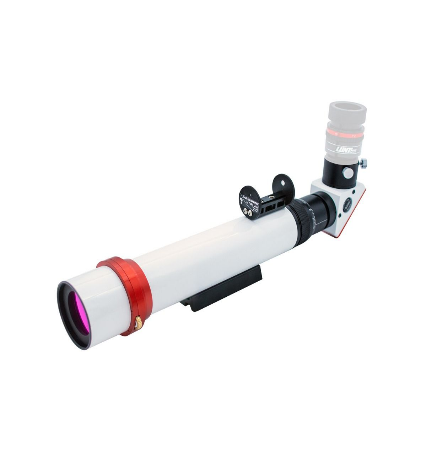
Lunt Solar 40mm f/10 Hydrogen-Alpha Solar Telescope
The Lunt Solar 40mm f/10 is an excellent entry level solar observing telescope that is available with a 5mm blocking filter for strictly solar observing, or as a 6mm or 12mm filter for solar imaging. These filters are not upgradeable, so be sure to plan appropriately if capturing images of the sun is in your future!
Lunt Zoom Eyepiece
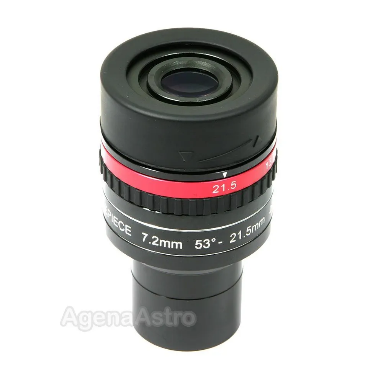
To maximize your solar observations, an eyepiece such as the Lunt 1.25" 7.2mm - 21.5mm Zoom Eyepiece will offer a wide range of focal lengths to switch between full solar disk observations and solar surface observations. These eyepieces are specifically designed to reduce glow and enhance background darkness and contrast. While ideal for solar observing, this eyepiece also works great for night astronomy – so feel free to use this to observe the planetary conjunctions scattered throughout March!
Deep Sky Objects (Nebula, Galaxies, Clusters)
Galaxies officially dominate the evening skies! Our own vantage point from Earth during this time of the year allows us to peer outside of our own Milky Way galaxy and into the cosmic melting pot! While the two targets discussed below are common favorites for March, feel free to use your preferred planetarium apps to look for other galaxies within the constellations of Coma Berenices, Virgo, Cancer, Canis Minor, Leo, and many other spring constellations! Let’s look at some of the targets you can expect to see for most of the evenings in March, and equipment recommendations to capture these objects and similar objects in the upcoming months:
Popular Targets:
Messier 51
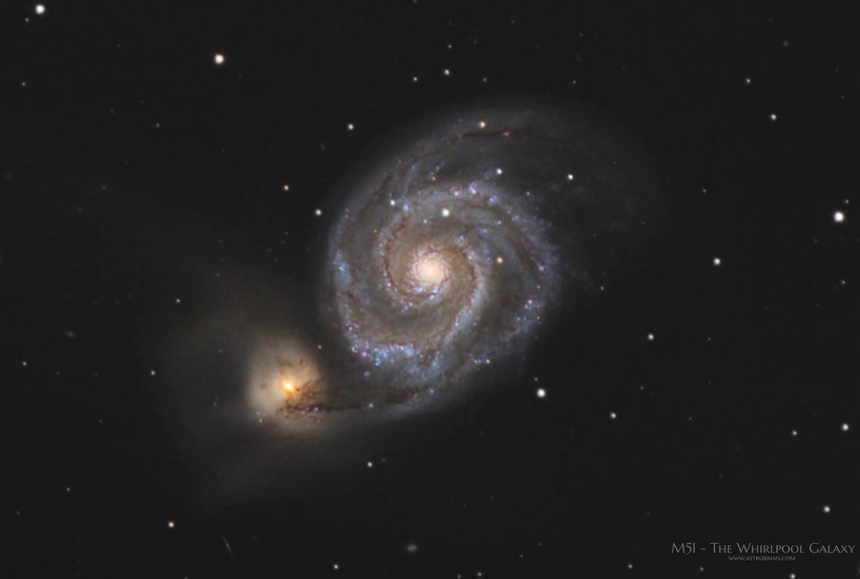
The Whirlpool Galaxy is a stunning spiral galaxy sitting 31 million light-years away, with easily discernible arms made of galactic dust and countless stars. There is even a significant presence of hydrogen alpha, making this an excellent target to combine traditional RGB image data with hydrogen-alpha narrowband data (check out our latest inventory of Chroma Imaging Filters to match your camera!). With an apparent magnitude of 8.4, this galaxy is easily visible with even a modest telescope under dark skies!
Markarian’s Chain
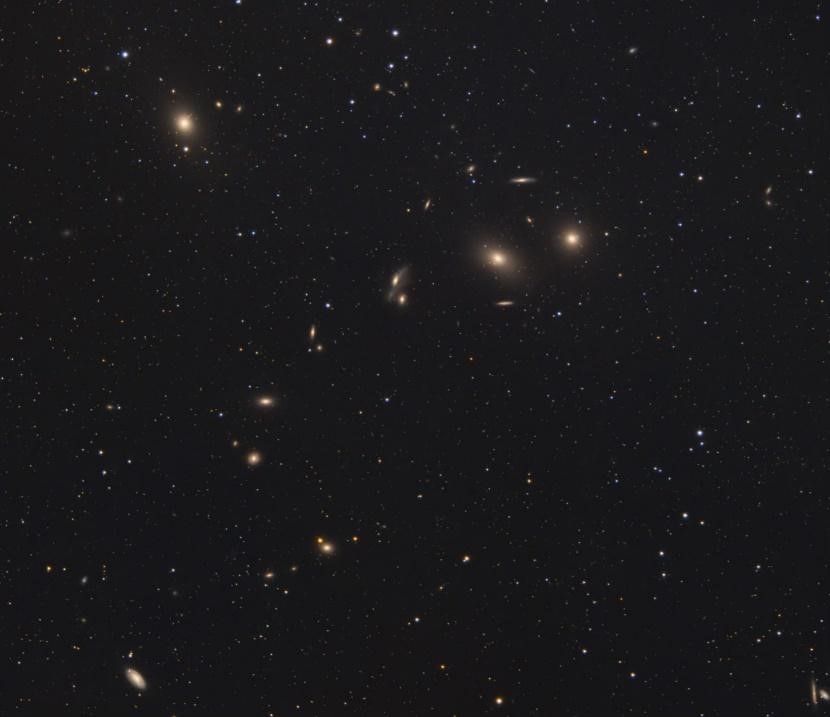
If one galaxy is exciting, then dozens of galaxies are sure to make for an interesting observing or imaging session. Markarian’s Chain is a close cluster of at least 8 galaxies within the greater Virgo Galaxy Cluster. Since there are so many smaller galaxies within this region, wide-field telescopes will be best to capture the full lineup of member galaxies. Longer focal length, such as that offered by the GSO 10” f/8 Ritchey-Chretien telescope (discussed later in this article), can conversely get you a much closer view of some of the more defined galaxies within the group.
Astrophotography Gear Recommendations
Observational & Beginner Imaging Telescope
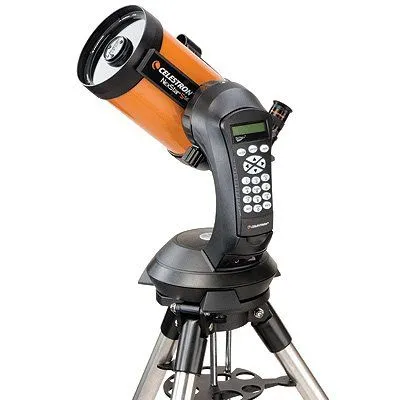
The Celestron NexStar 5SE is one of the smaller versions of the incredibly popular Celestron SE lineup of Schmidt-Cassegrain telescopes, packing 1250mm of focal length on a single-fork altazimuth tracking mount. The GoTo capability offered in this NexStar mount will allow observers to quickly locate their targets and keep the object centered in the eyepiece for a very satisfying observing session! This tracking capability will also allow for you to capture images of the moon and planets, and brief exposures of other deep space objects. The 17lb Celestron NexStar 5SE optical tube assembly can also be “de-forked” from the stock mount and transferred to a modest equatorial mount for long exposure astrophotography! The 5SE will be a great fit for March’s busy planetary and lunar conjunction schedule!
Advanced Astronomy Imaging Telescope
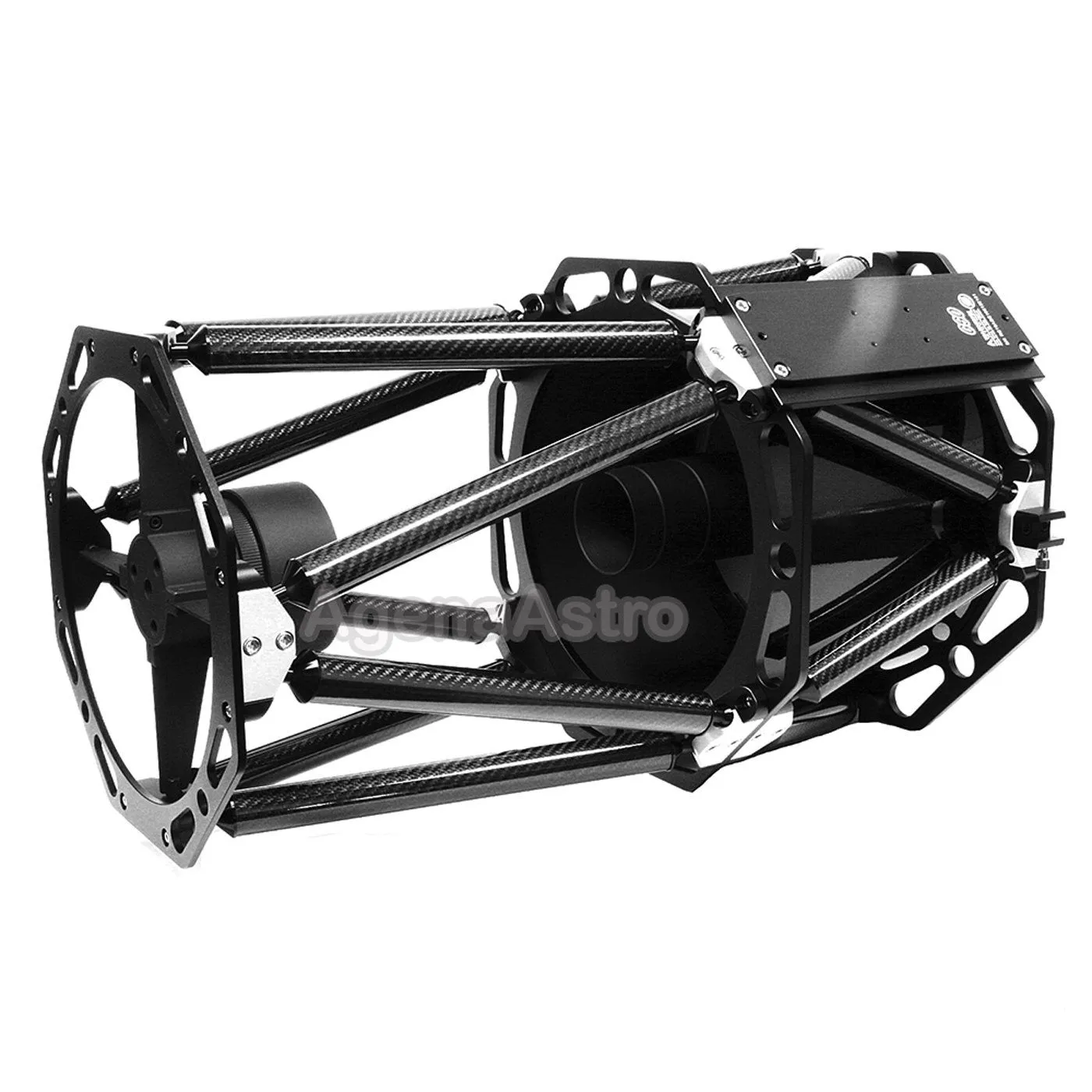
The GSO 10" f/8 Ritchey-Chretien Astrograph brings the highly sought-after RC telescope design to a relatively affordable price point compared to similar quality RC scopes! With 2000mm of focal length, you will have plenty of reach to capture the full range of galaxies in the March skies, as well as the Moon and planets. The hyperbolic primary mirror is made from quartz, coated with enhanced aluminum to a nominal reflectivity of 95%, and coated with a protective layer of SiO2 (quartz) for durability. These optics are made to impress and are rigorously evaluated by Agena’s own Master Optician. The steel optical tube is white-enameled with a flat black interior and includes numerous baffles to reduce stray light and improve image contrast. Weighing 35lbs, this telescope hovers around the payload capacity supported by the SkyWatcher EQ6-R Pro Equatorial Mount or iOptron GEM45-NUC Equatorial Mount. March’s galaxy dominated skies make the GSO 10" f/8 Ritchey-Chretien Astrograph a perfect fit for the advanced imager!
*Do you find these monthly guides helpful? We’d love to hear your feedback! Follow us on Facebook and Instagram to stay up to date on the latest gear, sales, and news from Agena!*