

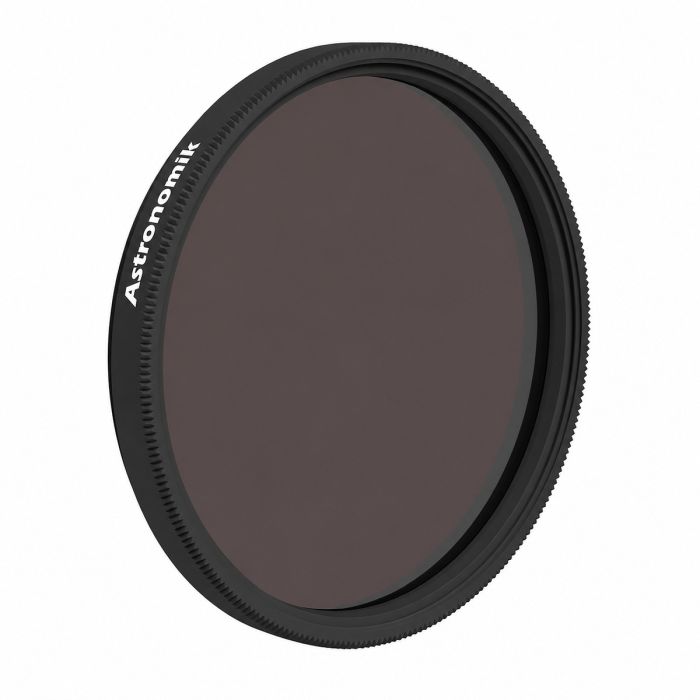
Astronomik H-a MaxFR 4nm High-Speed Imaging Filter - 2" Mounted
- This item is out of stock.
- Sign up for back-in-stock alerts to be notified when this item becomes available (account login required).
Stock count is accurate & shown in real time.
- This item is out of stock.
- Sign up for back-in-stock alerts to be notified when this item becomes available (account login required).
- This item is out of stock.
- Sign up for back-in-stock alerts to be notified when this item becomes available (account login required).
Contiguous US / Lower 48:
Free shipping applies to orders over $50 using our chosen carrier/method. Faster paid options are available at checkout.
Alaska, Hawaii & US Territories:
Free shipping applies to many—but not all—products. Enter your ZIP code in cart or upon checkout to confirm options and costs.
International:
International orders do not qualify for free shipping. Shipping, duties, brokerage, tariffs, and taxes are the customer’s responsibility. Some items may be restricted due to export, size, or manufacturer limitations.
Astronomik H-alpha 4nm MaxFR 2" (M48)
The Astronomik H-alpha filter is ideal for imaging HII regions from both light-polluted and dark observation sites.
The Astronomik H-alpha filter significantly enhances the contrast between objects emitting light at 656nm (H-alpha line) and the sky background, allowing for long exposure times for deep and high-contrast images.
The filter blocks the emission lines of high- and low-pressure sodium (Na)- and mercury (Hg)-vapor lamps, the maxima of typical LED lights, most lines of natural airglow, as well as most of the distracting moonlight.
The Astronomik H-alpha filter effectively blocks all unwanted light from wavelengths other than 656nm, from ultraviolet (UV) to infrared (IR).
The Astronomik H-alpha filter MUST NOT BE USED for solar observation!
Difference between Astronomik 12nm, 6nm and 4nm filters
The choice between 12nm, 6nm and 4nm Full-Width-Half-Maximum (FWHM) filters depends on your imaging conditions and camera type. There is no universal “best” option - each FWHM serves a specific purpose.
The 4nm Astronomik Narrowband-Emissionline filters are the best choice for astrophotography under extremely light-polluted skies. Astrophotographers who take pictures in a big city from their home garden or balcony can use the 4nm filters to create great, detailed, and high-contrast images of faint objects even under really bad skies. The 4nm Narrowband-Emissionline filters suppress stars even more than the 6nm filters. Compared to the 12nm filters, the number of stars is only about one third, making it easier to capture faint objects in extremely star-crowded regions of the milky way.
The 4nm filters are also the right tool for use with a CMOS astro camera or a modern system camera with very low dark current. They allow you to take very long exposures with minimal background noise.
The Astronomik MaxFR coating
Both the Astronomik MFR and MaxFR coatings offer extremely high contrast, minimized stray light, no halos and needle-sharp stars. In addition, they provide the best possible blocking across the entire spectral range from UV to IR.
The MaxFR coating ensures that the Astronomik Narrowband-Emissionline filters can be used with extremely fast optical systems such as the Celestron RASA and the Takahashi Epsilon Astrographs. Unlike other manufacturers' filters, which often require special “High-Speed” versions, Astronomik’s MaxFR filters maintain their transmission characteristics even with normal optical systems of slower focal ratios. Using a MaxFR filter with a normal optical system has no drawbacks and saves you a lot of money on multiple filter sets.
For 4nm filters with MaxFR coating, this means unlimited usability from f/2.8 to f/8.
Size of filter
Astronomik filters come in a wide range of standard sizes, both mounted and unmounted, to suit various optical setups and cameras.
This filter is a mounted filter in a threaded 2" cell (M48 x 0.75 thread).
Technical Data
- Guaranteed transmission of more than 90% at the H-alpha line (656nm)
- Typical transmission of 93% at the H-alpha line
- Full-Width-Half Maximum (FWHM): 4nm
- Glass thickness: 1mm (except Astronomik OWB Type 3 and XT filters)
- Finely polished optical glass, free of any striae, residual stresses, and bubbles
- Extremely scratch-resistant and durable coating
- Completely resistant against high humidity and aging effects
- Astronomik MaxFR coating (Astronomik 4nm, 6nm and 12nm Narrowband-Emissionline filters)
- Parfocal with other Astronomik filters
- Diffraction-limited
- Optimized spectral windows
- Delivered in a high-quality, long-lasting filter box
- Made in Germany
Astronomik filters are diffraction-limited, ensuring that the optical performance (resolution and contrast) of your telescope is not compromised. Thanks to the high-precision machining of the glas substrate, all Astronomik filters are parfocal. The wedge errors are far below all common tolerances. Therefore, all issues concerning focal distances and the exact alignment of images from each color channel are effectively eliminated.
All Astronomik filters are ideal for modern cameras, including both CMOS- and CCD-based models, ensuring you capture the best possible images with your equipment. Sharpness, contrast, and the absence of any reflections and halos are guaranteed. Even with bright stars in the field of view, nebulae and galaxies will be captured with the finest structures. The Astronomik MFR and MaxFR coatings are designed for optimal performance across a wide range of focal ratios of the optics used.
Every Astronomik filter undergoes a rigorous quality control process before delivery. Additionally, each Astronomik Narrowband-Emissionline filter is measured using a high-end PerkinElmer Spectrophotometer to ensure it meets the specifications published on our website. On the back of each Narrowband-Emissionline filter box, you will find a label detailing the precise spectral data for that specific filter, including the maximum transmission and the recommended range of focal ratios for best performance of that specific filter.
Other Information
- Country of Manufacture: Germany
Astronomik H-alpha 4nm MaxFR 2" (M48)
The Astronomik H-alpha filter is ideal for imaging HII regions from both light-polluted and dark observation sites.
The Astronomik H-alpha filter significantly enhances the contrast between objects emitting light at 656nm (H-alpha line) and the sky background, allowing for long exposure times for deep and high-contrast images.
The filter blocks the emission lines of high- and low-pressure sodium (Na)- and mercury (Hg)-vapor lamps, the maxima of typical LED lights, most lines of natural airglow, as well as most of the distracting moonlight.
The Astronomik H-alpha filter effectively blocks all unwanted light from wavelengths other than 656nm, from ultraviolet (UV) to infrared (IR).
The Astronomik H-alpha filter MUST NOT BE USED for solar observation!
Difference between Astronomik 12nm, 6nm and 4nm filters
The choice between 12nm, 6nm and 4nm Full-Width-Half-Maximum (FWHM) filters depends on your imaging conditions and camera type. There is no universal “best” option - each FWHM serves a specific purpose.
The 4nm Astronomik Narrowband-Emissionline filters are the best choice for astrophotography under extremely light-polluted skies. Astrophotographers who take pictures in a big city from their home garden or balcony can use the 4nm filters to create great, detailed, and high-contrast images of faint objects even under really bad skies. The 4nm Narrowband-Emissionline filters suppress stars even more than the 6nm filters. Compared to the 12nm filters, the number of stars is only about one third, making it easier to capture faint objects in extremely star-crowded regions of the milky way.
The 4nm filters are also the right tool for use with a CMOS astro camera or a modern system camera with very low dark current. They allow you to take very long exposures with minimal background noise.
The Astronomik MaxFR coating
Both the Astronomik MFR and MaxFR coatings offer extremely high contrast, minimized stray light, no halos and needle-sharp stars. In addition, they provide the best possible blocking across the entire spectral range from UV to IR.
The MaxFR coating ensures that the Astronomik Narrowband-Emissionline filters can be used with extremely fast optical systems such as the Celestron RASA and the Takahashi Epsilon Astrographs. Unlike other manufacturers' filters, which often require special “High-Speed” versions, Astronomik’s MaxFR filters maintain their transmission characteristics even with normal optical systems of slower focal ratios. Using a MaxFR filter with a normal optical system has no drawbacks and saves you a lot of money on multiple filter sets.
For 4nm filters with MaxFR coating, this means unlimited usability from f/2.8 to f/8.
Size of filter
Astronomik filters come in a wide range of standard sizes, both mounted and unmounted, to suit various optical setups and cameras.
This filter is a mounted filter in a threaded 2" cell (M48 x 0.75 thread).
Technical Data
- Guaranteed transmission of more than 90% at the H-alpha line (656nm)
- Typical transmission of 93% at the H-alpha line
- Full-Width-Half Maximum (FWHM): 4nm
- Glass thickness: 1mm (except Astronomik OWB Type 3 and XT filters)
- Finely polished optical glass, free of any striae, residual stresses, and bubbles
- Extremely scratch-resistant and durable coating
- Completely resistant against high humidity and aging effects
- Astronomik MaxFR coating (Astronomik 4nm, 6nm and 12nm Narrowband-Emissionline filters)
- Parfocal with other Astronomik filters
- Diffraction-limited
- Optimized spectral windows
- Delivered in a high-quality, long-lasting filter box
- Made in Germany
Astronomik filters are diffraction-limited, ensuring that the optical performance (resolution and contrast) of your telescope is not compromised. Thanks to the high-precision machining of the glas substrate, all Astronomik filters are parfocal. The wedge errors are far below all common tolerances. Therefore, all issues concerning focal distances and the exact alignment of images from each color channel are effectively eliminated.
All Astronomik filters are ideal for modern cameras, including both CMOS- and CCD-based models, ensuring you capture the best possible images with your equipment. Sharpness, contrast, and the absence of any reflections and halos are guaranteed. Even with bright stars in the field of view, nebulae and galaxies will be captured with the finest structures. The Astronomik MFR and MaxFR coatings are designed for optimal performance across a wide range of focal ratios of the optics used.
Every Astronomik filter undergoes a rigorous quality control process before delivery. Additionally, each Astronomik Narrowband-Emissionline filter is measured using a high-end PerkinElmer Spectrophotometer to ensure it meets the specifications published on our website. On the back of each Narrowband-Emissionline filter box, you will find a label detailing the precise spectral data for that specific filter, including the maximum transmission and the recommended range of focal ratios for best performance of that specific filter.
Other Information
- Country of Manufacture: Germany