

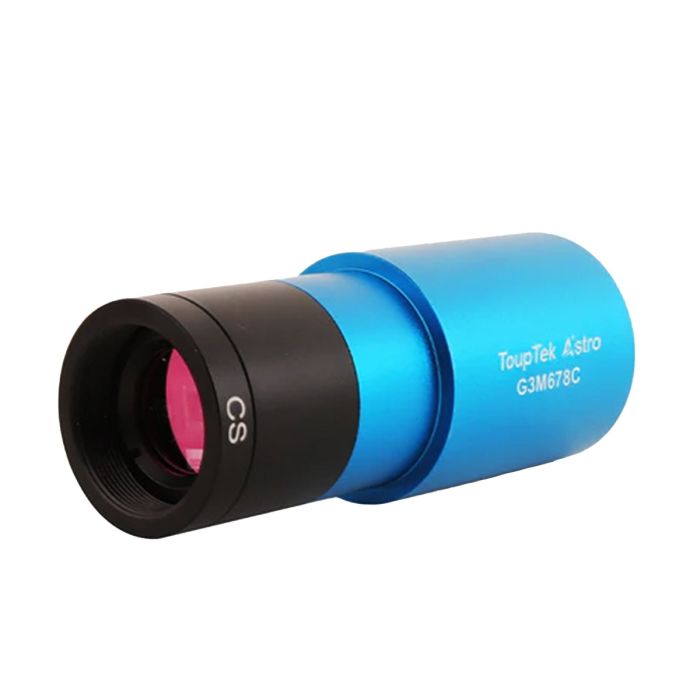
ToupTek G3M678C Planetary Color Astronomy Camera - Extended Length Version
- This item is currently on backorder from the manufacturer.
- Orders are fulfilled in the order they are received once inventory arrives.
Stock count is accurate & shown in real time.
- This item is out of stock.
- Sign up for back-in-stock alerts to be notified when this item becomes available (account login required).
- This item is out of stock.
- Sign up for back-in-stock alerts to be notified when this item becomes available (account login required).
Contiguous US / Lower 48:
Free shipping applies to orders over $50 using our chosen carrier/method. Faster paid options are available at checkout.
Alaska, Hawaii & US Territories:
Free shipping applies to many—but not all—products. Enter your ZIP code in cart or upon checkout to confirm options and costs.
International:
International orders do not qualify for free shipping. Shipping, duties, brokerage, tariffs, and taxes are the customer’s responsibility. Some items may be restricted due to export, size, or manufacturer limitations.
- Sony IMX678 color CMOS sensor with STARVIS 2 technology for sharp, detailed planetary imaging
- High-speed USB 3.0 performance with up to 1500+ FPS in ROI mode
- Includes an IR-cut filter for accurate color reproduction during planetary, lunar, and solar imaging
- Extended-length is specifically desgined for compatibility with Off-Axis Guiders (OAGs). The shorter flange distance provides more back-focus adjustment space, making it much easier to achieve focus across a broader range of OAG
ToupTek G3M Series Planetary Cameras
The planetary camera G3M678C adopts SONY STARVIS 2 and Exmor R technologies, making it ideal for astronomical photography, microscopy, industrial vision, and more. Featuring an extremely low readout noise, ultra-high sensitivity, and a 12-bit ADC back-illuminated CMOS sensor, the G3M678C delivers exceptional 4K high-resolution astronomical images with outstanding detail and color fidelity. The camera also includes an IR-cut filter to help ensure accurate color reproduction for planetary, lunar, and solar imaging applications.
STARVIS 2 Technology
The G3M678C incorporates Sony's STARVIS 2 image sensor technology, delivering a broader photosensitivity range and superior dynamic performance. STARVIS 2 enhances infrared-band imaging capabilities in low-light environments, featuring significantly reduced dark current and lower readout noise. It maintains high SNR (Signal-to-Noise Ratio) and exceptional clarity even when capturing high-contrast subjects.
Zero Amp-Glow Technology
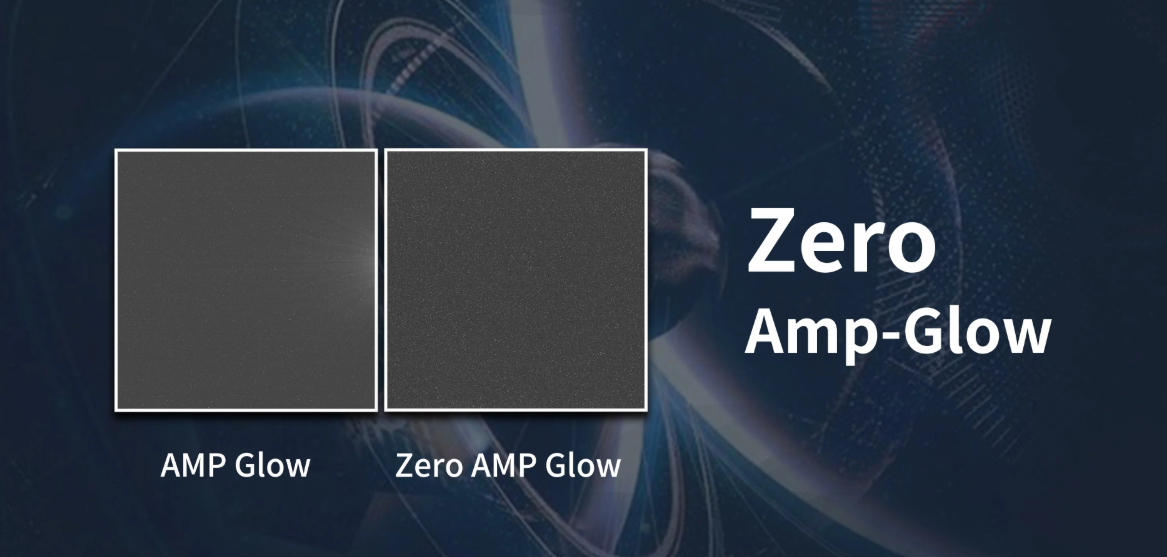
The G3M678C achieves "zero amp-glow" at the hardware level. Whether under long exposure or high gain settings, your resulting images remain pristine and clean, free from unwanted thermal artifacts.

DDR3 High-Speed Buffer
Equipped with a USB 3.0 high-speed interface and 512MB DDR3 high-speed buffer, this camera significantly reduces amp-glow caused by image data buffering. The advanced buffer system ensures stable and smooth data transmission for uninterrupted imaging sessions.
Near-Infrared Imaging
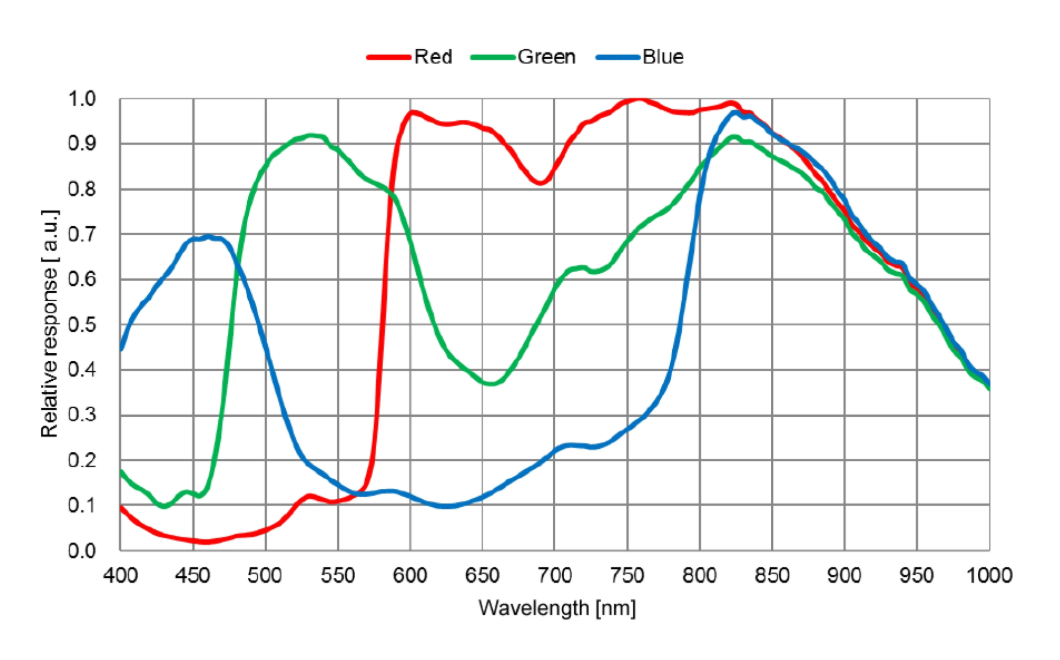
The G3M678C exhibits exceptional sensitivity in the near-infrared (NIR) band, significantly enhancing the texture and detail rendition of planets. This advanced capability opens new possibilities for specialized astronomical imaging.
- When paired with an 850nm IR-pass filter or 890nm methane filter, the G3M678C enables targeted imaging of Jupiter and Saturn, revealing atmospheric details invisible in visible light.
- NIR imaging offers higher stability and greater resistance to atmospheric seeing disturbances, ideal for capturing the Sun, lunar surface, and other celestial bodies.
OAG Compatibility
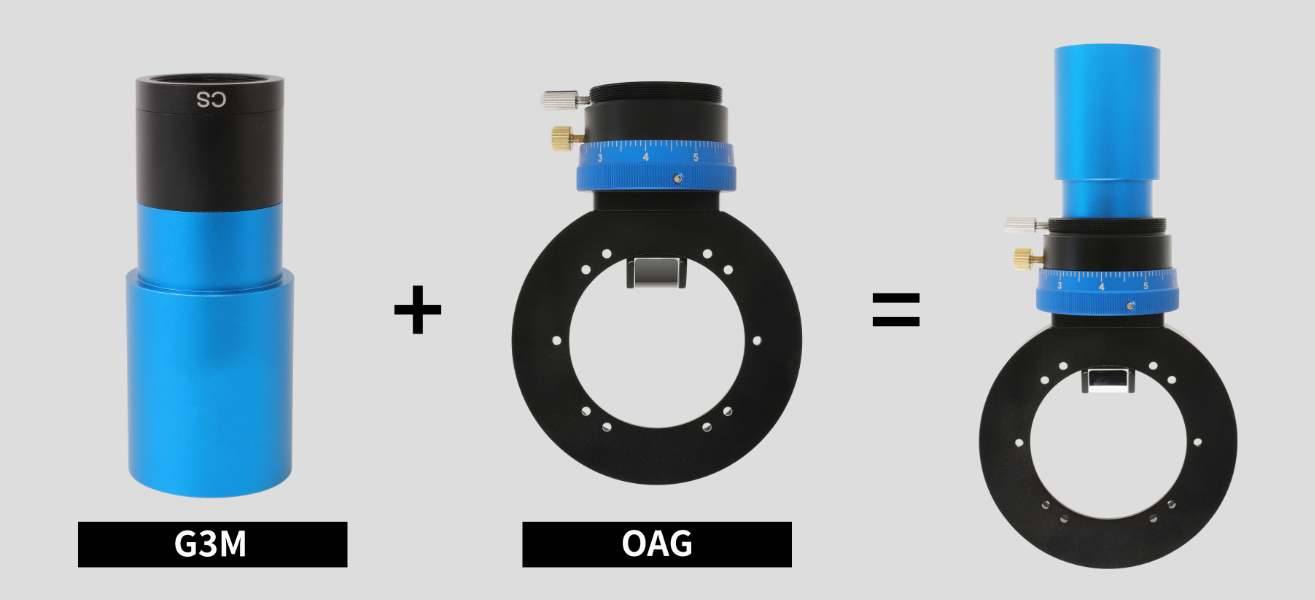
The extended-length version supports OAGs from third-party brands ( when used with a guide camera). It's elongated design provides greater adjustable range while maintaining the original sensor flange distance.
ROI High Frame Rate Imaging
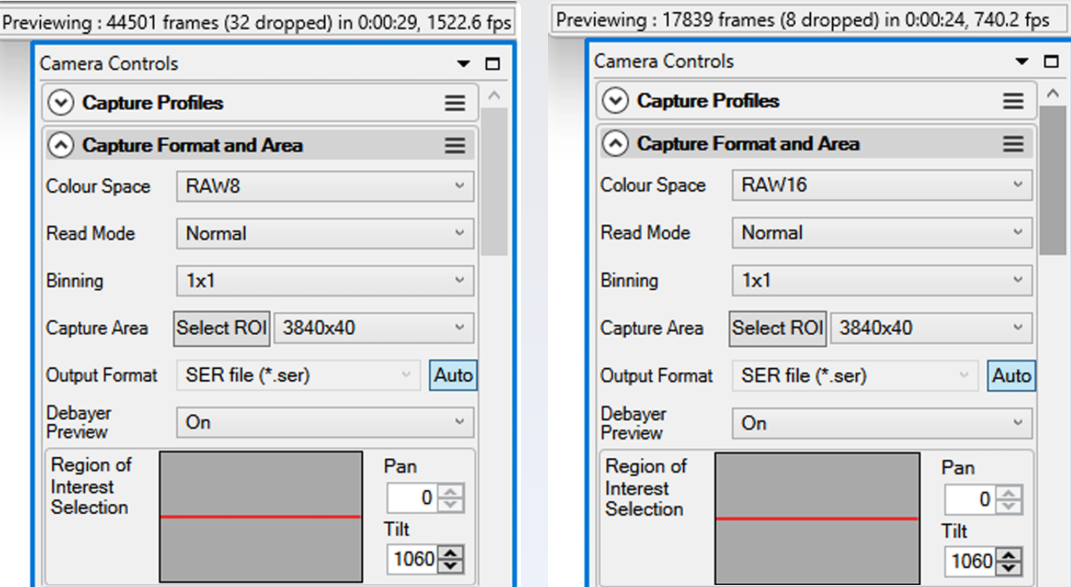
The G3M678C features a USB 3.0 high-speed interface with upgraded drivers that deliver exceptional frame rate performance in ROI mode, meeting precision requirements for diverse observation scenarios. *Note: At ultra-high frame rates (≥1500fps), dropped frame probability may vary depending on the user's video capture hardware. When using performance-limited capture devices, 740fps in 16-bit mode is recommended.
Specifications
-
Sensor Model: Sony IMX678 Color Back-Illuminated CMOS (STARVIS 2 Technology)
-
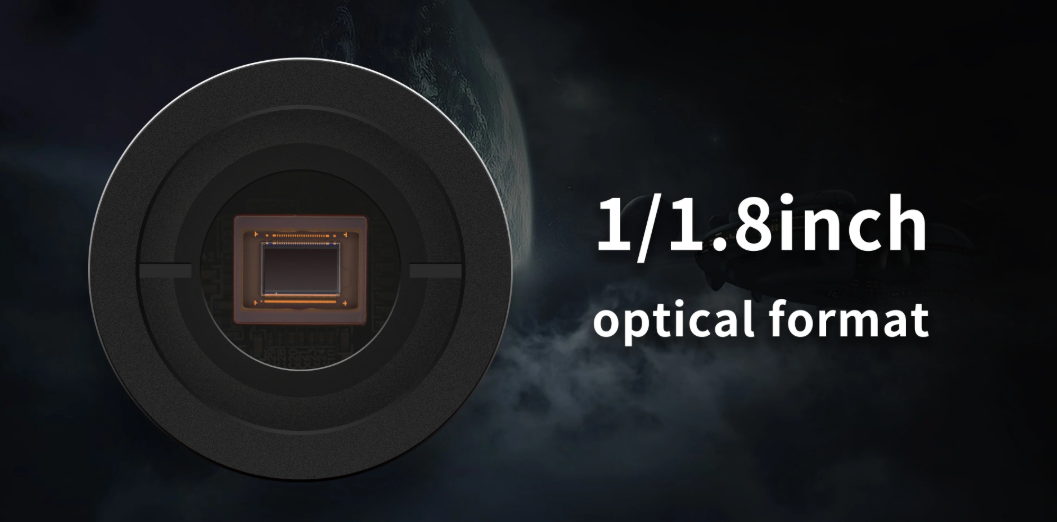
Sensor Size: 1/1.8-inch (8.92 mm / 0.35 in diagonal)
-
Image Area: 7.68 mm x 4.32 mm (0.30 in x 0.17 in)
-
Resolution: 8.3 Megapixels (3840 x 2160)
-
Pixel Size: 2.0 μm x 2.0 μm
-
ADC Bit Depth: 12-bit
-
Quantum Efficiency: > 83% Peak
-
Full Well Capacity: 10.0ke-
-
Read Noise: 0.60 e- (HCG mode) to 4.30 e- (LCG mode)
-
Dynamic Range: 78.0 dB (HDR mode)
-
SNR Max: 41.2 dB
-
G Sensitivity: 11467 mV with 1/30s
-
Spectral Range: 380–690 nm (with IR-cut filter) / 380–1100 nm (with AR-window variant)
-
Maximum Frame Rate (12-bit Output via USB 3.0): 43 FPS @ 3840 x 2160
-
Maximum Frame Rate (8-bit ROI Capture Mode): 1500+ FPS @ 3840 x 40
-
Exposure Time Range: 0.1 ms – 1000 s
-
Gain Range: 1x – 150x
-
Shutter Type: Rolling Shutter
-
Data Interface: USB 3.0 / USB 2.0 (with ST4 Guide Port & 512MB DDR3 Buffer)
-
Back Focus Distance: 12.5 mm for Standard Version (C-mount)
-
Camera Dimensions: 37 mm Diameter x 72.4 mm Height (1.46 in Diameter x 2.85 in Height)
-
Weight: 70 g (2.47 oz)
-
Supported OS: Windows XP/Vista/7/8/10/11, Mac OS X, Linux
-
SDK Support: Native C/C++, C#/VB.NET, Python, Java, DirectShow, Twain
Mechanical Diagrams
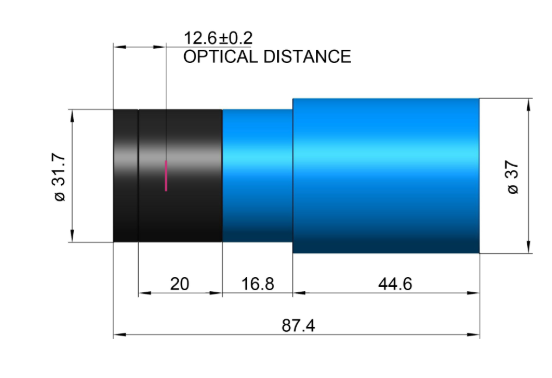
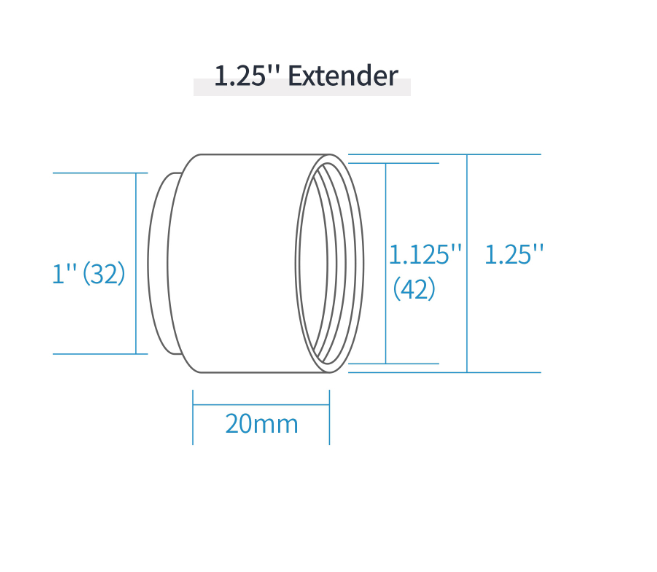
Performance Curve Analysis
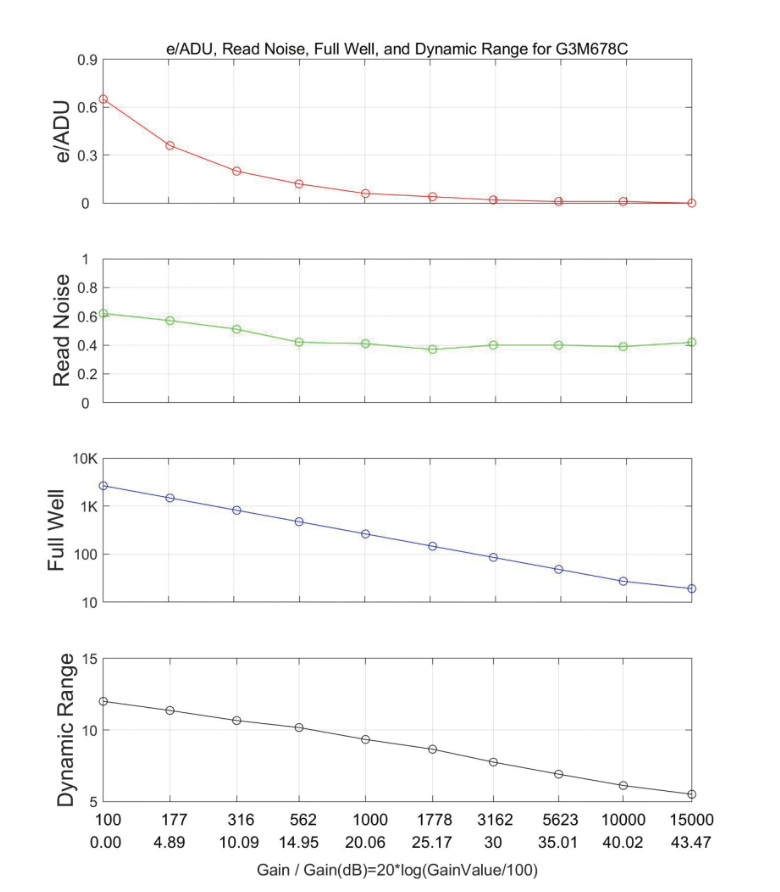
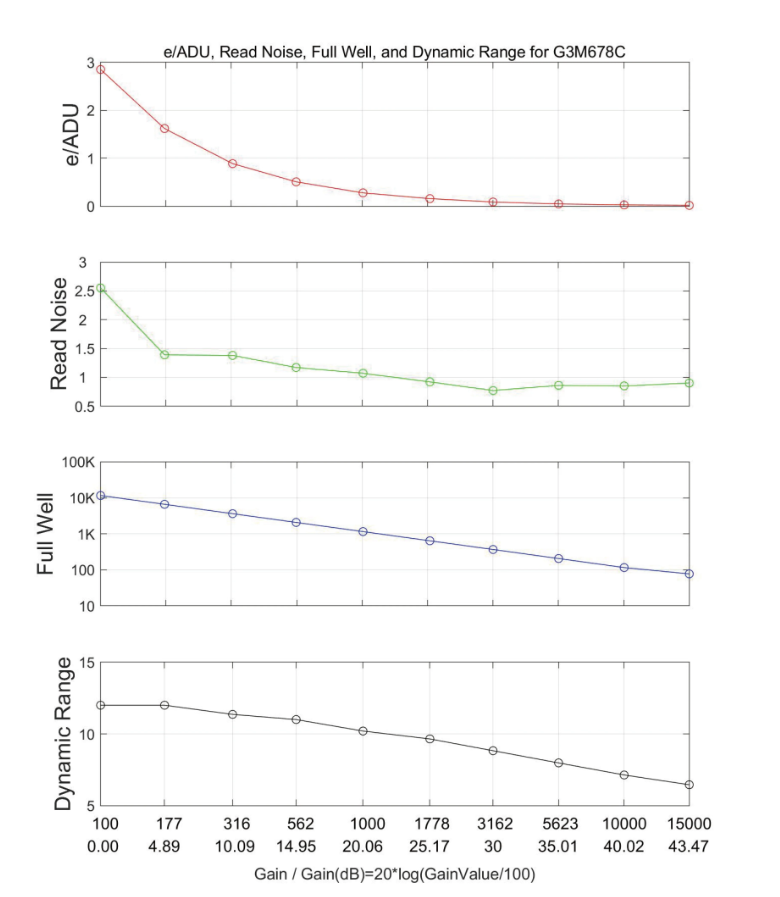
Other Information
- Country of Manufacture: China
ToupTek G3M Series Planetary Cameras
The planetary camera G3M678C adopts SONY STARVIS 2 and Exmor R technologies, making it ideal for astronomical photography, microscopy, industrial vision, and more. Featuring an extremely low readout noise, ultra-high sensitivity, and a 12-bit ADC back-illuminated CMOS sensor, the G3M678C delivers exceptional 4K high-resolution astronomical images with outstanding detail and color fidelity. The camera also includes an IR-cut filter to help ensure accurate color reproduction for planetary, lunar, and solar imaging applications.
STARVIS 2 Technology
The G3M678C incorporates Sony's STARVIS 2 image sensor technology, delivering a broader photosensitivity range and superior dynamic performance. STARVIS 2 enhances infrared-band imaging capabilities in low-light environments, featuring significantly reduced dark current and lower readout noise. It maintains high SNR (Signal-to-Noise Ratio) and exceptional clarity even when capturing high-contrast subjects.
Zero Amp-Glow Technology
The G3M678C achieves "zero amp-glow" at the hardware level. Whether under long exposure or high gain settings, your resulting images remain pristine and clean, free from unwanted thermal artifacts.
DDR3 High-Speed Buffer
Equipped with a USB 3.0 high-speed interface and 512MB DDR3 high-speed buffer, this camera significantly reduces amp-glow caused by image data buffering. The advanced buffer system ensures stable and smooth data transmission for uninterrupted imaging sessions.
Near-Infrared Imaging
The G3M678C exhibits exceptional sensitivity in the near-infrared (NIR) band, significantly enhancing the texture and detail rendition of planets. This advanced capability opens new possibilities for specialized astronomical imaging.
- When paired with an 850nm IR-pass filter or 890nm methane filter, the G3M678C enables targeted imaging of Jupiter and Saturn, revealing atmospheric details invisible in visible light.
- NIR imaging offers higher stability and greater resistance to atmospheric seeing disturbances, ideal for capturing the Sun, lunar surface, and other celestial bodies.
OAG Compatibility
The extended-length version supports OAGs from third-party brands ( when used with a guide camera). It's elongated design provides greater adjustable range while maintaining the original sensor flange distance.
ROI High Frame Rate Imaging
The G3M678C features a USB 3.0 high-speed interface with upgraded drivers that deliver exceptional frame rate performance in ROI mode, meeting precision requirements for diverse observation scenarios. *Note: At ultra-high frame rates (≥1500fps), dropped frame probability may vary depending on the user's video capture hardware. When using performance-limited capture devices, 740fps in 16-bit mode is recommended.
Specifications
-
Sensor Model: Sony IMX678 Color Back-Illuminated CMOS (STARVIS 2 Technology)
-
Sensor Size: 1/1.8-inch (8.92 mm / 0.35 in diagonal)
-
Image Area: 7.68 mm x 4.32 mm (0.30 in x 0.17 in)
-
Resolution: 8.3 Megapixels (3840 x 2160)
-
Pixel Size: 2.0 μm x 2.0 μm
-
ADC Bit Depth: 12-bit
-
Quantum Efficiency: > 83% Peak
-
Full Well Capacity: 10.0ke-
-
Read Noise: 0.60 e- (HCG mode) to 4.30 e- (LCG mode)
-
Dynamic Range: 78.0 dB (HDR mode)
-
SNR Max: 41.2 dB
-
G Sensitivity: 11467 mV with 1/30s
-
Spectral Range: 380–690 nm (with IR-cut filter) / 380–1100 nm (with AR-window variant)
-
Maximum Frame Rate (12-bit Output via USB 3.0): 43 FPS @ 3840 x 2160
-
Maximum Frame Rate (8-bit ROI Capture Mode): 1500+ FPS @ 3840 x 40
-
Exposure Time Range: 0.1 ms – 1000 s
-
Gain Range: 1x – 150x
-
Shutter Type: Rolling Shutter
-
Data Interface: USB 3.0 / USB 2.0 (with ST4 Guide Port & 512MB DDR3 Buffer)
-
Back Focus Distance: 12.5 mm for Standard Version (C-mount)
-
Camera Dimensions: 37 mm Diameter x 72.4 mm Height (1.46 in Diameter x 2.85 in Height)
-
Weight: 70 g (2.47 oz)
-
Supported OS: Windows XP/Vista/7/8/10/11, Mac OS X, Linux
-
SDK Support: Native C/C++, C#/VB.NET, Python, Java, DirectShow, Twain
Mechanical Diagrams
Performance Curve Analysis
- 1x Camera Body
- 1x USB 3.0 Data Cable (2m, Type-A to Type-B)
- 1x ST4 Guide Cable (2m)
- 1x 1.25" Nosepiece
- 1x Quick Start Guide
- Sony IMX678 color CMOS sensor with STARVIS 2 technology for sharp, detailed planetary imaging
- High-speed USB 3.0 performance with up to 1500+ FPS in ROI mode
- Includes an IR-cut filter for accurate color reproduction during planetary, lunar, and solar imaging
- Extended-length is specifically desgined for compatibility with Off-Axis Guiders (OAGs). The shorter flange distance provides more back-focus adjustment space, making it much easier to achieve focus across a broader range of OAG
ToupTek G3M Series Planetary Cameras
The planetary camera G3M678C adopts SONY STARVIS 2 and Exmor R technologies, making it ideal for astronomical photography, microscopy, industrial vision, and more. Featuring an extremely low readout noise, ultra-high sensitivity, and a 12-bit ADC back-illuminated CMOS sensor, the G3M678C delivers exceptional 4K high-resolution astronomical images with outstanding detail and color fidelity. The camera also includes an IR-cut filter to help ensure accurate color reproduction for planetary, lunar, and solar imaging applications.
STARVIS 2 Technology
The G3M678C incorporates Sony's STARVIS 2 image sensor technology, delivering a broader photosensitivity range and superior dynamic performance. STARVIS 2 enhances infrared-band imaging capabilities in low-light environments, featuring significantly reduced dark current and lower readout noise. It maintains high SNR (Signal-to-Noise Ratio) and exceptional clarity even when capturing high-contrast subjects.
Zero Amp-Glow Technology
The G3M678C achieves "zero amp-glow" at the hardware level. Whether under long exposure or high gain settings, your resulting images remain pristine and clean, free from unwanted thermal artifacts.
DDR3 High-Speed Buffer
Equipped with a USB 3.0 high-speed interface and 512MB DDR3 high-speed buffer, this camera significantly reduces amp-glow caused by image data buffering. The advanced buffer system ensures stable and smooth data transmission for uninterrupted imaging sessions.
Near-Infrared Imaging
The G3M678C exhibits exceptional sensitivity in the near-infrared (NIR) band, significantly enhancing the texture and detail rendition of planets. This advanced capability opens new possibilities for specialized astronomical imaging.
- When paired with an 850nm IR-pass filter or 890nm methane filter, the G3M678C enables targeted imaging of Jupiter and Saturn, revealing atmospheric details invisible in visible light.
- NIR imaging offers higher stability and greater resistance to atmospheric seeing disturbances, ideal for capturing the Sun, lunar surface, and other celestial bodies.
OAG Compatibility
The extended-length version supports OAGs from third-party brands ( when used with a guide camera). It's elongated design provides greater adjustable range while maintaining the original sensor flange distance.
ROI High Frame Rate Imaging
The G3M678C features a USB 3.0 high-speed interface with upgraded drivers that deliver exceptional frame rate performance in ROI mode, meeting precision requirements for diverse observation scenarios. *Note: At ultra-high frame rates (≥1500fps), dropped frame probability may vary depending on the user's video capture hardware. When using performance-limited capture devices, 740fps in 16-bit mode is recommended.
Specifications
-
Sensor Model: Sony IMX678 Color Back-Illuminated CMOS (STARVIS 2 Technology)
-
Sensor Size: 1/1.8-inch (8.92 mm / 0.35 in diagonal)
-
Image Area: 7.68 mm x 4.32 mm (0.30 in x 0.17 in)
-
Resolution: 8.3 Megapixels (3840 x 2160)
-
Pixel Size: 2.0 μm x 2.0 μm
-
ADC Bit Depth: 12-bit
-
Quantum Efficiency: > 83% Peak
-
Full Well Capacity: 10.0ke-
-
Read Noise: 0.60 e- (HCG mode) to 4.30 e- (LCG mode)
-
Dynamic Range: 78.0 dB (HDR mode)
-
SNR Max: 41.2 dB
-
G Sensitivity: 11467 mV with 1/30s
-
Spectral Range: 380–690 nm (with IR-cut filter) / 380–1100 nm (with AR-window variant)
-
Maximum Frame Rate (12-bit Output via USB 3.0): 43 FPS @ 3840 x 2160
-
Maximum Frame Rate (8-bit ROI Capture Mode): 1500+ FPS @ 3840 x 40
-
Exposure Time Range: 0.1 ms – 1000 s
-
Gain Range: 1x – 150x
-
Shutter Type: Rolling Shutter
-
Data Interface: USB 3.0 / USB 2.0 (with ST4 Guide Port & 512MB DDR3 Buffer)
-
Back Focus Distance: 12.5 mm for Standard Version (C-mount)
-
Camera Dimensions: 37 mm Diameter x 72.4 mm Height (1.46 in Diameter x 2.85 in Height)
-
Weight: 70 g (2.47 oz)
-
Supported OS: Windows XP/Vista/7/8/10/11, Mac OS X, Linux
-
SDK Support: Native C/C++, C#/VB.NET, Python, Java, DirectShow, Twain
Mechanical Diagrams
Performance Curve Analysis
Other Information
- Country of Manufacture: China
- 1x Camera Body
- 1x USB 3.0 Data Cable (2m, Type-A to Type-B)
- 1x ST4 Guide Cable (2m)
- 1x 1.25" Nosepiece
- 1x Quick Start Guide

ToupTek G3M678C Planetary Color Astronomy Camera - Extended Length Version