

Casual Stargazing to Serious Observation!
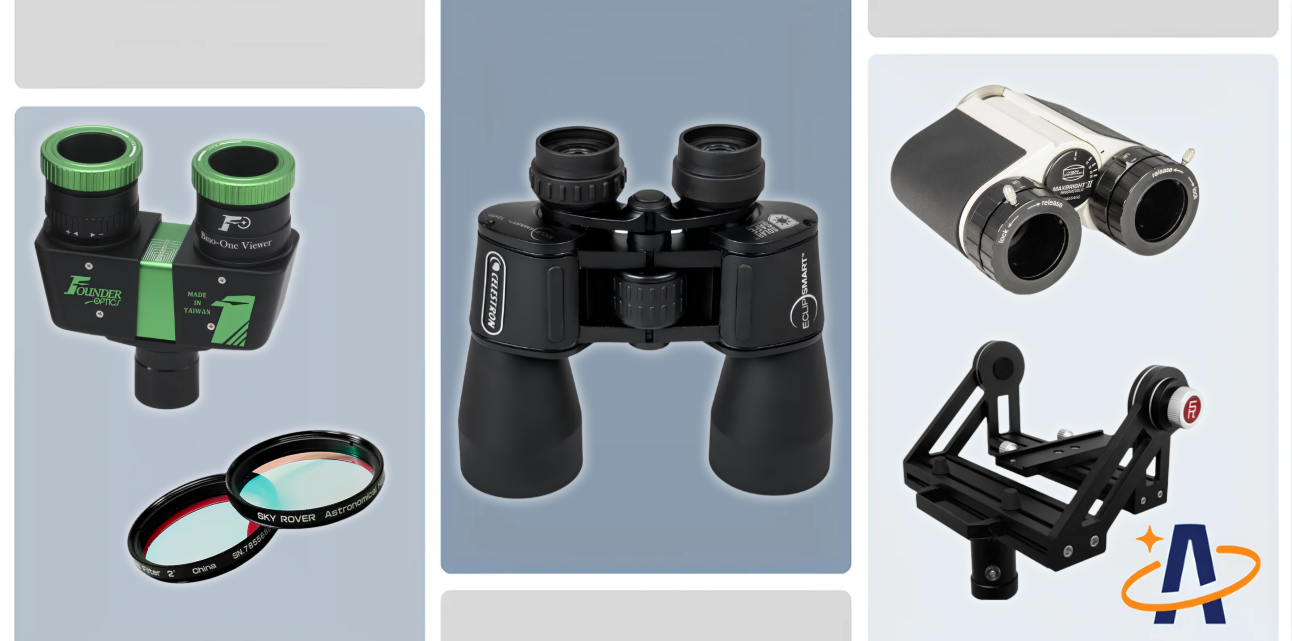
Binoculars give astronomers a fast, comfortable way to explore the night sky with both eyes open. They deliver wide, immersive views that single-eye telescopes cannot match, and they require almost no setup. There’s no easier way to get into casual stargazing, but binoculars can also be used for serious deep sky observation too.
The right pair of binoculars can reveal star clusters, detailed structures on the Moon, comets, and large nebulae in a natural, three-dimensional way. Small binoculars are still a marked improvement over naked-eye viewing, and extremely large binoculars present a visual experience that’s almost hard to believe.
This article covers the main options for astronomy binoculars sold at Agena Astro, along with the accessories that support them. Whether you want a grab-and-go pair for travel or a large mounted instrument for detailed observation, understanding your options will be key to picking the right gear that fits your goals.
Standard Binoculars (Up to 50mm)
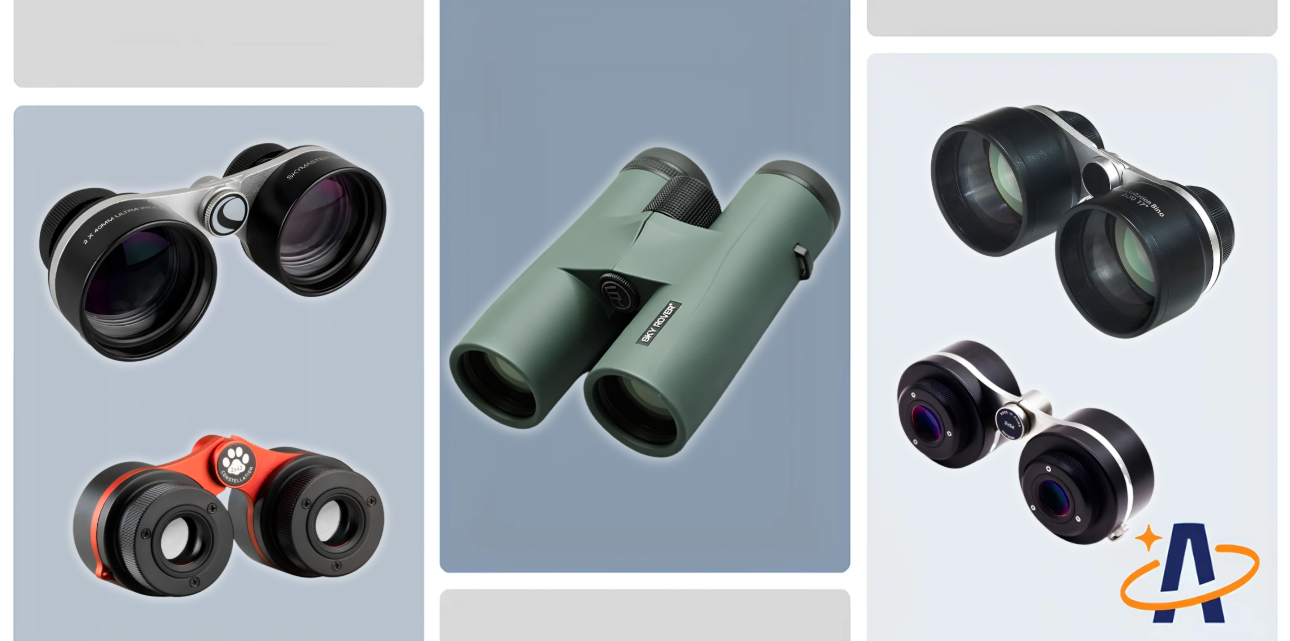
Standard binoculars use objective lenses of 50mm or smaller, which keeps them light and easy to hold. They work well for handheld viewing and are a popular starting point for new observers. This size also suits travel, outreach events, and daytime use such as birding or landscape viewing.
Smaller objectives gather less light than larger models, so these binoculars are best for brighter targets like the Moon, bright star fields, and constellations. Many observers value them as a second pair that stays packed and ready for quick sessions.
Large Binoculars (56mm-90mm)
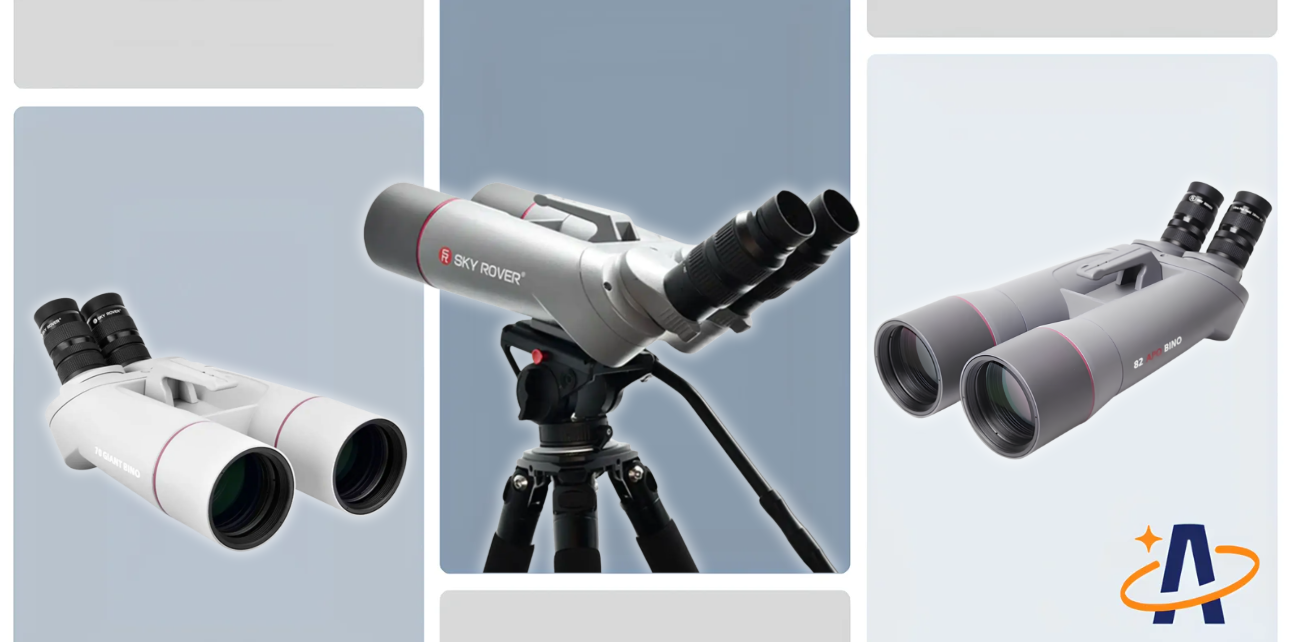
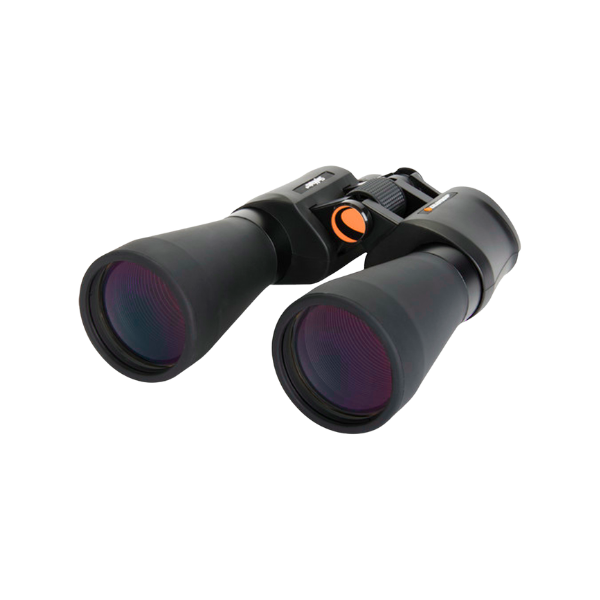
Large binoculars step up the objective size to a range of 56mm through 90mm. The wider lenses collect more light, which brings out fainter stars and improves detail on deep sky objects. This added performance comes with more weight, so a tripod or mount is often helpful during longer sessions.
These binoculars suit observers who want a clear gain in light gathering without moving to a giant instrument. They strike a balance between portability and reach, making them a strong middle option for dedicated stargazers.
Giant Binoculars (100mm & Larger)
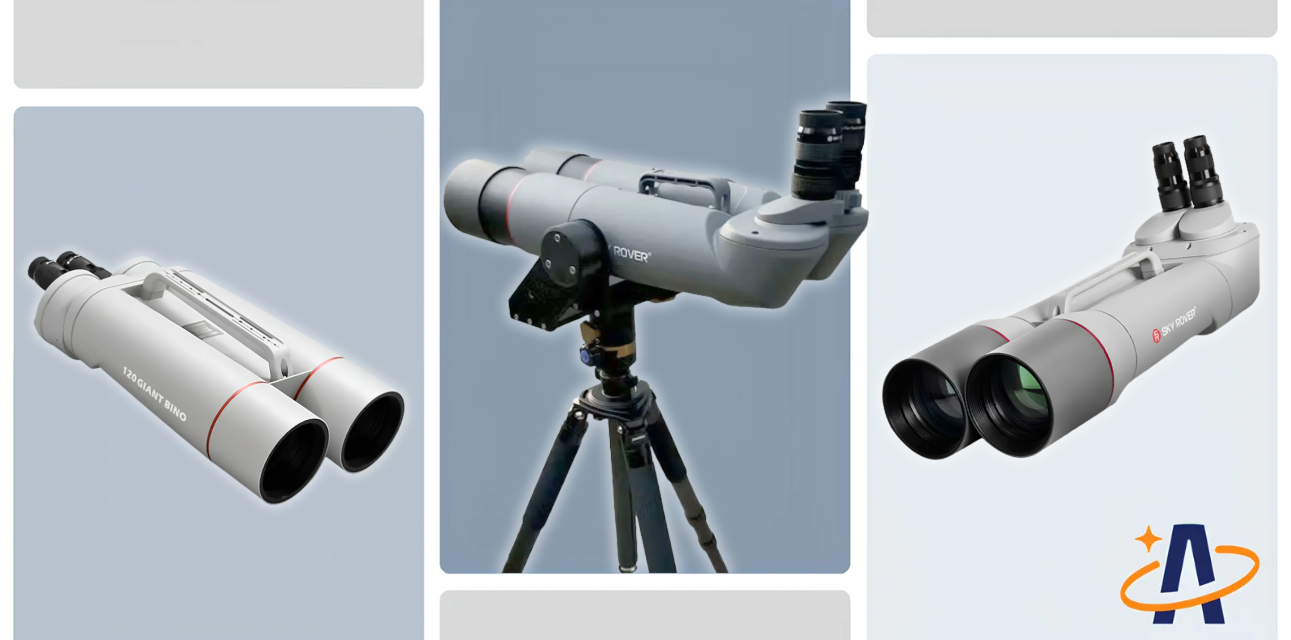
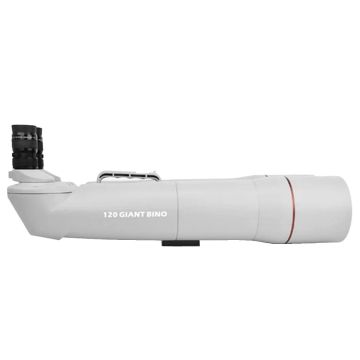
Giant binoculars feature objective lenses of 100mm and up, and some models reach 150mm. The large apertures pull in a great deal of light, which reveals faint galaxies, nebulae, and detailed star fields. Many giant models are also offered in angled designs that make high-altitude targets easier to view.
Because of their size and weight, giant binoculars require a sturdy mount or specialized fork for stable use. Observers who want telescope-level light gathering with the comfort of two-eyed viewing often turn to this category for their most detailed sessions.
Solar Binoculars
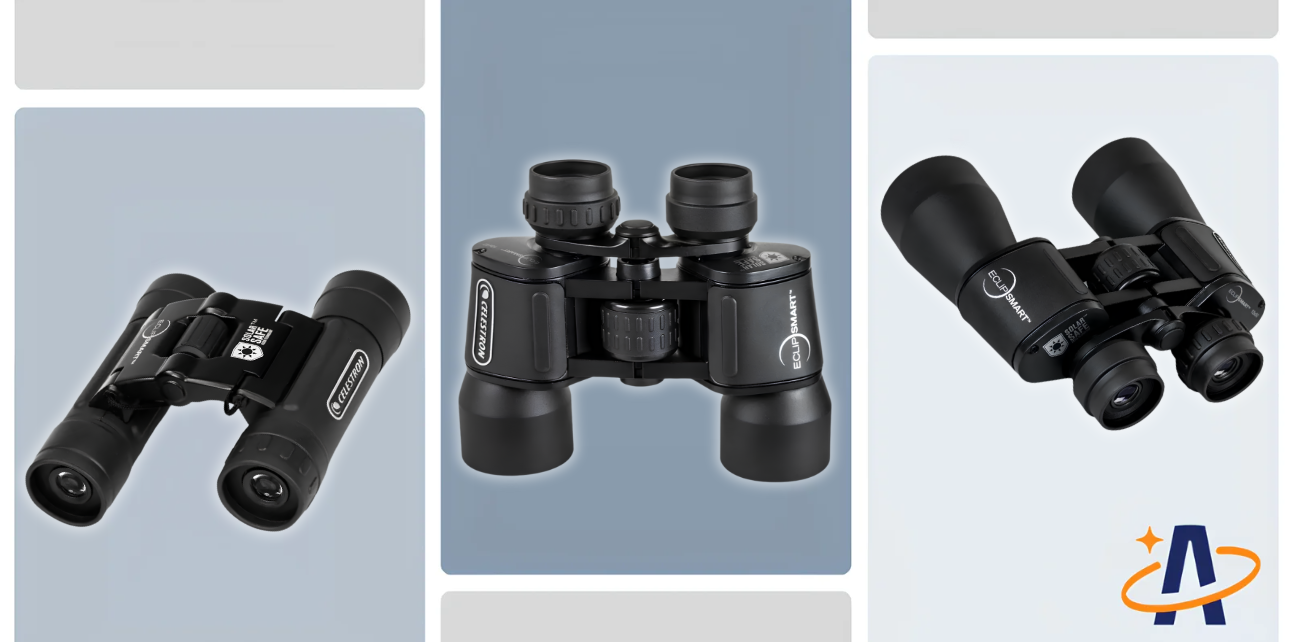
Solar binoculars are built specifically for safe viewing of the Sun. They include certified solar filtering that blocks harmful light, allowing observers to watch sunspots and solar events without risk to their eyes. These instruments should never be confused with standard binoculars! Without filtration, even the small binoculars can cause permanent eye damage if pointed at the Sun.
This category is especially popular for daytime solar observation and for eclipse events. With built-in solar filters these binoculars offer a simple and secure way to enjoy the Sun for everyone. This makes them especially popular for outreach events, or for quickly scanning the sun for activity.
Binocular Accessories
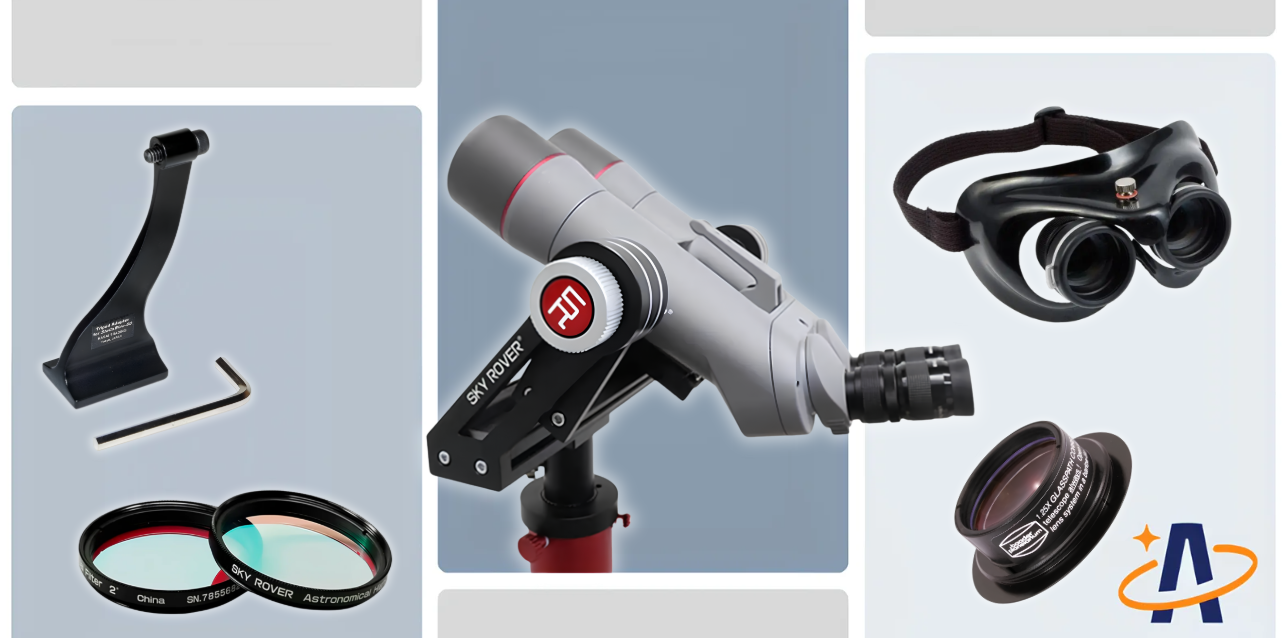
Binocular accessories help observers get more comfort, stability, and versatility from their gear. Tripod adapters and dedicated mounts steady the view during long sessions, which reduces fatigue and sharpens detail. Support arms and forks are especially useful for heavier large and giant models.
Other accessories include filters that boost contrast on specific targets, along with thread adapters that expand compatibility. Together these items extend the usefulness of a binocular setup and make extended viewing far more enjoyable.
Binoviewers
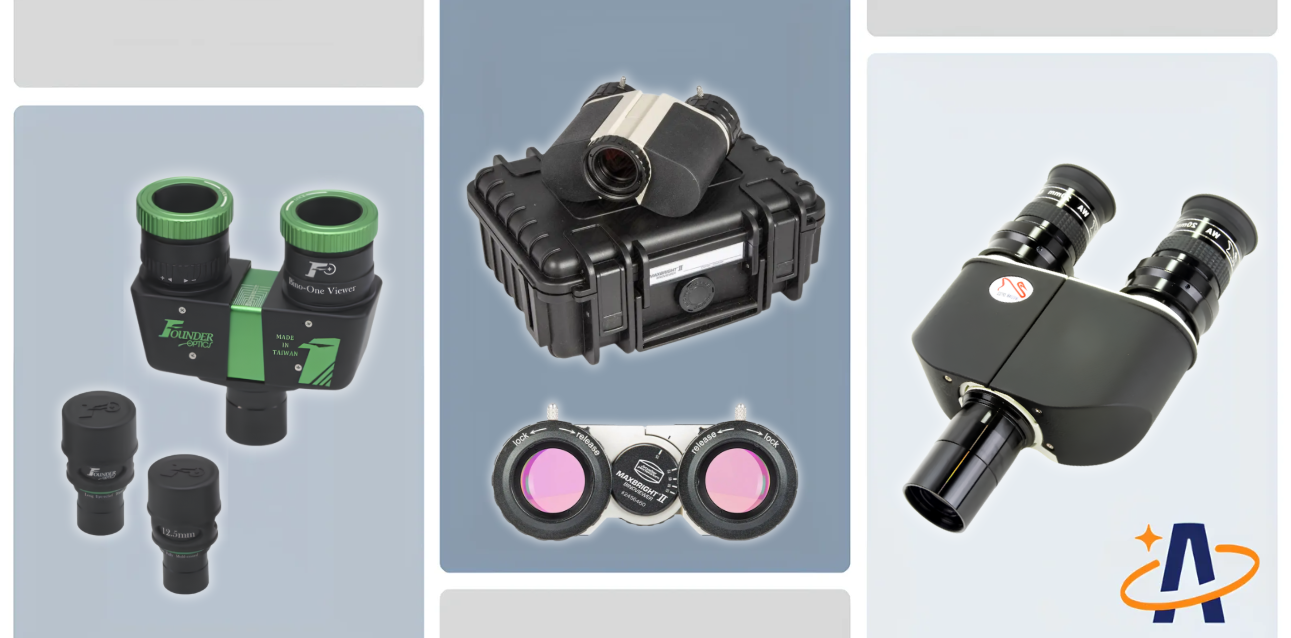
Binoviewers let observers use both eyes with a telescope by splitting the light path into two eyepieces. This brings the natural, relaxed viewing experience of binoculars to a telescope, which can improve comfort and reveal finer detail on the Moon and planets. Many users find that two-eyed viewing reduces strain during long sessions.
These units often pair with glasspath correctors and nosepieces that set the correct optical spacing for a given telescope. Binoviewers appeal to observers who already own a telescope and want a more comfortable, detailed view of bright targets.
Binocular Size Comparison
| Category | Objective Size | Portability | Typical Use | Mount Needed? |
|---|---|---|---|---|
| Standard | Up to 50mm | High, handheld | Moon, bright stars, travel, daytime | No |
| Large | 56mm to 90mm | Moderate | Fainter stars, deep-sky detail | Ideally |
| Giant | 100mm and up | Low, mounted | Faint galaxies, nebulae, star fields | Yes |
| Solar | Varies | High, handheld | Safe Sun and eclipse viewing with certified solar filters | No |
| Binoviewers | N/A, telescope use | Depends on scope | Moon and planet detail | Attached to telescope |
Frequently Asked Questions
Do I need a special mount for binoculars?
It depends on the size. Standard and solar models are light enough to hold by hand. Large and giant binoculars are heavier, so a tripod or fork mount helps keep the view steady and reduces arm fatigue.
What do the two numbers in a binocular name mean?
The first number is the magnification, and the second is the objective lens diameter in millimeters. A 10x50 pair magnifies ten times and has 50mm objective lenses. Larger second numbers gather more light but add weight.
Are angled and straight-through giant binoculars different to use?
Yes. Angled models let you look downward into the eyepieces, which is more comfortable for targets high in the sky. Straight-through models point directly at the target and can feel more natural for objects near the horizon.
Can I use regular binoculars to look at the Sun?
No. Only binoculars with certified solar filtering are safe for the Sun. Pointing an unfiltered pair at the Sun could cause permanent eye damage, so always choose a dedicated solar model for daytime Sun viewing.
What is the benefit of a binoviewer over a single eyepiece?
A binoviewer lets you observe through a telescope with both eyes. This can feel more relaxed during long sessions and may help you notice finer detail on the Moon and planets, since your brain combines the view from both eyes.
Are binoculars a good choice for a first astronomy purchase?
For many beginners, yes. They are simple to use, need little setup, and offer wide views that make it easy to find objects. A standard pair could serve as an affordable entry into the hobby before moving on to a telescope.