

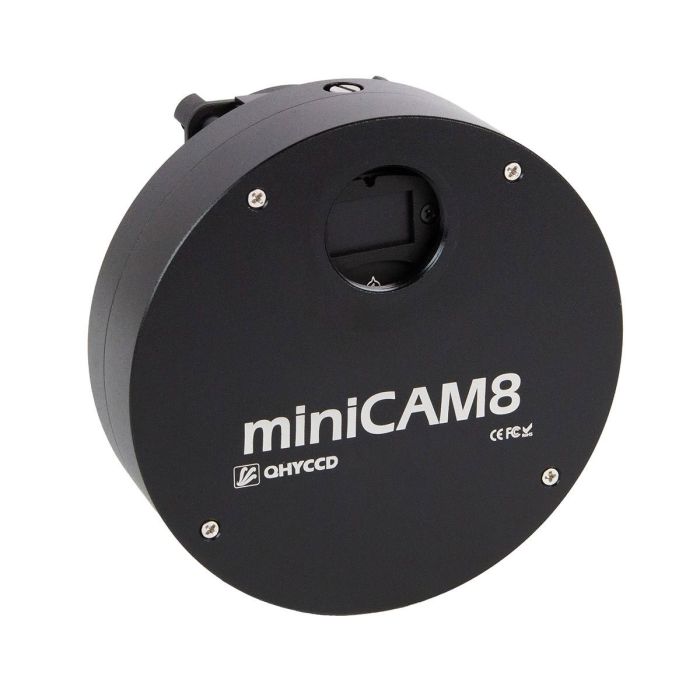
QHY miniCAM8M Monochrome Camera with LRGBSHO (7nm) 7-Filter Set (Deep Sky Combo)
Stock count is accurate & shown in real time.
- This item is out of stock.
- Sign up for back-in-stock alerts to be notified when this item becomes available (account login required).
- This item is out of stock.
- Sign up for back-in-stock alerts to be notified when this item becomes available (account login required).
Contiguous US / Lower 48:
Free shipping applies to orders over $50 using our chosen carrier/method. Faster paid options are available at checkout.
Alaska, Hawaii & US Territories:
Free shipping applies to many—but not all—products. Enter your ZIP code in cart or upon checkout to confirm options and costs.
International:
International orders do not qualify for free shipping. Shipping, duties, brokerage, tariffs, and taxes are the customer’s responsibility. Some items may be restricted due to export, size, or manufacturer limitations.
- 8 MP Sony IMX585 sensor
- 92% quantum efficiency (QE) in visible light
- TEC cooling system
- Integrated 8-position filter wheel with included LRGB and 7nm narrowband SHO filters
- Linearity HDR mode
- Zero amp glow
- Built-in anti-dew heater
- Compatible with a range of accessories
QHY miniCAM8: Big Imaging Power, Tiny Package
The miniCAM8 delivers professional astrophotography performance in a compact, travel-ready design. It’s built for both deep-sky and planetary imaging, with advanced features normally found only in larger systems. A sensitive Sony IMX585 sensor delivers sharp, detailed results, while built-in cooling keeps noise low for clearer data. With an integrated 8-position filter wheel, you can easily switch between filters without carrying extra gear. The miniCAM8 proves you don’t have to choose between portability and performance. This design delivers both, giving you a compact imaging solution that doesn’t cut corners.

The Lagoon Nebula (Messier 8) capture by Leah Thiel with the QHY Mini8
QHY miniCAM8 Review
In this video, Agena Astro affiliate The Space Koala provides a hands-on review of the QHYCCD miniCAM8, covering setup, specs, deep-sky and lunar imaging tests, filter performance, cooling, and software compatibility.
Three Core Technologies
High-Performance Camera
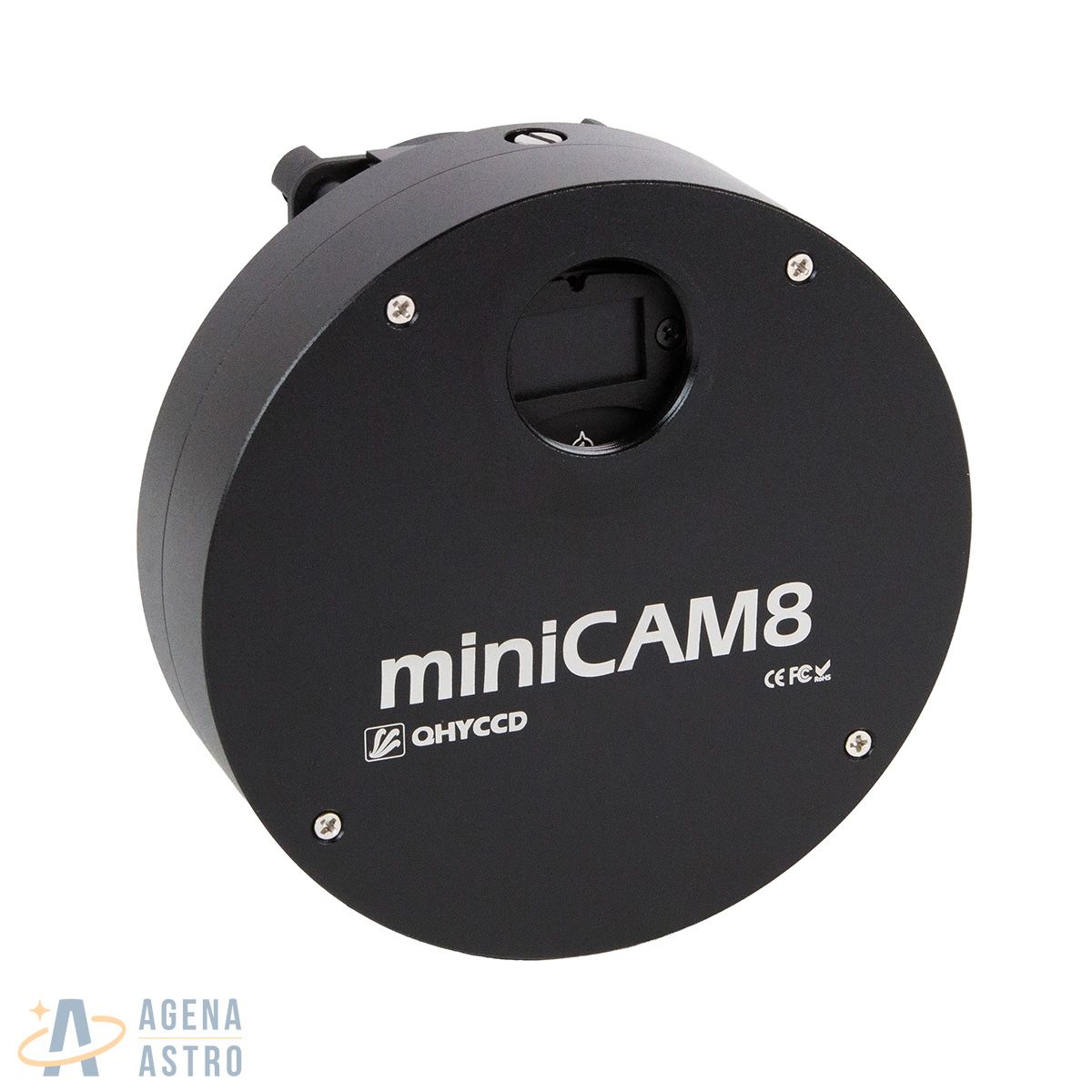
The miniCAM8’s built-in camera features Sony’s IMX585 sensor with Starvis II technology, delivering exceptional sensitivity and wide dynamic range. Its back-illuminated design maximizes light capture and eliminates amplifier glow.
Integrated Filter Wheel & Filters

The miniCAM8’s integrated 8-position filter wheel includes precision LRGB and narrowband 7nm SHO filters from XiMei, tuned to the sensor’s response curves. With OD 3 LRGB and OD 5 narrowband ratings, they suppress stray light for higher contrast and sharper detail in deep-sky imaging.
Dual-Stage Cooling & Anti-Dew

The miniCAM8 uses dual-stage thermoelectric cooling with QHYCCD’s dark current noise control. This keeps the sensor stable and reduces thermal noise during long exposures. Anti-dew protection includes a built-in window heater, a sealed chamber, and silica gel tube sockets.
Advanced Sensor Capabilities
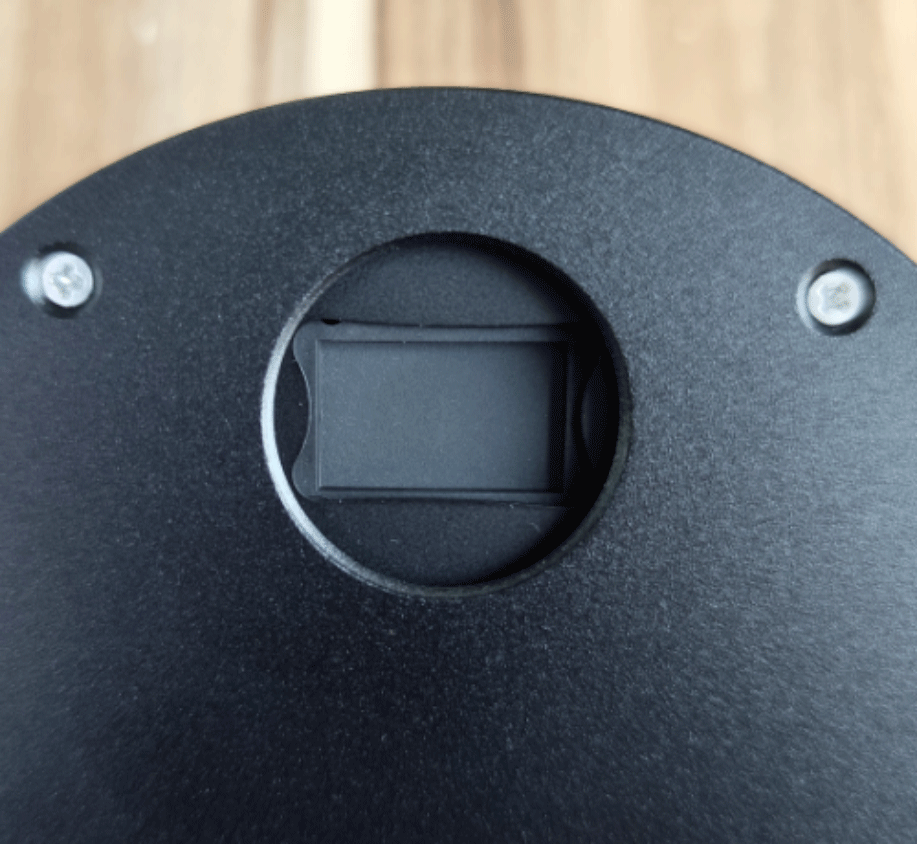
The miniCAM8 features a 1/1.2-inch, 8MP back-illuminated sensor with 2.9 × 2.9 μm pixels, delivering a full well capacity of 46,000 electrons. Its design boosts near-infrared sensitivity by 1.7×, reaching 60% QE in near-infrared and 92% in visible light
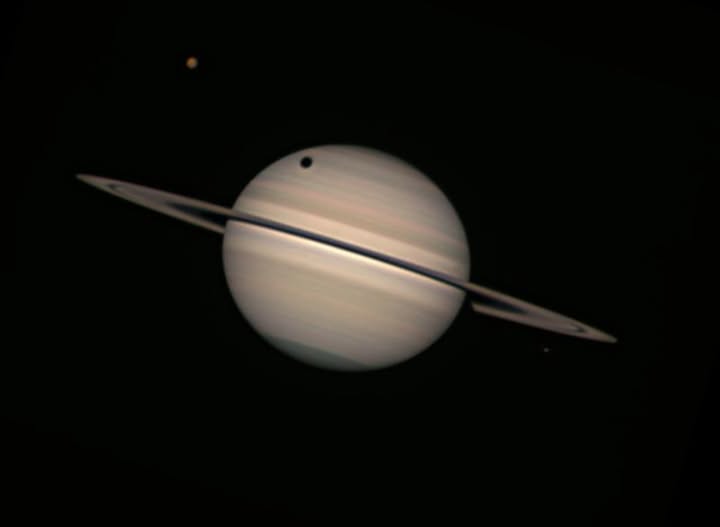
Saturn, Titan, and its shadow by Mitchell Duke captured with the mini8.
Planetary Performance
The miniCAM8 delivers fast planetary imaging with up to 41.5 FPS at 8-bit and 23.5 FPS at full 16-bit resolution. Its accessible photometric setup makes it ideal for scientific work, while planetary imagers can take advantage of UV, methane, and sodium filters (sold seperately) for sharper, more detailed captures. With this combination, the miniCAM8 makes switching from one-shot color to monochrome imaging easier than ever.
HDR & Linearity
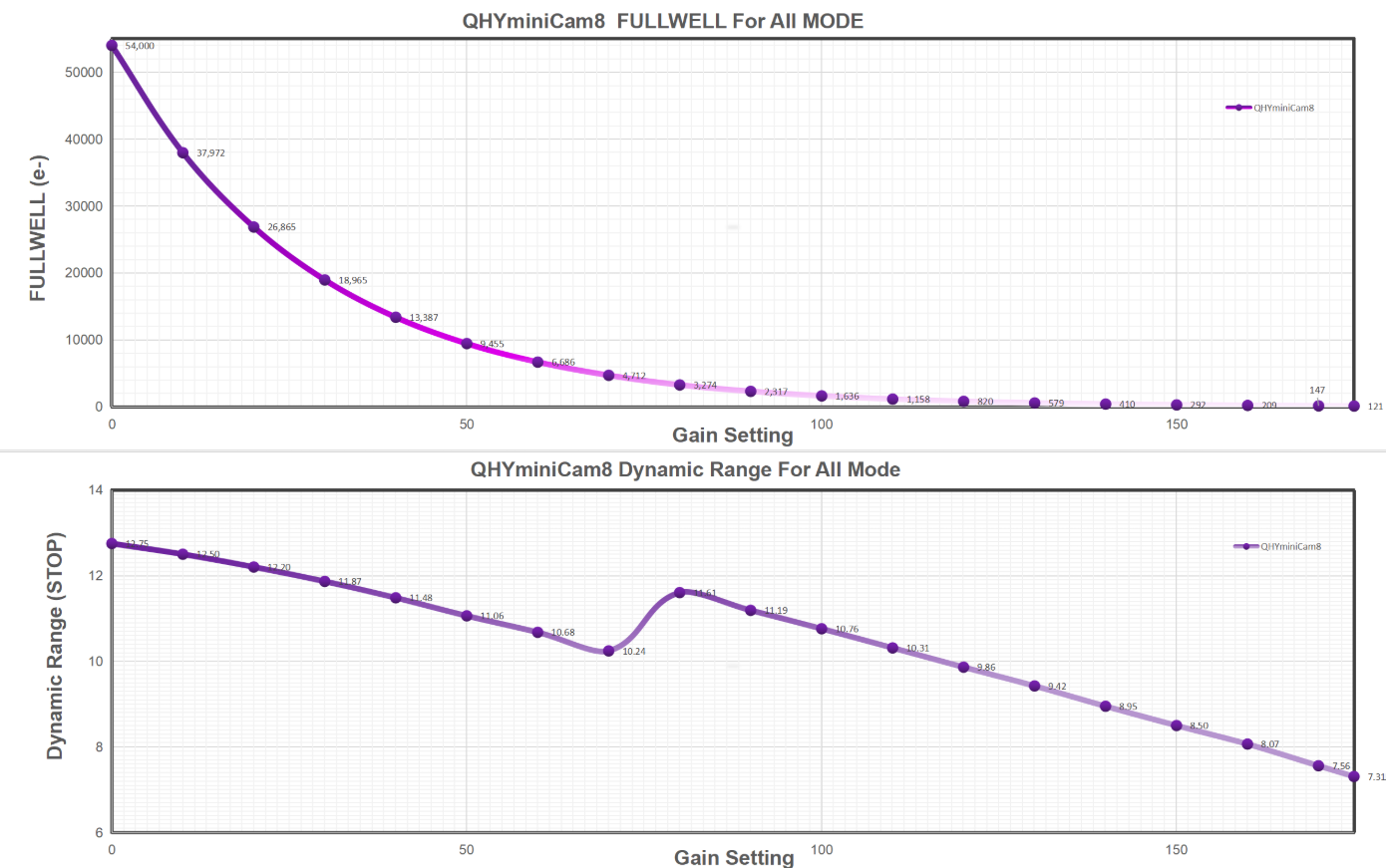
The miniCAM8 enhances the IMX585 sensor’s native 12-bit dynamic range with its innovative Linearity HDR mode. This feature combines high- and low-gain data to achieve performance equivalent to a 16-bit system.
Linearity HDR uses algorithmic correction to maintain smooth image transitions and prevent artifacts. In this mode, the sensor delivers a full well capacity of 46,000 electrons with just 1.0 electron read noise, resulting in a dynamic range greater than 46,300:1 or 15.5 stops of exposure.

Software & Control
The QHY miniCAM8 integrates seamlessly with standard astronomical imaging software. Using ASCOM connections or QHY’s native drivers, you can control the camera’s memory buffer, adjust high-speed USB settings, and maintain reliable operation in any setup. With filters, cooling, and exposure all software-controlled, the miniCAM8 is ideal for both backyard imaging and fully remote setups.
Specifications
- Model: QHY miniCAM8 With Filters
- CMOS Sensor: Sony IMX585
- Version: Mono
- BSI/FSI: BSI
- Sensor Size: 1/1.2 Inch
- Pixel Size: 2.9 μm × 2.9 μm
- Total Pixel Area: 3856 × 2180
- Effective Pixels: 8 MP
- Full Well Capacity: 54ke-
- Readout Noise: 0.76 – 7.8 e-
- A/D: 12-Bit (Output as 16-Bit)
- Full Frame Rates: Full Resolution: 41.5 FPS @ 8-Bit, 23.5 FPS @ 16-Bit
- ROI Frame Rates: Full Resolution 1080 Lines: 82 FPS @ 8-Bit, 47 FPS @ 16-Bit; 640 Lines: 177 FPS @ 8-Bit, 105 FPS @ 16-Bit
- Exposure Time Range: 11 μs – 900 Sec
- Shutter Type: Electronic Rolling Shutter
- Built-In Image Buffer: 512 MB DDR3
- Computer Interface: USB 3.0
- Telescope Interface: 1.25 Inch
- Optic Window Type: AR+AR
- Filter Wheel: Built-In 8-Position Carousel
- Back Focal Length (Sensor to Front Plate): 17.5 mm
- Back Focal Length (Front Plate to 2" M48 Adapter Threads): 37.5 mm
- Cooling System: Dual-Stage TEC Cooler: Long Exposures (> 1 Second) Typically -45℃ Below Ambient
- Weight: 480 grams
How to Install the Filters on the MiniCAM8
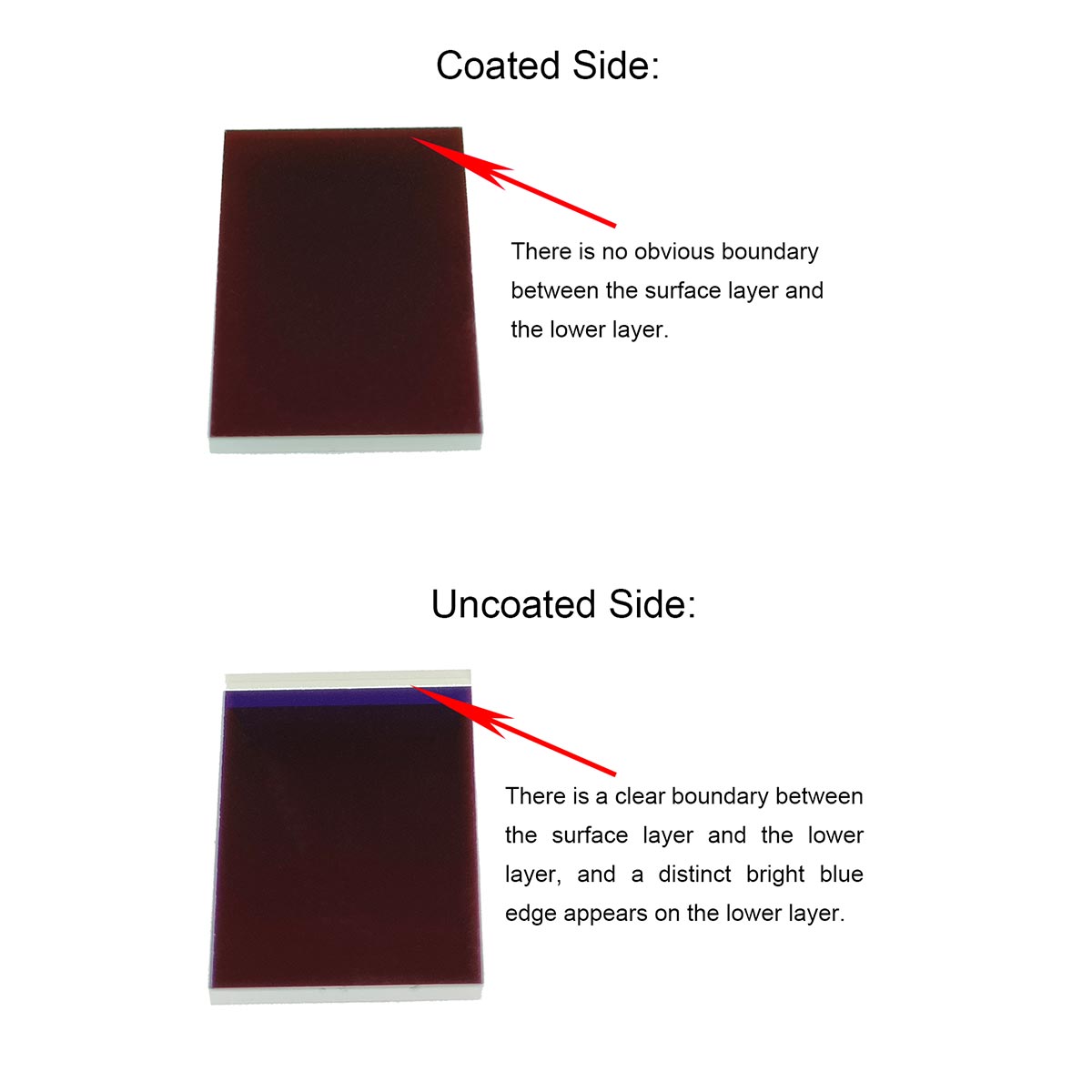
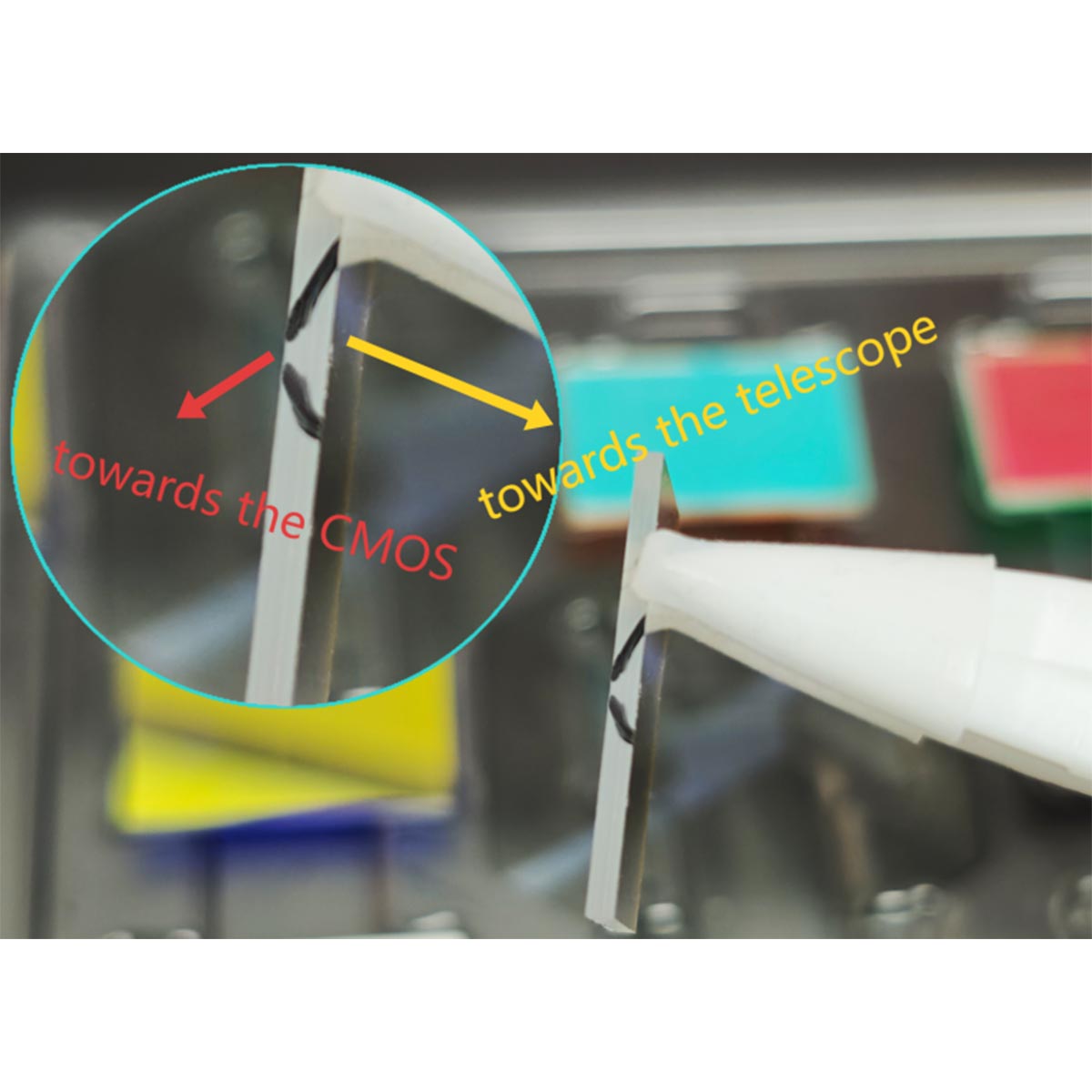
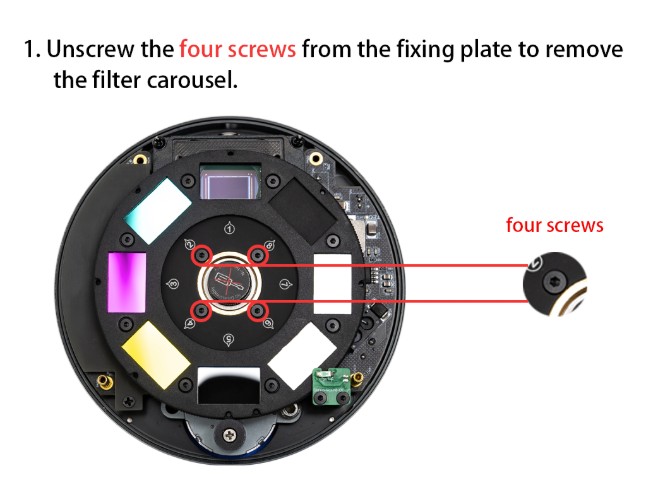
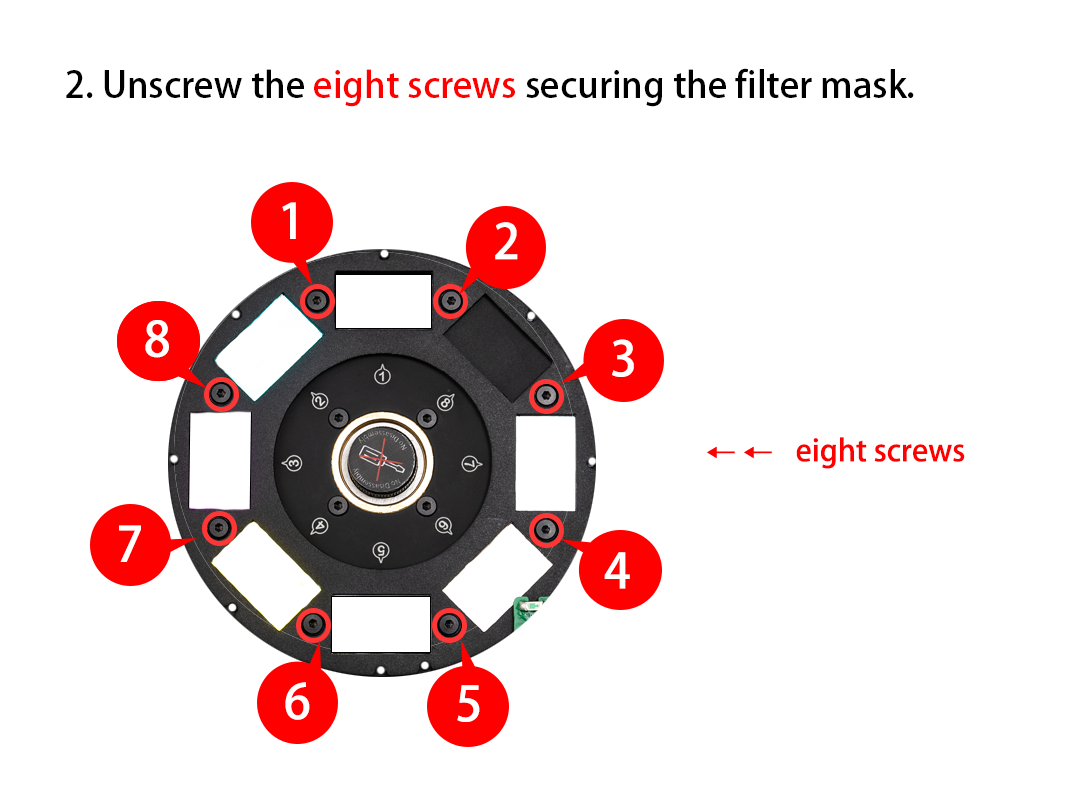
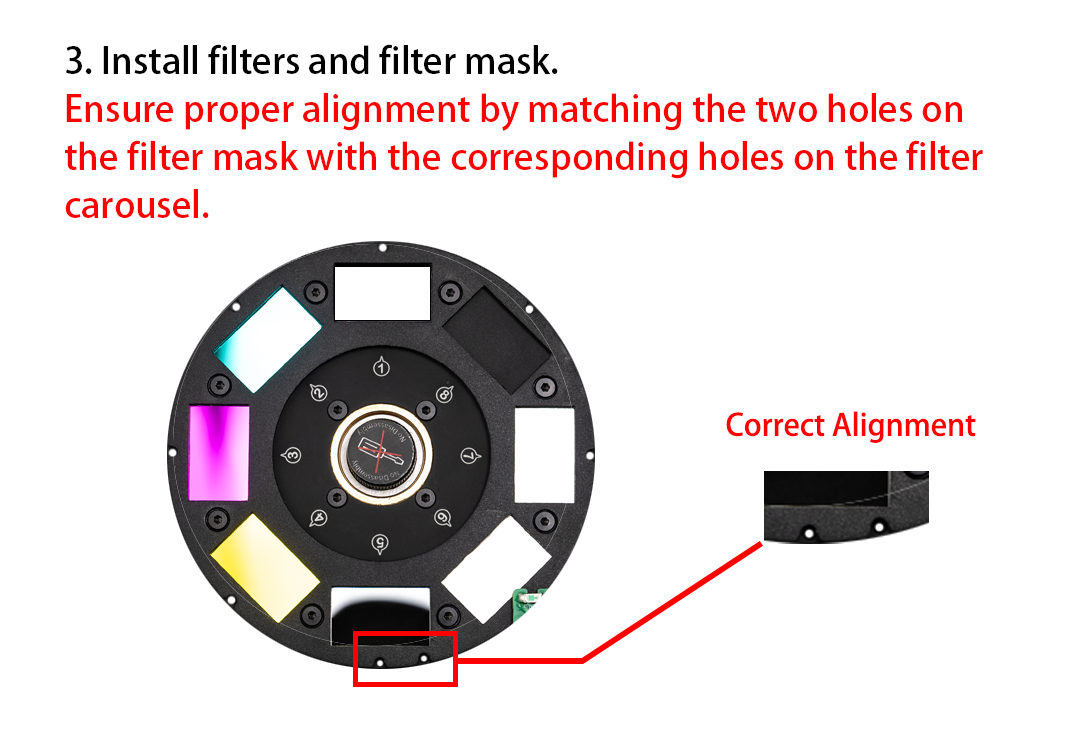
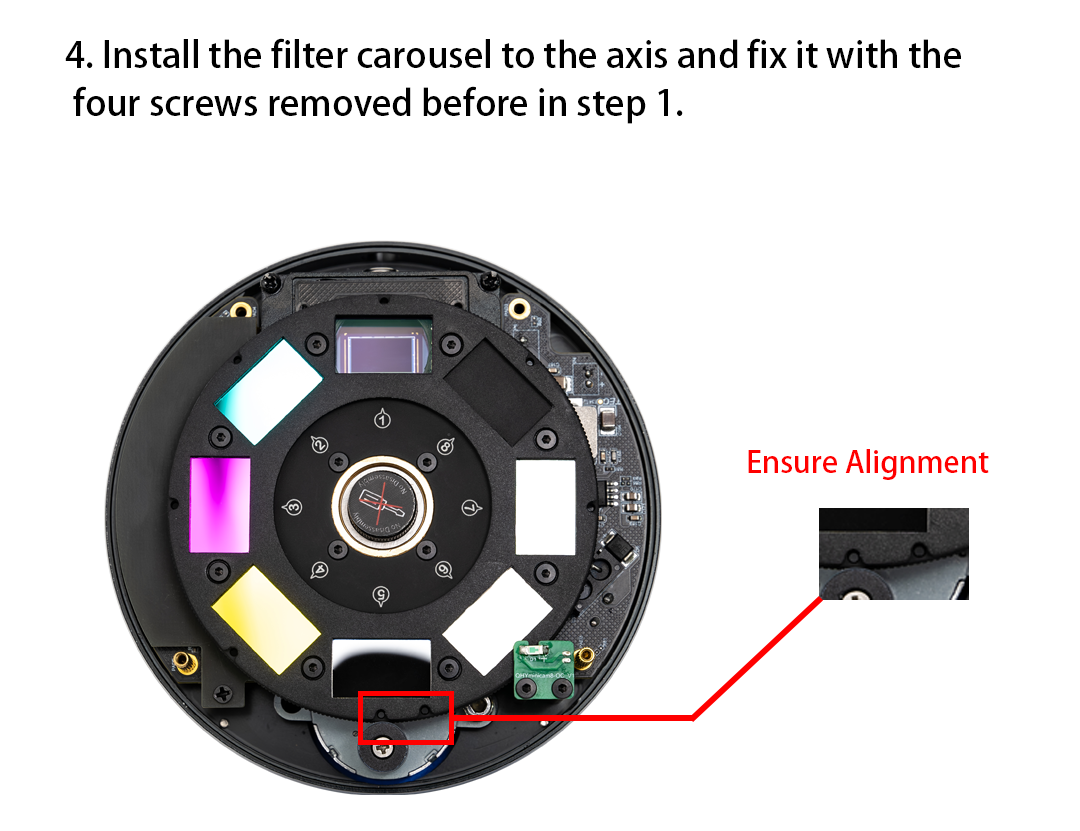
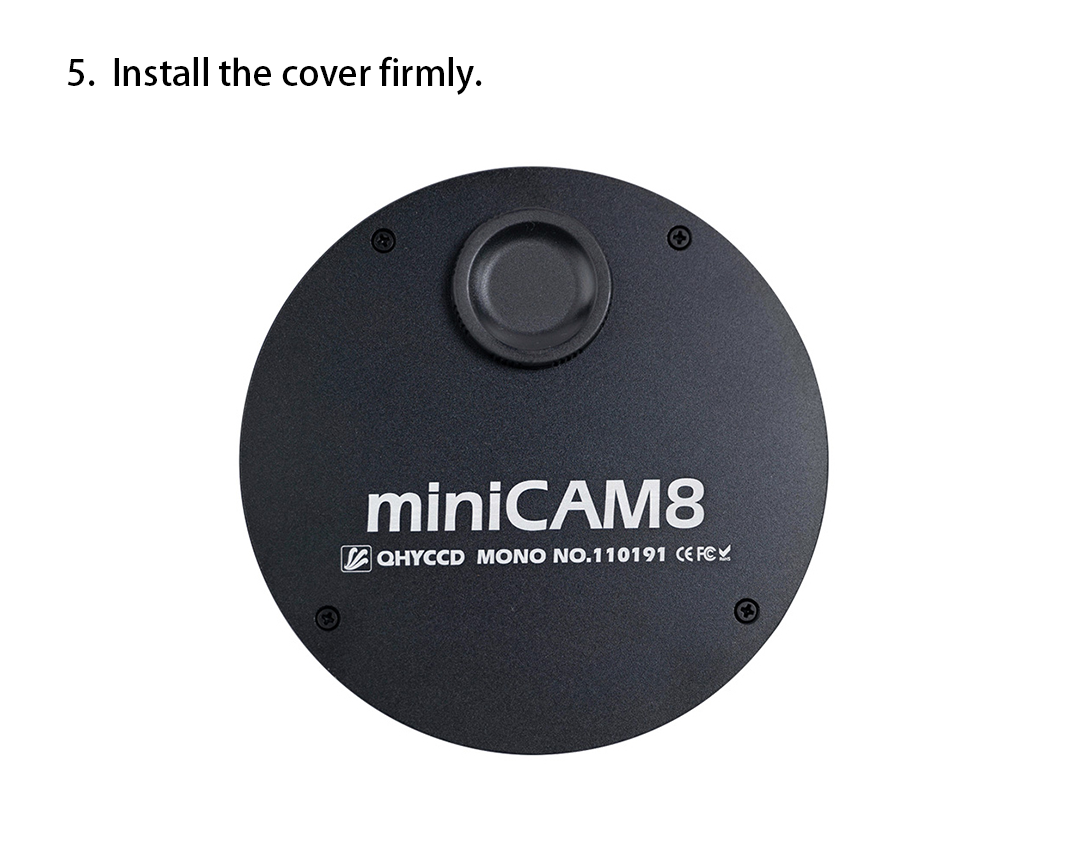
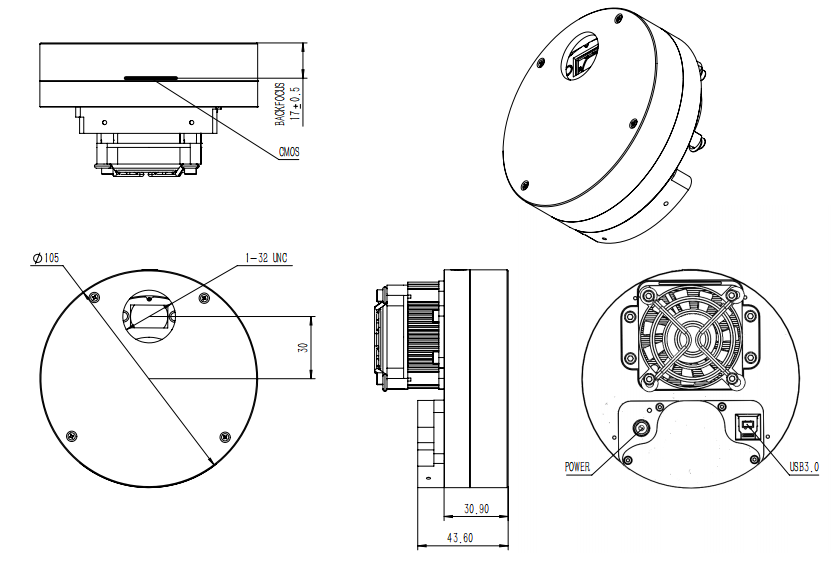
MiniCAM8M Mechanical Diagram
Frequently Asked Questions
Can I use my existing filters with the miniCAM8, or do I need the custom filter set?
The miniCAM8 requires the custom 19mm × 12mm × 1.1mm filters designed specifically for its integrated filter wheel. Standard astronomical filters won't fit due to the compact optical design. The included custom filter sets are precision-manufactured by XiMei Filters with optimal optical density ratings (OD 3 for LRGB, OD 5 for narrowband), matched to the camera's sensor response and optical characteristics.
What is the temperature range for the cooling system on the miniCAM8 series?
The miniCAM8 can achieve a delta-t (change in temperature) of up to -45°C from ambient. This makes it suitable for long-exposure work in any climate, especially when paired with QHY’s advanced humidity protection features.
How does the AutoDew feature work?
Absolutely—it ships with everything you need to get started. Just add your telescope and software of choice.
What computers and software work with miniCAM8?
The camera connects over USB 3.0 and works with any computer or mobile device capable of running ASCOM Standards or ASCOM Alpaca.
Other Information
- Country of Manufacture: China
QHY miniCAM8: Big Imaging Power, Tiny Package
The miniCAM8 delivers professional astrophotography performance in a compact, travel-ready design. It’s built for both deep-sky and planetary imaging, with advanced features normally found only in larger systems. A sensitive Sony IMX585 sensor delivers sharp, detailed results, while built-in cooling keeps noise low for clearer data. With an integrated 8-position filter wheel, you can easily switch between filters without carrying extra gear. The miniCAM8 proves you don’t have to choose between portability and performance. This design delivers both, giving you a compact imaging solution that doesn’t cut corners.
The Lagoon Nebula (Messier 8) capture by Leah Thiel with the QHY Mini8
QHY miniCAM8 Review
In this video, Agena Astro affiliate The Space Koala provides a hands-on review of the QHYCCD miniCAM8, covering setup, specs, deep-sky and lunar imaging tests, filter performance, cooling, and software compatibility.
Three Core Technologies
High-Performance Camera
The miniCAM8’s built-in camera features Sony’s IMX585 sensor with Starvis II technology, delivering exceptional sensitivity and wide dynamic range. Its back-illuminated design maximizes light capture and eliminates amplifier glow.
Integrated Filter Wheel & Filters
The miniCAM8’s integrated 8-position filter wheel includes precision LRGB and narrowband 7nm SHO filters from XiMei, tuned to the sensor’s response curves. With OD 3 LRGB and OD 5 narrowband ratings, they suppress stray light for higher contrast and sharper detail in deep-sky imaging.
Dual-Stage Cooling & Anti-Dew
The miniCAM8 uses dual-stage thermoelectric cooling with QHYCCD’s dark current noise control. This keeps the sensor stable and reduces thermal noise during long exposures. Anti-dew protection includes a built-in window heater, a sealed chamber, and silica gel tube sockets.
Advanced Sensor Capabilities
The miniCAM8 features a 1/1.2-inch, 8MP back-illuminated sensor with 2.9 × 2.9 μm pixels, delivering a full well capacity of 46,000 electrons. Its design boosts near-infrared sensitivity by 1.7×, reaching 60% QE in near-infrared and 92% in visible light
Saturn, Titan, and its shadow by Mitchell Duke captured with the mini8.
Planetary Performance
The miniCAM8 delivers fast planetary imaging with up to 41.5 FPS at 8-bit and 23.5 FPS at full 16-bit resolution. Its accessible photometric setup makes it ideal for scientific work, while planetary imagers can take advantage of UV, methane, and sodium filters (sold seperately) for sharper, more detailed captures. With this combination, the miniCAM8 makes switching from one-shot color to monochrome imaging easier than ever.
HDR & Linearity
The miniCAM8 enhances the IMX585 sensor’s native 12-bit dynamic range with its innovative Linearity HDR mode. This feature combines high- and low-gain data to achieve performance equivalent to a 16-bit system.
Linearity HDR uses algorithmic correction to maintain smooth image transitions and prevent artifacts. In this mode, the sensor delivers a full well capacity of 46,000 electrons with just 1.0 electron read noise, resulting in a dynamic range greater than 46,300:1 or 15.5 stops of exposure.
Software & Control
The QHY miniCAM8 integrates seamlessly with standard astronomical imaging software. Using ASCOM connections or QHY’s native drivers, you can control the camera’s memory buffer, adjust high-speed USB settings, and maintain reliable operation in any setup. With filters, cooling, and exposure all software-controlled, the miniCAM8 is ideal for both backyard imaging and fully remote setups.
Specifications
- Model: QHY miniCAM8 With Filters
- CMOS Sensor: Sony IMX585
- Version: Mono
- BSI/FSI: BSI
- Sensor Size: 1/1.2 Inch
- Pixel Size: 2.9 μm × 2.9 μm
- Total Pixel Area: 3856 × 2180
- Effective Pixels: 8 MP
- Full Well Capacity: 54ke-
- Readout Noise: 0.76 – 7.8 e-
- A/D: 12-Bit (Output as 16-Bit)
- Full Frame Rates: Full Resolution: 41.5 FPS @ 8-Bit, 23.5 FPS @ 16-Bit
- ROI Frame Rates: Full Resolution 1080 Lines: 82 FPS @ 8-Bit, 47 FPS @ 16-Bit; 640 Lines: 177 FPS @ 8-Bit, 105 FPS @ 16-Bit
- Exposure Time Range: 11 μs – 900 Sec
- Shutter Type: Electronic Rolling Shutter
- Built-In Image Buffer: 512 MB DDR3
- Computer Interface: USB 3.0
- Telescope Interface: 1.25 Inch
- Optic Window Type: AR+AR
- Filter Wheel: Built-In 8-Position Carousel
- Back Focal Length (Sensor to Front Plate): 17.5 mm
- Back Focal Length (Front Plate to 2" M48 Adapter Threads): 37.5 mm
- Cooling System: Dual-Stage TEC Cooler: Long Exposures (> 1 Second) Typically -45℃ Below Ambient
- Weight: 480 grams
How to Install the Filters on the MiniCAM8
MiniCAM8M Mechanical Diagram
Frequently Asked Questions
Can I use my existing filters with the miniCAM8, or do I need the custom filter set?
The miniCAM8 requires the custom 19mm × 12mm × 1.1mm filters designed specifically for its integrated filter wheel. Standard astronomical filters won't fit due to the compact optical design. The included custom filter sets are precision-manufactured by XiMei Filters with optimal optical density ratings (OD 3 for LRGB, OD 5 for narrowband), matched to the camera's sensor response and optical characteristics.
What is the temperature range for the cooling system on the miniCAM8 series?
The miniCAM8 can achieve a delta-t (change in temperature) of up to -45°C from ambient. This makes it suitable for long-exposure work in any climate, especially when paired with QHY’s advanced humidity protection features.
How does the AutoDew feature work?
Absolutely—it ships with everything you need to get started. Just add your telescope and software of choice.
What computers and software work with miniCAM8?
The camera connects over USB 3.0 and works with any computer or mobile device capable of running ASCOM Standards or ASCOM Alpaca.
- 1x Camera Body
- 1x 12V 5A Power Adapter
- 1x 12V Power Cable
- 1x 12V Self-Locking Power Cable
- 1x USB 3.0 Cable (1.3m)
- 1x C-Mount to 1.25" Adapter
- 1x C-Mount to M48 (2" Adapter)
- 1x Filters Mounting Tweezer
- 1x Screwdriver
- 1x Camera Packaging Bag
- 7x Filters
- Luminance (19x12x1.1mm)
- Red (19x12x1.1mm)
- Green (19x12x1.1mm)
- Blue (19x12x1.1mm)
- 7nm SII (19x12x1.1mm)
- 7nm Ha (19x12x1.1mm)
- 7nm OIII (19x12x1.1mm)
- 8 MP Sony IMX585 sensor
- 92% quantum efficiency (QE) in visible light
- TEC cooling system
- Integrated 8-position filter wheel with included LRGB and 7nm narrowband SHO filters
- Linearity HDR mode
- Zero amp glow
- Built-in anti-dew heater
- Compatible with a range of accessories
QHY miniCAM8: Big Imaging Power, Tiny Package
The miniCAM8 delivers professional astrophotography performance in a compact, travel-ready design. It’s built for both deep-sky and planetary imaging, with advanced features normally found only in larger systems. A sensitive Sony IMX585 sensor delivers sharp, detailed results, while built-in cooling keeps noise low for clearer data. With an integrated 8-position filter wheel, you can easily switch between filters without carrying extra gear. The miniCAM8 proves you don’t have to choose between portability and performance. This design delivers both, giving you a compact imaging solution that doesn’t cut corners.
The Lagoon Nebula (Messier 8) capture by Leah Thiel with the QHY Mini8
QHY miniCAM8 Review
In this video, Agena Astro affiliate The Space Koala provides a hands-on review of the QHYCCD miniCAM8, covering setup, specs, deep-sky and lunar imaging tests, filter performance, cooling, and software compatibility.
Three Core Technologies
High-Performance Camera
The miniCAM8’s built-in camera features Sony’s IMX585 sensor with Starvis II technology, delivering exceptional sensitivity and wide dynamic range. Its back-illuminated design maximizes light capture and eliminates amplifier glow.
Integrated Filter Wheel & Filters
The miniCAM8’s integrated 8-position filter wheel includes precision LRGB and narrowband 7nm SHO filters from XiMei, tuned to the sensor’s response curves. With OD 3 LRGB and OD 5 narrowband ratings, they suppress stray light for higher contrast and sharper detail in deep-sky imaging.
Dual-Stage Cooling & Anti-Dew
The miniCAM8 uses dual-stage thermoelectric cooling with QHYCCD’s dark current noise control. This keeps the sensor stable and reduces thermal noise during long exposures. Anti-dew protection includes a built-in window heater, a sealed chamber, and silica gel tube sockets.
Advanced Sensor Capabilities
The miniCAM8 features a 1/1.2-inch, 8MP back-illuminated sensor with 2.9 × 2.9 μm pixels, delivering a full well capacity of 46,000 electrons. Its design boosts near-infrared sensitivity by 1.7×, reaching 60% QE in near-infrared and 92% in visible light
Saturn, Titan, and its shadow by Mitchell Duke captured with the mini8.
Planetary Performance
The miniCAM8 delivers fast planetary imaging with up to 41.5 FPS at 8-bit and 23.5 FPS at full 16-bit resolution. Its accessible photometric setup makes it ideal for scientific work, while planetary imagers can take advantage of UV, methane, and sodium filters (sold seperately) for sharper, more detailed captures. With this combination, the miniCAM8 makes switching from one-shot color to monochrome imaging easier than ever.
HDR & Linearity
The miniCAM8 enhances the IMX585 sensor’s native 12-bit dynamic range with its innovative Linearity HDR mode. This feature combines high- and low-gain data to achieve performance equivalent to a 16-bit system.
Linearity HDR uses algorithmic correction to maintain smooth image transitions and prevent artifacts. In this mode, the sensor delivers a full well capacity of 46,000 electrons with just 1.0 electron read noise, resulting in a dynamic range greater than 46,300:1 or 15.5 stops of exposure.
Software & Control
The QHY miniCAM8 integrates seamlessly with standard astronomical imaging software. Using ASCOM connections or QHY’s native drivers, you can control the camera’s memory buffer, adjust high-speed USB settings, and maintain reliable operation in any setup. With filters, cooling, and exposure all software-controlled, the miniCAM8 is ideal for both backyard imaging and fully remote setups.
Specifications
- Model: QHY miniCAM8 With Filters
- CMOS Sensor: Sony IMX585
- Version: Mono
- BSI/FSI: BSI
- Sensor Size: 1/1.2 Inch
- Pixel Size: 2.9 μm × 2.9 μm
- Total Pixel Area: 3856 × 2180
- Effective Pixels: 8 MP
- Full Well Capacity: 54ke-
- Readout Noise: 0.76 – 7.8 e-
- A/D: 12-Bit (Output as 16-Bit)
- Full Frame Rates: Full Resolution: 41.5 FPS @ 8-Bit, 23.5 FPS @ 16-Bit
- ROI Frame Rates: Full Resolution 1080 Lines: 82 FPS @ 8-Bit, 47 FPS @ 16-Bit; 640 Lines: 177 FPS @ 8-Bit, 105 FPS @ 16-Bit
- Exposure Time Range: 11 μs – 900 Sec
- Shutter Type: Electronic Rolling Shutter
- Built-In Image Buffer: 512 MB DDR3
- Computer Interface: USB 3.0
- Telescope Interface: 1.25 Inch
- Optic Window Type: AR+AR
- Filter Wheel: Built-In 8-Position Carousel
- Back Focal Length (Sensor to Front Plate): 17.5 mm
- Back Focal Length (Front Plate to 2" M48 Adapter Threads): 37.5 mm
- Cooling System: Dual-Stage TEC Cooler: Long Exposures (> 1 Second) Typically -45℃ Below Ambient
- Weight: 480 grams
How to Install the Filters on the MiniCAM8
MiniCAM8M Mechanical Diagram
Frequently Asked Questions
Can I use my existing filters with the miniCAM8, or do I need the custom filter set?
The miniCAM8 requires the custom 19mm × 12mm × 1.1mm filters designed specifically for its integrated filter wheel. Standard astronomical filters won't fit due to the compact optical design. The included custom filter sets are precision-manufactured by XiMei Filters with optimal optical density ratings (OD 3 for LRGB, OD 5 for narrowband), matched to the camera's sensor response and optical characteristics.
What is the temperature range for the cooling system on the miniCAM8 series?
The miniCAM8 can achieve a delta-t (change in temperature) of up to -45°C from ambient. This makes it suitable for long-exposure work in any climate, especially when paired with QHY’s advanced humidity protection features.
How does the AutoDew feature work?
Absolutely—it ships with everything you need to get started. Just add your telescope and software of choice.
What computers and software work with miniCAM8?
The camera connects over USB 3.0 and works with any computer or mobile device capable of running ASCOM Standards or ASCOM Alpaca.
Other Information
- Country of Manufacture: China
- 1x Camera Body
- 1x 12V 5A Power Adapter
- 1x 12V Power Cable
- 1x 12V Self-Locking Power Cable
- 1x USB 3.0 Cable (1.3m)
- 1x C-Mount to 1.25" Adapter
- 1x C-Mount to M48 (2" Adapter)
- 1x Filters Mounting Tweezer
- 1x Screwdriver
- 1x Camera Packaging Bag
- 7x Filters
- Luminance (19x12x1.1mm)
- Red (19x12x1.1mm)
- Green (19x12x1.1mm)
- Blue (19x12x1.1mm)
- 7nm SII (19x12x1.1mm)
- 7nm Ha (19x12x1.1mm)
- 7nm OIII (19x12x1.1mm)

QHY miniCAM8M Monochrome Camera with LRGBSHO (7nm) 7-Filter Set (Deep Sky Combo)