

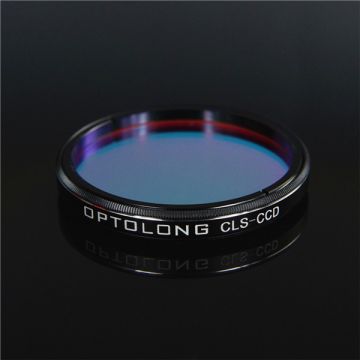

Optolong Filters at Agena Astro!
Optolong filters are a popular choice for astrophotography because they help you control skyglow, boost contrast, and produce cleaner data that is easier to process. If you image from suburban skies, work under moonlight, or simply want tighter color control on broadband targets, Optolong has options that fit real-world conditions. Their lineup covers everything from general light pollution reduction to aggressive dual-band and narrowband filters for emission nebulae. Agena Astro carries a wide selection of Optolong filters in common sizes and formats, as well as many of their less-traditional offerings, so it is easy to match a filter to your camera, telescope, and imaging style.
Extensive Options for Modern Imaging Workflows
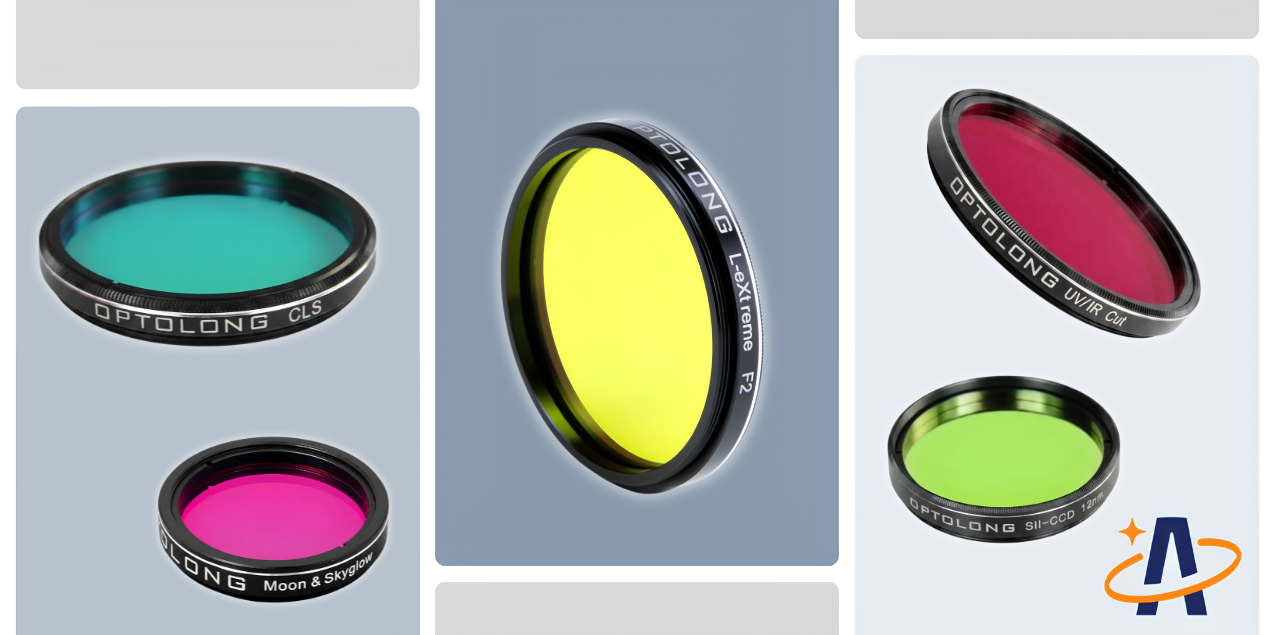
Today’s filters need to do more than just reduce sky brightness and fight off specific bandwidths of streetlights. Modern imaging systems require improved contrast without sacrificing their signal-to-noise ratio. This is particularly true with the newest generations of CMOS sensors. Their sensitivity, high pixel counts, and deep full-well depths require extra work to keep color response consistent for repeatable image processing from night to night. Selection has increase too, and Optolong offers options aimed at one-shot color imaging, monochrome systems with filter wheels, and multi-scope (or even multi-location) projects where matching data matters. Optolong even offers filters tuned for very fast optical systems down to f/2, at which point bandpass behavior can begin to shift.
Broadband, Dual-Band, and Narrowband Choices
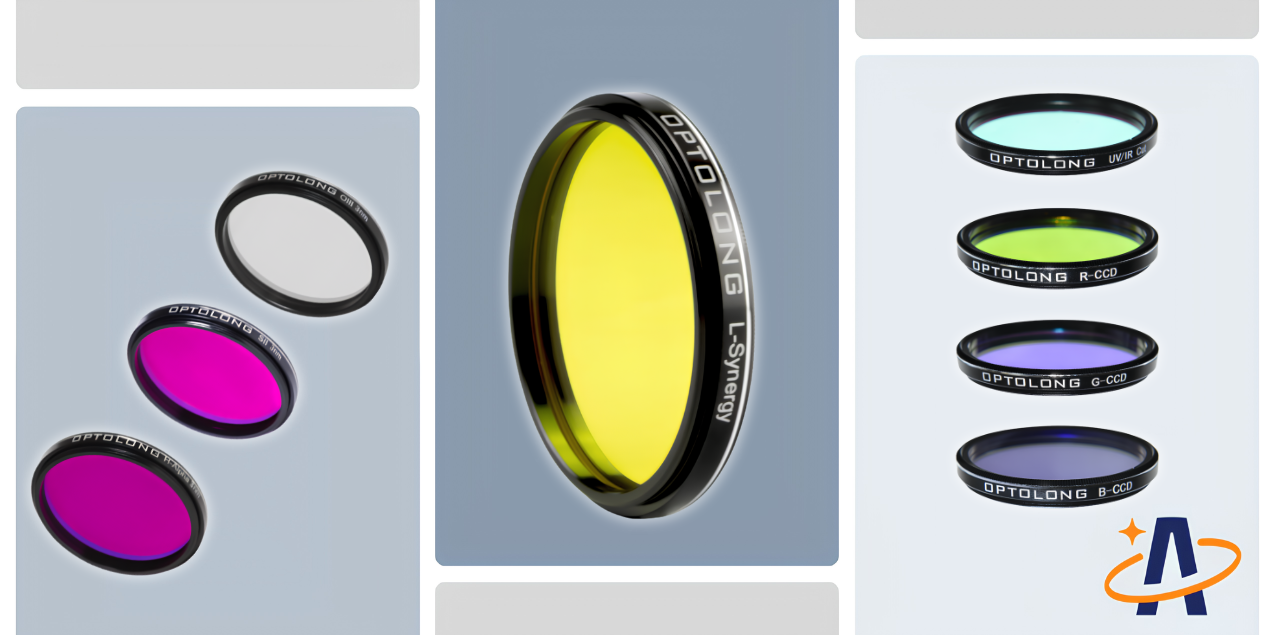
Broadband imaging:
Optolong offers filters that aim to reduce common light pollution while keeping a more natural star field. The Optolong L-Pro is a well-known option in this category, and it is often chosen as a general-purpose deep-sky filter for color cameras. But if your main targets are emission nebulae with a one-shot color camera, Optolong’s dual-band options would be a great choice instead! These dual-band designs emphasize key nebula lines while suppressing much of the background glow, which can make nebula structures stand out more clearly from brighter skies.
Monochrome imaging and filter wheels:
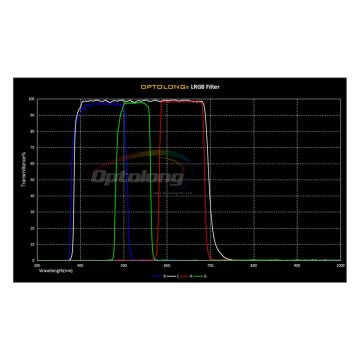
Optolong also offers narrowband and specialty filters that let you build images channel by channel. Traditional filter collections include H-alpha, O-III, and S-II-options in a variety of bandwidths, sizes, and costs. Optolong offers complete sets of these filters alongside their full broadband LRGB set. And all 7 of these classic imaging filters can be purchased together with their LRGBSHO packages for anyone building an entire new system from the ground up.
Sizes and Formats to Fit Your Imaging Train
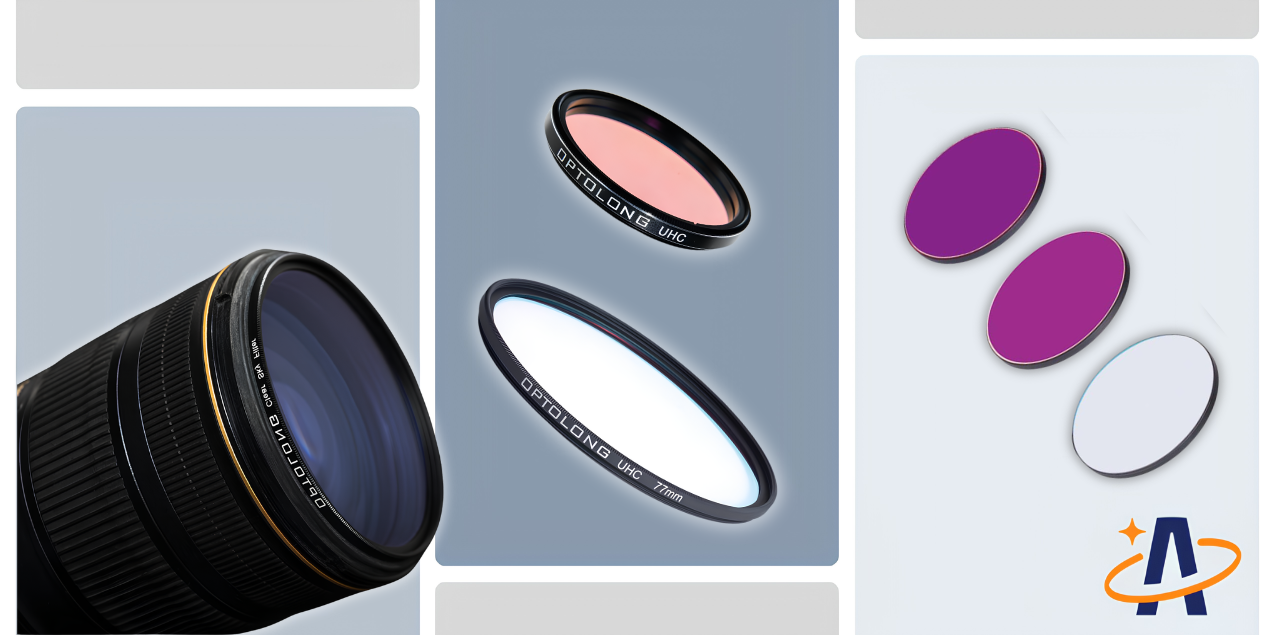
Optolong filters are available in the formats most astronomers actually use. Agena Astro stocks Optolong filters in 1.25 inch and 2 inch mounted sizes, plus common unmounted rounds such as 31mm and 36mm for filter wheels. There are also larger camera-thread options such as 77mm and 82mm screw-on filters for some setups. With these choices, you can usually fit an Optolong filter into a filter drawer, filter wheel, or threaded imaging train without reworking your entire mechanical spacing plan.
Clip-In Filters (DSLR and Mirrorless Options)
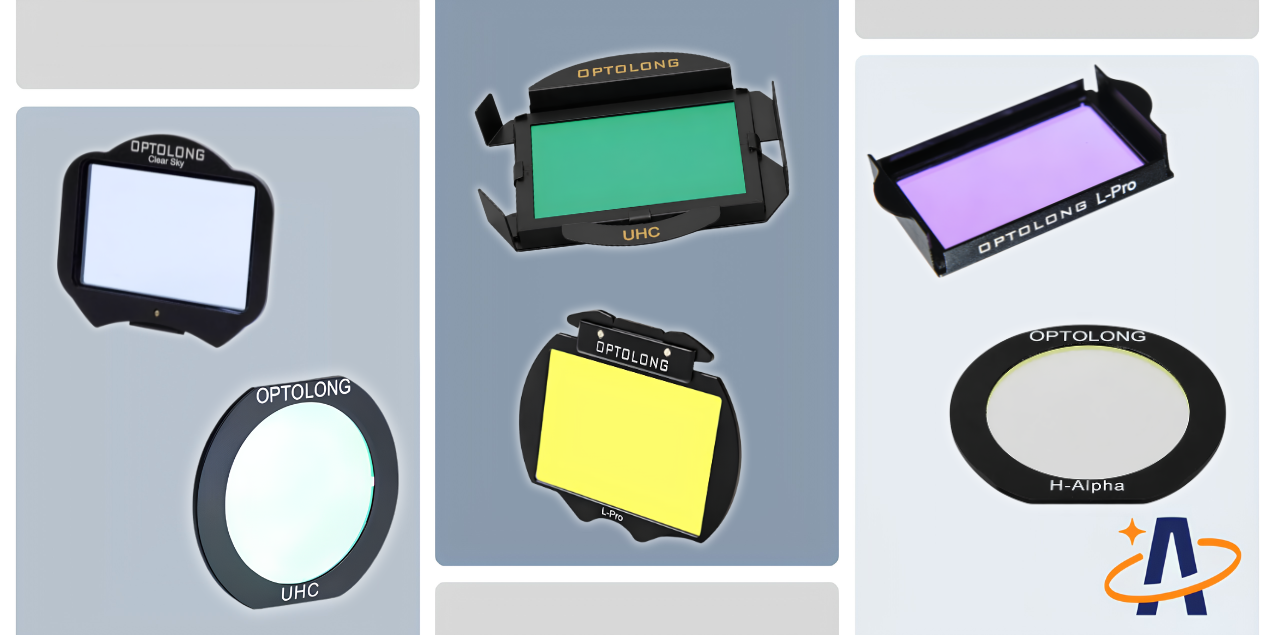
If you shoot with a DSLR or mirrorless camera, clip-in filters are one of the cleanest ways to add filtration without changing your telescope spacing. Agena Astro carries Optolong DSLR clip-in options for several camera families, including Canon EOS APS-C, Canon EOS full frame, Canon EOS-R, Sony, plus options for Nikon full frame and Nikon Z full frame bodies. Clip-in filters are popular because you can keep using your existing camera lenses or telescope adapters, and you can swap filters quickly without adding a filter drawer or wheel. They are also a practical solution when you want to keep your imaging train simple and still get the benefits of light pollution reduction or dual-band nebula filtration.