

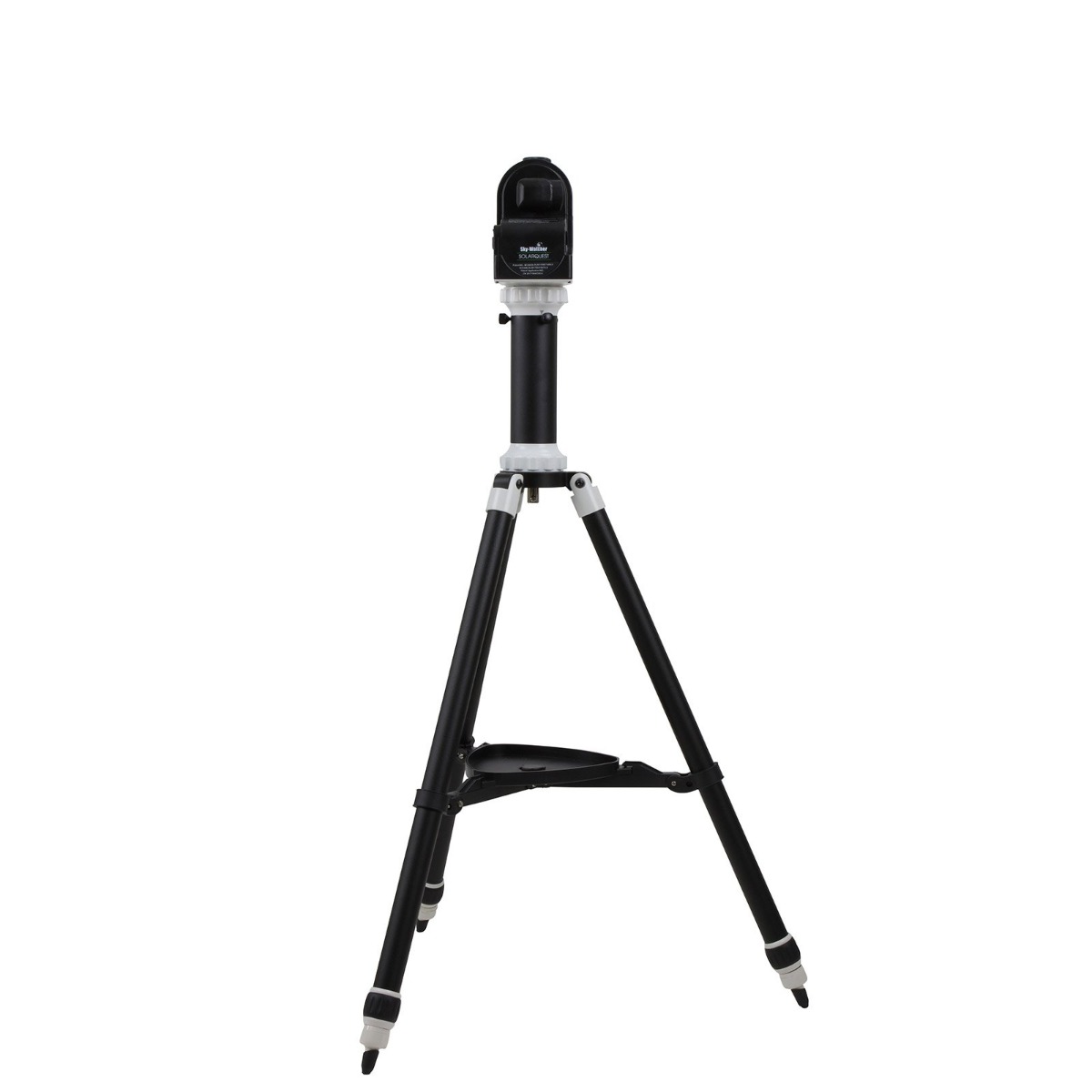
Sky-Watcher SolarQuest Sun Tracking Mount
Stock count is accurate & shown in real time.
- This item is out of stock.
- Sign up for back-in-stock alerts to be notified when this item becomes available (account login required).
- This item is out of stock.
- Sign up for back-in-stock alerts to be notified when this item becomes available (account login required).
Contiguous US / Lower 48:
Free shipping applies to orders over $50 using our chosen carrier/method. Faster paid options are available at checkout.
Alaska, Hawaii & US Territories:
Free shipping applies to many—but not all—products. Enter your ZIP code in cart or upon checkout to confirm options and costs.
International:
International orders do not qualify for free shipping. Shipping, duties, brokerage, tariffs, and taxes are the customer’s responsibility. Some items may be restricted due to export, size, or manufacturer limitations.
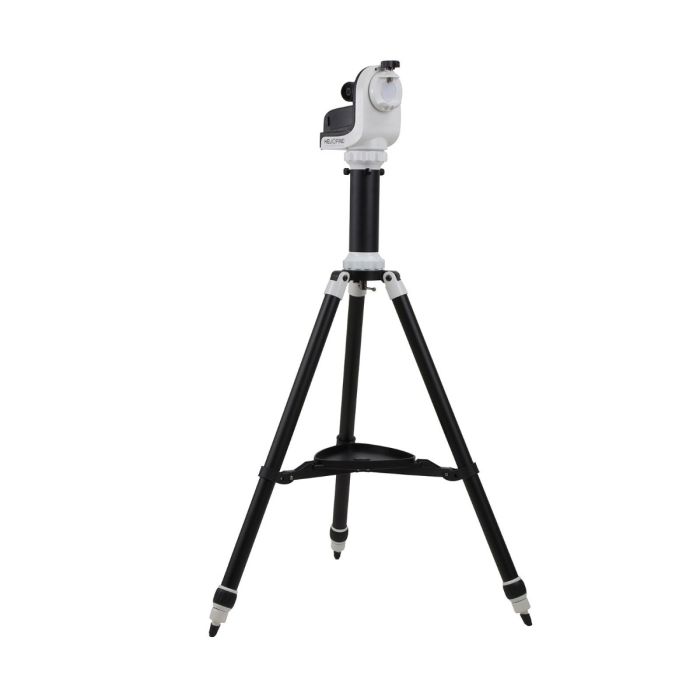
- Motorized alt-azimuth mount built specifically for solar observing
- HelioFind auto-alignment locates and tracks the Sun
- Built-in GPS with no date, time, or location entry
- 11 lb payload capacity
- Adjustable-height aluminum tripod with 1.25 inch legs
- Runs on eight AA batteries or a 12V adapter
What is the Sky-Watcher SolarQuest Sun Tracking Mount?
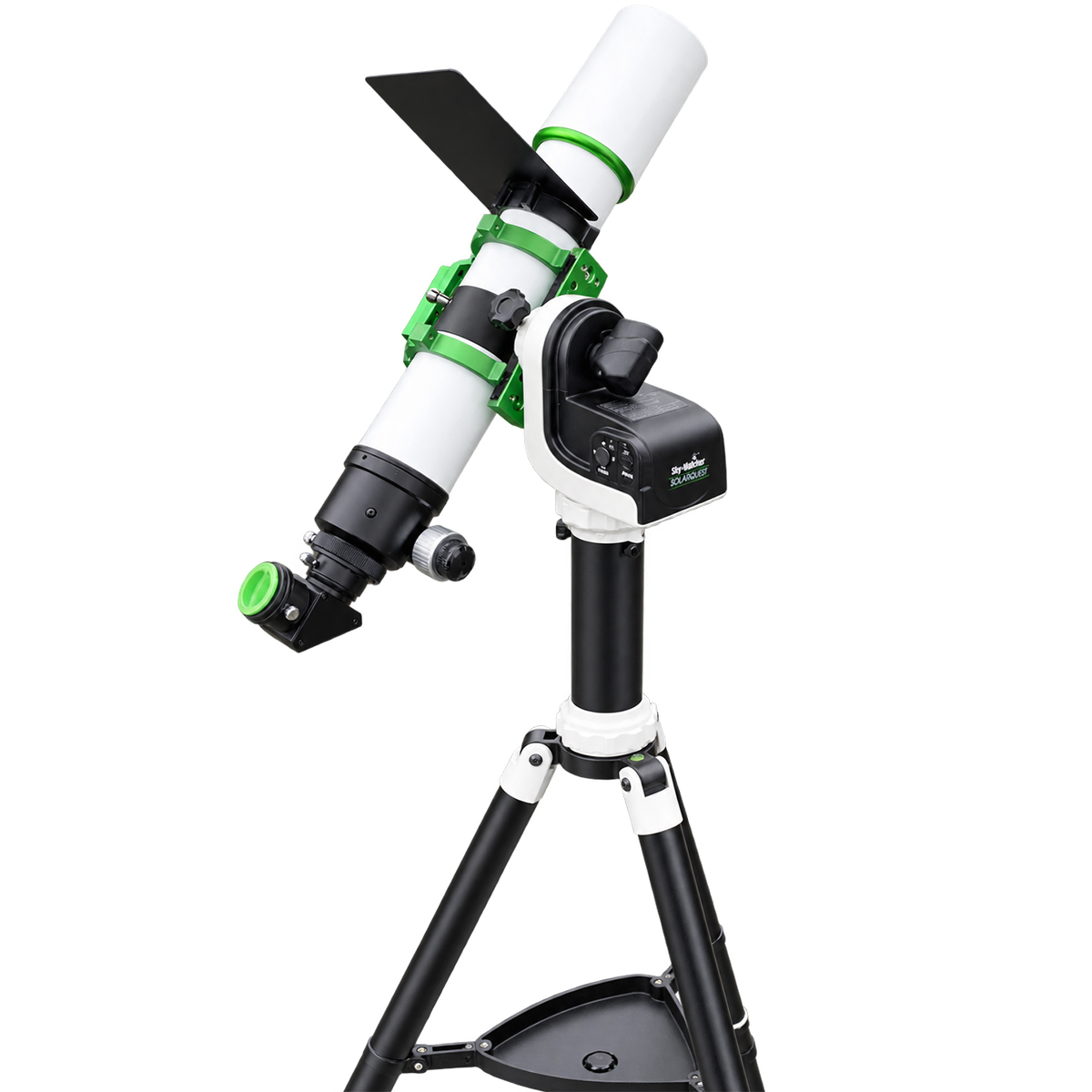
The Sky-Watcher SolarQuest is a motorized alt-azimuth mount built for a single purpose, which is tracking the Sun. It skips almost every setup step that comes with a standard equatorial mount. There is no polar alignment, no star alignment, and no hand controller to program. You attach a filtered solar telescope, press the power button, and the mount does the work.
Sky-Watcher's HelioFind system pairs a solar sensor with a built-in GPS receiver. The mount figures out where it is, calculates where the Sun should be, and drives to it. Once the Sun is centered, SolarQuest keeps following it for hours with no further input. That makes it a practical pick for eclipse travel, classroom sessions, and public outreach where setup time is short and the audience keeps rotating.
Sky-Watcher SolarQuest Sun Tracking Mount Video Introduction
Please enjoy the introduction to Sky-Watcher’s SolarQuest Mount straight from their weekly “What’s Up” podcast.
Highlights of the Sky-Watcher SolarQuest Sun Tracking Mount
Level Once and You’re Done
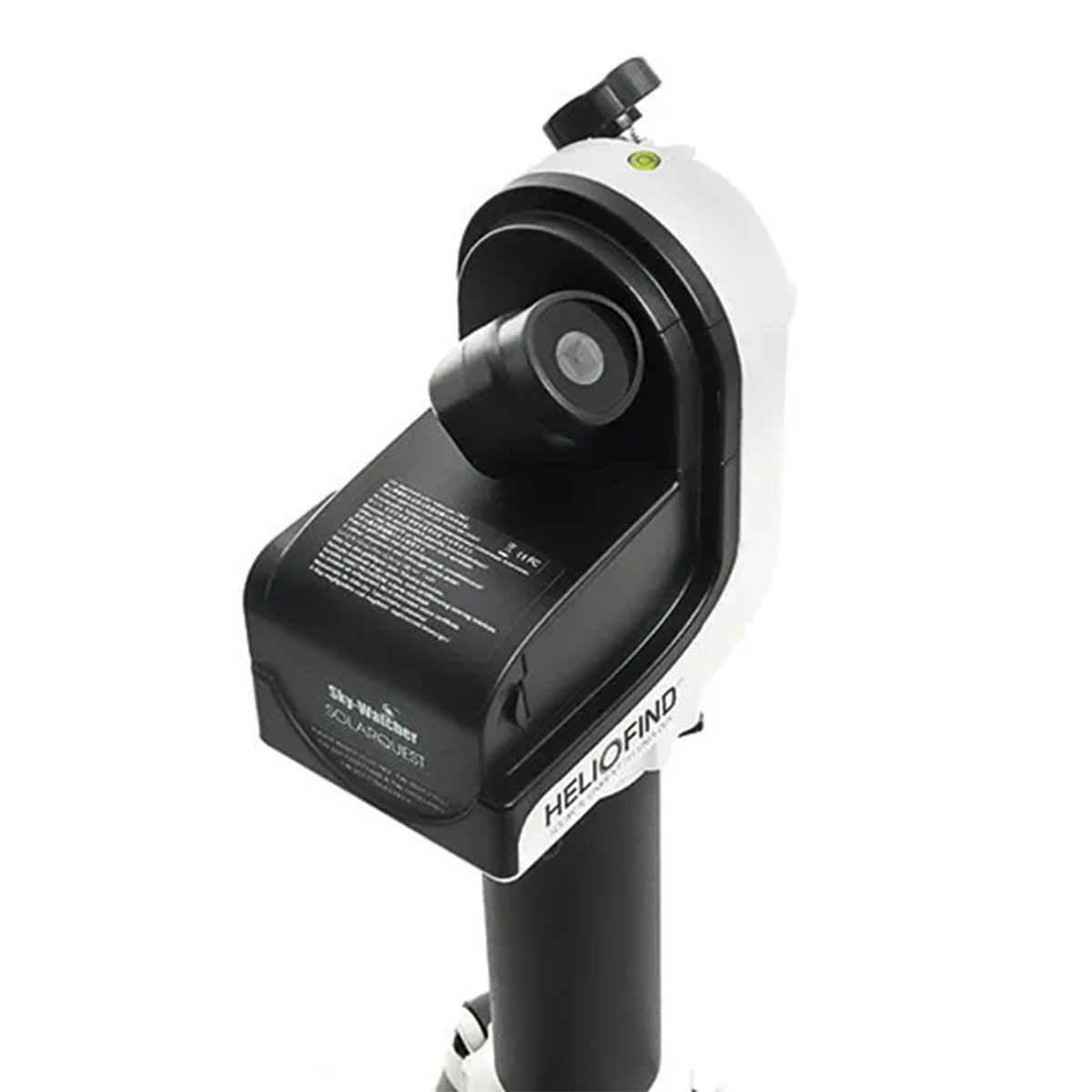
A bubble level sits on top of the mount body. Adjust the tripod leg lengths until the bubble is centered, and the setup work is finished. When you press power, the mount drives the telescope to a horizontal starting position on its own before it begins looking for the Sun.
Two Ways to Mount It
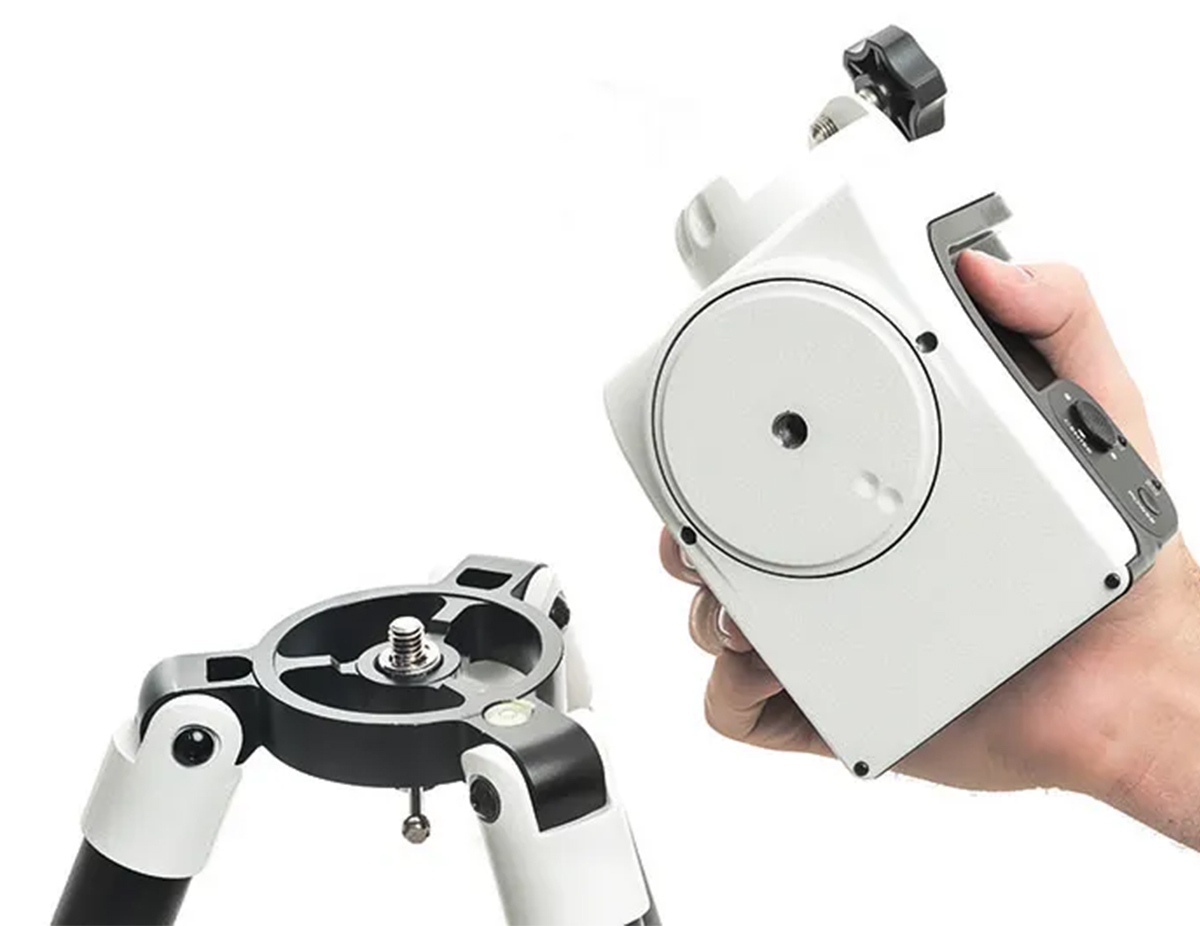
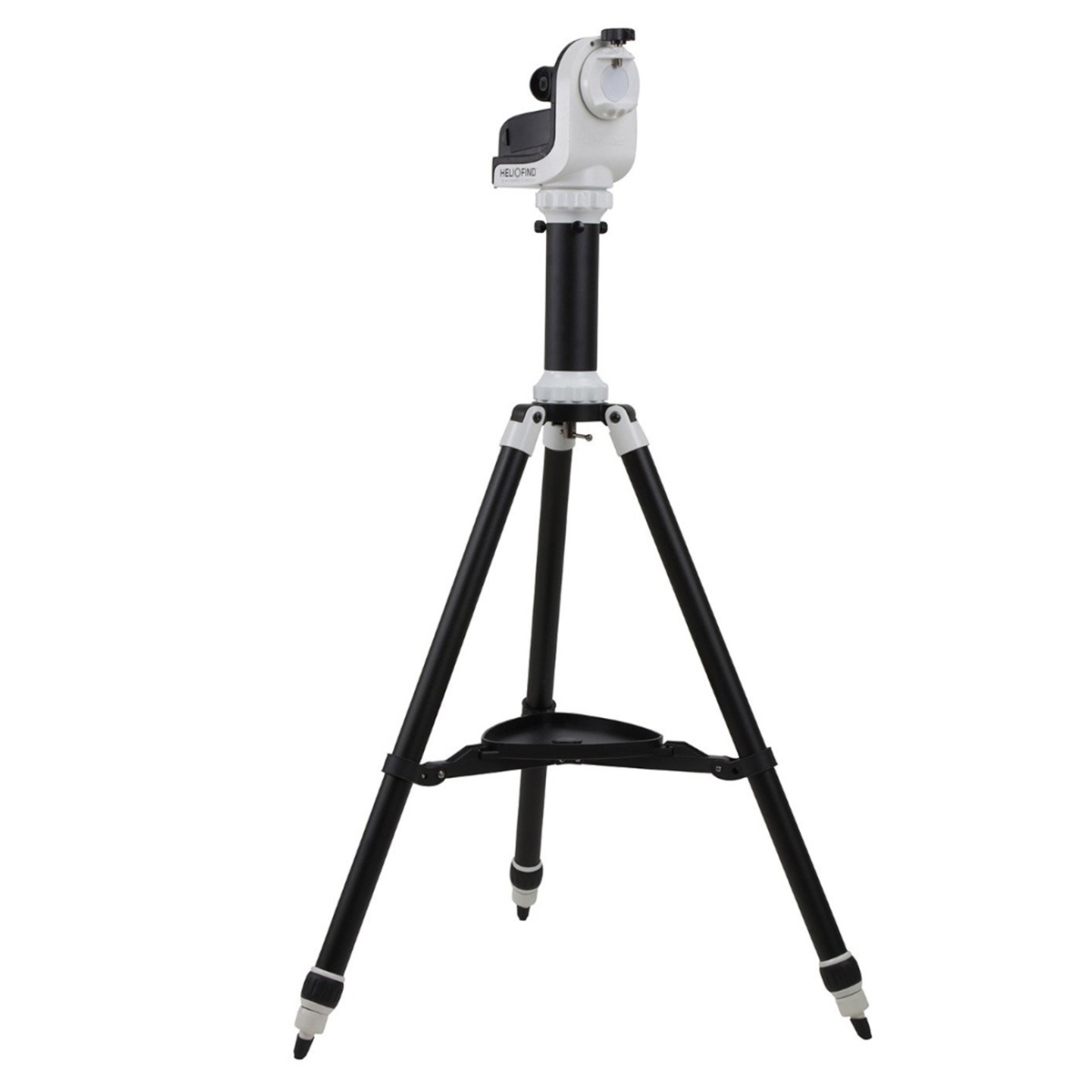
SolarQuest comes with an adjustable-height aluminum tripod. The base also has a 3/8 inch socket, so it can thread onto a standard camera tripod head when you want a lighter travel kit. On a camera tripod, raise the center column enough that the telescope clears the legs at high altitudes.
It Remembers Your Correction
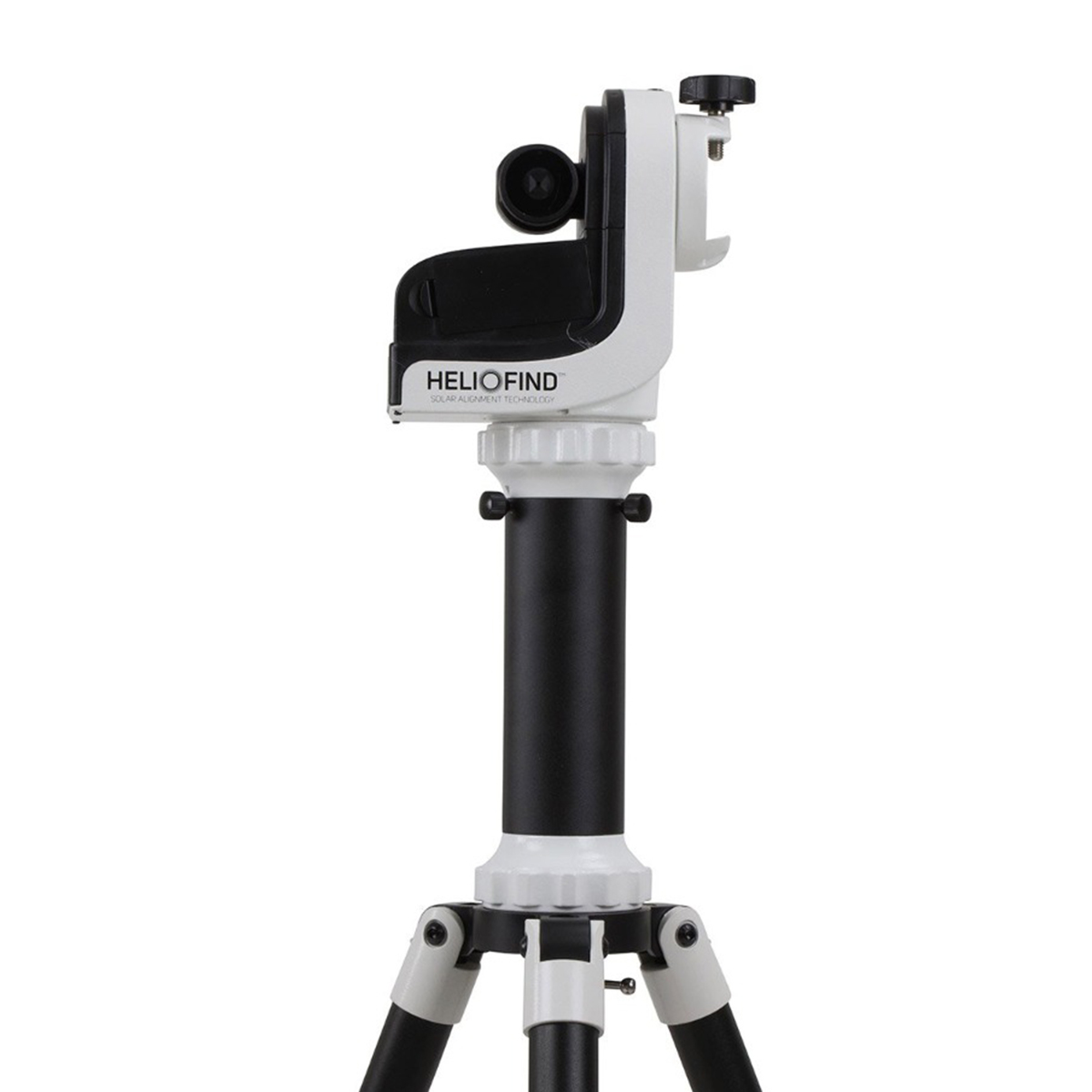
If the Sun sits slightly off center after the mount finishes pointing, recenter it and then double-click the power button. SolarQuest stores that correction and applies it the next time you run the routine.
Built Specifically for Solar Astronomy
SolarQuest is a solar mount, and that limitation is deliberate. Sky-Watcher states that only a solar telescope, or a telescope fitted with a certified solar filter, belongs on the saddle. Pointing an unfiltered instrument at the Sun can cause immediate and permanent eye injury, and it can wreck the optics just as fast. What you can observe depends on the filter you use. A white light filter shows sunspots, planetary transits, space station passes, and the partial phases of an eclipse. An H-alpha filter opens up prominences along the limb, along with filaments, plages, and flare activity across the disk.
How Sky-Watcher’s HelioFind Technology Locates the Sun
Press the power button and the red LED lights up. The mount then takes up to two minutes to acquire a GPS signal before it moves again. Once it has a fix, it swings the telescope to the Sun's current altitude and begins rotating clockwise in azimuth, scanning as it turns. The red LED blinks slowly during that search and goes solid when the sensor locks on. At that point you can look through the eyepiece and adjust the focuser for a sharp view. Aiming the telescope somewhat to the left of the Sun before you power on may shorten the search.
Centering On the Sun With an 8-Way Control Switch
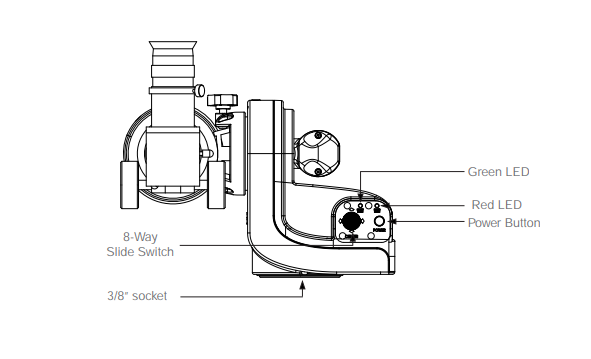
Auto-pointing gets the Sun into the field of view, and the 8-way slide switch handles the rest. Push the switch in one direction and the mount moves at a slow rate, which is what you want for nudging the Sun into the middle of the eyepiece. Hold the switch in a direction and press the power button at the same time, and the mount slews quickly instead. Expect a brief pause when you reverse direction, because the gear train has to take up slack before the view starts moving again. That lag is normal behavior and not a sign of a problem.
Attaching Your Own Solar Telescope
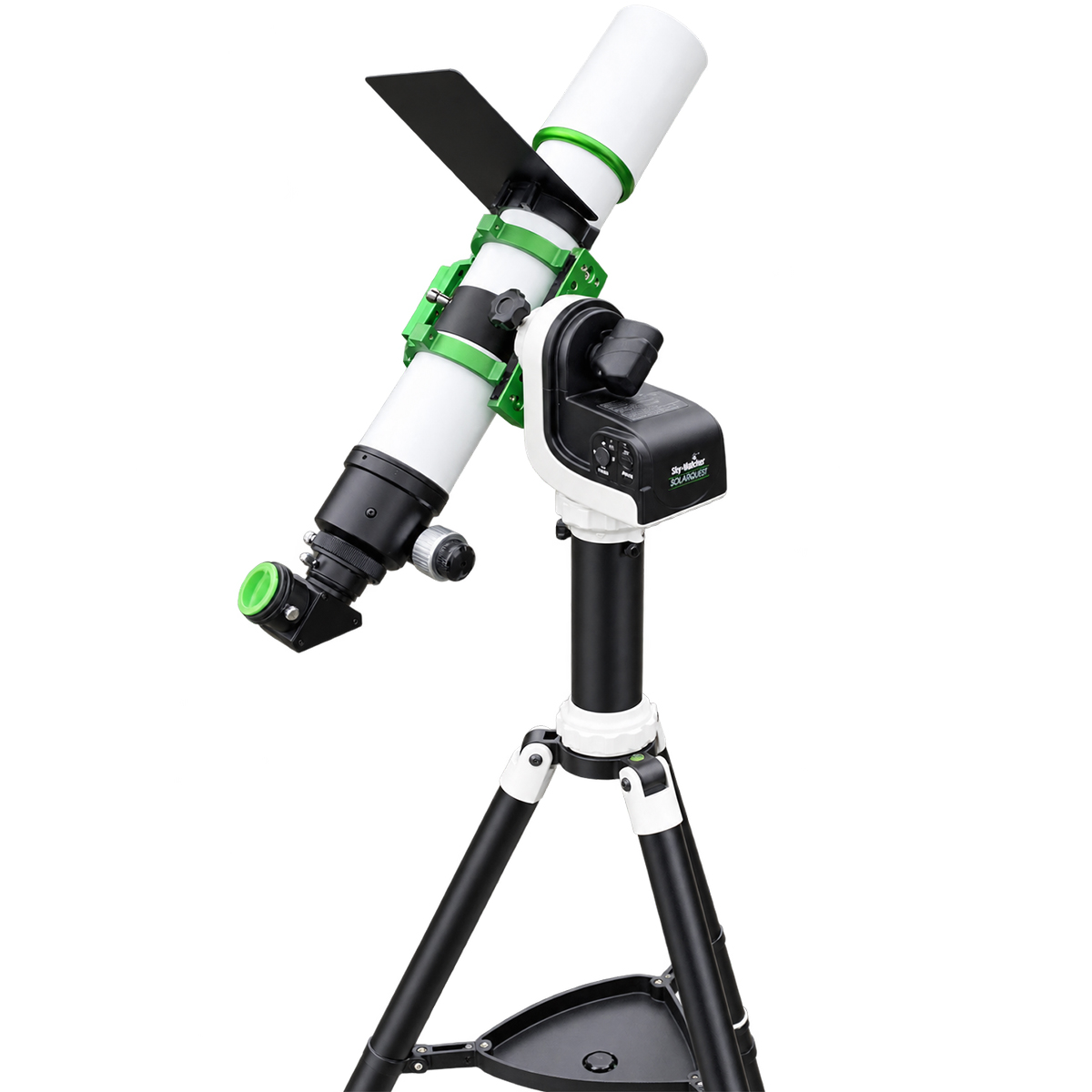
The saddle accepts a V-style dovetail bar, which is the standard used by most small refractors and dedicated solar scopes. Loosen the locking knob until the groove is clear, slide the bar in, and tighten the knob down before you let go of the tube. Sky-Watcher calibrates each mount at the factory alongside its own solar telescope, so a third-party scope may point slightly off at first. If saving a pointing correction does not clean that up, the mount has a one-time calibration routine you can run, plus a factory reset that restores the original data. Both are entered using the 8-way switch and the power button, and the instruction manual lists the switch position for each one.
What Types of Setups Are a Good Match for the Sky-Watcher SolarQuest Mount?
This mount fits a light, portable solar setup rather than a heavy observatory rig. The 11 lb payload covers most small dedicated solar telescopes, including the 40mm to 60mm class, along with short refractors carrying a front-mounted filter. Weigh your tube with the diagonal, eyepiece, and filter attached before ordering, since accessories add up faster than people expect.
The head is under 3 lb on its own, which keeps the package in grab-and-go territory. There is no hand controller or app to learn, so it works as a first solar setup or as a simple second rig for anyone already running a large equatorial mount at night.
Specifications
- Mount Type: Motorized alt-azimuth, solar tracking
- Payload Capacity: 11 lb (5 kg)
- Saddle: V-style dovetail
- Alignment System: HelioFind auto-alignment with built-in GPS
- Manual Control: Built-in 8-way slide switch
- Leveling: Bubble level on mount body
- Tripod Attachment: 3/8 inch socket
- Power: (8) AA batteries or 12V adapter
- Mount Head Weight: 2.9 lb (1.3 kg)
- Tripod Weight: 4.2 lb (1.9 kg)
- Extension Pier Weight: 1.9 lb (0.85 kg)
- Tripod Material: Aluminum
- Tripod Leg Diameter: 1.25 in
Frequently Asked Questions
Can I use SolarQuest at night to look at the Moon or stars?
No. The mount finds its target with a solar sensor, and it has no star alignment routine or object database. It is a daytime solar instrument only.
Does the mount come with a telescope or a solar filter?
No. SolarQuest is sold as a mount and tripod package. You supply either a dedicated solar telescope or a telescope with a certified solar filter fitted over the front aperture.
Can I turn the mount by hand to aim it?
Sky-Watcher advises against it. Both axes are driven by internal motors, and forcing them by hand could damage the gearing. Use the 8-way switch for all movement, including large repositioning.
Do I need to do anything special after moving the tripod to a new spot?
Set the tripod up level again and power the mount on. There is no location, date, or time data to re-enter, since the GPS handles that on every startup.
Should I leave the batteries in when I store the mount?
Sky-Watcher recommends pulling them out if the mount will sit unused for a long stretch. Cells that leak in storage could damage the battery holder and the contacts inside the compartment.
Other Information
- Country of Manufacture: China
What is the Sky-Watcher SolarQuest Sun Tracking Mount?
The Sky-Watcher SolarQuest is a motorized alt-azimuth mount built for a single purpose, which is tracking the Sun. It skips almost every setup step that comes with a standard equatorial mount. There is no polar alignment, no star alignment, and no hand controller to program. You attach a filtered solar telescope, press the power button, and the mount does the work.
Sky-Watcher's HelioFind system pairs a solar sensor with a built-in GPS receiver. The mount figures out where it is, calculates where the Sun should be, and drives to it. Once the Sun is centered, SolarQuest keeps following it for hours with no further input. That makes it a practical pick for eclipse travel, classroom sessions, and public outreach where setup time is short and the audience keeps rotating.
Sky-Watcher SolarQuest Sun Tracking Mount Video Introduction
Please enjoy the introduction to Sky-Watcher’s SolarQuest Mount straight from their weekly “What’s Up” podcast.
Highlights of the Sky-Watcher SolarQuest Sun Tracking Mount
Level Once and You’re Done
A bubble level sits on top of the mount body. Adjust the tripod leg lengths until the bubble is centered, and the setup work is finished. When you press power, the mount drives the telescope to a horizontal starting position on its own before it begins looking for the Sun.
Two Ways to Mount It
SolarQuest comes with an adjustable-height aluminum tripod. The base also has a 3/8 inch socket, so it can thread onto a standard camera tripod head when you want a lighter travel kit. On a camera tripod, raise the center column enough that the telescope clears the legs at high altitudes.
It Remembers Your Correction
If the Sun sits slightly off center after the mount finishes pointing, recenter it and then double-click the power button. SolarQuest stores that correction and applies it the next time you run the routine.
Built Specifically for Solar Astronomy
SolarQuest is a solar mount, and that limitation is deliberate. Sky-Watcher states that only a solar telescope, or a telescope fitted with a certified solar filter, belongs on the saddle. Pointing an unfiltered instrument at the Sun can cause immediate and permanent eye injury, and it can wreck the optics just as fast. What you can observe depends on the filter you use. A white light filter shows sunspots, planetary transits, space station passes, and the partial phases of an eclipse. An H-alpha filter opens up prominences along the limb, along with filaments, plages, and flare activity across the disk.
How Sky-Watcher’s HelioFind Technology Locates the Sun
Press the power button and the red LED lights up. The mount then takes up to two minutes to acquire a GPS signal before it moves again. Once it has a fix, it swings the telescope to the Sun's current altitude and begins rotating clockwise in azimuth, scanning as it turns. The red LED blinks slowly during that search and goes solid when the sensor locks on. At that point you can look through the eyepiece and adjust the focuser for a sharp view. Aiming the telescope somewhat to the left of the Sun before you power on may shorten the search.
Centering On the Sun With an 8-Way Control Switch
Auto-pointing gets the Sun into the field of view, and the 8-way slide switch handles the rest. Push the switch in one direction and the mount moves at a slow rate, which is what you want for nudging the Sun into the middle of the eyepiece. Hold the switch in a direction and press the power button at the same time, and the mount slews quickly instead. Expect a brief pause when you reverse direction, because the gear train has to take up slack before the view starts moving again. That lag is normal behavior and not a sign of a problem.
Attaching Your Own Solar Telescope
The saddle accepts a V-style dovetail bar, which is the standard used by most small refractors and dedicated solar scopes. Loosen the locking knob until the groove is clear, slide the bar in, and tighten the knob down before you let go of the tube. Sky-Watcher calibrates each mount at the factory alongside its own solar telescope, so a third-party scope may point slightly off at first. If saving a pointing correction does not clean that up, the mount has a one-time calibration routine you can run, plus a factory reset that restores the original data. Both are entered using the 8-way switch and the power button, and the instruction manual lists the switch position for each one.
What Types of Setups Are a Good Match for the Sky-Watcher SolarQuest Mount?
This mount fits a light, portable solar setup rather than a heavy observatory rig. The 11 lb payload covers most small dedicated solar telescopes, including the 40mm to 60mm class, along with short refractors carrying a front-mounted filter. Weigh your tube with the diagonal, eyepiece, and filter attached before ordering, since accessories add up faster than people expect.
The head is under 3 lb on its own, which keeps the package in grab-and-go territory. There is no hand controller or app to learn, so it works as a first solar setup or as a simple second rig for anyone already running a large equatorial mount at night.
Specifications
- Mount Type: Motorized alt-azimuth, solar tracking
- Payload Capacity: 11 lb (5 kg)
- Saddle: V-style dovetail
- Alignment System: HelioFind auto-alignment with built-in GPS
- Manual Control: Built-in 8-way slide switch
- Leveling: Bubble level on mount body
- Tripod Attachment: 3/8 inch socket
- Power: (8) AA batteries or 12V adapter
- Mount Head Weight: 2.9 lb (1.3 kg)
- Tripod Weight: 4.2 lb (1.9 kg)
- Extension Pier Weight: 1.9 lb (0.85 kg)
- Tripod Material: Aluminum
- Tripod Leg Diameter: 1.25 in
Frequently Asked Questions
Can I use SolarQuest at night to look at the Moon or stars?
No. The mount finds its target with a solar sensor, and it has no star alignment routine or object database. It is a daytime solar instrument only.
Does the mount come with a telescope or a solar filter?
No. SolarQuest is sold as a mount and tripod package. You supply either a dedicated solar telescope or a telescope with a certified solar filter fitted over the front aperture.
Can I turn the mount by hand to aim it?
Sky-Watcher advises against it. Both axes are driven by internal motors, and forcing them by hand could damage the gearing. Use the 8-way switch for all movement, including large repositioning.
Do I need to do anything special after moving the tripod to a new spot?
Set the tripod up level again and power the mount on. There is no location, date, or time data to re-enter, since the GPS handles that on every startup.
Should I leave the batteries in when I store the mount?
Sky-Watcher recommends pulling them out if the mount will sit unused for a long stretch. Cells that leak in storage could damage the battery holder and the contacts inside the compartment.
- SolarQuest mount head
- Tripod
- Pier extension
- 12v DC power adapter
- AA battery pack (installed in the mount)
- Accessory Tray

- Motorized alt-azimuth mount built specifically for solar observing
- HelioFind auto-alignment locates and tracks the Sun
- Built-in GPS with no date, time, or location entry
- 11 lb payload capacity
- Adjustable-height aluminum tripod with 1.25 inch legs
- Runs on eight AA batteries or a 12V adapter
What is the Sky-Watcher SolarQuest Sun Tracking Mount?
The Sky-Watcher SolarQuest is a motorized alt-azimuth mount built for a single purpose, which is tracking the Sun. It skips almost every setup step that comes with a standard equatorial mount. There is no polar alignment, no star alignment, and no hand controller to program. You attach a filtered solar telescope, press the power button, and the mount does the work.
Sky-Watcher's HelioFind system pairs a solar sensor with a built-in GPS receiver. The mount figures out where it is, calculates where the Sun should be, and drives to it. Once the Sun is centered, SolarQuest keeps following it for hours with no further input. That makes it a practical pick for eclipse travel, classroom sessions, and public outreach where setup time is short and the audience keeps rotating.
Sky-Watcher SolarQuest Sun Tracking Mount Video Introduction
Please enjoy the introduction to Sky-Watcher’s SolarQuest Mount straight from their weekly “What’s Up” podcast.
Highlights of the Sky-Watcher SolarQuest Sun Tracking Mount
Level Once and You’re Done
A bubble level sits on top of the mount body. Adjust the tripod leg lengths until the bubble is centered, and the setup work is finished. When you press power, the mount drives the telescope to a horizontal starting position on its own before it begins looking for the Sun.
Two Ways to Mount It
SolarQuest comes with an adjustable-height aluminum tripod. The base also has a 3/8 inch socket, so it can thread onto a standard camera tripod head when you want a lighter travel kit. On a camera tripod, raise the center column enough that the telescope clears the legs at high altitudes.
It Remembers Your Correction
If the Sun sits slightly off center after the mount finishes pointing, recenter it and then double-click the power button. SolarQuest stores that correction and applies it the next time you run the routine.
Built Specifically for Solar Astronomy
SolarQuest is a solar mount, and that limitation is deliberate. Sky-Watcher states that only a solar telescope, or a telescope fitted with a certified solar filter, belongs on the saddle. Pointing an unfiltered instrument at the Sun can cause immediate and permanent eye injury, and it can wreck the optics just as fast. What you can observe depends on the filter you use. A white light filter shows sunspots, planetary transits, space station passes, and the partial phases of an eclipse. An H-alpha filter opens up prominences along the limb, along with filaments, plages, and flare activity across the disk.
How Sky-Watcher’s HelioFind Technology Locates the Sun
Press the power button and the red LED lights up. The mount then takes up to two minutes to acquire a GPS signal before it moves again. Once it has a fix, it swings the telescope to the Sun's current altitude and begins rotating clockwise in azimuth, scanning as it turns. The red LED blinks slowly during that search and goes solid when the sensor locks on. At that point you can look through the eyepiece and adjust the focuser for a sharp view. Aiming the telescope somewhat to the left of the Sun before you power on may shorten the search.
Centering On the Sun With an 8-Way Control Switch
Auto-pointing gets the Sun into the field of view, and the 8-way slide switch handles the rest. Push the switch in one direction and the mount moves at a slow rate, which is what you want for nudging the Sun into the middle of the eyepiece. Hold the switch in a direction and press the power button at the same time, and the mount slews quickly instead. Expect a brief pause when you reverse direction, because the gear train has to take up slack before the view starts moving again. That lag is normal behavior and not a sign of a problem.
Attaching Your Own Solar Telescope
The saddle accepts a V-style dovetail bar, which is the standard used by most small refractors and dedicated solar scopes. Loosen the locking knob until the groove is clear, slide the bar in, and tighten the knob down before you let go of the tube. Sky-Watcher calibrates each mount at the factory alongside its own solar telescope, so a third-party scope may point slightly off at first. If saving a pointing correction does not clean that up, the mount has a one-time calibration routine you can run, plus a factory reset that restores the original data. Both are entered using the 8-way switch and the power button, and the instruction manual lists the switch position for each one.
What Types of Setups Are a Good Match for the Sky-Watcher SolarQuest Mount?
This mount fits a light, portable solar setup rather than a heavy observatory rig. The 11 lb payload covers most small dedicated solar telescopes, including the 40mm to 60mm class, along with short refractors carrying a front-mounted filter. Weigh your tube with the diagonal, eyepiece, and filter attached before ordering, since accessories add up faster than people expect.
The head is under 3 lb on its own, which keeps the package in grab-and-go territory. There is no hand controller or app to learn, so it works as a first solar setup or as a simple second rig for anyone already running a large equatorial mount at night.
Specifications
- Mount Type: Motorized alt-azimuth, solar tracking
- Payload Capacity: 11 lb (5 kg)
- Saddle: V-style dovetail
- Alignment System: HelioFind auto-alignment with built-in GPS
- Manual Control: Built-in 8-way slide switch
- Leveling: Bubble level on mount body
- Tripod Attachment: 3/8 inch socket
- Power: (8) AA batteries or 12V adapter
- Mount Head Weight: 2.9 lb (1.3 kg)
- Tripod Weight: 4.2 lb (1.9 kg)
- Extension Pier Weight: 1.9 lb (0.85 kg)
- Tripod Material: Aluminum
- Tripod Leg Diameter: 1.25 in
Frequently Asked Questions
Can I use SolarQuest at night to look at the Moon or stars?
No. The mount finds its target with a solar sensor, and it has no star alignment routine or object database. It is a daytime solar instrument only.
Does the mount come with a telescope or a solar filter?
No. SolarQuest is sold as a mount and tripod package. You supply either a dedicated solar telescope or a telescope with a certified solar filter fitted over the front aperture.
Can I turn the mount by hand to aim it?
Sky-Watcher advises against it. Both axes are driven by internal motors, and forcing them by hand could damage the gearing. Use the 8-way switch for all movement, including large repositioning.
Do I need to do anything special after moving the tripod to a new spot?
Set the tripod up level again and power the mount on. There is no location, date, or time data to re-enter, since the GPS handles that on every startup.
Should I leave the batteries in when I store the mount?
Sky-Watcher recommends pulling them out if the mount will sit unused for a long stretch. Cells that leak in storage could damage the battery holder and the contacts inside the compartment.
Other Information
- Country of Manufacture: China
- SolarQuest mount head
- Tripod
- Pier extension
- 12v DC power adapter
- AA battery pack (installed in the mount)
- Accessory Tray

Sky-Watcher SolarQuest Sun Tracking Mount