

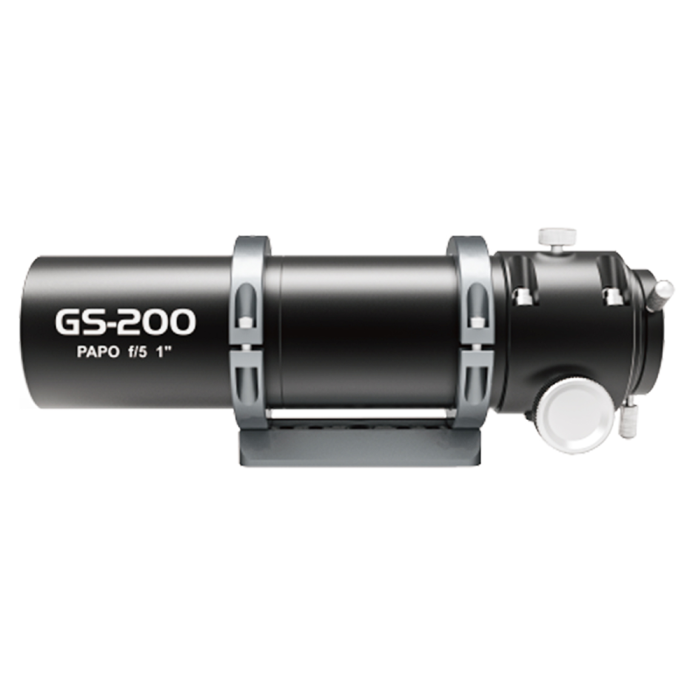
ToupTek 40mm f/5 ED Triplet PAPO Guide Scope with Crayford Focuser
- This item is currently on backorder from the manufacturer.
- Orders are fulfilled in the order they are received once inventory arrives.
Stock count is accurate & shown in real time.
- This item is out of stock.
- Sign up for back-in-stock alerts to be notified when this item becomes available (account login required).
- This item is out of stock.
- Sign up for back-in-stock alerts to be notified when this item becomes available (account login required).
Contiguous US / Lower 48:
Free shipping applies to orders over $50 using our chosen carrier/method. Faster paid options are available at checkout.
Alaska, Hawaii & US Territories:
Free shipping applies to many—but not all—products. Enter your ZIP code in cart or upon checkout to confirm options and costs.
International:
International orders do not qualify for free shipping. Shipping, duties, brokerage, tariffs, and taxes are the customer’s responsibility. Some items may be restricted due to export, size, or manufacturer limitations.
- Ultra compact 40mm aperture, 200mm focal length and fast f/5 focal ratio
- Self flattening optical design with ED glass for color correction and edge-to-edge sharpness
- Optimized for a 1-inch image circle for smaller guide or planetary cameras
- Smooth manual focus with Crayford-style focuser
- Designed as a flexible scope that adapts to a wide range of imaging accessories
- This guide scope is not suitable for visual observation
ToupTek GS Series Guide Scopes: Precision Guiding, Superior Image Quality!
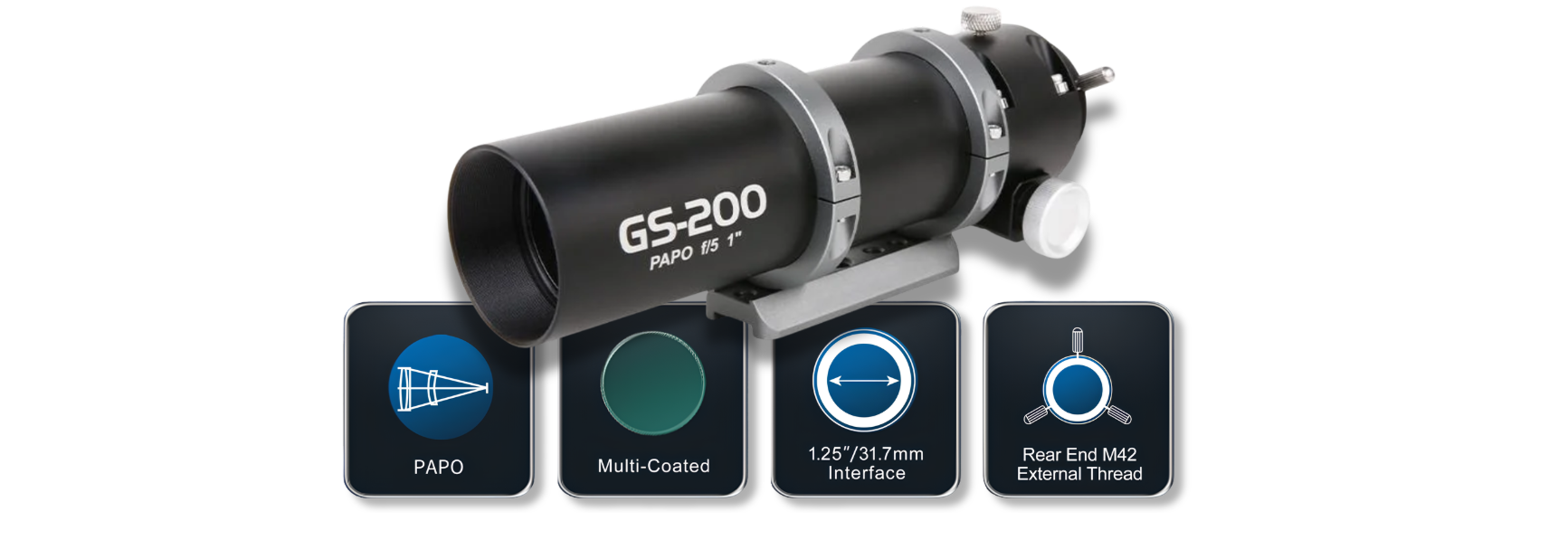
The ToupTek GS Series 200mm f/5 Guide Scope combines a 40mm aperture and 200mm focal length with a three-element PAPO ED optical design and integrated field flattening for sharp, pinpoint stars. Its compact CNC-machined aluminum body and smooth Crayford-style focuser (AC) provide precise focusing for guide cameras, planetary cameras, and lightweight imaging setups. Please Note: This guide scope is not suitable for visual observation and cannot be used with a diagonal.
How to Choose the Right Guide Scope
A practical starting point is to choose a guide scope with a focal length approximately one-third to one-half of your main telescope's focal length. For example, a 750mm main telescope can be paired with a guide scope around 250mm. The GS Series offers 150mm, 200mm, 250mm, 300mm, and 350mm focal-length options for different astrophotography setups.
| Model | Focal Length | Aperture | Focal Ratio | Camera Interface | Version |
|---|---|---|---|---|---|
| GS-150 AC/AR | 150mm | 30mm | f/5 | 1.25" / M42×0.75 | AC / AR |
| GS-200 AC/AR | 200mm | 40mm | f/5 | 1.25" / M42×0.75 | AC / AR |
| GS-250 AC/AR | 250mm | 50mm | f/5 | 1.25" / M42×0.75 | AC / AR |
| GS-300 AC/AR | 300mm | 50mm | f/6 | 1.25" / M42×0.75 | AC / AR |
| GS-350 AC/AR | 350mm | 58mm | f/6 | 1.25" / M42×0.75 | AC / AR |

Smooth Crayford-Style Focuser
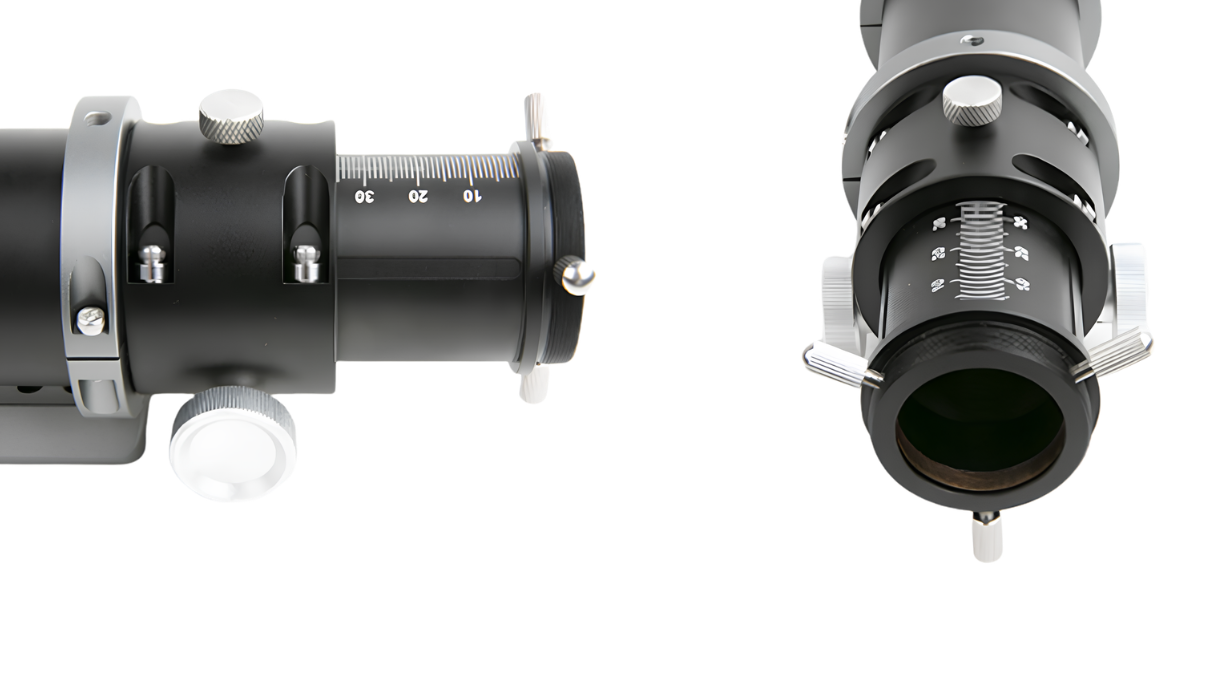
Crayford focuser (AC version): AC is designed for users whose primary purpose is autoguiding. Its rackless focusing structure allows fine adjustment with reduced movement, while the lightweight design helps keep a guiding setup stable during long imaging sessions.
| Your Use Case | Recommended Version |
|---|---|
| Autoguiding only | AC |
| Guiding + imaging | AR |
| More equipment or future expansion | AR |
High-Transmission Coatings & Anti-Reflection Threads
All optical surfaces are treated with broadband multi-layer AR coatings to reduce reflections and maximize light transmission. The internal barrel is precision-machined with anti-reflection threads, complemented by additional stray-light suppression measures, greatly enhancing image contrast and clarity.
CNC Precision Machining
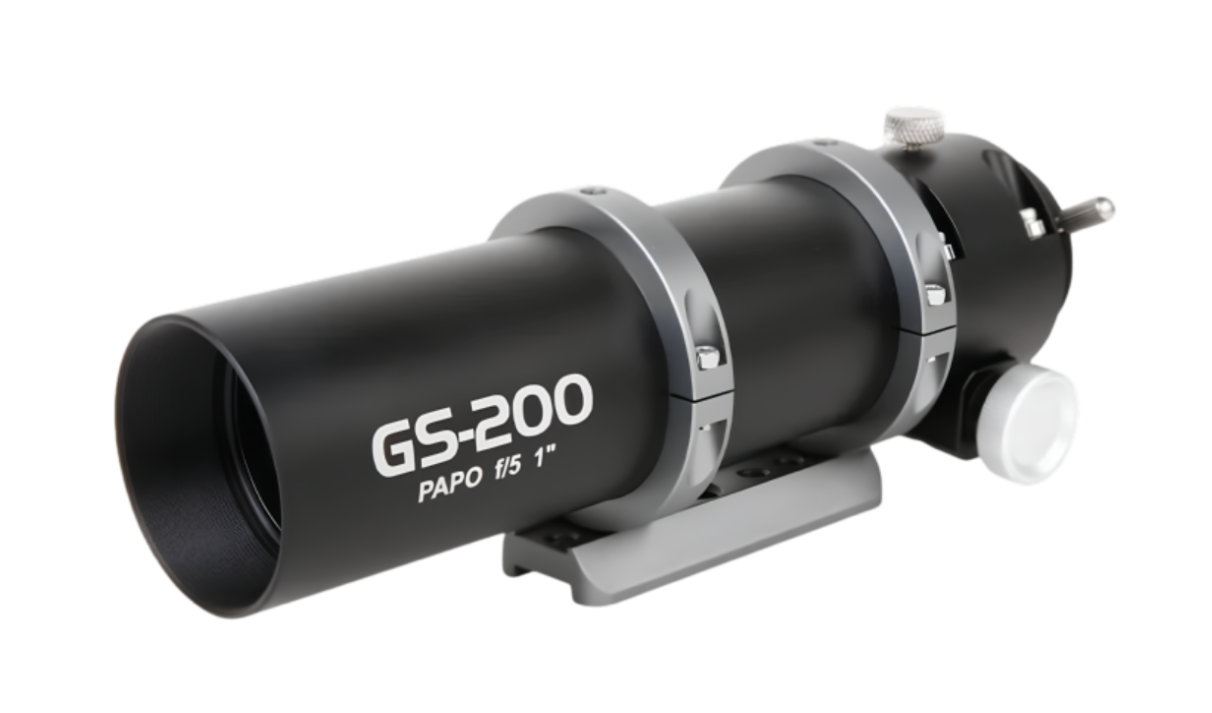
The optical tube, mounting rings, and dovetail plate are crafted from aluminum alloy via CNC machining, balancing lightweight design with structural strength. Anodized surfaces provide wear and corrosion resistance suitable for field astronomy. The fine matte finish offers a comfortable, non-slip, and durable tactile experience.
Camera Sensor Compatibility
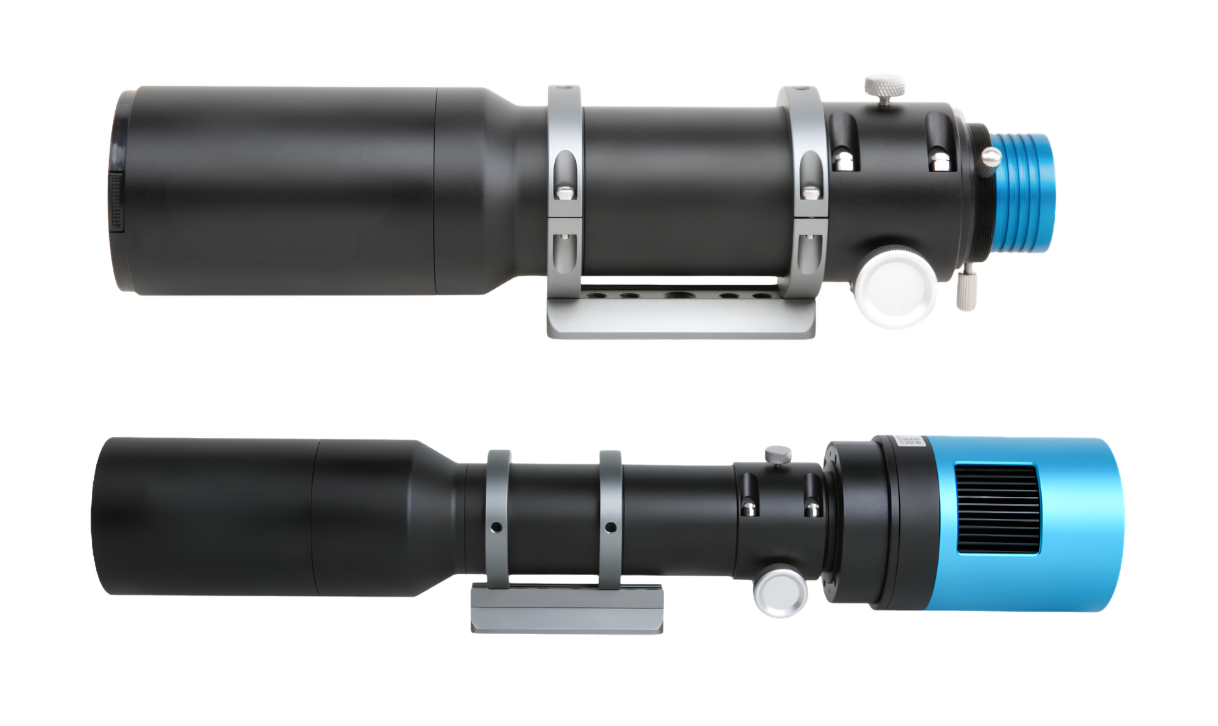
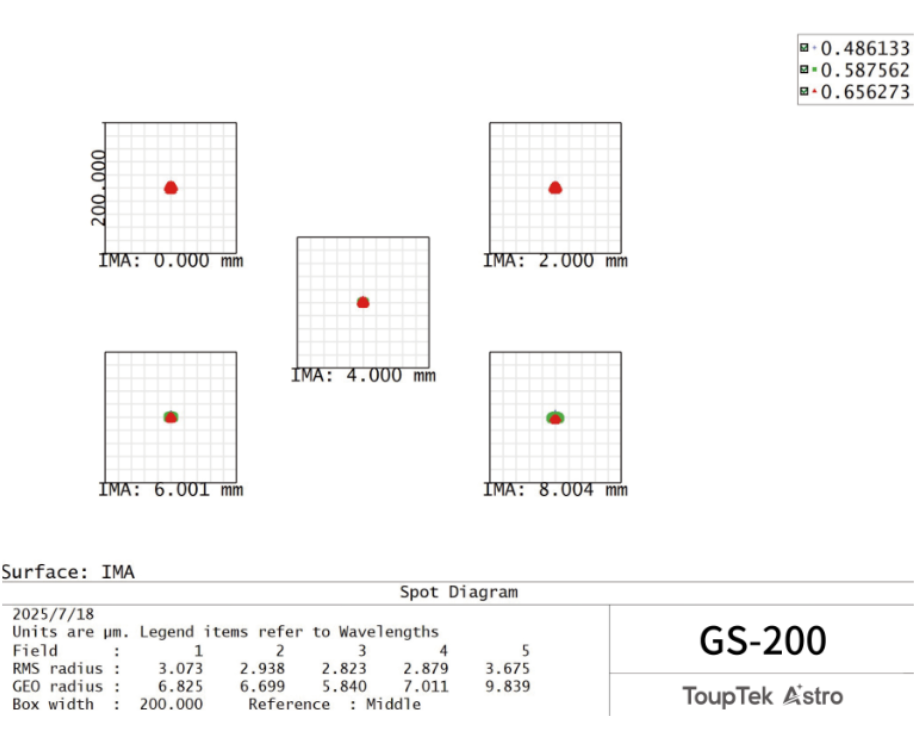
Designed around a 1-inch flat, well-corrected image circle, the GS Series supports sensors up to the IMX533 size. Versatile in function, it can be used for star-hopping, guiding, visual observing, and even DSO imaging—making it an ideal tool for astrophotography, casual stargazing, and entry-level night-sky photography. Focuser drawtube offers 1.25-inch inner diameter with an external M42x0.75 thread. (Cameras sold seperately)
Mounting Options
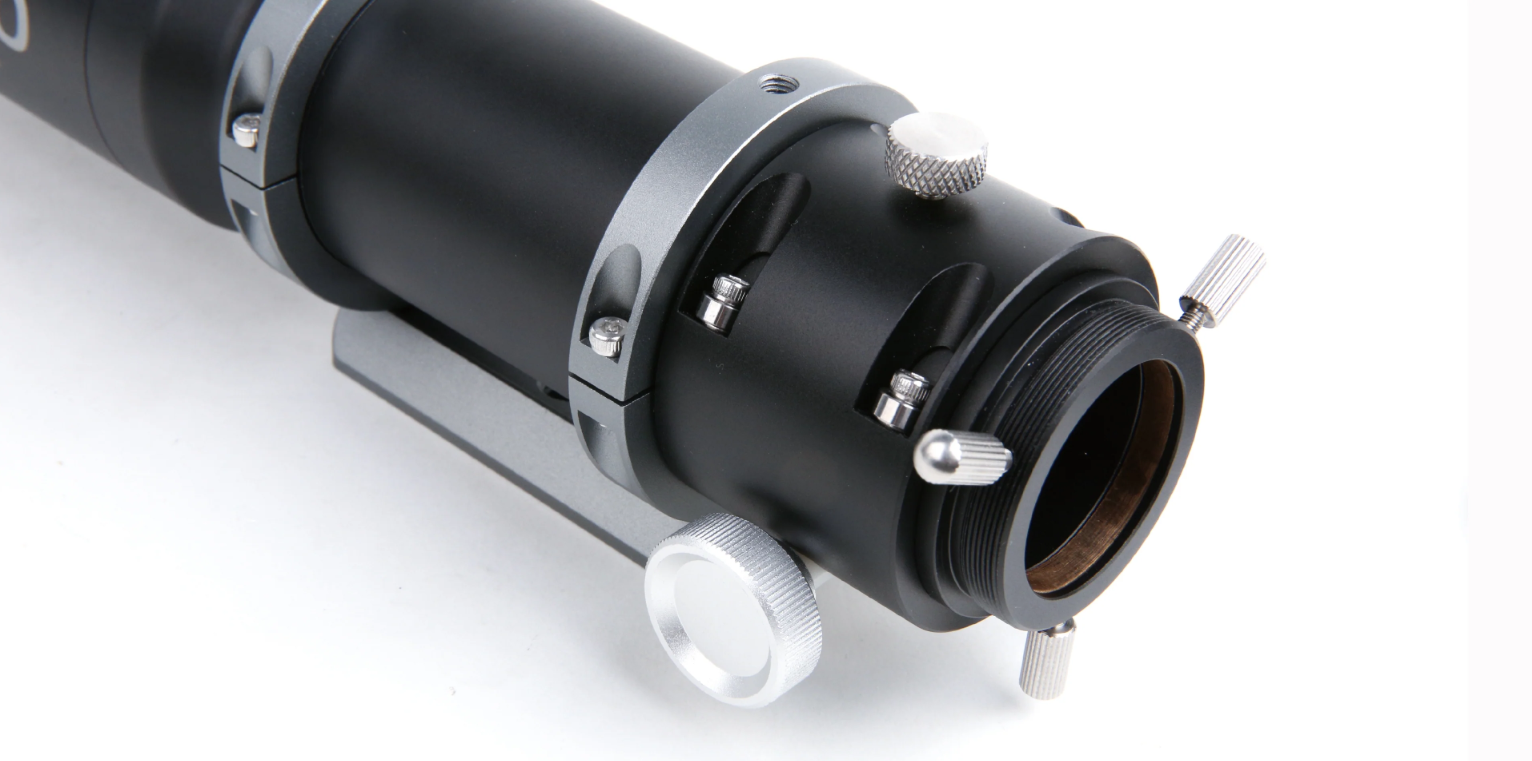
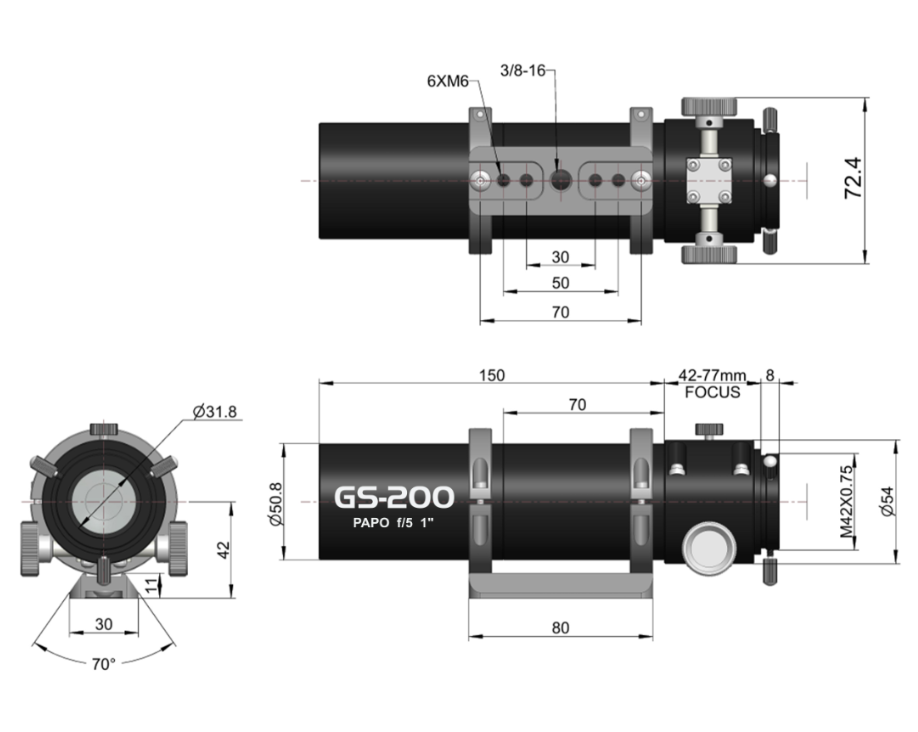
The tube rings feature multiple M5 threaded holes for attaching additional accessories, while the dovetail plate includes multiple M6 threads and a 3/8"-16 mounting point for easy attachment to compatible tripods and equatorial mounts.
Specifications:
- Aperture: 40 mm
- Focal Length: 200 mm
- Focal Ratio: f/5
- Optical design: Triplet APO (w/ ED glass element)
- Focuser Type: 1.25" Rackless focuser
- Material: Aluminum alloy
- Coatings: multi-layer AR
Dimensions
Spot Diagram
Frequently Asked Questions
How do I choose the right guide scope focal length?
Start with a guide scope focal length around 1/3–1/2 of your main telescope's focal length. For example, a 750mm main telescope can be paired with a guide scope around 250mm as a practical starting point.
Should I choose an AC or AR guide scope?
Choose AC if your main purpose is autoguiding and you want a lightweight, stable setup. Choose AR if you plan to use the guide scope for both guiding and imaging, or if you want more flexibility for additional equipment.
Do AC and AR models have different optical performance?
No. AC and AR versions use the same optical design and provide the same optical performance. Their main difference is the focusing mechanism and the type of setup they are designed to support.
Other Information
- Country of Manufacture: China
ToupTek GS Series Guide Scopes: Precision Guiding, Superior Image Quality!
The ToupTek GS Series 200mm f/5 Guide Scope combines a 40mm aperture and 200mm focal length with a three-element PAPO ED optical design and integrated field flattening for sharp, pinpoint stars. Its compact CNC-machined aluminum body and smooth Crayford-style focuser (AC) provide precise focusing for guide cameras, planetary cameras, and lightweight imaging setups. Please Note: This guide scope is not suitable for visual observation and cannot be used with a diagonal.
How to Choose the Right Guide Scope
A practical starting point is to choose a guide scope with a focal length approximately one-third to one-half of your main telescope's focal length. For example, a 750mm main telescope can be paired with a guide scope around 250mm. The GS Series offers 150mm, 200mm, 250mm, 300mm, and 350mm focal-length options for different astrophotography setups.
| Model | Focal Length | Aperture | Focal Ratio | Camera Interface | Version |
|---|---|---|---|---|---|
| GS-150 AC/AR | 150mm | 30mm | f/5 | 1.25" / M42×0.75 | AC / AR |
| GS-200 AC/AR | 200mm | 40mm | f/5 | 1.25" / M42×0.75 | AC / AR |
| GS-250 AC/AR | 250mm | 50mm | f/5 | 1.25" / M42×0.75 | AC / AR |
| GS-300 AC/AR | 300mm | 50mm | f/6 | 1.25" / M42×0.75 | AC / AR |
| GS-350 AC/AR | 350mm | 58mm | f/6 | 1.25" / M42×0.75 | AC / AR |
Smooth Crayford-Style Focuser
Crayford focuser (AC version): AC is designed for users whose primary purpose is autoguiding. Its rackless focusing structure allows fine adjustment with reduced movement, while the lightweight design helps keep a guiding setup stable during long imaging sessions.
| Your Use Case | Recommended Version |
|---|---|
| Autoguiding only | AC |
| Guiding + imaging | AR |
| More equipment or future expansion | AR |
High-Transmission Coatings & Anti-Reflection Threads
All optical surfaces are treated with broadband multi-layer AR coatings to reduce reflections and maximize light transmission. The internal barrel is precision-machined with anti-reflection threads, complemented by additional stray-light suppression measures, greatly enhancing image contrast and clarity.
CNC Precision Machining
The optical tube, mounting rings, and dovetail plate are crafted from aluminum alloy via CNC machining, balancing lightweight design with structural strength. Anodized surfaces provide wear and corrosion resistance suitable for field astronomy. The fine matte finish offers a comfortable, non-slip, and durable tactile experience.
Camera Sensor Compatibility
Designed around a 1-inch flat, well-corrected image circle, the GS Series supports sensors up to the IMX533 size. Versatile in function, it can be used for star-hopping, guiding, visual observing, and even DSO imaging—making it an ideal tool for astrophotography, casual stargazing, and entry-level night-sky photography. Focuser drawtube offers 1.25-inch inner diameter with an external M42x0.75 thread. (Cameras sold seperately)
Mounting Options
The tube rings feature multiple M5 threaded holes for attaching additional accessories, while the dovetail plate includes multiple M6 threads and a 3/8"-16 mounting point for easy attachment to compatible tripods and equatorial mounts.
Specifications:
- Aperture: 40 mm
- Focal Length: 200 mm
- Focal Ratio: f/5
- Optical design: Triplet APO (w/ ED glass element)
- Focuser Type: 1.25" Rackless focuser
- Material: Aluminum alloy
- Coatings: multi-layer AR
Dimensions
Spot Diagram
Frequently Asked Questions
How do I choose the right guide scope focal length?
Start with a guide scope focal length around 1/3–1/2 of your main telescope's focal length. For example, a 750mm main telescope can be paired with a guide scope around 250mm as a practical starting point.
Should I choose an AC or AR guide scope?
Choose AC if your main purpose is autoguiding and you want a lightweight, stable setup. Choose AR if you plan to use the guide scope for both guiding and imaging, or if you want more flexibility for additional equipment.
Do AC and AR models have different optical performance?
No. AC and AR versions use the same optical design and provide the same optical performance. Their main difference is the focusing mechanism and the type of setup they are designed to support.
| Manufacturer | ToupTek |
|---|---|
| Telescope Focal Length | Up to 300mm |
- 1x GS200AC
- 1x Tube ring and dovetail
- 1x Dust cap
- Ultra compact 40mm aperture, 200mm focal length and fast f/5 focal ratio
- Self flattening optical design with ED glass for color correction and edge-to-edge sharpness
- Optimized for a 1-inch image circle for smaller guide or planetary cameras
- Smooth manual focus with Crayford-style focuser
- Designed as a flexible scope that adapts to a wide range of imaging accessories
- This guide scope is not suitable for visual observation
ToupTek GS Series Guide Scopes: Precision Guiding, Superior Image Quality!
The ToupTek GS Series 200mm f/5 Guide Scope combines a 40mm aperture and 200mm focal length with a three-element PAPO ED optical design and integrated field flattening for sharp, pinpoint stars. Its compact CNC-machined aluminum body and smooth Crayford-style focuser (AC) provide precise focusing for guide cameras, planetary cameras, and lightweight imaging setups. Please Note: This guide scope is not suitable for visual observation and cannot be used with a diagonal.
How to Choose the Right Guide Scope
A practical starting point is to choose a guide scope with a focal length approximately one-third to one-half of your main telescope's focal length. For example, a 750mm main telescope can be paired with a guide scope around 250mm. The GS Series offers 150mm, 200mm, 250mm, 300mm, and 350mm focal-length options for different astrophotography setups.
| Model | Focal Length | Aperture | Focal Ratio | Camera Interface | Version |
|---|---|---|---|---|---|
| GS-150 AC/AR | 150mm | 30mm | f/5 | 1.25" / M42×0.75 | AC / AR |
| GS-200 AC/AR | 200mm | 40mm | f/5 | 1.25" / M42×0.75 | AC / AR |
| GS-250 AC/AR | 250mm | 50mm | f/5 | 1.25" / M42×0.75 | AC / AR |
| GS-300 AC/AR | 300mm | 50mm | f/6 | 1.25" / M42×0.75 | AC / AR |
| GS-350 AC/AR | 350mm | 58mm | f/6 | 1.25" / M42×0.75 | AC / AR |
Smooth Crayford-Style Focuser
Crayford focuser (AC version): AC is designed for users whose primary purpose is autoguiding. Its rackless focusing structure allows fine adjustment with reduced movement, while the lightweight design helps keep a guiding setup stable during long imaging sessions.
| Your Use Case | Recommended Version |
|---|---|
| Autoguiding only | AC |
| Guiding + imaging | AR |
| More equipment or future expansion | AR |
High-Transmission Coatings & Anti-Reflection Threads
All optical surfaces are treated with broadband multi-layer AR coatings to reduce reflections and maximize light transmission. The internal barrel is precision-machined with anti-reflection threads, complemented by additional stray-light suppression measures, greatly enhancing image contrast and clarity.
CNC Precision Machining
The optical tube, mounting rings, and dovetail plate are crafted from aluminum alloy via CNC machining, balancing lightweight design with structural strength. Anodized surfaces provide wear and corrosion resistance suitable for field astronomy. The fine matte finish offers a comfortable, non-slip, and durable tactile experience.
Camera Sensor Compatibility
Designed around a 1-inch flat, well-corrected image circle, the GS Series supports sensors up to the IMX533 size. Versatile in function, it can be used for star-hopping, guiding, visual observing, and even DSO imaging—making it an ideal tool for astrophotography, casual stargazing, and entry-level night-sky photography. Focuser drawtube offers 1.25-inch inner diameter with an external M42x0.75 thread. (Cameras sold seperately)
Mounting Options
The tube rings feature multiple M5 threaded holes for attaching additional accessories, while the dovetail plate includes multiple M6 threads and a 3/8"-16 mounting point for easy attachment to compatible tripods and equatorial mounts.
Specifications:
- Aperture: 40 mm
- Focal Length: 200 mm
- Focal Ratio: f/5
- Optical design: Triplet APO (w/ ED glass element)
- Focuser Type: 1.25" Rackless focuser
- Material: Aluminum alloy
- Coatings: multi-layer AR
Dimensions
Spot Diagram
Frequently Asked Questions
How do I choose the right guide scope focal length?
Start with a guide scope focal length around 1/3–1/2 of your main telescope's focal length. For example, a 750mm main telescope can be paired with a guide scope around 250mm as a practical starting point.
Should I choose an AC or AR guide scope?
Choose AC if your main purpose is autoguiding and you want a lightweight, stable setup. Choose AR if you plan to use the guide scope for both guiding and imaging, or if you want more flexibility for additional equipment.
Do AC and AR models have different optical performance?
No. AC and AR versions use the same optical design and provide the same optical performance. Their main difference is the focusing mechanism and the type of setup they are designed to support.
Other Information
- Country of Manufacture: China
| Manufacturer | ToupTek |
|---|---|
| Telescope Focal Length | Up to 300mm |
- 1x GS200AC
- 1x Tube ring and dovetail
- 1x Dust cap

ToupTek 40mm f/5 ED Triplet PAPO Guide Scope with Crayford Focuser