

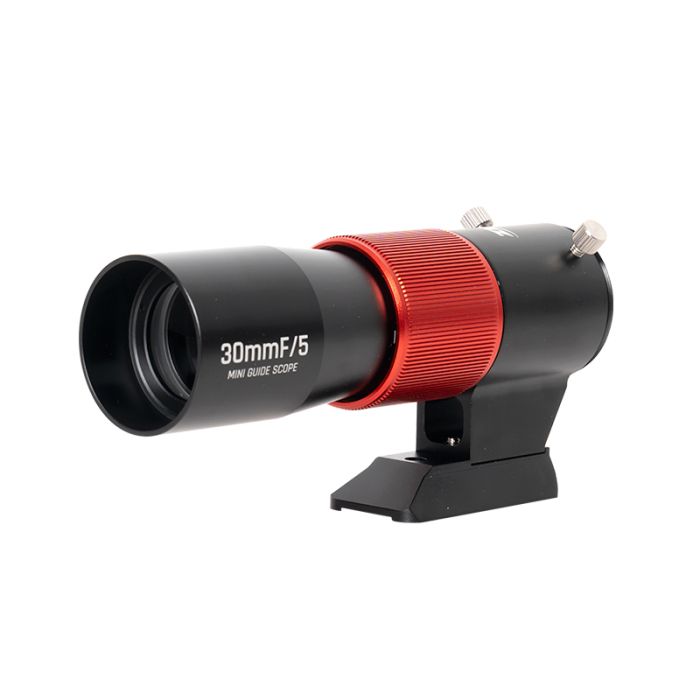
ZWO 30mm f/5 Mini Guide Scope
Stock count is accurate & shown in real time.
- This item is out of stock.
- Sign up for back-in-stock alerts to be notified when this item becomes available (account login required).
- This item is out of stock.
- Sign up for back-in-stock alerts to be notified when this item becomes available (account login required).
Contiguous US / Lower 48:
Free shipping applies to orders over $50 using our chosen carrier/method. Faster paid options are available at checkout.
Alaska, Hawaii & US Territories:
Free shipping applies to many—but not all—products. Enter your ZIP code in cart or upon checkout to confirm options and costs.
International:
International orders do not qualify for free shipping. Shipping, duties, brokerage, tariffs, and taxes are the customer’s responsibility. Some items may be restricted due to export, size, or manufacturer limitations.
- 30mm aperture, 150mm focal length, f/5 focal ratio
- 3-element apochromatic (APO) design with built-in ED glass
- Non-rotating helical focuser with positioning screws to prevent focus shift
- Extended focal length for sharper, better-defined guide stars
- Quick-release dovetail plate for fast installation on any standard rail
- Lightweight at 348g with a compact all-metal body
- Designed for direct use with ZWO ASI Mini series guide cameras
ZWO 30F5 Mini Guide Scope
The ZWO 30mm f/5 Mini Guide Scope was developed in-house by ZWO to work alongside their ASI camera lineup. With a 30mm aperture and 150mm focal length, the 30F5 gives autoguiding software enough star separation to detect and correct small tracking errors reliably. The 3-element APO optical design with built-in ED glass reduces chromatic aberration, which helps guiding software lock onto cleaner, more defined star profiles. The non-rotating helical focuser holds position under load and uses positioning screws to prevent focus shift during a session. Weighing 348g and measuring just 155mm long, the scope adds minimal load to any imaging rig without compromising the balance of the overall setup.
Highlights of the ZWO 30mm f/5 Mini Guide Scope
Compact, Lightweight Design
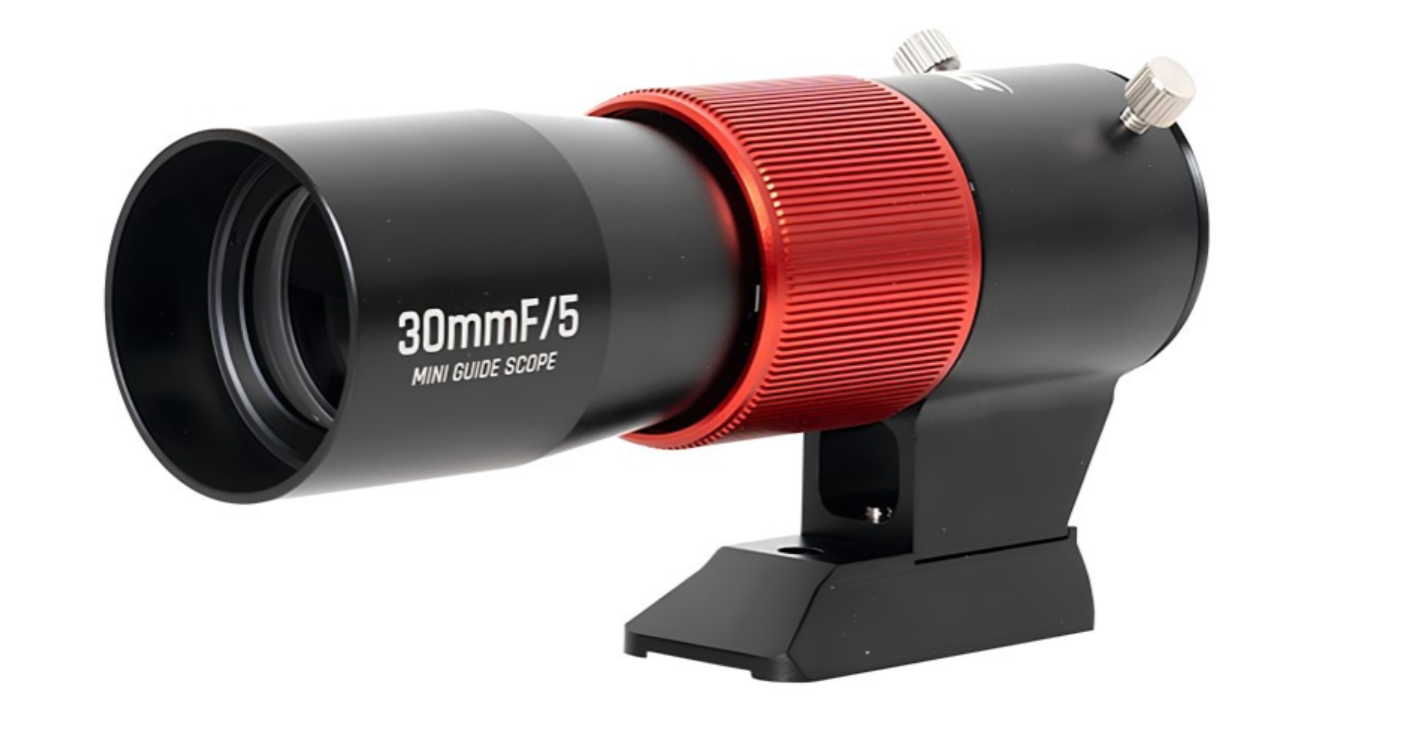
At 348g and 155mm long, the 30F5 fits most dovetail rail setups without overloading the mount or throwing off the system's balance point.
Easy Guiding Out of the Box
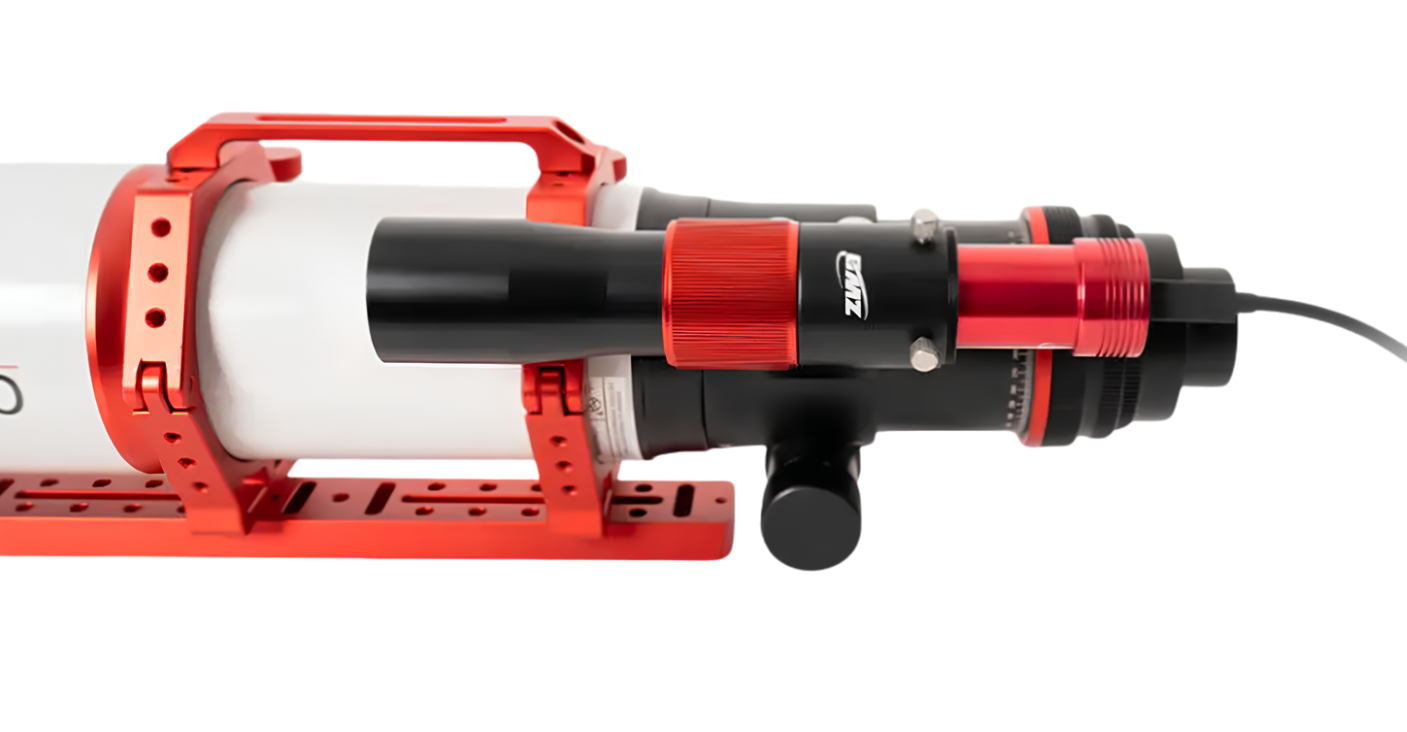
The 30F5 is designed to work directly with ZWO ASI Mini series cameras, making cable routing and system integration straightforward right out of the box. Focusing and spacing issues are prevented by using a compatible ZWO camera, and they even have a matching color scheme.
Wide-Field Imaging
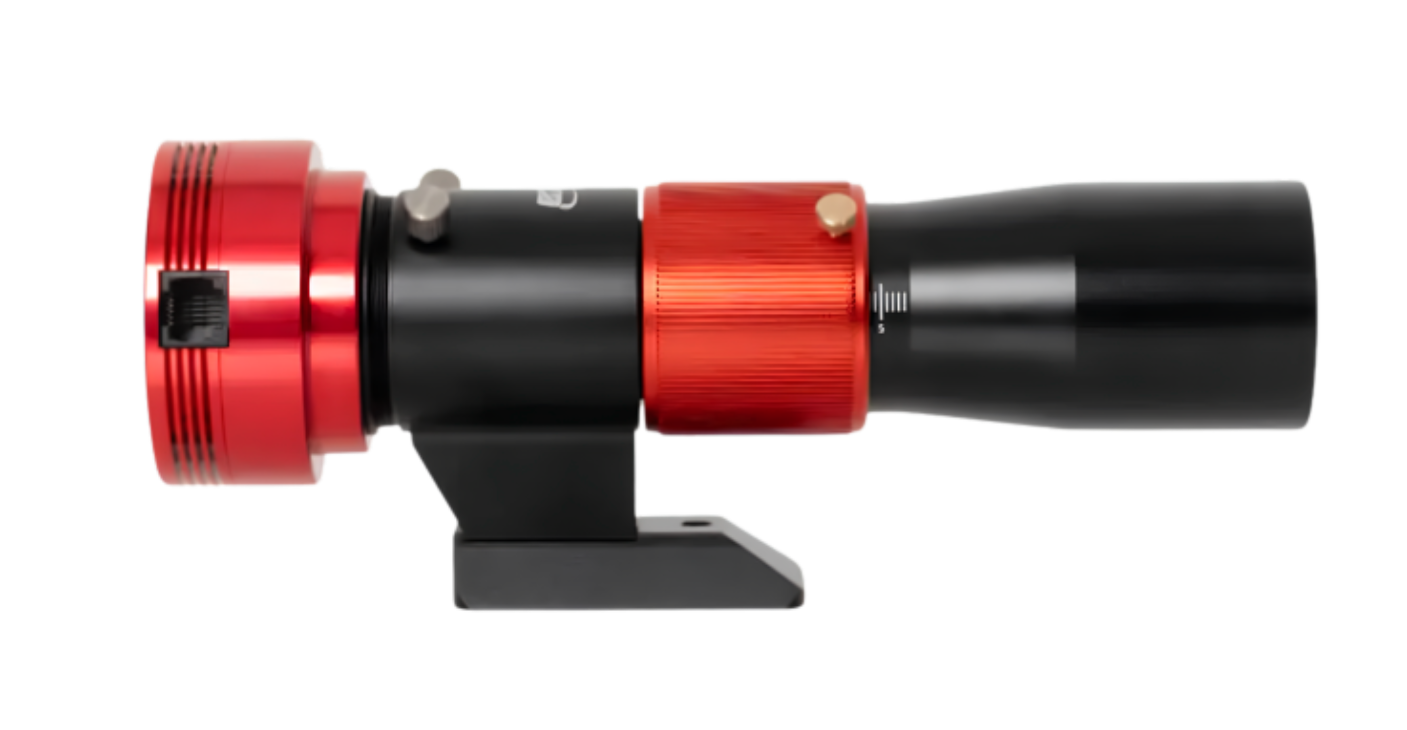
The f/5 aperture and ED triplet optics make the 30F5 a capable ultra-wide field imaging instrument when paired with a short back-focus camera like one of the ZWO planetary models or some mirrorless 4/3 cameras.
APO Optical Design in a Guide Scope!
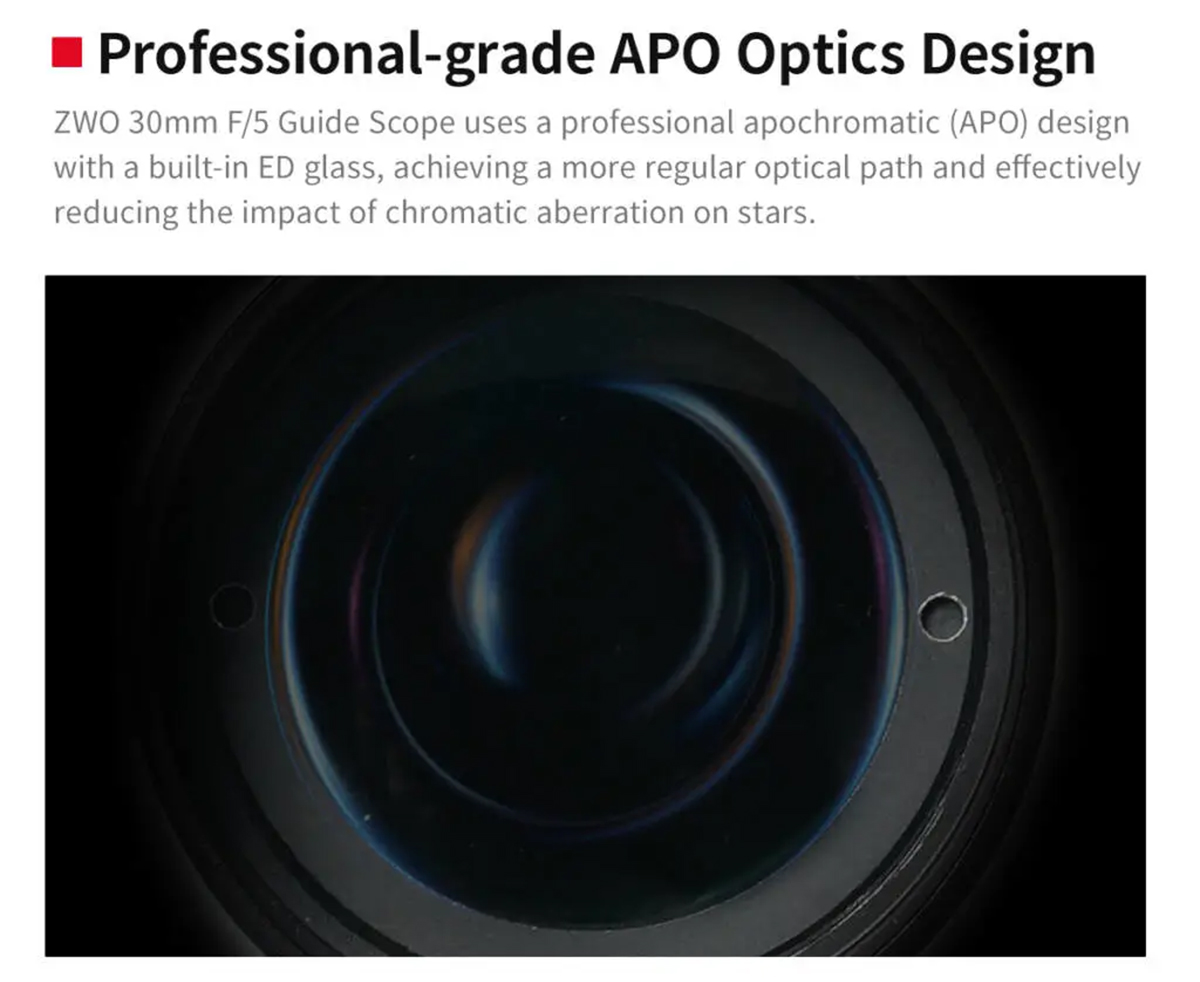
A standard achromatic guide scope focuses different wavelengths of light at slightly different distances, which softens star profiles and can make it harder for guiding software to calculate accurate corrections. The 30F5 addresses this with a 3-element apochromatic design that includes a built-in ED (extra-low dispersion) glass element, bringing those wavelengths into tighter common focus for rounder, more defined stars across the field.
This matters most when guide stars are faint, since a cleaner star shape gives the guiding algorithm more reliable centroid data to work with. The 150mm focal length is also longer than the previous generation of ZWO guide scopes, making this guide scope more suitable for a wider variety of scopes and cameras.
Non-Rotating Helical Focuser
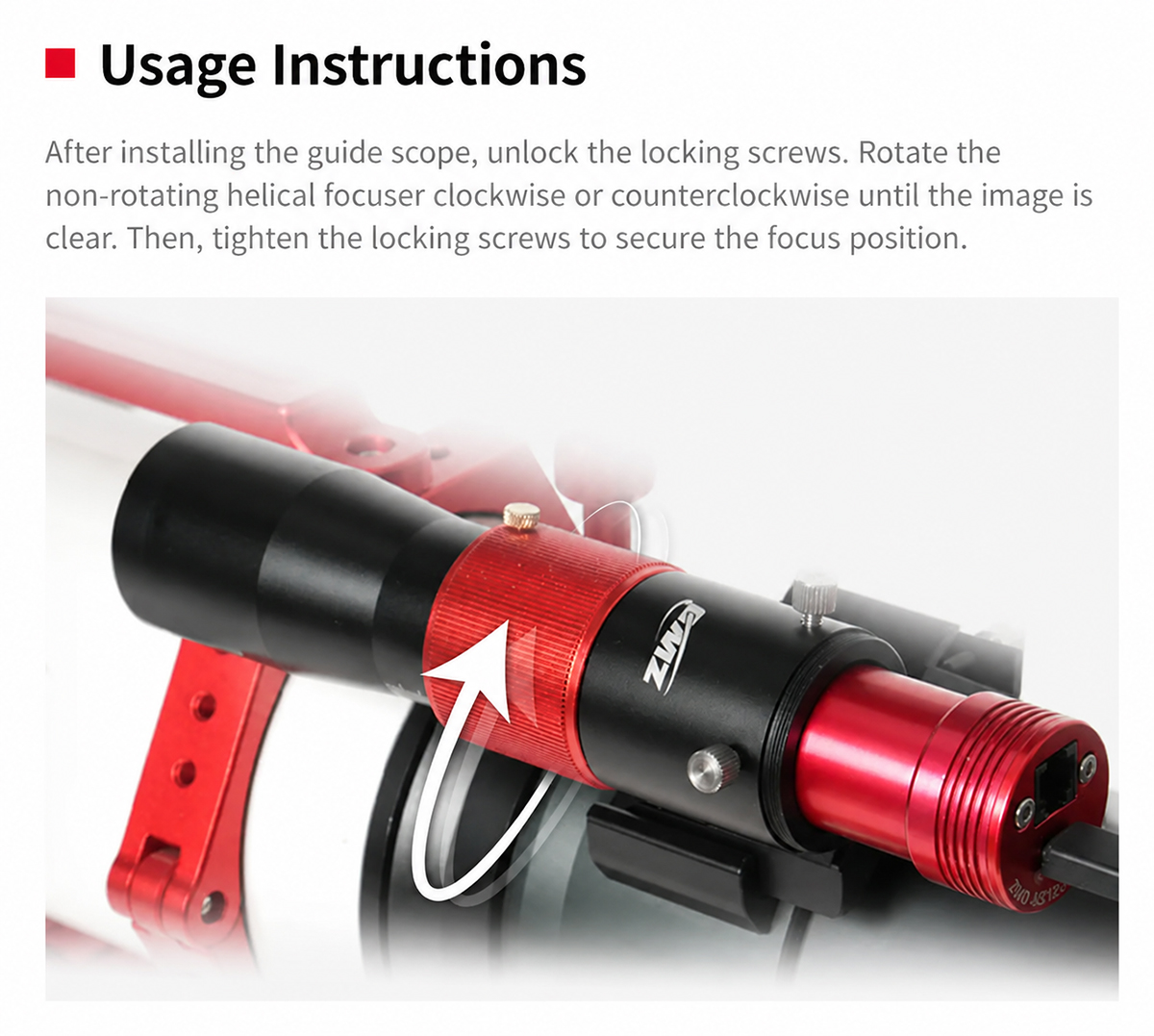
The 30F5 uses a helical focuser, which adjusts focus by rotating the focuser barrel rather than sliding a drawtube in and out. As the barrel turns, it moves the camera closer to or further from the objective until guide stars appear sharp in the camera preview.
The important feature of this design is that the barrel does not rotate as it travels, so the camera mounted on the back stays in a fixed orientation throughout the focusing process. Once focus is set, two positioning screws lock the barrel in place and resist any creep that could shift focus over the course of a session.
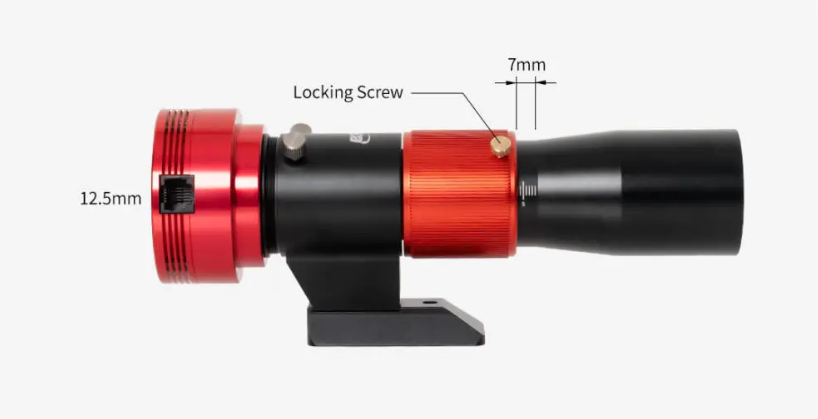
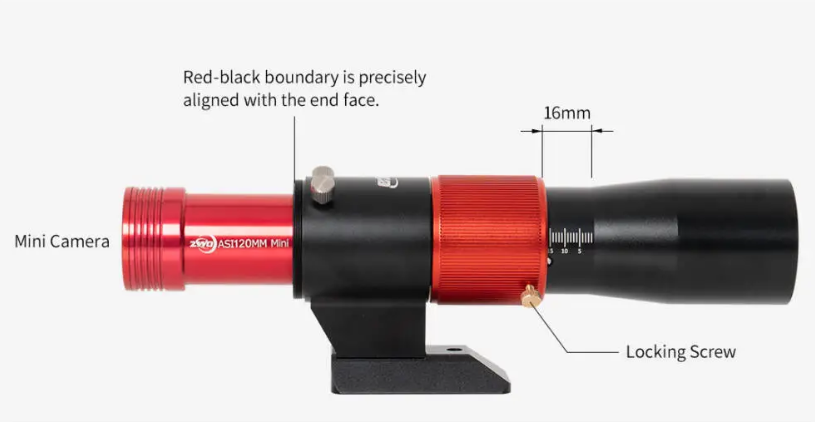
The 20mm of total focusing travel is sufficient for most compact guide cameras, though confirming back focus compatibility before purchase is worthwhile if using a camera other than the ZWO ASI Mini series. To set focus, loosen the locking screws, rotate the helical barrel clockwise or counterclockwise until stars are sharp, then retighten the screws to hold the position.
Mounting and Compatibility
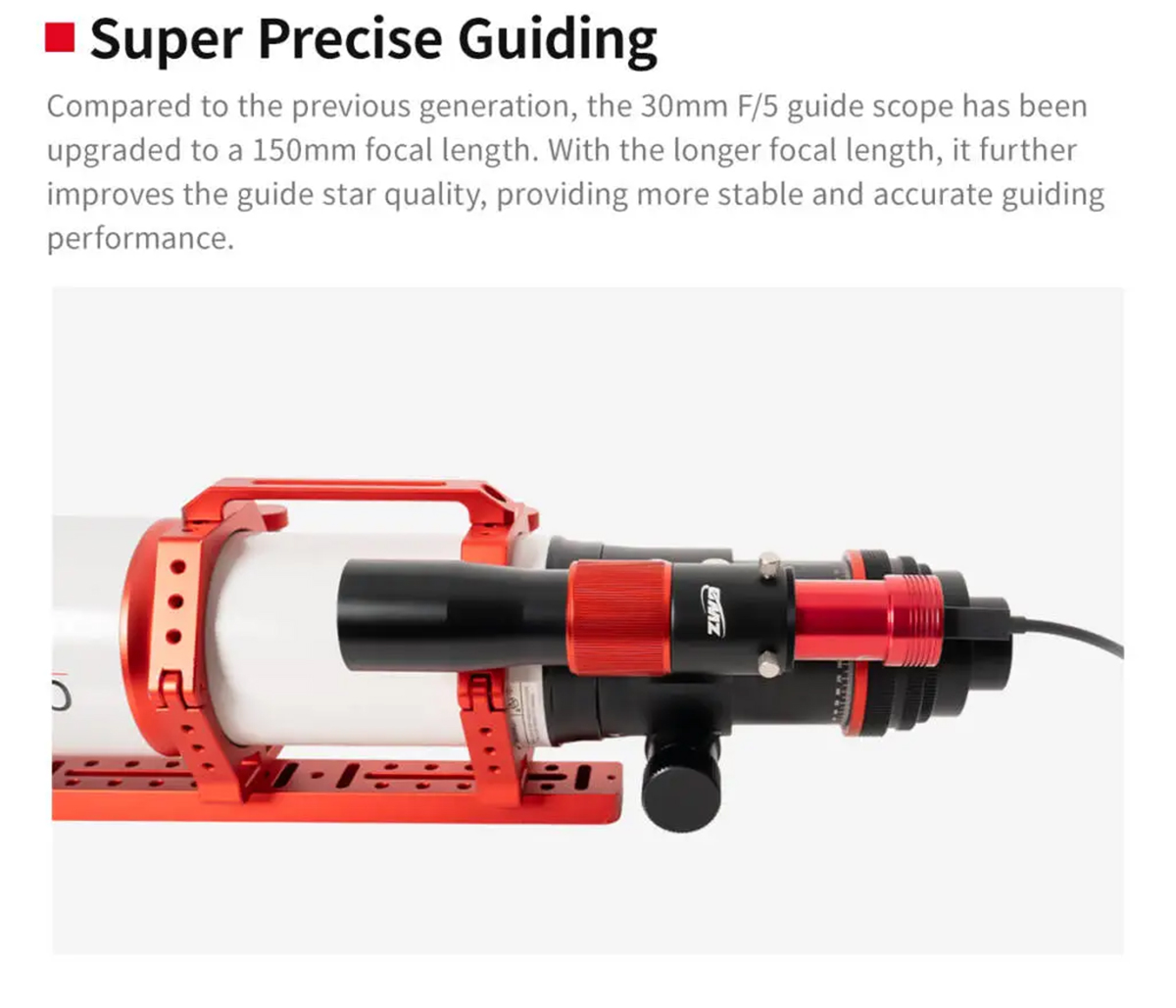
The 30F5 ships with a quick-release dovetail plate that mounts to any standard accessory rail or guide scope rings. The integrated holder keeps the guide scope and camera assembly rigid, which matters for maintaining a stable guiding signal throughout an exposure sequence.
ZWO recommends pairing the 30F5 with a main imaging telescope that has a focal length under 750mm. Within this range the 150mm guide scope focal length provides an appropriate scale for detecting and correcting the tracking errors a typical mount produces. Using the 30F5 with a significantly longer primary scope reduces its effectiveness, since small angular movements of the guide star translate to proportionally smaller corrections on the imaging sensor.
Compared to the previous generation, the 30mm F/5 guide scope has been upgraded to a 150mm focal length. With the longer focal length, it further improves the guide star quality, providing a more stable a guiding and accurate performance.
Specifications
Optical Specifications
- Aperture: 30 mm
- Focal length: 150 mm
- F-ratio: f/5
- Mounting Shoe: Synta/Vixen-style
- Optics: 3-element Apochromatic (APO) with ED glass
- Recommended main scope: < 750 mm
Mechanical Specifications
- Focusing mode: Non-Rotating Helical focuser
- Focusing Travel: 20 mm
- Weight: 348 g
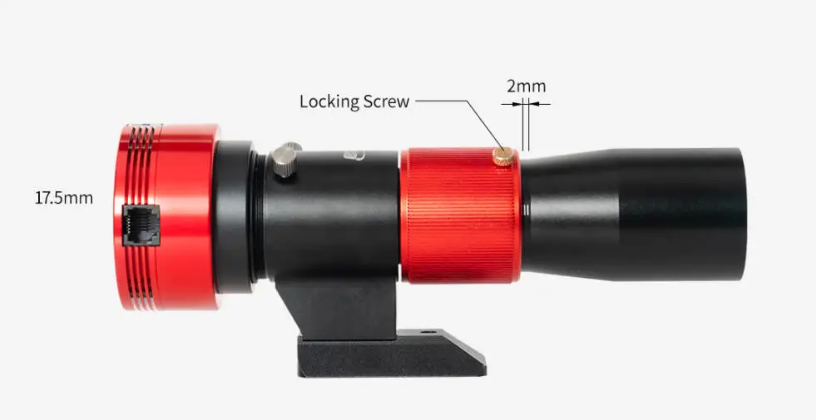
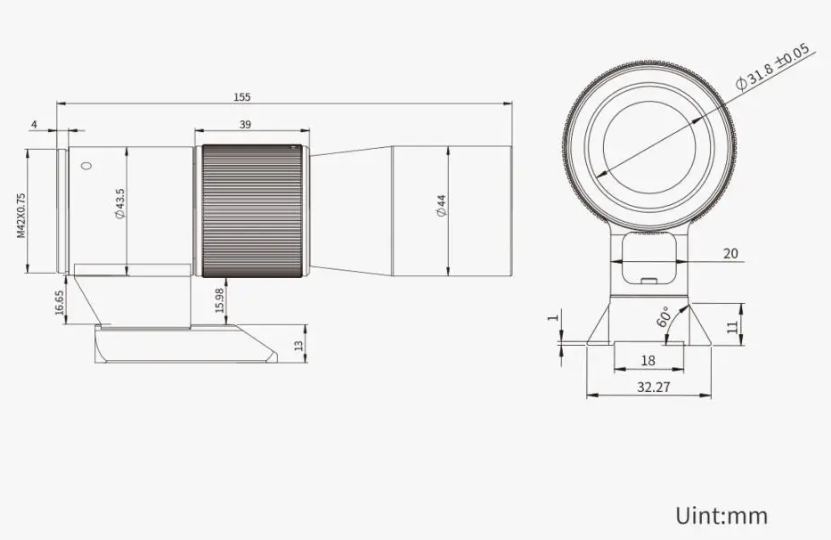
- Dimensions (mm): 155 x 44 x 73 mm
Camera Focus Example
Structural Dimension Diagram
Frequently Asked Questions:
What guide cameras work with the ZWO 30F5?
The 30F5 is designed to pair with ZWO's ASI Mini series cameras, including the ASI120MM Mini and ASI220MM Mini. Its standard connection also accepts other guide cameras that fit a compatible nosepiece, so many compact guide cameras may work. The 20mm of focusing travel is sufficient for most guide cameras in this size class, though verifying back focus distance before finalizing a pairing is a good habit when using cameras outside the ZWO Mini lineup.
Can the ZWO 30F5 be used for imaging instead of guiding?
The 30F5 is built for autoguiding rather than primary imaging. Its 30mm aperture and f/5 focal ratio produce an image well suited to guide software but the limited back focus and mounting hardware means that this scope will not work with any of the cooled cameras. You can certainly attach a ZWO guide camera, especially a color model, and capture images like you would with any scope. But the 30F5 performs best in its intended role alongside a main imaging telescope.
How does the ZWO 30F5 compare to an off-axis guider?
The main difference is differential flexure. An off-axis guider (OAG) shares the same optical path as the imaging sensor, so any movement the guide camera sees is real movement the main sensor sees too. A separate guide scope like the 30F5 is physically mounted alongside the main tube, and small amounts of flex in the hardware between them can mislead the guiding software. For setups under 750mm focal length, that flex is usually small enough that the 30F5 guides reliably. At longer focal lengths, an OAG is generally the better choice. The 30F5 does have one consistent advantage over an OAG: its wider field makes finding a usable guide star much easier, especially when the main scope is pointed at a sparse area of sky.
Does the helical focuser hold position during a long session?
The non-rotating helical focuser includes positioning screws that lock the barrel once focus is dialed in. When those screws are properly tightened, the focuser should hold position through a typical imaging session. Significant temperature drops over several hours may shift the optimal focal point slightly, since thermal contraction can move optical elements enough to soften guide stars. Checking focus periodically on longer nights is a reasonable precaution.
Other Information
- Country of Manufacture: China
ZWO 30F5 Mini Guide Scope
The ZWO 30mm f/5 Mini Guide Scope was developed in-house by ZWO to work alongside their ASI camera lineup. With a 30mm aperture and 150mm focal length, the 30F5 gives autoguiding software enough star separation to detect and correct small tracking errors reliably. The 3-element APO optical design with built-in ED glass reduces chromatic aberration, which helps guiding software lock onto cleaner, more defined star profiles. The non-rotating helical focuser holds position under load and uses positioning screws to prevent focus shift during a session. Weighing 348g and measuring just 155mm long, the scope adds minimal load to any imaging rig without compromising the balance of the overall setup.
Highlights of the ZWO 30mm f/5 Mini Guide Scope
Compact, Lightweight Design
At 348g and 155mm long, the 30F5 fits most dovetail rail setups without overloading the mount or throwing off the system's balance point.
Easy Guiding Out of the Box
The 30F5 is designed to work directly with ZWO ASI Mini series cameras, making cable routing and system integration straightforward right out of the box. Focusing and spacing issues are prevented by using a compatible ZWO camera, and they even have a matching color scheme.
Wide-Field Imaging
The f/5 aperture and ED triplet optics make the 30F5 a capable ultra-wide field imaging instrument when paired with a short back-focus camera like one of the ZWO planetary models or some mirrorless 4/3 cameras.
APO Optical Design in a Guide Scope!
A standard achromatic guide scope focuses different wavelengths of light at slightly different distances, which softens star profiles and can make it harder for guiding software to calculate accurate corrections. The 30F5 addresses this with a 3-element apochromatic design that includes a built-in ED (extra-low dispersion) glass element, bringing those wavelengths into tighter common focus for rounder, more defined stars across the field.
This matters most when guide stars are faint, since a cleaner star shape gives the guiding algorithm more reliable centroid data to work with. The 150mm focal length is also longer than the previous generation of ZWO guide scopes, making this guide scope more suitable for a wider variety of scopes and cameras.
Non-Rotating Helical Focuser
The 30F5 uses a helical focuser, which adjusts focus by rotating the focuser barrel rather than sliding a drawtube in and out. As the barrel turns, it moves the camera closer to or further from the objective until guide stars appear sharp in the camera preview.
The important feature of this design is that the barrel does not rotate as it travels, so the camera mounted on the back stays in a fixed orientation throughout the focusing process. Once focus is set, two positioning screws lock the barrel in place and resist any creep that could shift focus over the course of a session.
The 20mm of total focusing travel is sufficient for most compact guide cameras, though confirming back focus compatibility before purchase is worthwhile if using a camera other than the ZWO ASI Mini series. To set focus, loosen the locking screws, rotate the helical barrel clockwise or counterclockwise until stars are sharp, then retighten the screws to hold the position.
Mounting and Compatibility
The 30F5 ships with a quick-release dovetail plate that mounts to any standard accessory rail or guide scope rings. The integrated holder keeps the guide scope and camera assembly rigid, which matters for maintaining a stable guiding signal throughout an exposure sequence.
ZWO recommends pairing the 30F5 with a main imaging telescope that has a focal length under 750mm. Within this range the 150mm guide scope focal length provides an appropriate scale for detecting and correcting the tracking errors a typical mount produces. Using the 30F5 with a significantly longer primary scope reduces its effectiveness, since small angular movements of the guide star translate to proportionally smaller corrections on the imaging sensor.
Compared to the previous generation, the 30mm F/5 guide scope has been upgraded to a 150mm focal length. With the longer focal length, it further improves the guide star quality, providing a more stable a guiding and accurate performance.
Specifications
Optical Specifications
- Aperture: 30 mm
- Focal length: 150 mm
- F-ratio: f/5
- Mounting Shoe: Synta/Vixen-style
- Optics: 3-element Apochromatic (APO) with ED glass
- Recommended main scope: < 750 mm
Mechanical Specifications
- Focusing mode: Non-Rotating Helical focuser
- Focusing Travel: 20 mm
- Weight: 348 g
- Dimensions (mm): 155 x 44 x 73 mm
Camera Focus Example
Structural Dimension Diagram
Frequently Asked Questions:
What guide cameras work with the ZWO 30F5?
The 30F5 is designed to pair with ZWO's ASI Mini series cameras, including the ASI120MM Mini and ASI220MM Mini. Its standard connection also accepts other guide cameras that fit a compatible nosepiece, so many compact guide cameras may work. The 20mm of focusing travel is sufficient for most guide cameras in this size class, though verifying back focus distance before finalizing a pairing is a good habit when using cameras outside the ZWO Mini lineup.
Can the ZWO 30F5 be used for imaging instead of guiding?
The 30F5 is built for autoguiding rather than primary imaging. Its 30mm aperture and f/5 focal ratio produce an image well suited to guide software but the limited back focus and mounting hardware means that this scope will not work with any of the cooled cameras. You can certainly attach a ZWO guide camera, especially a color model, and capture images like you would with any scope. But the 30F5 performs best in its intended role alongside a main imaging telescope.
How does the ZWO 30F5 compare to an off-axis guider?
The main difference is differential flexure. An off-axis guider (OAG) shares the same optical path as the imaging sensor, so any movement the guide camera sees is real movement the main sensor sees too. A separate guide scope like the 30F5 is physically mounted alongside the main tube, and small amounts of flex in the hardware between them can mislead the guiding software. For setups under 750mm focal length, that flex is usually small enough that the 30F5 guides reliably. At longer focal lengths, an OAG is generally the better choice. The 30F5 does have one consistent advantage over an OAG: its wider field makes finding a usable guide star much easier, especially when the main scope is pointed at a sparse area of sky.
Does the helical focuser hold position during a long session?
The non-rotating helical focuser includes positioning screws that lock the barrel once focus is dialed in. When those screws are properly tightened, the focuser should hold position through a typical imaging session. Significant temperature drops over several hours may shift the optimal focal point slightly, since thermal contraction can move optical elements enough to soften guide stars. Checking focus periodically on longer nights is a reasonable precaution.
- 1x ZWO 30mm f/5 Mini Guide Scope optical assembly
- 1x Quick-release dovetail plate
- 1x Front and rear lens caps
- 2x M4 * 8mm Thumb Screws
- 1x M3 * 6mm Locking Screws

- 30mm aperture, 150mm focal length, f/5 focal ratio
- 3-element apochromatic (APO) design with built-in ED glass
- Non-rotating helical focuser with positioning screws to prevent focus shift
- Extended focal length for sharper, better-defined guide stars
- Quick-release dovetail plate for fast installation on any standard rail
- Lightweight at 348g with a compact all-metal body
- Designed for direct use with ZWO ASI Mini series guide cameras
ZWO 30F5 Mini Guide Scope
The ZWO 30mm f/5 Mini Guide Scope was developed in-house by ZWO to work alongside their ASI camera lineup. With a 30mm aperture and 150mm focal length, the 30F5 gives autoguiding software enough star separation to detect and correct small tracking errors reliably. The 3-element APO optical design with built-in ED glass reduces chromatic aberration, which helps guiding software lock onto cleaner, more defined star profiles. The non-rotating helical focuser holds position under load and uses positioning screws to prevent focus shift during a session. Weighing 348g and measuring just 155mm long, the scope adds minimal load to any imaging rig without compromising the balance of the overall setup.
Highlights of the ZWO 30mm f/5 Mini Guide Scope
Compact, Lightweight Design
At 348g and 155mm long, the 30F5 fits most dovetail rail setups without overloading the mount or throwing off the system's balance point.
Easy Guiding Out of the Box
The 30F5 is designed to work directly with ZWO ASI Mini series cameras, making cable routing and system integration straightforward right out of the box. Focusing and spacing issues are prevented by using a compatible ZWO camera, and they even have a matching color scheme.
Wide-Field Imaging
The f/5 aperture and ED triplet optics make the 30F5 a capable ultra-wide field imaging instrument when paired with a short back-focus camera like one of the ZWO planetary models or some mirrorless 4/3 cameras.
APO Optical Design in a Guide Scope!
A standard achromatic guide scope focuses different wavelengths of light at slightly different distances, which softens star profiles and can make it harder for guiding software to calculate accurate corrections. The 30F5 addresses this with a 3-element apochromatic design that includes a built-in ED (extra-low dispersion) glass element, bringing those wavelengths into tighter common focus for rounder, more defined stars across the field.
This matters most when guide stars are faint, since a cleaner star shape gives the guiding algorithm more reliable centroid data to work with. The 150mm focal length is also longer than the previous generation of ZWO guide scopes, making this guide scope more suitable for a wider variety of scopes and cameras.
Non-Rotating Helical Focuser
The 30F5 uses a helical focuser, which adjusts focus by rotating the focuser barrel rather than sliding a drawtube in and out. As the barrel turns, it moves the camera closer to or further from the objective until guide stars appear sharp in the camera preview.
The important feature of this design is that the barrel does not rotate as it travels, so the camera mounted on the back stays in a fixed orientation throughout the focusing process. Once focus is set, two positioning screws lock the barrel in place and resist any creep that could shift focus over the course of a session.
The 20mm of total focusing travel is sufficient for most compact guide cameras, though confirming back focus compatibility before purchase is worthwhile if using a camera other than the ZWO ASI Mini series. To set focus, loosen the locking screws, rotate the helical barrel clockwise or counterclockwise until stars are sharp, then retighten the screws to hold the position.
Mounting and Compatibility
The 30F5 ships with a quick-release dovetail plate that mounts to any standard accessory rail or guide scope rings. The integrated holder keeps the guide scope and camera assembly rigid, which matters for maintaining a stable guiding signal throughout an exposure sequence.
ZWO recommends pairing the 30F5 with a main imaging telescope that has a focal length under 750mm. Within this range the 150mm guide scope focal length provides an appropriate scale for detecting and correcting the tracking errors a typical mount produces. Using the 30F5 with a significantly longer primary scope reduces its effectiveness, since small angular movements of the guide star translate to proportionally smaller corrections on the imaging sensor.
Compared to the previous generation, the 30mm F/5 guide scope has been upgraded to a 150mm focal length. With the longer focal length, it further improves the guide star quality, providing a more stable a guiding and accurate performance.
Specifications
Optical Specifications
- Aperture: 30 mm
- Focal length: 150 mm
- F-ratio: f/5
- Mounting Shoe: Synta/Vixen-style
- Optics: 3-element Apochromatic (APO) with ED glass
- Recommended main scope: < 750 mm
Mechanical Specifications
- Focusing mode: Non-Rotating Helical focuser
- Focusing Travel: 20 mm
- Weight: 348 g
- Dimensions (mm): 155 x 44 x 73 mm
Camera Focus Example
Structural Dimension Diagram
Frequently Asked Questions:
What guide cameras work with the ZWO 30F5?
The 30F5 is designed to pair with ZWO's ASI Mini series cameras, including the ASI120MM Mini and ASI220MM Mini. Its standard connection also accepts other guide cameras that fit a compatible nosepiece, so many compact guide cameras may work. The 20mm of focusing travel is sufficient for most guide cameras in this size class, though verifying back focus distance before finalizing a pairing is a good habit when using cameras outside the ZWO Mini lineup.
Can the ZWO 30F5 be used for imaging instead of guiding?
The 30F5 is built for autoguiding rather than primary imaging. Its 30mm aperture and f/5 focal ratio produce an image well suited to guide software but the limited back focus and mounting hardware means that this scope will not work with any of the cooled cameras. You can certainly attach a ZWO guide camera, especially a color model, and capture images like you would with any scope. But the 30F5 performs best in its intended role alongside a main imaging telescope.
How does the ZWO 30F5 compare to an off-axis guider?
The main difference is differential flexure. An off-axis guider (OAG) shares the same optical path as the imaging sensor, so any movement the guide camera sees is real movement the main sensor sees too. A separate guide scope like the 30F5 is physically mounted alongside the main tube, and small amounts of flex in the hardware between them can mislead the guiding software. For setups under 750mm focal length, that flex is usually small enough that the 30F5 guides reliably. At longer focal lengths, an OAG is generally the better choice. The 30F5 does have one consistent advantage over an OAG: its wider field makes finding a usable guide star much easier, especially when the main scope is pointed at a sparse area of sky.
Does the helical focuser hold position during a long session?
The non-rotating helical focuser includes positioning screws that lock the barrel once focus is dialed in. When those screws are properly tightened, the focuser should hold position through a typical imaging session. Significant temperature drops over several hours may shift the optimal focal point slightly, since thermal contraction can move optical elements enough to soften guide stars. Checking focus periodically on longer nights is a reasonable precaution.
Other Information
- Country of Manufacture: China
- 1x ZWO 30mm f/5 Mini Guide Scope optical assembly
- 1x Quick-release dovetail plate
- 1x Front and rear lens caps
- 2x M4 * 8mm Thumb Screws
- 1x M3 * 6mm Locking Screws

ZWO 30mm f/5 Mini Guide Scope