

A Review of the Askar FMA230 ED Telescope
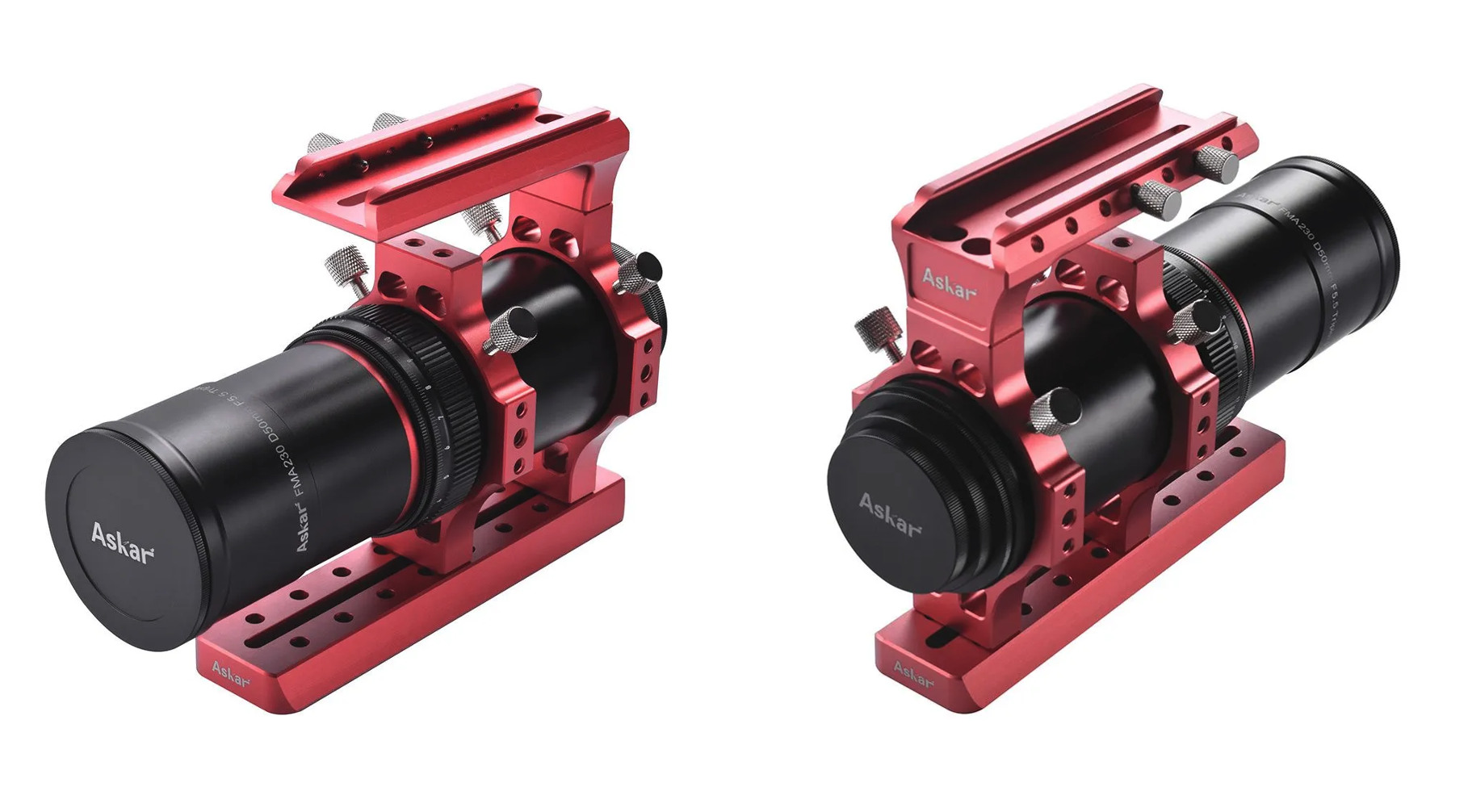
Figure 1 – Front and back views of the Askar FMA230 telescope. Image credit: Askar.
1. Overview of the FMA230
Over the past few years, the Chinese optical manufacturer Askar launched a series of innovative telescopes and lenses aimed at astronomical and terrestrial imagers. This series includes the reconfigurable FMA135 and FMA180 scopes with apochromatic objectives with 30mm and 40mm apertures, respectively, and the ACL200 f/4 manual focus ED astronomical camera lens with a 50mm aperture. Most recently, Askar launched a larger reconfigurable telescope, the FMA230, that has a 50mm aperture (Figure 1). I’ve been using the ACL200 for more than a year now and I’ve found it has superb optics and a solid build quality. So I was curious to see how the most recent FMA230 ‘mini scope’ matches up to this fast lens. This brief review considers the FMA230 and its performance for both photographic and visual use.
2. FMA230 Configurability
The FMA230 has the following specifications and features:
- Aperture: 50mm
- Objective Lens Configuration: Air-spaced triplet with two ED elements
- Corrector/Reducer: Four-element 0.84x corrector/reducer (removable)
- Focal Length/Ratio: 275mm at f/5.5 without reducer, 230mm at f/4.6 with reducer
- Focuser Travel: 30mm
- Weight: 1095g including rings and dovetails.
The scope also includes a set of red anodized rings, a Vixen-style mounting plate, a spacer ring, and a dovetail for a guide scope. The 0.84x focal reducer, which serves as the last element in the optical train when used for imaging, terminates with M48 threads for interfacing to a camera. The instrument also includes a 2” adapter ring that replaces the focal reducer to configure the telescope for visual use. It does not include a 2”-to-1.25” adapter - you must supply your own.
As with the smaller FMA135 and FMA180 lenses, the FMA has a modular configuration. It consists of, from front to back, a removable dew shield, the objective and helical focuser, a removable extension tube, a short ‘main tube’, and the focal reducer (for imaging) or 2” adapter (for visual use) that threads into the back of the main tube. The scope also includes a threaded M48x0.75 filter holder. Using these components, the FMA230 can be set up in three main configurations for i) imaging or ii) visual use with a 2” diagonal or iii) visual use with a 1.25” diagonal. Figure 2 shows a schematic of these configurations.

Figure 2 – Possible configurations of the Askar FMA230 telescope using included accessories. Note that the telescope does not include a 1.25”-2” adapter, diagonal, eyepiece, or camera.
For reference, Table 1 compares the configuration of the FMA230 to the smaller FMA135 and FMA180 telescopes and the ACL200 f/4 astronomical camera lens. The FMA230 has the longest focal length while still retaining a relatively fast focal ratio of f/4.6 when used for imaging with the reducer.
| Scope | FMA135 | FMA180 | FMA230 | ACL200 |
|---|---|---|---|---|
| Aperture | 30mm | 40mm | 50mm | 50mm |
| Removable Focal Reducer | No | 0.82x (three element) | 0.84x (four element) | No |
| Focal Ratio(s) | 4.5 | 5.5/4.5 | 5.5/4.6 | 4.0 |
| Focal Length(s) | 135mm | 220/180mm | 275/230mm | 200mm |
| Objective | ED Triplet + three element integrated flattener | ED Triple | ED Triplet | Six-element ED |
| Filter Holder | No | No | Yes (2”) | Yes (2”) |
| Guide Scope Dovetail | No | No | Yes | Yes |
| Imaging Field Size | APS-C | Full Frame | Full Frame | Full Frame |
| Visual Use | Yes (1.25”) | Yes (1.25”) | Yes (2”) | No |
| Weight | 280g | 395g | 1045g | 1500g |
3. Build Quality and Imaging with the FMA230
The FMA230 has the same all-metal, premium construction as my workhorse Askar ACL200 f/4 lens. All parts are made of metal and black or red anodized. The threads are precisely cut and easy to use including the threaded metal dust cover. The mounting rings include large thumb screws to enable easy tube rotation, and the helical focuser is a little stiff but solid and easy to work with. The entire assembly has the feel of a hefty, precision instrument. A basic instruction manual, Allen key, and a certificate of inspection are included.
Figure 3 shows the FMA230 mounted and configured for imaging. The M48 threads of the focal reducer, which itself is threaded into the optical tube, makes it easy to attach most astronomy cameras and DSLR/mirrorless cameras (with an M48 T-ring, not included). The focal reducer has a back focus requirement of 55mm. The helical focuser of the FMA230 is precise but quite stiff. I found trying to turn it too aggressively sometimes caused the objective tube to unthread from the extension tube if it was not threaded in firmly.

To see how the optics of the FMA230 perform, I captured guided test images with a full-frame DSLR camera (an old astro-modified Nikon D610) and a smaller-sensor astronomy camera, the ZWO ASI533MC-Pro. The scope and camera were mounted on a Sky-Watcher AZ-EQ5 mount and the entire assembly was controlled with a ZWO ASIAIR PRO. The test images were captured from suburban Bortle 7 skies. The focal reducer was installed so the scope operated at f/4.6.
Figure 4(a) shows a test image of the region around the North America Nebula and Deneb captured with the full-frame DSLR. The image was created with 40x300s sub-frames taken at ISO 800 with darks and flats applied. An Optolong L-Pro filter was used in the filter holder of the FMA230 to help with light pollution. With this full-frame camera, the field of view is 9ox6o with the FMA230 and focal reducer.


Figure 4(b) – Enlargements (200%) of the center and corners of the image in Figure 4(a). Click to enlarge in a new window.
Figure 4(b) shows the center and corners of the same image zoomed to 200%. Pixel peepers and optical perfectionists will see evidence of aberration at the corners in this image. Aberrations were more obvious in the FMA230 than what I’ve observed in my copy of the Askar ACL200 f/4 lens. Whether this performance is adequate depends on the imager. But given the selling price of the lens compared to higher end telescopes, it’s still adequate for occasional images with full-frame cameras. From the test images above, the telescope would deliver excellent performance with cameras with APS-C or smaller sensors.
Note - the halo around Deneb in Figure 4(a) is a result I commonly see when imaging bright stars with this astro-modified D610 camera; it was not visible when I used an unmodified full-frame Nikon Z6 to capture an image of the same part of the sky.
When used with smaller sensor cameras, the FMA230 really shines. The fast optics make for quick subs and the ED optical elements in the objective and reducer offer excellent color correction. Figure 5(a) shows an image of the North America Nebula captured with the ASI533MC-Pro (with an 11mm square sensor) and an Optolong L-eNhance filter. Figure 5(b) shows an image of the Pleiades captured with the same camera with the L-Pro filter in my Bortle 7 skies. In both images, the stars are sharp across the 2.7o square field of view.

Figure 5(a) – The North America and Pelican Nebulae captured with the Askar FMA230 at f/4.6 and a ZWO ASI533MC-Pro camera. Image made with 20x600s subframes, darks and flats applied, processed with Deep Sky Stacker and Photoshop. Click to enlarge in a new window.

Figure 5(b) – The Pleiades captured with the Askar FMA230 at f/4.6 and a ZWO ASI533MC-Pro camera. Image made with 41x300s subframes, darks and flats applied, processed with Deep Sky Stacker and Photoshop. Click to enlarge in a new window.
4. Visual Observing with the FMA230
Most who buy the Askar FMA230 will use it for imaging. But the scope can also be configured for visual observation with a 1.25” or 2” diagonal by removing the focal reducer and threading on the 2” adapter to the end of the tube. Figure 2 shows the two possible configurations for visual observation with 1.25” or 2” diagonals. Observers will have to supply their own 1.25”-2” adapter. And with the reducer removed for visual work, the telescope operates with a focal length of 275mm and a focal ratio of f/5.5. Figure 6 shows the telescope with a 2” diagonal, a 1.25” wide-field eyepiece ready for visual observation, and a red-dot finder attached to the guide scope rail (diagonal, finder, eyepiece, and 1.25”-2” adapter are not included with the FMA230).
While the 2” visual adapter is made from the same high-quality anodized metal as other components on the telescope, it cuts corners in one key respect – it does not have a compression ring. Instead, it uses three thumb screws which greatly increase the chances of marring an (often expensive) 2” diagonal or 1.25”-2” adapter. I hope Askar upgrades the 2” adapter in future releases of the FMA230. I used the instrument for visual observation on a larger go-to equatorial mount, but the guide scope rail on the FMA230 can also fit into Arca-Swiss plates available on many photographic tripods.
As expected, the optical performance of the FMA230 is superb. With a 24mm Panoptic eyepiece, I get a magnification of 11x and a field of view of about 6o which makes this a great combination for wide-field sweeping. The Double Cluster was magnificent in dark sky, and sweeping the star fields of Cassiopeia was a pleasure. I saw no false color on Deneb and Vega, and stars were razor-sharp on axis and quite sharp at the edge of the field of view.
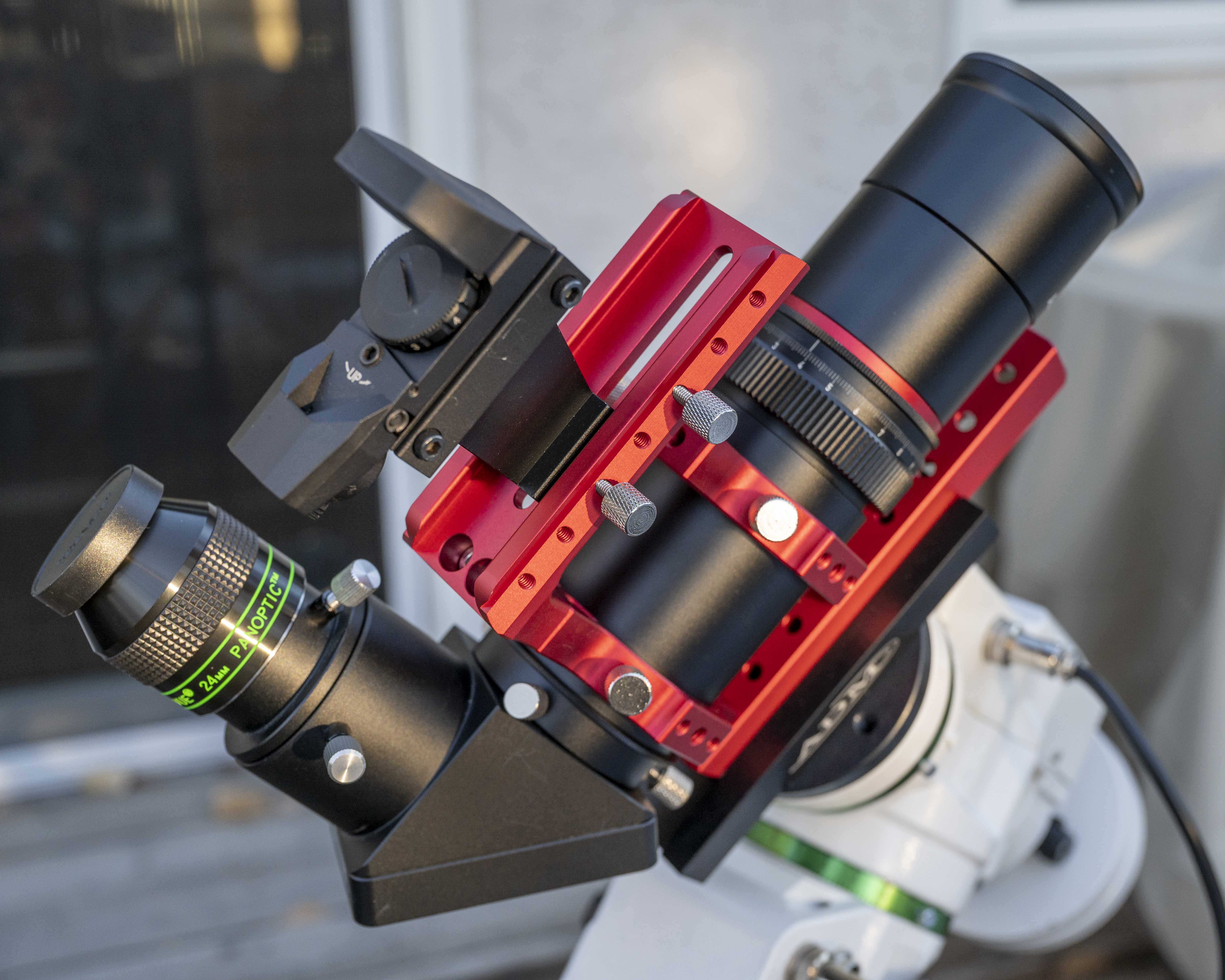
Figure 6 – The Askar FMA230 configured for visual observation. The focal reducer has been removed and replaced with the 2” adapter. The eyepiece, diagonal, finder, and 1.25”-2” adapter are not included with the FMA230 and must be purchased separately.
A 3mm DeLite eyepiece delivered a magnification of 92x and a 0.7o field of view. Achieving focus at high magnification with the helical focuser took some patient deliberation and the sweet spot for focus was fairly shallow. Vega displayed textbook diffraction rings in focus and just a hint of undercorrection with no evidence of astigmatism or misalignment. I couldn’t split the Double-Double on a night of average seeing, but the star was clearly elongated. While hardly a planetary instrument, the FMA230 easily showed the two main cloud belts of Jupiter and its four moons.
Overall, the FMA230 worked nicely for visual observation, though it is by no means intended as a main visual instrument. It lacks the ease of use of, for example, the William Optics Zenithstar 61 or the Sharpstar 61EDPHII 61mm, both of which have rack and pinion focusers. But the FMA230 is a faster scope than the former when used for imaging and less expensive than the latter, and it’s lighter than both.
5. Summary
The Askar FMA230 is aimed primarily at astrophotographers looking for premium optics and a fast focal ratio in a compact package. The scope easily rides on any of the portable sky trackers available from Sky-Watcher and iOptron, for example, so it makes a perfect photo-visual instrument for air travel and backpacking. While it does deliver images with adequate corner performance with full-frame cameras, it works best with APS-C and smaller sensors where image quality across the frame is excellent.
What I liked:
- Superb optical performance and image quality
- Fast optics with focal reducer; especially good with cameras with APS-C sensors or smaller
- Excellent build quality
- Versatile
What I didn't like:
- Stiff focuser
- No compression ring on 2” visual adapter
- Marginal performance at edges with full-frame cameras

About the Author
Brian Ventrudo is a writer, scientist, and astronomy educator. He received his first telescope at the age of 5 and completed his first university course in astronomy at the age of 12, eventually receiving a master's degree in the subject. He also holds a Ph.D. in engineering physics from McMaster University. During a twenty-year scientific career, he developed laser systems to detect molecules found in interstellar space and planetary atmospheres, and leveraged his expertise to create laser technology for optical communications networks. Since 2008, Brian has taught astronomy to tens of thousands of stargazers through his websites OneMinuteAstronomer.com and CosmicPursuits.com.