


Your Guide to the 2026 Night Sky!
The 2026 night sky has a great mix of deep sky targets and special events. In this guide you’ll find everything you need to make the most of your nights out this year. We’ve included monthly moon phases, standout meteor showers, solar and lunar eclipses, and special planetary events. Everything here has been included to keep stargazing in 2026 simple and accessible, with month-by-month highlights and a short list of targets that are realistic for a variety of gear and sky conditions.
Jump to the best events of each month below:

January 2026 - Jupiter at Opposition
Night Sky Events:
- Jan 3–4: The Quadrantid meteor shower peaks, and it can be one of the stronger showers even when the peak window is short.
- Jan 3: The Full Moon is a supermoon, so it can look slightly larger and brighter than average.
- Jan 10: Jupiter reaches opposition, which means it stays up all night and is at one of the best points of the year for viewing and photography.
- Jan 14: Look for the Moon near Saturn, because the pairing is easy to spot in the evening sky and it is great for photos.
- All month: January evenings are excellent for the winter sky, so this is a great month to build confidence in finding bright constellations and your first deep-sky objects.
Moon Phases:
- Full Moon: January 3
- Third Quarter: January 10
- New Moon: January 18
- First Quarter: January 26
| Target | Type | Best For | Gear Recommendations |
|---|---|---|---|
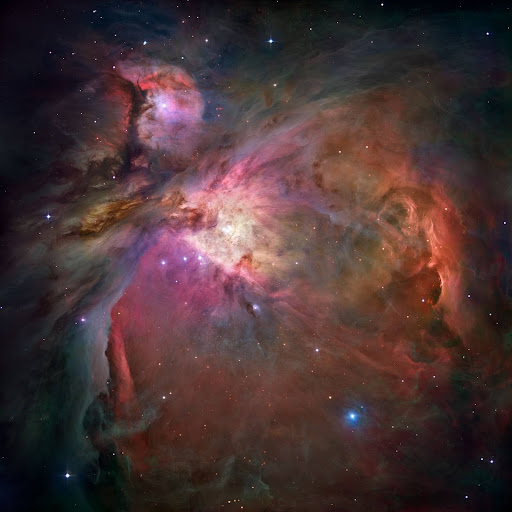
| Orion Nebula (M42) | Bright emission nebula | Visual and imaging |
Visual
Any telescope works; a 6–10 inch scope shows more structure. Start low power, then increase slightly. Imaging
50–200mm on a tracker; prioritize clean focus and longer total integration. |
| Andromeda Galaxy (M31) | Spiral galaxy | Visual and imaging |
Visual
Binoculars or very low power; darker skies matter more than magnification. Imaging
50–200mm on a tracker; stack many sub-exposures for dust detail. |
| Pleiades (M45) | Open star cluster | Visual and imaging |
Visual
Binoculars are ideal; keep magnification low. Imaging
35–135mm on a tracker; stop down slightly for sharper stars. |
| Jupiter | Gas giant planet | Visual and imaging |
Visual
Any telescope shows detail; increase magnification when seeing is steady. Imaging
Record short videos and stack frames for best clarity. |
| M36 | Open cluster | Visual and imaging |
Visual
4–6 inch scope at low to medium power. Imaging
50–150mm on a tracker; stack shorter exposures. |
February 2026 - An Annular Eclipse
Night Sky Events:
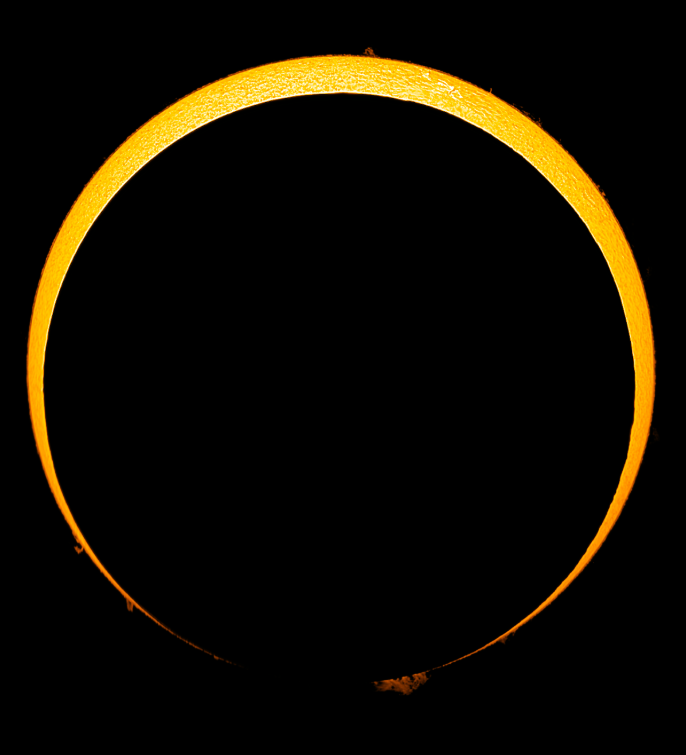
- Feb 17: An annular solar eclipse occurs, and it is visible from Antarctica and the southern Indian Ocean. It’s not visible from the USA, but it is still worth noting in a 2026 astronomy calendar, especially if you can travel!
- Feb 17: Observing near the New Moon helps because the darker sky makes nebulae and galaxies easier to see.
- Feb 19: Mercury reaches greatest eastern elongation, which creates one of the better windows to try spotting Mercury low in the west after sunset.
- Feb 27: Venus and Saturn form a close evening pairing that looks great in binoculars and photographs well with a camera lens.
- All month: February remains a top month for bright winter targets like Orion, so beginners often find star-hopping easier from well-known constellations.
Moon Phases:
- Full Moon: February 1
- Third Quarter: February 9
- New Moon: February 17 (Solar Eclipse!)
- First Quarter: February 24
| Target | Type | Best For | Gear Recommendations |
|---|---|---|---|
| Rosette Nebula (NGC 2237/2244) | Nebula with embedded cluster | Imaging (and visual with filter) |
Visual
Minimum 8–10 inch reflector plus a UHC filter from darker skies. Use low magnification and look for a large faint glow around the central cluster. Imaging
135–300mm on a tracker. Dual-band or narrowband is strongly recommended for better contrast under light pollution. |
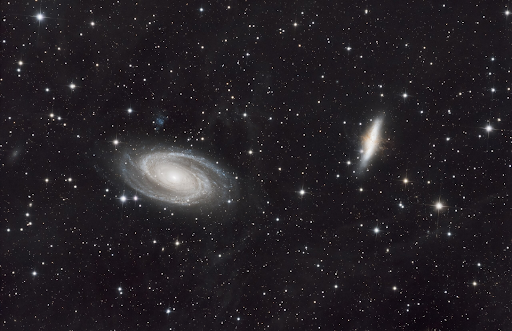
| M81 (Bode’s Galaxy) & M82 (Cigar Galaxy) | Galaxy pair | Visual and imaging |
Visual
Minimum 4–6 inch telescope. Start low power so both fit in one view; darker skies and a medium scope reveal more structure. Imaging
300–800mm on a tracker. No filter required, but longer total integration improves faint detail. |
| M37 (Auriga) | Rich open cluster | Visual |
Visual
4–6 inch telescope at medium magnification for a dense “sparkle field.” Increase power until stars separate nicely, then stop before the view dims too much. Imaging
Optional: 100–300mm on a tracker for a wide star-field look. Keep stars tight and avoid overexposure. |
| M35 (Gemini) | Open cluster | Visual and imaging |
Visual
Binoculars or a small telescope at low to medium power. Great beginner target that looks good even in average conditions. Imaging
50–150mm on a tracker. Frame wide enough to include the surrounding star field. |
| Flame Nebula (NGC 2024) | Nebula near a bright star | Imaging |
Visual
Challenging visually. Try an 8–10 inch telescope with a UHC filter from dark skies, and keep magnification low. Imaging
200–600mm on a tracker. Careful exposure control is key due to nearby bright stars; plan longer total integration to bring out faint detail. |
March 2026 - A Blood Moon
Night Sky Events:
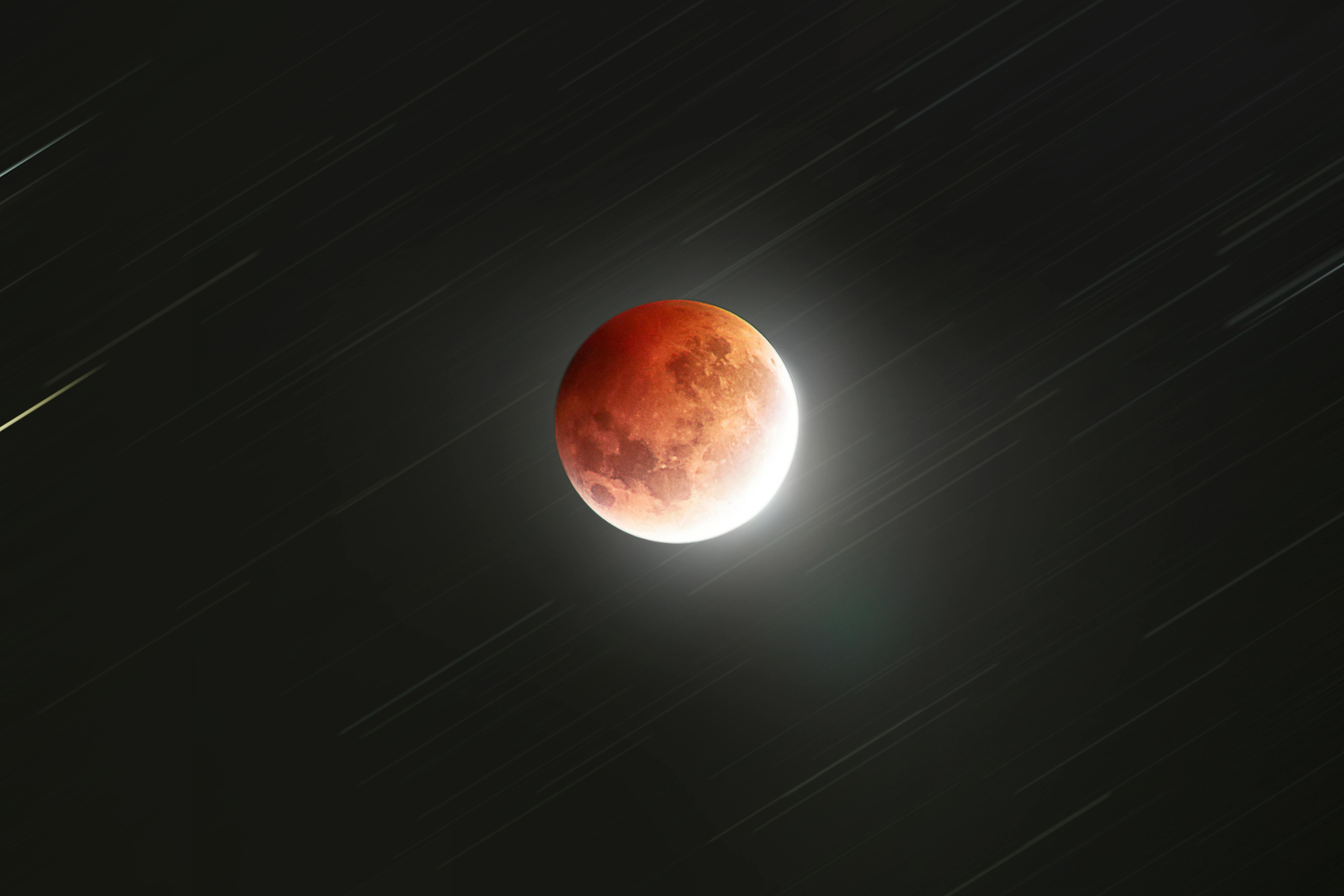
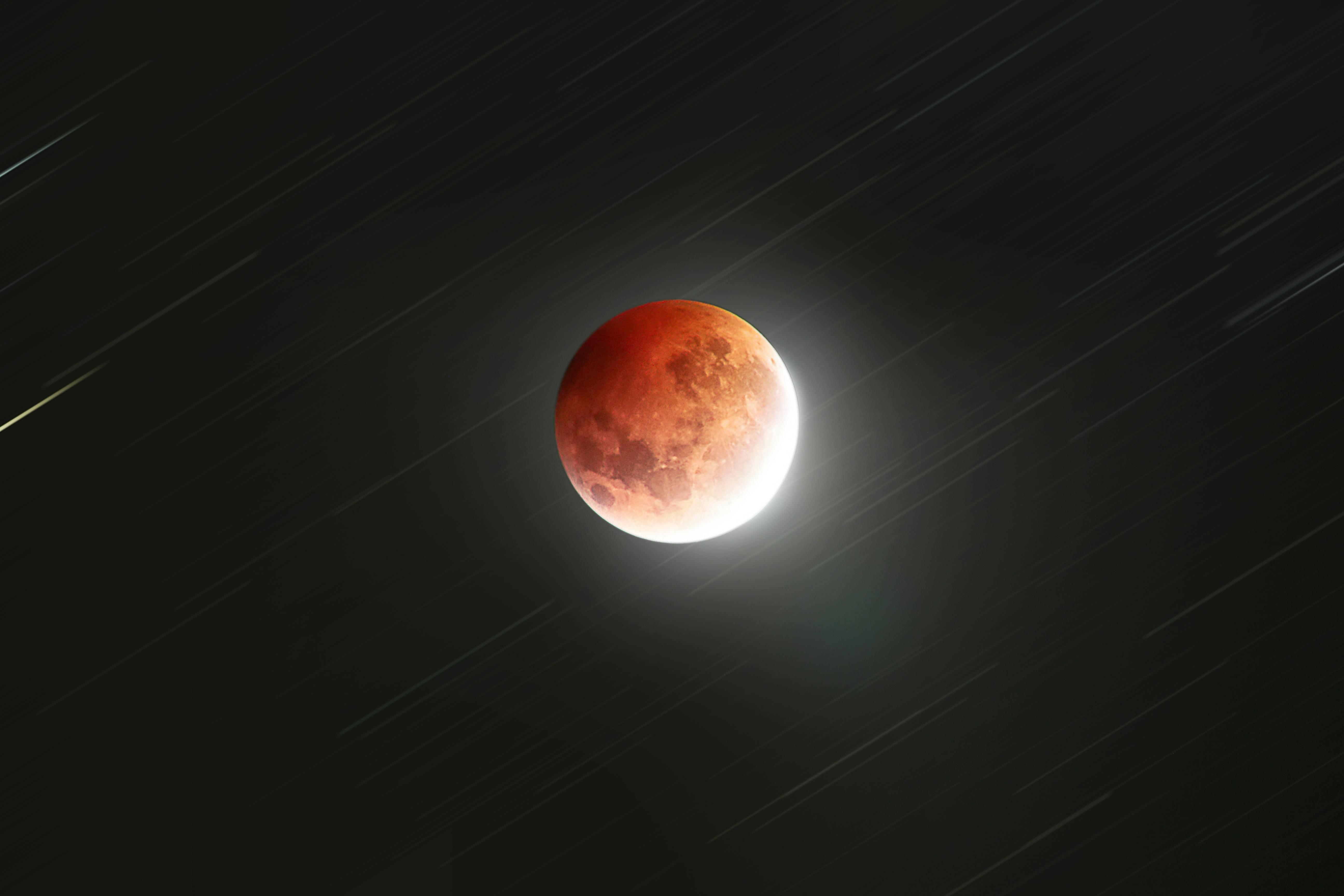
- Mar 3: A total lunar eclipse occurs, and it is visible from North America, which makes it a very accessible event; everyone can watch a lunar eclipse without special glasses.
- Mar 8: Venus and Saturn form a close conjunction in the evening sky, and they may appear about a degree apart, which is striking in binoculars.
- Mid-March: The Moon passes near the Pleiades, which provides an easy guide to one of the sky’s brightest clusters.
- Mar 20: The March equinox occurs, and it signals the shift toward the spring galaxy season.
- All month: March is when many observers start enjoying galaxies more, because evening skies move toward constellations rich in bright Messier targets.
Moon Phases:
- Full Moon: March 3 (Lunar Eclipse!)
- Third Quarter: March 11
- New Moon: March 19
- First Quarter: March 25
| Target | Type | Best For | Gear Recommendations |
|---|---|---|---|
| Whirlpool Galaxy (M51) | Interacting spiral galaxy pair | Visual and imaging |
Visual
Minimum 8–10 inch reflector under darker skies. Start low magnification, then increase to tease out spiral structure. Imaging
600–1200mm on a tracker. Prioritize long total integration and stable tracking for spiral detail. |
| Leo Triplet (M65, M66, NGC 3628) | Galaxy group | Visual and imaging |
Visual
Minimum 6–8 inch telescope. Use low to medium magnification; darker skies improve separation and contrast. Imaging
600–1000mm on a tracker. Longer total integration reveals faint halos and NGC 3628’s structure. |
| M3 | Globular cluster | Visual and imaging |
Visual
Any telescope works. Increase magnification gradually until stars resolve, then back off if the view softens. Imaging
600–1200mm on a tracker. Stack shorter subs to avoid blowing out the bright core. |
| Owl Nebula (M97) | Planetary nebula | Visual and imaging |
Visual
Minimum 8–10 inch reflector plus an OIII filter. Use medium to higher magnification when seeing is steady. Imaging
800–1500mm focal length on a tracker. Longer integration improves contrast and subtle structure. |
| Beehive Cluster (M44) | Open cluster | Visual and imaging |
Visual
Binoculars are best. It’s large and looks great in a wide field. Imaging
35–85mm wide-field lens on a tracker. Keep exposures short to avoid bloated bright stars. |
April 2026 - Galaxies Galore
Night Sky Events:
- Apr 3: Mercury reaches greatest western elongation, which is a good chance to spot it low in the east before sunrise.
- Apr 11: The Moon passes near Regulus and also near Saturn, which creates a helpful grouping for spring sky orientation.
- Apr 22–23: The Lyrid meteor shower peaks, and it is a reliable annual shower with occasional bright trails.
- Late April: Jupiter begins to fade in the evening, but Mercury and Venus can remain visible together low in the west at dusk.
- All month: April is one of the best months to learn galaxy-hopping, because consistent practice helps you improve quickly.
Moon Phases:
- Full Moon: April 2
- Third Quarter: April 10
- New Moon: April 17
- First Quarter: April 24
| Target | Type | Best For | Gear Recommendations |
|---|---|---|---|
| Sombrero Galaxy (M104) | Bright edge-on galaxy | Visual and imaging |
Visual
Minimum 6–8 inch telescope. A medium scope under darker skies hints at its shape more clearly. Use medium magnification once centered. Imaging
800–1500mm on a tracker. Longer integration helps bring out the bright core and thin disk cleanly. |
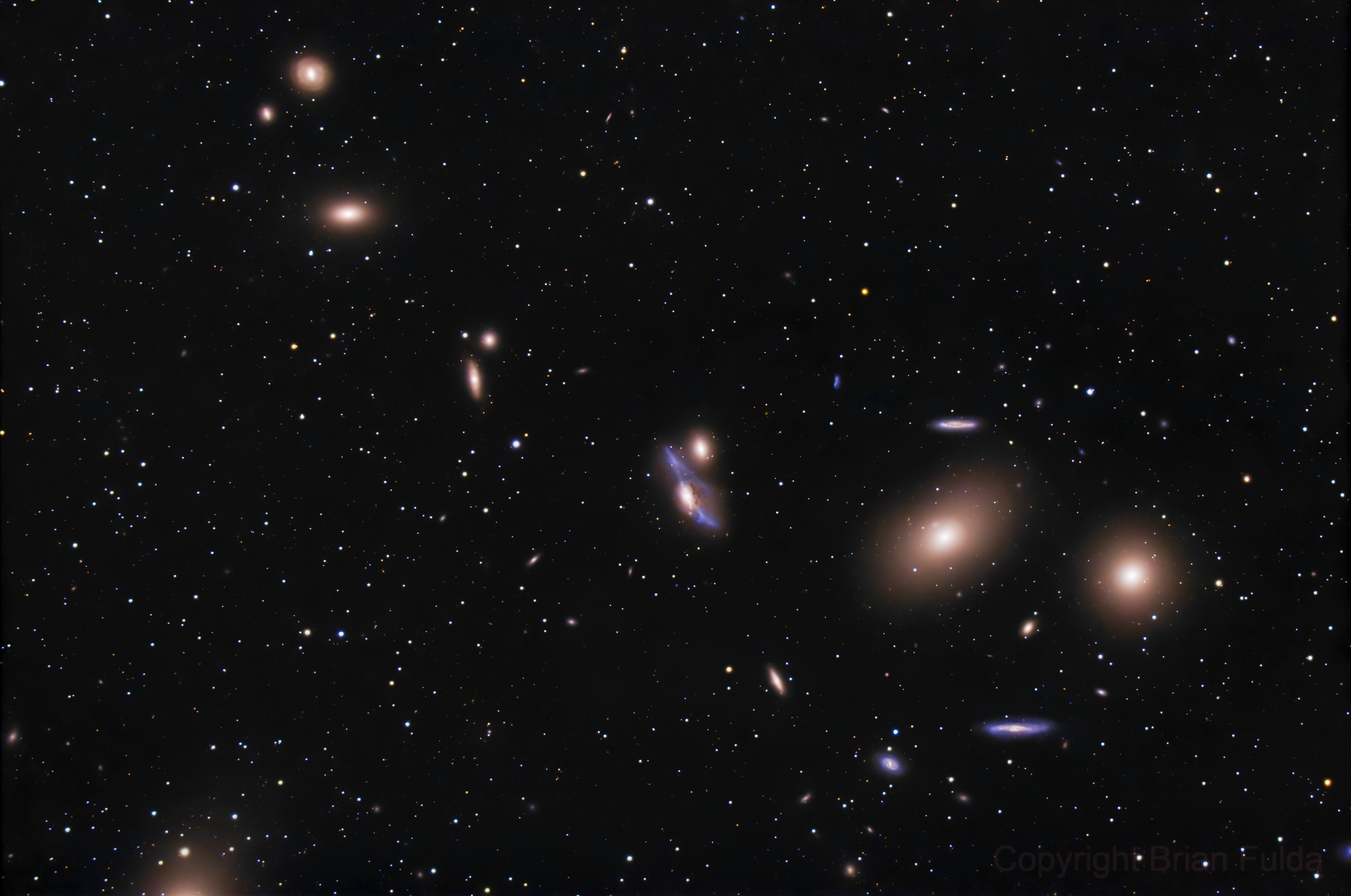
| Markarian’s Chain (Virgo) | Chain of galaxies | Imaging (visual from dark sky) |
Visual
Minimum 10 inch reflector from a dark site. Use low to medium magnification and a chart or app to confirm what you’re seeing. Imaging
300–800mm on a tracker. Prioritize framing and total integration to pull out multiple galaxies at once. |
| M5 | Globular cluster | Visual and imaging |
Visual
Any telescope works; medium magnification resolves more stars as aperture increases. Imaging
600–1200mm on a tracker. Stack shorter subs to keep star colors cleaner. |
| M87 Region (Virgo Cluster Core) | Galaxy field | Visual |
Visual
Minimum 8–10 inch reflector under darker skies. Use low magnification and treat it like a treasure hunt of faint smudges — a chart makes it far more enjoyable. Imaging
Optional: 600–1200mm framing the core region. Long integration reveals multiple faint cluster members. |
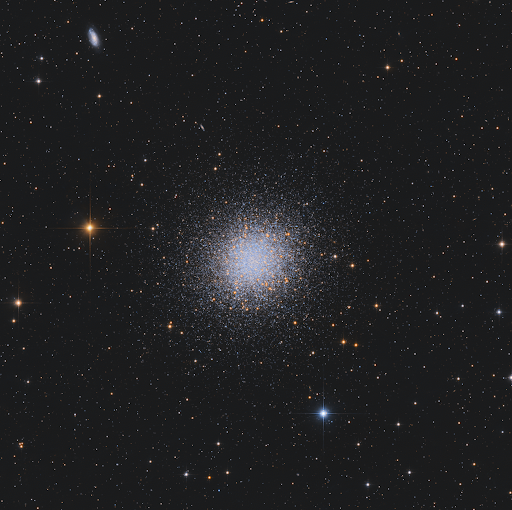
| M13 (Hercules Cluster) | Globular cluster | Visual and imaging |
Visual
Any telescope works; medium magnification in a medium scope begins resolving the outer stars clearly. Imaging
600–1200mm on a tracker. Stack shorter subs to avoid saturating the bright core. |
Gear Used:
May 2026 - Once in a Blue Moon
Night Sky Events:
- May 1: The Moon passes near Saturn, which helps newer observers locate the ringed planet.May 6–7: The Eta Aquariid meteor shower peaks; rates are higher in the Southern Hemisphere, but it is still worth watching from the USA before dawn.
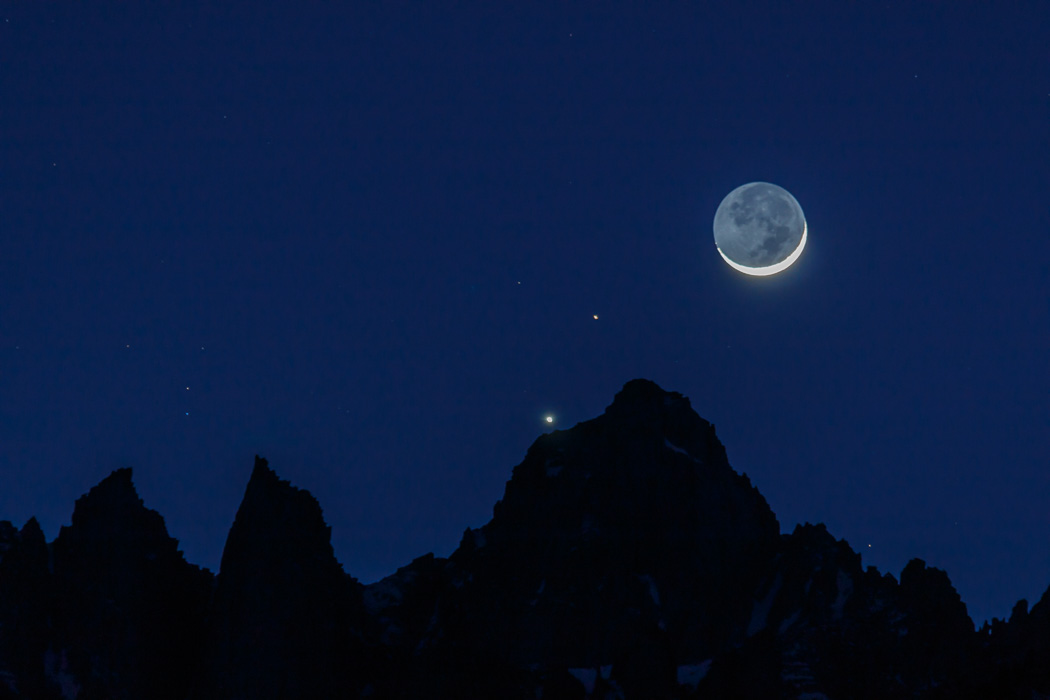
- Mid-May: Mercury, Venus, and Jupiter form a tight evening grouping, and it is easy to photograph with binocular-style framing or a camera lens.
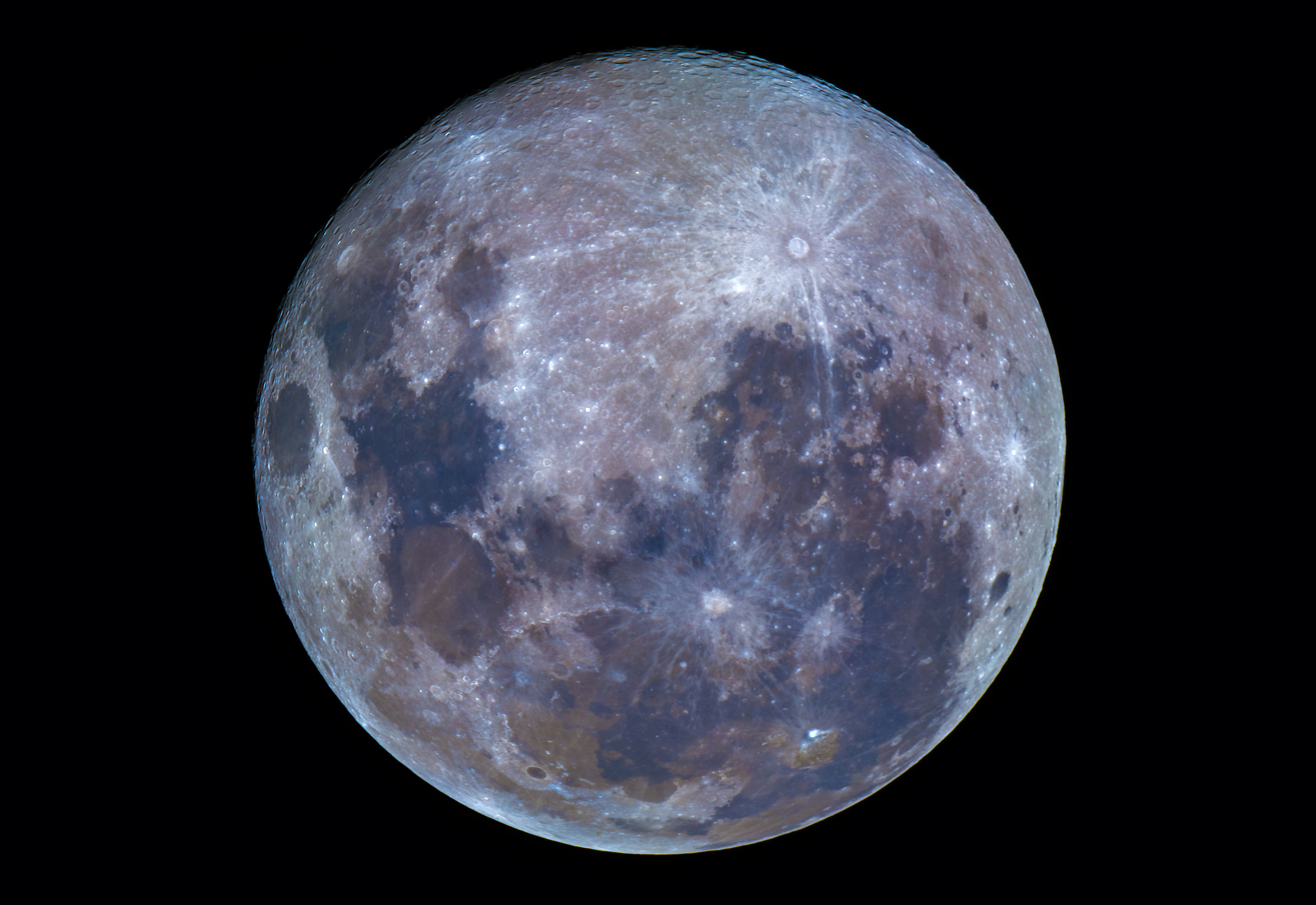
- May 31: The Full Moon is a Blue Moon because it is the second full Moon in the same month.
- All month: May is excellent for globular clusters, because they are bright, impressive in modest telescopes, and less sensitive to light pollution than many faint nebulae.
Moon Phases:
- Full Moon: May 1
- Third Quarter: May 9
- New Moon: May 16
- First Quarter: May 23
- Full Moon: May 31
| Target | Type | Best For | Gear Recommendations |
|---|---|---|---|
| Black Eye Galaxy (M64) | Galaxy with dark dust lane | Visual and imaging |
Visual
Minimum 6–8 inch telescope. Medium magnification helps show a brighter core and uneven, patchy look in darker skies. Imaging
800–1200mm on a tracker. Longer integration helps define the dust feature and faint outer glow. |
| Ring Nebula (M57) | Planetary nebula | Visual and imaging |
Visual
Minimum 6–8 inch reflector at medium to high magnification. An OIII filter increases contrast and makes it stand out cleanly. Imaging
800–2000mm on a tracker. Keep exposures short enough to avoid blowing out the bright ring, then stack. |
| Pinwheel Galaxy (M101) | Large faint spiral galaxy | Imaging (visual from dark sky) |
Visual
Dark sky is essential. Minimum 8–10 inch reflector at low magnification helps detect its broad, faint glow. Imaging
400–800mm on a tracker. Longer total integration is key due to its low surface brightness. |
| Mizar and Alcor | Bright double star | Visual |
Visual
Naked-eye and binocular-friendly. A telescope reveals additional companions and makes a great “quick win” between deep-sky objects. Imaging
Optional: 400–800mm for resolving components cleanly. Short exposures help maintain sharp star separation. |
| M2 | Globular cluster | Visual |
Visual
Minimum 6–8 inch telescope at moderate magnification. Increase power until the cluster shows granular texture or resolved stars. Imaging
600–1200mm on a tracker. Stack shorter subs to preserve star color and avoid saturating the core. |
June 2026 - A Triple Conjunction
Night Sky Events:
- Jun 8–9: A brilliant Venus–Jupiter conjunction occurs, and it can be one of the most striking planetary pairings of the year. Around Jun 12: Mercury, Venus, and Jupiter form a triple alignment in the western evening sky, which is a rare and photogenic sight in clear conditions.
- Jun 15: Mercury reaches greatest eastern elongation, which can make it easier to spot low in the west after sunset.
- Jun 21: The June solstice occurs, which brings the shortest nights in the Northern Hemisphere, so a focused, realistic target list helps with this condensed timetable.
- All month: Milky Way-rich regions become more prominent later at night, which is great for binocular sweeping and wide-field imaging.
Moon Phases:
- Third Quarter: June 8
- New Moon: June 15
- First Quarter: June 21
- Full Moon: June 30
| Target | Type | Best For | Gear Recommendations |
|---|---|---|---|
| Lagoon Nebula (M8) | Bright emission nebula | Visual and imaging |
Visual
Minimum 6–8 inch telescope. A UHC filter helps significantly, and low to medium magnification keeps the larger glow in view. Imaging
135–600mm on a tracker. Dual-band or narrowband is very helpful under light pollution. |
| Trifid Nebula (M20) | Nebula with dark lanes | Visual and imaging |
Visual
Dark sky plus a UHC filter recommended. Minimum 8 inch reflector; low magnification helps keep the whole object visible. Imaging
300–800mm on a tracker. Narrowband or dual-band improves contrast and brings out structure. |
| Swan Nebula (M17) | Bright nebula | Visual and imaging |
Visual
Minimum 6–10 inch telescope. A UHC filter boosts contrast, and medium magnification often shows the “swan” shape best. Imaging
300–800mm on a tracker. Narrowband or dual-band recommended for clean structure. |
| M92 | Globular cluster | Visual |
Visual
Any telescope works. Use medium magnification and increase until stars begin to resolve, then stop before the image softens. Imaging
Optional: 600–1200mm for tight star detail. Stack shorter exposures to preserve star color. |
| Rho Ophiuchi Region | Dusty wide-field region | Imaging |
Visual
Challenging visually. Best appreciated in dark skies with binoculars for the surrounding Milky Way star field. Imaging
50–200mm on a tracker from a dark location. Use careful focus, strong calibration frames, and long total integration to reveal dust color and smooth gradients. |
Gear Used:
- ZWO 2600MC Pro
- Sky-Watcher EQ6-R
- Rokinon 135mm f/2 Lens
July 2026 - Milky Way Magic
Night Sky Events:
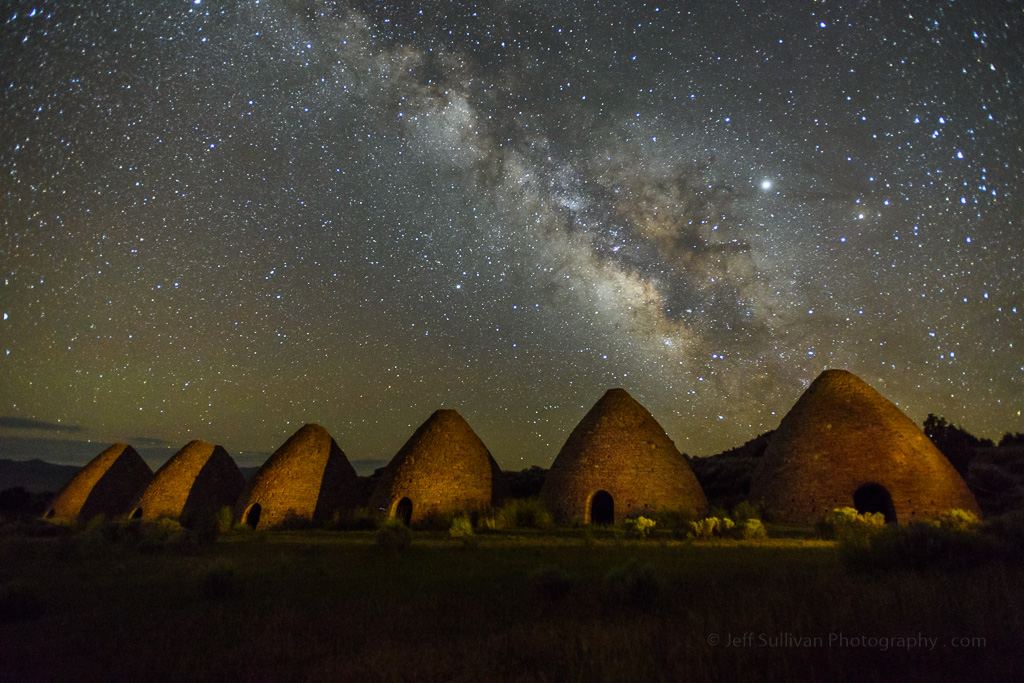
- Jul 10: The Moon passes near Saturn and Antares, which is a colorful grouping that shows how the Moon can guide you through summer constellations.
- Jul 15: Planning sessions around the New Moon is a simple way to secure darker skies for nebula observing.
- Late July: Venus and Saturn form a close evening pairing, which works well for wide-field photography and casual observing.
- Jul 28–29: The Delta Aquariid meteor shower peaks, and it is steady even when moonlight reduces the faintest meteors.
- All month: July is peak season for exploring dense Milky Way star fields with binoculars, because sweeping often reveals more targets than you can log in one night.
Moon Phases:
- Third Quarter: July 7
- New Moon: July 14
- First Quarter: July 21
- Full Moon: July 29
| Target | Type | Best For | Gear Recommendations |
|---|---|---|---|
| Eagle Nebula (M16) | Nebula with embedded cluster | Visual and imaging |
Visual
Minimum 8 inch reflector plus a UHC filter. Low to medium magnification helps separate cluster stars from surrounding nebulosity. Imaging
300–800mm on a tracker. Dual-band or narrowband is recommended for stronger contrast. |
| Dumbbell Nebula (M27) | Planetary nebula | Visual and imaging |
Visual
Minimum 6–8 inch telescope. Medium magnification makes its shape obvious; an OIII filter improves contrast. Imaging
400–1200mm on a tracker. Longer integration reveals faint outer structure. |
| Wild Duck Cluster (M11) | Dense open cluster | Visual |
Visual
Minimum 6–8 inch telescope at medium magnification. This cluster responds well to higher power when seeing is steady. Imaging
Optional: 400–800mm for a tighter framing. Keep star color intact with moderate exposure lengths. |
| Veil Nebula (NGC 6960/6992) | Supernova remnant | Visual and imaging |
Visual
Minimum 8–10 inch reflector plus an OIII filter. Use low to medium magnification to keep filament sections bright and visible. Imaging
200–600mm on a tracker. Narrowband or dual-band strongly helps under light pollution. |
| M106 | Spiral galaxy with active core | Visual and imaging |
Visual
Minimum 6–8 inch telescope. Low to medium magnification reveals an oval glow and brighter core under darker skies. Imaging
400–1000mm on a tracker. No filter required, but longer total integration improves structure and faint outer detail. |
August 2026 - Totality & Powerful Perseids
Night Sky Events:
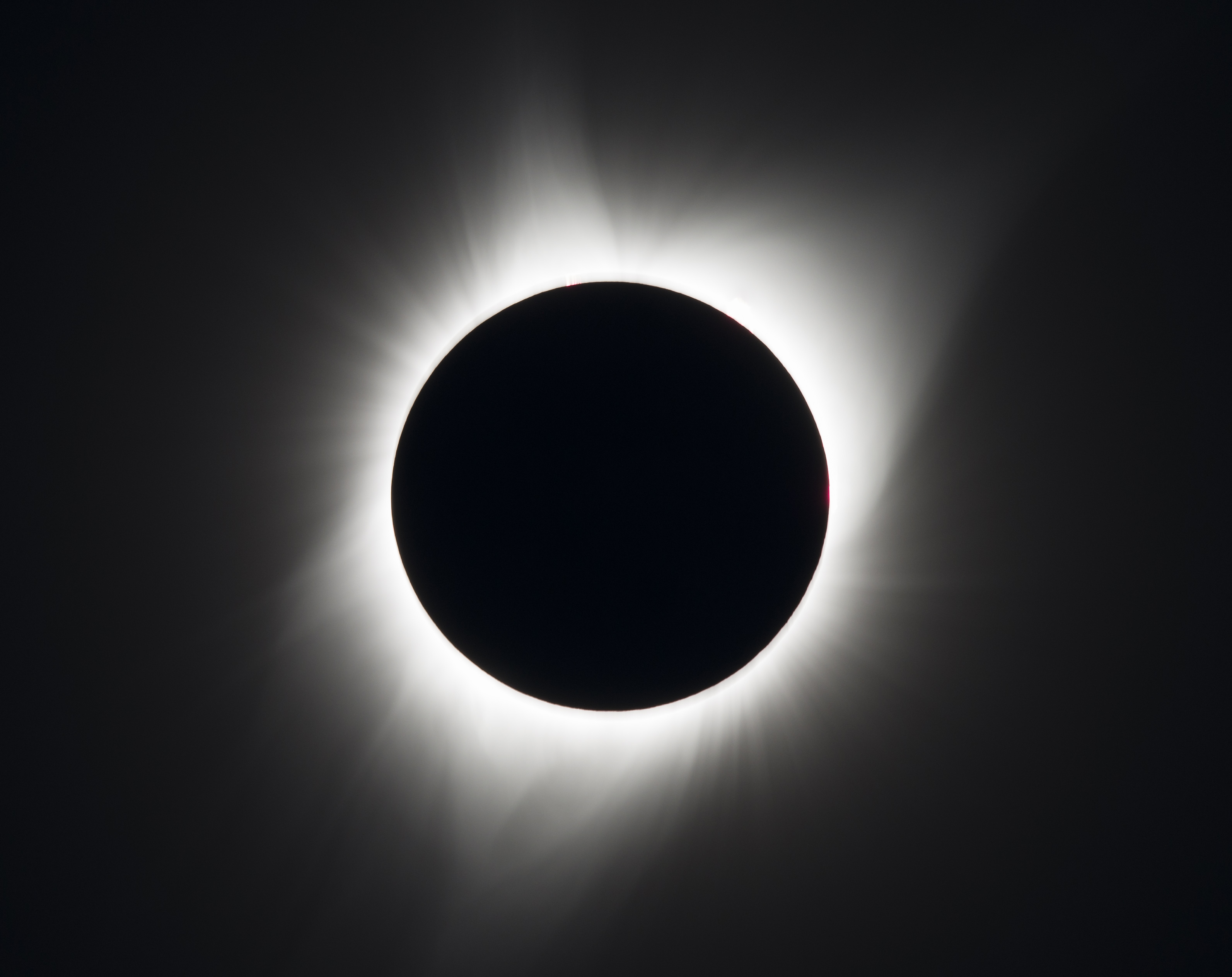
- Aug 12: A total solar eclipse occurs, and it is best enjoyed from locations along the path of totality; check eclipse maps for your location before you travel or plan an event.
-
- Solar eclipse safety matters: only view the Sun with certified eclipse glasses or a proper front-mounted solar filter, and never look through unfiltered binoculars, a camera lens, or a telescope.
-
- Aug 12–13: The Perseid meteor shower peaks, and this is an excellent year because there is no moonlight to interfere with viewing.
- Aug 15: Venus reaches its greatest eastern elongation, which is one of the best windows to see Venus high and bright after sunset.
- Aug 28: A partial lunar eclipse occurs, and it will be visible for most of North America, making it a great event for the general public and families.
- Late August: The Moon passes near Saturn and Antares, which provides an easy guide to summer sky landmarks.
Moon Phases:
- Third Quarter: August 6
- New Moon: August 12 (Solar Eclipse!)
- First Quarter: August 20
- Full Moon: August 28 (Lunar Eclipse!
| Target | Type | Best For | Gear Recommendations |
|---|---|---|---|
| Total Solar Eclipse! | Total Solar Eclipse | Imaging and visual (with protection) |
Visual
Only use certified eclipse glasses (ISO 12312-2) or a proper front-mounted solar filter for any optics. Never look at the Sun unfiltered. Imaging
DSLR or mirrorless on a sturdy tripod. 200–600mm for close-up solar detail (with proper solar filter) and 14–35mm for wide scene shots. |
| North America Nebula (NGC 7000) | Large nebula | Imaging (visual possible) |
Visual
Binoculars plus a UHC filter from a dark site. Keep the view wide and scan slowly for the faint glow. Imaging
35–200mm on a tracker. Narrowband or dual-band strongly recommended for stronger contrast. |
| Crescent Nebula (NGC 6888) | Emission nebula (Wolf-Rayet bubble) | Imaging (visual possible but challenging) |
Visual
Minimum 8–10 inch reflector plus an OIII filter and dark sky. Use low to medium magnification to keep the faint shell visible. Imaging
400–1000mm on a tracker. Narrowband or dual-band strongly recommended for contrast. |
| Double Cluster (NGC 869/884) | Two open clusters | Visual and imaging |
Visual
Binoculars are ideal. Keep it wide and enjoy the “two clusters in one view” effect. Imaging
85–200mm on a tracker. Moderate exposures stacked produce rich star color. |
| M4 | Globular cluster | Visual |
Visual
Minimum 4–6 inch telescope at low to medium magnification. Bright and forgiving — a strong beginner globular. Imaging
Optional: 600–1000mm framing. Stack shorter subs to preserve core detail. |
September 2026 - Venus Impresses
Night Sky Events:
- Sep 10: The Moon passes near Saturn and Antares, which creates a beautiful photo opportunity.
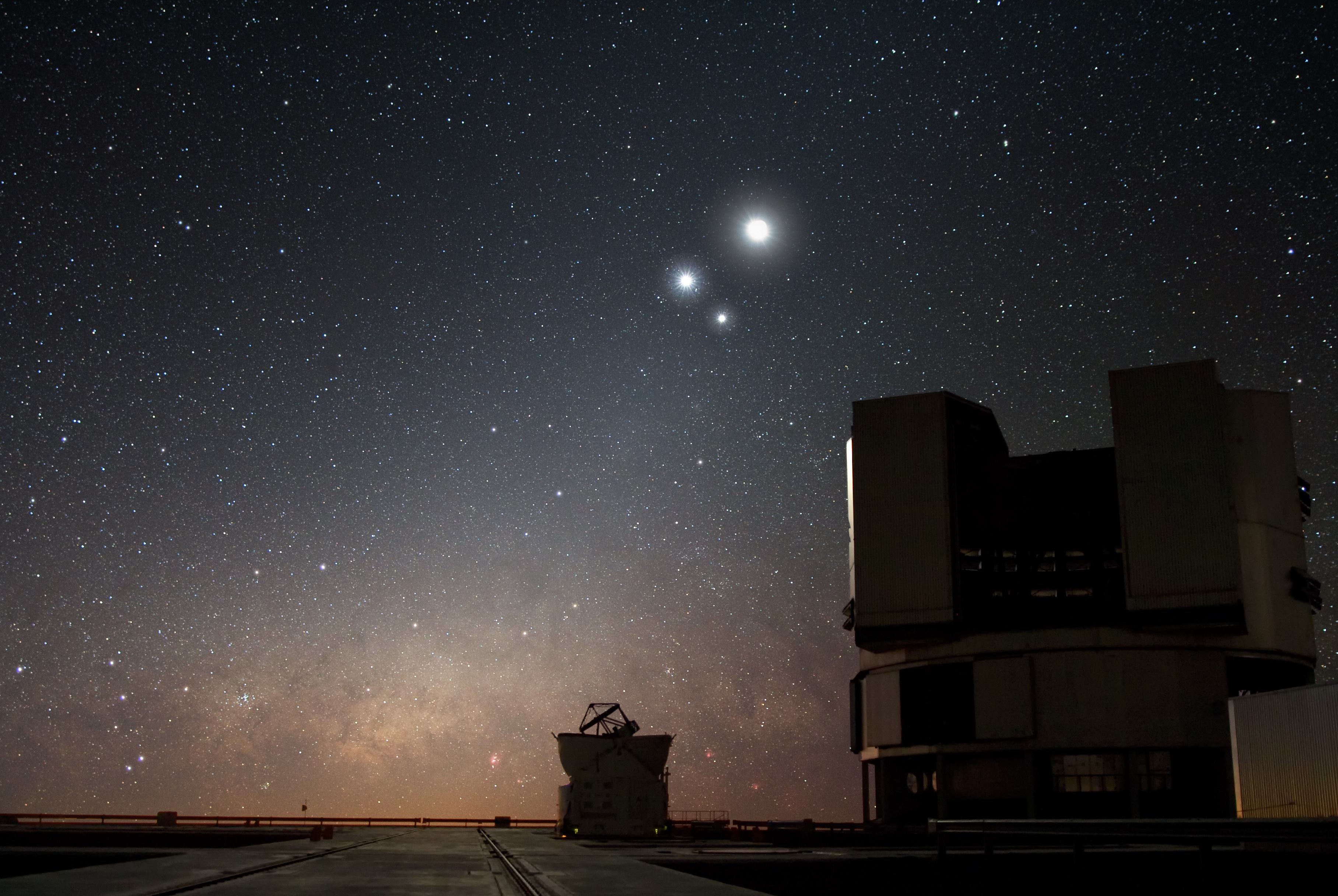
- Mid-September: Venus and Saturn form another close evening pairing, which is excellent for wide-field imaging.
- Sep 23: The September equinox occurs, and it marks the seasonal shift toward longer nights in the Northern Hemisphere.
- Sep 25: Neptune reaches opposition, which is the best time to attempt viewing and imaging it; Neptune will still look small, so you will need a telescope and a star chart.
- All month: Venus will be brilliant all month, and September is often one of the most comfortable months to observe, and classic autumn targets like Andromeda become easier in the evening.
Moon Phases:
- Third Quarter: September 4
- New Moon: September 11
- First Quarter: September 18
- Full Moon: September 26
| Target | Type | Best For | Gear Recommendations |
|---|---|---|---|
| Triangulum Galaxy (M33) | Spiral galaxy | Imaging (visual from dark sky) |
Visual
Dark sky and minimum 8 inch reflector. Use low magnification and averted vision since it is large and low contrast. Imaging
200–600mm on a tracker. Longer total integration is key due to its low surface brightness. |
| Helix Nebula (NGC 7293) | Planetary nebula | Visual and imaging |
Visual
Minimum 8–10 inch reflector plus an OIII filter. Low to medium magnification keeps the large disk visible. Imaging
200–800mm on a tracker. Longer integration improves faint outer structure. |
| Messier 2 | Globular cluster | Visual |
Visual
Minimum 6–8 inch telescope at moderate magnification. Increase power slowly until it appears tighter and more textured. Imaging
Optional: 600–1200mm framing. Stack shorter subs to preserve core detail. |
| Wizard Nebula (NGC 7380) | Emission nebula with cluster | Visual and imaging |
Visual
Minimum 6–8 inch reflector from a dark site. A UHC filter helps; low to medium magnification frames the cluster and glow together. Imaging
200–600mm on a tracker. Dual-band or narrowband recommended for strong nebula contrast. |
| Eta Cassiopeiae | Colorful double star | Visual |
Visual
Any telescope works. Use medium magnification on steady nights to split the pair cleanly and enjoy the contrasting colors. Imaging
Optional: 400–800mm for resolving the pair cleanly. Short exposures help maintain sharp star separation. |
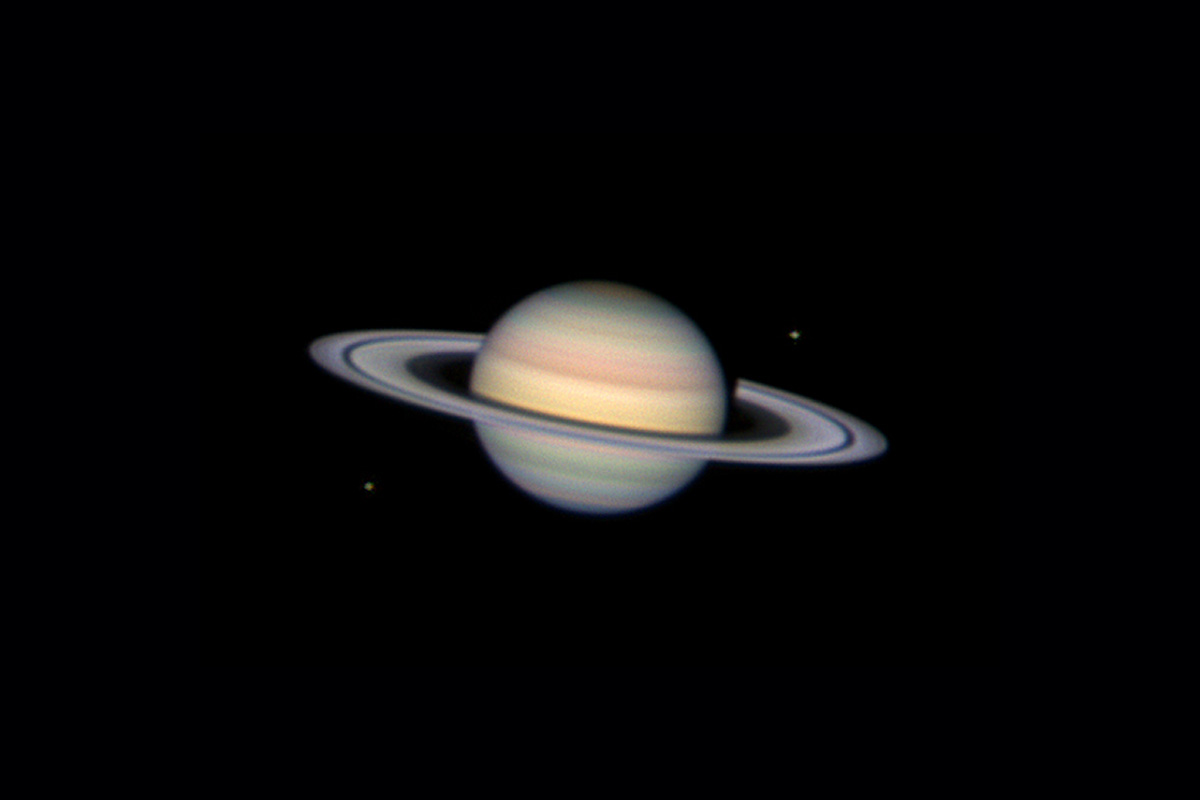
October 2026 - Saturn's Best View
Night Sky Events:
- Oct 4: Saturn reaches opposition, and this is one of the best times of year to see its rings and brighter moons.
- Oct 6: The Moon passes near Saturn, which makes Saturn easy to point out during a group observing session.
- Oct 12: Mercury reaches greatest eastern elongation, which gives a chance to spot it low in the west after sunset.
- Oct 21–22: The Orionid meteor shower peaks, and it can improve after midnight when skies are darker.
- All month: The Pleiades dominates the eastern sky, and the California Nebula becomes a great target for anyone getting into narrowband imaging.
Moon Phases:
- Third Quarter: October 3
- New Moon: October 10
- First Quarter: October 18
- Full Moon: October 26
| Target | Type | Best For | Gear Recommendations |
|---|---|---|---|
| Pleiades (M45) | Open cluster | Visual and imaging |
Visual
Binoculars are ideal. In a telescope, keep magnification low so the cluster stays in one wide view. Imaging
35–135mm on a tracker. Stop down slightly for sharper stars and cleaner corners. |
| California Nebula (NGC 1499) | Emission nebula | Visual and imaging |
Visual
Minimum 8–10 inch reflector from dark skies plus a UHC filter. Use very low magnification since it is long and diffuse. Imaging
50–200mm on a tracker. Narrowband or dual-band strongly recommended under light pollution. |
| M15 | Globular cluster | Visual |
Visual
Minimum 6–8 inch telescope at medium to high magnification. Increase power until the cluster tightens and begins to show texture. Imaging
Optional: 600–1200mm framing. Stack shorter subs to preserve core detail and star color. |
| Saturn | Planet (gas giant with rings) | Visual and imaging |
Visual
Any telescope shows rings. A medium scope reveals more ring detail and brighter moons when seeing is steady. Imaging
Planetary camera or phone-through-eyepiece video stacking. Record short videos and stack frames for best sharpness. |
| Horsehead Nebula (IC 434) | Dark nebula | Imaging |
Visual
Extremely challenging visually. Requires very dark skies, large aperture, and specialized filters. Imaging
400–800mm on a tracker from very dark skies. Narrowband (especially H-alpha capable) strongly recommended. Plan long integration and careful processing to control gradients and noise. |
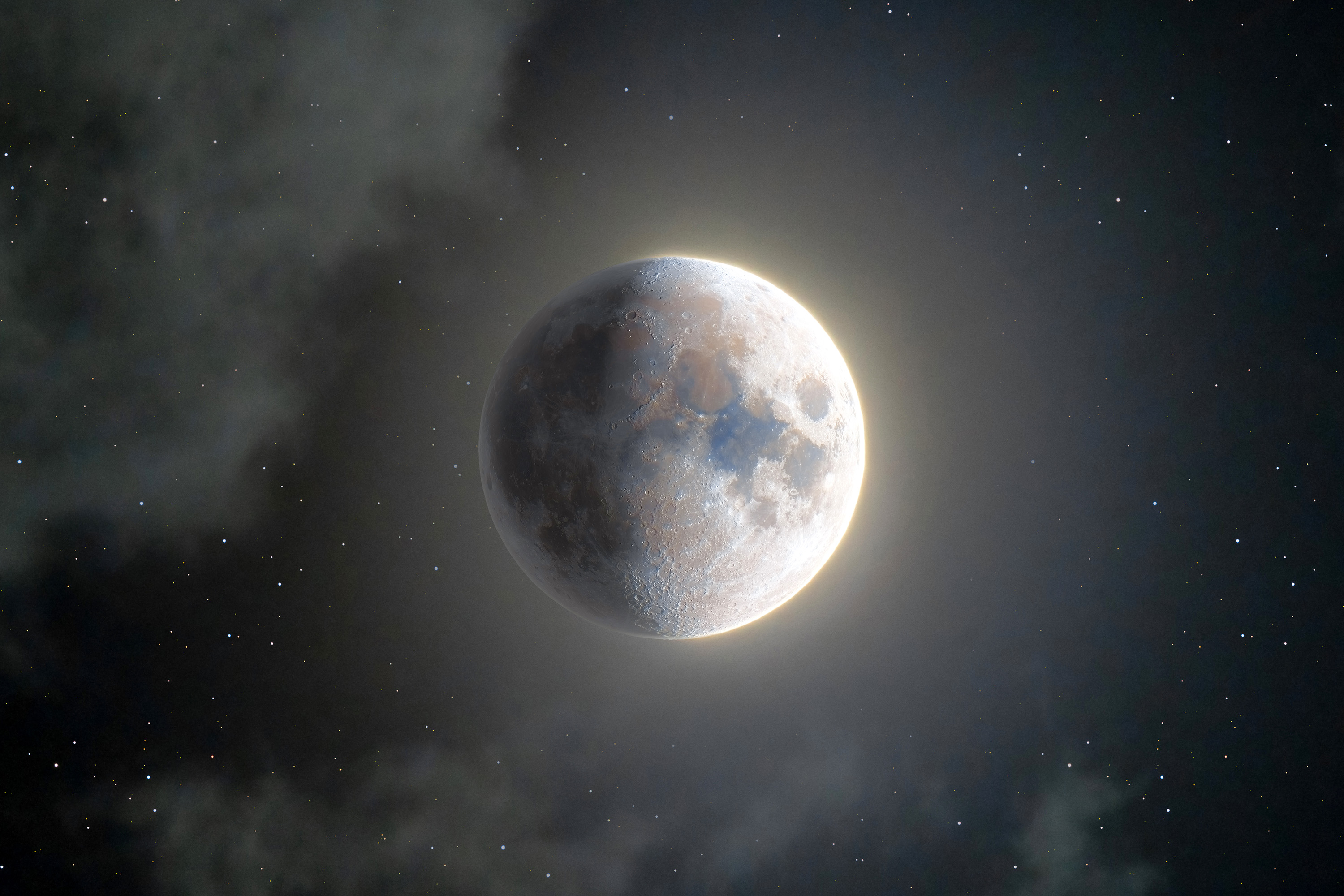
November 2026 - Supermoon Special
Night Sky Events:
- Nov 4–5: The Taurid meteor shower peaks, and it has a lower rate, but it can be fun because it lasts a long time.
- Nov 17–18: The Leonid meteor shower peaks, and it should be best after midnight when skies are darkest.
- Nov 20: Mercury reaches greatest western elongation, which is one of the better morning opportunities to spot Mercury before sunrise.
- Nov 25: Uranus reaches opposition, which is the best time of year to view it; Uranus typically appears as a tiny blue-green dot in most telescopes.
- Nov 24–25: The Full Moon is a supermoon, which can make it appear slightly larger and brighter than average, and it is excellent for lunar imaging.
Moon Phases:
- Third Quarter: November 1
- New Moon: November 9
- First Quarter: November 17
- Full Moon: November 24
| Target | Type | Best For | Gear Recommendations |
|---|---|---|---|
| Heart Nebula (IC 1805) | Emission nebula | Visual and imaging |
Visual
Minimum 8 inch reflector plus a UHC filter from darker skies. Use low magnification and scan for broad faint glow. Imaging
135–600mm on a tracker. Narrowband or dual-band strongly recommended for contrast. |
| Soul Nebula (IC 1848) | Emission nebula | Visual and imaging |
Visual
Minimum 8 inch reflector plus a UHC filter from a dark site. Use low magnification and expect subtle structure visually. Imaging
135–600mm on a tracker. Narrowband or dual-band recommended, and plan multi-hour integration. |
| IC 342 | Spiral galaxy | Visual and imaging |
Visual
Minimum 8–10 inch reflector with dark skies essential. Use low magnification and averted vision due to low surface brightness. Imaging
300–800mm on a tracker. No filter required, but longer integration and good gradient control are important. |
| Uranus | Planet (ice giant) | Visual |
Visual
A telescope is required. Use an app or chart to confirm identification and moderate magnification to reveal a small blue-green disk. Imaging
Optional: Planetary camera with video stacking. Short captures stacked improve sharpness and color. |
| M34 | Open cluster | Visual |
Visual
Binoculars or a small telescope at low magnification. A great “first cluster” to share because it is easy and attractive. Imaging
Optional: 85–200mm framing. Moderate exposures stacked produce pleasing star color. |
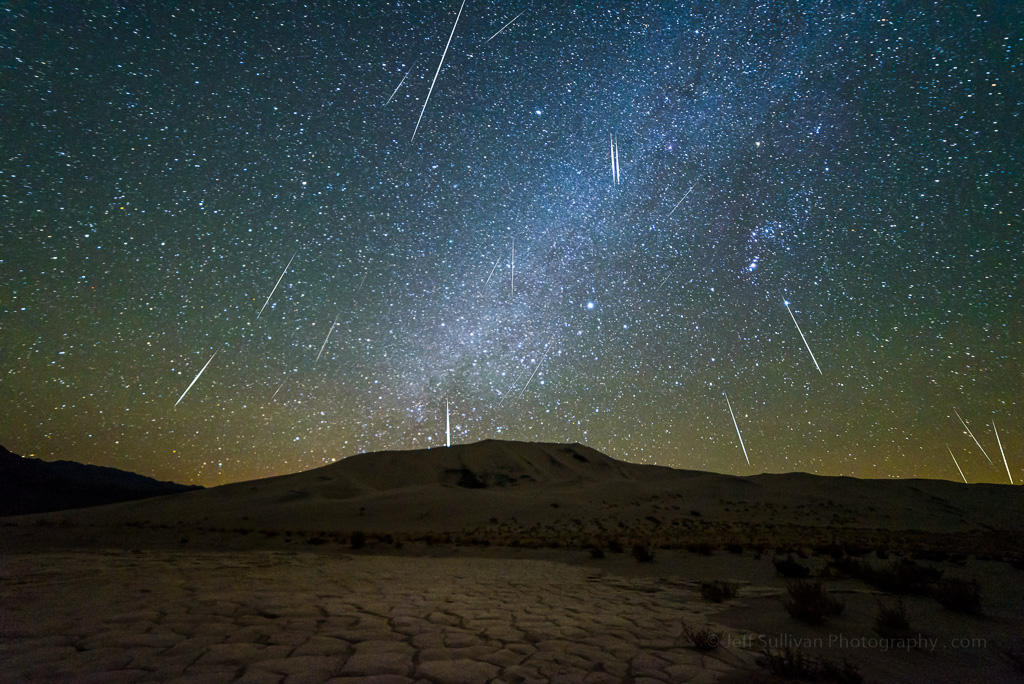
December 2026 - Geminids on Display
Night Sky Events:
- Dec 8–9: Jupiter and Saturn form a close pairing in the evening sky, and it is easy to photograph with binocular-style framing or a camera lens.
- Dec 13–14: The Geminid meteor shower peaks, and it can be one of the strongest showers with many bright meteors.
- Dec 21: The December solstice occurs, bringing the longest nights in the Northern Hemisphere, which is ideal for deep-sky observing.
- Dec 21–22: The Ursid meteor shower peaks, and it is usually smaller, but it can be a nice bonus near the solstice.
- Dec 25: The Full Moon is a supermoon, so it may look slightly larger and brighter than average, which is great for lunar photography.
Moon Phases:
- Third Quarter: December 1
- New Moon: December 9
- First Quarter: December 17
- Full Moon: December 24
- Third Quarter: December 1
| Target | Type | Best For | Gear Recommendations |
|---|---|---|---|
| M35 (Gemini) | Open cluster | Visual |
Visual
Minimum 4–6 inch telescope at low to medium magnification. Beginner-friendly and looks especially rich when seeing is steady. Imaging
Optional: 50–200mm framing. Moderate exposures stacked preserve star color and avoid overexposure. |
| NGC 891 | Edge-on spiral galaxy | Visual and imaging |
Visual
Minimum 6–8 inch telescope. Use low magnification to locate the thin streak, then increase to hint at the dust lane under darker skies. Imaging
400–1000mm on a tracker. No filter required, but longer integration reveals the dust lane and faint halo. |
| Crab Nebula (M1) | Supernova remnant | Visual and imaging |
Visual
Minimum 6–8 inch reflector helps. Use medium magnification and averted vision for best detection under suburban skies. Imaging
400–1000mm on a tracker. Longer total integration improves filamentary texture. |
| Sirius and Procyon | Bright star pairing | Visual |
Visual
Naked-eye guide stars for winter. Use them to orient the sky or as a simple, engaging “first look” target for new observers. Imaging
Optional: Short exposures at 200–600mm can capture color contrast. Keep exposures brief to avoid blown highlights. |
| Seagull Nebula (IC 2177) | Emission nebula complex | Imaging |
Visual
Very challenging visually. Requires dark skies, larger aperture, and specialized filters. Imaging
300–800mm on a tracker. Narrowband or dual-band strongly recommended. Consider a wider focal length or mosaic if capturing the full “seagull” shape. |
Solar and Lunar Eclipses of 2026:
- An annular solar eclipse occurs on Feb 17, and it is visible from Antarctica and the southern Indian Ocean.
- A total lunar eclipse occurs on Mar 3, and it is visible from North America.
- A total solar eclipse occurs on Aug 12, with partial visibility from only the northernmost parts of the USA.
- A partial lunar eclipse occurs on Aug 28, and it is visible from most of North America.
Understanding our Gear Recommendations:
- Naked eye and a chair: This setup is best for meteor showers and eclipses. Comfort matters, so bring a reclining chair and a blanket. Stay away from bright lights for 15-20 minutes to help your eyes adapt to the dark.
- Binoculars (7x50 or 10x50): Binoculars are the easiest upgrade for amateur astronomers. They make star clusters and large galaxies easier to spot and they help you learn your way around the sky quickly. When picking binoculars you will see two numbers given, such as 7x50 or 10x50, which are two of the best starting options you can use. The first number given will be the magnification in the system (so 7x enlarged or 10x enlarged), while the second number refers to the size of the optics with larger numbers gathering more light. So a 7x50 and 10x50 will show the same level of brightness on a target, but with different degrees of magnification.
- Phone camera: A phone camera works well for the Moon and bright planet pairings. It struggles with faint deep-sky objects, so consider upgrading to a smart telescope for more detailed captures.
- Mirrorless / DSLR camera with a tripod (no tracker): This setup is great for Moon photos and wide constellation scenes. For star fields, use shorter exposures and capture many frames for stacking.
- Mirrorless / DSLR camera with a star tracker: A star tracker is one of the biggest leaps forward for deep-sky imaging. It can turn “barely there” nebula captures into detailed images. They are much smaller and much less expensive than full size equatorial mounts, and offer an easy point of entry for anyone who already owns a DSLR, lenses, and a tripod.
- Equatorial mount (full-size tracking mount): An equatorial (EQ) mount is a heavier-duty tracking mount built for long-exposure astrophotography, especially with longer focal lengths and heavier gear. After polar alignment, it tracks the sky smoothly and keeps stars round for longer exposures, but it costs more and takes more setup time than a small star tracker.
- Smart telescopes: Smart telescopes are app-controlled telescopes that automatically align themselves and use built-in cameras with live stacking to reveal galaxies and nebulae that can be difficult to see visually from light-polluted areas. They are a great choice if you want an easier learning curve and shareable results without learning polar alignment, manual tracking, or complicated imaging software right away.
- Small refractor (60-100 mm): This is beginner-friendly for imaging and excellent for low-power visual observing.These will be well-suited for wide-field targets and for observing bright objects. An 80mm refractor is among the most common entry level scopes, with smaller options prioritizing portability and larger options prioritizing performance.
- Medium telescopes (6-10 inch reflector, Newtonian, SCT): These telescopes are ideal for planets, globular clusters, and small bright nebulae, including planetary nebulae. Different types will be ideal for different targets and sky conditions, but generally speaking scopes in this size range will be great for the widest range of targets. As such this is the broadest category of scopes, providing better performance and range than the smaller options without requiring the labor of some truly massive setups like a large dobsonian.
- Dark site sites: These are locations with minimal light pollution, far away from population centers. Darker skies make nebulae and galaxies much easier to see and photograph.
- Helpful filters for visual observing (Optional):
- UHC filter: A UHC filter boosts contrast on many emission nebulae.
- OIII filter: An OIII filter often makes planetary nebulae and bright emission regions stand out dramatically.
Glossary:
- Aperture: The diameter of a telescope’s main lens or mirror. A larger aperture collects more light, which usually means brighter views and more detail on faint objects.
- Averted vision: A technique where you look slightly to the side of a faint object instead of directly at it. This uses the more sensitive part of your eye and can make dim targets easier to see.
- Blue Moon: A calendar term meaning the second full Moon in the same month. It usually does not look blue.
- Conjunction: When two objects appear close together in the sky (for example, Venus near Saturn). Conjunctions are often easy to enjoy with the naked eye or binoculars.
- Elongation (greatest eastern or western elongation): How far Mercury or Venus appears from the Sun in the sky. Greatest elongation is often the best time to spot Mercury because it is farthest from the Sun’s glare.
- Emission nebula: A glowing cloud of gas lit up by nearby hot, young stars. Many famous nebulae are emission nebulae.
- Equinox: A day when daylight and nighttime are close to equal length worldwide. The March equinox marks spring in the Northern Hemisphere, and the September equinox marks fall.
- Focal length: A camera or telescope measurement (in mm) that affects magnification and field of view. Short focal length gives a wider view; long focal length gives a tighter, more zoomed-in view.
- Globular cluster: A dense, round swarm of very old stars. Globulars can look great even under moderate light pollution.
- Light pollution: Unwanted artificial light that brightens the night sky. It reduces contrast and makes faint objects harder to see.
- Meteor shower: A period when many meteors appear to radiate from the same part of the sky over predictable dates. Many showers are best after midnight and before dawn.
- Narrowband (imaging): Filters that isolate specific wavelengths of light (commonly H-alpha and OIII). Narrowband imaging can reveal nebulae even under light-polluted skies.
- New Moon: The Moon phase when the Moon is near the Sun and is not visible at night. This is usually the best part of the month for faint galaxies and nebulae.
- Open cluster: A loose group of stars born from the same cloud. Open clusters are often excellent beginner targets because many look great in binoculars or at low telescope magnification.
- Opposition: When a planet is opposite the Sun in the sky from Earth. Planets at opposition are typically closest, brightest, and visible most of the night.
- Planetary nebula: A glowing shell of gas ejected by a dying star. Despite the name, it has nothing to do with planets.
- Quarter Moon: The Moon phase when half the Moon’s disk is illuminated as seen from Earth (First Quarter or Last Quarter). These phases are excellent for viewing craters and shadows along the lunar terminator.
- Star-hopping: Finding a faint object by moving step-by-step from bright, easy stars using a finder scope, binoculars, or a chart/app.
- Star tracker (tracking mount): A device that automatically rotates a camera or telescope to follow the stars as Earth turns. This enables longer exposures without star trailing.
- Supernova remnant: The expanding cloud of gas and dust left behind after a star explodes as a supernova. Many appear as faint, delicate filaments and often respond well to OIII filters or narrowband imaging.