

Pegasus Astro
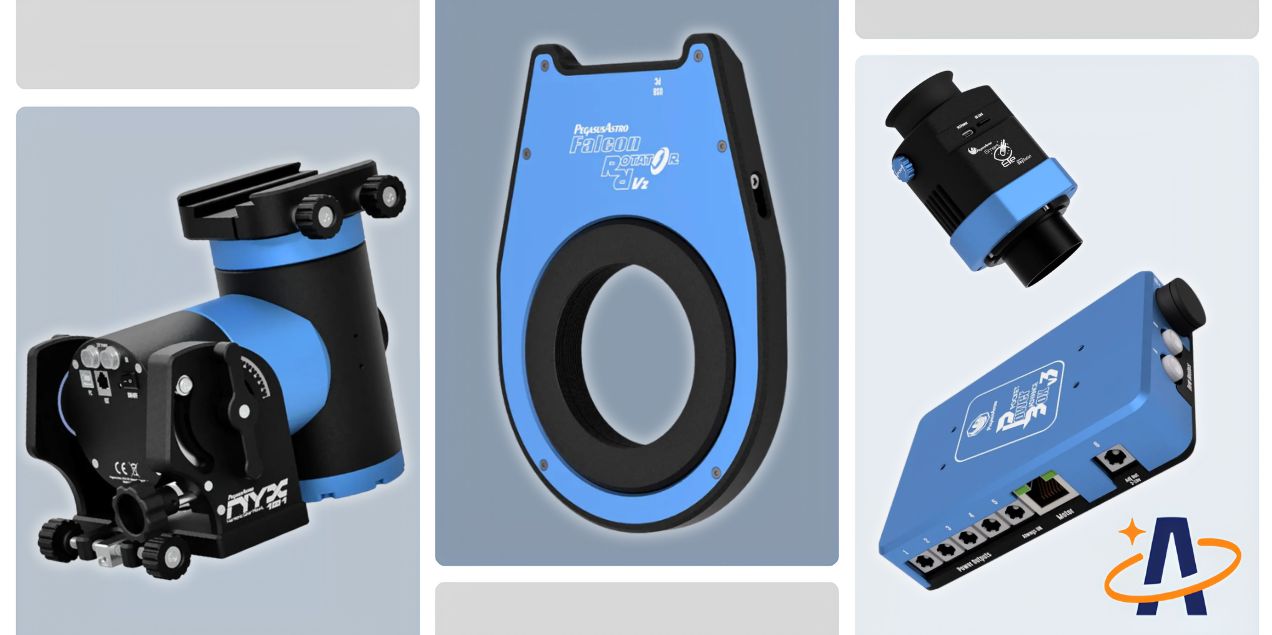
Pegasus Astro designs and builds electronics and accessories for astrophotography and visual astronomy. Based in Greece, the brand is known for practical, field-ready solutions that improve reliability and simplify setup. Their product ecosystem centers on the parts of an imaging rig that affect nearly every session, including power delivery, cable management, focusing, dew control, rotation, and device connectivity.
Agena Astro carries a wide selection of Pegasus Astro products for portable rigs and permanent observatory installations. These solutions are a strong fit for beginners building a first reliable system and for advanced users refining automation and cable organization.
Control Units and Cable Managment
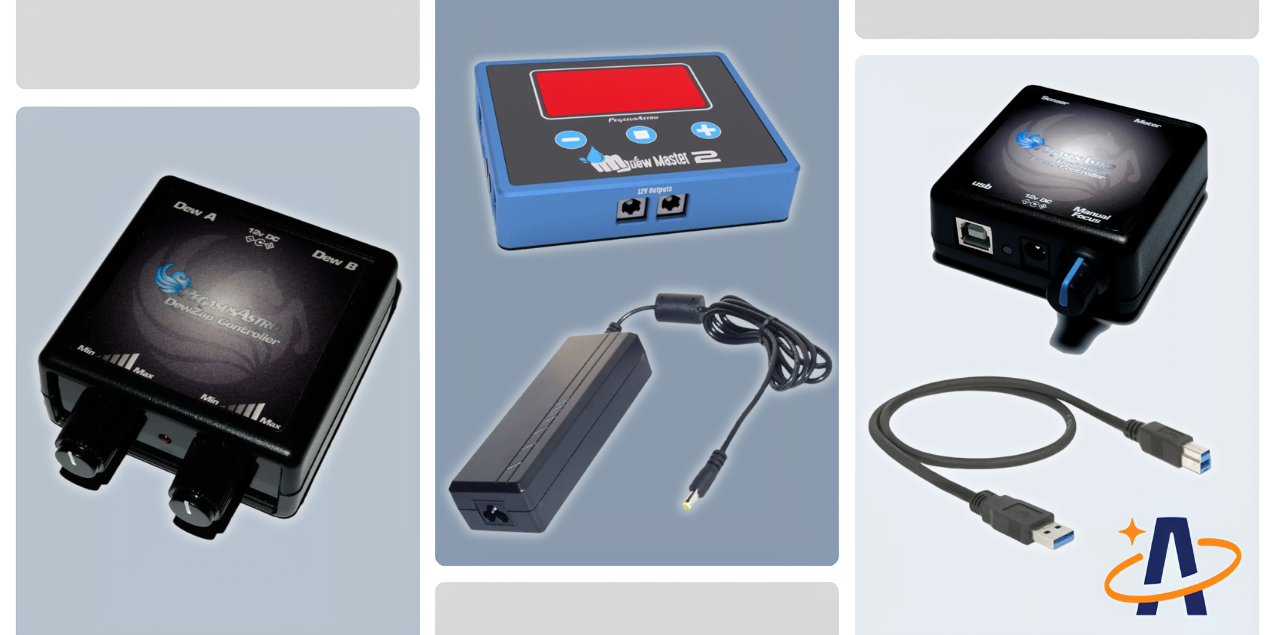
Stable power delivery is the foundation of a successful imaging session. Pegasus Astro power management products distribute regulated 12V DC power to multiple devices from a single source, which helps streamline wiring and reduce the number of separate power adapters in your kit. Many models provide real-time voltage and current monitoring, so you can identify loose connectors, overloaded circuits, or weak power supplies before they cause disconnects or data loss.
Some units also support software-controlled switching for individual outputs. This allows you to cycle power to a camera, focuser, or mini PC without physically accessing the rig, which is especially useful in cold weather, remote operation, or observatory environments. Product options range from compact controllers built for travel to larger hubs designed for complex imaging systems, and placing that control point near the telescope can reduce snags during slews and improve repeatability when you set up night after night.
Focus Control Systems
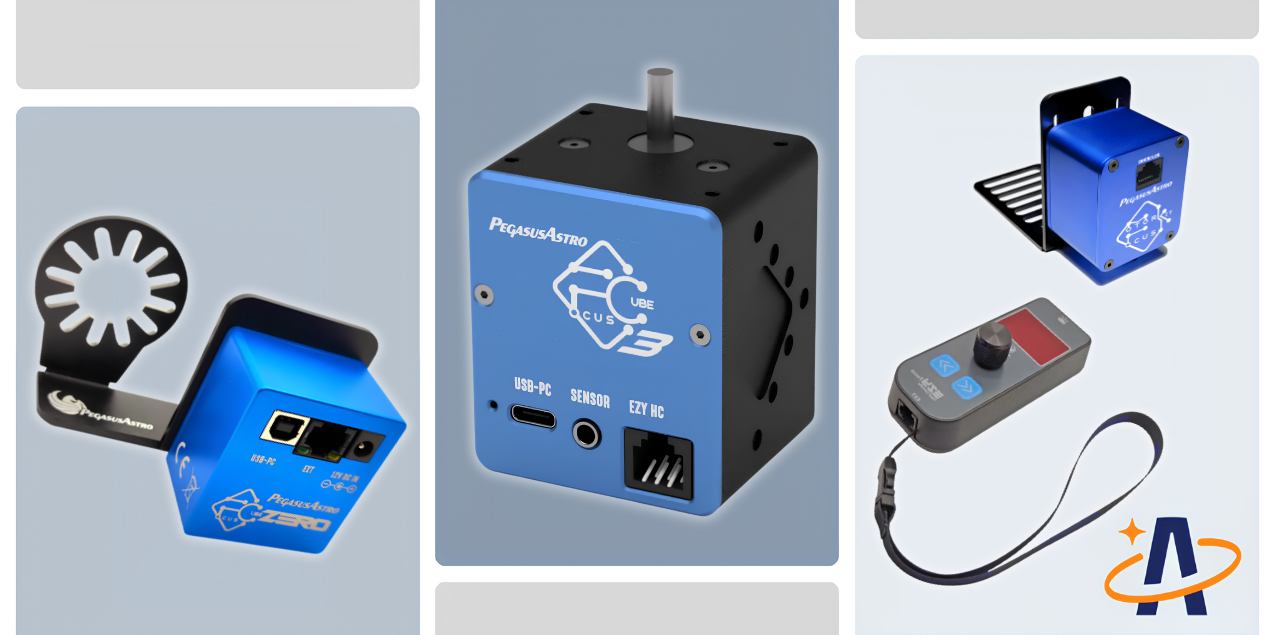
Accurate focus has a direct impact on star shape and fine detail. Pegasus Astro focus control solutions provide motorized, repeatable movement for many common telescope focusers, supporting both careful manual adjustments and reliable autofocus routines. High step resolution is particularly valuable for fast optical systems and high-resolution cameras, where small focus errors can noticeably soften your results.
Repeatability also matters in real-world workflows. It helps you return to a known focus position after filter changes, temperature shifts, or a meridian flip, which can reduce lost time during a session. Many setups incorporate temperature compensation to help limit focus drift as temperatures drop overnight. With compatibility through standard astronomy drivers and popular capture software, focusing can become a consistent, automated process rather than an ongoing manual task.
Telescope Mounts
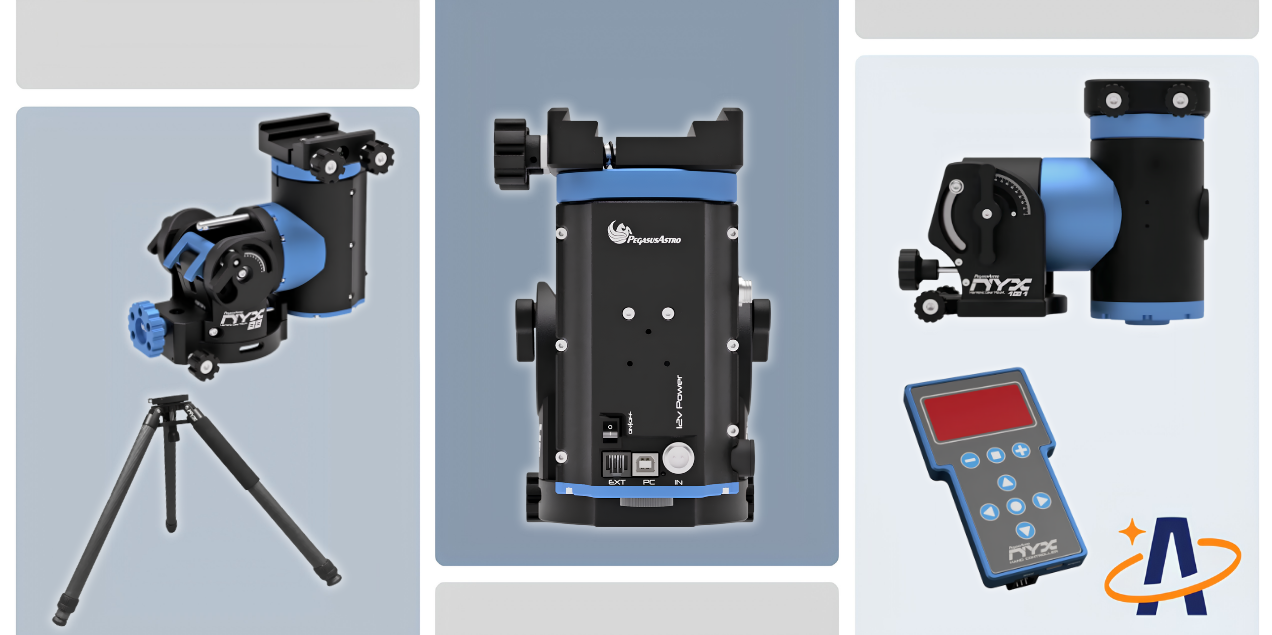
The mount is a core component of any imaging system. Pegasus Astro offers strain wave drive mounts designed for precise tracking with minimal backlash. This style of mount is often chosen for its compact build which makes it ideal for travel or dark site use, but without sacrificing tracking performance or payload exposure like smaller mounts with traditional gear systems.
Mount models are available across a range of payload capacities, so you can build around anything from a small refractor to a heavier optical tube with a more substantial imaging train. As with any mount, results depend on practical setup habits such as sensible payload planning, good balance, and a solid guiding configuration. When those fundamentals are in place, strain wave mounts can support consistent, repeatable imaging performance in a portable footprint.
Imaging Accessories
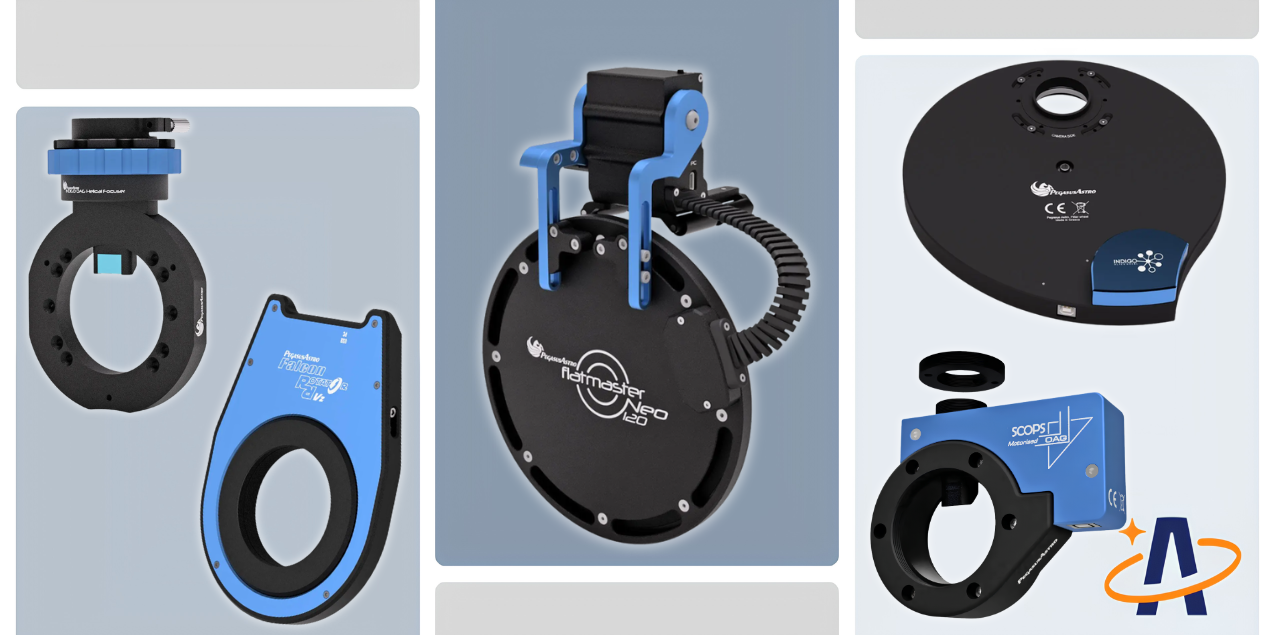
Pegasus Astro imaging accessories help automate the steps between finding a target and producing a clean final image. Their off-axis guiders, filter wheels, camera rotators, and flat-field panels work together to improve guiding, framing, filter changes, and image calibration—making advanced imaging workflows easier to manage from one night to the next.
Off-axis guiders use light from the telescope’s main optical path to guide the mount, helping reduce differential flexure compared with a separate guide scope. The Indigo Off-Axis Guider provides precise manual focusing, while the Scops Motorized OAG adds software-controlled guide-camera focusing for automated and remote systems. The Indigo Filter Wheel automatically moves filters into position during an imaging sequence. Its seven-position carousel accepts 2" mounted or 50mm unmounted filters, making it suitable for LRGB, narrowband, and multi-filter projects. It can also connect directly to the Indigo OAG to create a compact imaging train with fewer adapters.
Precise framing is easier with the Falcon Camera Field Rotator V2. Software-controlled rotation lets you adjust camera orientation without loosening mechanical connections, helping preserve rigidity, tilt, and spacing. While the Pegasus Astro FlatMaster Neo panel provides an even, adjustable light source for capturing calibration frames. Flats help correct dust shadows, vignetting, and uneven field illumination, while adjustable brightness supports different cameras and filters
Power & Connectivity Units
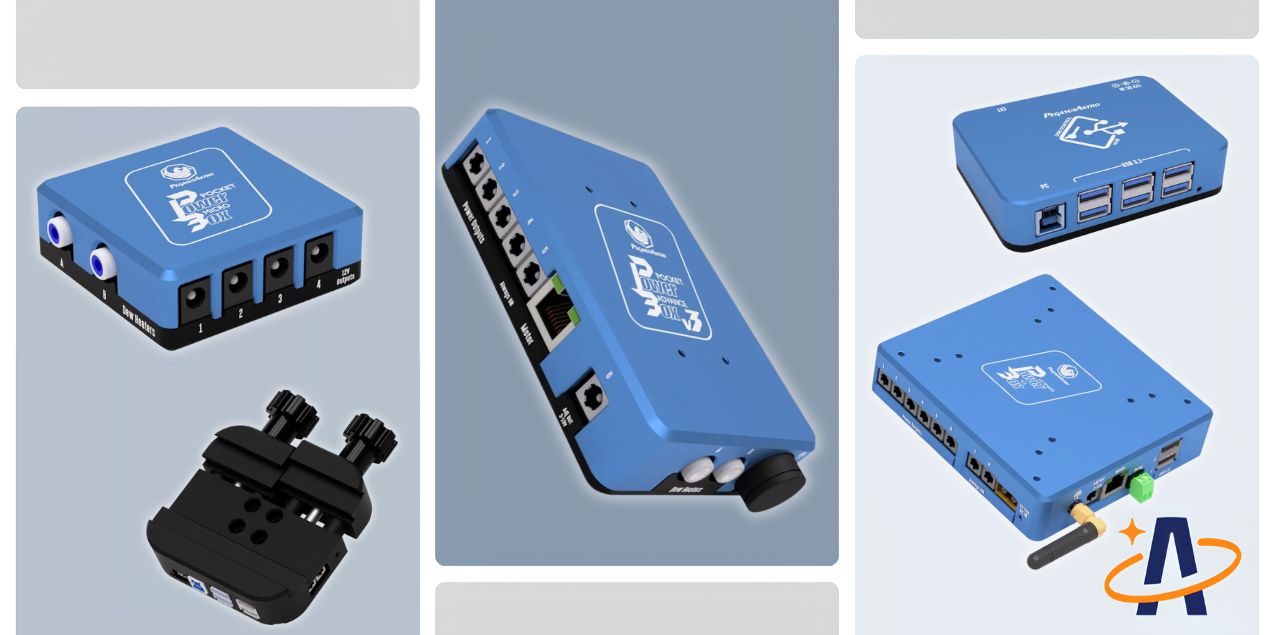
A typical astrophotography system can include a mount, main camera, guide camera, focuser, filter wheel, rotator, dew heaters, and sensors. Pegasus Astro products help reduce cable complexity by combining features such as USB hub connectivity and power distribution into a single control point near the telescope. A cleaner cable path lowers the chance of disconnects, snags, and port strain, and it can also make your system easier to manage when you tear down and set up repeatedly.
Pegasus Astro supports widely used control standards such as ASCOM and INDI, which helps maintain compatibility across common Windows and Linux imaging workflows. Many users also prefer centralized monitoring for power, dew control, focus control, and environmental sensors because it keeps key system status information in one place while imaging, troubleshooting, or operating remotely.
Electronically Assisted Viewing
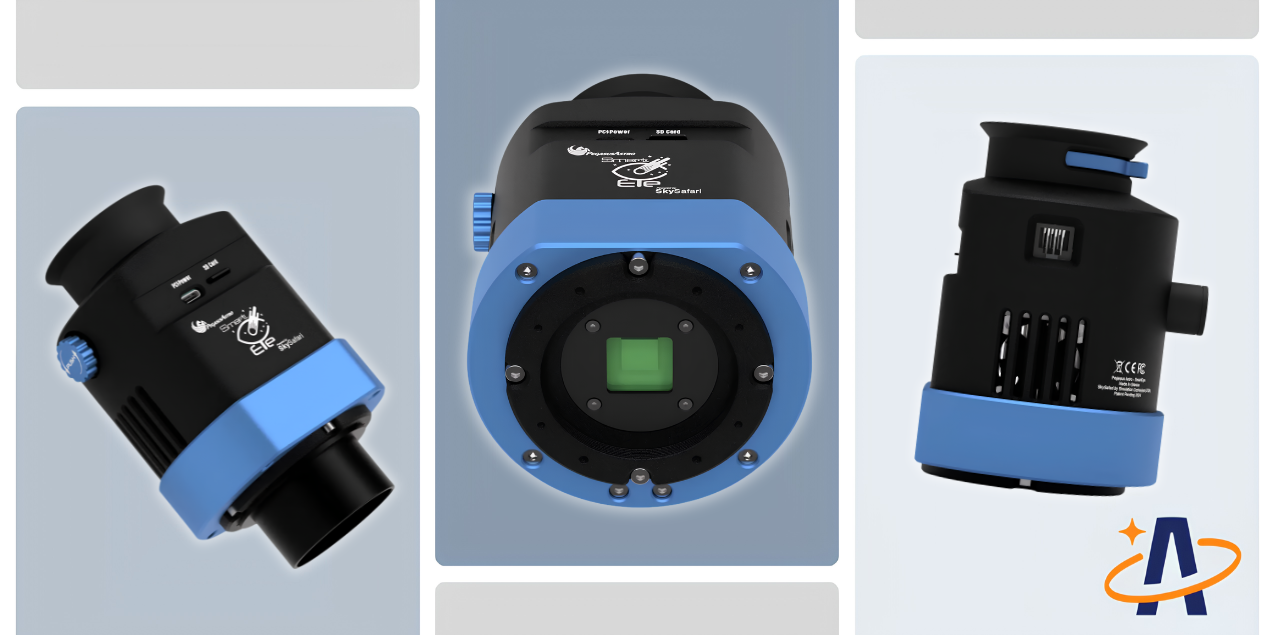
The SmartEye is a unique product designed to bring electronically assisted astronomy to more traditional visual-only astronomers. It is aimed at observers who want consistent views of faint targets without committing to a full astrophotography capture and processing routine. For many setups, it serves as a bridge between traditional visual observing and camera-based imaging. And this versatility makes it a strong option for outreach, quick weeknight sessions, and observers working under light pollution.
In practical use, SmartEye is typically treated as a viewing and enhancement tool that helps you spend less time chasing marginal visibility and more time staying on target. The main advantages tend to be a clearer presentation of dim objects and a more repeatable experience from session to session. It also fits well into modern, app-driven observing workflows, where the goal is simplicity and reliable results. If you paste the key specs and compatibility notes from smarteyepiece.com that you want included, I will tighten this section further and add the correct technical details without making it longer.
Why Choose Pegasus Astro?
Pegasus Astro is a strong choice for astronomers who want an electronics ecosystem that scales as a rig grows. Many users begin with power distribution or dew control, then add focusing and rotation as they move toward higher levels of automation and repeatability. Practical features such as monitoring, consolidation, and software control can improve session reliability and reduce time spent troubleshooting common field issues.