

ZWO ASI2600MM Duo APS-C Cooled Monochrome Astronomy Camera with Built-In Guide Sensor

Stock count is accurate & shown in real time.
- This item is out of stock.
- Sign up for back-in-stock alerts to be notified when this item becomes available (account login required).
- This item is out of stock.
- Sign up for back-in-stock alerts to be notified when this item becomes available (account login required).
Contiguous US / Lower 48:
Free shipping applies to orders over $50 using our chosen carrier/method. Faster paid options are available at checkout.
Alaska, Hawaii & US Territories:
Free shipping applies to many—but not all—products. Enter your ZIP code in cart or upon checkout to confirm options and costs.
International:
International orders do not qualify for free shipping. Shipping, duties, brokerage, tariffs, and taxes are the customer’s responsibility. Some items may be restricted due to export, size, or manufacturer limitations.
- Integrates with accessories like the ZWO CAA Camera Angle Adjuster Electronic Rotator or the ZWO 7-Position Electronic Filter Wheel for 2" Filters (EFW).
- Zero Amp-Glow ensures clean images without the camera adding unwanted light from its electronics, even during extended exposures, reducing post-processing hassle.
- 26 megapixel APS-C Size sensor delivers exceptional detail for capturing deep-sky objects with precision.
- AR-coated window and sealed chamber prevent dew and dust.
- 12V 5A AC to DC Power Adapter required for operation but sold seperately.
ASI2600MM Duo: Imaging and Guiding for Effortless Astrophotography
The ZWO ASI2600MM-Duo builds on the success of the original 2600MM series with a powerful all-in-one imaging solution for deep-sky astrophotography. It features the same proven high-resolution monochrome sensor that made the original camera so popular, now paired with a built-in auto-guiding sensor that simplifies your setup and reduces the need for additional guiding hardware.
Designed for maximum flexibility with LRGB and narrowband imaging, the ASI2600MM-Duo delivers exceptional sensitivity, impressive dynamic range, and the clean image performance the 2600 series is known for. Whether you're upgrading your imaging system or streamlining your setup, this camera combines powerful monochrome performance with the convenience of integrated guiding in one compact package.

Agena Astro affiliate Astroworkz full test and review of the ZWO ASI2600MM Duo
What’s New with the ASI2600MM Duo
Two-in-one design

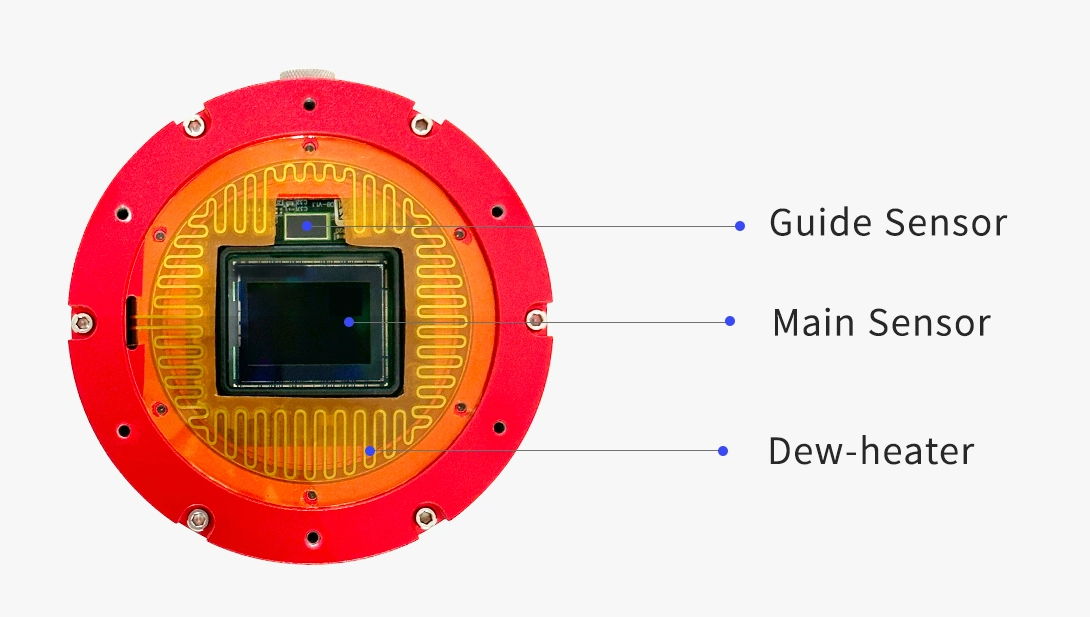
The ZWO ASI2600MM Duo features a built-in auto-guiding sensor positioned above the main imaging sensor, creating a streamlined all-in-one imaging solution. Integrating the guide camera directly into the body eliminates the need for separate guiding hardware like off-axis guiders, reducing flexure and balance issues while simplifying your imaging setup. It also frees up valuable space in the imaging train for additional accessories.
No Amp Glow, Less Processing

Amp-glow is when an infrared light source leaks onto your sensor and leaves an artifact on the final images. This issue is especially bad in many older astronomy cameras, DSLRs, and some newer mirrorless cameras. Most cases are severe enough that your dark frames need their own set of flats to remove it effectively.
Effortless Tilt Adjustment

The rear of the ASI2600MM features a convenient three-point tilt adjustment system that makes fine-tuning your imaging setup quick and straightforward. These accessible adjustment points allow you to correct sensor tilt without removing the tilt plate from the camera body, saving time and reducing setup hassle. This design helps ensure optimal alignment for sharper stars and improved image quality across the entire field. Optional ZWO M54 Tilt Adapter sold separately.
Stunning Results with the ASI2600MM Duo
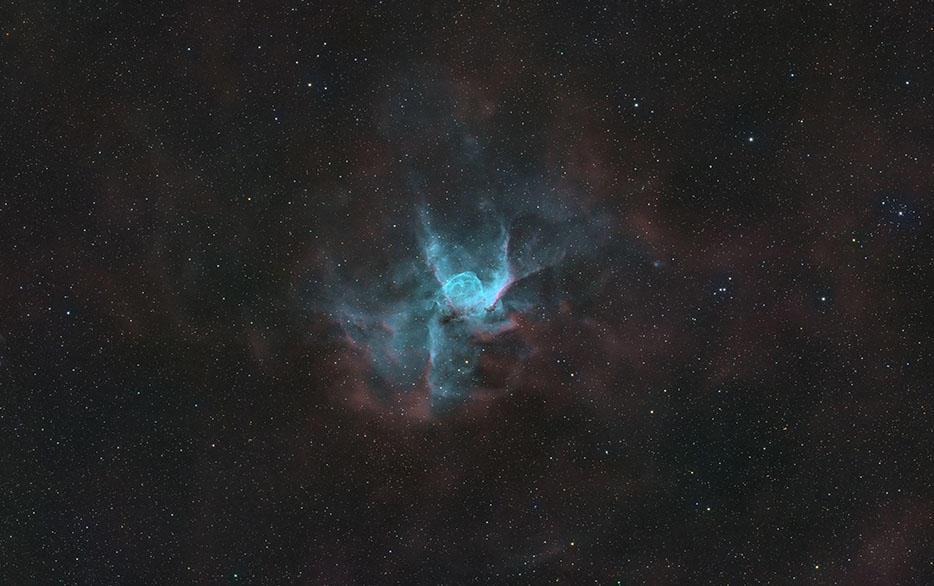
Thor's Helmet in HOO + RGB
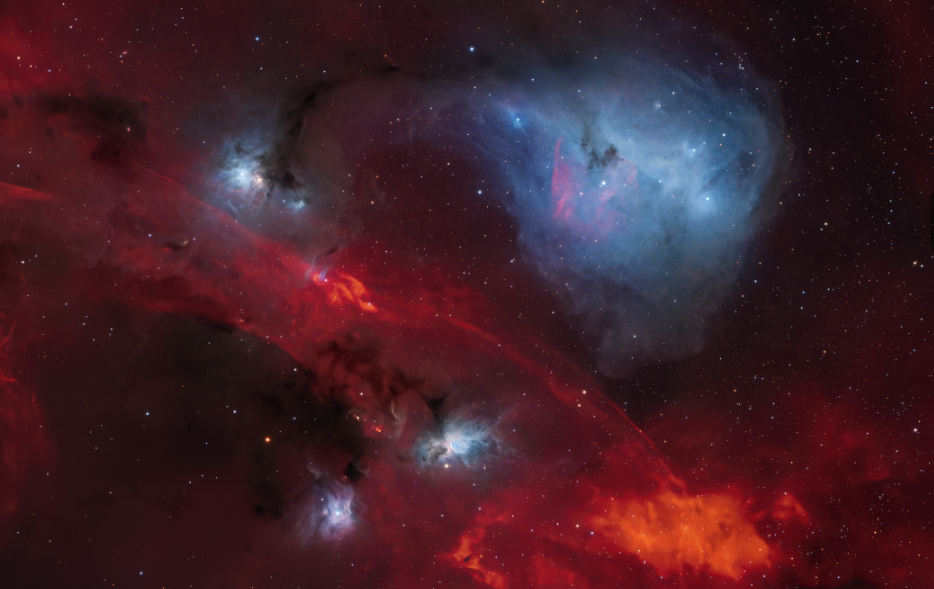
IC 447 - Dreyer's Nebula
ZWO ASI Camera Model Comparison
| Specification | ASI2600MC/MM Duo | ASI2600MC Pro |
|---|---|---|
| Sensor | SONY IMX571 SC2210 | SONY IMX571 |
| Max FPS | 15 FPS (RAW8) | 12.8 FPS (RAW8) |
| Full Well | 50Ke – Over 73Ke (Extended Full Well Mode) | 50Ke |
| DDR3 Buffer | 512MB | 512MB |
| Adapter | M54 × 0.75 | M42 × 0.75 |
| Guiding Module | Yes | No |
Main Imaging Sensor
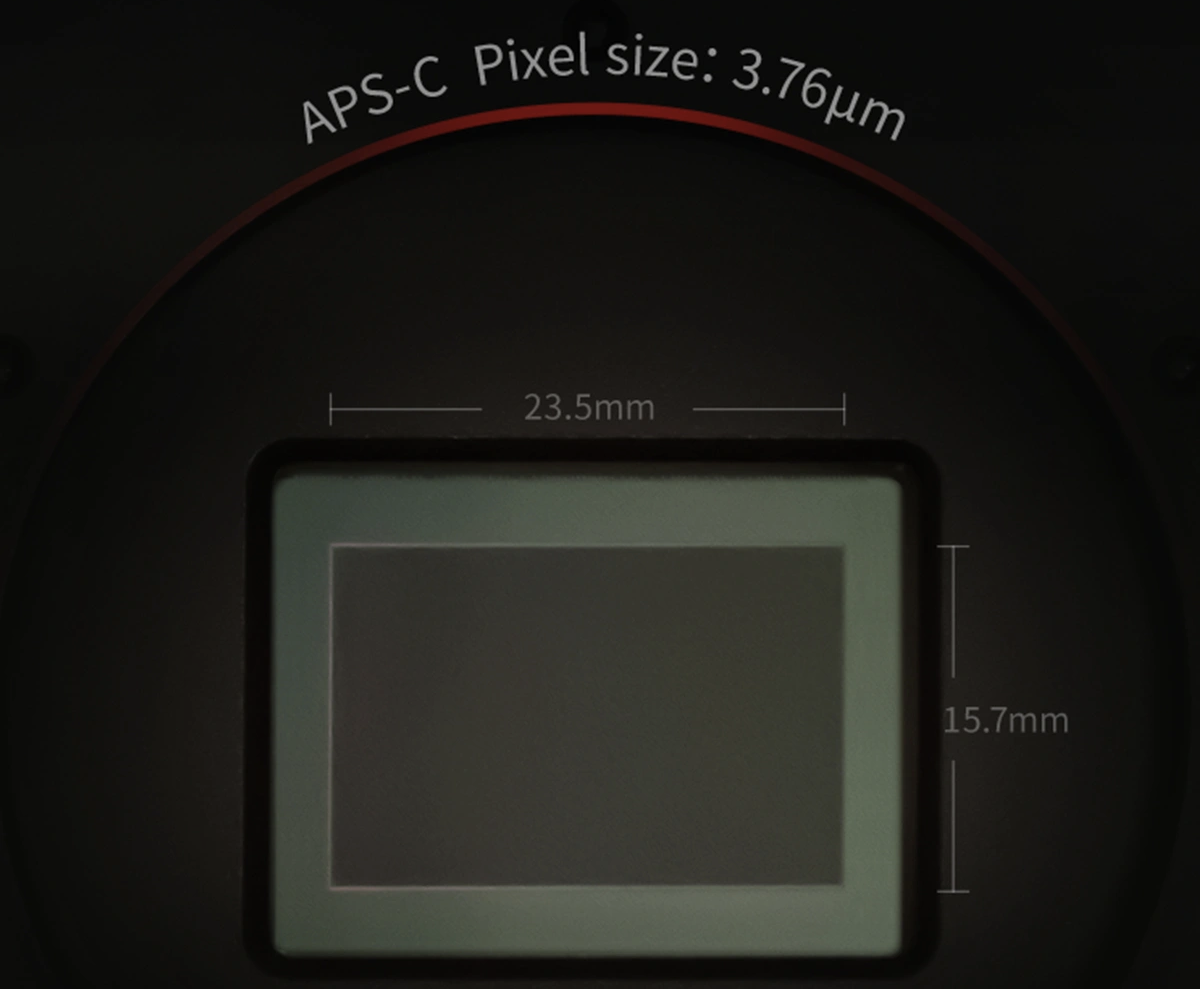
The main sensor IMX571 features an APS-C format and 26MP total pixels. The size is 23.5mm in width x 15.7mm in height, and the diagonal is 28.3mm. The 3.76um x 3.76um small pixel size accommodates an impressive full depth of 50ke. With the new hardware technology, it is even extended to 73ke.
Guiding Sensor
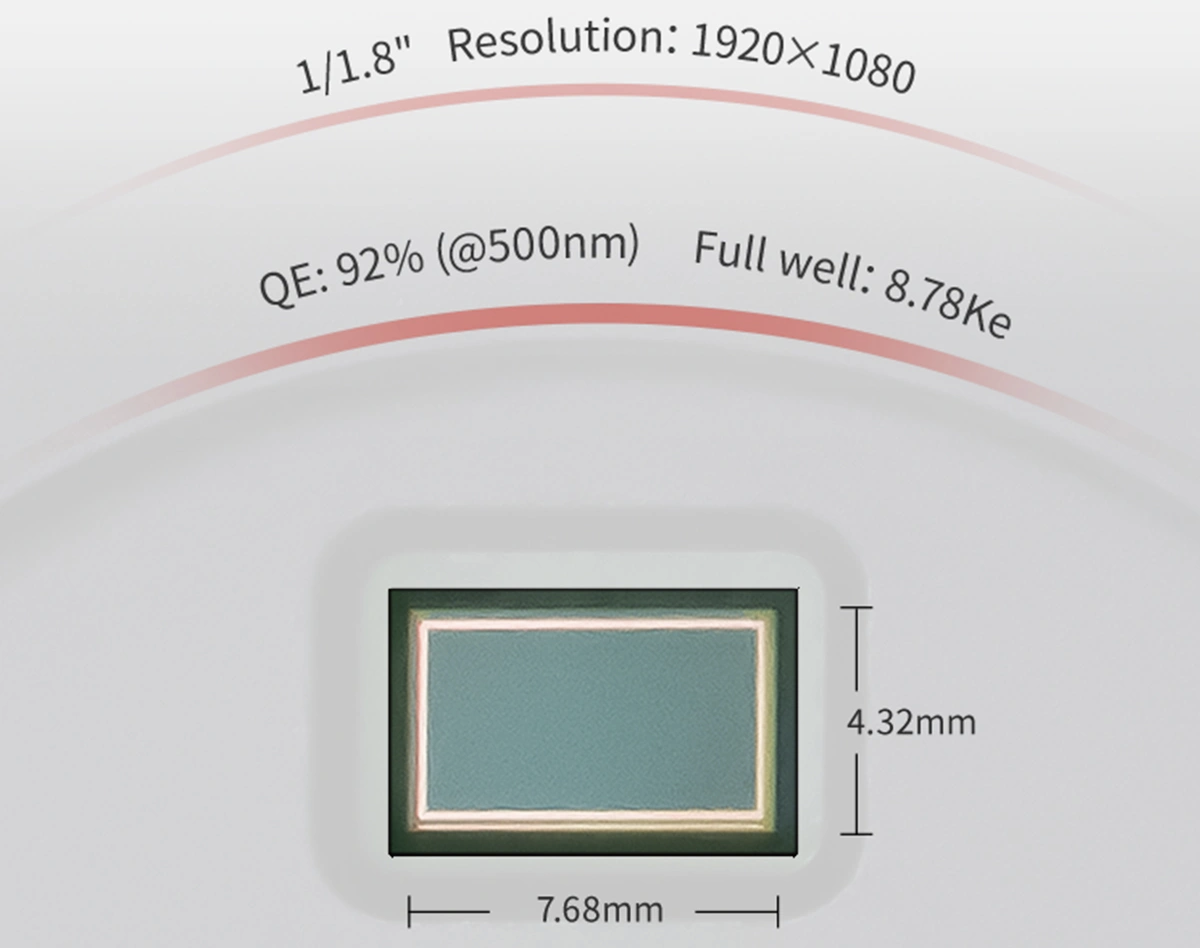
The SC2210 sensor taken from the ASI220MM Mini camera features very high sensitivity. The QE peak value reaches 92% at 500nm. The readout noise is as low as 0.6e. As the new generation of guide sensor, it has achieved great results in guiding, proved by hundreds of astrophotographers.
Anti-Dew Heater
There is a polyimide heater completely fitting the protective window in the ASI2600MC/MM Duo camera. It can help avoid any potential annoying dew or icing issues depending on the environment in which you capture images. The power of the heater is around 5W. If you want to save battery, you can always turn it off in your photography software.
Two-Stage TEC Cooling
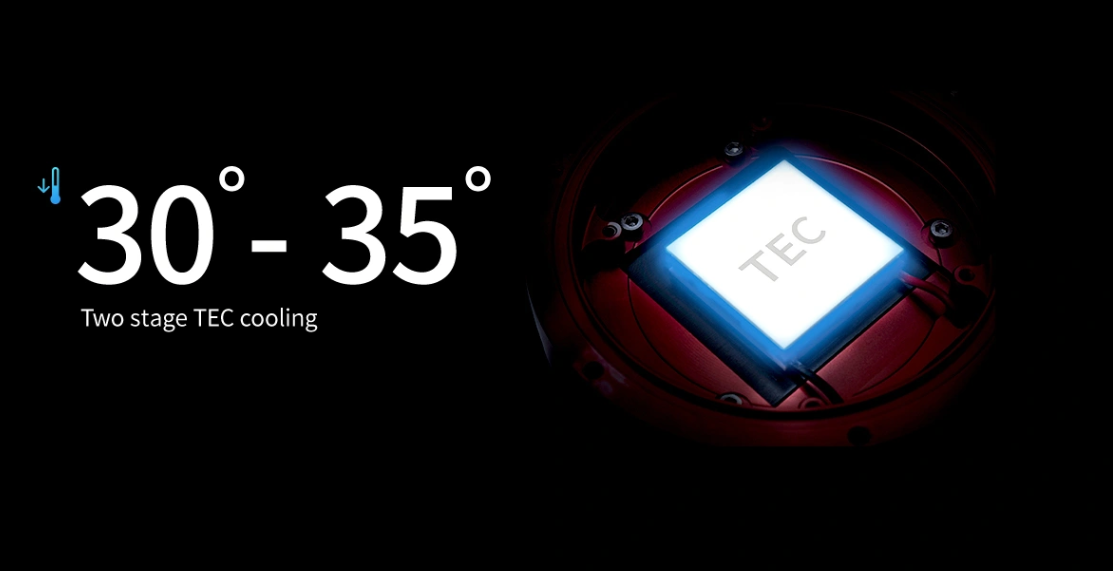
The ASI2600MM-Duo features a powerful two-stage TEC cooling system to reduce thermal noise during long exposures. It can reduce the sensor temperature by a whopping 63°F (35°C) below ambient conditions!
This impressive system works alongside ZWO's innovative dark current suppression technology to provide industry-leading noise management. At 32°F (0°C), the camera produces an exceptionally low 0.0022 electrons of dark current noise per second per pixel. This means during a 5-minute (300s) exposure, the accumulated dark current noise (0.7e) remains below the camera's basic readout noise. When cooled further to -4°F (-20°C), dark current becomes virtually nonexistent at 0.00012e/s/px, making it inconsequential to final image quality.
*Please note: the camera’s TEC cooler requires a 12V external power supply (not included).
Modern Backside-Illuminated Sensor (BSI) For Improved Sensitivity
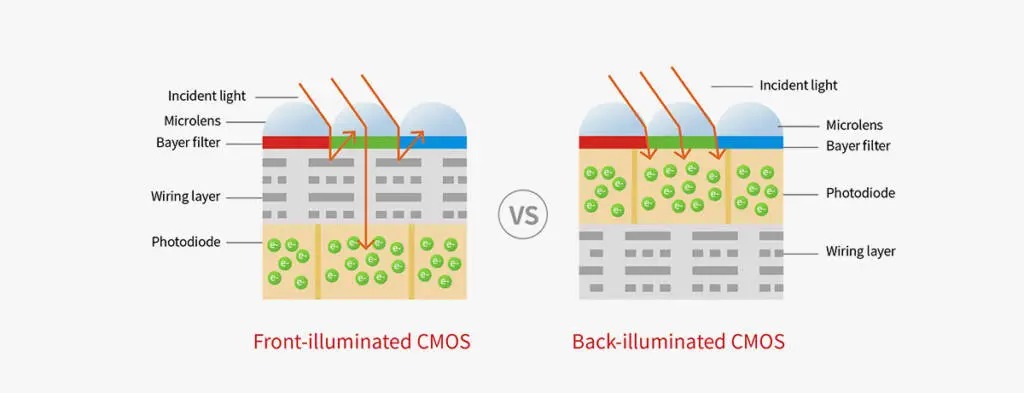
Sony’s backside-illuminated (BSI) sensor technology improves sensitivity and reduces noise by placing the sensor electronics behind the light-sensitive layer instead of on top of it. This design allows more incoming light to reach the photodiodes, resulting in better efficiency and cleaner images. In high-resolution sensors like the IMX571, BSI also supports faster data readout while maintaining the low-noise performance modern CMOS astrophotography cameras are known for.

Native 16-bit ADC Improves Dynamic Range
The ZWO ASI2600MM-Duo distinguishes itself with an advanced 16-bit analog-to-digital converter (ADC). While some older CCD cameras claim 16-bit capability, this modern CMOS sensor provides a genuine 14-stop dynamic range. Improved dynamic range yields image quality with superior contrast and improved tonal gradations. And this is particularly true when used with narrowband filters. From the faintest details of a nebula to the brilliant stars at its center, the ASI2600MM-Duo handles them with ease! And all in one single exposure!
High-Speed Data Transfer with USB 3.0
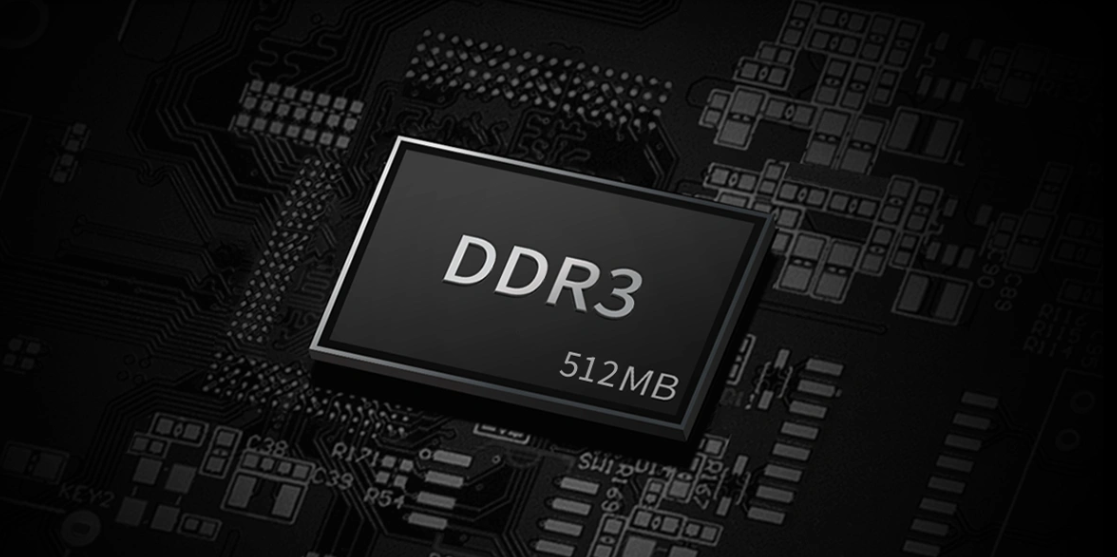
The ASI2600MM Duo includes a high-speed USB 3.0 interface and a built-in 512MB DDR3 cache. Both ensure stable and secure data transmission. During long exposures, this combination effectively avoids frame dropping and reduces the amp glow effect caused by slow readout speed.
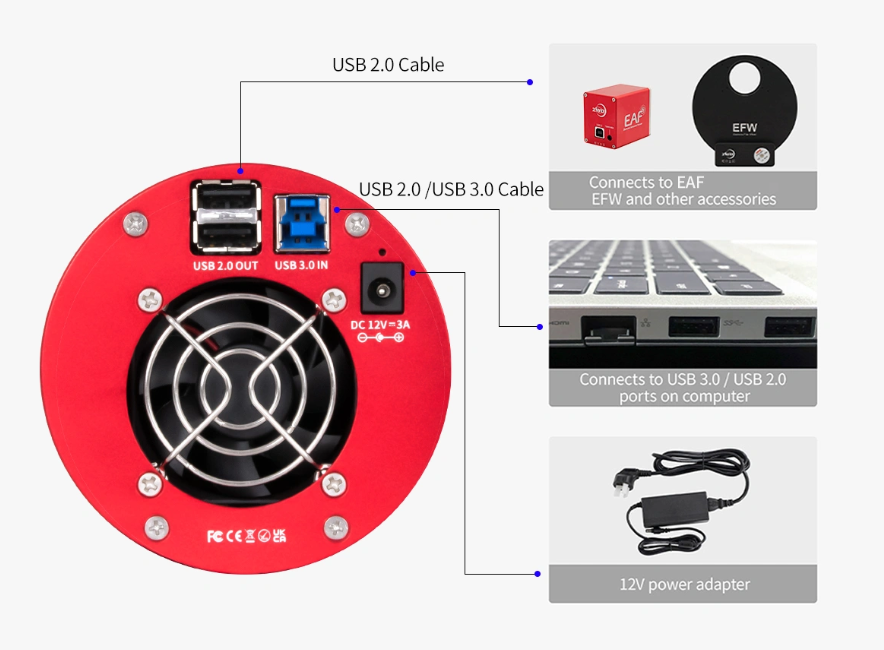
Connection Diagram
Wavelength Charts
Quantum Efficiency
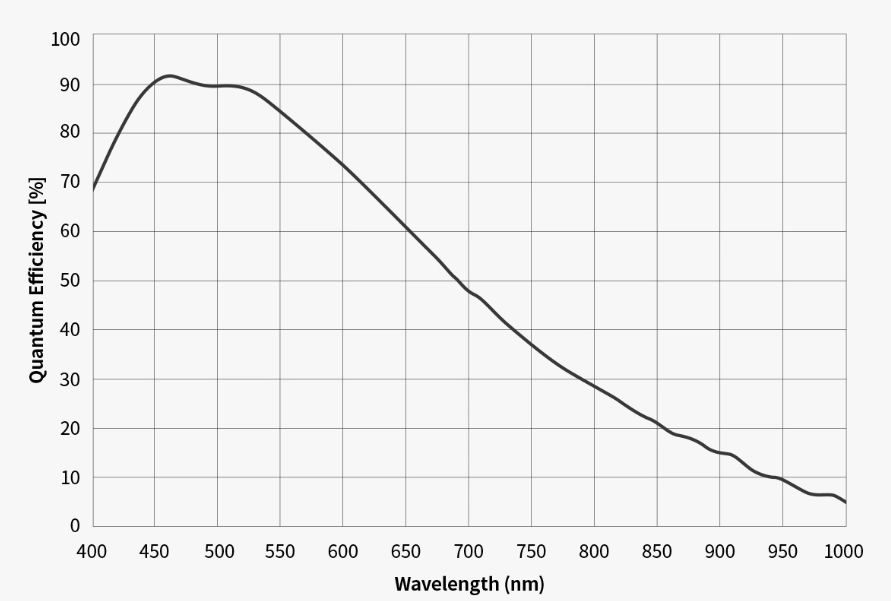
The ASI2600MM Duo has some of the best technical capabilities of any cooled astronomy camera on the market. The 91% QE means that 91% of the photons hitting your sensor are recorded as data. This is essential when imaging deep space objects, especially faint objects like galaxies and planetary nebulae. The ASI2600MM-Duo also has a 16-bit analog-to-digital converter (ADC). This allows for a very wide dynamic range, which complements its 73,000e full well capacity.
Dual Gain Structure
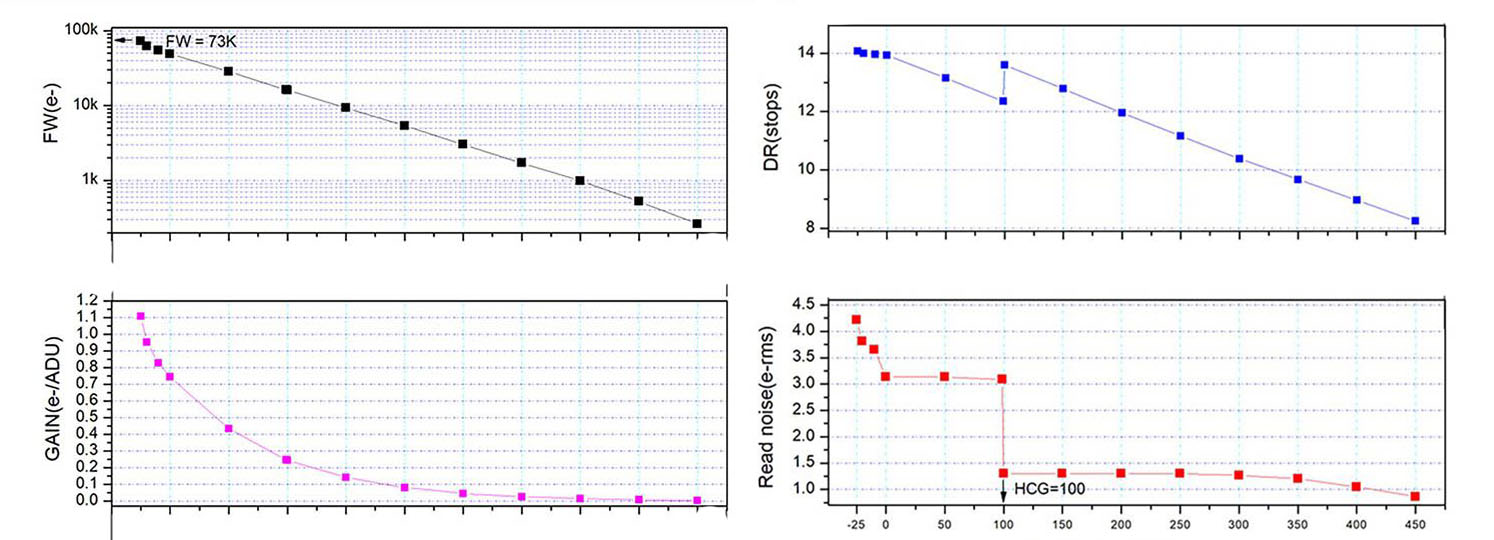
A key advancement of the IMX571 over previous generations of camera sensors is the dual gain structure. By setting the gain to 100, you can immediately reduce read noise and boost dynamic range. The sensitivity also increases, allowing you to capture finer details with minimal noise. ZWO recommends using gain 100 for most applications, the main exception is for very bright deep-space objects or when using short exposures that might benefit from different settings.
Technical Diagram
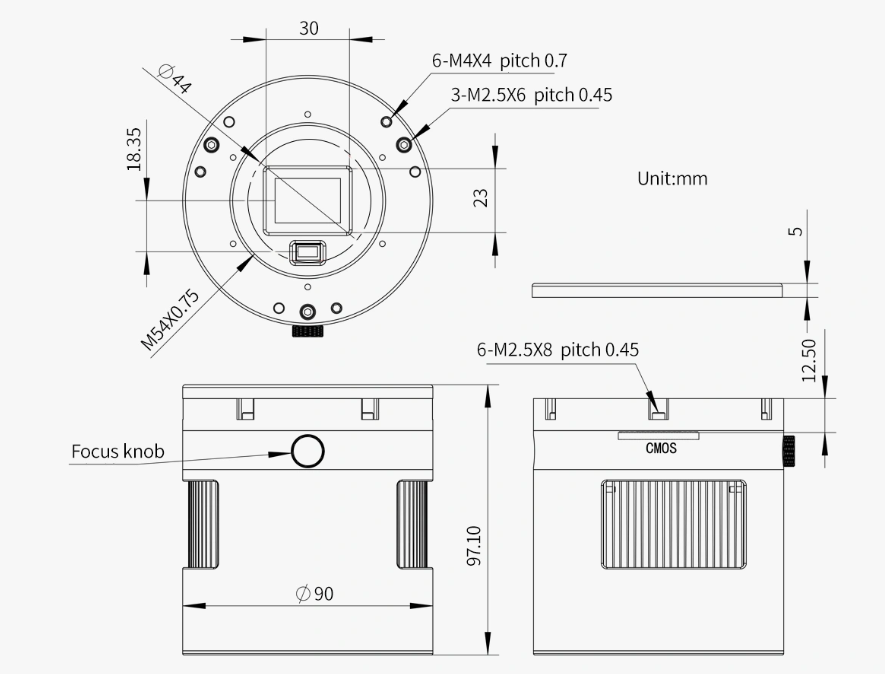
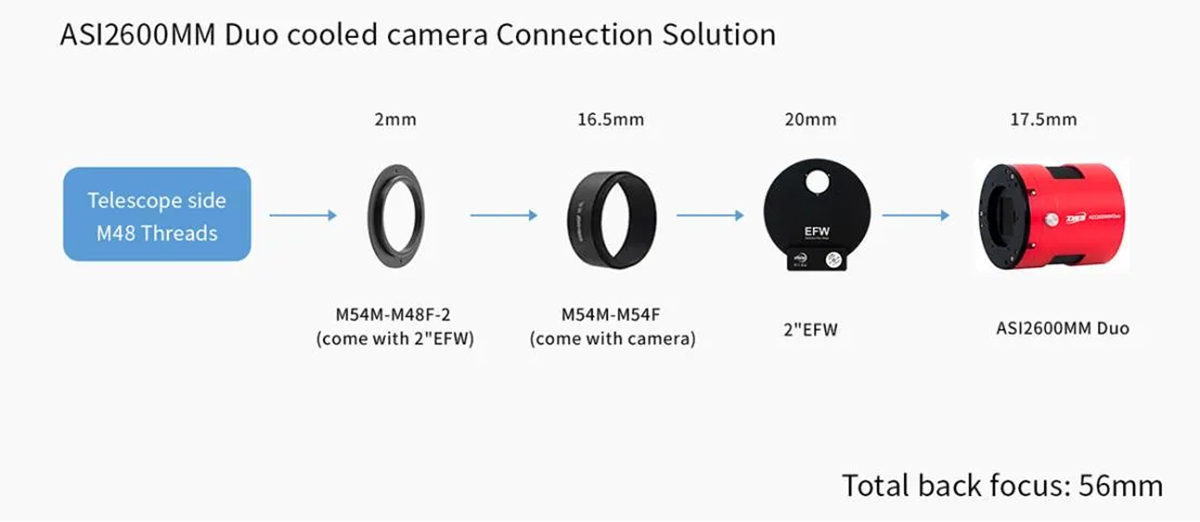
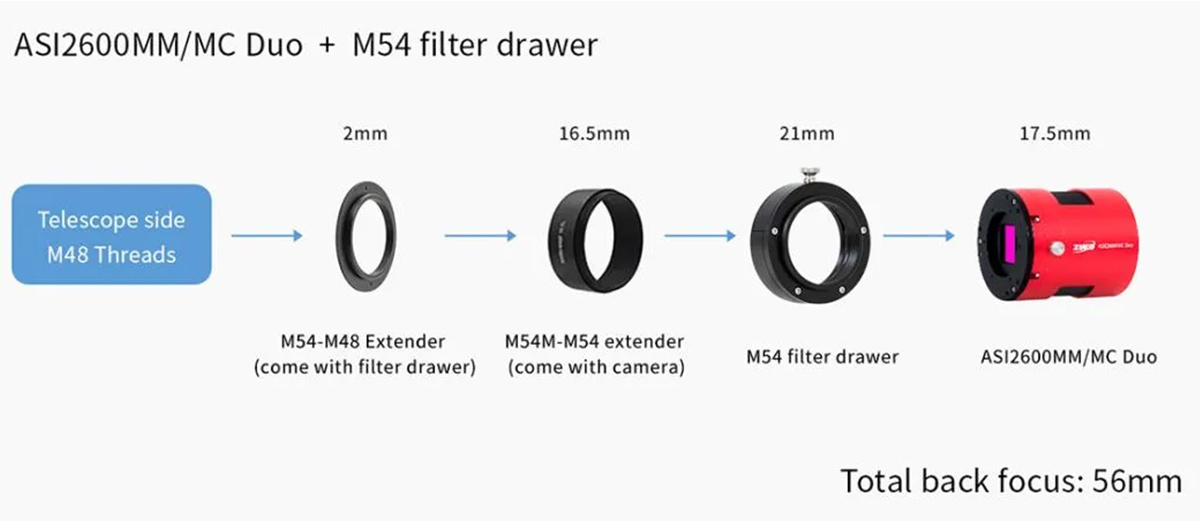
Best Solutions to Reach 56mm Back Spacing
FAQ About the ASI2600MM Duo
What are the power and setup requirements?
Users often ask why the camera must be connected to an external power supply. The ASI2600MM-Duo requires an external 11–14V power source to operate, even if the cooler isn’t active. It can also be powered via ASIAIR. This design ensures the cooling system and all internal electronics work reliably.
What sensor and performance characteristics does it offer?
The camera is equipped with Sony’s back‐illuminated IMX571 APS-C format sensor. This sensor provides a native 16-bit ADC, high dynamic range (up to 14 stops), 26MP resolution with a pixel size of 3.76µm, and a well depth of 50ke. These features help capture fine details while keeping noise to a minimum.
How does the two-stage TEC cooling and noise performance work?
The ASI2600MM-Duo incorporates a two-stage TEC cooling system that can lower the sensor temperature to more than 35°C below ambient. This cooling dramatically reduces dark current noise, and ZWO’s “zero amp glow” design further minimizes unwanted artifacts during long exposures.
What distinguishes the color (ASI2600MM-Duo) version from the monochrome model?
Both models share the same basic sensor technology and performance benefits. But the ASI2600MM-Duo was built for color imaging using a microlensing system known as a Bayer matrix filter.
Many users choose color cameras for their simplicity, cost, and the immediacy of the results. Whereas the monochrome variant (ASI2600MM-P) is more complex, but with increased sensitivity and resolution when combined with various filters.
How do I achieve proper spacing and integration with my telescope setup?
Many telescopes require a specific back focus distance, with the most common being 55mm. This spacing is critical for proper alignment and performance with various telescope systems. ZWO includes all the necessary spacers and adapters you’ll need. Refer to the above diagram for correct spacing.
What measures are in place for robust data transmission?
The camera uses a USB 3.0 interface along with an onboard DDR3 cache (512MB in models produced after August 2023). This system ensures that large volumes of data are handled smoothly, even during extended imaging sessions.
How is dew or icing managed during cold imaging sessions?
The ZWO ASI2600MM-Duo is equipped with a polyimide heater that fits over the protective window. This helps prevent dew or icing and ensures consistent performance with clear images during long exposures.
Specifications
- Main Sensor
- Type: IMX571
- Size: APS-C (23.5x15.7 mm)
- Diagonal:
- Resolution: 6248x4176
- ADC: 16bit
- FPS: 15 (RAW8)
- Full well: 50 Ke
- Read noise: 0.9e-4.2e
- Cooling temp: 30°-35°C
- Data transfer: DDR3 Buffer/ 512MB
- USB: 3.0
- QE: 91%
- Pixel size: 3.79
- Guide Sensor
- Type: SC2210
- Size: 7.68x4.32 mm
- Resolution: 1920x1080
- Read noise: 0.6e
- FPS: 14
- QE: 92%
- USB: 2.0
- ADC: 12bit
Other Information
- Country of Manufacture: China
ASI2600MM Duo: Imaging and Guiding for Effortless Astrophotography
The ZWO ASI2600MM-Duo builds on the success of the original 2600MM series with a powerful all-in-one imaging solution for deep-sky astrophotography. It features the same proven high-resolution monochrome sensor that made the original camera so popular, now paired with a built-in auto-guiding sensor that simplifies your setup and reduces the need for additional guiding hardware.
Designed for maximum flexibility with LRGB and narrowband imaging, the ASI2600MM-Duo delivers exceptional sensitivity, impressive dynamic range, and the clean image performance the 2600 series is known for. Whether you're upgrading your imaging system or streamlining your setup, this camera combines powerful monochrome performance with the convenience of integrated guiding in one compact package.
Agena Astro affiliate Astroworkz full test and review of the ZWO ASI2600MM Duo
What’s New with the ASI2600MM Duo
Two-in-one design
The ZWO ASI2600MM Duo features a built-in auto-guiding sensor positioned above the main imaging sensor, creating a streamlined all-in-one imaging solution. Integrating the guide camera directly into the body eliminates the need for separate guiding hardware like off-axis guiders, reducing flexure and balance issues while simplifying your imaging setup. It also frees up valuable space in the imaging train for additional accessories.
No Amp Glow, Less Processing
Amp-glow is when an infrared light source leaks onto your sensor and leaves an artifact on the final images. This issue is especially bad in many older astronomy cameras, DSLRs, and some newer mirrorless cameras. Most cases are severe enough that your dark frames need their own set of flats to remove it effectively.
Effortless Tilt Adjustment
The rear of the ASI2600MM features a convenient three-point tilt adjustment system that makes fine-tuning your imaging setup quick and straightforward. These accessible adjustment points allow you to correct sensor tilt without removing the tilt plate from the camera body, saving time and reducing setup hassle. This design helps ensure optimal alignment for sharper stars and improved image quality across the entire field. Optional ZWO M54 Tilt Adapter sold separately.
Stunning Results with the ASI2600MM Duo
Thor's Helmet in HOO + RGB
IC 447 - Dreyer's Nebula
ZWO ASI Camera Model Comparison
| Specification | ASI2600MC/MM Duo | ASI2600MC Pro |
|---|---|---|
| Sensor | SONY IMX571 SC2210 | SONY IMX571 |
| Max FPS | 15 FPS (RAW8) | 12.8 FPS (RAW8) |
| Full Well | 50Ke – Over 73Ke (Extended Full Well Mode) | 50Ke |
| DDR3 Buffer | 512MB | 512MB |
| Adapter | M54 × 0.75 | M42 × 0.75 |
| Guiding Module | Yes | No |
Main Imaging Sensor
The main sensor IMX571 features an APS-C format and 26MP total pixels. The size is 23.5mm in width x 15.7mm in height, and the diagonal is 28.3mm. The 3.76um x 3.76um small pixel size accommodates an impressive full depth of 50ke. With the new hardware technology, it is even extended to 73ke.
Guiding Sensor
The SC2210 sensor taken from the ASI220MM Mini camera features very high sensitivity. The QE peak value reaches 92% at 500nm. The readout noise is as low as 0.6e. As the new generation of guide sensor, it has achieved great results in guiding, proved by hundreds of astrophotographers.
Anti-Dew Heater
There is a polyimide heater completely fitting the protective window in the ASI2600MC/MM Duo camera. It can help avoid any potential annoying dew or icing issues depending on the environment in which you capture images. The power of the heater is around 5W. If you want to save battery, you can always turn it off in your photography software.
Two-Stage TEC Cooling
The ASI2600MM-Duo features a powerful two-stage TEC cooling system to reduce thermal noise during long exposures. It can reduce the sensor temperature by a whopping 63°F (35°C) below ambient conditions!
This impressive system works alongside ZWO's innovative dark current suppression technology to provide industry-leading noise management. At 32°F (0°C), the camera produces an exceptionally low 0.0022 electrons of dark current noise per second per pixel. This means during a 5-minute (300s) exposure, the accumulated dark current noise (0.7e) remains below the camera's basic readout noise. When cooled further to -4°F (-20°C), dark current becomes virtually nonexistent at 0.00012e/s/px, making it inconsequential to final image quality.
*Please note: the camera’s TEC cooler requires a 12V external power supply (not included).
Modern Backside-Illuminated Sensor (BSI) For Improved Sensitivity
Sony’s backside-illuminated (BSI) sensor technology improves sensitivity and reduces noise by placing the sensor electronics behind the light-sensitive layer instead of on top of it. This design allows more incoming light to reach the photodiodes, resulting in better efficiency and cleaner images. In high-resolution sensors like the IMX571, BSI also supports faster data readout while maintaining the low-noise performance modern CMOS astrophotography cameras are known for.
Native 16-bit ADC Improves Dynamic Range
The ZWO ASI2600MM-Duo distinguishes itself with an advanced 16-bit analog-to-digital converter (ADC). While some older CCD cameras claim 16-bit capability, this modern CMOS sensor provides a genuine 14-stop dynamic range. Improved dynamic range yields image quality with superior contrast and improved tonal gradations. And this is particularly true when used with narrowband filters. From the faintest details of a nebula to the brilliant stars at its center, the ASI2600MM-Duo handles them with ease! And all in one single exposure!
High-Speed Data Transfer with USB 3.0
The ASI2600MM Duo includes a high-speed USB 3.0 interface and a built-in 512MB DDR3 cache. Both ensure stable and secure data transmission. During long exposures, this combination effectively avoids frame dropping and reduces the amp glow effect caused by slow readout speed.
Connection Diagram
Wavelength Charts
Quantum Efficiency
The ASI2600MM Duo has some of the best technical capabilities of any cooled astronomy camera on the market. The 91% QE means that 91% of the photons hitting your sensor are recorded as data. This is essential when imaging deep space objects, especially faint objects like galaxies and planetary nebulae. The ASI2600MM-Duo also has a 16-bit analog-to-digital converter (ADC). This allows for a very wide dynamic range, which complements its 73,000e full well capacity.
Dual Gain Structure
A key advancement of the IMX571 over previous generations of camera sensors is the dual gain structure. By setting the gain to 100, you can immediately reduce read noise and boost dynamic range. The sensitivity also increases, allowing you to capture finer details with minimal noise. ZWO recommends using gain 100 for most applications, the main exception is for very bright deep-space objects or when using short exposures that might benefit from different settings.
Technical Diagram
Best Solutions to Reach 56mm Back Spacing
FAQ About the ASI2600MM Duo
What are the power and setup requirements?
Users often ask why the camera must be connected to an external power supply. The ASI2600MM-Duo requires an external 11–14V power source to operate, even if the cooler isn’t active. It can also be powered via ASIAIR. This design ensures the cooling system and all internal electronics work reliably.
What sensor and performance characteristics does it offer?
The camera is equipped with Sony’s back‐illuminated IMX571 APS-C format sensor. This sensor provides a native 16-bit ADC, high dynamic range (up to 14 stops), 26MP resolution with a pixel size of 3.76µm, and a well depth of 50ke. These features help capture fine details while keeping noise to a minimum.
How does the two-stage TEC cooling and noise performance work?
The ASI2600MM-Duo incorporates a two-stage TEC cooling system that can lower the sensor temperature to more than 35°C below ambient. This cooling dramatically reduces dark current noise, and ZWO’s “zero amp glow” design further minimizes unwanted artifacts during long exposures.
What distinguishes the color (ASI2600MM-Duo) version from the monochrome model?
Both models share the same basic sensor technology and performance benefits. But the ASI2600MM-Duo was built for color imaging using a microlensing system known as a Bayer matrix filter.
Many users choose color cameras for their simplicity, cost, and the immediacy of the results. Whereas the monochrome variant (ASI2600MM-P) is more complex, but with increased sensitivity and resolution when combined with various filters.
How do I achieve proper spacing and integration with my telescope setup?
Many telescopes require a specific back focus distance, with the most common being 55mm. This spacing is critical for proper alignment and performance with various telescope systems. ZWO includes all the necessary spacers and adapters you’ll need. Refer to the above diagram for correct spacing.
What measures are in place for robust data transmission?
The camera uses a USB 3.0 interface along with an onboard DDR3 cache (512MB in models produced after August 2023). This system ensures that large volumes of data are handled smoothly, even during extended imaging sessions.
How is dew or icing managed during cold imaging sessions?
The ZWO ASI2600MM-Duo is equipped with a polyimide heater that fits over the protective window. This helps prevent dew or icing and ensures consistent performance with clear images during long exposures.
Specifications
- Main Sensor
- Type: IMX571
- Size: APS-C (23.5x15.7 mm)
- Diagonal:
- Resolution: 6248x4176
- ADC: 16bit
- FPS: 15 (RAW8)
- Full well: 50 Ke
- Read noise: 0.9e-4.2e
- Cooling temp: 30°-35°C
- Data transfer: DDR3 Buffer/ 512MB
- USB: 3.0
- QE: 91%
- Pixel size: 3.79
- Guide Sensor
- Type: SC2210
- Size: 7.68x4.32 mm
- Resolution: 1920x1080
- Read noise: 0.6e
- FPS: 14
- QE: 92%
- USB: 2.0
- ADC: 12bit
- 1x ZWO ASI2600MM Duo Camera Body
- 1x Soft case
- 1x Quick guide
- 1x USB 3.0 cable (2 meter)
- 1x 2x USB 2.0 cable (0.5 meter)
- 1x T2 - M48 Extender (16.5mm)
- 1x T2 Extender (21mm)
- 1x M42 to M48 Adapter
- 1x Dust Cover
- 1x Hexagon Wrench


- Integrates with accessories like the ZWO CAA Camera Angle Adjuster Electronic Rotator or the ZWO 7-Position Electronic Filter Wheel for 2" Filters (EFW).
- Zero Amp-Glow ensures clean images without the camera adding unwanted light from its electronics, even during extended exposures, reducing post-processing hassle.
- 26 megapixel APS-C Size sensor delivers exceptional detail for capturing deep-sky objects with precision.
- AR-coated window and sealed chamber prevent dew and dust.
- 12V 5A AC to DC Power Adapter required for operation but sold seperately.
ASI2600MM Duo: Imaging and Guiding for Effortless Astrophotography
The ZWO ASI2600MM-Duo builds on the success of the original 2600MM series with a powerful all-in-one imaging solution for deep-sky astrophotography. It features the same proven high-resolution monochrome sensor that made the original camera so popular, now paired with a built-in auto-guiding sensor that simplifies your setup and reduces the need for additional guiding hardware.
Designed for maximum flexibility with LRGB and narrowband imaging, the ASI2600MM-Duo delivers exceptional sensitivity, impressive dynamic range, and the clean image performance the 2600 series is known for. Whether you're upgrading your imaging system or streamlining your setup, this camera combines powerful monochrome performance with the convenience of integrated guiding in one compact package.
Agena Astro affiliate Astroworkz full test and review of the ZWO ASI2600MM Duo
What’s New with the ASI2600MM Duo
Two-in-one design
The ZWO ASI2600MM Duo features a built-in auto-guiding sensor positioned above the main imaging sensor, creating a streamlined all-in-one imaging solution. Integrating the guide camera directly into the body eliminates the need for separate guiding hardware like off-axis guiders, reducing flexure and balance issues while simplifying your imaging setup. It also frees up valuable space in the imaging train for additional accessories.
No Amp Glow, Less Processing
Amp-glow is when an infrared light source leaks onto your sensor and leaves an artifact on the final images. This issue is especially bad in many older astronomy cameras, DSLRs, and some newer mirrorless cameras. Most cases are severe enough that your dark frames need their own set of flats to remove it effectively.
Effortless Tilt Adjustment
The rear of the ASI2600MM features a convenient three-point tilt adjustment system that makes fine-tuning your imaging setup quick and straightforward. These accessible adjustment points allow you to correct sensor tilt without removing the tilt plate from the camera body, saving time and reducing setup hassle. This design helps ensure optimal alignment for sharper stars and improved image quality across the entire field. Optional ZWO M54 Tilt Adapter sold separately.
Stunning Results with the ASI2600MM Duo
Thor's Helmet in HOO + RGB
IC 447 - Dreyer's Nebula
ZWO ASI Camera Model Comparison
| Specification | ASI2600MC/MM Duo | ASI2600MC Pro |
|---|---|---|
| Sensor | SONY IMX571 SC2210 | SONY IMX571 |
| Max FPS | 15 FPS (RAW8) | 12.8 FPS (RAW8) |
| Full Well | 50Ke – Over 73Ke (Extended Full Well Mode) | 50Ke |
| DDR3 Buffer | 512MB | 512MB |
| Adapter | M54 × 0.75 | M42 × 0.75 |
| Guiding Module | Yes | No |
Main Imaging Sensor
The main sensor IMX571 features an APS-C format and 26MP total pixels. The size is 23.5mm in width x 15.7mm in height, and the diagonal is 28.3mm. The 3.76um x 3.76um small pixel size accommodates an impressive full depth of 50ke. With the new hardware technology, it is even extended to 73ke.
Guiding Sensor
The SC2210 sensor taken from the ASI220MM Mini camera features very high sensitivity. The QE peak value reaches 92% at 500nm. The readout noise is as low as 0.6e. As the new generation of guide sensor, it has achieved great results in guiding, proved by hundreds of astrophotographers.
Anti-Dew Heater
There is a polyimide heater completely fitting the protective window in the ASI2600MC/MM Duo camera. It can help avoid any potential annoying dew or icing issues depending on the environment in which you capture images. The power of the heater is around 5W. If you want to save battery, you can always turn it off in your photography software.
Two-Stage TEC Cooling
The ASI2600MM-Duo features a powerful two-stage TEC cooling system to reduce thermal noise during long exposures. It can reduce the sensor temperature by a whopping 63°F (35°C) below ambient conditions!
This impressive system works alongside ZWO's innovative dark current suppression technology to provide industry-leading noise management. At 32°F (0°C), the camera produces an exceptionally low 0.0022 electrons of dark current noise per second per pixel. This means during a 5-minute (300s) exposure, the accumulated dark current noise (0.7e) remains below the camera's basic readout noise. When cooled further to -4°F (-20°C), dark current becomes virtually nonexistent at 0.00012e/s/px, making it inconsequential to final image quality.
*Please note: the camera’s TEC cooler requires a 12V external power supply (not included).
Modern Backside-Illuminated Sensor (BSI) For Improved Sensitivity
Sony’s backside-illuminated (BSI) sensor technology improves sensitivity and reduces noise by placing the sensor electronics behind the light-sensitive layer instead of on top of it. This design allows more incoming light to reach the photodiodes, resulting in better efficiency and cleaner images. In high-resolution sensors like the IMX571, BSI also supports faster data readout while maintaining the low-noise performance modern CMOS astrophotography cameras are known for.
Native 16-bit ADC Improves Dynamic Range
The ZWO ASI2600MM-Duo distinguishes itself with an advanced 16-bit analog-to-digital converter (ADC). While some older CCD cameras claim 16-bit capability, this modern CMOS sensor provides a genuine 14-stop dynamic range. Improved dynamic range yields image quality with superior contrast and improved tonal gradations. And this is particularly true when used with narrowband filters. From the faintest details of a nebula to the brilliant stars at its center, the ASI2600MM-Duo handles them with ease! And all in one single exposure!
High-Speed Data Transfer with USB 3.0
The ASI2600MM Duo includes a high-speed USB 3.0 interface and a built-in 512MB DDR3 cache. Both ensure stable and secure data transmission. During long exposures, this combination effectively avoids frame dropping and reduces the amp glow effect caused by slow readout speed.
Connection Diagram
Wavelength Charts
Quantum Efficiency
The ASI2600MM Duo has some of the best technical capabilities of any cooled astronomy camera on the market. The 91% QE means that 91% of the photons hitting your sensor are recorded as data. This is essential when imaging deep space objects, especially faint objects like galaxies and planetary nebulae. The ASI2600MM-Duo also has a 16-bit analog-to-digital converter (ADC). This allows for a very wide dynamic range, which complements its 73,000e full well capacity.
Dual Gain Structure
A key advancement of the IMX571 over previous generations of camera sensors is the dual gain structure. By setting the gain to 100, you can immediately reduce read noise and boost dynamic range. The sensitivity also increases, allowing you to capture finer details with minimal noise. ZWO recommends using gain 100 for most applications, the main exception is for very bright deep-space objects or when using short exposures that might benefit from different settings.
Technical Diagram
Best Solutions to Reach 56mm Back Spacing
FAQ About the ASI2600MM Duo
What are the power and setup requirements?
Users often ask why the camera must be connected to an external power supply. The ASI2600MM-Duo requires an external 11–14V power source to operate, even if the cooler isn’t active. It can also be powered via ASIAIR. This design ensures the cooling system and all internal electronics work reliably.
What sensor and performance characteristics does it offer?
The camera is equipped with Sony’s back‐illuminated IMX571 APS-C format sensor. This sensor provides a native 16-bit ADC, high dynamic range (up to 14 stops), 26MP resolution with a pixel size of 3.76µm, and a well depth of 50ke. These features help capture fine details while keeping noise to a minimum.
How does the two-stage TEC cooling and noise performance work?
The ASI2600MM-Duo incorporates a two-stage TEC cooling system that can lower the sensor temperature to more than 35°C below ambient. This cooling dramatically reduces dark current noise, and ZWO’s “zero amp glow” design further minimizes unwanted artifacts during long exposures.
What distinguishes the color (ASI2600MM-Duo) version from the monochrome model?
Both models share the same basic sensor technology and performance benefits. But the ASI2600MM-Duo was built for color imaging using a microlensing system known as a Bayer matrix filter.
Many users choose color cameras for their simplicity, cost, and the immediacy of the results. Whereas the monochrome variant (ASI2600MM-P) is more complex, but with increased sensitivity and resolution when combined with various filters.
How do I achieve proper spacing and integration with my telescope setup?
Many telescopes require a specific back focus distance, with the most common being 55mm. This spacing is critical for proper alignment and performance with various telescope systems. ZWO includes all the necessary spacers and adapters you’ll need. Refer to the above diagram for correct spacing.
What measures are in place for robust data transmission?
The camera uses a USB 3.0 interface along with an onboard DDR3 cache (512MB in models produced after August 2023). This system ensures that large volumes of data are handled smoothly, even during extended imaging sessions.
How is dew or icing managed during cold imaging sessions?
The ZWO ASI2600MM-Duo is equipped with a polyimide heater that fits over the protective window. This helps prevent dew or icing and ensures consistent performance with clear images during long exposures.
Specifications
- Main Sensor
- Type: IMX571
- Size: APS-C (23.5x15.7 mm)
- Diagonal:
- Resolution: 6248x4176
- ADC: 16bit
- FPS: 15 (RAW8)
- Full well: 50 Ke
- Read noise: 0.9e-4.2e
- Cooling temp: 30°-35°C
- Data transfer: DDR3 Buffer/ 512MB
- USB: 3.0
- QE: 91%
- Pixel size: 3.79
- Guide Sensor
- Type: SC2210
- Size: 7.68x4.32 mm
- Resolution: 1920x1080
- Read noise: 0.6e
- FPS: 14
- QE: 92%
- USB: 2.0
- ADC: 12bit
Other Information
- Country of Manufacture: China
- 1x ZWO ASI2600MM Duo Camera Body
- 1x Soft case
- 1x Quick guide
- 1x USB 3.0 cable (2 meter)
- 1x 2x USB 2.0 cable (0.5 meter)
- 1x T2 - M48 Extender (16.5mm)
- 1x T2 Extender (21mm)
- 1x M42 to M48 Adapter
- 1x Dust Cover
- 1x Hexagon Wrench

ZWO ASI2600MM Duo APS-C Cooled Monochrome Astronomy Camera with Built-In Guide Sensor