

ZWO ASI585MM Pro Cooled Monochrome Astronomy Camera

Stock count is accurate & shown in real time.
- This item is out of stock.
- Sign up for back-in-stock alerts to be notified when this item becomes available (account login required).
- This item is out of stock.
- Sign up for back-in-stock alerts to be notified when this item becomes available (account login required).
Contiguous US / Lower 48:
Free shipping applies to orders over $50 using our chosen carrier/method. Faster paid options are available at checkout.
Alaska, Hawaii & US Territories:
Free shipping applies to many—but not all—products. Enter your ZIP code in cart or upon checkout to confirm options and costs.
International:
International orders do not qualify for free shipping. Shipping, duties, brokerage, tariffs, and taxes are the customer’s responsibility. Some items may be restricted due to export, size, or manufacturer limitations.
- 8MP monochrome sensor with 4K resolution and 2.9µm pixels for sharp lunar, planetary, EAA, and deep-sky imaging.
- High 91% peak quantum efficiency captures more light for cleaner, more detailed images.
- Large 43ke- full well capacity helps preserve bright-star detail and offers 3x the capacity of its predecessor.
- Ultra-low 0.7e read noise improves image clarity, dynamic range, and low-light performance.
- Zero amp-glow design keeps long exposures cleaner and easier to process.
- 512MB DDR3 memory buffer supports fast, stable readout with fewer dropped frames.
- Seamless compatibility with ZWO accessories
- Power supply (required) sold separately
ZWO ASI585MM Pro: A Low-Cost Entry Point to Monochrome Imaging

The ZWO ASI585MM Pro is the newest in ZWO’s line of monochrome deep space astrophotography cameras. But don’t let its small sensor size fool you! Despite only being 1/1.2 inches, this camera is still incredibly powerful and versatile. It is arguably the most capable planetary imaging camera among all the cooled ZWO cameras! This is thanks to its speed and small pixels. With 91% quantum efficiency, the IMX585 sensor is a great option for entry-level deep-sky astrophotography. With all these features in one package, the most impressive part might be the price!
ZWO ASI585MM Pro Review
Key Features of the ZWO ASI585MM Pro
- 4K High-Resolution Sensor: The ZWO ASI585MM Pro delivers exceptional detail with an 8-megapixel sensor with a pixel size of 2.9µm.
- 512MB DDR3 Memory: Provides ultra-fast readouts and prevents frame dropping during electronically assisted astronomy (EAA) or planetary astrophotography.
- 91% Peak Quantum Efficiency (QE): Greater sensitivity means more light capture, resulting in clearer and more detailed images.
- 43ke- Full Well Capacity: Prevents saturation of bright stars, even in long exposures. And 3x bigger than its predecessor!
- Ultra-Low Readout Noise (0.7e): Produces better image clarity and dynamic range.
- Zero Amp-Glow: Ensures clean, noise-free images, even during extended exposures, reducing post-processing hassle.
- Complete Compatibility with ZWO Accessories: Integrates effortlessly with accessories like the ZWO CAA Camera Angle Adjuster Electronic Rotator or the ZWO 7-Position Electronic Filter Wheel for 2" Filters (EFW).
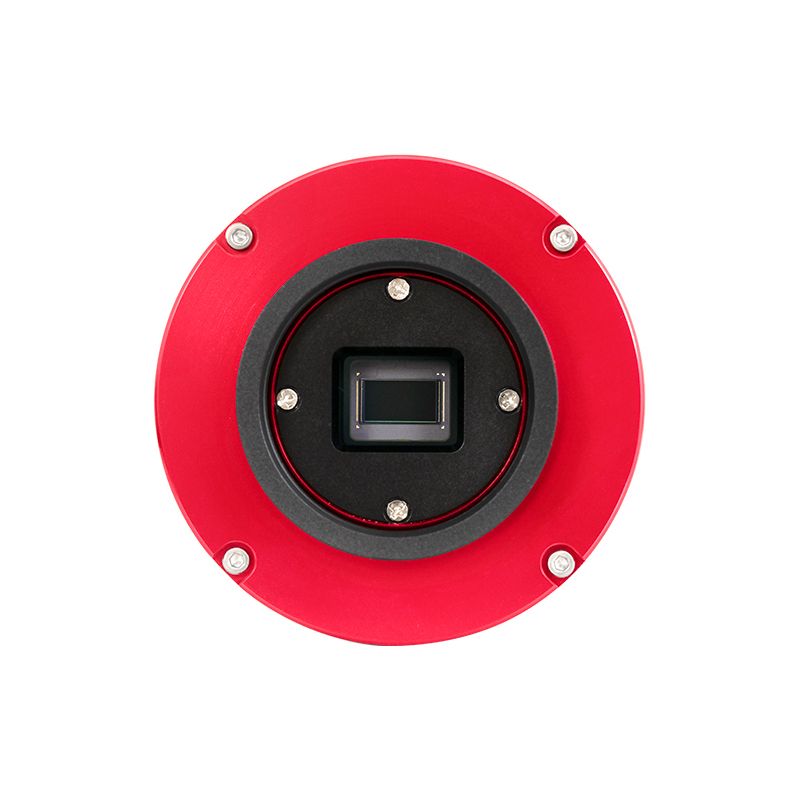
ZWO ASI585MM Pro: One Camera, Lots of Options
Versatility for Deep-Sky and Planetary Imaging
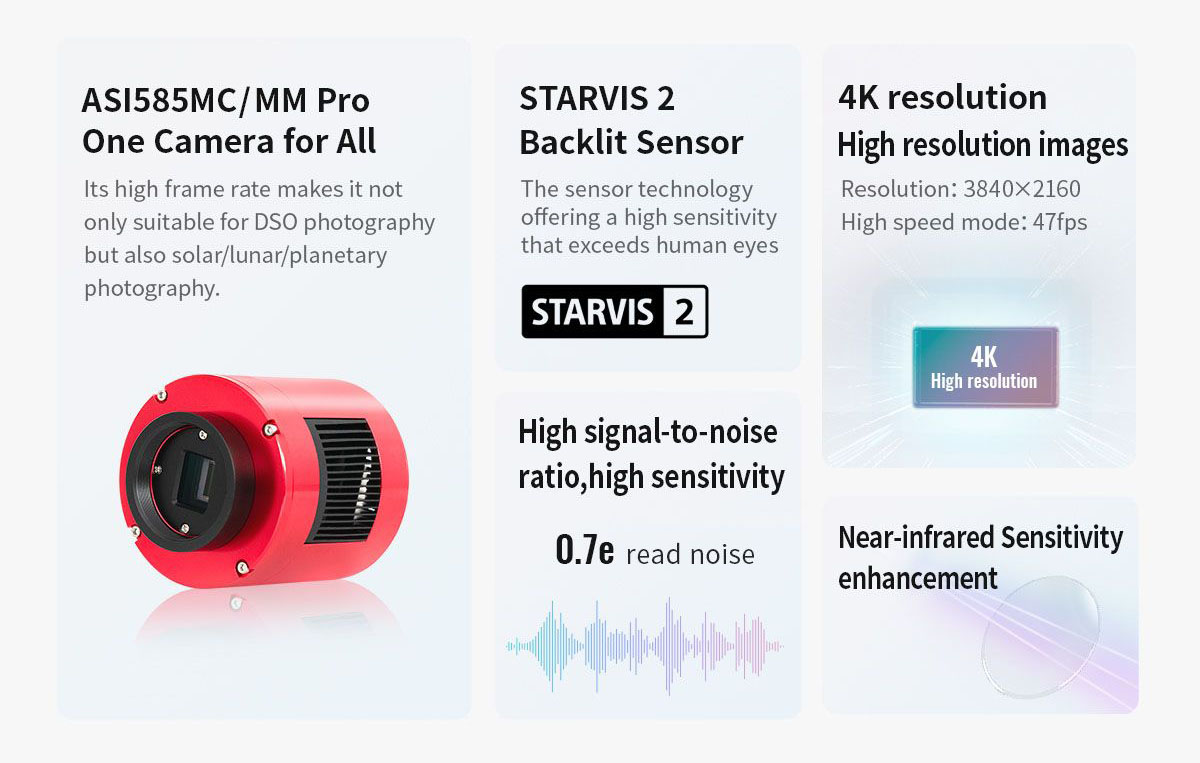
The ZWO ASI585MM Pro is a versatile camera packed with years of ZWO and Sony advancements. This cooled astronomy camera is sensitive enough for deep-sky astrophotography, and it’s fast enough for video-based planetary imaging. At full resolution, the ASI585MM Pro can record 47 frames per second (FPS), but using a smaller region of interest can significantly increase FPS.
No matter the resolution or frame rate, you’ll get a nearly noise-free image, thanks to the ASI585MM’s ultra-low read noise of 0.7e. With ZWO’s upgraded High Conversion Gain (HCG) mode, the ASI585MM achieves an impressive 12 stops of dynamic range—reducing noise and preserving fine detail in both faint and bright areas of your images!
Cutting-Edge Technical Specifications
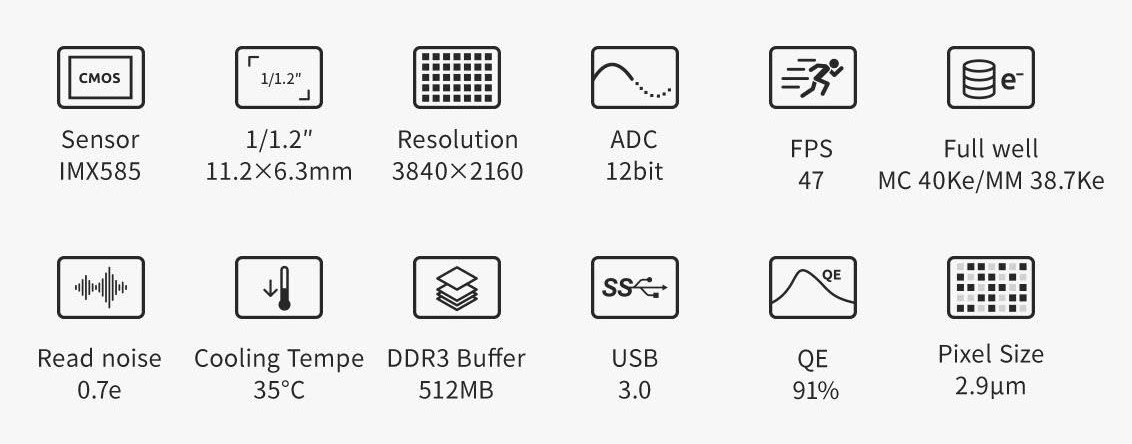
Like many modern CMOS cameras, the ASI585MM is a major upgrade over its predecessors, except for its sensor size. Its IMX585 monochrome sensor boasts an impressive 91% QE, capturing up to 91% of light from deep-space objects. This high efficiency spans much of the visual spectrum, even into near-infrared wavelengths!
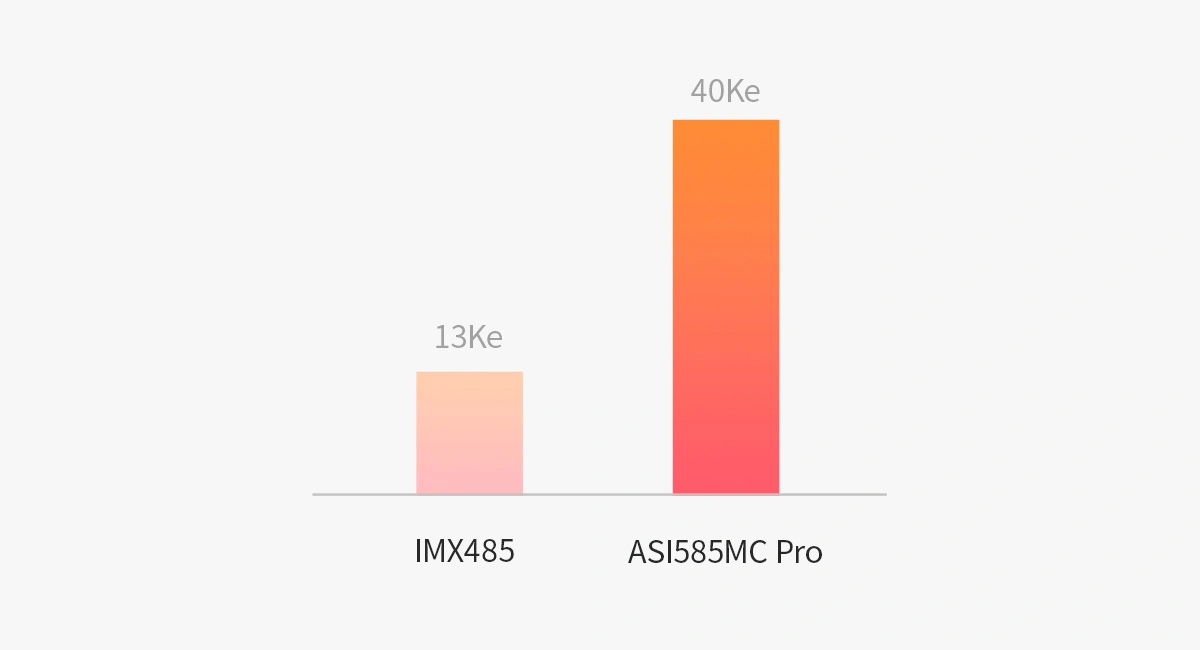
Another big upgrade is the full well depth—nearly three times greater than the previous IMX485 sensor! This allows longer exposures without stars over-saturating, meaning they keep their natural color and fine details instead of turning into featureless blown-out white spots.
What Makes the ZWO ASI585MM Pro Cooled Astronomy Camera Shine
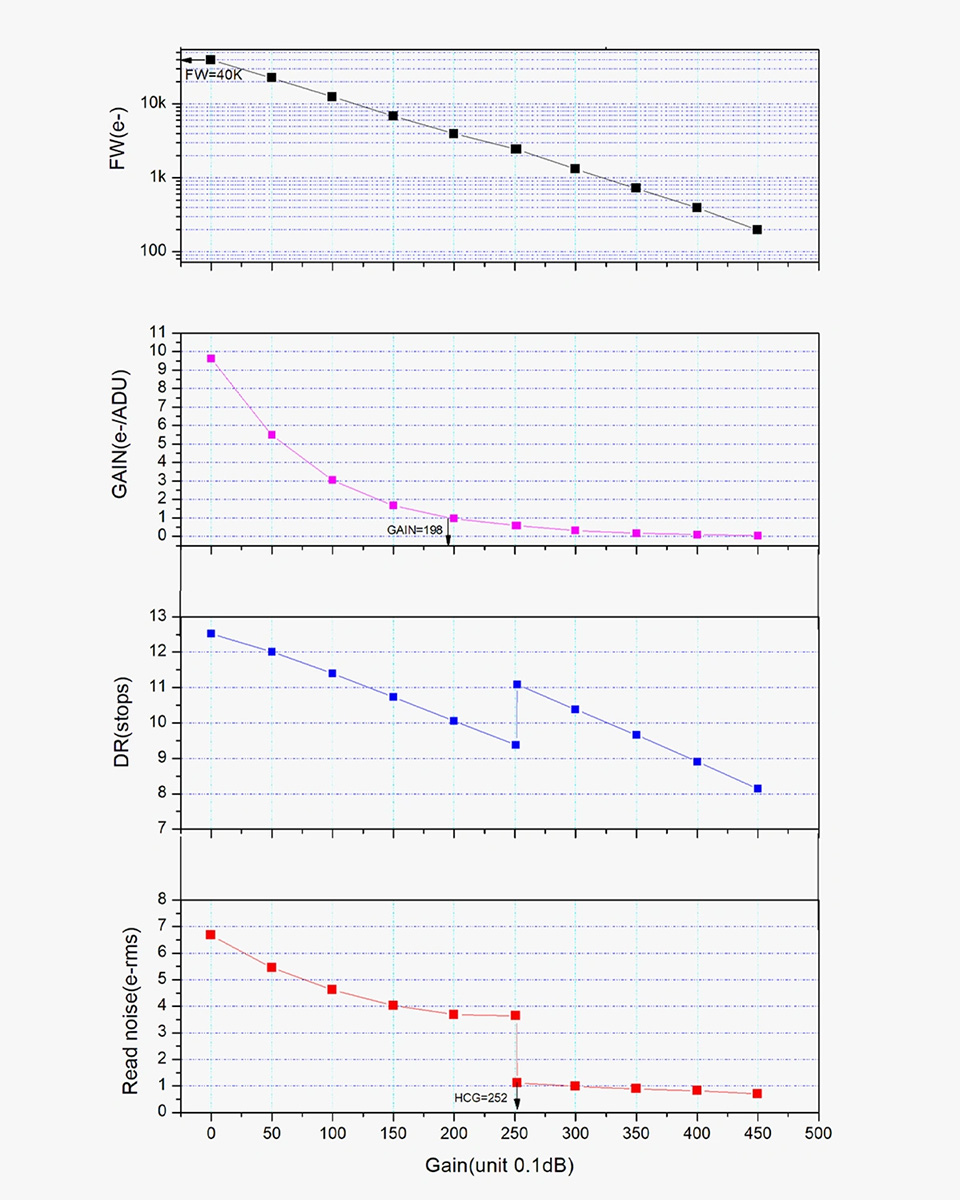
Low read noise, High dynamic range
The ZWO ASI585MM Pro follows in the footsteps of other recent CMOS offerings from ZWO in having a distinct gain value at which read noise drops and dynamic range skyrockets.
This feature is called a "high conversion gain" mode (HCG), and with the IMX585 monochrome sensor, this activates when the camera is set to a gain of 252. At this point the HCG mode automatically activates, and the dynamic range jumps from about 9.5 stops to almost an 11 bit output, while simultaneously dropping the read noise to as low as 0.9e.
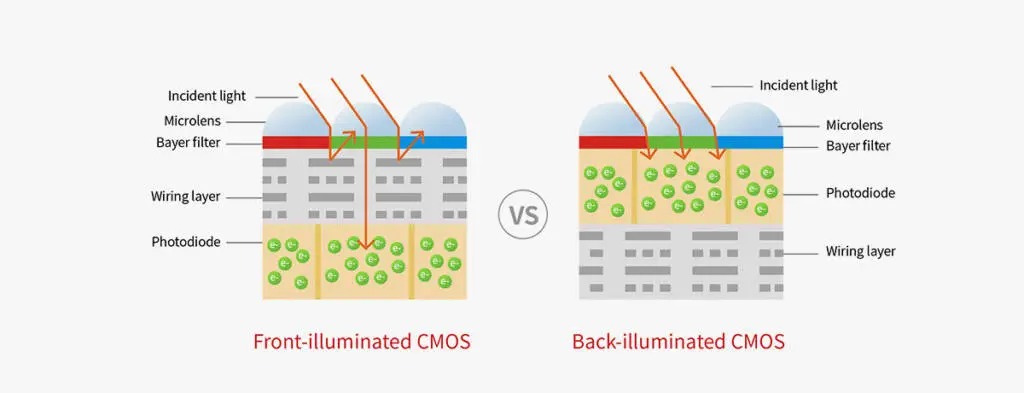
Backside-Illuminated Sensor (BSI)
Sony has been improving and innovating their backside-illumination (BSI) sensor technology for years. The newest generation of STARVIS2 BSI sensors have significantly enhanced sensitivity while reducing noise. Traditional sensor designs place essential electronics (metal wiring and transistors) on top of the silicon layer that light must penetrate. This, blocks a portion of incoming photons from reaching the sensor. BSI technology flips this arrangement, positioning these electronics behind the silicon layer and allowing the photons to be recorded with much less interference.
The result is that any camera with a STARVIS 2 chip will have several benefits. These include a wider dynamic range than was previously possible, super-high sensitivity that goes beyond the normal range of human vision, and improved signal-to-noise ratio.
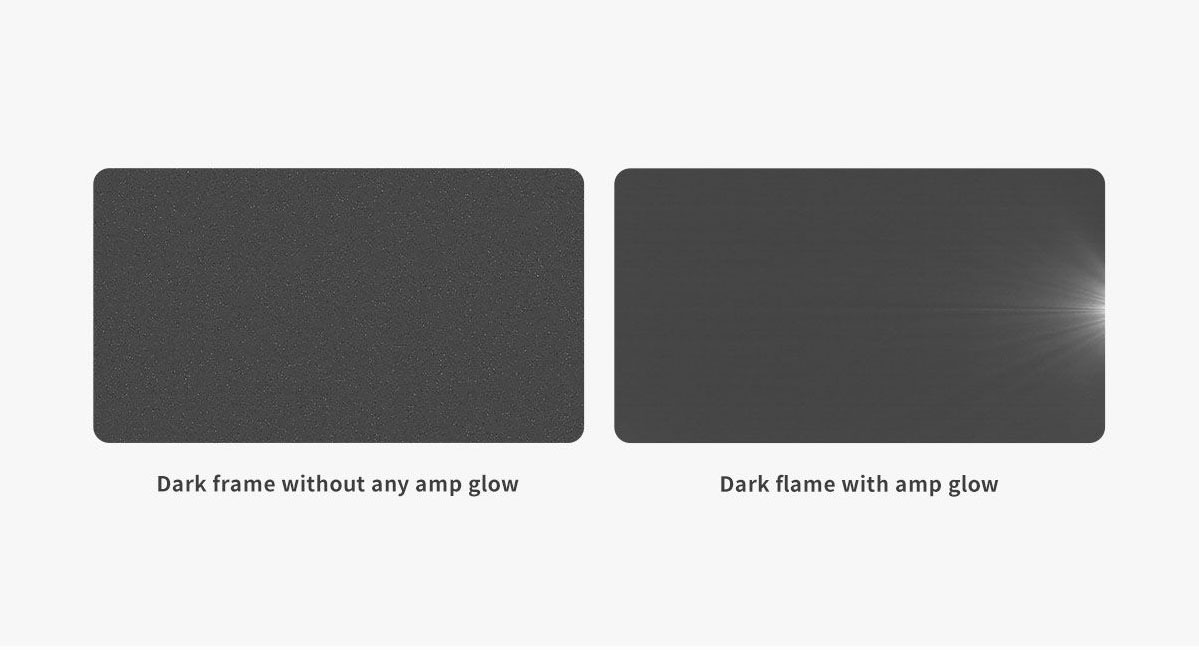
Zero Amp Glow
The newest wave of Sony STARVIS 2 CMOS camera sensors have all successfully addressed the biggest issue from their predecessors - the amp glow. For those who have not had the misfortune of dealing with this phenomenon, amp-glow is when a weak infrared light source leaks onto your sensor and leaves a pattern, shape, or flare of some kind on the final images.
This issue has been problematic for many older astronomy cameras, DSLRs, and even newer mirrorless cameras, but the most severe cases were actually from some of the immediate predecessors to the ASI585MM-Pro. Thankfully, the IMX585 monochrome sensor used in the ZWO ASI585MM Pro does not experience this issue at all, making it easier than ever to collect calibration frames and process a nice, clean image.
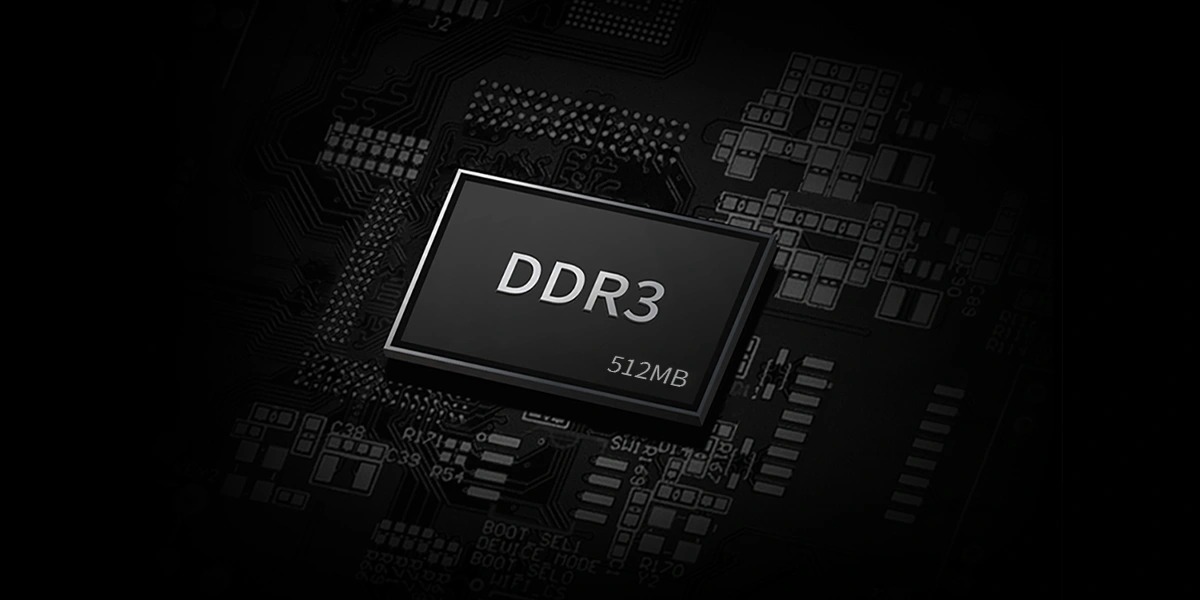
Native 12-bit ADC and 512MB of DDR3 RAM
The ZWO ASI585MM Pro uses a standard 12-bit analog-to-digital converter, but the memory size has doubled over some of the larger sensor models like the ASI2600MC Pro. It now sits at a whopping 512MB of DDR3 RAM!
This is important for smaller, faster chips like the IMX585 because of the speed required for planetary imaging. Unlike typical low-resolution planetary cameras, the ZWO ASI585MMPro has a 4K resolution thanks to its small 2.9µm pixels. More pixels means larger files, so if you’re capturing 90-second exposures of Jupiter or the Moon then this increased memory will help prevent your camera’s data from bottlenecking and dropping frames.
Two-stage TEC Cooling
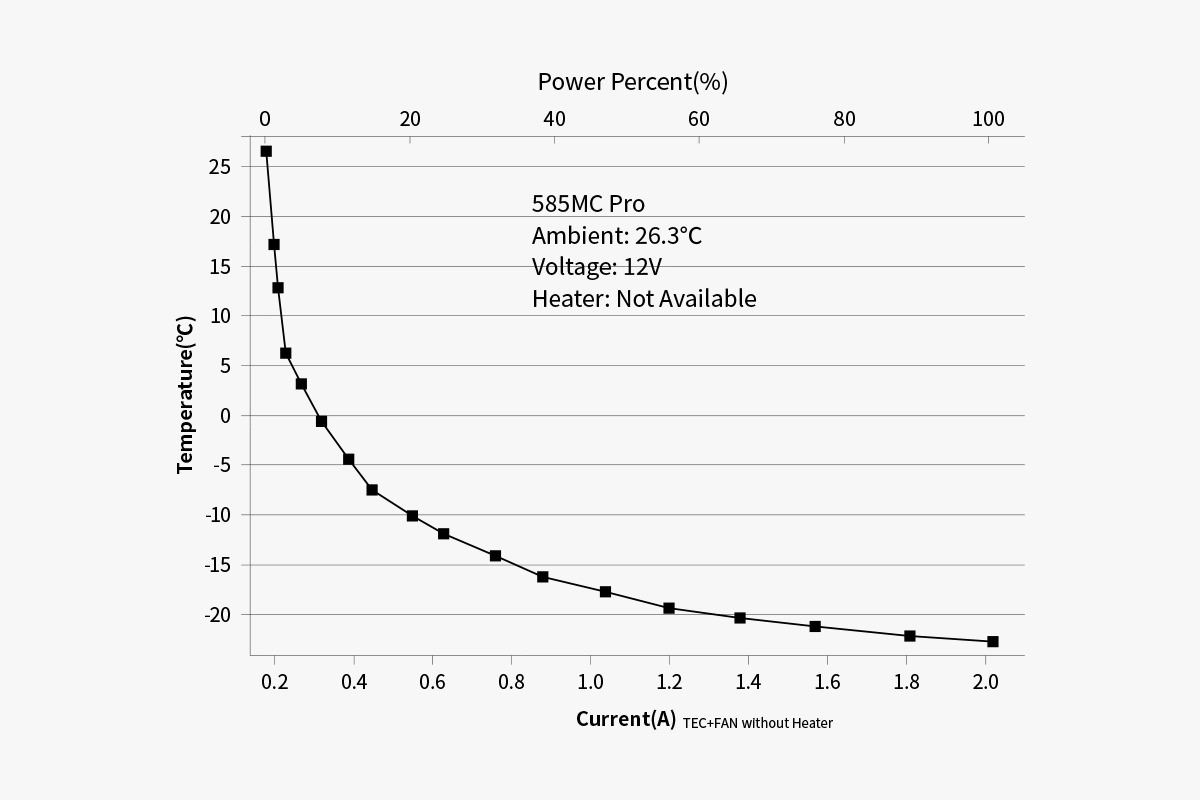
The ASI585MM Pro features a powerful two-stage TEC cooling system capable of reducing sensor temperature by a substantial 35°C (63°F) reduction to ambient conditions. This significantly minimizes thermal noise during extended deep-sky exposures.
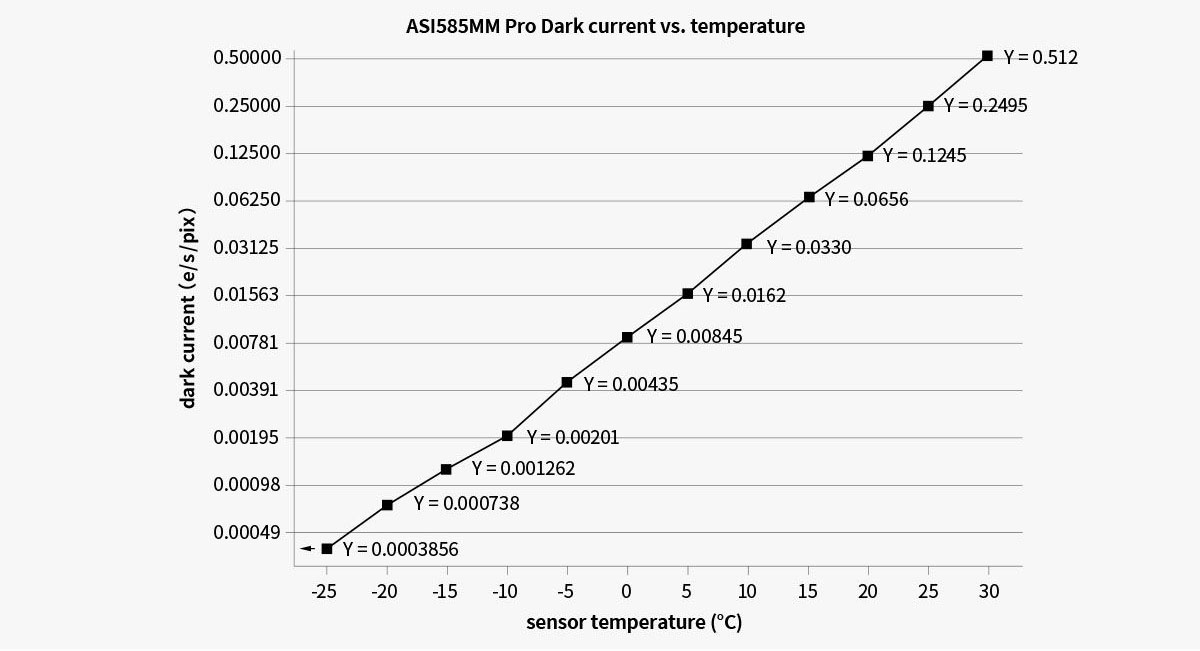
This impressive cooling capability works alongside ZWO's innovative dark current suppression technology for comprehensive noise management. At just 0°C, the camera produces a dark current of less than 0.00781 noise per second per pixel (n/s/pix). If you can lower the sensor to -4°F (-20°C), the dark current becomes so low that it effectively renders any remaining noise inconsequential to the final image quality.
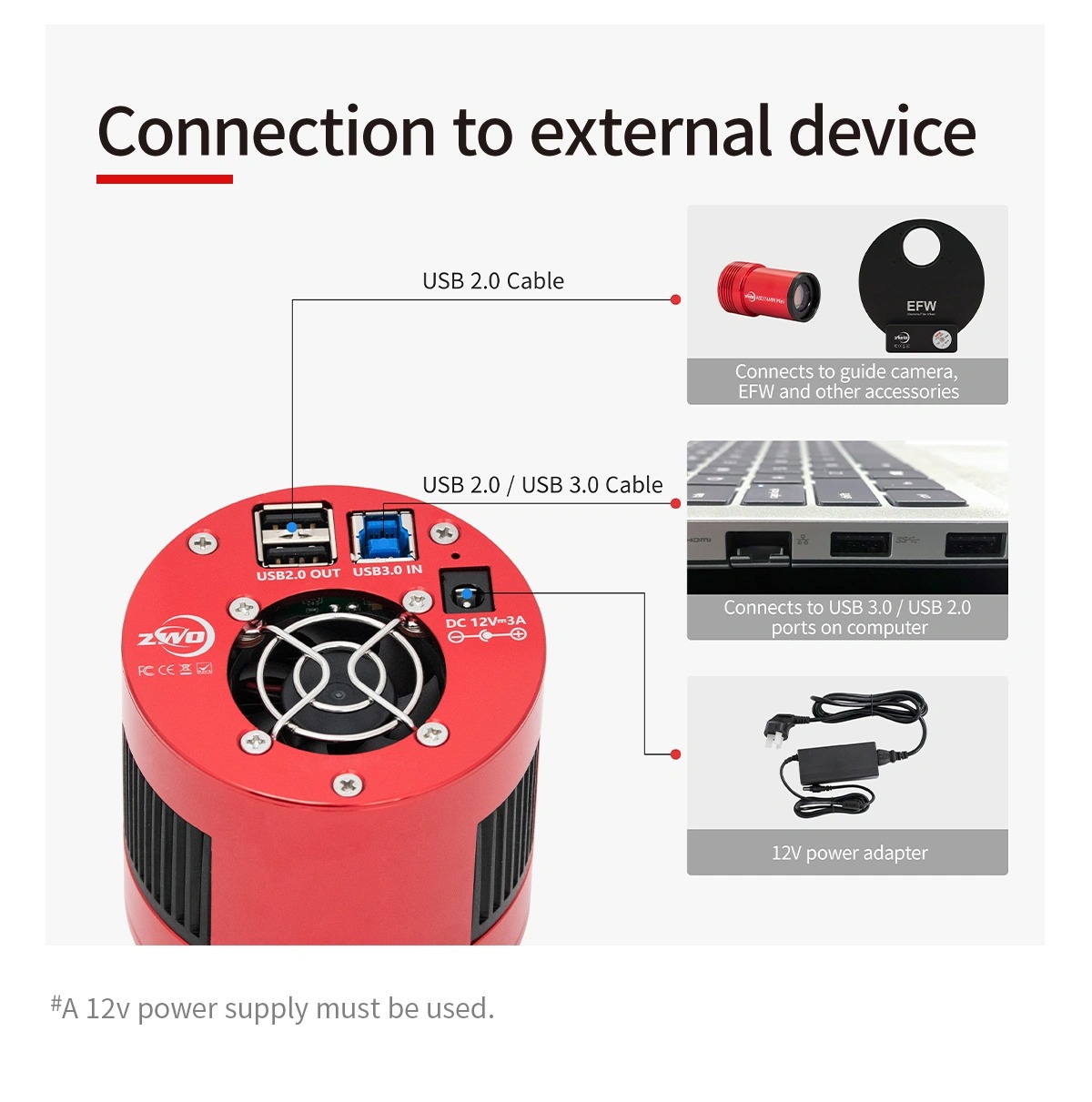
Please note: the camera’s TEC cooler requires a 12V external power supply (not included).
USB 2.0 for connectivity and USB 3.0 for High-Speed Data Transfer
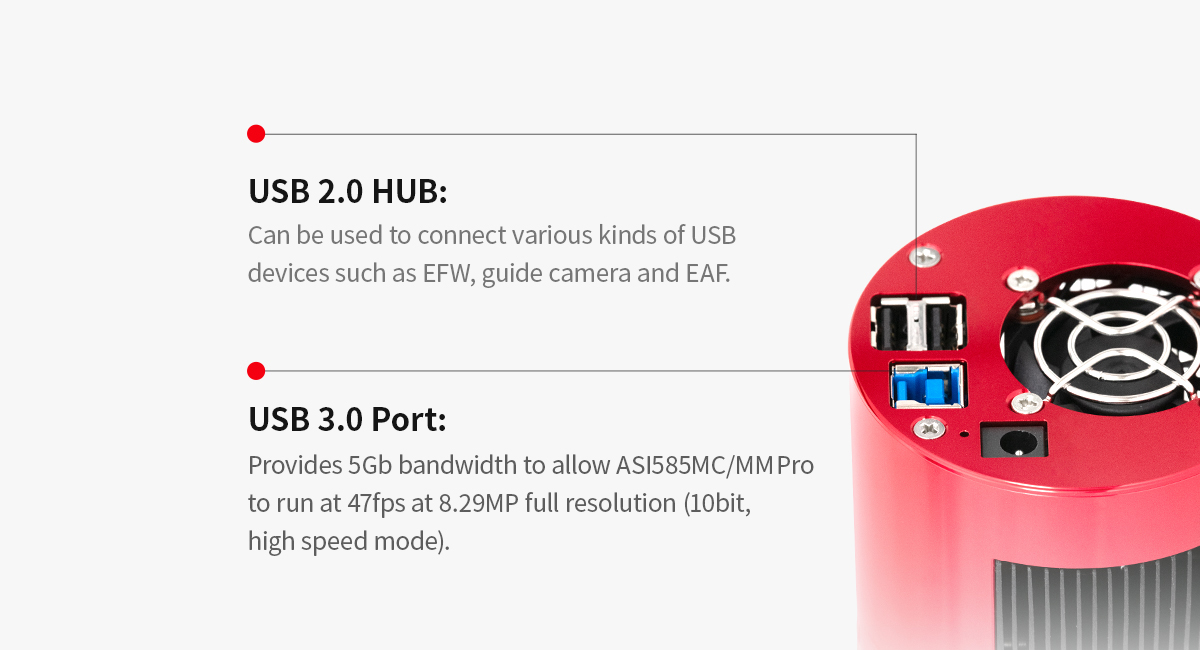
The ZWO ASI585MM Pro is equipped with a high-speed USB 3.0 interface and a built-in 512MB DDR3 cache. These combine to ensure stable and secure data transmission. During long exposure astrophotography, this helps with the amp glow reduction caused by slow readout speed, and during high-speed planetary or lunar astrophotography this means fewer frames dropping and faster data recording.
Ready for Widefield Imaging
The ZWO ASI585MM-Pro would make for a particularly good companion to widefield camera lenses. While the small sensor may be a bit limiting for longer focal lengths, the small IMX585 sensor will excel when using a wide angle telescope or even a camera lens.
For Canon EF lenses, which are by far the most common in this hobby, this connection would require the ZWO T2 Thread to Canon EOS EF-Mount Lens Adapter. This configuration will allow you to integrate with other ZWO accessories, such as the ZWO 8-Position Electronic Filter Wheel or the ZWO CAA Camera Angle Adjuster Electronic Rotator.
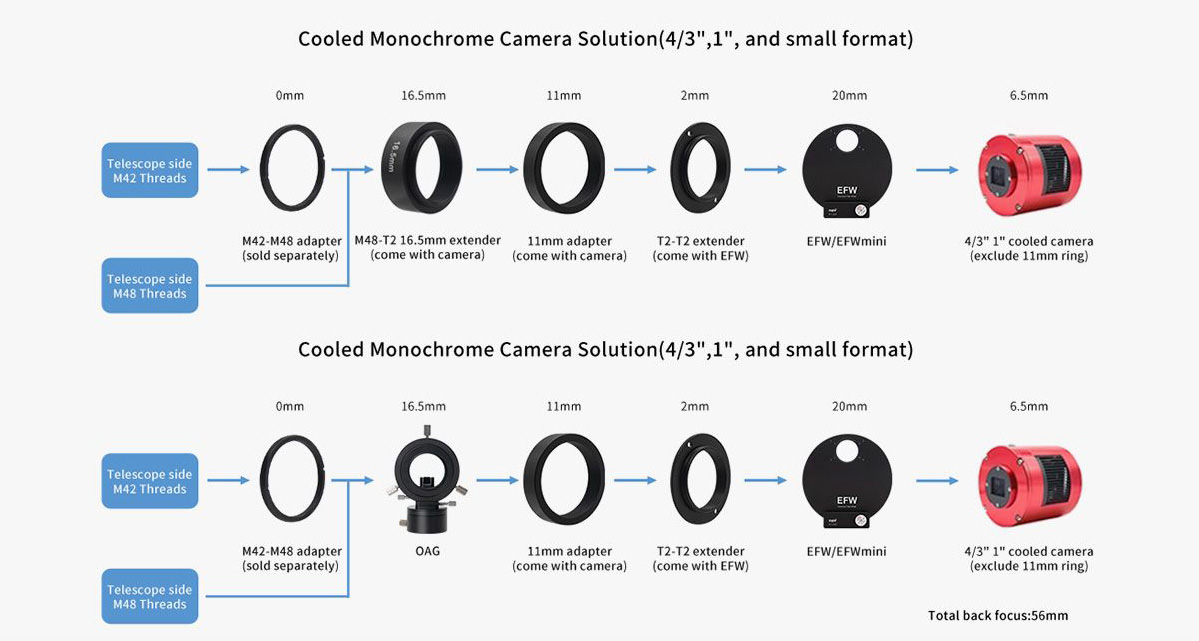
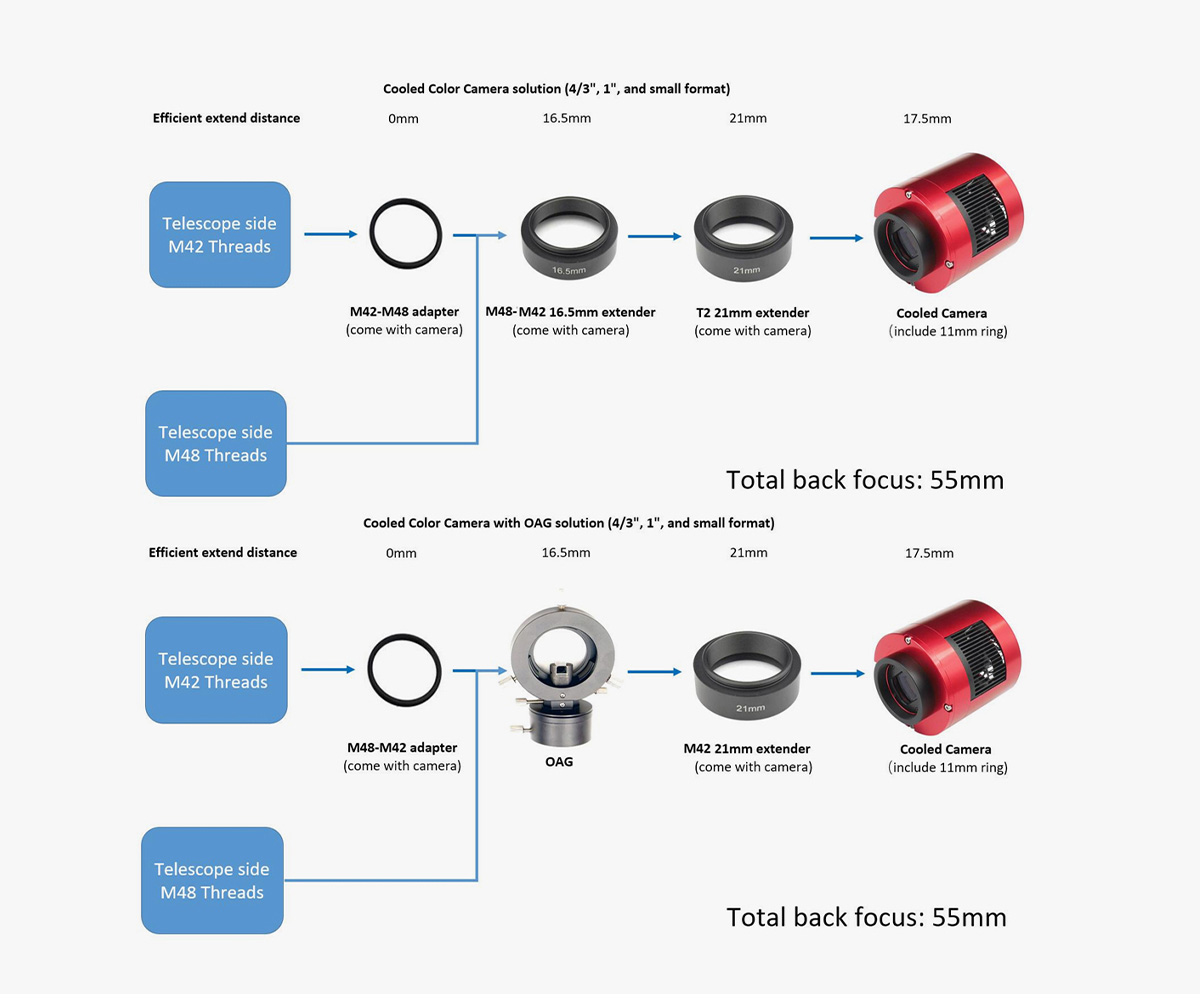
Backfocus solutions
The best solutions to reach a 55mm back focus length:
Additional Info
Frequently Asked Questions
What are the power and setup requirements?
Users often ask why the camera must be connected to an external power supply. The ASI585MM Pro needs an external 11–14 volt power source to operate (even if the cooler isn’t active). This power can be supplied by the ASIAIR or the ZWO 12V AC to DC power adapter. This design ensures the cooling system and all internal electronics work reliably.
What sensor and performance characteristics does it offer?
The camera is equipped with Sony’s back‐illuminated IMX585 monochrome sensor. This sensor provides a native 4K resolution, high dynamic range (up to 11 stops), and a full well depth of 38.7ke. These features help capture fine details while keeping noise to a minimum.
How does the two-stage TEC cooling and noise performance work?
The ASI585MM Pro incorporates a two-stage TEC cooling system that can lower the sensor temperature to approximately 95°F (35°C) below ambient. This cooling dramatically reduces dark current noise, and the innovations in sensor technology have allowed for zero amp glow on the IMX585 sensor.
What distinguishes the color (ASI585MC Pro) version from the monochrome model?
While both models share essentially the same sensor technology and performance benefits, the ASI585MC Pro requires no additional filters, and it has a very slight increase in full well depth (40Ke versus 38.7ke).
How do I achieve proper integration with my telescope setup?
A common question relates to connectivity and achieving optimal back focus. For many users, setting up the camera correctly involves using simply the adapters provided by ZWO in the camera packaging. These adapters allow the vast majority of users to reach a standard 55mm back focus length, which is the most commonly found spacing configuration across a wide range of optical systems.
What measures are in place to help maintain a stable data transmission during high-speed imaging sessions?
To address concerns about data reliability, the camera uses a USB 3.0 interface along with an onboard DDR3 cache that has 512MB of buffer room. This abundance of memory ensures that large volumes of data are handled smoothly, even during solar, planetary, or lunar video captures at maximum speeds.
How is dew or icing managed during cold imaging sessions?
Users working in high-moisture environmental conditions often ask about dew prevention, and particularly about icing in the sensor chamber. The ZWO ASI585MM Pro is equipped with a polyimide heater that fits over the protective window to help prevent dew or icing.
Other Information
- Country of Manufacture: China
ZWO ASI585MM Pro: A Low-Cost Entry Point to Monochrome Imaging
The ZWO ASI585MM Pro is the newest in ZWO’s line of monochrome deep space astrophotography cameras. But don’t let its small sensor size fool you! Despite only being 1/1.2 inches, this camera is still incredibly powerful and versatile. It is arguably the most capable planetary imaging camera among all the cooled ZWO cameras! This is thanks to its speed and small pixels. With 91% quantum efficiency, the IMX585 sensor is a great option for entry-level deep-sky astrophotography. With all these features in one package, the most impressive part might be the price!
ZWO ASI585MM Pro Review
Key Features of the ZWO ASI585MM Pro
- 4K High-Resolution Sensor: The ZWO ASI585MM Pro delivers exceptional detail with an 8-megapixel sensor with a pixel size of 2.9µm.
- 512MB DDR3 Memory: Provides ultra-fast readouts and prevents frame dropping during electronically assisted astronomy (EAA) or planetary astrophotography.
- 91% Peak Quantum Efficiency (QE): Greater sensitivity means more light capture, resulting in clearer and more detailed images.
- 43ke- Full Well Capacity: Prevents saturation of bright stars, even in long exposures. And 3x bigger than its predecessor!
- Ultra-Low Readout Noise (0.7e): Produces better image clarity and dynamic range.
- Zero Amp-Glow: Ensures clean, noise-free images, even during extended exposures, reducing post-processing hassle.
- Complete Compatibility with ZWO Accessories: Integrates effortlessly with accessories like the ZWO CAA Camera Angle Adjuster Electronic Rotator or the ZWO 7-Position Electronic Filter Wheel for 2" Filters (EFW).
ZWO ASI585MM Pro: One Camera, Lots of Options
Versatility for Deep-Sky and Planetary Imaging
The ZWO ASI585MM Pro is a versatile camera packed with years of ZWO and Sony advancements. This cooled astronomy camera is sensitive enough for deep-sky astrophotography, and it’s fast enough for video-based planetary imaging. At full resolution, the ASI585MM Pro can record 47 frames per second (FPS), but using a smaller region of interest can significantly increase FPS.
No matter the resolution or frame rate, you’ll get a nearly noise-free image, thanks to the ASI585MM’s ultra-low read noise of 0.7e. With ZWO’s upgraded High Conversion Gain (HCG) mode, the ASI585MM achieves an impressive 12 stops of dynamic range—reducing noise and preserving fine detail in both faint and bright areas of your images!
Cutting-Edge Technical Specifications
Like many modern CMOS cameras, the ASI585MM is a major upgrade over its predecessors, except for its sensor size. Its IMX585 monochrome sensor boasts an impressive 91% QE, capturing up to 91% of light from deep-space objects. This high efficiency spans much of the visual spectrum, even into near-infrared wavelengths!
Another big upgrade is the full well depth—nearly three times greater than the previous IMX485 sensor! This allows longer exposures without stars over-saturating, meaning they keep their natural color and fine details instead of turning into featureless blown-out white spots.
What Makes the ZWO ASI585MM Pro Cooled Astronomy Camera Shine
Low read noise, High dynamic range
The ZWO ASI585MM Pro follows in the footsteps of other recent CMOS offerings from ZWO in having a distinct gain value at which read noise drops and dynamic range skyrockets.
This feature is called a "high conversion gain" mode (HCG), and with the IMX585 monochrome sensor, this activates when the camera is set to a gain of 252. At this point the HCG mode automatically activates, and the dynamic range jumps from about 9.5 stops to almost an 11 bit output, while simultaneously dropping the read noise to as low as 0.9e.
Backside-Illuminated Sensor (BSI)
Sony has been improving and innovating their backside-illumination (BSI) sensor technology for years. The newest generation of STARVIS2 BSI sensors have significantly enhanced sensitivity while reducing noise. Traditional sensor designs place essential electronics (metal wiring and transistors) on top of the silicon layer that light must penetrate. This, blocks a portion of incoming photons from reaching the sensor. BSI technology flips this arrangement, positioning these electronics behind the silicon layer and allowing the photons to be recorded with much less interference.
The result is that any camera with a STARVIS 2 chip will have several benefits. These include a wider dynamic range than was previously possible, super-high sensitivity that goes beyond the normal range of human vision, and improved signal-to-noise ratio.
Zero Amp Glow
The newest wave of Sony STARVIS 2 CMOS camera sensors have all successfully addressed the biggest issue from their predecessors - the amp glow. For those who have not had the misfortune of dealing with this phenomenon, amp-glow is when a weak infrared light source leaks onto your sensor and leaves a pattern, shape, or flare of some kind on the final images.
This issue has been problematic for many older astronomy cameras, DSLRs, and even newer mirrorless cameras, but the most severe cases were actually from some of the immediate predecessors to the ASI585MM-Pro. Thankfully, the IMX585 monochrome sensor used in the ZWO ASI585MM Pro does not experience this issue at all, making it easier than ever to collect calibration frames and process a nice, clean image.
Native 12-bit ADC and 512MB of DDR3 RAM
The ZWO ASI585MM Pro uses a standard 12-bit analog-to-digital converter, but the memory size has doubled over some of the larger sensor models like the ASI2600MC Pro. It now sits at a whopping 512MB of DDR3 RAM!
This is important for smaller, faster chips like the IMX585 because of the speed required for planetary imaging. Unlike typical low-resolution planetary cameras, the ZWO ASI585MMPro has a 4K resolution thanks to its small 2.9µm pixels. More pixels means larger files, so if you’re capturing 90-second exposures of Jupiter or the Moon then this increased memory will help prevent your camera’s data from bottlenecking and dropping frames.
Two-stage TEC Cooling
The ASI585MM Pro features a powerful two-stage TEC cooling system capable of reducing sensor temperature by a substantial 35°C (63°F) reduction to ambient conditions. This significantly minimizes thermal noise during extended deep-sky exposures.
This impressive cooling capability works alongside ZWO's innovative dark current suppression technology for comprehensive noise management. At just 0°C, the camera produces a dark current of less than 0.00781 noise per second per pixel (n/s/pix). If you can lower the sensor to -4°F (-20°C), the dark current becomes so low that it effectively renders any remaining noise inconsequential to the final image quality.
Please note: the camera’s TEC cooler requires a 12V external power supply (not included).
USB 2.0 for connectivity and USB 3.0 for High-Speed Data Transfer
The ZWO ASI585MM Pro is equipped with a high-speed USB 3.0 interface and a built-in 512MB DDR3 cache. These combine to ensure stable and secure data transmission. During long exposure astrophotography, this helps with the amp glow reduction caused by slow readout speed, and during high-speed planetary or lunar astrophotography this means fewer frames dropping and faster data recording.
Ready for Widefield Imaging
The ZWO ASI585MM-Pro would make for a particularly good companion to widefield camera lenses. While the small sensor may be a bit limiting for longer focal lengths, the small IMX585 sensor will excel when using a wide angle telescope or even a camera lens.
For Canon EF lenses, which are by far the most common in this hobby, this connection would require the ZWO T2 Thread to Canon EOS EF-Mount Lens Adapter. This configuration will allow you to integrate with other ZWO accessories, such as the ZWO 8-Position Electronic Filter Wheel or the ZWO CAA Camera Angle Adjuster Electronic Rotator.
Backfocus solutions
The best solutions to reach a 55mm back focus length:
-
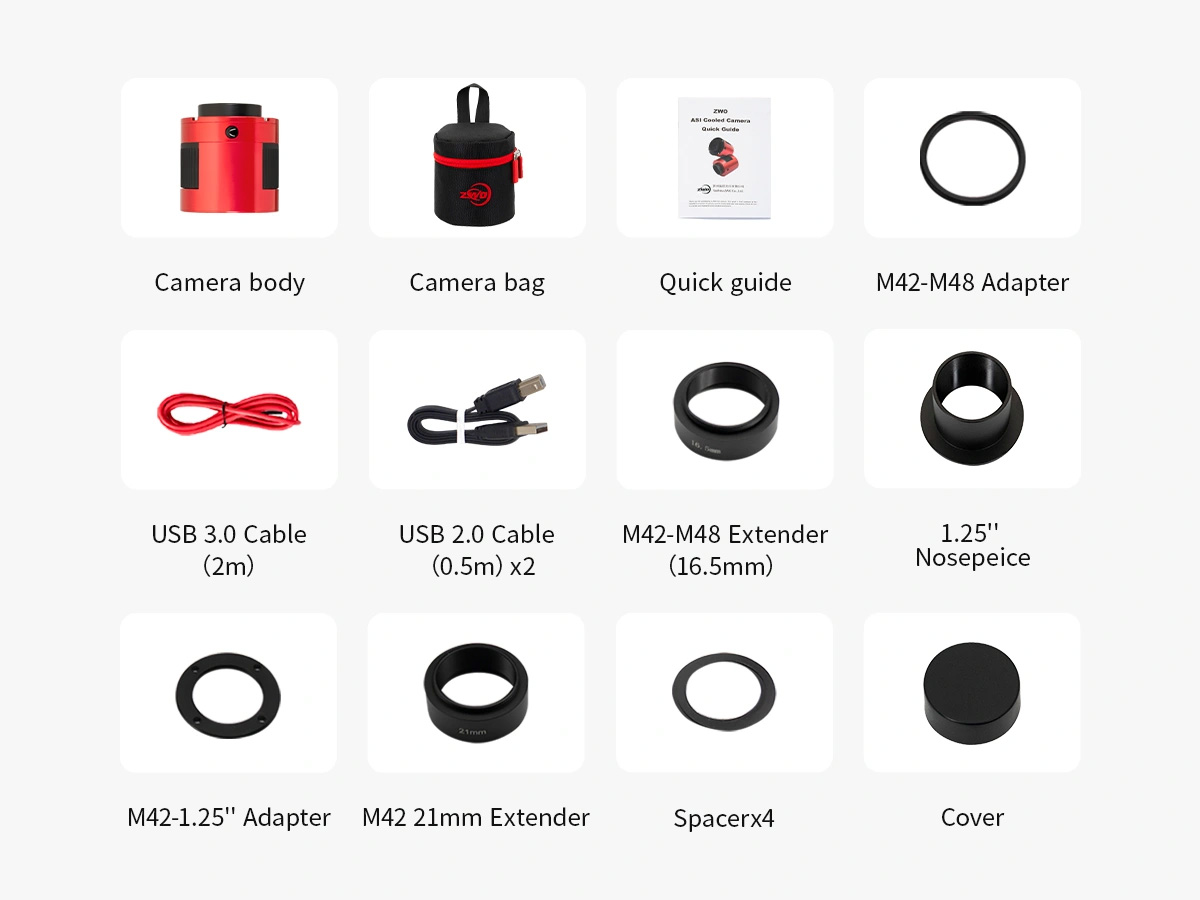
ZWO ASI585MM Pro Cooled Astronomy Camera Body
-
Soft Camera Bag
-
Quick Guide
-
USB 3.0 Cable (2m)
-
2x USB 2.0 Cable (0.5m)
-
M42-M48 Adapter
-
M42-M48 Extender (16.5mm)
-
M42-1.25" Adapter
-
M42 21mm Extender
-
4x Spacer
-
1.25" Nosepiece
-
2" Cover
- 8MP monochrome sensor with 4K resolution and 2.9µm pixels for sharp lunar, planetary, EAA, and deep-sky imaging.
- High 91% peak quantum efficiency captures more light for cleaner, more detailed images.
- Large 43ke- full well capacity helps preserve bright-star detail and offers 3x the capacity of its predecessor.
- Ultra-low 0.7e read noise improves image clarity, dynamic range, and low-light performance.
- Zero amp-glow design keeps long exposures cleaner and easier to process.
- 512MB DDR3 memory buffer supports fast, stable readout with fewer dropped frames.
- Seamless compatibility with ZWO accessories
- Power supply (required) sold separately
ZWO ASI585MM Pro: A Low-Cost Entry Point to Monochrome Imaging
The ZWO ASI585MM Pro is the newest in ZWO’s line of monochrome deep space astrophotography cameras. But don’t let its small sensor size fool you! Despite only being 1/1.2 inches, this camera is still incredibly powerful and versatile. It is arguably the most capable planetary imaging camera among all the cooled ZWO cameras! This is thanks to its speed and small pixels. With 91% quantum efficiency, the IMX585 sensor is a great option for entry-level deep-sky astrophotography. With all these features in one package, the most impressive part might be the price!
ZWO ASI585MM Pro Review
Key Features of the ZWO ASI585MM Pro
- 4K High-Resolution Sensor: The ZWO ASI585MM Pro delivers exceptional detail with an 8-megapixel sensor with a pixel size of 2.9µm.
- 512MB DDR3 Memory: Provides ultra-fast readouts and prevents frame dropping during electronically assisted astronomy (EAA) or planetary astrophotography.
- 91% Peak Quantum Efficiency (QE): Greater sensitivity means more light capture, resulting in clearer and more detailed images.
- 43ke- Full Well Capacity: Prevents saturation of bright stars, even in long exposures. And 3x bigger than its predecessor!
- Ultra-Low Readout Noise (0.7e): Produces better image clarity and dynamic range.
- Zero Amp-Glow: Ensures clean, noise-free images, even during extended exposures, reducing post-processing hassle.
- Complete Compatibility with ZWO Accessories: Integrates effortlessly with accessories like the ZWO CAA Camera Angle Adjuster Electronic Rotator or the ZWO 7-Position Electronic Filter Wheel for 2" Filters (EFW).
ZWO ASI585MM Pro: One Camera, Lots of Options
Versatility for Deep-Sky and Planetary Imaging
The ZWO ASI585MM Pro is a versatile camera packed with years of ZWO and Sony advancements. This cooled astronomy camera is sensitive enough for deep-sky astrophotography, and it’s fast enough for video-based planetary imaging. At full resolution, the ASI585MM Pro can record 47 frames per second (FPS), but using a smaller region of interest can significantly increase FPS.
No matter the resolution or frame rate, you’ll get a nearly noise-free image, thanks to the ASI585MM’s ultra-low read noise of 0.7e. With ZWO’s upgraded High Conversion Gain (HCG) mode, the ASI585MM achieves an impressive 12 stops of dynamic range—reducing noise and preserving fine detail in both faint and bright areas of your images!
Cutting-Edge Technical Specifications
Like many modern CMOS cameras, the ASI585MM is a major upgrade over its predecessors, except for its sensor size. Its IMX585 monochrome sensor boasts an impressive 91% QE, capturing up to 91% of light from deep-space objects. This high efficiency spans much of the visual spectrum, even into near-infrared wavelengths!
Another big upgrade is the full well depth—nearly three times greater than the previous IMX485 sensor! This allows longer exposures without stars over-saturating, meaning they keep their natural color and fine details instead of turning into featureless blown-out white spots.
What Makes the ZWO ASI585MM Pro Cooled Astronomy Camera Shine
Low read noise, High dynamic range
The ZWO ASI585MM Pro follows in the footsteps of other recent CMOS offerings from ZWO in having a distinct gain value at which read noise drops and dynamic range skyrockets.
This feature is called a "high conversion gain" mode (HCG), and with the IMX585 monochrome sensor, this activates when the camera is set to a gain of 252. At this point the HCG mode automatically activates, and the dynamic range jumps from about 9.5 stops to almost an 11 bit output, while simultaneously dropping the read noise to as low as 0.9e.
Backside-Illuminated Sensor (BSI)
Sony has been improving and innovating their backside-illumination (BSI) sensor technology for years. The newest generation of STARVIS2 BSI sensors have significantly enhanced sensitivity while reducing noise. Traditional sensor designs place essential electronics (metal wiring and transistors) on top of the silicon layer that light must penetrate. This, blocks a portion of incoming photons from reaching the sensor. BSI technology flips this arrangement, positioning these electronics behind the silicon layer and allowing the photons to be recorded with much less interference.
The result is that any camera with a STARVIS 2 chip will have several benefits. These include a wider dynamic range than was previously possible, super-high sensitivity that goes beyond the normal range of human vision, and improved signal-to-noise ratio.
Zero Amp Glow
The newest wave of Sony STARVIS 2 CMOS camera sensors have all successfully addressed the biggest issue from their predecessors - the amp glow. For those who have not had the misfortune of dealing with this phenomenon, amp-glow is when a weak infrared light source leaks onto your sensor and leaves a pattern, shape, or flare of some kind on the final images.
This issue has been problematic for many older astronomy cameras, DSLRs, and even newer mirrorless cameras, but the most severe cases were actually from some of the immediate predecessors to the ASI585MM-Pro. Thankfully, the IMX585 monochrome sensor used in the ZWO ASI585MM Pro does not experience this issue at all, making it easier than ever to collect calibration frames and process a nice, clean image.
Native 12-bit ADC and 512MB of DDR3 RAM
The ZWO ASI585MM Pro uses a standard 12-bit analog-to-digital converter, but the memory size has doubled over some of the larger sensor models like the ASI2600MC Pro. It now sits at a whopping 512MB of DDR3 RAM!
This is important for smaller, faster chips like the IMX585 because of the speed required for planetary imaging. Unlike typical low-resolution planetary cameras, the ZWO ASI585MMPro has a 4K resolution thanks to its small 2.9µm pixels. More pixels means larger files, so if you’re capturing 90-second exposures of Jupiter or the Moon then this increased memory will help prevent your camera’s data from bottlenecking and dropping frames.
Two-stage TEC Cooling
The ASI585MM Pro features a powerful two-stage TEC cooling system capable of reducing sensor temperature by a substantial 35°C (63°F) reduction to ambient conditions. This significantly minimizes thermal noise during extended deep-sky exposures.
This impressive cooling capability works alongside ZWO's innovative dark current suppression technology for comprehensive noise management. At just 0°C, the camera produces a dark current of less than 0.00781 noise per second per pixel (n/s/pix). If you can lower the sensor to -4°F (-20°C), the dark current becomes so low that it effectively renders any remaining noise inconsequential to the final image quality.
Please note: the camera’s TEC cooler requires a 12V external power supply (not included).
USB 2.0 for connectivity and USB 3.0 for High-Speed Data Transfer
The ZWO ASI585MM Pro is equipped with a high-speed USB 3.0 interface and a built-in 512MB DDR3 cache. These combine to ensure stable and secure data transmission. During long exposure astrophotography, this helps with the amp glow reduction caused by slow readout speed, and during high-speed planetary or lunar astrophotography this means fewer frames dropping and faster data recording.
Ready for Widefield Imaging
The ZWO ASI585MM-Pro would make for a particularly good companion to widefield camera lenses. While the small sensor may be a bit limiting for longer focal lengths, the small IMX585 sensor will excel when using a wide angle telescope or even a camera lens.
For Canon EF lenses, which are by far the most common in this hobby, this connection would require the ZWO T2 Thread to Canon EOS EF-Mount Lens Adapter. This configuration will allow you to integrate with other ZWO accessories, such as the ZWO 8-Position Electronic Filter Wheel or the ZWO CAA Camera Angle Adjuster Electronic Rotator.
Backfocus solutions
The best solutions to reach a 55mm back focus length:
Additional Info
Frequently Asked Questions
What are the power and setup requirements?
Users often ask why the camera must be connected to an external power supply. The ASI585MM Pro needs an external 11–14 volt power source to operate (even if the cooler isn’t active). This power can be supplied by the ASIAIR or the ZWO 12V AC to DC power adapter. This design ensures the cooling system and all internal electronics work reliably.
What sensor and performance characteristics does it offer?
The camera is equipped with Sony’s back‐illuminated IMX585 monochrome sensor. This sensor provides a native 4K resolution, high dynamic range (up to 11 stops), and a full well depth of 38.7ke. These features help capture fine details while keeping noise to a minimum.
How does the two-stage TEC cooling and noise performance work?
The ASI585MM Pro incorporates a two-stage TEC cooling system that can lower the sensor temperature to approximately 95°F (35°C) below ambient. This cooling dramatically reduces dark current noise, and the innovations in sensor technology have allowed for zero amp glow on the IMX585 sensor.
What distinguishes the color (ASI585MC Pro) version from the monochrome model?
While both models share essentially the same sensor technology and performance benefits, the ASI585MC Pro requires no additional filters, and it has a very slight increase in full well depth (40Ke versus 38.7ke).
How do I achieve proper integration with my telescope setup?
A common question relates to connectivity and achieving optimal back focus. For many users, setting up the camera correctly involves using simply the adapters provided by ZWO in the camera packaging. These adapters allow the vast majority of users to reach a standard 55mm back focus length, which is the most commonly found spacing configuration across a wide range of optical systems.
What measures are in place to help maintain a stable data transmission during high-speed imaging sessions?
To address concerns about data reliability, the camera uses a USB 3.0 interface along with an onboard DDR3 cache that has 512MB of buffer room. This abundance of memory ensures that large volumes of data are handled smoothly, even during solar, planetary, or lunar video captures at maximum speeds.
How is dew or icing managed during cold imaging sessions?
Users working in high-moisture environmental conditions often ask about dew prevention, and particularly about icing in the sensor chamber. The ZWO ASI585MM Pro is equipped with a polyimide heater that fits over the protective window to help prevent dew or icing.
Other Information
- Country of Manufacture: China
-
ZWO ASI585MM Pro Cooled Astronomy Camera Body
-
Soft Camera Bag
-
Quick Guide
-
USB 3.0 Cable (2m)
-
2x USB 2.0 Cable (0.5m)
-
M42-M48 Adapter
-
M42-M48 Extender (16.5mm)
-
M42-1.25" Adapter
-
M42 21mm Extender
-
4x Spacer
-
1.25" Nosepiece
-
2" Cover

ZWO ASI585MM Pro Cooled Monochrome Astronomy Camera