

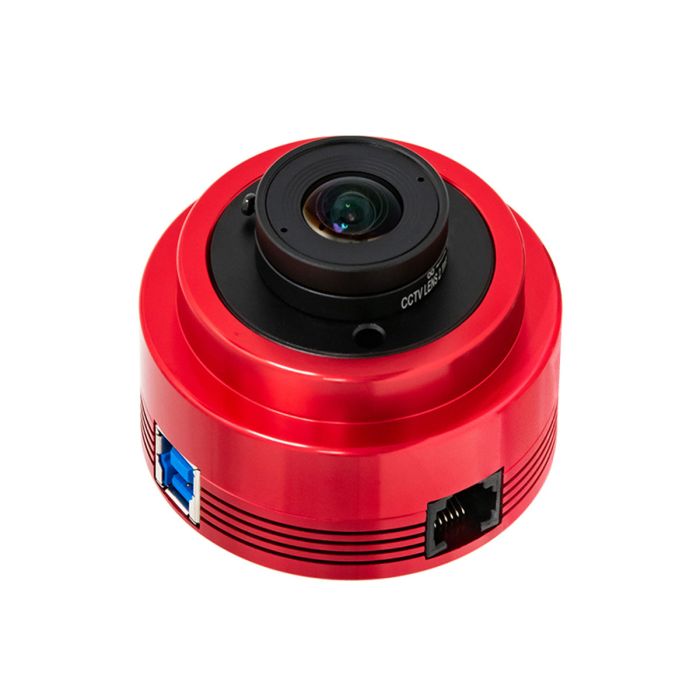
ZWO ASI662MC 2.07 MP CMOS Color Astronomy Camera with USB 3.0
Stock count is accurate & shown in real time.
- This item is out of stock.
- Sign up for back-in-stock alerts to be notified when this item becomes available (account login required).
- This item is out of stock.
- Sign up for back-in-stock alerts to be notified when this item becomes available (account login required).
Contiguous US / Lower 48:
Free shipping applies to orders over $50 using our chosen carrier/method. Faster paid options are available at checkout.
Alaska, Hawaii & US Territories:
Free shipping applies to many—but not all—products. Enter your ZIP code in cart or upon checkout to confirm options and costs.
International:
International orders do not qualify for free shipping. Shipping, duties, brokerage, tariffs, and taxes are the customer’s responsibility. Some items may be restricted due to export, size, or manufacturer limitations.
- Sony IMX662 sensor, 1/2.8" frame size, 2.9µm pixel size
- 2.07 megapixel resolution (1920x1080)
- Up to 107.6 frames per second in high-speed mode
- 91% peak quantum efficiency
- Zero amp glow at any exposure length or gain setting
- 256MB DDR3 buffer with USB 3.0 interface
- Full well capacity of 37.8Ke, 3x larger than the ASI462MC
ZWO ASI662MC High-Speed Planetary Camera!
The ZWO ASI662MC is a high-speed color planetary camera built around the Sony IMX662 sensor. With a 1/2.8" frame size and 2.9µm pixels, it captures 2.07 megapixel images and can output up to 107.6 frames per second at full resolution in high-speed mode. That combination of speed and sensitivity makes it well suited to planetary, lunar, and solar imaging, where capturing many frames quickly and stacking out atmospheric turbulence produces sharper final results. As an upgrade over the ASI462MC, the ASI662MC brings a larger full well capacity, lower read noise, and the elimination of amp glow.
ZWO ASI662MC Color Astronomy Camera Video Introduction:
Highlights of the ZWO ASI662MC Color Astronomy Camera
STARVIS 2 Sensor Technology
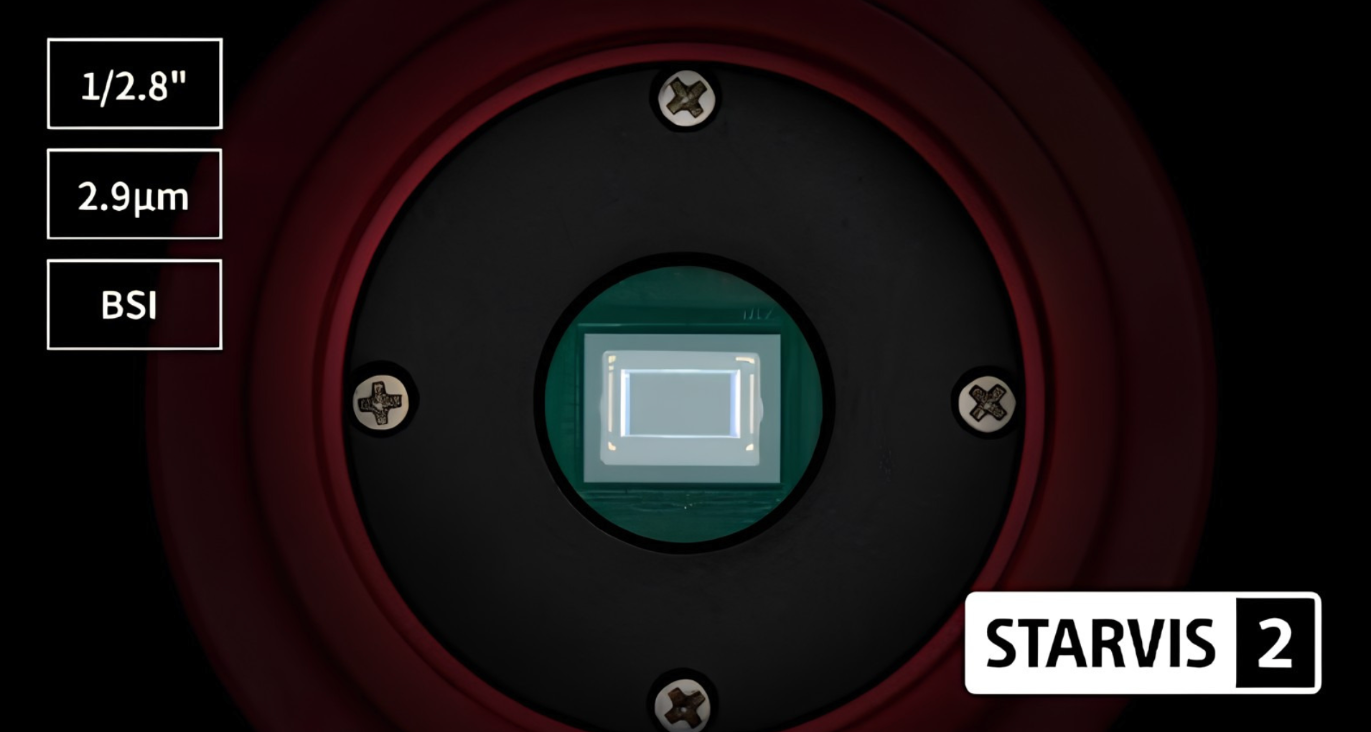
The IMX662 sensor uses Sony's STARVIS 2 technology, giving the ASI662MC higher sensitivity to red and near-infrared light along with dark current noise several times lower than the ASI174MC.
Built to Avoid Overexposure
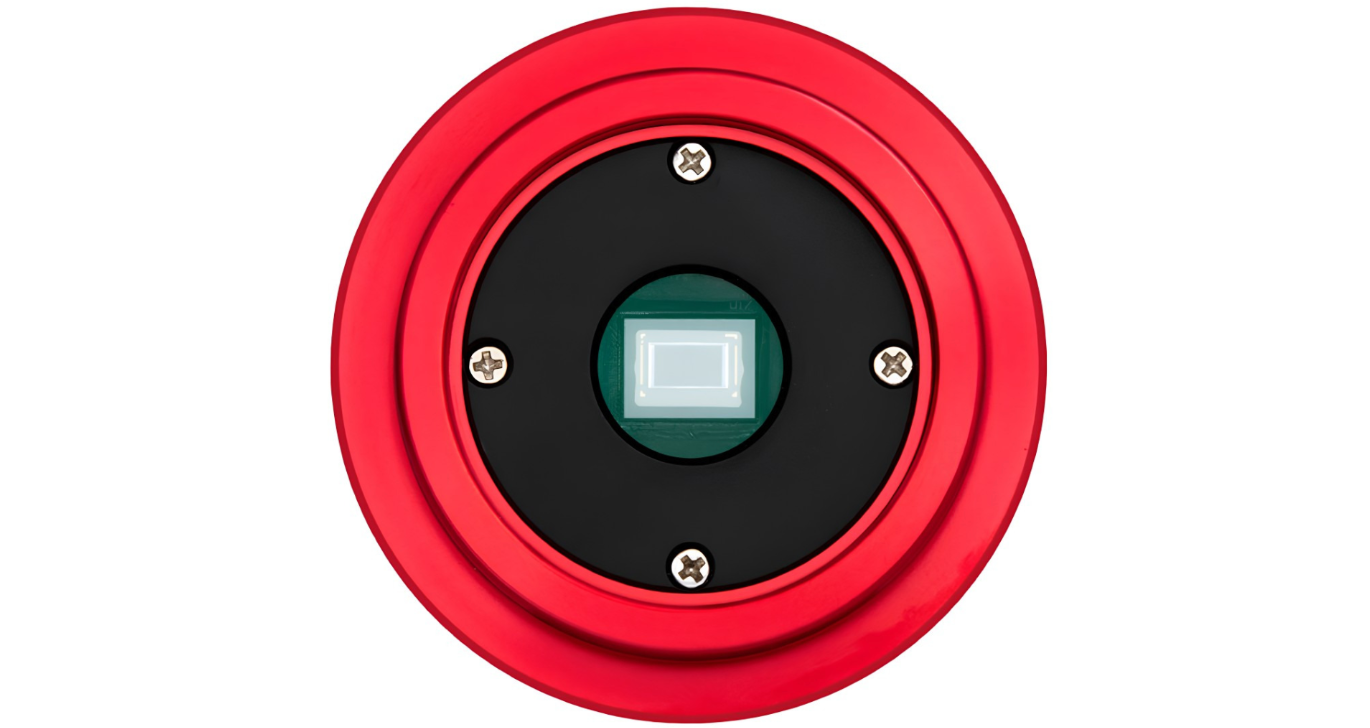
A full well capacity of 37.8Ke, three times larger than the ASI462MC, makes the sensor far more resistant to overexposure. This allows for longer exposures and cleaner results in low light.
Fast, Stable Data Transfer
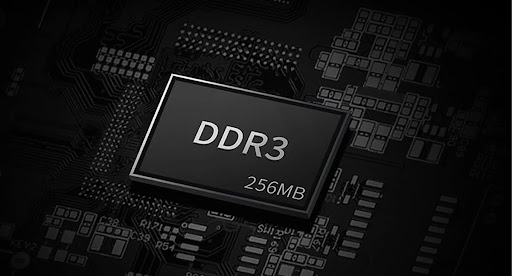
A USB 3.0 interface paired with a 256MB DDR3 buffer keeps data transmission stable during long capture sessions, helping prevent dropped frames during extended imaging runs.
Top-Tier Sensor Performance
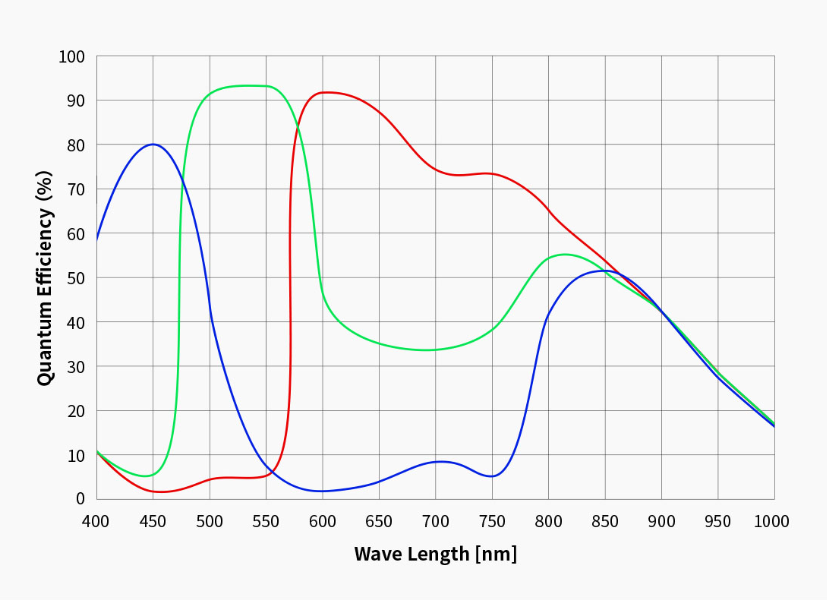
The ASI662MC reaches a peak quantum efficiency of 91 percent, meaning the sensor converts a high percentage of incoming light into a usable signal. Read noise stays low across the gain range, and the camera's built-in HCG (high conversion gain) mode automatically activates at a gain setting of 252, restoring the dynamic range to 12-bit at higher gain levels. This keeps shadow detail intact even when gain is pushed up to compensate for dim targets or short exposures.
Low Noise and No Amp Glow
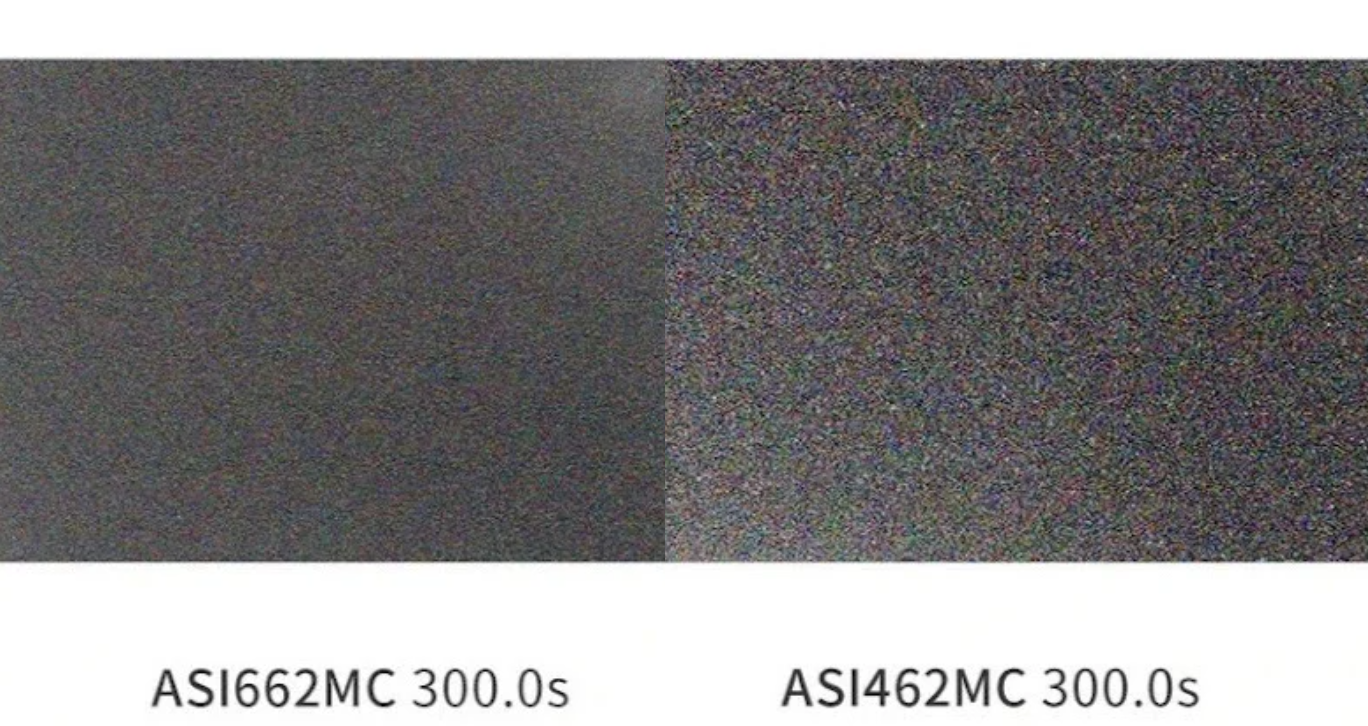
Amp glow is a common issue in CMOS astronomy cameras, appearing as a faint glow near the edges or corners of long exposures. The ASI662MC eliminates this entirely at the hardware level, regardless of exposure length or gain setting. Because the fix is built into the sensor design itself, no software correction or dark frame calibration is needed to remove it.
Connection and Uses
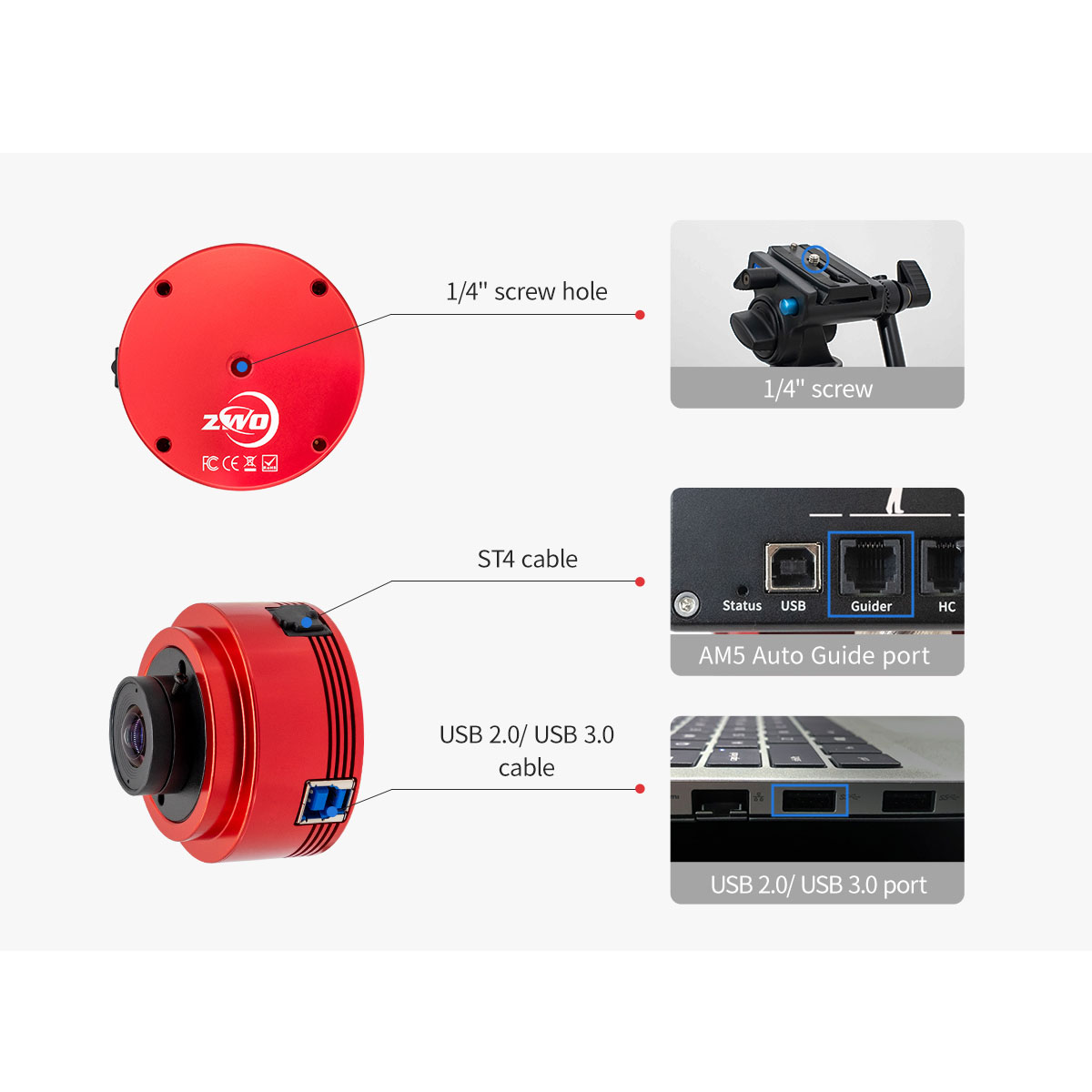
The ASI662MC connects to a telescope through a standard 1.25" nosepiece, with an optional 1.25" filter that can be threaded in between the camera and nosepiece. On the camera body, a USB 3.0 port handles data transfer to a computer, and an ST4 guide port allows the camera to send guiding corrections directly to a compatible mount, such as ZWO's AM5 series. The camera supports Windows 7, 8, and 10 in both 32-bit and 64-bit versions, along with Linux and Mac.
Specifications
Sensor: Sony IMX662, 1/2.8" CMOS
Bayer Pattern: RGGB
Shutter Type: Rolling Shutter
Resolution: 2.07 MP (1920 × 1080)
Pixel Size: 2.9 µm
Sensor Dimensions: 5.568 × 3.132 mm
Peak Quantum Efficiency: 91%
Full Well Capacity: 37.8 ke⁻
Read Noise: 0.8 e⁻ (1.22 e⁻ at 19 dB Gain)
ADC: 12-bit
Performance Specifications
Maximum Frame Rate: 107.6 fps
Exposure Range: 32 µs – 2000 s
Buffer: 256 MB DDR3
Interface: USB 3.0 / USB 2.0 Type-B
Mechanical Specifications
Back Focus: 12.5 mm
Protective Window: Ø21 × 1.1 mm, AR-Coated
Weight: 126 g (4.4 oz)
Environmental Specifications
Operating Temperature: -5°C to 50°C (23°F to 122°F)
Storage Temperature: -10°C to 60°C (14°F to 140°F)
Operating Relative Humidity: 0–80%
Supported OS: Windows 7/8/10 (32-bit & 64-bit), Linux, macOS
Frequently Asked Questions
Is the ASI662MC a good choice for planetary imaging?
The ASI662MC is well suited to planetary work. The 1920x1080 resolution maps cleanly onto the disk sizes of planets like Jupiter and Saturn at typical focal lengths, and the 107.6 fps frame rate allows for large capture runs that give stacking software plenty of frames to work with for atmospheric turbulence rejection.
How does the ASI662MC compare to the ASI462MC it replaced?
The ASI662MC carries a full well capacity three times larger than the ASI462MC, which reduces the risk of overexposure on bright planetary targets. It also eliminates amp glow entirely at the hardware level, a limitation that required dark frame calibration to manage on the ASI462MC. Dark current noise is also several times lower than the ASI174MC, which was a common alternative in this class.
Can the ASI662MC be used for deep sky imaging?
It can, though it is optimized for planetary and high-speed work rather than long-exposure deep sky photography. The lack of active cooling means thermal noise accumulates during long exposures, which limits its effectiveness on faint targets compared to a dedicated cooled deep sky camera. For bright targets like the Orion Nebula or star clusters, shorter exposures at high frame rates and stacking can produce good results
Does the ASI662MC work with narrowband filters?
Yes. The camera accepts standard 1.25" filters threaded between the nosepiece and the camera body. The IMX662 sensor's strong sensitivity to red and near-infrared wavelengths makes it particularly responsive to hydrogen-alpha filtration, which is useful for solar imaging and some planetary nebula work.
What software is compatible with the ASI662MC?
The ASI662MC is supported on Windows 7, 8, and 10 in both 32-bit and 64-bit versions, as well as Linux and Mac. It works with ZWO's own ASIStudio and ASILive software, and is also compatible with popular third-party capture and processing applications including SharpCap, FireCapture, and PHD2 for guiding use.
Other Information
- Country of Manufacture: China
ZWO ASI662MC High-Speed Planetary Camera!
The ZWO ASI662MC is a high-speed color planetary camera built around the Sony IMX662 sensor. With a 1/2.8" frame size and 2.9µm pixels, it captures 2.07 megapixel images and can output up to 107.6 frames per second at full resolution in high-speed mode. That combination of speed and sensitivity makes it well suited to planetary, lunar, and solar imaging, where capturing many frames quickly and stacking out atmospheric turbulence produces sharper final results. As an upgrade over the ASI462MC, the ASI662MC brings a larger full well capacity, lower read noise, and the elimination of amp glow.
ZWO ASI662MC Color Astronomy Camera Video Introduction:
Highlights of the ZWO ASI662MC Color Astronomy Camera
STARVIS 2 Sensor Technology
The IMX662 sensor uses Sony's STARVIS 2 technology, giving the ASI662MC higher sensitivity to red and near-infrared light along with dark current noise several times lower than the ASI174MC.
Built to Avoid Overexposure
A full well capacity of 37.8Ke, three times larger than the ASI462MC, makes the sensor far more resistant to overexposure. This allows for longer exposures and cleaner results in low light.
Fast, Stable Data Transfer
A USB 3.0 interface paired with a 256MB DDR3 buffer keeps data transmission stable during long capture sessions, helping prevent dropped frames during extended imaging runs.
Top-Tier Sensor Performance
The ASI662MC reaches a peak quantum efficiency of 91 percent, meaning the sensor converts a high percentage of incoming light into a usable signal. Read noise stays low across the gain range, and the camera's built-in HCG (high conversion gain) mode automatically activates at a gain setting of 252, restoring the dynamic range to 12-bit at higher gain levels. This keeps shadow detail intact even when gain is pushed up to compensate for dim targets or short exposures.
Low Noise and No Amp Glow
Amp glow is a common issue in CMOS astronomy cameras, appearing as a faint glow near the edges or corners of long exposures. The ASI662MC eliminates this entirely at the hardware level, regardless of exposure length or gain setting. Because the fix is built into the sensor design itself, no software correction or dark frame calibration is needed to remove it.
Connection and Uses
The ASI662MC connects to a telescope through a standard 1.25" nosepiece, with an optional 1.25" filter that can be threaded in between the camera and nosepiece. On the camera body, a USB 3.0 port handles data transfer to a computer, and an ST4 guide port allows the camera to send guiding corrections directly to a compatible mount, such as ZWO's AM5 series. The camera supports Windows 7, 8, and 10 in both 32-bit and 64-bit versions, along with Linux and Mac.
Specifications
Sensor: Sony IMX662, 1/2.8" CMOS
Bayer Pattern: RGGB
Shutter Type: Rolling Shutter
Resolution: 2.07 MP (1920 × 1080)
Pixel Size: 2.9 µm
Sensor Dimensions: 5.568 × 3.132 mm
Peak Quantum Efficiency: 91%
Full Well Capacity: 37.8 ke⁻
Read Noise: 0.8 e⁻ (1.22 e⁻ at 19 dB Gain)
ADC: 12-bit
Performance Specifications
Maximum Frame Rate: 107.6 fps
Exposure Range: 32 µs – 2000 s
Buffer: 256 MB DDR3
Interface: USB 3.0 / USB 2.0 Type-B
Mechanical Specifications
Back Focus: 12.5 mm
Protective Window: Ø21 × 1.1 mm, AR-Coated
Weight: 126 g (4.4 oz)
Environmental Specifications
Operating Temperature: -5°C to 50°C (23°F to 122°F)
Storage Temperature: -10°C to 60°C (14°F to 140°F)
Operating Relative Humidity: 0–80%
Supported OS: Windows 7/8/10 (32-bit & 64-bit), Linux, macOS
Frequently Asked Questions
Is the ASI662MC a good choice for planetary imaging?
The ASI662MC is well suited to planetary work. The 1920x1080 resolution maps cleanly onto the disk sizes of planets like Jupiter and Saturn at typical focal lengths, and the 107.6 fps frame rate allows for large capture runs that give stacking software plenty of frames to work with for atmospheric turbulence rejection.
How does the ASI662MC compare to the ASI462MC it replaced?
The ASI662MC carries a full well capacity three times larger than the ASI462MC, which reduces the risk of overexposure on bright planetary targets. It also eliminates amp glow entirely at the hardware level, a limitation that required dark frame calibration to manage on the ASI462MC. Dark current noise is also several times lower than the ASI174MC, which was a common alternative in this class.
Can the ASI662MC be used for deep sky imaging?
It can, though it is optimized for planetary and high-speed work rather than long-exposure deep sky photography. The lack of active cooling means thermal noise accumulates during long exposures, which limits its effectiveness on faint targets compared to a dedicated cooled deep sky camera. For bright targets like the Orion Nebula or star clusters, shorter exposures at high frame rates and stacking can produce good results
Does the ASI662MC work with narrowband filters?
Yes. The camera accepts standard 1.25" filters threaded between the nosepiece and the camera body. The IMX662 sensor's strong sensitivity to red and near-infrared wavelengths makes it particularly responsive to hydrogen-alpha filtration, which is useful for solar imaging and some planetary nebula work.
What software is compatible with the ASI662MC?
The ASI662MC is supported on Windows 7, 8, and 10 in both 32-bit and 64-bit versions, as well as Linux and Mac. It works with ZWO's own ASIStudio and ASILive software, and is also compatible with popular third-party capture and processing applications including SharpCap, FireCapture, and PHD2 for guiding use.
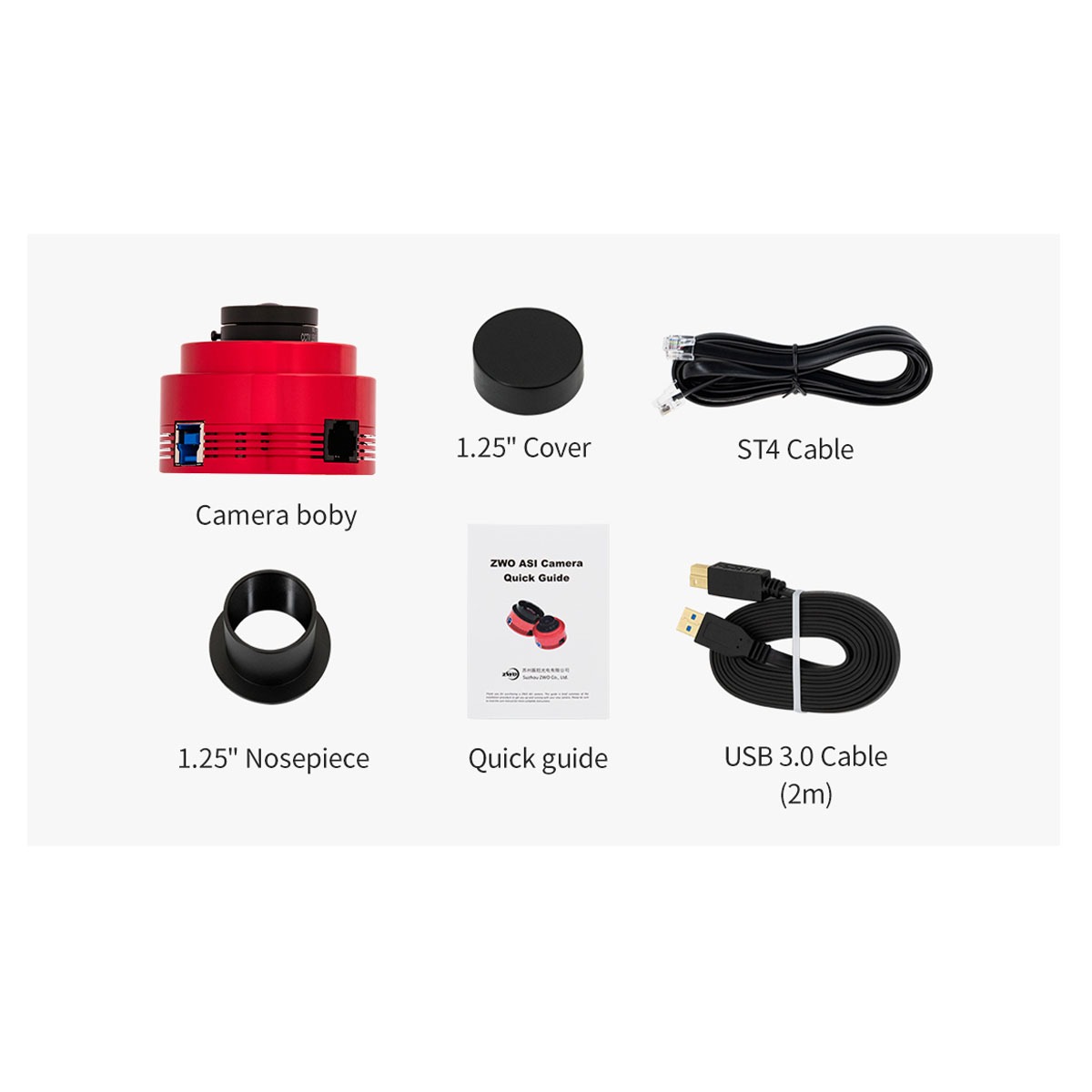
- 1x Camera body
- 1x 1.2" Cover
- 1x ST4 Cable
- 1x 1.25" Nosepiece
- 1x Quick Guide
- 1x USB 3.0 Cable (2m)

- Sony IMX662 sensor, 1/2.8" frame size, 2.9µm pixel size
- 2.07 megapixel resolution (1920x1080)
- Up to 107.6 frames per second in high-speed mode
- 91% peak quantum efficiency
- Zero amp glow at any exposure length or gain setting
- 256MB DDR3 buffer with USB 3.0 interface
- Full well capacity of 37.8Ke, 3x larger than the ASI462MC
ZWO ASI662MC High-Speed Planetary Camera!
The ZWO ASI662MC is a high-speed color planetary camera built around the Sony IMX662 sensor. With a 1/2.8" frame size and 2.9µm pixels, it captures 2.07 megapixel images and can output up to 107.6 frames per second at full resolution in high-speed mode. That combination of speed and sensitivity makes it well suited to planetary, lunar, and solar imaging, where capturing many frames quickly and stacking out atmospheric turbulence produces sharper final results. As an upgrade over the ASI462MC, the ASI662MC brings a larger full well capacity, lower read noise, and the elimination of amp glow.
ZWO ASI662MC Color Astronomy Camera Video Introduction:
Highlights of the ZWO ASI662MC Color Astronomy Camera
STARVIS 2 Sensor Technology
The IMX662 sensor uses Sony's STARVIS 2 technology, giving the ASI662MC higher sensitivity to red and near-infrared light along with dark current noise several times lower than the ASI174MC.
Built to Avoid Overexposure
A full well capacity of 37.8Ke, three times larger than the ASI462MC, makes the sensor far more resistant to overexposure. This allows for longer exposures and cleaner results in low light.
Fast, Stable Data Transfer
A USB 3.0 interface paired with a 256MB DDR3 buffer keeps data transmission stable during long capture sessions, helping prevent dropped frames during extended imaging runs.
Top-Tier Sensor Performance
The ASI662MC reaches a peak quantum efficiency of 91 percent, meaning the sensor converts a high percentage of incoming light into a usable signal. Read noise stays low across the gain range, and the camera's built-in HCG (high conversion gain) mode automatically activates at a gain setting of 252, restoring the dynamic range to 12-bit at higher gain levels. This keeps shadow detail intact even when gain is pushed up to compensate for dim targets or short exposures.
Low Noise and No Amp Glow
Amp glow is a common issue in CMOS astronomy cameras, appearing as a faint glow near the edges or corners of long exposures. The ASI662MC eliminates this entirely at the hardware level, regardless of exposure length or gain setting. Because the fix is built into the sensor design itself, no software correction or dark frame calibration is needed to remove it.
Connection and Uses
The ASI662MC connects to a telescope through a standard 1.25" nosepiece, with an optional 1.25" filter that can be threaded in between the camera and nosepiece. On the camera body, a USB 3.0 port handles data transfer to a computer, and an ST4 guide port allows the camera to send guiding corrections directly to a compatible mount, such as ZWO's AM5 series. The camera supports Windows 7, 8, and 10 in both 32-bit and 64-bit versions, along with Linux and Mac.
Specifications
Sensor: Sony IMX662, 1/2.8" CMOS
Bayer Pattern: RGGB
Shutter Type: Rolling Shutter
Resolution: 2.07 MP (1920 × 1080)
Pixel Size: 2.9 µm
Sensor Dimensions: 5.568 × 3.132 mm
Peak Quantum Efficiency: 91%
Full Well Capacity: 37.8 ke⁻
Read Noise: 0.8 e⁻ (1.22 e⁻ at 19 dB Gain)
ADC: 12-bit
Performance Specifications
Maximum Frame Rate: 107.6 fps
Exposure Range: 32 µs – 2000 s
Buffer: 256 MB DDR3
Interface: USB 3.0 / USB 2.0 Type-B
Mechanical Specifications
Back Focus: 12.5 mm
Protective Window: Ø21 × 1.1 mm, AR-Coated
Weight: 126 g (4.4 oz)
Environmental Specifications
Operating Temperature: -5°C to 50°C (23°F to 122°F)
Storage Temperature: -10°C to 60°C (14°F to 140°F)
Operating Relative Humidity: 0–80%
Supported OS: Windows 7/8/10 (32-bit & 64-bit), Linux, macOS
Frequently Asked Questions
Is the ASI662MC a good choice for planetary imaging?
The ASI662MC is well suited to planetary work. The 1920x1080 resolution maps cleanly onto the disk sizes of planets like Jupiter and Saturn at typical focal lengths, and the 107.6 fps frame rate allows for large capture runs that give stacking software plenty of frames to work with for atmospheric turbulence rejection.
How does the ASI662MC compare to the ASI462MC it replaced?
The ASI662MC carries a full well capacity three times larger than the ASI462MC, which reduces the risk of overexposure on bright planetary targets. It also eliminates amp glow entirely at the hardware level, a limitation that required dark frame calibration to manage on the ASI462MC. Dark current noise is also several times lower than the ASI174MC, which was a common alternative in this class.
Can the ASI662MC be used for deep sky imaging?
It can, though it is optimized for planetary and high-speed work rather than long-exposure deep sky photography. The lack of active cooling means thermal noise accumulates during long exposures, which limits its effectiveness on faint targets compared to a dedicated cooled deep sky camera. For bright targets like the Orion Nebula or star clusters, shorter exposures at high frame rates and stacking can produce good results
Does the ASI662MC work with narrowband filters?
Yes. The camera accepts standard 1.25" filters threaded between the nosepiece and the camera body. The IMX662 sensor's strong sensitivity to red and near-infrared wavelengths makes it particularly responsive to hydrogen-alpha filtration, which is useful for solar imaging and some planetary nebula work.
What software is compatible with the ASI662MC?
The ASI662MC is supported on Windows 7, 8, and 10 in both 32-bit and 64-bit versions, as well as Linux and Mac. It works with ZWO's own ASIStudio and ASILive software, and is also compatible with popular third-party capture and processing applications including SharpCap, FireCapture, and PHD2 for guiding use.
Other Information
- Country of Manufacture: China
- 1x Camera body
- 1x 1.2" Cover
- 1x ST4 Cable
- 1x 1.25" Nosepiece
- 1x Quick Guide
- 1x USB 3.0 Cable (2m)

ZWO ASI662MC 2.07 MP CMOS Color Astronomy Camera with USB 3.0