

Updated September 21st, 2026
25 Best Fall Deep Sky Objects for Stargazing and Astrophotography
Autumn brings longer nights, cooler temperatures, and some of the best deep-sky observing of the year. As summer’s Milky Way begins to set, galaxies, star clusters, and planetary nebulae take center stage across the Northern Hemisphere.
In this guide, we’ve selected 25 of the best deep-sky objects to observe and image in fall, ranging from bright seasonal showpieces to faint galaxies and nebulae that reward darker skies and more advanced equipment.
Where to Look
The richest fall observing regions are found around Pegasus, Andromeda, Perseus, Cepheus, and Cassiopeia. Early in the season, Cygnus also remains well positioned after sunset, while Triangulum, Aries, and Pisces rise later in the evening. By late fall, Orion and the surrounding winter constellations begin returning to the evening sky, rising earlier each night.
What You’ll Need
Many of the brightest targets can be seen or imaged with small binoculars or a small telescope. A 6–10-inch telescope will reveal considerably more detail and bring fainter galaxies and nebulae within reach, while larger apertures are best for the most challenging objects.
Quick Observing Tips
- Start with western summer targets early. Cygnus and other Milky Way regions are best observed soon after dark before they sink lower.
- Save fall galaxies for later. Andromeda, Pegasus, Triangulum, and Cetus climb higher as the evening progresses.
- Watch out for dew. Cooler fall nights can quickly fog lenses, corrector plates, eyepieces, and camera gear.
- Take advantage of the seasonal overlap. By late fall, you can observe autumn targets early and Orion and other winter favorites later the same night.
- Wear more layers than you think you’ll need. Temperatures can drop quickly after sunset, especially during long sessions.
Now, here are 25 of the best deep-sky objects to see this fall.
Beginner Fall Targets

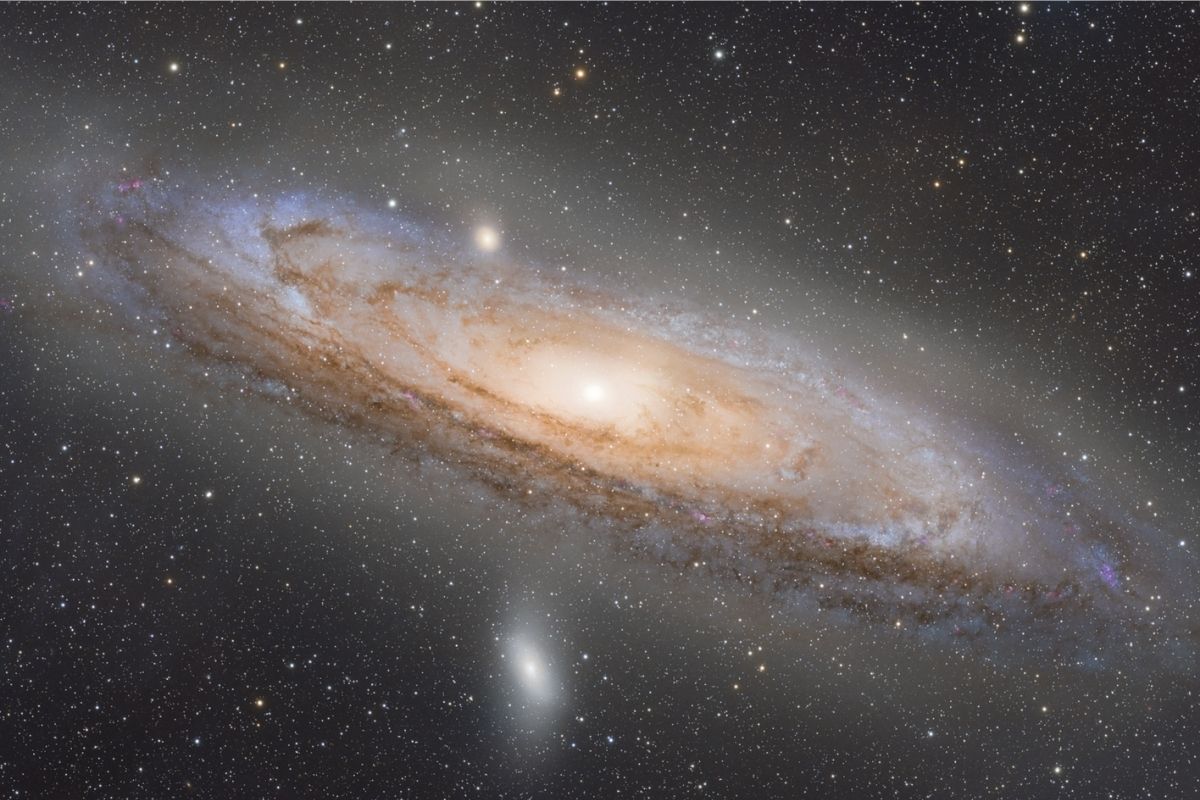
Andromeda Galaxy by Isaac Garfinkle
1. Andromeda Galaxy (M31)
- Object Type: Spiral Galaxy
- Constellation: Andromeda
- Distance: 2.5 million light-years
- Apparent Size: 3.2° × 1.0°
- Apparent Magnitude: 3.4
The Andromeda Galaxy (M31) is the showpiece galaxy of the autumn sky and one of the most impressive deep-sky objects visible from the Northern Hemisphere. Located about 2.5 million light-years away, it is the nearest large galaxy to the Milky Way and stretches across more than three degrees of sky—roughly six times the apparent width of the full Moon. Its bright core makes it relatively easy to find, while darker skies reveal just how enormous the galaxy really is.
Through binoculars or a telescope at low power, M31 appears as a bright, elongated glow surrounding a concentrated central core. Under dark skies, its outer regions extend much farther than they first appear, and larger telescopes can begin to reveal its prominent dust lanes. Its two brightest companion galaxies, M32 and M110, are also visible nearby. For astrophotographers, Andromeda is an exceptional wide-field target, with long integrations revealing its sweeping spiral structure, dark dust lanes, star-forming regions, and satellite galaxies in remarkable detail.

M45 Star Cluster by Tommy Lease
2. Pleiades (M45)
- Object Type: Open Star Cluster
- Constellation: Taurus
- Distance: 444 light-years
- Apparent Size: 110 arcminutes
- Apparent Magnitude: 1.6
The Pleiades (M45) is one of the most recognizable star clusters in the night sky and a standout target of the late-fall season. This relatively young open cluster contains hundreds of hot, blue-white stars, with its brightest members forming the familiar compact pattern often called the Seven Sisters. Around them lies faint blue reflection nebulosity, created as the stars illuminate surrounding interstellar dust.
M45 is easily visible to the naked eye, while binoculars reveal dozens of stars spread across a wide area of sky. Its large apparent size makes it especially well suited to binoculars, low-power telescopes, and wide-field astrophotography. Long exposures can reveal the intricate reflection nebulae surrounding the brightest stars, making the Pleiades one of the most rewarding fall targets for imagers as well as visual observers.

NGC 869 and NGC 884 by Drew Evans
3. Double Cluster (NGC 869 and NGC 884)
- Object Type: Open Star Cluster
- Constellation: Perseus
- Distance: 7,600 light-years
- Apparent Size: 30 arcminutes each
- Apparent Magnitude: 4.3/4.4
The Double Cluster in Perseus (NGC 869 and NGC 884) is one of the most spectacular star-cluster pairings in the night sky. Both clusters are young, massive, and packed with hot blue-white stars, along with a scattering of orange and red supergiants that add striking color contrast. Although they appear side by side from Earth, the two clusters are distinct stellar groups separated by a considerable distance in space.
Under dark skies, the Double Cluster can be seen with the naked eye as a faint hazy patch. Binoculars frame both clusters beautifully, while low-power telescopes reveal dense star fields, colorful stellar groupings, and intricate chains of stars across both clusters. For astrophotographers, the pair is especially well suited to wide-field imaging, where both clusters and the rich surrounding Milky Way star fields can be captured in a single frame.

Triangulum Galaxy by Brian Puhl & Charles Hagen
4. Triangulum Galaxy (M33)
- Object Type: Spiral Galaxy
- Constellation: Triangulum
- Distance: 2.7 million light-years
- Apparent Size: 73 × 45 arcminutes
- Apparent Magnitude: 5.7
The Triangulum Galaxy (M33) is the third-largest galaxy in the Local Group and one of the best face-on spiral galaxies in the autumn sky. Located roughly 2.7 million light-years away, it spans more than a degree across the sky, but its light is spread so thinly that it can be surprisingly difficult to see from light-polluted locations. Its loosely wound spiral arms are filled with active star-forming regions, including NGC 604, one of the largest and brightest H II regions in the Local Group.
Visually, M33 appears as a large, faint glow that benefits tremendously from dark skies, low magnification, and a wide field of view. Under excellent conditions, experienced observers may begin to trace hints of spiral structure and brighter star-forming regions within the galaxy. For astrophotographers, M33 is an outstanding target for revealing delicate spiral arms, blue star-forming regions, and pink emission nebulae scattered throughout the disk.

Pelican Nebula by Jon Brown
5. Pelican Nebula (IC 5070)
- Object Type: Emission Nebula
- Constellation: Cygnus
- Distance: 1,800 light-years
- Apparent Size: 60 × 50 arcminutes
- Apparent Magnitude: 8.0
The Pelican Nebula (IC 5070) is a large emission nebula in Cygnus and part of the same vast star-forming complex as the nearby North America Nebula. Its nickname comes from the way dark dust lanes and glowing hydrogen gas create the silhouette of a pelican, with the most recognizable feature being its long, curved “beak.” Rich in hydrogen-alpha emission and sculpted by nearby young stars, the nebula is a favorite target for wide-field astrophotography.
Visually, the Pelican Nebula is much more challenging than its brightness figure might suggest because its light is spread across a large area. Under dark skies, observers using a wide-field telescope with a UHC or OIII filter may be able to detect brighter portions of the nebula, especially the beak region, but it is primarily an astrophotography target. For imagers, IC 5070 rewards wide-field setups with sweeping clouds of glowing gas, dark dust lanes, and intricate structure throughout the surrounding nebular complex.
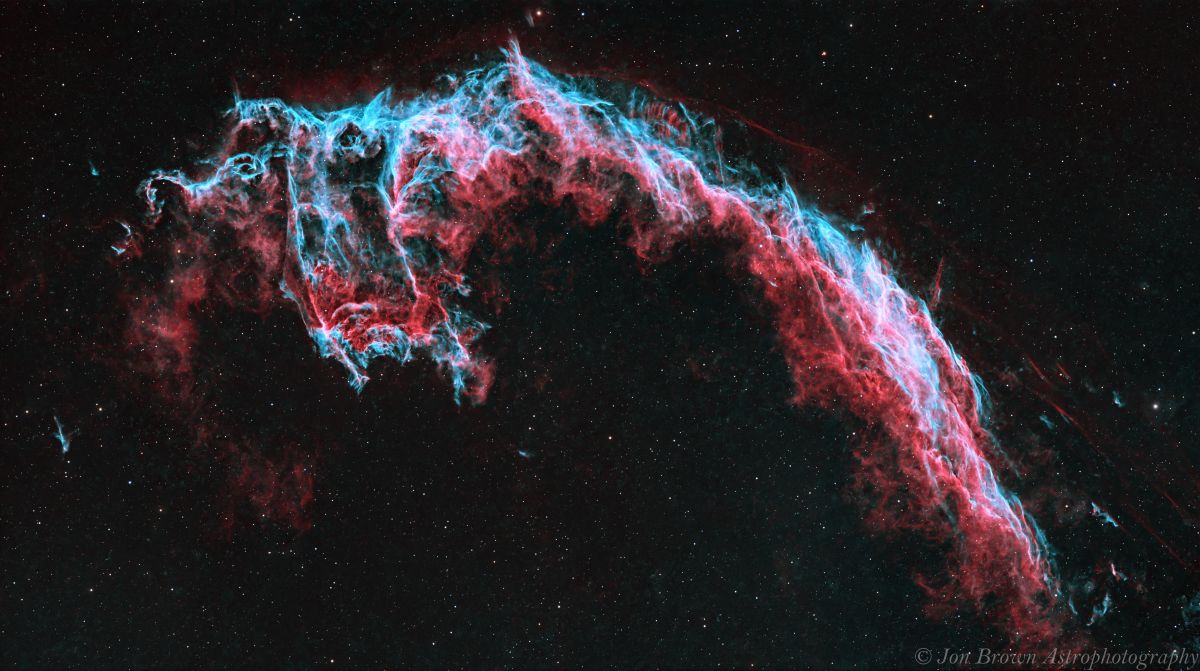
NGC 6992 – Eastern Veil Nebula by Jon Brown
6. Eastern Veil Nebula (NGC 6992)
- Object Type: Supernova Remnant
- Constellation: Cygnus
- Distance: 2,100 light-years
- Apparent Size: 78 × 50 arcminutes
- Apparent Magnitude: 7.0
The Eastern Veil Nebula is one of the brightest and most intricate sections of the Veil Nebula supernova remnant in Cygnus. Formed by a massive stellar explosion thousands of years ago, its sweeping arcs and delicate filaments trace the expanding shock wave as it collides with surrounding interstellar gas. These collisions produce the glowing hydrogen and oxygen structures that give the Veil its distinctive lace-like appearance.
Under dark skies, the Eastern Veil can be an impressive visual target through a wide-field telescope, especially with an OIII filter, which dramatically increases the contrast of its brightest filaments. Larger apertures reveal increasingly complex knots, strands, and branching structures throughout the nebula. For astrophotographers, the Eastern Veil is an outstanding narrowband target, with H-alpha and OIII data revealing fine filamentary detail and striking color separation across the expanding shell.

NGC 6960 by Isaac Garfinkle
7. Western Veil Nebula (NGC 6960)
- Object Type: Supernova Remnant
- Constellation: Cygnus
- Distance: 2,100 light-years
- Apparent Size: 70 × 6 arcminutes
- Apparent Magnitude: 7.0
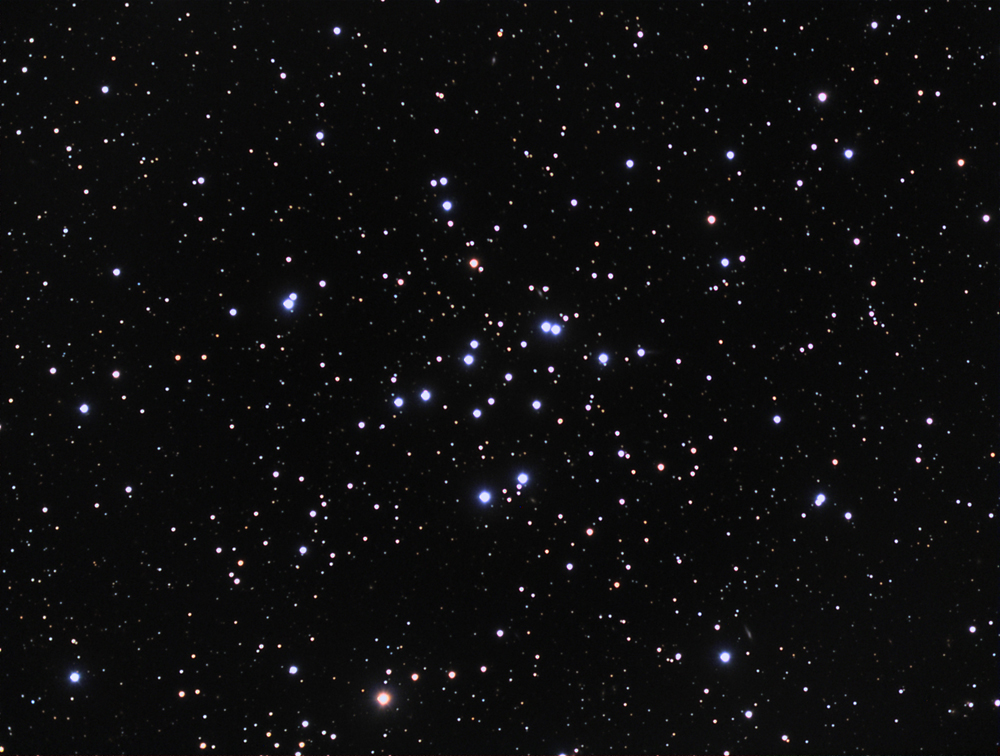
M34 by Jim Mazur

8. Open Cluster (M34)
- Object Type: Open Star Cluster
- Constellation: Perseus
- Distance: 1,500 light-years
- Apparent Size: 35 arcminutes
- Apparent Magnitude: 5.5
The Messier 34 (M34) open cluster in Perseus is a bright, loosely packed group of stars located roughly 1,500 light-years away. Spanning about the apparent width of the full Moon, the cluster contains dozens of readily visible members and is thought to be around 200 million years old. Its mix of blue-white stars and warmer yellow-orange members gives the cluster noticeable color contrast, while its scattered arrangement creates several attractive chains and geometric patterns.
M34 is easily resolved in binoculars and is especially well suited to low-power telescopes, which can frame the entire cluster in a single field of view. Unlike denser clusters, much of its appeal comes from its open, spacious appearance and the patterns formed by its brighter stars. For astrophotographers, M34 is a straightforward wide-field target that works well with short-focal-length telescopes and captures nicely alongside the rich surrounding star field of Perseus.

NGC 7293 by Brian Fulda
9. Helix Nebula (NGC 7293)
- Object Type: Planetary Nebula
- Constellation: Aquarius
- Distance: 650 light-years
- Apparent Size: 16 × 12 arcminutes
- Apparent Magnitude: 7.6
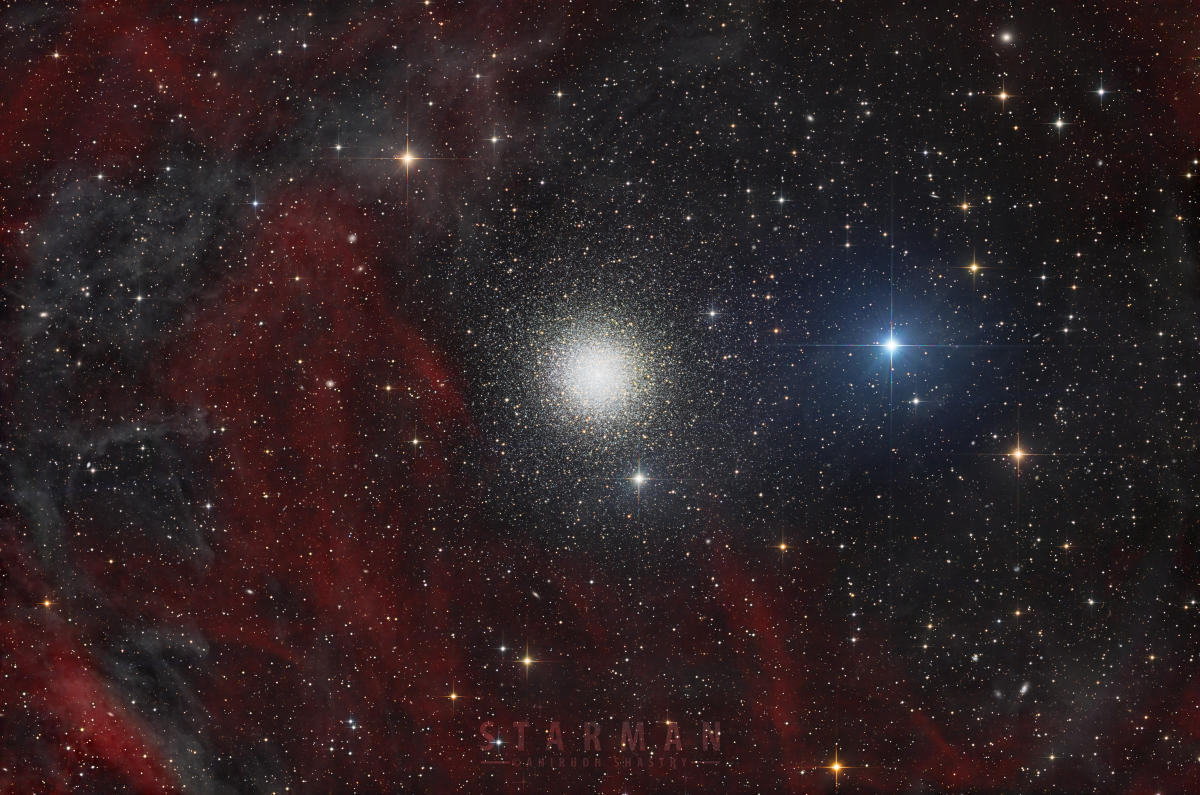
M15 by Ani Shastry
10. Great Pegasus Cluster (M15)
- Object Type: Globular Cluster
- Constellation: Pegasus
- Distance: 33,600 light-years
- Apparent Size: 18 arcminutes
- Apparent Magnitude: 6.2
Intermediate Fall Targets

Bubble Nebula by Ryan Heuer
11. Bubble Nebula (NGC 7635)
- Object Type: Emission Nebula
- Constellation: Cassiopeia
- Distance: 7,100 light-years
- Apparent Size: 15 × 8 arcminutes
- Apparent Magnitude: 11.0
The Bubble Nebula (NGC 7635) is one of the most distinctive emission nebulae in the fall sky. Located about 7,000 light-years away in Cassiopeia, its nearly spherical shell is being carved into surrounding gas by powerful stellar winds from the massive star BD+60°2522. The expanding bubble spans roughly 7 light-years and sits within a much larger complex of glowing hydrogen and dark interstellar dust.
The Bubble Nebula is best placed for Northern Hemisphere observers from September through November, when Cassiopeia climbs high in the evening sky. Visually, it is a challenging target that benefits from dark skies, moderate-to-large apertures, and a nebula filter, with the brightest portions of the shell appearing as faint curved nebulosity. For astrophotographers, NGC 7635 is an outstanding narrowband target, with H-alpha and OIII imaging revealing the bubble itself along with intricate structure throughout the surrounding emission nebula.
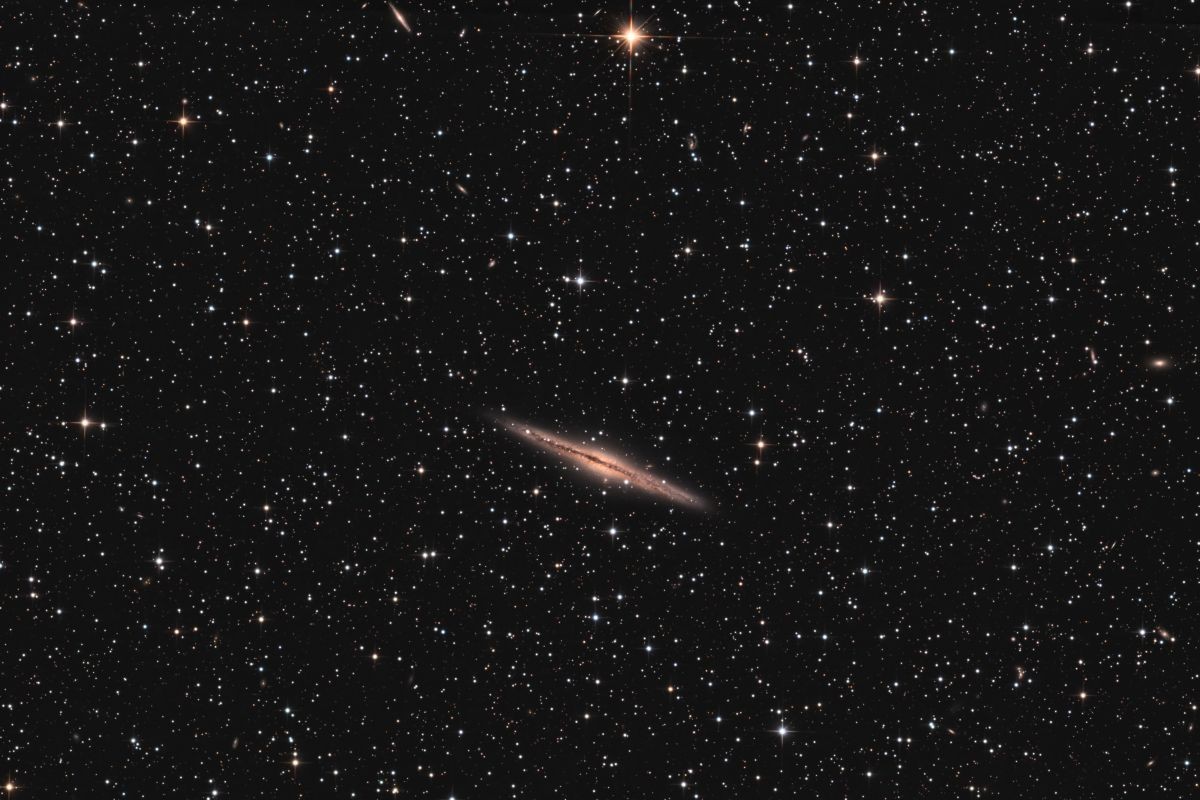
NGC 891 by Robert Swearingen
12. Silver Sliver Galaxy (NGC 891)
- Object Type: Edge-on Spiral Galaxy
- Constellation: Andromeda
- Distance: 30 million light-years
- Apparent Size: 13.5 × 2.5 arcminutes
- Apparent Magnitude: 10.8
Often compared to our own Milky Way galaxy, the Silver Sliver Galaxy (NGC 891) presents itself perfectly edge-on, creating a dramatic silver needle silhouetted against the dark autumn night sky. This perspective reveals the galaxy's prominent dust lane cutting through the galactic plane, as well as the subtle bulge of its central regions. Both of which are features that help astronomers understand our own galaxy's structure. The dust lane contains enough material to form several billion stars like our Sun. This target in particular serves as the prototype for edge-on spiral galaxies used in extensive structural studies.
Moderate telescopes (8+ inches) under good sky conditions reveal the galaxy's faint, elongated glow with slightly brighter central regions. Its prominent dust lane requires larger apertures and excellent seeing to be detected visually as a dark division running along the galaxy's length. For astrophotography, the edge-on orientation creates spectacular imaging opportunities showcasing dramatic dust lanes and extended disk structure through 15-30 minute exposures that emphasize luminance detail over color information in the distant stellar populations.
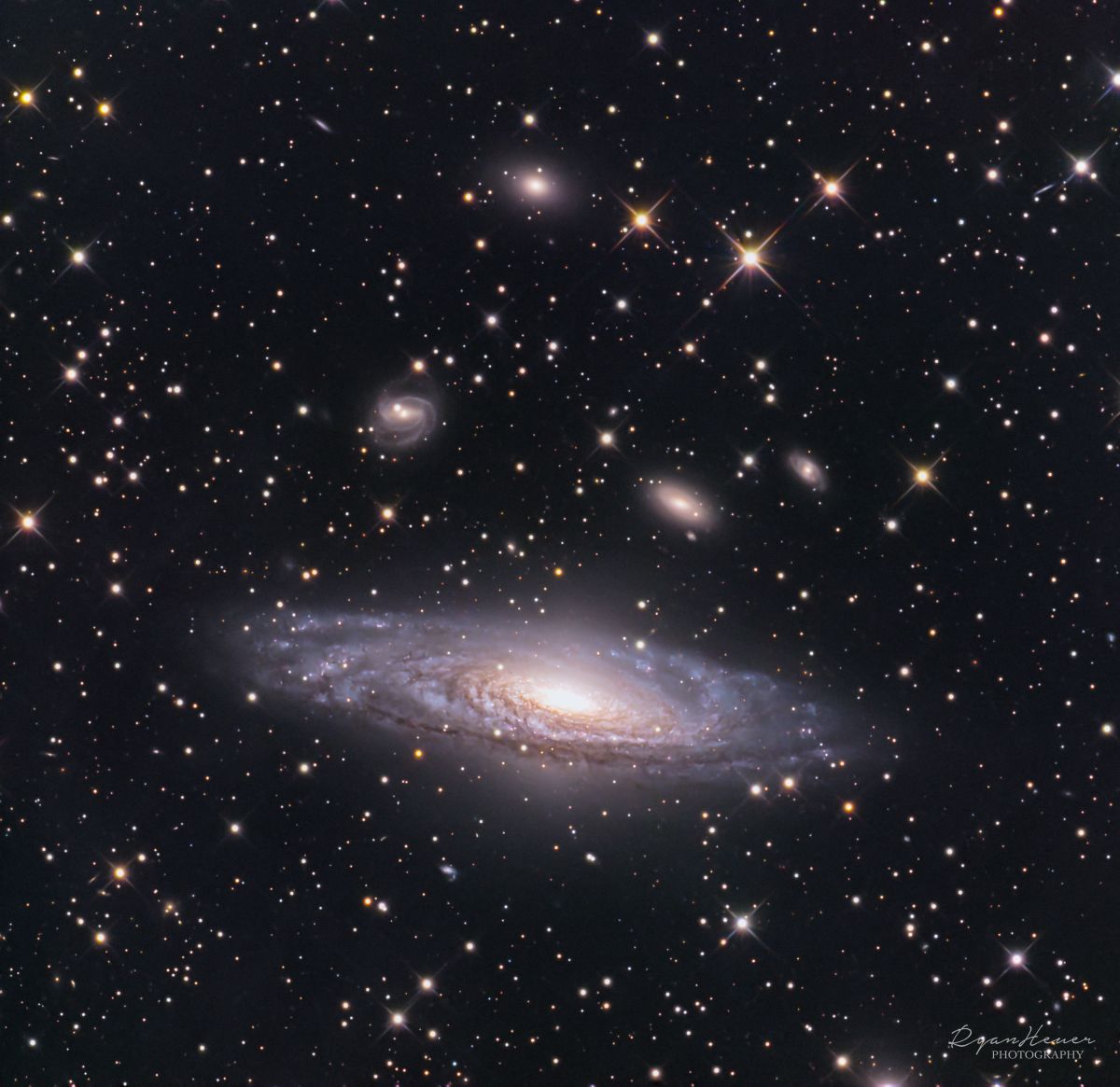
Deer Lick Group by Ryan Heuer
13. Deer Lick Group (NGC 7331)
- Object Type: Spiral Galaxy
- Constellation: Pegasus
- Distance: 40 million light-years
- Apparent Size: 10.5 x 3.7 arcminutes
- Apparent Magnitude: 9.5
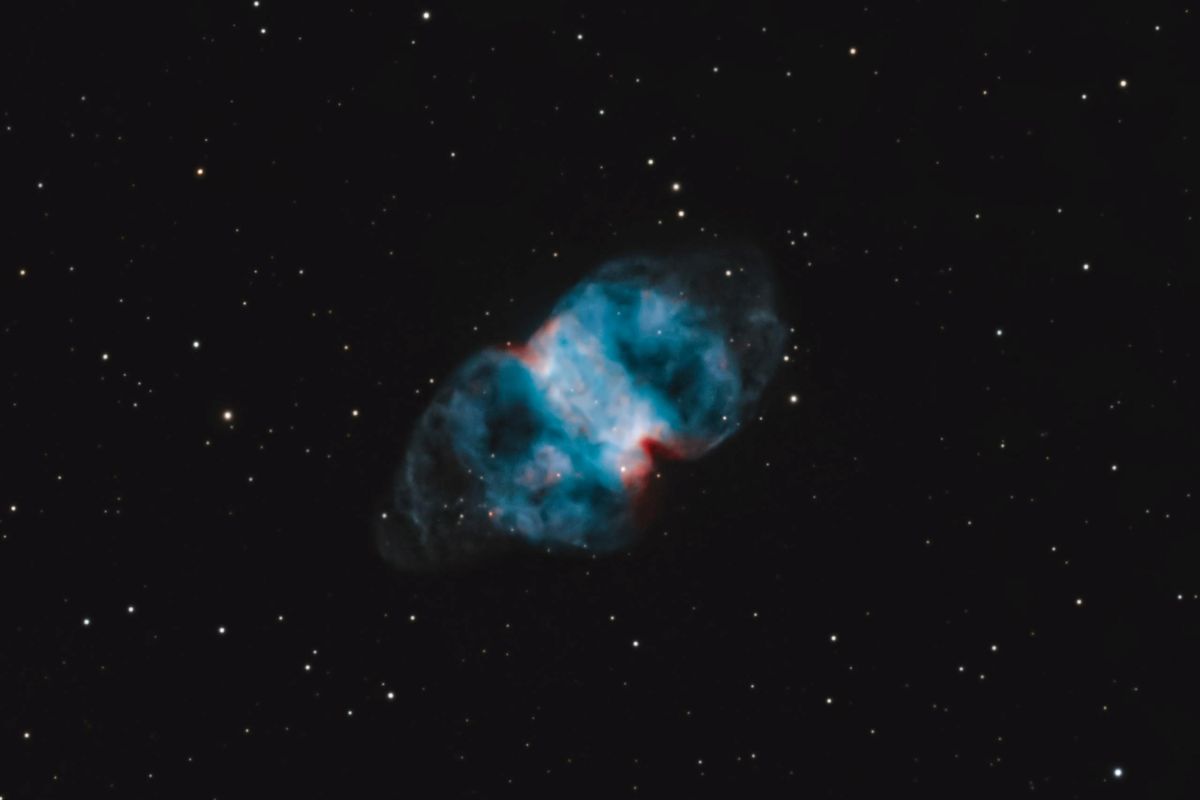
M76 by Gary Imm
14. Little Dumbbell Nebula (M76)
- Object Type: Planetary Nebula
- Constellation: Perseus
- Distance: 2,500 light-years
- Apparent Size: 2.7 × 1.8 arcminutes
- Apparent Magnitude: 10.1
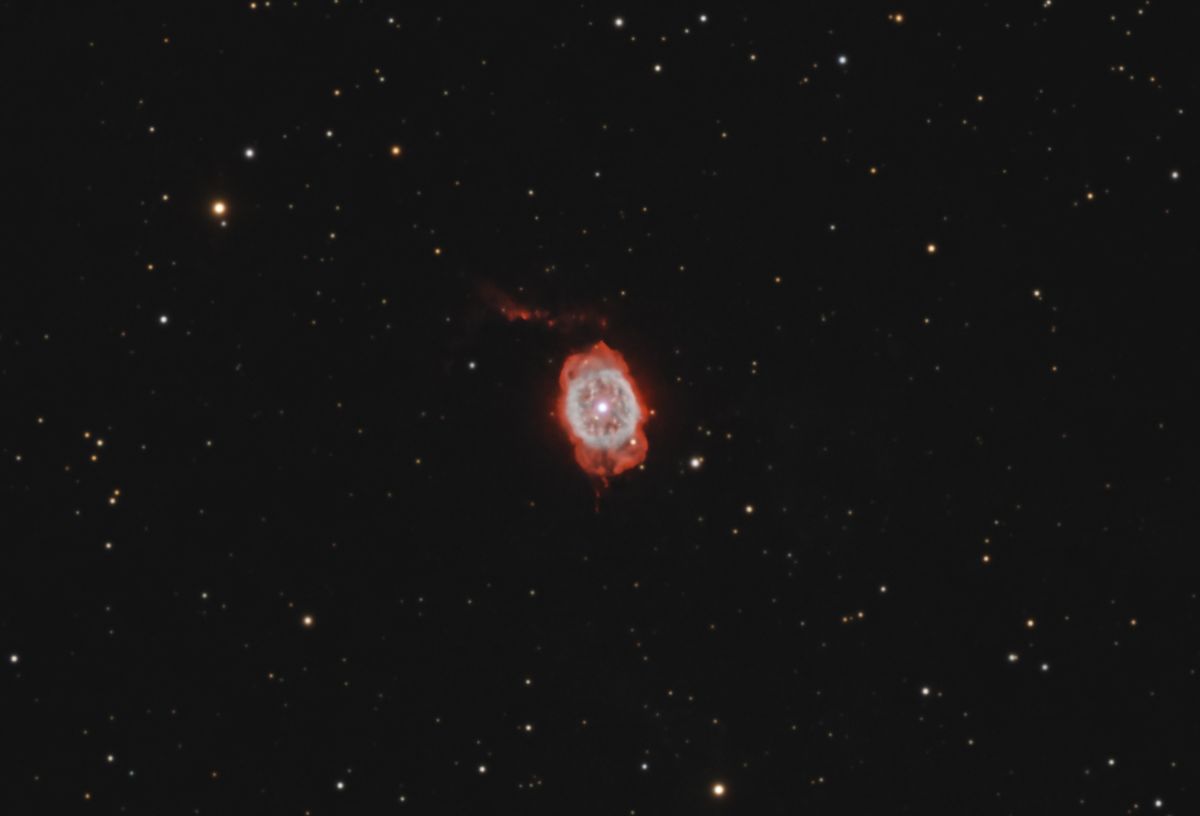
NGC 40 by Gary Imm
15. Bow-Tie Nebula (NGC 40)
- Object Type: Planetary Nebula
- Constellation: Cepheus
- Distance: 3,500 light-years
- Apparent Size: 60 × 40 arcseconds
- Apparent Magnitude: 10.7
The Bow-Tie Nebula (NGC 40) is a compact planetary nebula in Cepheus with a distinctive oval, slightly pinched shape. Located roughly 3,500 light-years away, it consists of glowing gas expelled by an aging star nearing the end of its life. The central star is an unusually hot Wolf-Rayet-type stellar remnant whose intense ultraviolet radiation energizes the expanding shell and gives the nebula its bright, structured appearance.
NGC 40 is best placed for Northern Hemisphere observers in early to mid-fall, when Cepheus is high in the evening sky. Visually, it appears as a small, bright disk in moderate telescopes, with larger apertures and higher magnification revealing its elongated shape and uneven internal structure. For astrophotographers, its compact size makes it well suited to longer-focal-length systems, where narrowband and broadband imaging can reveal the bright inner shell and fainter outer extensions.

NGC 1055 and M77 by Robert Swearingen
16. Cetus Galaxy (M77)
- Object Type: Spiral Galaxy
- Constellation: Cetus
- Distance: 47 million light-years
- Apparent Size: 7.1 × 6.0 arcminutes
- Apparent Magnitude: 9.6
The Cetus Galaxy (M77) is a bright face-on spiral galaxy in Cetus located about 45 million light-years away. Also known as NGC 1068, it is one of the nearest and best-studied Seyfert galaxies, with an unusually energetic nucleus powered by material falling toward a supermassive black hole. Surrounding the brilliant core is a broad spiral disk filled with dust lanes, star-forming regions, and tightly wound arms.
M77 is best placed for Northern Hemisphere observers from October through December, when Cetus is highest during the evening hours. Visually, moderate telescopes show a compact, bright core surrounded by a fainter circular glow, while the outer spiral structure becomes increasingly difficult under light-polluted skies. For astrophotographers, M77 rewards longer integrations with considerably more detail, revealing its spiral arms, dust structure, and active central region.
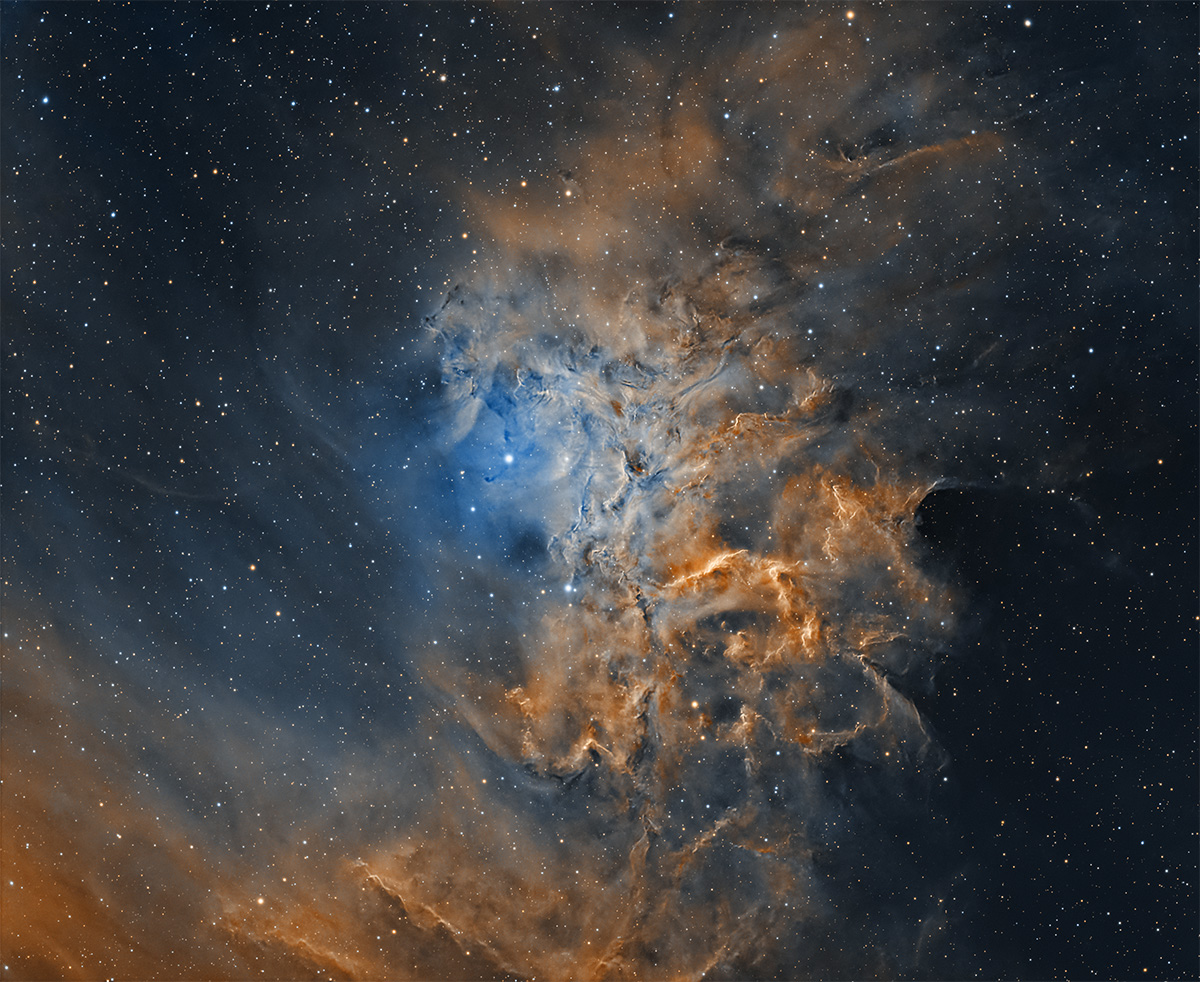
The Flaming Star Nebula by Chuck Ayoub

17. Flaming Star Nebula (IC 405)
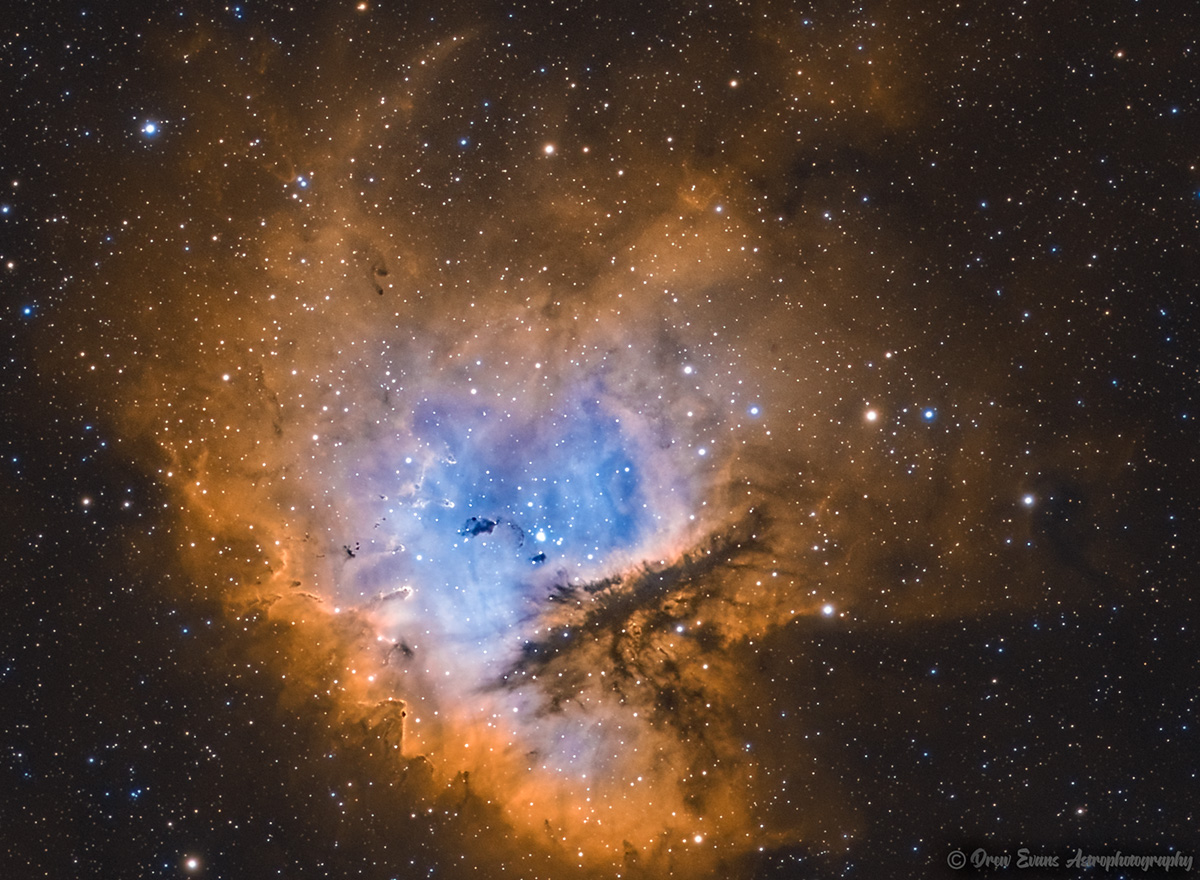
The Pacman Nebula by Drew Evans
18. Pacman Nebula (NGC 281)
- Object Type: Emission Nebula
- Constellation: Cassiopeia
- Distance: 9,500 light-years
- Apparent Size: 35 x 35 arcminutes
- Apparent Magnitude: ~7.4
The Pacman Nebula (NGC 281) is a large emission nebula and active star-forming region in Cassiopeia. Dark dust lanes cut into the surrounding glow and create the distinctive open-mouthed shape that inspired its nickname. Embedded within the nebula is the young open cluster IC 1590, whose hot stars illuminate and ionize the surrounding hydrogen gas.
NGC 281 is especially well placed from September through November, when Cassiopeia climbs high in the evening sky. Visually, its brighter nebulosity can be detected from dark skies with moderate apertures, with a UHC or OIII filter improving contrast considerably. For astrophotographers, its roughly half-degree size works well with many common refractors and imaging systems, while H-alpha and OIII data can reveal intricate dust lanes, glowing gas, and structure throughout the surrounding star-forming region.

Tulip Nebula by Tommy Lease
19. Tulip Nebula (SH2-101)
- Object Type: Emission Nebula
- Constellation: Cygnus
- Distance: 6,000 light-years
- Apparent Size: 16 x 9 arcminutes
- Apparent Magnitude: 9.0
The Tulip Nebula (Sh2-101) is a large emission nebula in Cygnus whose curved clouds of glowing hydrogen give it the flower-like shape behind its nickname. Located roughly 6,000 light-years away, the nebula is energized by hot young stars whose ultraviolet radiation causes the surrounding gas to glow, while stellar winds and dark dust help sculpt its distinctive structure. Its position among Cygnus’s rich Milky Way star fields makes it especially striking in wide-field images.
The Tulip Nebula is best viewed and imaged in late summer through early fall, when Cygnus remains high in the evening sky. Visually, it is a challenging low-surface-brightness target that benefits from dark skies and a UHC or similar nebula filter. For astrophotographers, it is much more approachable and responds especially well to H-alpha and OIII narrowband imaging, which can reveal the curved outer arcs, dark lanes, and intricate structure throughout the surrounding emission region.

NGC 253 – Sculptor Galaxy by Kurious George
20. Sculptor Galaxy (NGC 253)
- Object Type: Spiral Galaxy
- Constellation: Sculptor
- Distance: 11.4 million light-years
- Apparent Size: 27.5 × 6.8 arcminutes
- Apparent Magnitude: 8.0
The Sculptor Galaxy (NGC 253) is one of the brightest galaxies beyond the Local Group and one of the finest edge-on spirals visible in the fall sky. Located about 11 million light-years away, it is the dominant galaxy of the Sculptor Group and an active starburst galaxy, with intense star formation concentrated toward its dusty central regions. Its highly inclined orientation reveals prominent dark dust lanes, mottled structure, and bright patches of star formation across the disk.
NGC 253 is best viewed from September through November, when Sculptor is well placed later in the evening. Visually, it appears as a bright, elongated glow through moderate telescopes, with darker skies revealing more of its extended disk and irregular dust structure. For astrophotographers, its large apparent size and high surface brightness make it an excellent galaxy target, with longer integrations bringing out intricate dust lanes, star-forming regions, and the textured structure of its central starburst.
Advanced Fall Targets

Ghost of Cassiopeia by Drew Evans
21. Ghost of Cassiopeia (IC 63)
- Object Type: Emission and Reflection Nebula
- Constellation: Cassiopeia
- Distance: 550 light-years
- Apparent Size: 10 × 3 arcminutes
- Apparent Magnitude: 10.0
The Ghost of Cassiopeia (IC 63) is a faint emission and reflection nebula illuminated by the nearby hot star Gamma Cassiopeiae. Ultraviolet radiation from the star ionizes hydrogen within the cloud, producing red emission, while surrounding dust scatters starlight to create subtler blue reflection nebulosity. The interaction between radiation, gas, and dust gives the nebula its wispy, ghost-like appearance.
IC 63 is best placed from September through November, when Cassiopeia is high in the evening sky. Visually, it is a challenging low-surface-brightness target that benefits from dark skies and larger apertures, especially because of the glare from nearby Gamma Cassiopeiae. For astrophotographers, it is much more rewarding, with longer integrations revealing the contrast between red hydrogen emission, blue reflection nebulosity, and intricate dust structure throughout the cloud.
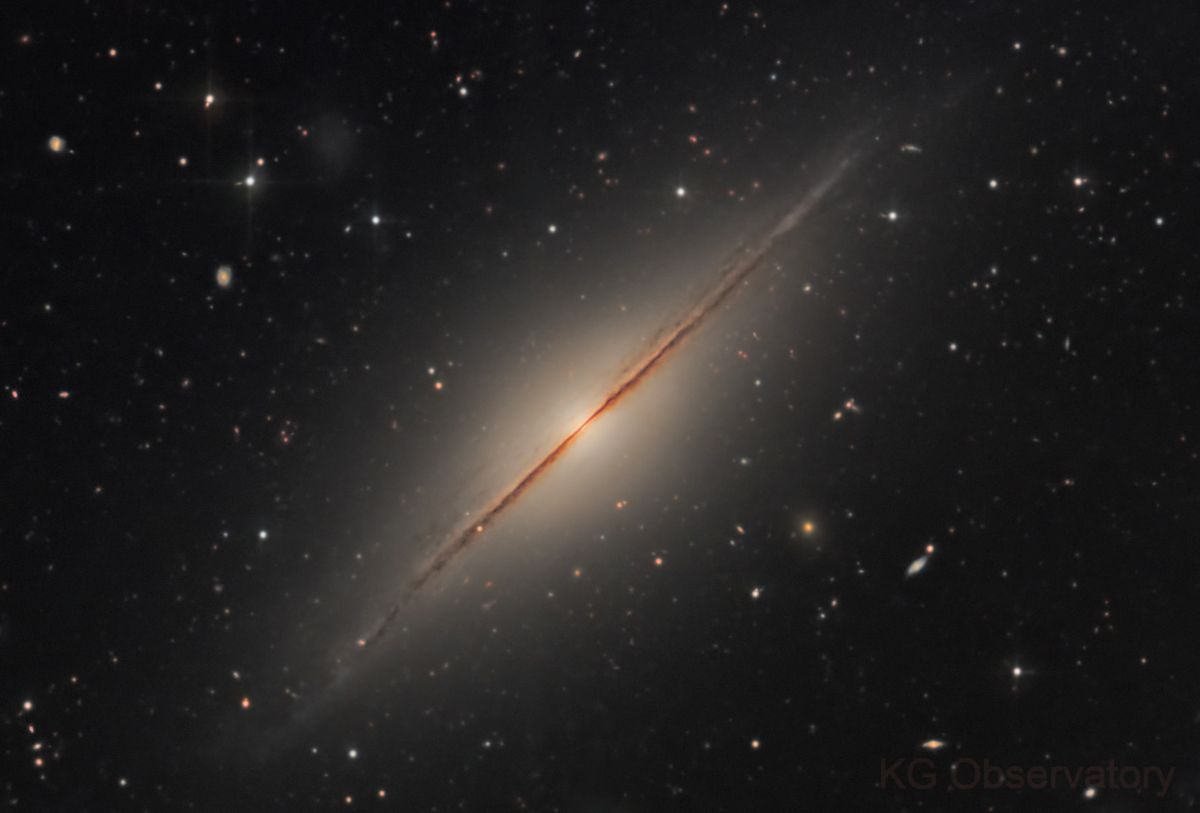
Little Sombrero Galaxy by Kurious George
22. Little Sombrero Galaxy (NGC 7814)
- Object Type: Edge-on Spiral Galaxy
- Constellation: Pegasus
- Distance: 40 million light-years
- Apparent Size: 6.3 × 2.5 arcminutes
- Apparent Magnitude: 10.6
The Little Sombrero Galaxy (NGC 7814) is a nearly edge-on spiral galaxy in Pegasus, located roughly 40 million light-years away. Its bright central bulge and razor-thin dust lane give it a strong resemblance to the more famous Sombrero Galaxy in Virgo, which inspired its nickname. The galaxy’s orientation makes it especially striking, with the dark lane cutting cleanly across the luminous central region and emphasizing the thinness of the disk.
NGC 7814 is best placed in early to mid-fall, when Pegasus is high in the evening sky. Visually, it is a challenging target that benefits from dark skies and larger apertures, with the galaxy itself appearing as a faint elongated glow and the dust lane requiring excellent conditions to detect. For astrophotographers, its relatively small apparent size makes it a more demanding target, rewarding longer focal lengths and good seeing with a detailed view of the central bulge, thin disk, and prominent dust lane.
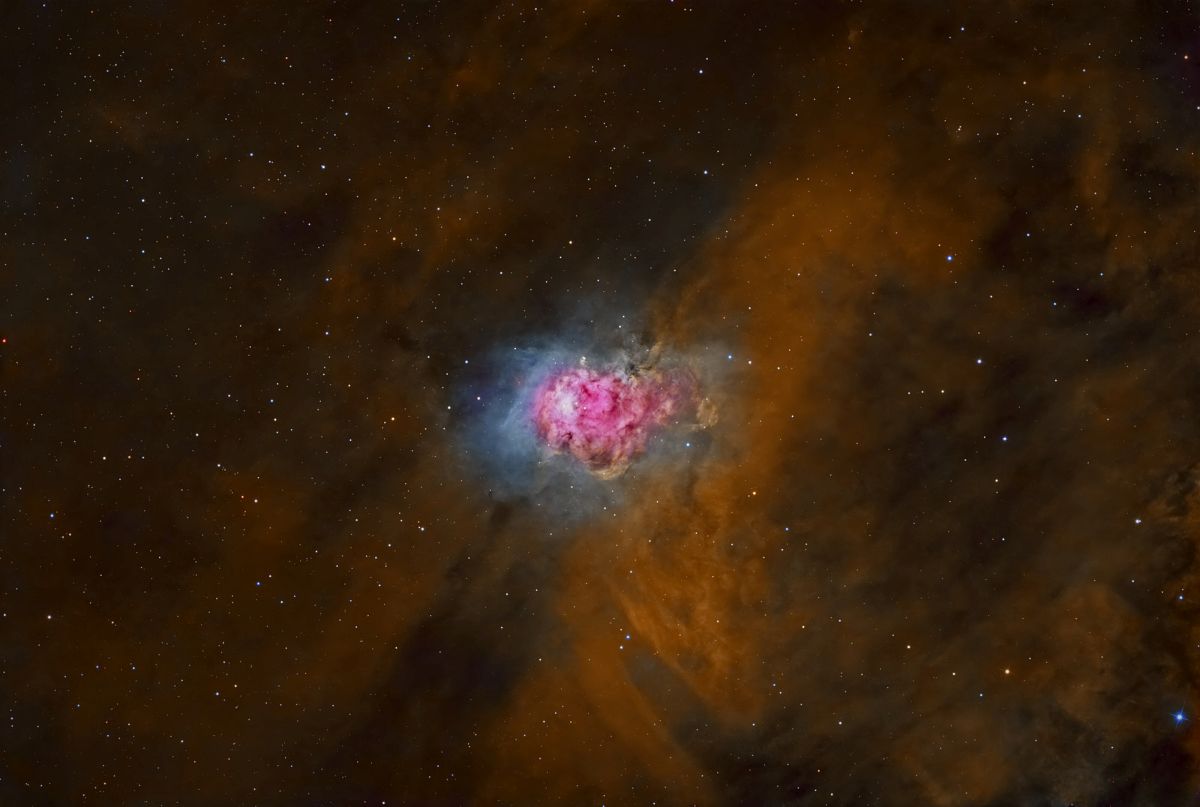
Northern Rosette by Scott F
23. Little Rosette Nebula (Sh2-170)
- Object Type: Emission Nebula
- Constellation: Cepheus
- Distance: 9,100 light-years
- Apparent Size: 9 × 5 arcminutes
- Apparent Magnitude: 13.0
The Little Rosette Nebula (Sh2-170) is an active star-forming region in Cepheus, located roughly 9,000 light-years away. It contains numerous young, massive stars still embedded within the surrounding molecular cloud, along with bright emission regions, dark dust lanes, and compact areas of ongoing stellar formation. Much of the youngest activity is hidden at visible wavelengths, making the region especially important in infrared and radio observations.
Sh2-170 is well placed from late summer through fall, when Cepheus is high in the northern sky. Visually, it is a challenging but attainable target under dark skies, appearing as a small patch of nebulosity that benefits from a nebula filter and moderate-to-large aperture. For astrophotographers, it is much more accessible, with H-alpha and other narrowband data revealing bright knots, sweeping emission structure, and dark dust throughout the surrounding star-forming complex.

Abell 426 by Kurious George
24. Perseus Galaxy Cluster (Abell 426)
- Object Type: Galaxy Cluster
- Constellation: Perseus
- Distance: 250 million light-years
- Apparent Size: 4° field
- Various Magnitudes: 11–15
The Perseus Galaxy Cluster (Abell 426) is one of the richest galaxy clusters in the northern sky, containing hundreds of galaxies spread across millions of light-years. Located roughly 240 million light-years away, the cluster is centered near NGC 1275, a massive active galaxy associated with the powerful radio and X-ray source Perseus A. Between the galaxies lies extremely hot intracluster gas, making Abell 426 one of the brightest galaxy clusters in the sky at X-ray wavelengths.
Abell 426 is best placed in late fall and winter, when Perseus climbs high in the evening sky. Visually, NGC 1275 and a few of the brighter members can be detected with moderate-to-large telescopes under dark skies, but revealing the cluster as a rich field of faint galaxies is a much more advanced challenge. For astrophotographers, the appeal lies in depth rather than a single dominant object: longer integrations can uncover dozens of galaxies across the field, with NGC 1275 providing a bright anchor near the cluster’s center.

SH2-136 by Mount Lemmon SkyCenter, University of Arizona
25. Ghost Nebula (Sh2-136)
- Object Type: Emission and Reflection Nebula
- Constellation: Cepheus
- Distance: 1,200 light-years
- Apparent Size: 7 × 5 arcminutes
- Apparent Magnitude: 10.0