

Top Night Sky & Astronomy Events in February 2022
1. Introduction to February (Astronomy & Astrophotography)
Welcome to February - the month that asks you to pack 31 days into 28. While the month may be short, there is no shortage of interesting astronomical events and opportunities to capture the cosmos throughout the month! To help prioritize your astronomical observing and imaging sessions, we’ve put together an overview of this month’s highlights to get you out under clear skies and looking up at the cosmos! Gear recommendations and highlights from the astronomy community are included to give you a good idea of the tools needed (or not needed) to enjoy the night sky!
2. Solar System Observing & Imaging in February 2022
Moon Phases
- New Moon: February 1st
- 1st Quarter: February 8th
- Full moon: February 16th
- 3rd Quarter: February 23rd
Solar Observing & Imaging
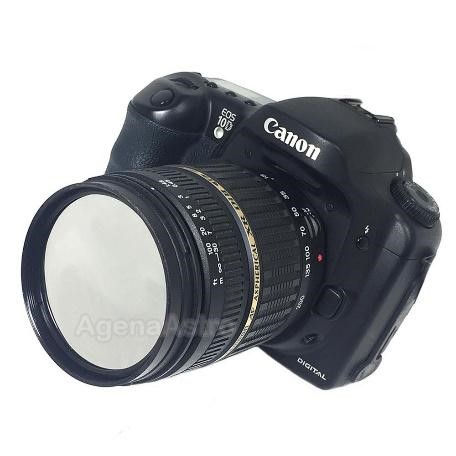
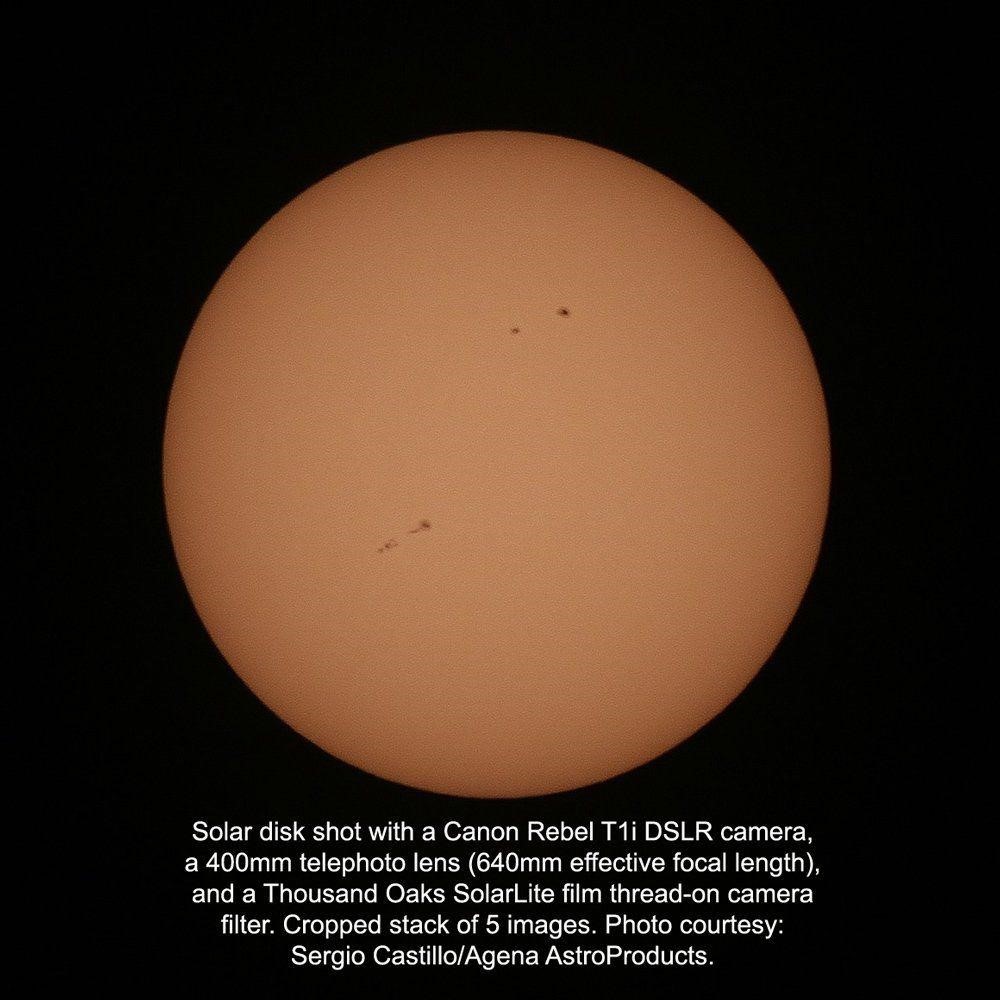
The northern hemisphere is back on track to longer days and subsequently more opportunities for solar observing and imaging. In our Top Night Sky & Astronomy Events in January 2022 article we highlighted the use of both solar dedicated telescopes and simple glass or film solar filters for use with traditional telescopes! However, a telescope is not truly required to enjoy our Sun, and even those with a basic DSLR camera and lens can enjoy solar imaging. Products such as Solar Filters for Camera Lenses (Figures 1 & 2) afford you the opportunity to use a DSLR and compatible lens to view and image large sunspots, planetary transits on the Sun's surface, and even solar transits of the International Space Station. Solar transits are entirely location dependent, so be sure to check out your favorite planetarium apps to see when a transit is next visible from your location!
3. Other Important Solar System & Astronomy Events in February 2022
- February 8th: Peak of Alpha Centaurid Meteor Shower in the evening for southern hemisphere
- February 9th: Venus at peak brightness in the morning
- February 12th: Conjunction of Venus & Mars in the southeastern morning sky
- February 16th: Mercury at greatest western elongation just before sunrise
- February 27th: Conjunction of the Moon, Venus, & Mars
4. Top Astronomy Gear Recommendations for February 2022
Observational Telescope
The success and enjoyment of visual astronomy can almost be mathematically tied to the aperture of the telescope being used. A larger aperture telescope will ensure you are getting the most resolution possible at the highest magnification, which is ideal for viewing both the lunar surface and our more distant planetary neighbors. While smaller dobsonian telescopes (such as the Sky Watcher 8" Flextube Dobsonian Telescope ) are typically the recommendation for those new to the hobby, we recommend pursuing the largest practical telescope for your needs (consider any need to transport the telescope to darker skies, ease of use/maintenance, etc.).
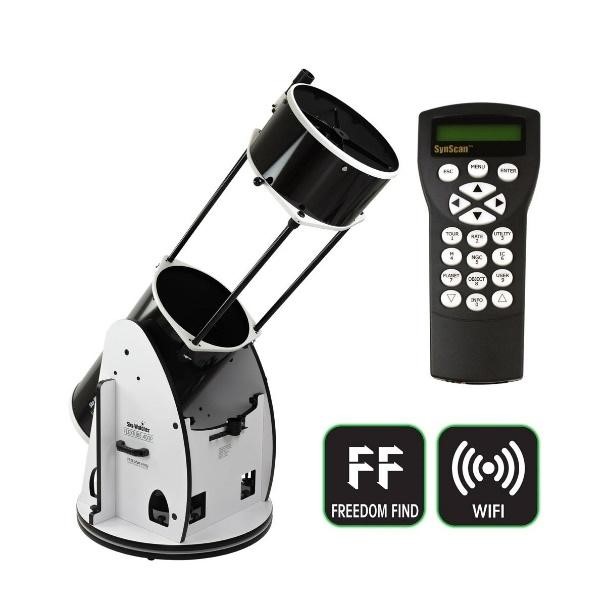
The serious astronomer will want to set their sights on much larger apertures, such as those available within the Sky-Watcher lineup, with versions as large and advanced as the Sky Watcher 16" Flextube GoTo Collapsible Dobsonian Telescope (Figure 3), which adds both a massive increase in light gathering ability and automation in the form of a go-to mount with tracking capabilities to keep your target centered in the eyepiece. The collapsible design offered in the Sky-Watcher lineup also helps to mitigate some of the difficulty with transporting such a large instrument - ideal for those without ready access to dark skies.
Binoviewer
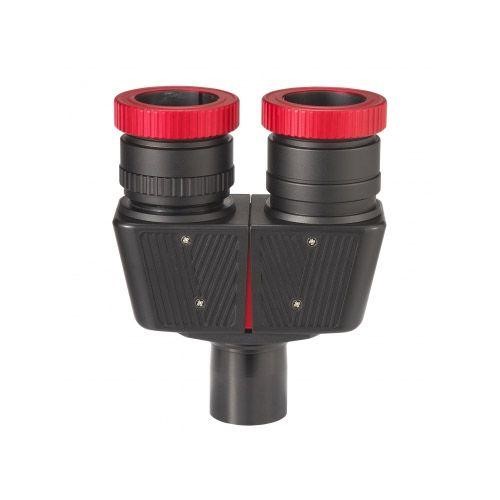
If you are primarily interested in using your telescope for observing, we highly recommend pairing your telescope with a binoviewer, such as the Long Perng 1.25" Erect Image Divergent Binoviewer (Figure 4). Binoviewers are designed to split the light captured by a telescope into two eyepieces rather than one, reducing the strain and fatigue that can result from prolonged observations through a single eyepiece. Be sure to check out our full discussion on binoviewers here for more info.
Beginner Imaging Telescope
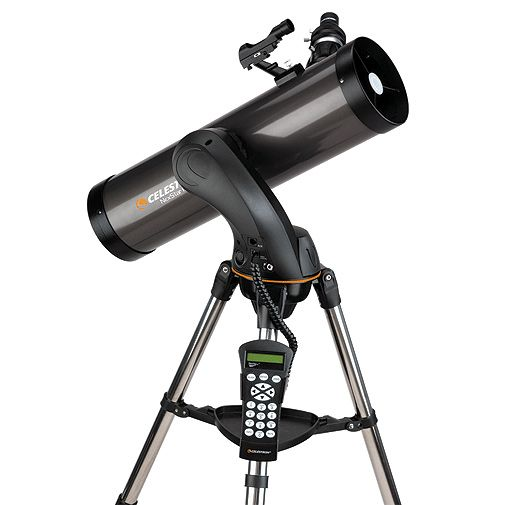
The minimum standard for any attempt at imaging the night sky is the use of a tracking mount of some sort. While equatorial mounts (such as the CGEMII discussed below) are ideal for long exposures, beginning imagers may find a budget friendly solution to capture brief exposures of solar system objects using an Altazimuth mount. The Celestron NexStar 130SLT Computerized Telescope (Figure 5) provides an affordable computerized tracking mount that can be used to guide your observing sessions or to track your target in the eyepiece to capture the Moon and other bodies using a smartphone, DSLR, or dedicated astronomy camera. The Celestron NexStar 130SLT telescope can also be removed from the altazimuth mount for pairing with an equatorial mount in the future if desired.
Intermediate Imaging Telescope
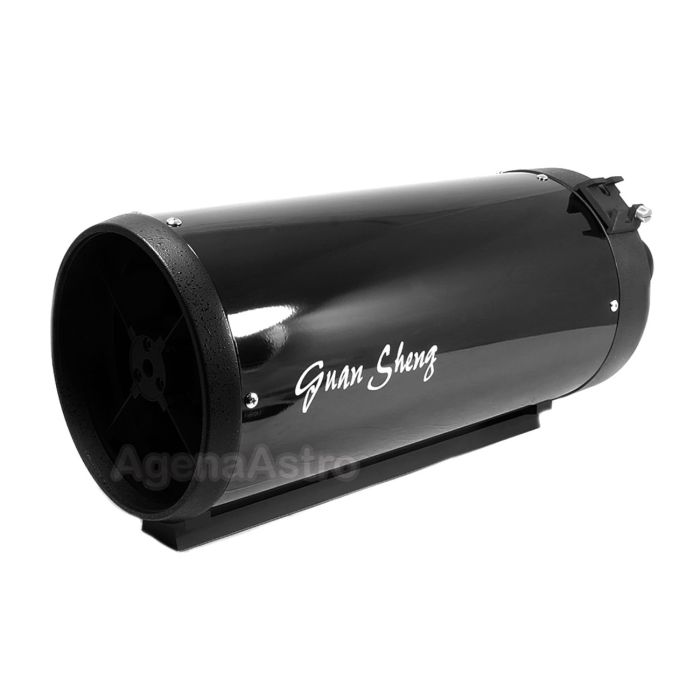
The GSO lineup of reflectors are some of the most affordable reflectors on the market, while providing high quality optics for imaging or observing. The GSO 6" f/12 Classical Cassegrain Reflector Telescope (Figure 6) delivers over 1800mm of focal length while weighing less than 14lbs, giving you adequate focal length for solar system imaging capable of being supported by a modest mount.
Advanced Imaging Telescope for Astronomy
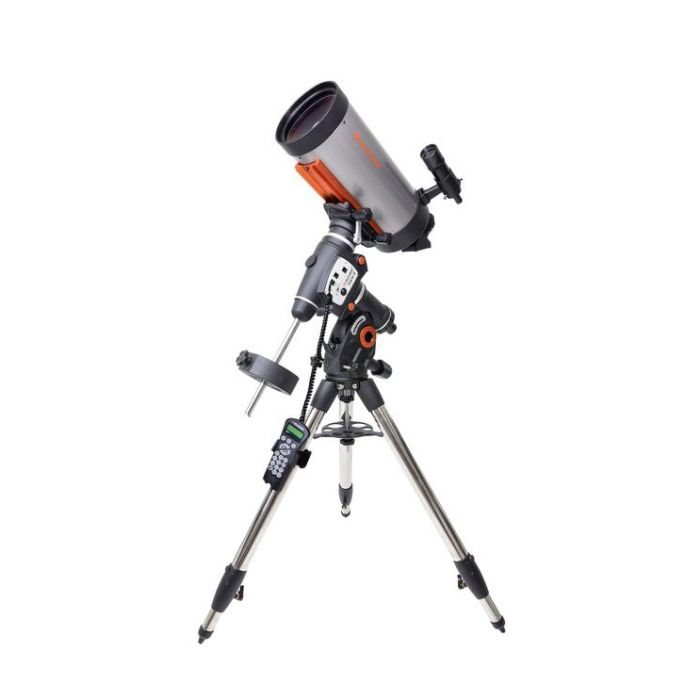
If you are looking to take your solar system imaging to the next level, large focal lengths such as the 2700mm offered by the Celestron 700 Maksutov-Cassegrain telescope (Figure 7) will get you up close and personal with lunar craters, the rings of Saturn, and the Great Red Spot of Jupiter. To accurately track objects at higher focal lengths, a capable equatorial mount will be a requirement. Agena offers the 700 Mak as part of a package deal in the Celestron 7" CGEM II 700 Computerized Maksutov-Cassegrain Telescope. Simply pair this combo with your favorite planetary imaging camera such as the ZWO ASI485MC Astronomy Camera to start capturing high contrast views of your favorite solar system locations!
5. Deep Sky Objects (Nebulae, Galaxies, Clusters)
The desire to witness deep sky objects often forces the amateur astronomer to progress from eyepiece observation to legitimate astrophotography. The faint nature of these objects often makes observing with anything less than a very large telescope in dark skies an underwhelming experience. For this reason, our gear recommendations for these targets will be heavily focused on astrophotography equipment and less on observational astronomy. If interested in attempting visual astronomy on DSOs, we recommend referencing the large Sky-Watcher dobsonian reflectors discussed in the Solar System Gear Recommendations section. Let’s look at some of the targets you can expect to see for most of the evenings in February, and equipment recommendations to capture these objects and similar objects in the upcoming months:
Popular Deep Sky Targets in February 2022
M81 (Bode’s Galaxy) & M82 (The Cigar Galaxy)
Messier 81 and 82 (Figure 8) offer an excellent opportunity for astrophotographers of all skill levels to capture two beautiful galaxies at any focal length. Throughout February, M81 and M82 are positioned high in the evening sky, allowing for ample integration time for maximum detail. Check out our recommended gear below to see how each setup differs on these targets.

Beginner Imaging Telescope
Similar to the GSO 6" f/12 Classical Cassegrain Reflector Telescope mentioned earlier, the GSO 6" f/4 Imaging Newtonian Reflector Telescope offers high quality optics at an affordable price but at a much faster 600mm f/4 focal ratio for widefield imaging and fast light capturing. Weighing less than 14lbs, this scope is also easily supported by a modest equatorial mount such as the iOptron CEM26.
Advanced Imaging Telescope
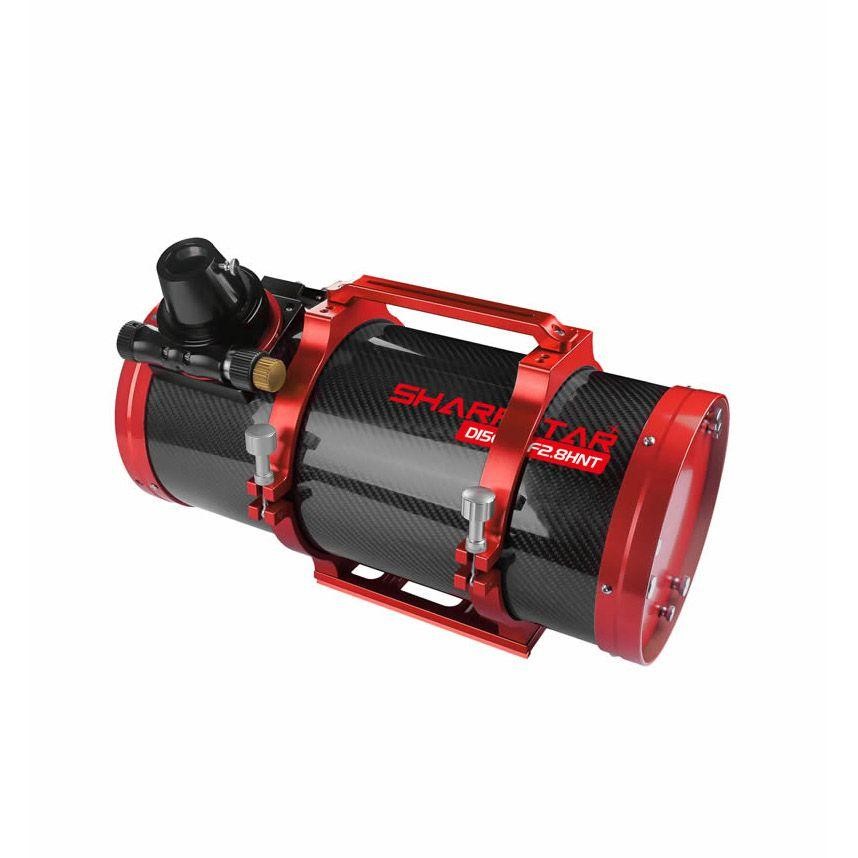
Veteran astrophotographers will typically want to capture light as quickly as possible when imaging DSOs. To accomplish this, you’ll want to look for telescopes with a fast focal ratio such as the Sharpstar 150mm f/2.8 HNT Hyperbolic Newtonian Astrograph (Figure 9) While collimation is a process that can be mastered by anyone, the incredibly fast optics of the Sharpstar 150mm HNT Astrograph requires precision collimation and for this reason is best suited for experienced astrophotographers.
Cameras
To take full advantage of the wide field of view offered by both the Sharpstar 150mm f/2.8 HNT Hyperbolic Newtonian Astrograph and the GSO 6" f/4 Imaging Newtonian Reflector, serious astrophotographers should consider a full frame camera to capture as much of any particular region of the sky as possible. The ZWO ASI6200MM and ASI6200MC (Figure 10) are extremely popular full frame astronomy cameras offering a 36mm x 24mm sensor and 62 megapixels!
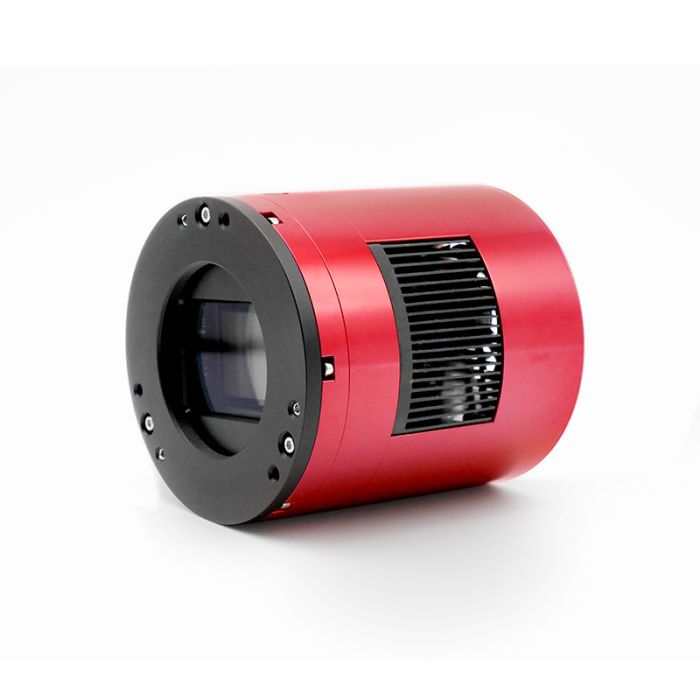
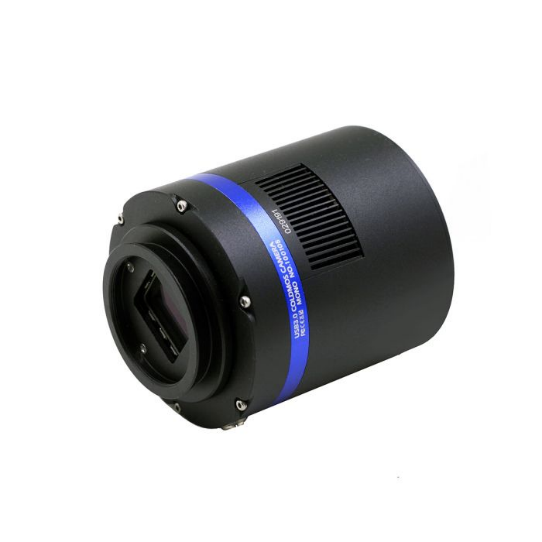
Looking for a more budget friendly option or a narrower field of view? Check out the QHY 183MM or QHY 183C astronomy camera (Figure 11) which offer a 1 inch x 1 inch sensor for a more narrow field of view. This smaller sensor size is a great match for posting images to social media without compromising on quality!
The screenshots below provide a good example of the fields of view you can expect to see from these telescope/camera combinations when imaging M81 & M82:

Filters
It is typically recommended that astrophotographers image galaxies using the traditional broadband R-G-B color spectrum since these targets do not typically emit much light in the common narrowband spectrums associated with Hydrogen, Sulfur, and Oxygen. However, M81/M82 and many others do contain some levels of hydrogen which can be revealed using narrowband imaging filters.
Color camera users may find that a simple H-alpha filter such as the Optolong H-alpha 7nm Narrowband Filter can isolate the wavelength associated with Hydrogen-alpha to add some beautiful deep reds to the bands of M81 and the central region of M82. Monochrome camera users can take advantage of the increased sensitivity of monochrome sensors in conjunction with ultra-narrowband filters such as the Antlia 3.0nm Narrowband H-Alpha Pro Imaging Filter to truly maximize their data. When galaxy season has come and gone, use these same filters to image your favorite nebulae!
*Did you find our February Monthly Guide helpful? We’d love to hear your feedback! Follow us on Facebook and Instagram to stay up to date on the latest gear, sales, and news from Agena!*