

Top Night Sky & Astronomy Events in January 2022
- 1. Introduction
- 2. January Solar Observing & Imaging
- 3. Explore the Moon & Planets in January 2022
- 4. Deep Sky Astronomy Objects in January 2022 (Nebula, Galaxies, Clusters)
- 5. Exciting Updates and Information on Telescopes & Mounts
- 6. Learn More About Astrophotography Cameras for 2022
- 7. Our Recommended Filters for Deep Sky Targets in January 2022
1. Introduction
Happy New Year and welcome to Agena’s overview of the January skies! Winter is in full force across the northern hemisphere, presenting benefits and difficulties to many astronomers and astrophotographers. Cold, clear nights are becoming more common in dryer regions, while many find themselves digging out of snow to prepare for a stargazing session! Before heading out to stargaze or image the January skies, let’s look at some of the targets and gear that will optimize your experience!
2. January Solar Observing & Imaging
December was an exciting month for solar observers and astronomers as NASA’s Parker Solar Probe returned data of the first ever instance of an object “touching” the solar corona (Figure 1)! Since most of us enjoy solar observing from the much cooler comfort of Earth, let’s check out some of the tools required to get a glimpse of our home star from our backyards!

Dedicated Solar Telescope
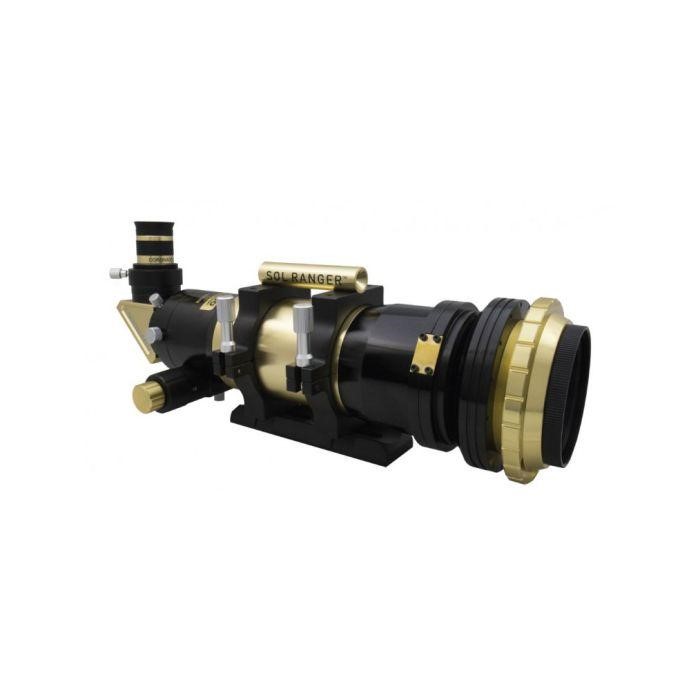
Without doubt, the best solar observing and imaging opportunities are delivered by dedicated solar telescopes which are deliberately designed to provide stunning details of the solar chromosphere, prominences, and other solar events with sharp contrast! The Coronado SolarMax III 70mm Solar Telescope with 10mm Blocking Filter (Figure 2) is a fine example of a Hydrogen-alpha solar scope, equipped with Coronado’s patented RichView tuning mechanism to fine tune the primary etalon filter for the sharpest and most detailed views of the solar surface!
Solar Finder for Telescope with Solar Filter
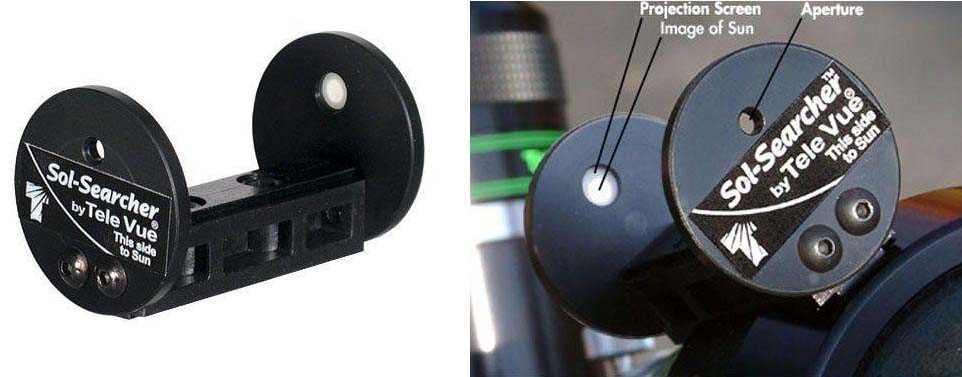
For those looking to use traditional telescopes for solar, a proper universal solar filter such as the Spectrum Glass Solar Filters can provide a convenient and easy to use option by simply mounting the filter to the front end of the telescope. While locating a massive fireball in the sky sounds like an easy task, it’s important to remember that traditional finder scopes will also need protection from the Sun. An incredibly helpful tool for solar astronomy is a dedicated solar finder, such as the Tele Vue Sol-Searcher Solar Finder (Figure 3) which can be mounted to your telescope just like a traditional finder scope. The Tele Vue Sol-Searcher allows you to aim your telescope toward the Sun and projects a small amount of light onto the “screen” of the finder, allowing you to quickly see if you are on target while preventing excess exposure to sunlight!
3. Explore the Moon & Planets in January 2022
The month of January manages to squeeze in two New Moons, with one at the very beginning of the month and one at the very end. As you plan your stargazing and imaging sessions for the month, be sure to double check the moon phases below to ensure you are accessing the darkest skies possible for deep sky observing, or the ideal days for lunar observing and imaging:
-
New Moon: January 2nd, January 31st
-
1st Quarter: January 9th
-
Full Moon: January 17th
-
3rd Quarter: January 24th
Since the moon phase has minimal effect on planetary observing and imaging, take advantage of our nearby neighbors as Mercury, Venus, Jupiter, and Saturn continue to offer nightly views in the western sky after sunset. Scan to the southern sky after sunset to locate Uranus and Neptune, both of which can be located with binoculars!
Often considered one of the best solar system objects to view through a telescope, Jupiter will slowly leave our evening skies by the middle of February, so we recommend this as the primary solar system target for the month! More specifically, don’t miss the January 12th dual transit of Jupiter’s moons Ganymede and Callisto across the disk of the planet. The Callisto transit will begin at 5:20pm EST, with Ganymede following close behind at 6:50pm EST.
4. Deep Sky Astronomy Objects in January 2022 (Nebula, Galaxies, Clusters)
As each month passes, so too do many of the popular deep sky objects that occupied the skies for most of the evening during the prior months. Targets such as the Andromeda Galaxy and the Triangulum Galaxy are already past or closely approaching the meridian by sunset throughout January, so if you’re hoping to get some extensive imaging time on these targets it would be best to act now!
Let’s take a look at some of the targets you can expect to see for most of the evenings in January, and equipment recommendations to capture these objects and similar objects in the upcoming months:
Crab Nebula, Messier 1
The Crab Nebula is the very first object listed in the Messier Catalog, and for good reason! Chinese astronomers in the year 1054 first recognized the Crab Nebula as a new star in the night sky, though we would later come to learn it was one of the first known recordings of the aftermath of a supernova explosion! In 2022, the Crab Nebula remains a widely popular target thanks to its beautiful structures and colors when imaged using narrowband filters. The image below (Figure 4) shows the Crab Nebula captured by astrophotographer Wanda Conde-Silva using the very popular Celestron Edge HD 8”!

Thor’s Helmet, NGC 2359
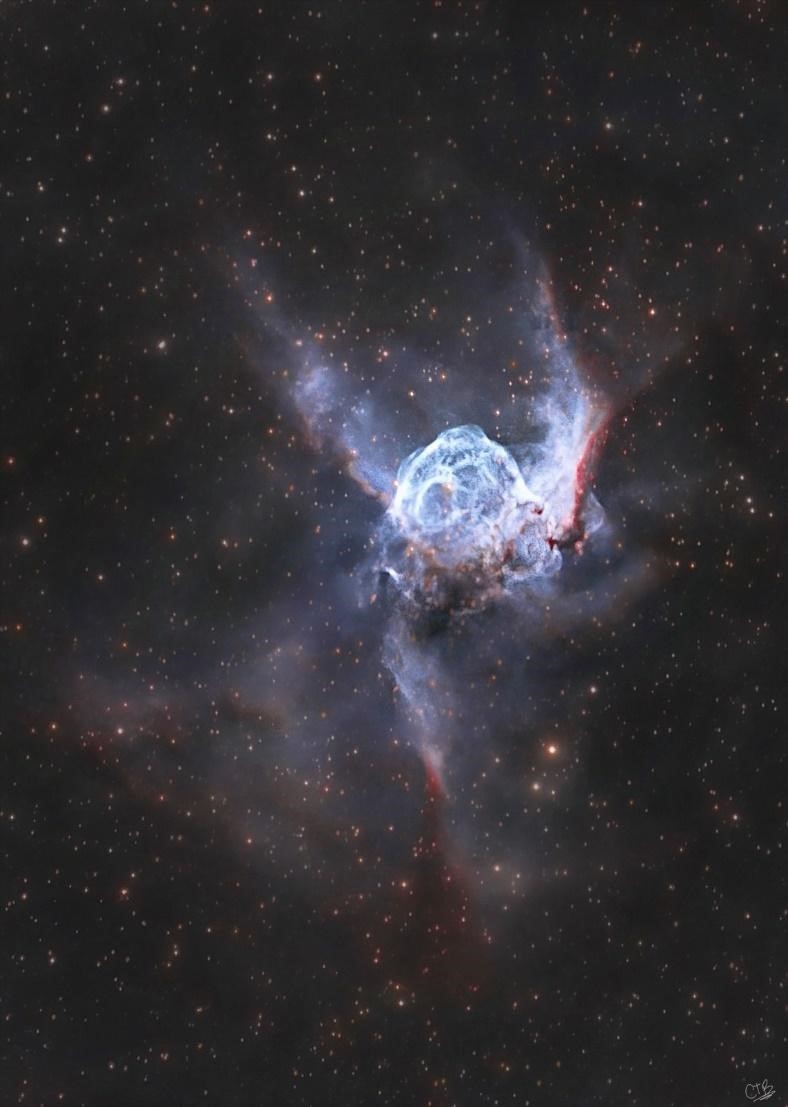
Thor’s Helmet is another popular target for astrophotography, and similar to the Crab Nebula it benefits from longer focal length due its smaller size in comparison to much larger nebulae, though even with modest focal lengths it becomes easy to distinguish the filament structures that have earned this nebula the Norse God’s name! The image of NGC 2359 in Figure 6 was captured by astrophotographer Clark Bacaltos using the Explore Scientific ED127 triplet refractor! This telescope is also available as a lighter carbon fiber based model in the Explore Scientific 127CF FCD100 f/7.5 Triplet Refractor, an increasingly popular choice for the serious astrophotographer!
5. Exciting Updates and Information on Telescopes & Mounts
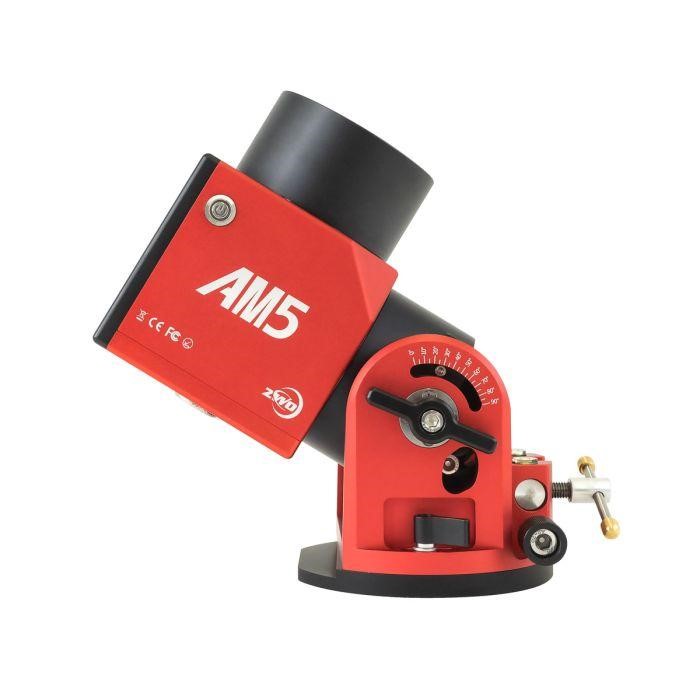
In late December, ZWO announced the upcoming release of the ZWO AM5 Harmonic Drive Equatorial Mount which is sure to make quite the splash into the astrophotography world due to its lightweight and portable design, while still being capable of supporting up to 40lbs of equipment with a counterweight! Without a counterweight, this mount would be an excellent match for small refractors such as the newly released William Optics RedCat 71 f/4.9 Petzval Refractor, while adding a counterweight will allow you to support much larger refractors such as the William Optics Fluoro Star 132mm f/7 Refractor, larger SCT’s and Newtonian reflectors.
For closeup imaging of M1 and NGC2359, the longer focal length and weight of the Celestron Edge HD 8” and larger is best handled with a slightly larger mount, such as the Celestron CGX-L Computerized Equatorial Mount which can support up to 70lbs of gear. With this sort of payload capacity, you can easily upgrade and add to your setup overtime without worrying about mount support!
6. Learn More About Astrophotography Cameras for 2022
Whether shooting color or monochrome, a dedicated astronomy camera is the most practical way to capture deep sky objects in the quickest and cleanest way possible. Agena carries a wide range of astronomy cameras, and many of these cameras are now available at a discount as we receive loaned equipment back. These cameras are in perfect working order with only a few hours of use each, mostly new cosmetic condition, and will be provided with all included and standard accessories! Find deals on monochrome cameras such as the ZWO ASI1600MM Pro or color cameras such as the ZWO ASI183MC Pro and avoid inventory concerns by picking up lightly used gear! Check out our full inventory of special offers and sales for frequent updates!
7. Our Recommended Filters for Deep Sky Targets in January 2022
This month’s recommended deep sky targets would both be imaged with greatest success by utilizing narrowband imaging filters. These filters help to isolate very specific wavelengths of light to help capture the structures invisible to the human eye or drowned out by light pollution. Here are some of our current recommendations for narrowband imaging filters:
Monochrome Camera Filter
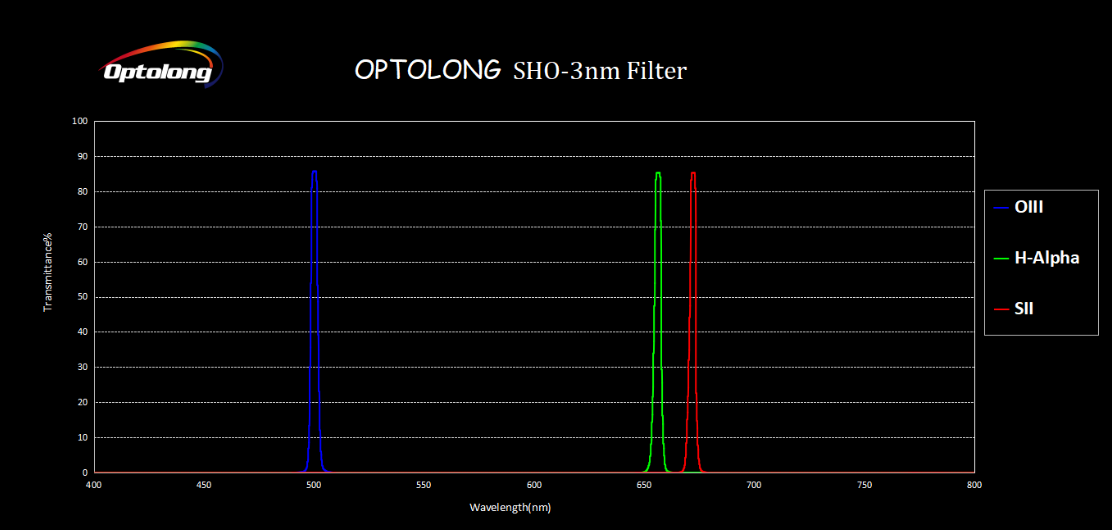
Optolong 3nm SHO Filter Set – the narrow 3nm bandwidth (Figure 7) of the new Optolong SHO filter set ensures that you are capturing as much of the desired wavelengths as possible while filtering out those produced by artificial light such as mercury vapor, sodium vapor lights, and unwanted natural light caused by skyglow in our atmosphere.
Color Camera Filters
Antlia ALP-T Dual Narrowband OIII and H-a 5nm Filter – narrowband filters for color cameras have recently encouraged many astrophotographers to stick with color astronomy cameras over monochrome cameras due to the convenience of using a single filter to capture multiple wavelengths within one image. The new Antlia ALP-t Dual Narrowband filter will allow color camera users to capture both Hydrogen-alpha and Oxygen-III at a quite narrow 5nm bandwidth, which can be isolated in post processing to produce images using color pallets similar to those used by the Hubble Space Telescope! These filters are a true game changer for anyone looking to capture faint deep sky objects from within the confines of the city lights!
*Follow us on Facebook and on Instagram at @AgenaAstro to stay up to date on the latest gear, sales, and news from Agena!*