

Top Night Sky & Astronomy Events in November 2021
1. Overview
As we progress through November, most of us in the northern hemisphere will be welcoming cooler weather, longer nights, and clearer skies! In astrophotography, this trio represents the perfect opportunity to ramp up your integration time on larger imaging projects, while observers will see the sky reveal some its most famous targets for eyepiece exploration! Let’s have a look at what we can expect to see in the November skies and sort through the gear best suited to make your observing or imaging experience as fruitful as possible!
2. Solar Observing & Imaging
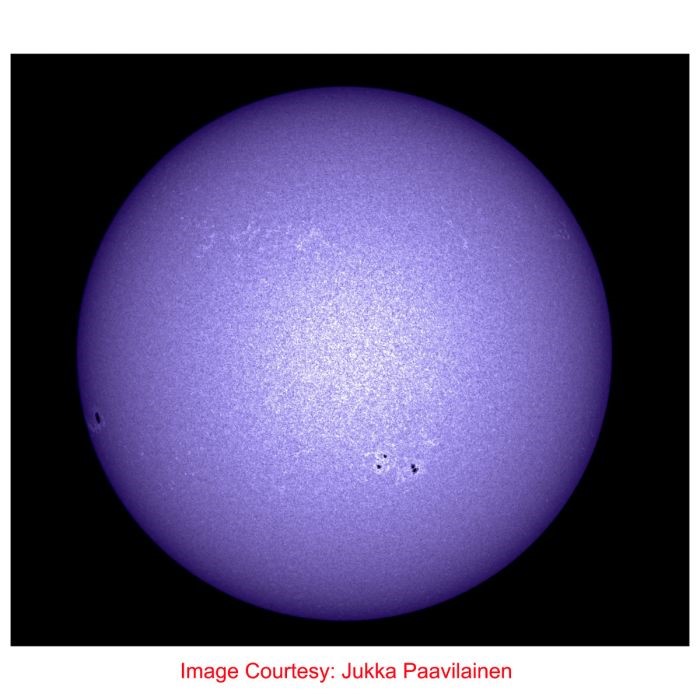
For those of you looking to partake in daytime astronomy, our own star is ramping up its solar activity and making for a wonderful observing and imaging experience! The Sun is entering into a new cycle of activity and pushing closer to “solar maximum” which means more sunspots, flares, and prominences as time progresses. Solar astronomy is a specialized field, and with that comes the need for specialized gear! Check out our most recommended gear for solar observing and imaging:
Lunt LS60MT Day & Night Modular Solar Telescope – This multi-purpose telescope is a true jack of all trades, allowing for both daytime and nighttime observing and imaging thanks to an easy-to-remove Hydrogen-Alpha module. Simply remove the Hydrogen-Alpha module to transform the LS60MT into an easily portable 70mm nighttime telescope! The best of both worlds! Want to capture some images of the sun? The ZWO ASI174MM astronomy camera is the perfect tool for solar imaging and slides directly into the eyepiece holder of the Lunt LS60MT for simplicity!

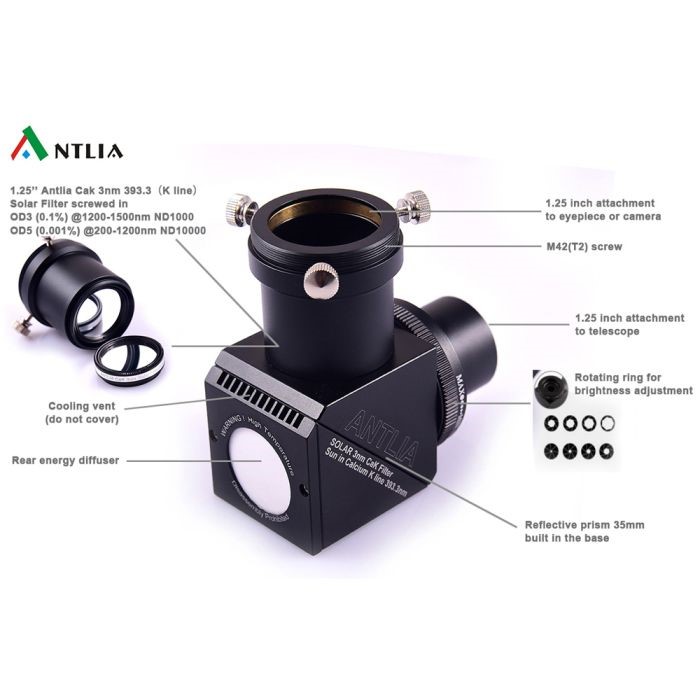
Antlia Imaging 1.25" Herschel Wedge with 35mm Prism and 1.25" Cak 3nm Solar Filter - If you are looking to take your first step into solar imaging specifically and already have a refractor telescope (no larger than 120mm or focal ratio of F5.5 or longer) then the Antlia 1.25” Herschel Wedge is a budget-friendly step in the right direction! With a built-in ceramic heat dispersion diffuser and CaK 3nm 393.3nm solar filter screwed into the eyepiece holder base, this simple tool can help to produce some stunning solar images for a fraction of the cost of high end dedicated solar telescopes! (NOT TO BE USED FOR VISUAL OBSERVING)!
3. Moon & Planets
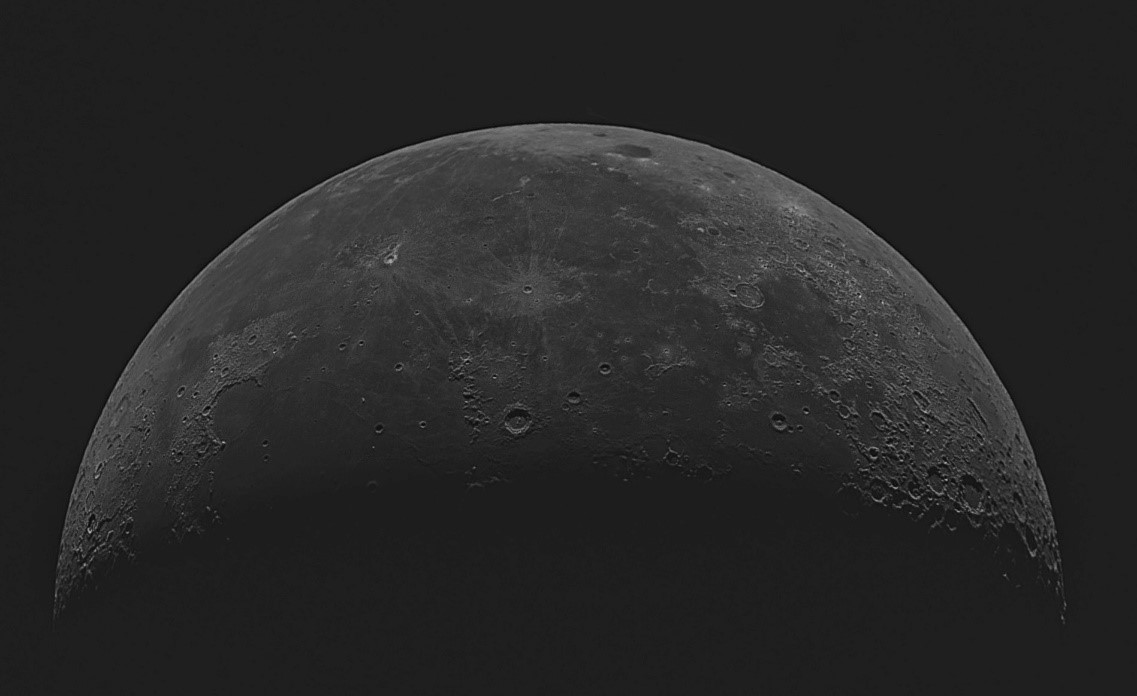
The November New Moon arrives early on November 4th, with the Full Moon clocking in on November 19th. While a New Moon is an ideal time for deep space imaging, all other lunar phases retain their own unique observing and imaging possibilities as the terminator (the line separating the dark and illuminated sides of the Moon) moves across the face of the Moon. One of the most compelling aspects of lunar photography is that a simple Dobsonian telescope and a smart phone can capture incredibly detailed features of our closest neighbors. Lunar and planetary photography and visual observing require significantly less extensive equipment than deep space imaging and are much less negatively impact by light pollution, making this a hobby accessible anywhere in the world! With the Moon, Venus, Jupiter, and Saturn all making an appearance in the November skies, here are some gear recommendations for the planet seekers:
Beginner
The standard recommendation for a beginner into the hobby is a 6-8 inch Dobsonian telescope, such as the Sky-Watcher 6” Traditional Dobsonian – a simple point and observe telescope sitting on a lazy-Susan style base. Dobsonian telescopes are ideal for the beginning observer looking to make first eye contact with our Moon and nearby planets, with the Sky-Watcher 6” Traditional Dobsonian offering a 1200mm focal length suitable for observing details of the Moon, the rings of Saturn, the moons of Jupiter, star clusters, and other sights. Pair this with a smartphone camera and the Celestron NexYZ Universal Smartphone Adapter for some quick and easy lunar astrophotography! Due to the overwhelming brightness of a full Moon, you may find it necessary to utilize a neutral density filter such as the Optolong Variable Transmission Polarizing Filter during your observations to cut down the brightness and resolve more surface detail!
Intermediate
Once accustomed with the orientation of the night sky, many folks will move on from the simple Dobsonian setup and seek out a motorized tracking mount to compensate for the rotation of the Earth, allowing for the target to stay centered in the eyepiece for observing or centered in the camera sensor for imaging. A highly popular entry level telescope and tracking mount combo is the Celestron NexStar 8SE, which offers 2032mm of focal length to get up close and personal with your targets! While a German equatorial mount (such as the iOptron GEM28) is ideal for astrophotography, the alt/az mount provided with the Celestron 8SE will allow for brief imaging exposures to capture solar system objects and targets not visible to the naked eye!
Advanced
In lunar and planetary imaging, longer focal lengths pave the way for more detailed images of the lunar surface and planetary features. Telescopes like the GSO 8" f/12 Classical Cassegrain Reflector offer a long focal length without being too large to physically manage, and when mounted to a German equatorial mount such as the Sky-Watcher EQ6-R Pro you will find that you can track your targets accurately and consistently throughout the night. To maximize the results of your imaging, the previously mentioned ZWO ASI174MM astronomy camera as well as the recently released ZWO ASI482MC and ZWO ASI485MC offer adequate frame rate video recording for you to capture video of the moon and planets which can be processed using astrophotography software to create one final image!
4. DSO’s (Nebula, Galaxies, Clusters)
Perhaps the most involved category of observing and imaging is the adventure of locating and imaging deep-sky objects (DSO’s), such as galaxies and nebulae thousands to millions of lightyears from Earth! This is possible thanks to advances in telescope optical designs, dedicated astronomy camera sensitivity, and specially designed light pollution filters. Those of you lucky enough to live under truly dark skies (check out the Unihedron Sky Quality Meter to get a good idea of your local sky quality) may be able to spot some brighter targets through the eyepiece, while most of us will need to use cameras to detect these faint targets. Let’s look at some of the commonly sought out DSOs for November and the tools you’ll need to capture these beautiful regions of the sky:
Galaxies & Star Clusters: Andromeda Galaxy, Pleiades Cluster, Double Cluster in Perseus
These objects are often referred to as “broadband” targets which become much more difficult to observe or image under light polluted skies or a brightly illuminated moon. Ideal observing and imaging for these targets should occur as close to a New Moon as possible. To combat light pollution, these targets can also be captured using broadband light pollution filters such as the Optolong L-Pro Light Pollution Filter with a color astronomy camera or DSLR.

To truly contest light pollution, monochrome cameras such as the ZWO ASI2600MM APS-C Monochrome Astronomy Camera or the QHY 268M Monochrome Astronomy Camera can deliver significantly higher signal-to-noise ratios while using color filters such as the Antlia V-Series LRGB Imaging Pro Filter Set designed to suppresses light pollution from high-pressure sodium and mercury street lamps and other sources of local light pollution.
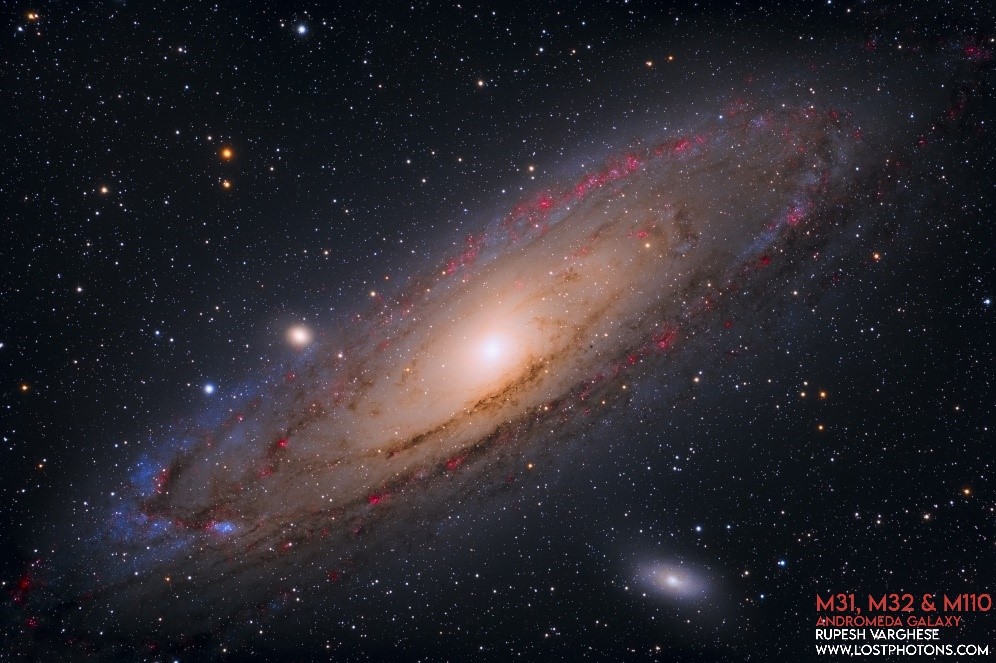
Since these targets appear relatively large in our sky, widefield imaging setups are ideal. The successor to the world-famous William Optics Redcat 51 Petzval Refractor Telescope will soon arrive and brings with it a focal length of 348mm, making the highly anticipated William Optics Redcat 71 the perfect telescope for capturing the full scale of the Andromeda Galaxy and the thousands of stars residing within and around the Perseus Double Cluster.
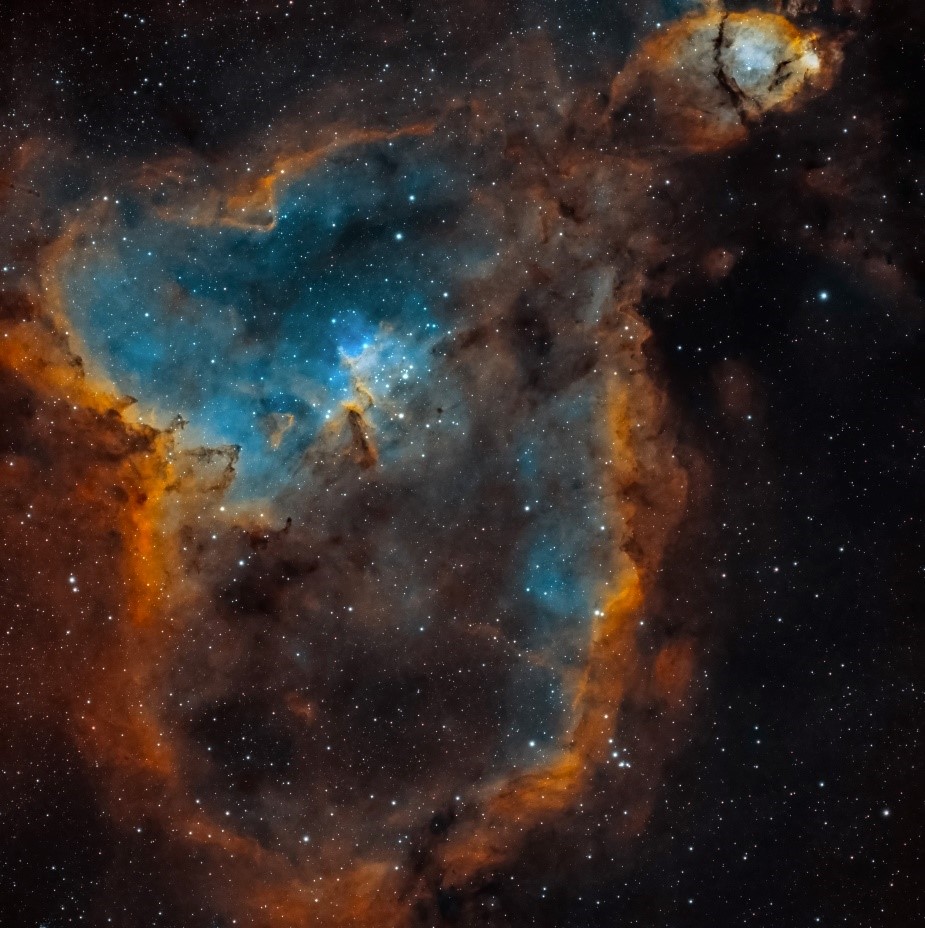
Nebulae: Heart Nebula, Soul Nebula
If you’re looking to capture stunning colors to make your astrophotography stand out, then imaging nebulae is the way to go! The Heart & Soul Nebulae are neighbors within the constellation Cassiopeia that each possess stunning structures and color that can be emphasized with post-processing techniques and the use of narrowband imaging filters.
Slightly longer focal lengths such as those offered by the William Optics FLT 132 Fluoro Star 132mm f/6.9 Triplet Refractor and Explore Scientific FCD100 Series 127mm f/7.5 Carbon Fiber Apochromatic Triplet Refractor telescopes will give you a close up view of these targets separately, allowing you to individually capture narrower regions within each target. Adding focal reducers to these telescopes can also widen your field of view and allow you to collect light significantly faster using the same gear!
A major highlight of nebula astrophotography is that even color cameras can produce incredible images of these areas, despite light pollution, when using narrowband filters such as the Optolong L-eXtreme Dual Bandpass Light Pollution Filter. This filter allows light emission from the wavelengths associated with Hydrogen-Alpha and Oxygen-III, while blocking out common sources of light pollution to deliver sharper contrast!
5. Special Events
November is littered with opportunities to witness meteors, a thrilling observing experience that requires nothing more than dark skies and your eyes! Turn your outside lights out and look anywhere in the sky on the expected peak evenings to catch a glimpse of these high-speed rocky fireballs! If you're unfamiliar with the night sky, check out the Celestron Sky Map or similar sky charts to quickly locate constellations, stars, and tons of other objects! During each of these meteor showers, the meteor trails will trace their paths back to a point in a particular constellation.