

A 3D Printing Q&A with Astrodymium and BuckeyeStargazer
A timelapse video showing the production of a desiccant cap. Courtesy of BuckeyeStargazer.
Many amateur astronomers may have heard of 3D printing and noticed 3D-printed parts and accessories for sale, but they don’t know much about the background technology. Are these parts reliable and well constructed? What are they made of? What are their limitations?
Agena AstroProducts got in touch with Bill Nguyen of Astrodymium in British Columbia and Joel Short of BuckeyeStargazer in Indiana, the two leading companies in this space, for a Q&A about 3D printing and how each company makes products for the amateur astronomy marketplace.
What got you interested in 3D printing for astronomy? Did you come to the field as an amateur astronomer, or someone with mechanical/design expertise, or both?
Bill Nguyen: I had problems with my astrophotography setup, so I used 3D printing to solve them. It's as simple as that. Prior to getting into astronomy, I took a mechatronics course that introduced me to 3D printing and CAD software.
Joel Short: I've been an amateur astrophotographer for 20 years and a "tinkerer" all my life. Initially I became interested in 3D printing because it would allow me to design and make custom parts to mount various accessories on my own telescope setup. I also had some ideas about useful products that others might be interested in and I wanted to serve the astronomy community where most do not have access to a 3D printer. Since starting out, I thoroughly enjoy helping people bring their ideas to life. The possibilities with 3D printing are almost endless.
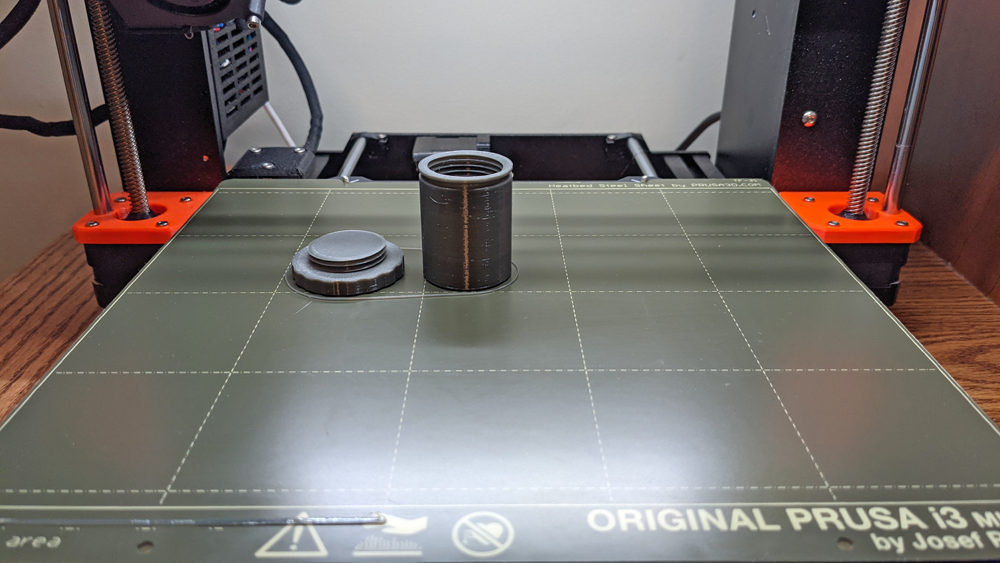
Figure 2 – A finished desiccant cap on the printer. Image courtesy of BuckeyeStargazer
How long have you been delivering products to the astronomy marketplace?
Bill Nguyen: Since May 2020.
Joel Short: Since April 2020. I bought my first 3D printer one week before the COVID pandemic shut down everything for two months. During those two months I was able to focus quite a bit of time on learning 3D printing. Most of the products I make I either use myself, or others have had an idea that I helped bring to life that many others have found useful. If I see a practical need for a product in the astronomy community, I try to fill that need. I currently have four 3D printers.
What types of products and parts are best suited to 3D printing right now?
Bill Nguyen: Anything that doesn't make economic sense to produce with traditional manufacturing techniques such as injection moulding or CNC machining, as long as the part is strong enough to handle the application.
Joel Short: I have found that many people are looking for lighter weight mounting components to reduce the overall weight of their telescope setup. 3D printing is ideal for these types of applications because while the plastic filament is not as strong as metal components, the weight is drastically reduced, and the filament is more than strong enough for many non-load-bearing applications. Also, 3D printing has a rapid turn-around time, meaning if a customer has an idea about something they need, the prototype and testing phase is very quick compared to metal machined parts.

Figure 3 – A ring system for a Rokinon/Samyang 135mm f/2 lens made from multiple 3D-printed parts. Image courtesy Astrodymium.
What is the material used for 3D printing, and how is it similar to other materials that people might be familiar with?
Bill Nguyen: There are many types of plastic materials that can be used for consumer level 3D printing, but there is no perfect one. You must pick the material that is suitable for the application. The vast majority of 3D-printed parts used in astronomy are made out of polyethylene terephthalate glycol (PETG) because it is relatively easy to use, has good thermal resistance, and is fairly resistant to UV radiation. PETG is not often used outside of the 3D printing industry, but PET (a similar plastic that lacks glycol) is used for most food packaging and transparent bottles. Other astronomy-suitable materials for 3D printing include acrylonitrile butadiene styrene (ABS) or acrylic styrene acrylonitrile (ASA), which nearly everyone has experience with. It is used to manufacture automotive parts, Lego bricks, containers, among other things. Pretty much anything that's been injection moulded has a high chance of being made out of ABS.
Joel Short: In the mainstream, polylactic acid (PLA) filament is the standard plastic used. It is readily available, cheapest and easiest to work with. But PETG has gained a lot of traction in recent years because it is both stronger than PLA and much easier to work with than ABS. There are many more exotic filaments as well: metallic, wood, carbon fiber, and conductive just to name a few.
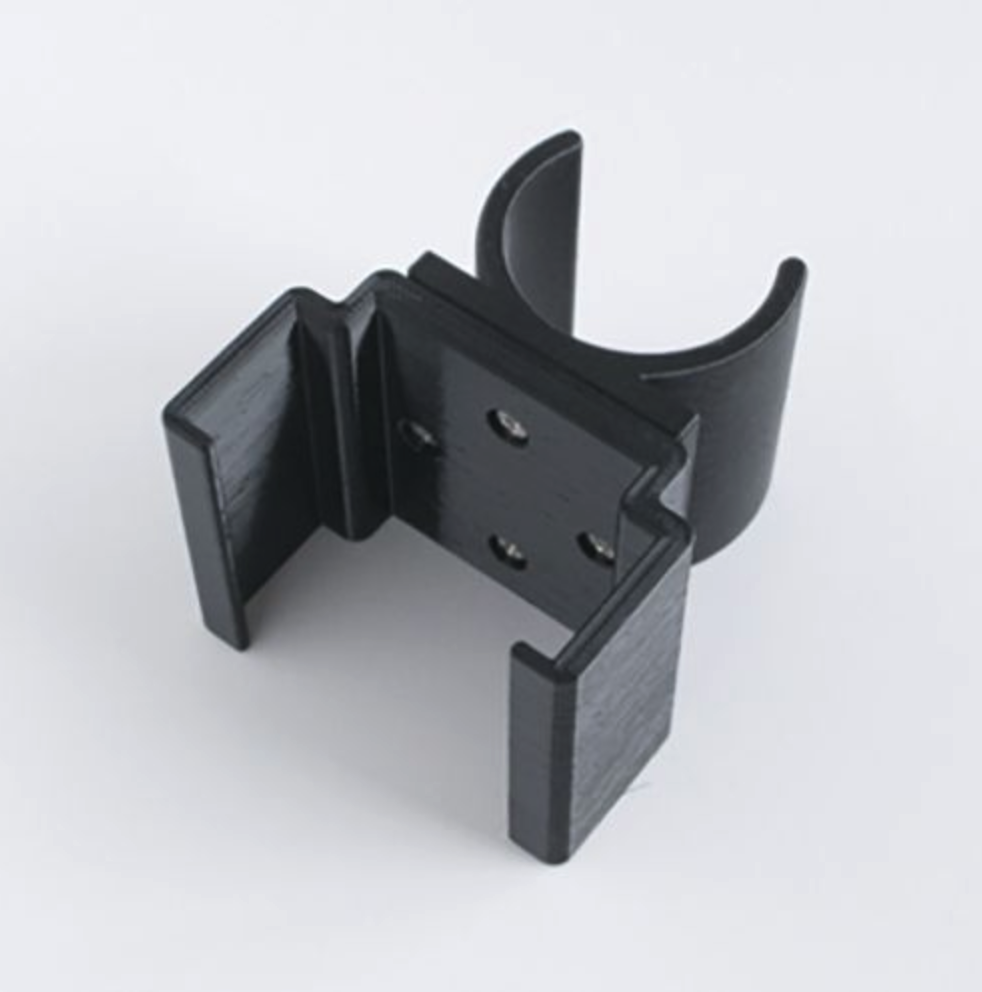
Figure 4 – A 3D-printed tripod mounting bracket for a hand controller. Image courtesy of BuckeyeStargazer.
How long does it take to print a 3D astro product? Are the yields (and reproducibility) relatively high?
Joel Short: A simple M48 dust cap takes about an hour to print. On the other end of the scale, a Tri-Bahtinov mask for a C14 takes about 13 hours in total to print. Print times for the same object can vary depending on the settings used for printing, but I tend to focus more on quality than speed.
Once the product is designed you can produce as many of that item as you want. As long as the printer is maintained properly, the same design file can be used repeatedly and it should yield the exact same results every time. This is a small part of the reason why I am very glad to work with individual customers on ideas they may have. Chances are if one person wants a product others will as well, and once I have the design I can use it forever.
Bill Nguyen: The yield rates can be very high (over 95%), if you have a good machine, tuned settings, and buy quality material from a reliable supplier. However, usually in the beginning of a product's life cycle the yield rate will be much lower because you're still figuring out the optimal settings to ensure that it can be reliably produced.
What’s the current practical limitation on size and strength of 3DP parts? Do they have a long life compared to metal parts?
Joel Short: The size is limited to the print bed of the 3D printer, however many items are designed in parts that link together to form a whole. In that sense there is no limit on the size. As far as the strength of parts, for practical reasons most 3D printed parts are not yet on the same level as metal parts. There are some stronger exotic filaments, such as carbon fiber, but those are not yet practical for mass produced items. In general, I would not make a part for any load bearing applications, although I have made things like scope risers for telescope rings. A solid block of PETG for a scope riser is very strong.
Agena currently offers a wide range of 3D-printed astronomy products from Astrodymium and BuckeyeStargazer as well as other manufacturers (3D Astro Accessories, 3DiBari, Astronetics Design, Machinza Astro Products and ProAstroGear).