

Smart Telescope Buying Guide: The Future of Astrophotography
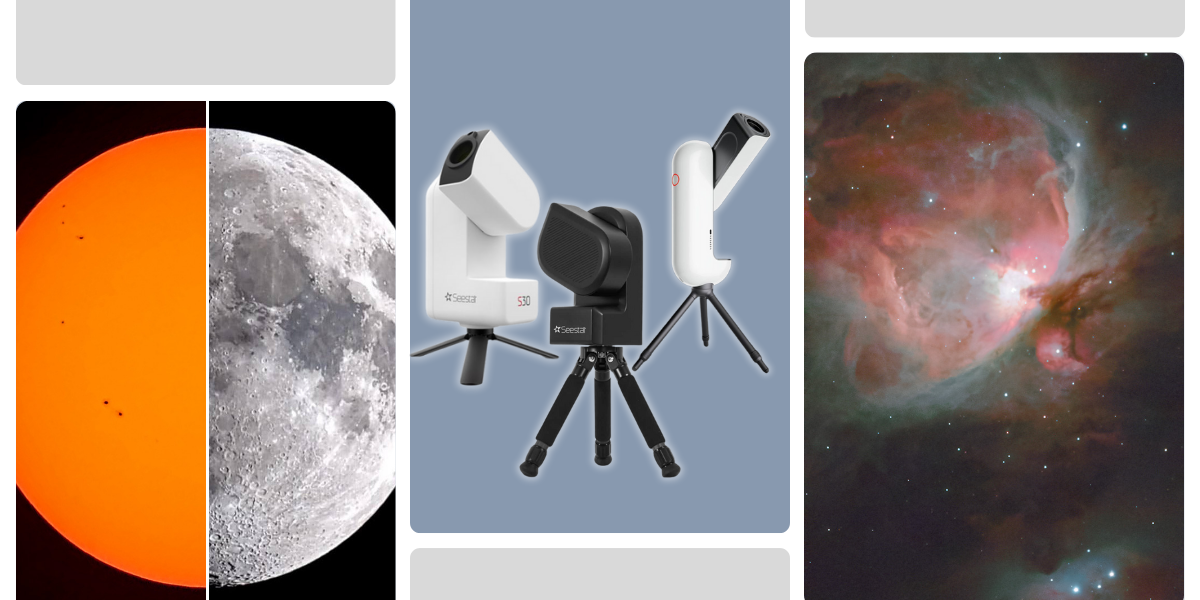
Smart telescopes are changing how we interact with the night sky. These innovative devices are great telescopes for astrophotography and make astronomy simple, fun, and accessible for everyone. Imagine effortlessly capturing stunning images of the Sun, Moon, galaxies, and nebulae—all with your smartphone or tablet. Sounds amazing, right?
At Agena Astro, we offer the best smart telescopes on the market. Explore popular models like the ZWO Seestar S50, Seestar S30, Vaonis Vespera, Vaonis Hestia, and Celestron Origin!
So which one is right for you? We’ve got you covered! To help you choose the right telescope for your needs, we’ve answered some of your most asked questions.
Smart telescopes are revolutionizing how we explore the night sky. These advanced devices make astrophotography easy and bring the wonders of the universe to your fingertips. Capture stunning images of the Sun, Moon, galaxies, and nebulae—all with just your smartphone or tablet. Incredible, right?
What Are Smart Telescopes and How Do They Work?
Smart telescopes combine everything you need to take stunning images of the universe—like a motorized telescope and mount, filters, and a camera—into one streamlined package.
With intuitive apps compatible with most Android or iOS devices, you can set up in minutes. These telescopes use GPS and advanced sensors to figure out their location and orientation. After a quick star alignment, you’re ready to go!
Want to view the Orion Nebula or a distant galaxy? Select your target from the app’s catalog, and the telescope will move to it and track it to keep it in view. The app will then begin capturing images, gradually revealing more detail with each exposure. Many apps also include image enhancement features, such as noise reduction.
If you’re not sure what’s up there, don’t worry! Most apps can recommend the best objects to capture based on your location and time. With smart telescopes - astrophotography really is that simple!
Best Smart Telescopes
ZWO Seestar S50 - Best All-in-One Smart Telescope for Quality and Value
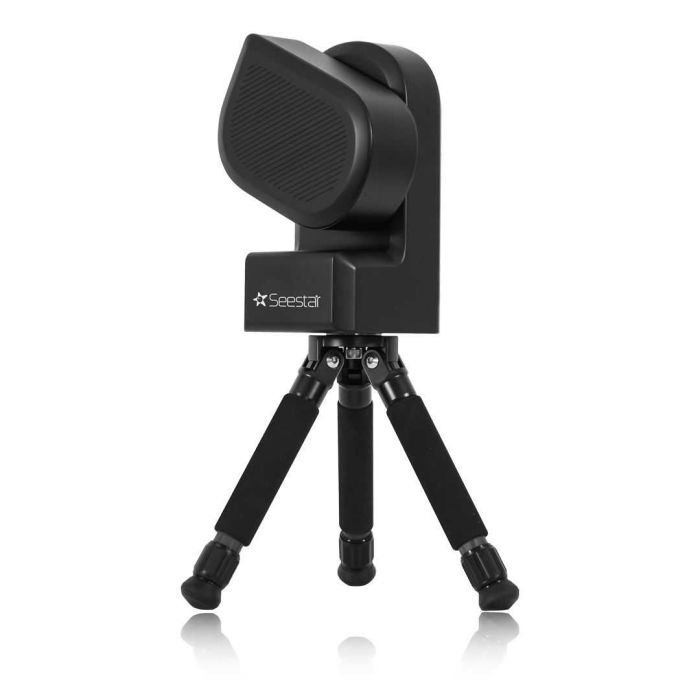
The ZWO Seestar S50 stands out as our number-one choice for its all-in-one capabilities! It comes equipped with a 2MP sensor, providing detailed images with a wide field of view, making it ideal for astrophotography and deep-sky observation.
The telescope’s focal length is set at 250mm with an f/5 focal ratio, enabling it to capture a range of celestial objects, from the Moon to deep sky targets like nebulae. This compact, portable device offers a 10-second exposure stacking feature to improve image quality, even in light-polluted areas!
With a dual-band filter for light pollution reduction, and a solar filter for safe solar observations, the Seestar S50 is an excellent option for beginners and urban astronomers looking for convenience and quality in one affordable package!
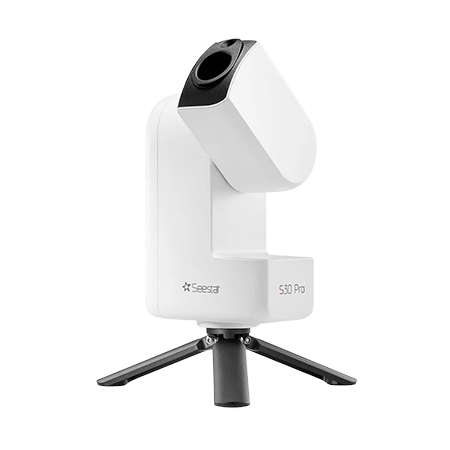
ZWO Seestar S30 - Best Budget-Friendly Smart Telescope

Compact, portable, and budget-friendly, the ZWO Seestar S30 offers a 150mm f/5 optical system paired with a full HD color camera.
It’s one of the most affordable smart telescopes available while still providing solid imaging performance.
Perfect for beginners and casual users, the Seestar S30 balances affordability and functionality.
Vaonis Vespera Pro - Best Smart Telescope for High-Quality Astrophotography
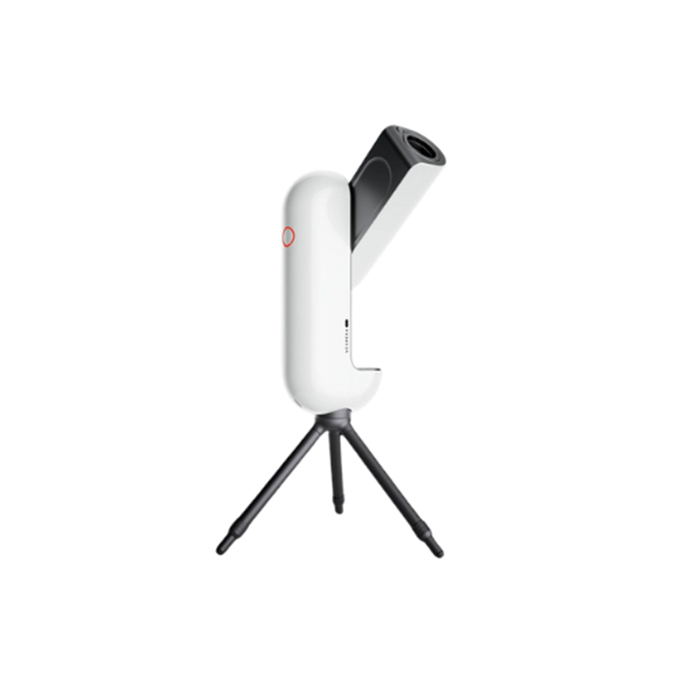
For astrophotography enthusiasts, the Vaonis Vespera Pro is a standout choice. It combines a 250mm focal length, fast f/5 optics, and a 12.5MP color sensor to capture breathtaking, high-resolution images.
Advanced yet user-friendly, the Vespera Pro delivers exceptional performance and value, making it a top pick for those serious about imaging.
Why Start Your Astrophotography Journey with a Smart Telescope
Smart telescopes simplify the often-complex process of astrophotography. They automate tasks like tracking, imaging, and long-exposure stacking, allowing beginners to focus on enjoying the night sky!
With a smart telescope, you can easily photograph the Sun and Moon, star clusters, nebulae, and more. Models like the Vaonis Vespera Pro and Seestar S30 are compact, intuitive, and ideal for anyone starting their astrophotography journey!
Smart Telescopes and Observing in Light-Polluted Areas
Think city lights will ruin your images? Smart telescopes come with built-in or optional filters to combat the effects of light pollution and enhance your astrophotography.
Most models include a Duo Band Filter, which can improve the visibility of nebulae (large areas of dust and gases in space) by allowing light from key emission lines to pass through while blocking out other wavelengths. This filter is especially useful in urban environments, boosting contrast and revealing more details.
Another common filter is the UV/IR Cut Filter, which removes ultraviolet and infrared light. This enhances image sharpness and clarity by ensuring that only visible light reaches the camera.
Some systems also offer an optional CLS (City Light Suppression) Filter, which blocks the light commonly emitted by streetlights. They help restore the natural colors of the sky and improve the visibility of faint celestial objects.
Whether you're observing from your balcony or capturing deep-sky images in your backyard, using these filters with your smart telescope allows you to capture clearer, more vibrant images despite the challenges of light pollution!
Explore Our Range of Smart Telescopes for Easy, Automated Astrophotography
Seestar S50: Affordable Entry into Astrophotography
Best for beginners and people on a budget | $-$$
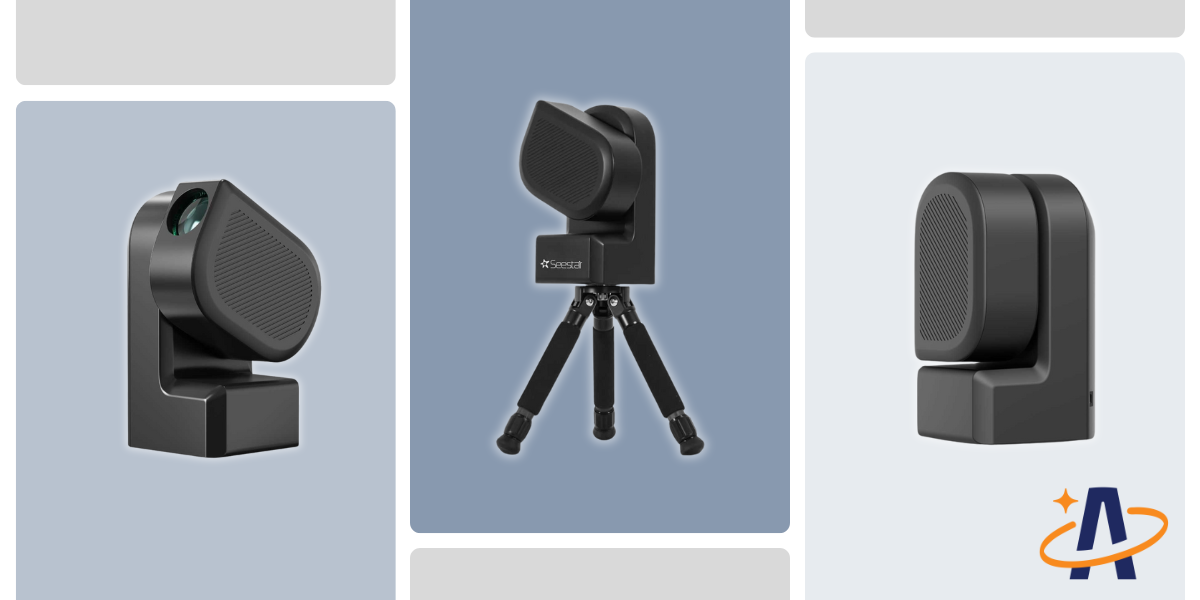
Looking for a beginner-friendly telescope that thrives in urban environments? The ZWO Seestar S50 is an affordable, lightweight, and fully automated smart telescope designed for casual astronomers and those starting out!
At 6.6 lbs (3 kg), the Seestar is easy to carry and comes with a tripod and carry bag, making it perfect for stargazing on the go. Its compact design and built-in light pollution filters make it an excellent choice for observing under city skies.
Key Features at a Glance
- Optics: The 50mm aperture and 250mm focal length provide solid magnification and light-gathering power. The triplet apochromatic lens ensures sharp, color-accurate images with minimal color fringing.
- Imaging Capabilities: A 2MP Starvis camera supports exposures up to 30 seconds and offers multiple file formats, including AVI, RAW, and FITS, for flexible image processing. Autofocus delivers sharp results, while the app allows for fine-tuned focus adjustments.
- Ease of Use: Controlled via an Android or iOS app, the Seestar automates setup, eliminating the need for manual polar alignment. Its intuitive interface and built-in leveling feature make it easy to start observing in minutes.
- Portability: With a small size and included accessories, the Seestar is perfect for travel or backyard astronomy.
Performance Highlights
The Seestar S50’s field of view fits approximately one full Moon, making it ideal for observing lunar features, and many deep-sky objects.
While its older Starvis camera technology isn’t the most advanced, it still delivers reliable performance for beginner astrophotography.
The built-in dew heater and light pollution filters enhance your experience in colder climates and urban areas.
Pros:
- No experience is required to use it.
- Budget-friendly and beginner-friendly.
- User-friendly app simplifies operation.
- A lightweight and portable design ideal for travel.
- Simple setup suitable for beginners and children.
- Tripod and carry case included.
- Built-in light-pollution filters and dew heater.
Cons
- Not ideal for viewing the planets.
- Maximum 30-second exposures.
The Seestar S50 is one of the most affordable smart telescopes available, offering excellent value without compromising essential features! Whether you’re observing the Moon, capturing nebulae, or recording videos, this compact telescope is a practical choice for beginners seeking ease of use and reliable performance.
Seestar S30: Small But Mighty
Best for beginners, people on a budget and those wanting portability | $-$$
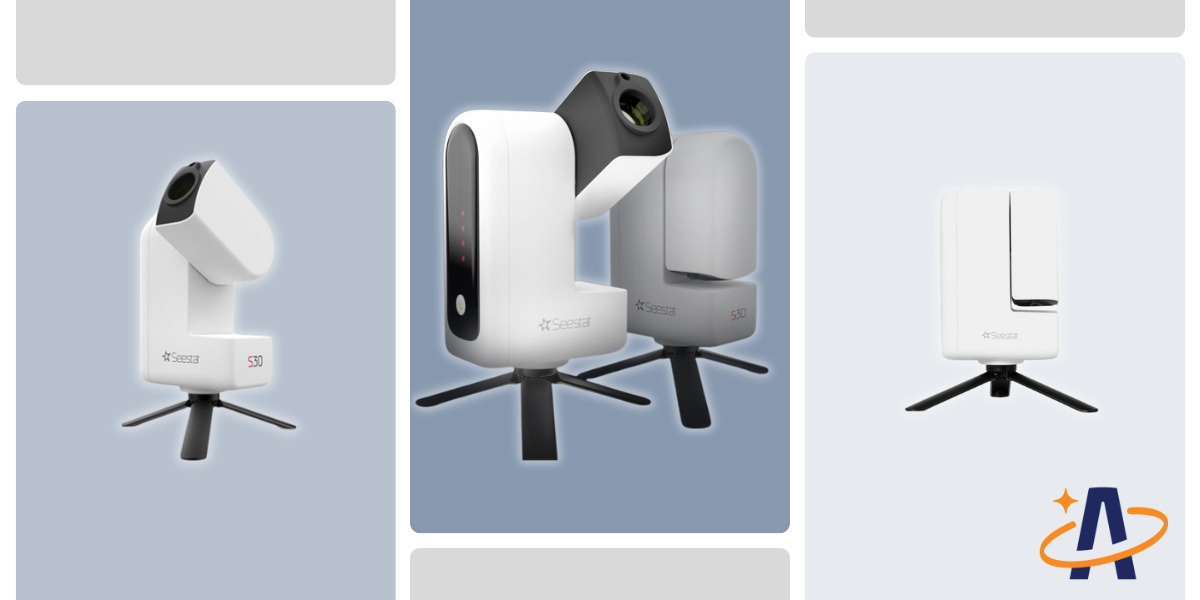
The ZWO Seestar S30 is a compact, affordable smart telescope designed for beginners and casual astronomers. Weighing 3.6 lbs (1.65 kg), it's incredibly lightweight and portable, making it perfect for stargazing on the go. It’s also one of the cheapest telescopes!
Key Features at a Glance
- Optics: The 30mm aperture and 150mm focal length, paired with dual telephoto and wide-angle lenses, make it versatile for observing the Moon, Sun, nebulae, and other celestial objects. Its triplet optical system ensures sharp images with minimal chromatic aberration.
- Mosaic Mode: A standout feature, mosaic mode captures and combines multiple images to create wide-angle views. This is particularly useful for photographing large objects like galaxies and nebulae.
- Imaging Capabilities: The 2MP color camera supports up to 30-second exposures, making it possible to capture faint objects with decent detail. Images are saved in formats like FITS and JPEG for easy post-processing. Autofocus ensures sharp results, with app controls for fine adjustments.
- Ease of Use: The S30 is controlled via an Android or iOS app, simplifying alignment and operation. Beginners can start observing or imaging with minimal effort.
- Portability: Its lightweight design and included tripod and carry case make it a great choice for travel.
Performance Highlights
With its slightly larger field of view compared to the Seestar S50, the S30 is great for observing a variety of celestial objects. Mosaic mode enhances its ability to capture larger targets, while the built-in light-pollution filters and dew heater improve performance in colder and urban environments.
Pros
- No experience is required to use it.
- Budget-friendly and beginner-friendly.
- Lightweight, portable design perfect for travel.
- User-friendly app simplifies operation.
- Mosaic mode and dual lenses for versatile imaging.
- Includes tripod, carry case, and built-in light-pollution filters.
Cons
- A small 30mm aperture limits light-gathering ability.
- Maximum 30-second exposure time.
- May experience field rotation in certain conditions.
The Seestar S30 is a fantastic choice for beginners or casual astronomers looking for a portable and affordable smart telescope. It combines ease of use with practical features, making it an excellent value for anyone starting their astronomy journey!
Vaonis Vespera Pro: A Mid-Range Smart Telescope with High-Resolution Astrophotography Capabilities
Best for beginners and experienced users, and astrophotography | $$-$$$
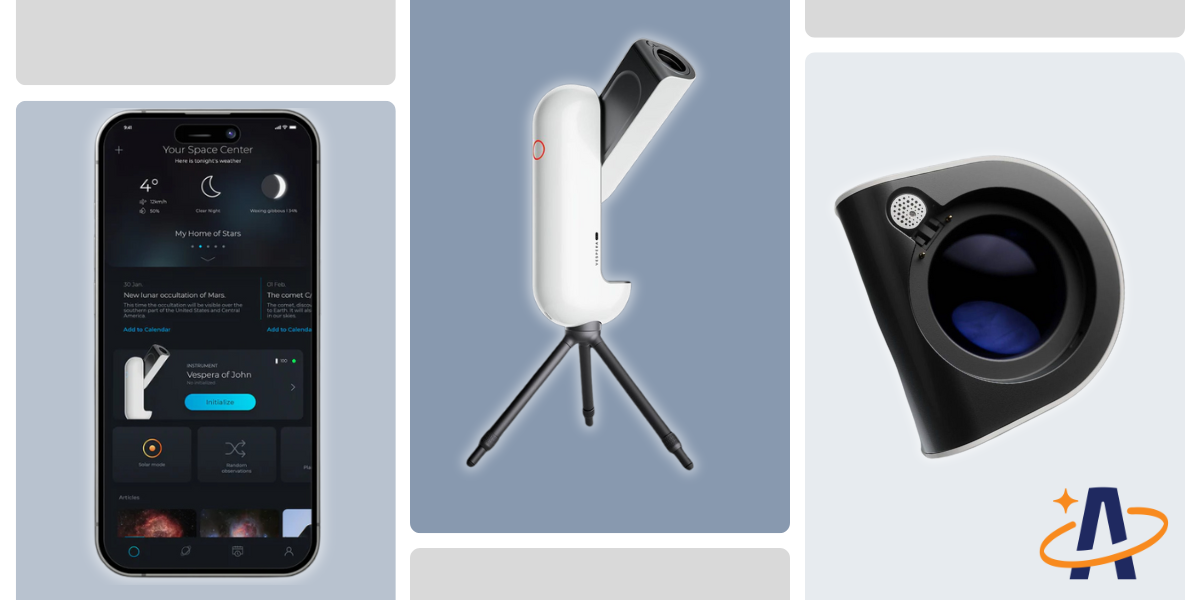
The Vaonis Vespera Pro is a breakthrough in automated astrophotography and is considered one of the best smartphone telescopes. Combining innovative technology with user-friendly design, it offers high-resolution imaging and versatility for both beginners and experienced astrophotographers.
Key Features at a Glance
Optics: A 50mm aperture and 250mm focal length at f/5, paired with a quadruplet lens system and field corrector, ensure sharp, distortion-free images with minimal chromatic aberration.
CovalENS Technology: Exclusive to Vaonis, this feature enables panoramic captures of the night sky, delivering exceptional resolution and clarity with the Sony IMX585 sensor.
Imaging Capabilities: Supports JPEG, FITS, and TIFF (16-bit RAW) formats, making it suitable for detailed post-processing. Multi-night stacking enhances deep-sky images, while autofocus ensures precision.
Portability: Weighing 11 lbs (5 kg), the Vespera is compact and easy to transport. An 11-hour battery life supports extended observing sessions. Optional accessories, like a backpack and filters, allow for a customizable setup.
Ease of Use: The Singularity App simplifies operations, offers educational content, and includes trivia about celestial objects. Features like precise tracking and intuitive controls make it accessible for users of all experience levels.
Performance Highlights
The Vespera delivers outstanding resolution and pinpoint tracking, making it ideal for high-quality astrophotography. Its multi-night stacking feature and advanced autofocus routines allow users to capture stunning deep-sky images effortlessly. While its field of view isn’t optimized for planetary imaging, it excels in wide-field astrophotography!
Pros
- High-resolution imaging with Sony IMX585 sensor.
- Includes tripod, hard case, and anti-dew heater.
- Compact and portable design.
- Excellent tracking performance and autofocus.
- Versatile with support for various image formats and optional accessories.
Cons
- A smaller aperture limits light-gathering ability.
- Heavier and pricier than other smart telescopes.
- Not ideal for planetary imaging.
- Solar and light-pollution filters are sold separately.
- Maximum exposure time is limited to 20 seconds in expert mode.
The Vaonis Vespera Pro is a stylish, advanced, and intuitive telescope that bridges the gap between casual stargazing and serious astrophotography. Its combination of cutting-edge features and high-resolution imaging makes it a top choice for those seeking exceptional performance without breaking the bank.
Celestron Origin: Powered by RASA Optics for Stunning Clarity
Best for serious automated astrophotography | $$-$$$
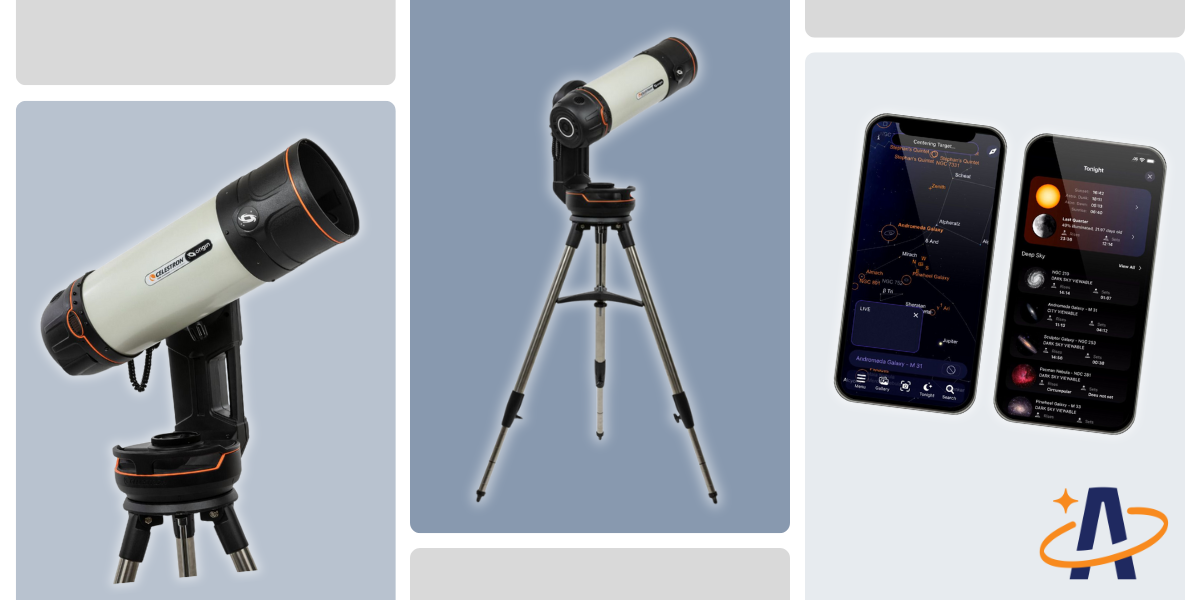
The Celestron Origin is a smart telescope built with serious astrophotography in mind. It combines cutting-edge RASA optics, automation, and user-friendly technology, to deliver superb imaging and versatility!
Key Features at a Glance
- Optics: The 6” RASA (Rowe-Ackermann Schmidt Astrograph) optical tube provides outstanding light-gathering power, paired with a built-in 6-megapixel Sony Starvis camera for stunning deep-sky images.
- Integrated Technology: A built-in computer, cooling fans, and autofocuser streamline the imaging process, ensuring clear, sharp photos every time.
- Filter Drawer: Includes a UV/IR cut light pollution filter for improved image clarity in urban environments.
- Dew Prevention: An advanced system with a dew heater ring, environmental sensors, and a dew shield keeps optics clear for uninterrupted imaging.
- Ease of Use: Fully automated alignment via StarSense technology makes setup simple, even for beginners.
Performance Highlights
The Alt-Az mount delivers precise motorized tracking, keeping celestial objects perfectly centered for every exposure. With advanced features like scheduled observations and automated stacking, capturing detailed, breathtaking images has never been easier. Seamless WiFi connectivity and an intuitive app put the universe at your fingertips, guiding you effortlessly to your next celestial discovery!
Pros
- Exceptional 6” RASA optics for high-quality deep-sky imaging.
- Built-in camera and autofocuser for streamlined astrophotography.
- Advanced dew prevention system ensures clear images in all conditions.
- The included UV/IR cut filter improves imaging in light-polluted areas.
- Fully automated setup with StarSense technology.
- Stable full-height tripod included.
Cons
- Higher price point compared to other smart telescopes.
- Larger size and weight may limit portability.
- Primarily designed for deep-sky imaging, with limited planetary performance.
The Celestron Origin is a smart telescope that caters to casual stargazers and serious astrophotographers. With its premium RASA optics and advanced automation, it’s perfect for those seeking exceptional performance and ease of use.
Vaonis Hestia Smartphone Telescope: Unlock the Power of Your Smartphone
Best for beginners and on-the-go imaging of the Moon and Sun | $-$$
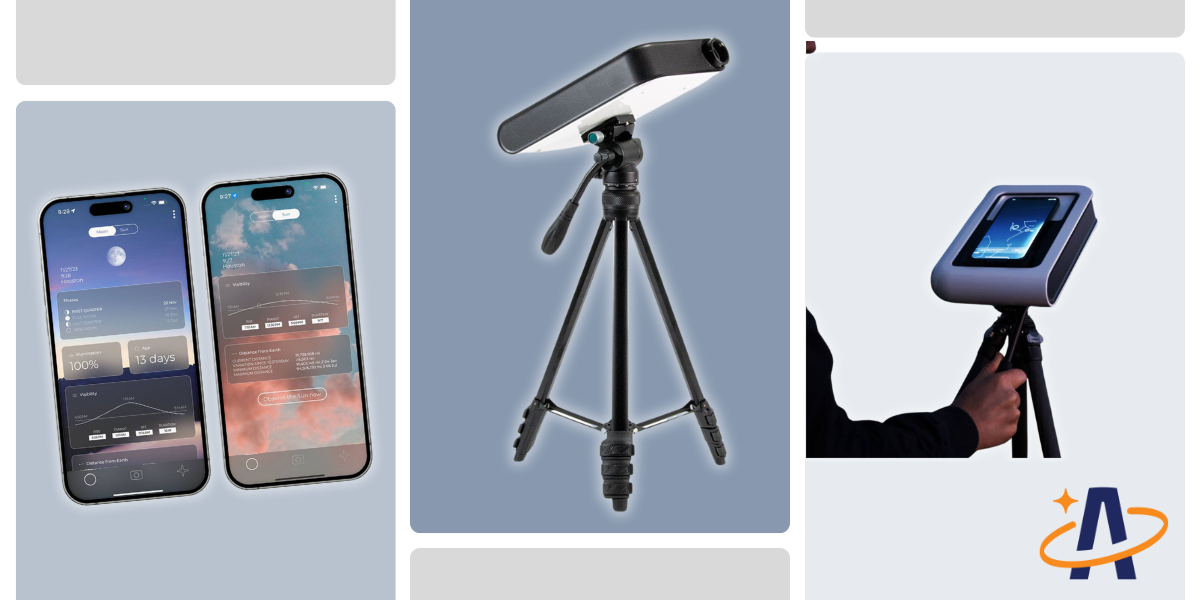
The Vaonis Hestia is a revolutionary smartphone telescope that turns your device into a powerful tool for exploring the Moon, Sun, and bright celestial objects. Lightweight, portable, and beginner-friendly, it’s the perfect choice for those starting their astronomy journey.
Key Features at a Glance
- Smartphone Integration: Attaches directly to your smartphone, using your device’s camera for imaging. Works with the Gravity app for alignment and object tracking.
- Optics: 30mm aperture provides up to 25x magnification, perfect for crisp views of the Moon and Sun.
- Solar Observation: Includes a solar filter for safe imaging of sunspots and solar activity.
- Portability: Compact and lightweight and no battery required - ideal for on-the-go astronomy! The premium package includes a hard case and tripod for added convenience.
- User-Friendly App: The Gravity app guides you step-by-step, allowing adjustments to exposure, ISO, framing, and focus. Five imaging modes, including daytime imaging, make it versatile for various observations.
Performance Highlights
The Vaonis Hestia isn’t motorized and doesn’t include a built-in camera, making it less suitable for deep-sky astrophotography. Its simplicity and affordability make it an excellent choice for capturing bright objects like the Moon and the Sun. The app’s intuitive interface ensures an easy learning curve for beginners.
Pros
- Affordable and beginner-friendly.
- Includes a solar filter, tripod, and hard case (Premium package).
- Battery-free operation.
- Gravity app offers step-by-step guidance and customizable imaging settings.
Cons
- Limited compatibility with older smartphones.
- Image quality depends on your phone’s camera.
- No tracking or GoTo functionality.
- Manual focus, with fine-tuning available through the app.
- Lacks internal storage for standalone use.
The Vaonis Hestia is the perfect telescope for those who want to explore astronomy without the complexity of traditional setups. Its compact design, ease of use, and affordability make it a great entry point for stargazing and solar observation.
Comparing Smart Telescopes
Features |
Seestar S30 |
Seestar S50 |
Vaonis Vespera |
Celestron Origin |
|---|---|---|---|---|
| Aperture | 30mm | 50mm | 50mm | 152mm |
| Focal Length | 150mm | 250mm | 250mm | 335mm |
| Focal Ratio | f/5 | f/5 | f/5 | f/2.2 |
| Optical System | Triplet | Triplet | Quadruplet | RASA |
| Camera | Sony IMX662 (Starvis 2) 2 MP Color |
Sony IMX462 (Starvis) 2 MP Color |
Sony IMX676 (Starvis 2) 12.5 MP Color |
Sony IMX178 (Starvis) 6.44 MP Color |
| Camera Resolution | 1920 × 1080 | 1920 × 1080 | 3536 × 3536 | 3096 × 2080 |
| Battery Life | 6 hrs image / 4 hrs video | 6 hrs image / 4 hrs video | 11 hours | 6+ hours |
| Size | 3.6 lbs (1.65kg) | 6.6 lbs (3kg) | 11 lbs (5kg) | 41.6 lbs (18kg) total |
| File Formats | FITS JPEG MP4 AVI |
FITS RAW AVI |
FITS JPEG TIFF |
FITS PNG JPEG |
| Internal Storage | 64GB | 64GB | 225GB | 50+GB |
| Light Pollution Filters | Duo Band (OIII 30nm, Ha 20nm) UV/IR Cut Included |
Duo Band (OIII 30nm, Ha 20nm) UV/IR Cut Included |
Duo Band LPF City Light Suppression Sold Separately |
UV/IR Cut (Included) Optional 1.25"/2" Filters (Sold Separately) |
| White Light Solar Filter | Included | Included | Sold Separately | Sold Separately |
| Dark Frame Filter | Included | Included | Cap Included | Cap Included |
| Built-in Mosaic Mode | Yes | Yes | Yes | No |
| Tripod | Included | Included | Included | Included |
| Case/Bag | Included | Included | Included | Not Included |
Frequently Asked Questions
What is a smart telescope?
A smart telescope is an advanced astronomical telescope with integrated technology, such as Wi-Fi, Bluetooth, and app connectivity, enabling users to automate alignment, tracking, and imaging without requiring manual adjustments.
How do smart telescopes work?
Smart telescopes use built-in sensors, motors, and software to automatically align and track celestial objects. The user typically connects their smartphone to the telescope's app, which provides guidance and control and allows for astrophotography.
Are smart telescopes good for beginners?
Yes, smart telescopes are ideal for beginners, as they simplify the setup and alignment process through automation. Many models also come with user-friendly apps that guide users in locating and observing celestial objects.
Can smart telescopes be used in cities?
Yes, but there will be some limitations due to light pollution. Many smart telescopes come with filters to help reduce light pollution, making it possible to view deep-sky objects like nebulae from the city and suburban areas.
What objects can I observe with a smart telescope?
Smart telescopes can be used to observe a wide range of celestial objects, including the Moon, stars, galaxies, nebulae, star clusters, and planets to a limited degree.
Do smart telescopes work for deep-sky imaging?
Yes, smart telescopes can be used for deep-sky imaging, especially when paired with advanced imaging features and filters. With longer overall exposure times, smart telescopes can capture incredibly detailed images of deep sky objects like nebulae, galaxies, and more!
Can you photograph planets with smart telescopes?
Yes, smart telescopes are capable of photographing planets, especially those that are bright and visible from Earth, such as Mars, Jupiter, and Saturn. Yet, due to their field of view, planets will appear small and less detailed than traditional telescopes with larger apertures like a Dobsonian.
What is the difference between a smart telescope and a regular telescope?
The main difference is automation. Smart telescopes come with integrated technology, such as motors, sensors, and apps, which automatically align, track, and assist in capturing images, while regular telescopes typically require manual adjustments. The other main difference is that smart telescopes do not typically have an eyepiece, meaning you cannot visually observe objects. Instead, smart telescopes let you view and share images you capture via the Companion app.
Are smart telescopes suitable for kids?
Many smart telescopes are suitable for kids, as they offer a simple setup and easy-to-use apps that allow for guided exploration. Some models also come with educational content and features designed to engage young users. We especially recommend the Seestar S30 or Seestar S50 for kids thanks to its effortless setup and operation!
Can I upgrade the camera on my smart telescope?
Most smart telescopes have integrated cameras that cannot be upgradable, but the Celestron Origin is designed with future upgrades in mind. Celestron’s engineers are actively working on enhancements, including potential camera upgrades as technology advances.
How do I clean my smart telescope lens?
Typically, we don’t recommend touching the optics of a telescope unless you know what you’re doing, as there is a risk of damaging it. However, if the lens is very dirty (dust will not affect your view), you can use a lens brush or a can of compressed air to remove dust. If necessary, use a microfiber cloth dampened with a lens cleaning solution to gently wipe the lens in a circular motion. Avoid harsh chemicals and excessive pressure.
Can I use a power bank with a smart telescope?
Yes, most smart telescopes can be powered by a USB portable power bank, as long as the power bank supplies the correct voltage and current specified by the telescope's requirements.
What accessories are compatible with smart telescopes?
Smart telescopes are designed to work with specific accessories tailored to each model, ensuring optimal performance. Common compatible accessories include dust caps, filter holders, power banks, tripods, smartphone holders, cases, and more.
How do I improve the image quality of my smart telescope?
Ensure your telescope is properly aligned and focused. Use the app to adjust exposure settings, ISO, and other image-processing features. Consider using a filter to reduce light pollution if you’re in a city. Additionally, shoot in clear weather conditions, ideally when the Moon is not up in the sky, and avoid observing during moments of atmospheric turbulence.
Do smart telescopes require Wi-Fi to operate?
Many smart telescopes require Wi-Fi for app connectivity and remote control. Some models offer offline modes or Bluetooth connectivity that can function without Wi-Fi. Most smart telescopes allow you to operate them without an internet or cellular data connection, meaning you can use them out in remote areas!
Can smart telescopes track satellites?
Most smart telescopes are designed for celestial objects like stars and nebulae. Users can attempt to photograph the International Space Station (ISS) by capturing it transiting the Sun or Moon, a popular technique for astrophotographers. Some smart telescopes, such as the Seestar S30, feature AI-based tracking systems that can be used to track and photograph near-Earth satellites, though this capability is primarily designed for people, animals, and moving objects.
Are smart telescopes portable for travel?
Yes, most smart telescopes are designed for portability. They are typically lightweight and come with carrying cases, making them easy to transport for stargazing trips.
What are the limitations of smart telescopes?
Smart telescopes are convenient but come with limitations. They perform best under dark skies, as light pollution can reduce visibility. Integrated components, such as fixed cameras, limit customization or upgrades. Battery life can restrict session length without external power, and their automated design may not appeal to users who prefer manual control. Additionally, while great for casual use, smart telescopes often lack the image quality and precision of professional equipment. Finally, they rely heavily on proprietary software, which may impact long-term usability if updates cease.
Do smart telescopes require collimation?
Most smart telescopes use lenses, not mirrors, and so don’t require collimation.
Are smart telescopes compatible with all smartphones?
Smart telescopes are generally compatible with smartphones running iOS or Android operating systems, but you should check the specific compatibility requirements for the app associated with your telescope model.
How much light pollution can smart telescopes handle?
Smart telescopes can operate in light-polluted areas but perform best under darker skies. Many models include filters to enhance image quality in urban environments. Designed for portability, they are easy to take to locations with darker skies.
Can smart telescopes be used during the day?
Yes, smart telescopes can be used during the day to observe the Sun (with a proper solar filter) and land objects. But, they are primarily designed for use at night.
How do smart telescopes avoid star trailing?
Smart telescopes use motorized mounts and tracking systems to avoid star trailing. They adjust the telescope's position to keep celestial objects in the field of view but are limited to short exposures to avoid field rotation.
How do I store my smart telescope safely?
Store your telescope in a dry, cool place to avoid damage. Use a protective case or bag to prevent dust, dirt, or physical damage. Avoid storing it in areas with extreme temperatures or humidity.
What warranty options are available for smart telescopes?
Warranty options vary by manufacturer. Typically, smart telescopes come with a 1 to 2-year warranty that covers manufacturing defects. Some brands may offer extended warranties or protection plans for an additional cost.
Connectivity Issues and Troubleshooting
How do I set up my smart telescope?
Set up involves assembling the tripod and attaching it to your smart telescope, connecting the telescope to your smartphone or tablet via Wi-Fi or Bluetooth, and using the associate app for alignment and tracking. Once you’ve powered up your device, you can begin the alignment process by following the directions in the app.
What to do if the app crashes?
First, restart the app and your device. Ensure both the app and your telescope's firmware are up to date. If the issue persists, reinstall the app and ensure no conflicting apps are running in the background. Lodge a report with the developer via the Playstore or Apple Store.
I am having connectivity issues, what should I do?
Ensure your telescope and smartphone or tablet are connected to the same Wi-Fi network. Restart both the telescope and the app. If using Bluetooth, make sure your device's Bluetooth is enabled and within range. Check for software updates for both the telescope's firmware and the app.
Why is my smart telescope not aligning properly?
Make sure you place the telescope on a stable surface. If the alignment is still off, ensure your location settings in the app are correct, and follow the alignment instructions carefully.