



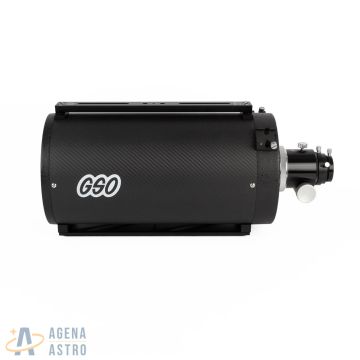
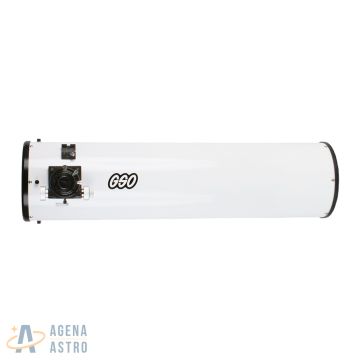
About Reflector Telescopes
Isaac Newton made a revolutionary contribution to astronomy with his introduction of the reflecting Newtonian telescope in 1668. The astronomy community commonly refers to reflecting telescopes as light buckets. The term highlights the reflector's large apertures (front openings), which allow them to gather more light compared to other types of telescopes.
This makes them a great choice for astrophotographers and visual observers, because they’re more efficient at capturing fainter deep-sky objects.
How Reflector Telescopes Work
Unlike refractor telescopes that rely only on lenses, reflecting telescopes use mirrors to gather light. These telescopes feature a primary mirror, which concentrates light onto a second mirror. This secondary mirror then directs the light to an eyepiece or camera for observing or imaging.

Types of Reflecting Telescopes
Reflecting telescopes offer great views without the color distortion, or chromatic aberration, you sometimes get with lens-based telescopes. There are three main types of reflectors you’ll come across: Newtonians, Cassegrains, and Dobsonians (which are a type of Newtonian).
Each has its unique benefits, from affordability to portability. Ready to explore which one fits your needs? Keep reading, and we'll guide you to the perfect reflecting telescope for your next night under the stars!
Newtonian Telescopes
Best for intermediate deep-sky astrophotographers and visual observers | $ - $$$
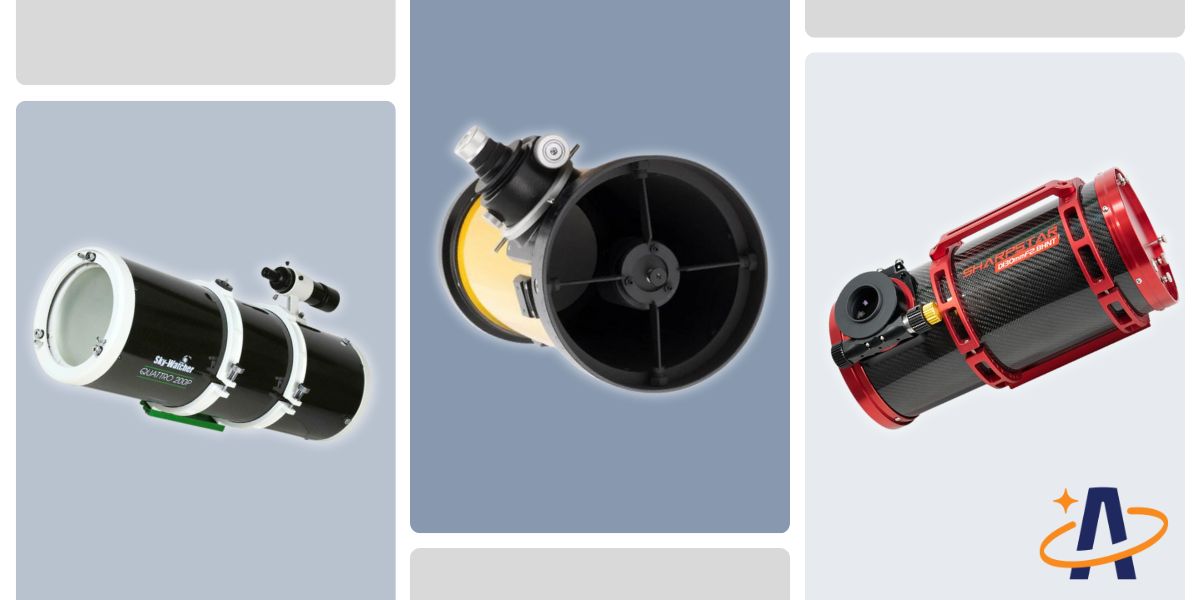
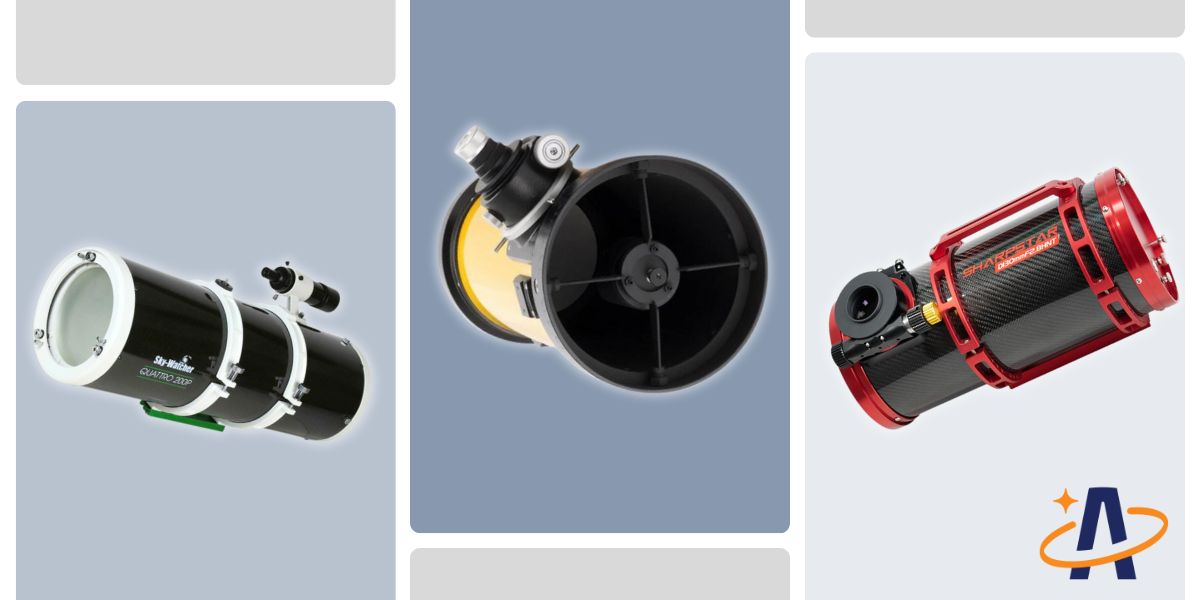
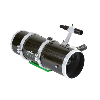
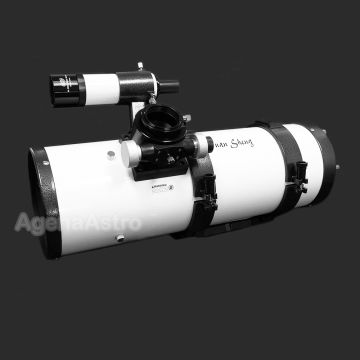
Newtonian telescopes are well-known for their simple design and ease of use. These telescopes use a primary mirror to gather light. As light enters the telescope, it is reflected off the primary mirror up to a flat diagonal secondary mirror. The light then passes from the secondary mirror through to an eyepiece or camera, typically located on the side of the telescope.
Astrophotographers often favor Newtonian telescopes for their wide field of view and light-gathering capabilities.
Pros: Newtonians offer great value for money, as you get a larger aperture at a lower cost compared to other types of telescopes. They’re versatile and can be used to view or image nebulae, galaxies, planets and more. They’re easy to use and maintain.
Cons: While Newtonians have some great advantages over other telescopes, there are some downsides. Newtonian telescopes suffer from some optical issues, like coma, and need regular collimation, which can be daunting for beginners. Larger apertures and longer focal lengths can be bulky, heavy and less portable.
Dobsonian Telescopes
Best for young people, beginners and intermediate visual observers | $ - $$$
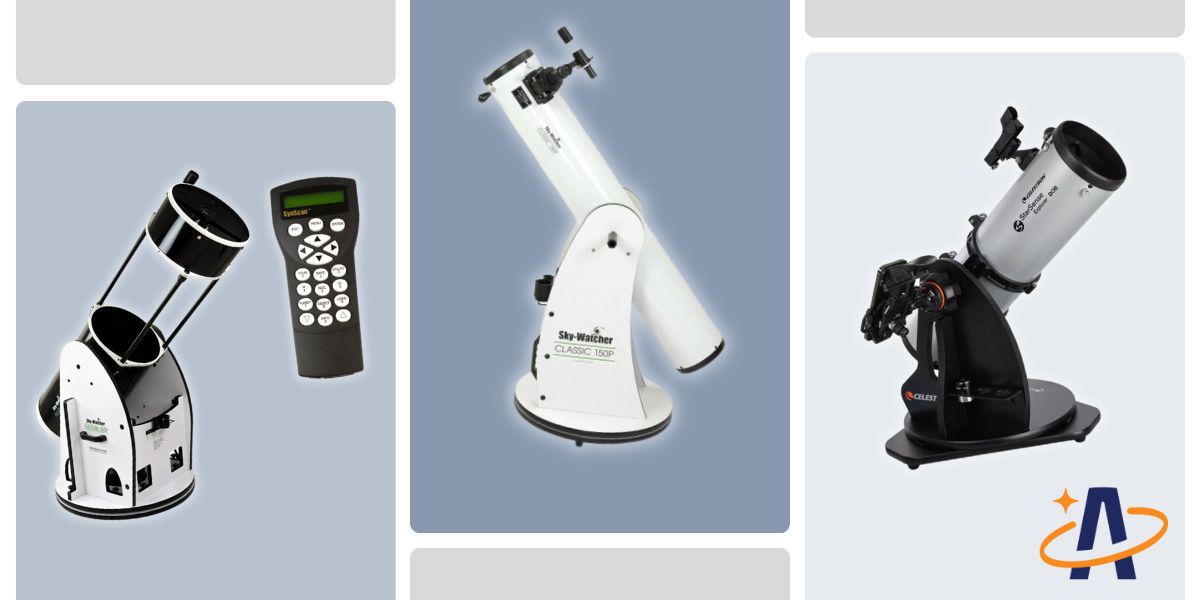
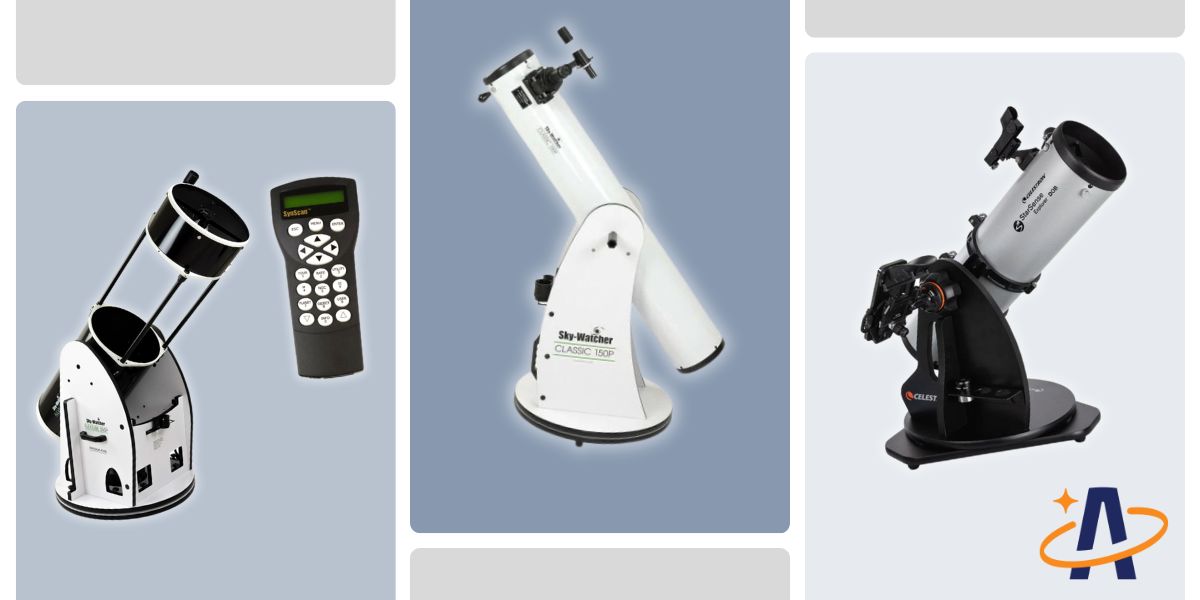
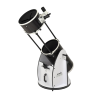
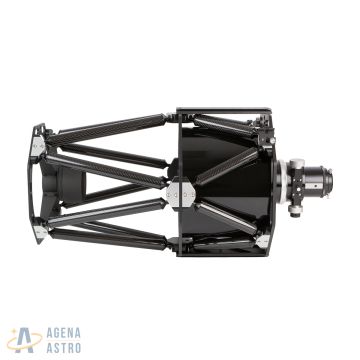
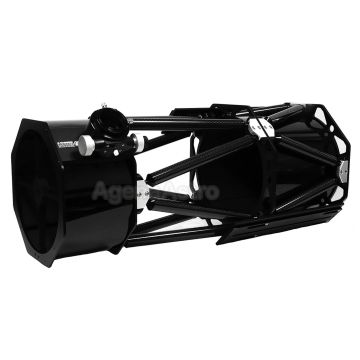
Named after legendary amateur astronomer John Dobson, Dobsonian telescopes are a type of Newtonian reflector mounted on an alt-azimuth mount that swivels on a rotating base and can be angled up and down. They are known for their ease of use and large apertures, which gather a lot of light and detail.
They are highly recommended for beginners to amateur astronomy wanting to visually observe the night sky.
Since Dobsonians use a Newtonian reflector telescope in its design, they work like a Newtonian, but with the addition of an alt-az mount. They use a large primary mirror at the bottom of the tube to collect light. This light is then reflected to a secondary mirror located near the top of the telescope’s opening. The secondary mirror redirects the light to the side of the tube, where the eyepiece is positioned.
The Dobsonian telescope’s simple alt-azimuth mount allows easy movement along vertical (altitude) and horizontal (azimuth) axes. There are manual or computerized Go-To mounts available.
Due to their design, Dobsonians are not recommended for long-exposure astrophotography. But you can attach your mobile phone, or planetary camera, and take photos of the Moon, planets, and star clusters.
Pros: Great for beginner visual observers. Great value for money, as you get a larger aperture at a lower cost compared to other types of telescopes. Smaller tabletop designs offer great portability.
Cons: Not suited to deep sky astrophotography. As with other reflecting telescopes, the Dobsonian also requires collimation and can suffer from coma. Larger Dobsonians can be heavy and difficult to travel with.
Cassegrain Telescopes
Best for experienced deep-sky and planetary astrophotographers | $$ - $$$$
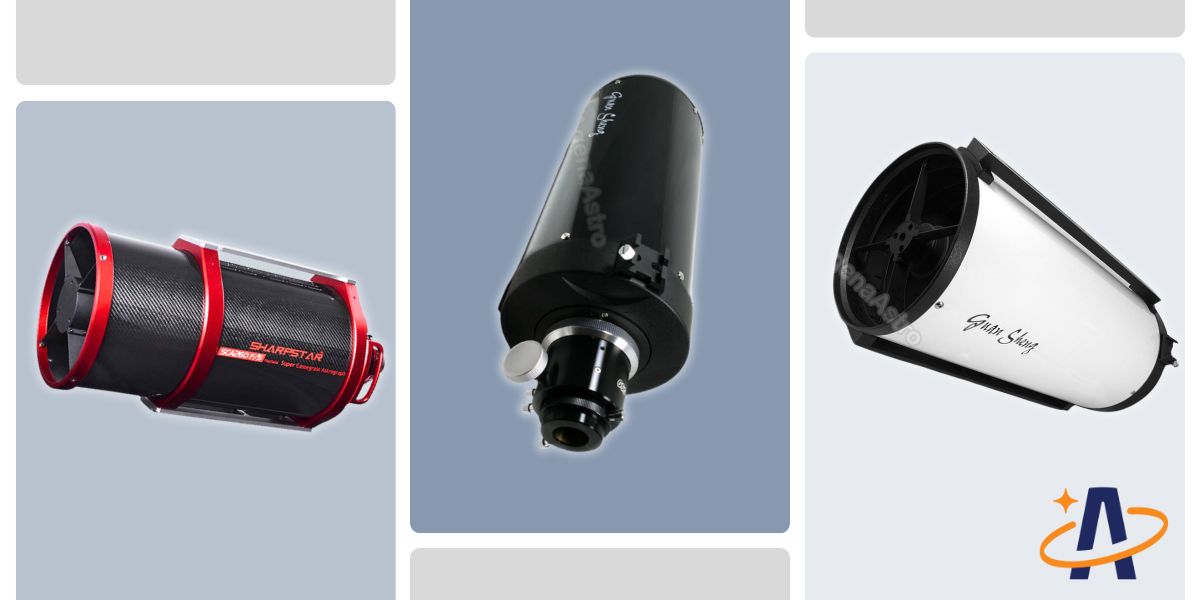

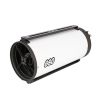
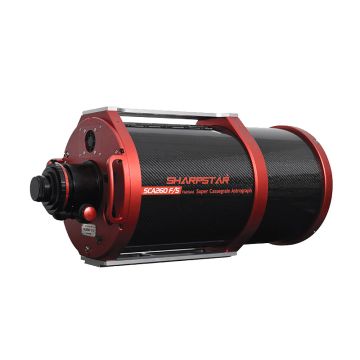
Cassegrain telescopes use a primary concave mirror and a secondary convex mirror that reflects light through a hole in the primary mirror to an eyepiece located behind it. This design results in a compact telescope with a long effective focal length.
Due to their longer focal lengths and larger apertures, Cassegrain telescopes are excellent for viewing or photographing planets and the moon. They're also a popular choice for observatory use. Variations include the Ritchey-Chrétien and Dall-Kirkham.
Cassegrain telescopes are recommended for more experienced observers or astrophotographers, as they can be challenging to use because of their design and longer focal lengths.
Pros: Superior optical performance. More compact design relative to their focal length compared to other types of telescopes. Rarely requires collimation.
Cons: Cassegrain telescopes can be more expensive and have a more complex collimation process compared to other designs like Newtonians. The secondary mirror in a Cassegrain reflector causes a central obstruction, which can reduce contrast. Their long focal lengths make them a challenging choice for beginners, and deep sky imagers will want to master autoguiding with Cassegrains.
Ritchey-Chretien Telescopes
Best for observatories and professional deep-sky and planetary astrophotographers | $$$ - $$$$
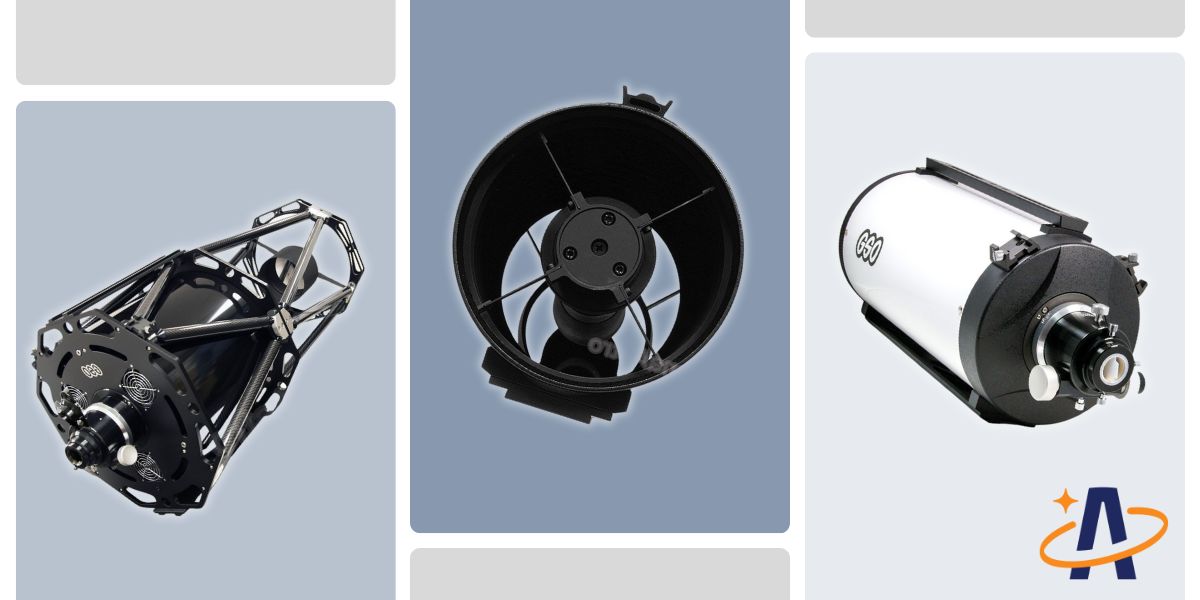

The Ritchey-Chretien (RC) telescope is a type of Cassegrain telescope that typically features a very long focal length.
But unlike some Cassegrains, which use an aspheric mirror and corrector plate, RCs use special hyperbolic mirrors. These mirrors create clear and flat-field images.
They also have less field curvature compared to other types of Cassegrain telescopes. Usually, a field flattener is not required unless a large format camera is being used.
Pros: Superior optical performance. RCs are known for their very flat photographic field. This means they can produce images that are sharp and in focus right to the edge of the field of view. Rarely requires collimation. Do not require corrective lenses, like a coma corrector.
Cons: RCs have a large central obstruction at or near 50%. This can reduce the contrast of the image, particularly for planetary viewing. They're typically more expensive than other types of telescopes, and RCs with larger apertures can be heavy. Their long focal lengths are unforgiving to beginners.
Need Help?
Our team is always on standby to help you choose the right telescope to meet your needs. If you have any questions, or can't find what you’re looking for, contact us.
Frequently Asked Questions
Do Reflecting Telescopes Have Optical Flaws?
Yes, while reflecting telescopes are one of the preferred choices for many astrophotographers and visual observers due to their incredible light-gathering capabilities, they can suffer from some optical flaws.
Common issues include coma, pinched optics, field curvature, and vignetting. Fortunately, these issues can be easily fixed with the right tools.
What Are Diffraction Spikes?
Another optical quirk of reflecting telescopes is the presence of diffraction spikes. These are the bright lines that extend from stars, often forming a cross or asterisk pattern. They are caused by the support structures of the secondary mirror, known as spider vanes, which diffract the incoming light. While some find them aesthetically pleasing, they can be a nuisance, especially on large bright stars, as the diffraction spike can extend into the details of nebulae.
What Is Coma?
A common issue found in reflecting telescopes is coma. Coma causes stars to appear with comet-like tails, stretching away from the center of the field of view.
Coma is more pronounced in telescopes with faster focal ratios, particularly those below F6. Fortunately, coma is easily corrected by using a coma corrector.
Coma correctors consist of multiple lens elements that counteract the spread of light rays caused by the telescope’s mirrors. They work by redirecting the off-axis light so that it converges more accurately at the focal plane.
This results in stars appearing sharp across the entire field of view, not just at the center. A coma corrector is typically placed in the optical path between the telescope’s focuser and the eyepiece or camera.
What Is Collimation?
Collimation can be thought of as calibrating your telescope. The process involves adjusting the telescope's optical elements so that they perfectly align. If your telescope’s mirrors are not aligned, images can be blurry and stars can appear distorted.
How Do I Collimate My Telescope?
You can collimate your telescope using tools like a laser collimator, a collimation cap, or electronically using an Ocal Electronic Collimator.
You can check how well-collimated your telescope is by viewing the concentric patterns on an out of focus star.
A well-collimated telescope should show a symmetrical pattern. Here is one of the best videos available on how to collimate your Newtonian telescope.
What Is Aperture, F-Ratio & Focal Length?
Not sure what terms like aperture, focal length, and focal ratio mean? Learn more by visiting, Choosing the Best Telescope for Beginners.