


Complete Telescope Buying Guide
Choosing a telescope can feel overwhelming, but our team of expert astronomers is here to make your choice easy! In this complete guide, we’ll go over things like:
- What to Consider When Buying a Telescope
- Our Top 5 Picks for Beginner Telescopes
- 3 Essential Telescope Specifications to Know
- Which Telescope Should I Buy? Imaging, Visual, or Both
- Types of Telescopes Explained: Refractors, Reflectors, and Catadioptrics
- Don't Forget These Essential Telescope Accessories
- Telescope FAQs
- Telescope Terms to Know
Why You Can Trust Agena Astro
For over 20 years, Agena Astro has helped astronomers find the right telescope for their goals and experience level. Our team isn’t made up of salespeople — we’re active observers and astrophotographers with more than 200 years of combined experience using the same telescopes we sell and over 30,000 5-star customer reviews. We offer honest advice, expert support, and equipment that truly fits your needs under the night sky.
What to Consider When Buying a Telescope
Telescopes come in many types, shapes, and sizes. Which one is best for you depends on your goals, experience, and budget. There is no “best telescope” for everyone, but we’ll help you identify the best for your needs!
3 Things to Think About Before You Buy
-
Use: Decide whether you’ll use your telescope for astrophotography, visual observing, or both. Visual observing favors simplicity and ease of setup, while imaging requires more precise mounts and accessories.
-
Budget: Set a realistic price range before you start shopping. Don’t forget to account for extra essentials like eyepieces, a camera, or filters. If you’re planning to do astrophotography, the mount often matters more than the telescope itself for steady performance.
-
Portability: Consider how often and how far you’ll need to move your telescope. Large telescopes gather more light but can be heavy and bulky, while smaller, lightweight models are easier to transport and faster to set up.
Our Top 5 Picks for Beginner Telescopes
Looking for a few quick recommendations without the deep dive? These five beginner-friendly telescopes offer outstanding performance and value across a range of budgets and skill levels.
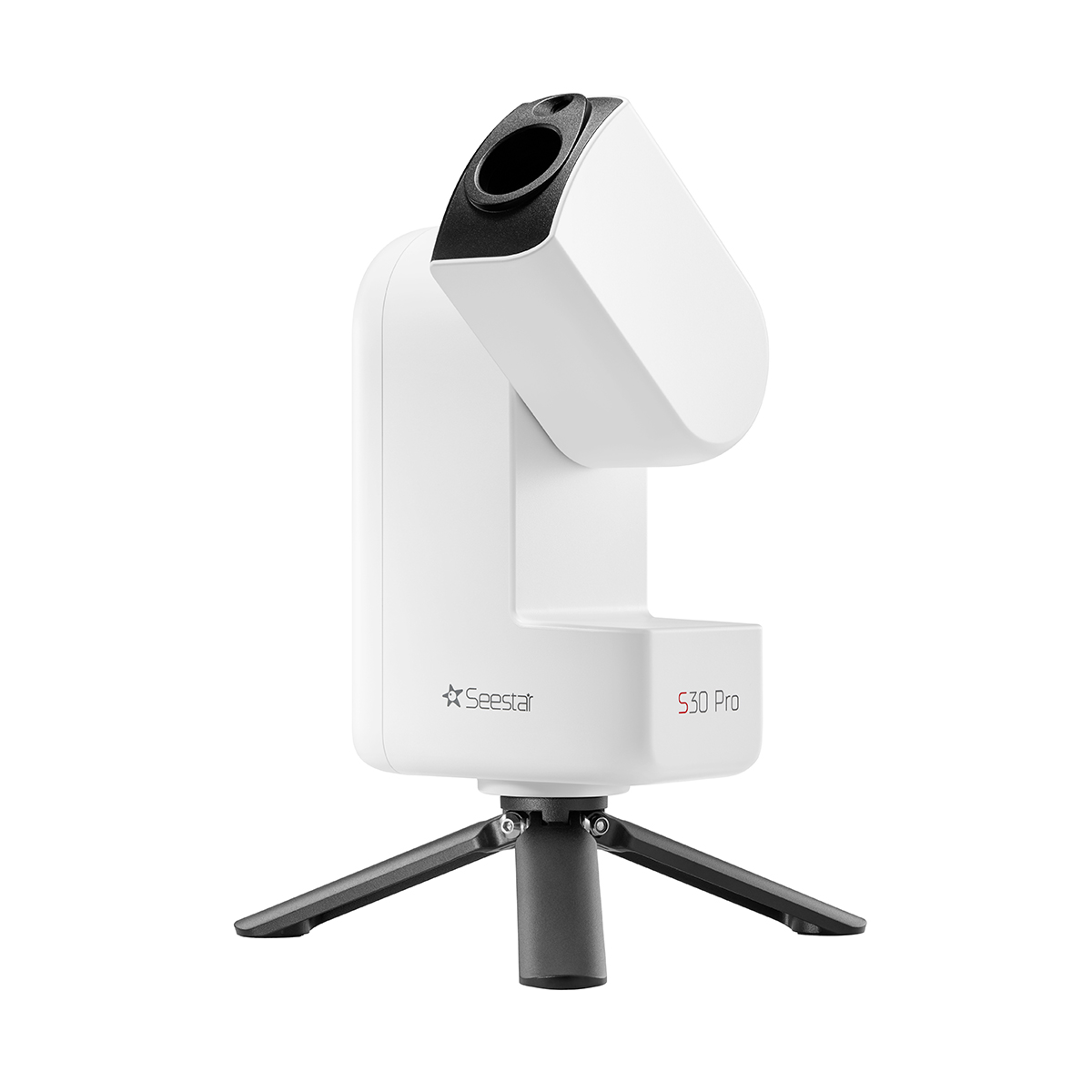
1. ZWO Seestar S30 Pro All-in-One Smart Telescope
The Seestar S30 Pro does it all — it automatically aligns with the night sky, captures celestial objects, and streams images directly to your smartphone or tablet.
Best for: Anyone who wants effortless astrophotography and app-based control without traditional eyepiece viewing.
Pros:
-
- Fully automatic and self-aligning
- Captures impressive deep-sky and lunar images with no experience
- Compact, all-in-one design at a great price
Cons:
-
- No through-the-eyepiece viewing
- Shorter battery life in cold weather (use external power for long sessions)
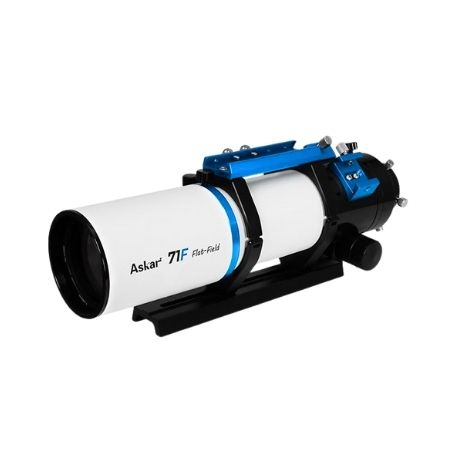
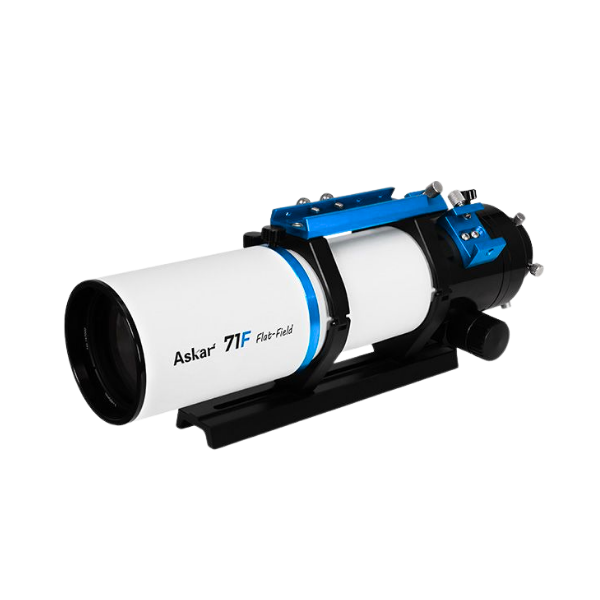
2. Askar 71F f/6.9 Quadruplet Refractor Telescope
The Askar 71F hits the sweet spot for price, portability, and performance. This Petzval refractor delivers crisp, flat-field images and works well with APS-C and full-frame cameras — ideal for deep-sky imaging when paired with an equatorial mount.
Best for: Astrophotographers looking for an affordable, high-performance refractor.
Pros:
-
- Flat, well-corrected field across full-frame sensors
- Petzval design eliminates the need for a field flattener
- Excellent optical quality for the price
Cons:
-
- Requires separate mount and camera
- Short focal length limits reach for very small objects
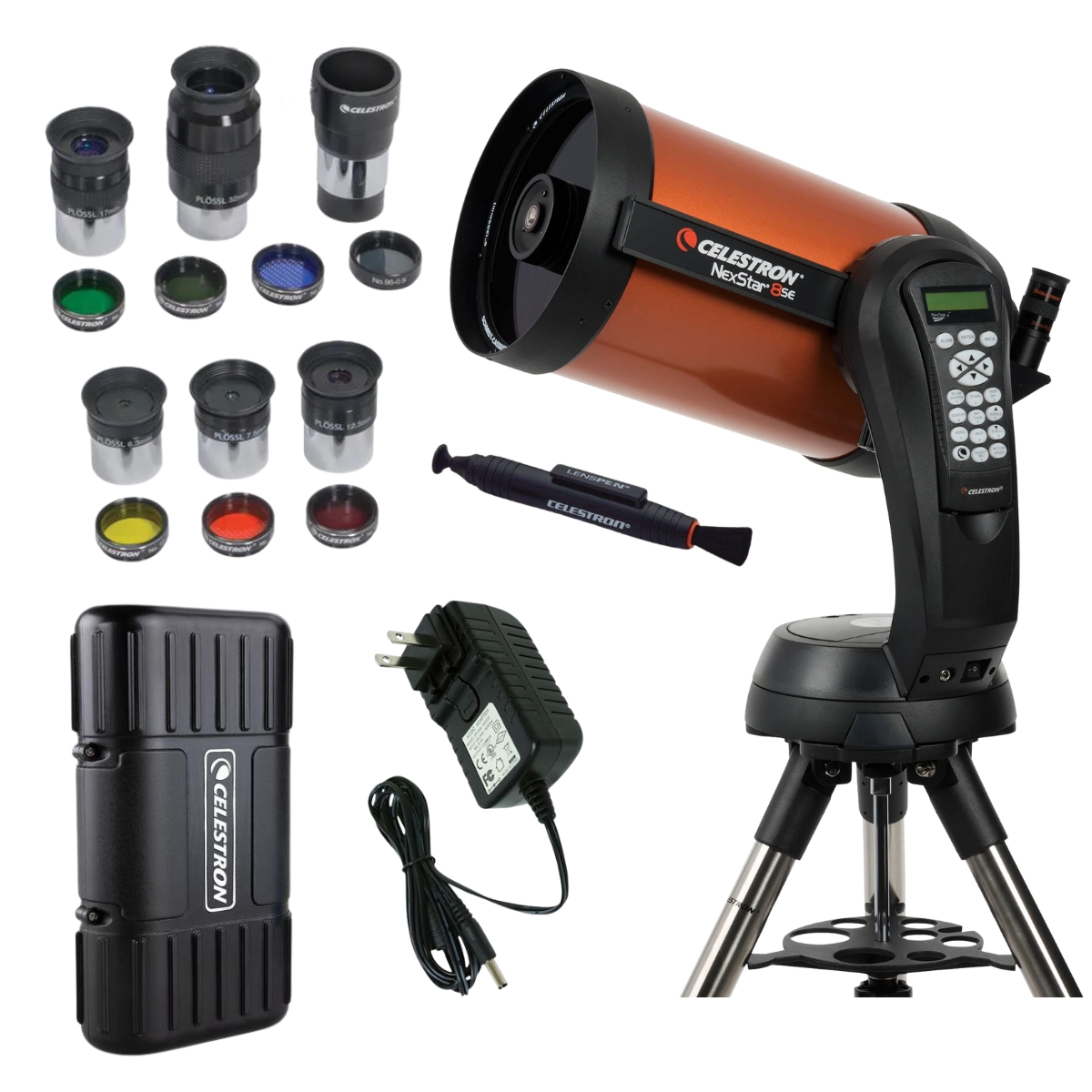
3. Celestron NexStar 8SE Advanced Bundle
The Celestron NexStar 8SE is one of the world’s best-selling telescopes for good reason. With an 8” aperture, GoTo mount, and tracking, it’s perfect for planetary and lunar observing. Our Advanced Bundle adds a 14-piece eyepiece and filter kit plus a portable battery for even greater value.
Best for: Visual observers who want a complete, motorized GoTo setup.
Pros:
-
- 8" aperture delivers superb lunar and planetary detail
- GoTo tracking automatically finds and follows objects
- Bundle includes useful accessories at a discounted price
Cons:
-
- More expensive than manual telescopes
- Alt-az mount not suited for long-exposure astrophotography
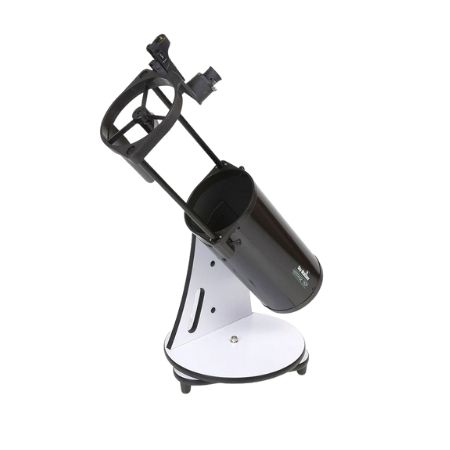
4. Sky-Watcher Heritage 150 Tabletop Dobsonian Telescope
Compact yet powerful, the Heritage 150 provides a generous 6” aperture in a collapsible tabletop design. It’s portable, easy to use, and delivers excellent planetary and lunar views for its price.
Best for: Beginners and families wanting bright, affordable visual views on a budget.
Pros:
-
- 6" aperture provides excellent light gathering
- Collapsible, tabletop design for easy storage and travel
- Great value with included eyepieces and mount
Cons:
-
- Requires frequent manual adjustment (no tracking)
- Optional light shroud recommended to reduce glare
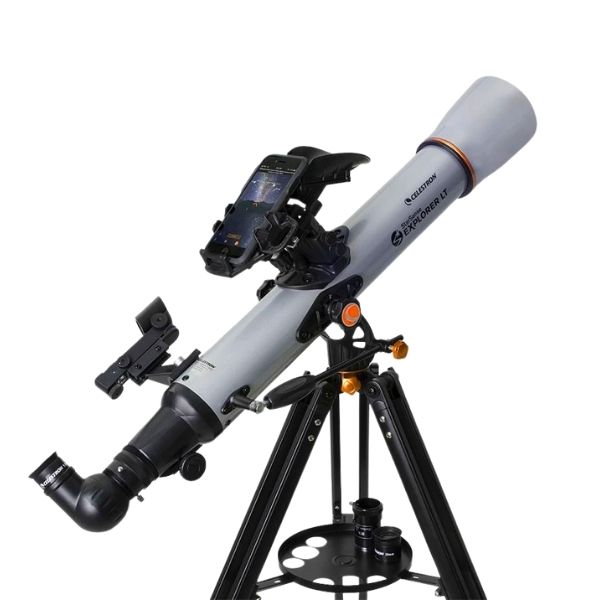
5. Celestron StarSense Explorer LT 80AZ Refractor Telescope
The StarSense Explorer LT 80AZ combines classic refractor simplicity with smartphone-assisted pointing. Using your phone’s camera and the StarSense app, it guides you to celestial objects — a huge help for first-time users.
Best for: Beginners seeking an affordable, guided observing experience.
Pros:
-
- StarSense app helps you easily locate celestial objects
- Includes two eyepieces, 2x Barlow, and a red-dot finder
- Under $300 — exceptional value for a complete kit
Cons:
-
- Lightweight tripod can feel less stable
- No GoTo or motorized tracking
3 Essential Telescope Specifications to Know
Not sure what all those telescope numbers mean? Don’t worry — if you only have time to learn three specs, make it these. Aperture, focal length, and focal ratio are the most important numbers to understand, and together they tell you almost everything about how a telescope will perform.
-
Aperture — The aperture is the diameter of the front lens or mirror that collects light. A larger aperture gathers more light, revealing fainter details in galaxies, nebulae, and planets. Most telescopes are named after their aperture size — for example, the Sky-Watcher Heritage 150 has a 150 mm mirror, while the Celestron 8SE uses an 8-inch one. Of all the specs to know, aperture matters most: it determines how much you can see or capture in your images.
Example: An 80mm refractor is great for portability and wide-field imaging, while a 250mm (10") Dobsonian reveals faint deep-sky galaxies. -
Focal Length — The focal length is the distance light travels inside the telescope before reaching focus. It determines your magnification and field of view. A longer focal length gives higher magnification, ideal for planets and the Moon, while a shorter focal length offers wider views perfect for deep-sky objects and astrophotography.
Example: A Petzval refractor with a 400mm focal length captures wide nebulae like the North America Nebula, while an SCT with a 2000mm focal length excels at zooming in on Jupiter or Saturn. -
Focal Ratio (f/number) — Calculated by dividing the focal length by the aperture, the focal ratio describes how “fast” or “slow” a telescope is. For imaging, a lower f/ratio (like f/4–f/6) means a faster system that captures brighter images in less time. Higher f/ratios (like f/10) are better for visual use and fine planetary detail but require much longer exposures for imaging.
Example: An f/5 refractor is well-suited for astrophotography, while an f/10 SCT provides the magnification needed for detailed planetary observing.
Now that you’ve got a handle on these three specs, you’re ready to explore which telescope type best fits your interests. Jump to:
Which Telescope Should I Buy? Imaging, Visual, or Both
Not sure where to start? The best telescope for you depends on how you plan to use it — for photography, visual observing, or a mix of both. In this section, we’ll help you understand the strengths of each type so you can choose a setup that fits your goals, experience, and budget.
How to Choose a Telescope for Astrophotography
Here at Agena Astro, we carry one of the world’s widest selections of telescopes for imaging! We offer full lineups from trusted brands such as Askar, William Optics, Celestron, Sky-Watcher, and many more. Whether you’re just beginning your journey into astrophotography or you’re a seasoned expert, you can trust Agena Astro to have your back.
What's the Best Telescope for Astrophotography?
The refractor telescope is our pick for the best all-around choice thanks to its excellent performance, ease of use, and low maintenance. Ultimately, the best telescope type for imaging depends on the kind of astrophotography you plan to do.
Deep Sky Astrophotography
Our top choice for deep sky astrophotography is a Petzval refractor. Petzval telescopes are ready for imaging straight out of the box — just attach your camera and start capturing. They’re popular with beginners and advanced imagers alike for their sharp, flat fields and reliability.
While other telescope types can also produce even better results, they often need extra accessories like field flatteners or coma correctors. Reflectors like Newtonians also require collimation (mirror alignment). For that reason, these setups are better suited for intermediate imagers.
Best for: Beginners to advanced deep-sky imagers
Explore Petzval Refractor Telescopes →
Planetary & Lunar Astrophotography
For capturing the Moon and planets, Schmidt-Cassegrain Telescopes (SCTs) are ideal. Their long focal lengths provide the magnification needed for small, bright targets. Pair them with a Barlow lens and a planetary camera for optimal detail.
Best for: Intermediate imagers focusing on the Moon and planets
Explore Schmidt-Cassegrain Telescopes →
Solar Astrophotography
For imaging the Sun, a hydrogen-alpha solar telescope reveals the most detail. These specialized scopes deliver stunning solar views of flares and prominences. If you also want to image at night, consider an H-alpha filter like the Daystar Quark, which attaches to most refractors for both solar and deep-sky imaging.
Best for: Dedicated solar imagers or dual-purpose refractor users
Explore Solar Telescopes →
A Telescope That Can (Almost) Do It All
Smart telescopes combine automated alignment, tracking, and image stacking into a simple app-based experience. While they lack the focal length for planetary imaging, they excel at deep-sky, lunar, and even solar (with included filters) photography. They’re perfect for anyone who wants quick results with minimal setup.
Best for: Beginners and casual astrophotographers
Explore Smart Telescopes →
Key Considerations for Deep Sky Astrophotography
- Budget — Remember to budget for your mount and camera, not just the telescope. The mount is the most important part of any imaging setup, so it’s worth spending more here for smoother tracking and sharper results.
- Mount Capacity — Your telescope, camera, and accessories should weigh well below your mount’s maximum payload capacity. This helps maintain balance and ensures pinpoint stars during long exposures.
- Camera Sensor Size — Match your telescope’s image circle to your camera’s sensor size. For example, a full-frame camera has a 43 mm diagonal, so choose a telescope with an image circle of 43 mm or larger to keep stars sharp across the entire frame.
How to Choose a Telescope for Visual Astronomy
At Agena Astro, we carry top brands for visual astronomy like Celestron, Sky-Watcher, and Tele Vue. With our team’s 200 years of combined experience under the stars, we’ve tested nearly every design — here’s what we recommend.
Which Type of Telescope Is Best for Visual Astronomy?
For most observers, the Dobsonian telescope is the best all-around choice. Its large aperture, simple setup, and affordable price make it ideal for viewing the Moon, planets, galaxies, and nebulae.
Dobsonians are often called “light buckets” because they gather lots of light — revealing faint objects that smaller telescopes can’t. They range in size from small tabletop versions to giant 16-inch models over six feet tall. Bigger models show more detail but are heavier to move and store, so choose one you can comfortably handle.
Most Dobsonians are manual, meaning you move them by hand as objects drift across the sky. However, models like the Sky-Watcher Flextube GoTo add motorized tracking for hands-free observing. If you’re looking for the best views possible, get the largest Dobsonian that fits your space, vehicle, and budget.
Explore Dobsonian Telescopes →
Best Alternatives to Dobsonians
If you prefer something lighter or more portable, refractor telescopes are a great option. They’re low-maintenance, high-contrast, and ideal for beginners or families. Even small refractors can show craters on the Moon, Jupiter’s moons, and Saturn’s rings, just not in as much detail.
Explore Refractor Telescopes →
For detailed views of the Moon and planets, Schmidt-Cassegrain Telescopes (SCTs) like the Celestron NexStar SE offer long focal lengths and GoTo tracking to keep objects centered.
Explore Schmidt-Cassegrain Telescopes →
If you want something compact and budget-friendly, a Maksutov-Cassegrain is another strong choice. These telescopes deliver crisp, high-magnification views of planets and the Moon, though their narrow field of view makes them less ideal for deep-sky objects.
How to Choose a Telescope for Both Imaging and Visual Use
If you want a telescope that performs well for both viewing and imaging, the good news is — you don’t have to choose just one path. Many astronomers enjoy exploring the night sky through the eyepiece one night and capturing it with a camera the next. The key is finding a telescope that balances optical performance, portability, and mount stability.
Refractors — Small to mid-sized apochromatic refractors (60–100 mm) are the most popular dual-purpose telescopes. They deliver crisp, color-corrected views for visual observing and sharp, flat images for astrophotography. Lightweight and low-maintenance, they’re ideal for beginners or anyone who wants a grab-and-go setup that does it all.
Best for: Beginners and all skill levels
Explore Refractor Telescopes →
Schmidt-Cassegrain Telescopes (SCTs) — SCTs like the Celestron EdgeHD series are true multitaskers. Their long focal lengths excel for lunar and planetary observing, while accessories like focal reducers expand their capabilities for deep-sky imaging. Their compact design makes them easy to transport, though their complexity and focusing precision make them better suited for intermediate or advanced imagers.
Best for: Intermediate to advanced astronomers
Explore Schmidt-Cassegrain Telescopes →
Newtonians — A fast f/4–f/5 Newtonian offers excellent light-gathering ability and wide-field performance for both observing and imaging. They require regular collimation and careful setup, so they’re generally recommended for intermediate users who want the most aperture and imaging power for the money.
Best for: Intermediate users and budget-conscious imagers
Explore Newtonian Telescopes →
Pro Tip: For astrophotography, your mount is just as important as your telescope — often more so. A solid equatorial mount ensures accurate tracking and sharper long exposures, no matter which telescope you choose.
Types of Telescopes Explained: Refractors, Reflectors & Catadioptrics
Every telescope falls into one of three main categories: refractor, reflector, or catadioptric. Each has unique strengths, ideal uses, and maintenance needs. In this section, we’ll break down how each design works, what it’s best for, and how to decide which one suits your observing style.
Refractor Telescopes
Refractor telescopes are what most people picture when they think of a telescope. They use glass lenses to bend light into focus through a simple, durable design that’s been around since the 1600s—the era of the very first telescopes.
Modern refractors use two, three, or even four lenses to improve image quality and reduce optical flaws known as aberrations. The most common of these is chromatic aberration, which happens when different colors of light focus at slightly different points, creating faint color fringes around bright stars or the Moon. Most higher-end refractors correct for this entirely, producing bright, color-accurate images.
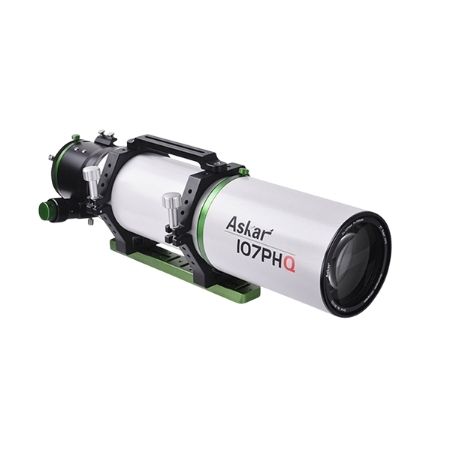
Petzval Refractors — Flat-Field Imaging Made Simple
Petzval refractors use four or more lenses to fully correct color and flatten the image field. They’re the top choice for astrophotography because they don’t require a separate field flattener or backspacing adjustments — just attach your camera and start imaging. Though they cost more per inch of aperture, Petzvals are prized for their reliability, speed, and pinpoint stars edge to edge.
Best for: Astrophotographers who want a ready-to-image, flat-field telescope
Explore Petzval Refractor Telescopes →
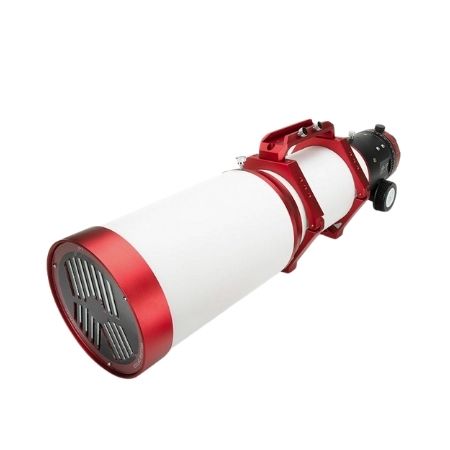
Triplet Refractors — Balanced for Imaging and Visual Use
Triplet refractors use three lenses to fully correct for chromatic aberration. They offer an excellent balance between visual observing and imaging performance. For astrophotography, they typically require an accessory field flattener or reducer to maintain sharp stars across the frame.
Best for: Intermediate observers and imagers seeking high color correction
Explore Triplet Refractor Telescopes →

Doublet Refractors — Affordable and Beginner-Friendly
Doublet refractors use two lenses for a lightweight, affordable design that’s ideal for beginners and casual observers. While they can show slight color fringing on bright objects, higher-end doublets with ED glass coatings provide strong optical performance for their price.
Best for: Beginners and visual observers on a budget
Explore Doublet Refractor Telescopes →
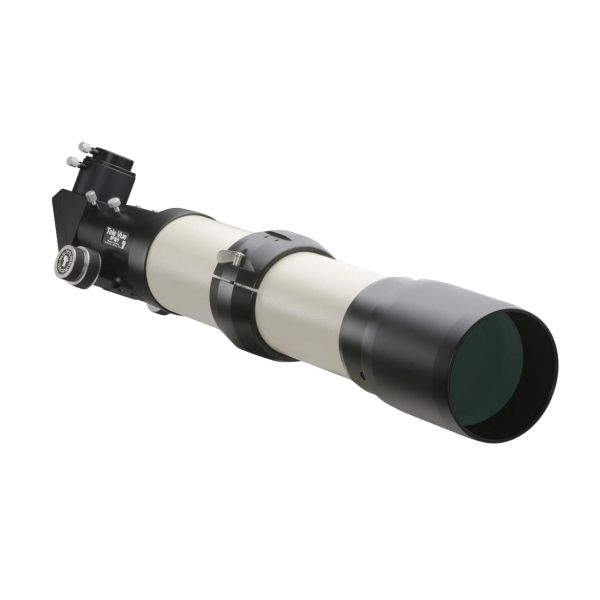
Apochromatic (APO) Refractors — Premium Color Correction
The term apochromatic once referred only to the most advanced refractors that brought three wavelengths of light to the same focus. Today, most high-quality refractors — including many doublets, triplets, and Petzvals — meet or exceed that standard thanks to advanced glass and coatings. APO refractors deliver the sharpest, most color-accurate views and are ideal for demanding observers and imagers alike.
Best for: Experienced astronomers and astrophotographers seeking premium optical performance
Explore APO Refractor Telescopes →
Which Refractor Telescope Is Right for You?
-
For astrophotography: A Petzval refractor offers a flat field and ready-to-image performance.
-
For balanced performance: A triplet refractor delivers excellent color correction for both observing and imaging.
-
For beginner observers: Start with a doublet refractor — simple, lightweight, and great for visual astronomy.
-
For visual purists: APO refractors offer some of the sharpest, most color-accurate views available
Reflector Telescopes
Reflector telescopes use mirrors instead of lenses to collect light, allowing for much larger apertures at a lower cost. They’re ideal for deep-sky viewing and astrophotography, and come in a wide range of designs—from simple visual scopes to advanced imaging systems used by observatories.
If you’re choosing your first reflector, it’s helpful to understand how each design fits a different purpose. Reflectors tend to offer the most aperture per dollar but require occasional collimation (mirror alignment) for best results.
Explore All Reflector Telescopes →
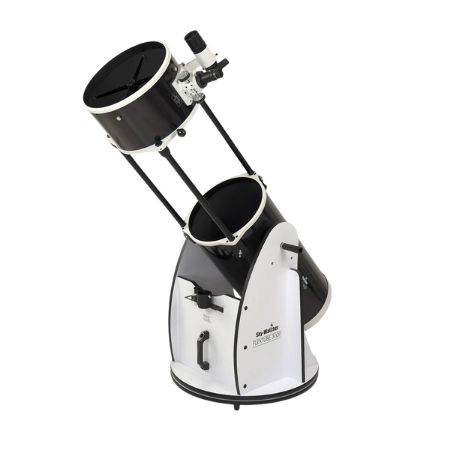
Dobsonian Telescopes — The Classic Visual Workhorse
Dobsonian telescopes deliver the best views for the money. Built around a simple Newtonian optical tube on an alt-azimuth base, Dobsonians are intuitive to use and gather huge amounts of light. They’re perfect for beginners and visual observers who want bright, detailed views of galaxies, nebulae, and planets.
If portability is key, look for tabletop or collapsible “truss tube” Dobsonians. For hands-free tracking, GoTo and motorized Dobsonians automatically follow objects across the sky.
Best for: Beginners and visual observers of all skill levels who want the most light for their dollar
Explore Dobsonian Telescopes →
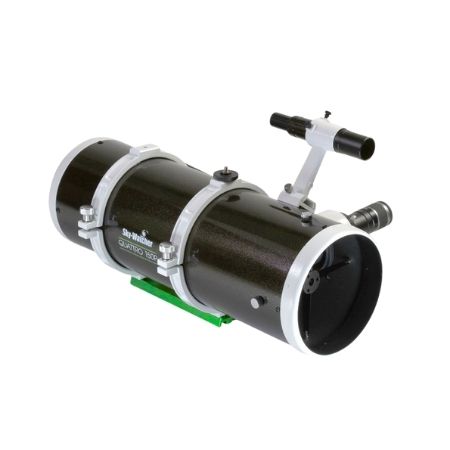
Newtonian Telescopes — Budget-Friendly and Imaging-Ready
Newtonians share the same optical design as Dobsonians but are typically mounted on equatorial mounts, making them ideal for intermediate or advanced astrophotographers who want to experiment with deep-sky imaging on a budget.
Fast Newtonians (f/4–f/5) offer wide fields and shorter exposures, while slower ones (f/6+) provide better contrast for visual use. For imaging, a coma corrector is often added to sharpen stars at the edges of the frame.
Best for: Intermediate imagers looking for performance and value
Explore Newtonian Telescopes →
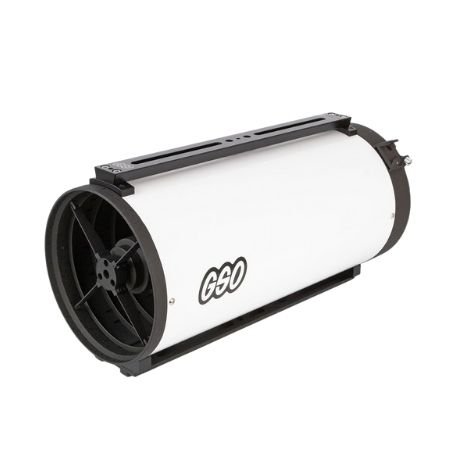
Ritchey-Chrétien (RC) Telescopes — The Professional’s Choice
Ritchey-Chrétien (RC) telescopes are specialized reflectors designed for high-resolution imaging. Their hyperbolic primary and secondary mirrors eliminate coma and spherical aberration, producing sharp, flat fields across large camera sensors.
Used by major observatories including the Hubble Space Telescope, RCs excel at small galaxies, planetary nebulae, and other fine-detail targets. They require precise collimation and often benefit from field flatteners for full-frame sensors.
Best for: Advanced astrophotographers seeking professional-grade precision
Explore Ritchey-Chrétien Telescopes →
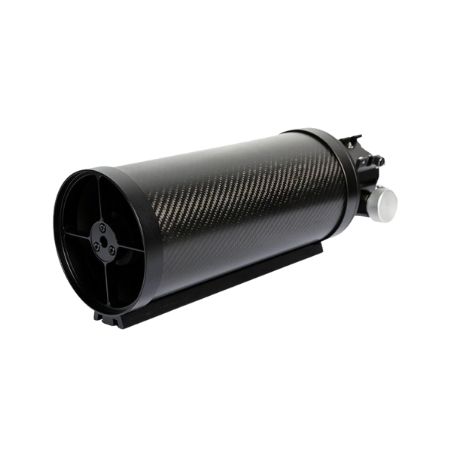
Cassegrain Telescopes — Versatile and Compact
Cassegrain telescopes fold a long optical path into a short tube using a concave primary and convex secondary mirror. This creates a compact system with a long focal length, great for lunar and planetary observing. Some Cassegrains are technically reflectors, but many technically fall under the Catadioptric category. Regardless, the term Cassegrain is used interchangeably.
Modern variants include Schmidt-Cassegrain (SCT) and Maksutov-Cassegrain (Mak) telescopes. SCTs are popular all-around performers, while Maks excel at high-magnification views of planets and the Moon. For imaging, faster variants like the Sharpstar SCA260 or Celestron RASA bring the Cassegrain concept into the realm of fast astrographs.
Best for: All-around observers and imagers seeking long focal lengths in a compact design
Explore Cassegrain Telescopes →
Which Reflector Telescope Is Right for You?
-
For visual observing: Choose a Dobsonian for the most aperture and simplicity at the lowest cost.
-
For intermediate astrophotography: A Newtonian offers wide fields and short exposures with great value.
-
For advanced imaging: A Ritchey-Chrétien or corrected Cassegrain provides professional-level precision.
-
For compact power: Modern Cassegrain variants deliver long reach in portable tubes.
Catadioptric Telescopes
Catadioptric telescopes — also called compound telescopes — use a combination of lenses and mirrors to create compact, versatile designs that perform well for both visual observing and astrophotography. By folding the light path inside the tube, these scopes achieve long focal lengths in short, portable bodies.
They’re popular with astronomers who want a single telescope that can handle nearly everything: planetary and lunar viewing, deep-sky observing, and even imaging. The three most common catadioptric designs are the Schmidt-Cassegrain (SCT), Maksutov-Cassegrain (Mak), and RASA, each optimized for different uses.
Shop All Catadioptric Telescopes →
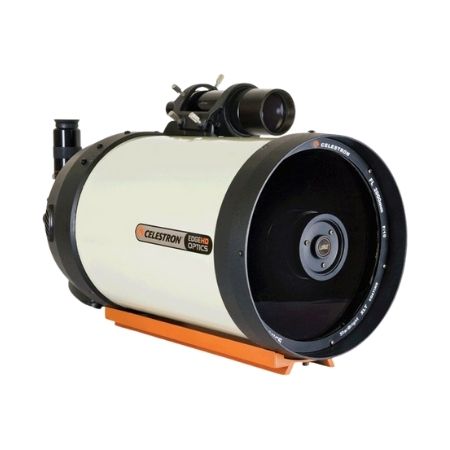
Schmidt-Cassegrain Telescopes (SCTs) — The All-Around Performer
Schmidt-Cassegrain Telescopes are among the most widely used telescope designs in amateur astronomy. Their folded light path and corrector plate provide long focal lengths in a compact, lightweight tube. SCTs excel at lunar and planetary observation but can also handle deep-sky imaging when paired with a focal reducer.
Modern GoTo and tracking mounts make SCTs a highly versatile “do-it-all” option for astronomers who want strong magnification and portability in one system.
Best for: All-around observers and imagers seeking a compact, multipurpose telescope
Explore Schmidt-Cassegrain Telescopes →
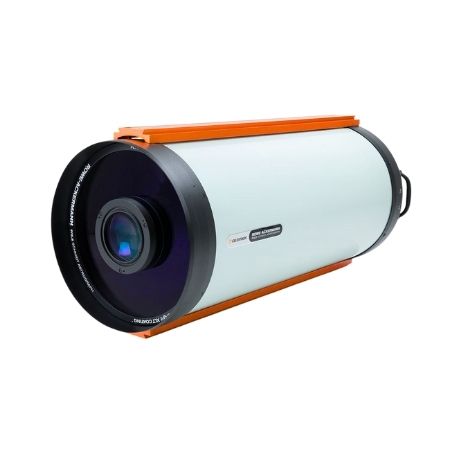
RASA Telescopes — Built for Imaging Speed
RASA (Rowe-Ackermann Schmidt Astrograph) telescopes are specialized versions of the Schmidt design built exclusively for fast astrophotography. With extremely short focal ratios (around f/2), they capture faint deep-sky targets in a fraction of the exposure time needed by other telescopes.
Since the camera mounts at the front of the optical tube, RASAs are imaging-only instruments, not designed for visual use — but they deliver professional-quality, wide-field images with stunning clarity and speed.
Best for: Dedicated astrophotographers who want ultra-fast, wide-field imaging performance
Explore RASA Telescopes →

Maksutov-Cassegrain Telescopes (Maks) — Compact and Sharp
Maksutov-Cassegrains use a thick meniscus lens and spherical mirrors to produce crisp, high-contrast views. Their long focal lengths make them ideal for the Moon, planets, double stars, and even daytime terrestrial use.
Maks require almost no maintenance and deliver beautiful, high-magnification views of bright targets, though their narrow field of view makes them less suited for large deep-sky objects or long-exposure astrophotography.
Best for: Planetary and lunar observers who value sharpness and portability
Explore Maksutov-Cassegrain Telescopes →
Which Catadioptric Telescope Is Right for You?
-
For all-around versatility: Choose an SCT for both visual observing and imaging.
-
For ultra-fast deep-sky imaging: A RASA is unmatched in speed and field flatness.
-
For planetary and lunar views: A Maksutov-Cassegrain delivers stunning sharpness in a compact design.
Don’t Forget These Essential Telescope Accessories
Your telescope is only as good as the gear that supports it. The right accessories can dramatically improve your observing experience, enhance image quality, and make setup and operation easier. Whether you’re just getting started or expanding your setup, these are the essentials every astronomer should consider:
-
Mounts & Tripods – A stable mount is the foundation of any telescope setup. Choose from manual, motorized, or GoTo mounts depending on your observing or imaging goals.
-
Cameras – Capture stunning astrophotos with dedicated astronomy cameras designed for deep-sky, planetary, or solar imaging.
-
Eyepieces – Swap out eyepieces to fine-tune your magnification and field of view for different celestial targets.
-
Finder Scopes & Red Dot Finders – Make it easier to locate and center objects in your main telescope.
-
Filters – Boost contrast, cut light pollution, or safely observe the Sun with visual and imaging filters.
-
Power Supplies – Keep your GoTo mount or smart telescope running all night with reliable portable power.
-
Adapters & Spacers – Ensure your camera, filter wheel, and accessories all connect with the right backfocus spacing.
Explore our full collection of telescope accessories to find everything you need to get the most out of your nights under the stars.
Telescope FAQs
What is a good telescope?
There are many good telescopes depending on your needs and budget. For a hassle-free, all-in-one experience, the Seestar S30 Pro Smart Telescope is hard to beat. Visual observers will appreciate the simplicity and power of the Sky-Watcher Heritage 150 for planets and the Moon, while aspiring astrophotographers will find the Askar 71F an excellent entry into deep-sky imaging.
How much does a good telescope cost?
Good telescopes typically start around the $250–$500 range. This range hits the sweet spot for most beginner telescopes, offering quality optics, reliable components, and a manageable size — making them a solid choice that can last for years.
Where can I buy a telescope?
You can buy telescopes right here at Agena Astro! With one of the world’s largest selections of over 400 telescopes and excellent customer reviews, you can shop with confidence for all your astronomy gear needs.
Which telescope is best for seeing planets?
The best telescopes for seeing planets are Dobsonians, Schmidt-Cassegrains, and long focal length refractors. Planets are small, so telescopes with focal lengths above 1000mm provide the best magnification. For detailed views, consider a Dobsonian or SCT with at least 10” of aperture.
What size telescope is needed to see planets?
Even a 3” or 4” telescope can show Saturn’s rings and Jupiter’s moons. Larger apertures reveal more planetary surface detail — for example, Jupiter's Great Red Spot or Mars’ polar caps. To observe Neptune or Uranus as disks, aim for an 8” or larger telescope.
Which telescope is better: refracting or reflecting?
Both designs have strengths. For astrophotography, a refractor telescope is generally best. For visual observing, a Dobsonian reflector offers the most light-gathering power for the price.
What is the best telescope to buy?
The best telescope depends on your goals, budget, and portability needs. For beginners, a smart telescope or any beginner-friendly model is a great start. For planetary observing, go with the largest Dobsonian you can handle. For astrophotography, start with a refractor. Need help deciding? Contact our expert team — we’re happy to help.
Can you use a telescope during the day?
Yes, but never point it at the Sun without a certified solar filter. With the right accessories, such as an erect image diagonal, telescopes can also be used for daytime terrestrial viewing.
Can I use a telescope in the city or under light pollution?
Yes — telescopes work well even under city lights, especially for viewing the Moon and planets. For deep-sky astrophotography, consider narrowband filters or plan a trip to a darker site.
What’s the difference between a telescope and a spotting scope?
Astronomy telescopes are optimized for faint celestial objects at night, while spotting scopes are designed for daytime viewing with upright images. Spotting scopes offer lower magnification, whereas telescopes excel at higher magnification for stars and planets.
What accessories do I need with a telescope?
Basic accessories for visual observing include:
- Eyepieces for different magnifications
- Stable mount or tripod to keep objects centered
- Finder scope or red-dot finder to help locate targets
Astrophotographers will need an equatorial tracking mount, a cooled camera, and a control unit like a ZWO ASIAIR or laptop.
How do I clean or maintain a telescope?
Avoid touching the optics. Use a blower or soft brush to remove dust, and clean lenses only when necessary with lens-safe materials. See our How to Clean a Telescope Guide for detailed instructions.
Telescope Terms to Know
Confused by telescope jargon? You’re not alone! Here’s a quick glossary of the most common terms you’ll see on telescope spec pages — explained simply and clearly to help you choose the right gear for your setup.
Aperture
The diameter of a telescope’s main lens or mirror. Larger apertures gather more light and show finer detail.
Apparent Field of View (AFOV)
How wide an eyepiece looks when viewed through. Larger AFOV (e.g., 82°) gives a more immersive view.
Backspacing / Back Focus
The available space behind a telescope for accessories before reaching focus—important for imaging setups.
Barlow Lens
An accessory that increases an eyepiece’s magnification, usually by 2× or 3×.
Bortle Scale
A 1–9 scale rating sky brightness. Bortle 1 is very dark; Bortle 9 is inner-city light pollution.
Catadioptric Telescope
One of the three main telescope types. A compact telescope design that combines mirrors and lenses to focus light. Popular types include Schmidt-Cassegrain and Maksutov-Cassegrain.
Central Obstruction
The secondary mirror or support that blocks some incoming light in reflectors or SCTs, slightly reducing contrast.
Chromatic Aberration
Unwanted color fringing caused when different wavelengths don’t focus together. Corrected in APO refractors.
Collimation
Aligning a telescope’s mirrors or lenses so light focuses accurately. Needed for reflectors and catadioptrics.
Coma
A distortion in fast reflectors that makes stars near the edge appear stretched or comet-shaped.
Dawes Limit
A measure of the smallest separation between two stars that can still be seen as distinct points.
Dobsonian Telescope
A large Newtonian reflector on a simple swivel base—excellent for visual observing.
Dovetail Rail
A mounting bar that attaches your telescope to a mount. Comes in Vixen (narrow) or Losmandy (wide) styles.
Eyepiece
The part you look through. Its focal length (mm) determines magnification with your telescope.
Exit Pupil
The beam of light exiting the eyepiece. Calculated as eyepiece focal length ÷ telescope f/ratio.
Eye Relief
The distance your eye can sit from the eyepiece while seeing the full field. Longer eye relief suits glasses wearers.
Field Flattener
An optical corrector that keeps stars sharp across the entire image field, especially in refractors.
Finder Scope / Red Dot Finder
A small sight that helps you locate and center targets before viewing through the main scope.
Focal Length
The distance light travels inside the telescope to reach focus. Short = wide views; long = higher magnification.
Focal Ratio (f/number)
Focal length ÷ aperture. Lower f/numbers (f/4–f/6) are “faster” for imaging; higher (f/9–f/12) give finer detail.
Focal Reducer
Shortens focal length for a wider field and faster exposures in imaging.
GoTo Mount
A motorized mount that automatically finds and tracks celestial objects once aligned.
Highest Useful Magnification
The most magnification usable before images blur—about 40–50× per inch of aperture.
Image Circle
The diameter of the corrected image a telescope produces. Should be larger than your camera sensor’s diagonal for sharp corners.
Imaging Newtonian
A fast (f/4–f/5) reflector optimized for astrophotography, offering bright, wide fields.
Limiting Magnitude
The faintest star a telescope can show under dark skies. Increases with aperture and darker observing sites.
Mount (Alt-Az / Equatorial)
Supports the telescope. Alt-az moves up/down and side-to-side; equatorial tracks the sky’s rotation for imaging.
Newtonian
Uses mirrors to focus light. Affordable, powerful, and common among visual observers and imagers.
Optical Tube Assembly (OTA)
The telescope itself, without mount or tripod, for pairing with your preferred setup.
Payload Capacity
The maximum weight a mount can safely carry. For imaging, keep your load below the rated limit for best tracking.
Petzval Refractor
A four-element refractor with a built-in field flattener for sharp, flat imaging across large sensors.
Refractor Telescope
One of the three main telescope types. Uses lenses to gather and focus light. APO designs offer crisp, color-free images. Popular types include doublet, triplet, and Petzval.
Reflector Telescope
One of the three main telescope types. Uses mirrors to gather and focus light. Great for faint deep-sky objects but needs occasional alignment. Popular types include Newtonian and Dobsonian.
Resolution
A telescope’s ability to reveal fine detail. Larger apertures give higher resolution.
Schmidt-Cassegrain Telescope (SCT)
Compact mirror-lens design offering long focal lengths in a short tube—great for planetary and all-purpose observing.
Seeing
The steadiness of the atmosphere. Good seeing means stable, sharp views; poor seeing causes stars to shimmer.
Smart Telescope
An app-controlled telescope that automatically aligns, captures, and processes images.
Tracking
A motorized mount feature that automatically moves the telescope to match Earth’s rotation, keeping celestial objects centered in view or on camera.
Transparency
The clarity of the sky. High transparency means clear, dark skies; low transparency means haze or light pollution.
Tripod / Pier
The base supporting your telescope and mount, providing stability and reducing vibration.
True Field of View (TFOV)
The actual portion of sky visible through a telescope–eyepiece combo, measured in degrees.
Shopping for a telescope? Don’t forget these essential accessories:
Eyepieces – Mounts – Filters – Cameras
Final Thoughts
Ready to take your next step into the universe? Whether you’re searching for your first beginner telescope, upgrading to advanced astrophotography gear, or looking to buy telescopes online from trusted brands, Agena Astro has you covered. We offer one of the widest selections of refractor, reflector, and catadioptric telescopes, backed by expert guidance from astronomers who use this equipment every clear night. Discover the perfect telescope for your goals — and start exploring the night sky with confidence!